
Angehefteter Tweet
𓆝
8.5K posts


𓆝
@prion333
Alex 𓅘 25 𓃦 🏳️⚧️⃤ 𓃚 he/him 𓃠 Ohio
right behind you Beigetreten Ağustos 2017
1.5K Folgt190 Follower
𓆝 retweetet


𓆝 retweetet


𓆝 retweetet

the mountain is known as the six grandfathers (tȟuŋkášila šákpe) to the lakota sioux tribes and is sacred to their nations. the US stole the land and so hideously defaced and desecrated this spiritual space in what should be considered both a humanitarian and environmental crime
Alex 🔻 ᚱᛅᚢᚦᛦ 🔥 ᚼᛁᚦᛁᚾ ⚒@valdrblindi
It really is insane just how fucking ugly and out of place this vandalism of a beautiful natural wonder is when you arent hyperzoomed in on it to make it look like it takes up the whole mountain
English
𓆝 retweetet

𓆝 retweetet

𓆝 retweetet


𓆝 retweetet

Went down the rabbit hole on this. There are bacteria in your gut right now with tiny electric motors built into them. Each motor is 45 nanometers wide, about 2,000 times thinner than a human hair. It spins faster than a Formula 1 engine. After 50 years, scientists just cracked how it works.
The motor spins a corkscrew-shaped tail so the bacterium can swim. At that tiny scale, water feels as thick as tar. Moving anywhere takes serious power. A single E. coli cell (the kind in your gut) spins its motor at 18,000 RPM. That beats modern Formula 1 engines, which redline around 15,000. Some bacteria in the ocean run theirs at 42,000 RPM, nearly triple.
And the motor barely wastes any energy as heat. Your car engine loses most of its fuel to heat. This thing loses almost none.
Inside the motor, 5 proteins form a ring wrapped around 2 proteins in the middle. Five can't split evenly into 2. The resulting lopsidedness is what makes the whole thing work. Protons, which are tiny charged particles, get pulled from outside the cell through the motor. Each one grabs a center protein, then lets go. In letting go, it tugs the outer ring a fraction of a turn. Another proton does the same thing on the other side. Then another. It's like two feet alternating on bicycle pedals. Over 2,000 times per second.
Switching directions is a whole other trick. When the bacterium senses food running out, it tags a small messenger protein with a phosphorus atom. That tagged messenger floats over and touches one protein on the outer ring. The touched protein flips into a new shape. That flip triggers the next protein, and the next, and the next, around the whole ring, like dominos falling. The ring reshapes in milliseconds. Rotation reverses. The bacterium turns and swims somewhere else.
Mike Manson, a biophysicist at Texas A&M, has been studying this one motor since the 1970s. For five decades, most of its parts stayed a mystery. Starting in 2020, a new wave of imaging let scientists see the individual pieces. The last pieces clicked into place in a March 2026 paper from Aravinthan Samuel's lab at Harvard. Manson told Quanta Magazine his lifelong quest was fulfilled.
A billion years of evolution built the most efficient rotary motor on the planet. Trillions of them are spinning inside you right now.
Natalie Wolchover@nattyover
Bacteria move around using a molecular machine called the flagellar motor that rotates faster than the flywheel of a race car engine and switches directions in an instant. After 50 yrs, scientists have finally figured out how it works. “My lifelong quest is now fulfilled.” Link⤵️
English
𓆝 retweetet

🚨Federal judge strikes down RFKs Kennedy Declaration, ruling it illegal and beyond federal authority.
This allows the 40 hospitals nationwide that stopped giving gender affirming trans care to resume or face legal consequences.

English
@pacoceanlover @sfchronicle these are animal ambassadors not sport birds. they are too imprinted on humans or too disabled to make it on their own. ex: idiot tries raising vulture chick (illegal), gets arrested, bird too friendly to people/doesn't know how to find food so it is surrendered to sanctuary.
English

@sfchronicle If humans would just leave wild birds, animals and fish alone but they need a hobby. Falcons were never meant to be trained for man’s sport
English

Someone broke into a Northern California falconry education and conservation center early Friday and intentionally released all of its birds, several of which are still missing and at risk, according to West Coast Falconry.
Staff at the falconry — located about 40 miles north of Sacramento in Marysville — found the premises vandalized and all 11 birds set free. The intruder or intruders destroyed equipment and merchandise, and released the birds by cutting gear from their legs and removing them from their enclosures, “leaving them to fend for themselves,” the organization said.
“These birds are not wild — they are trained and rely on human care,” West Coast Falconry said in a Facebook post. “Releasing them in this condition puts them at serious risk of injury or death.”
Four birds were still missing as of midday Sunday: Walter, a great horned owl; Cubbie, a peregrine falcon; Amadon, a barn owl; and Cora, a dark-morph red-tailed hawk who is blind in one eye.
The center said it was actively working to locate and recover the missing raptors, and asked for help from nearby residents to look out for birds who are “unusually comfortable around people.”
People should not approach the raptors, but instead should report any sightings to West Coast Falconry.
📸: Courtesy of West Coast Falconry

English
𓆝 retweetet

adhd is so funny because structure feels like a PRISON but if i have no structure i descend into executive dysfunction and just do nothing for days
English
𓆝 retweetet

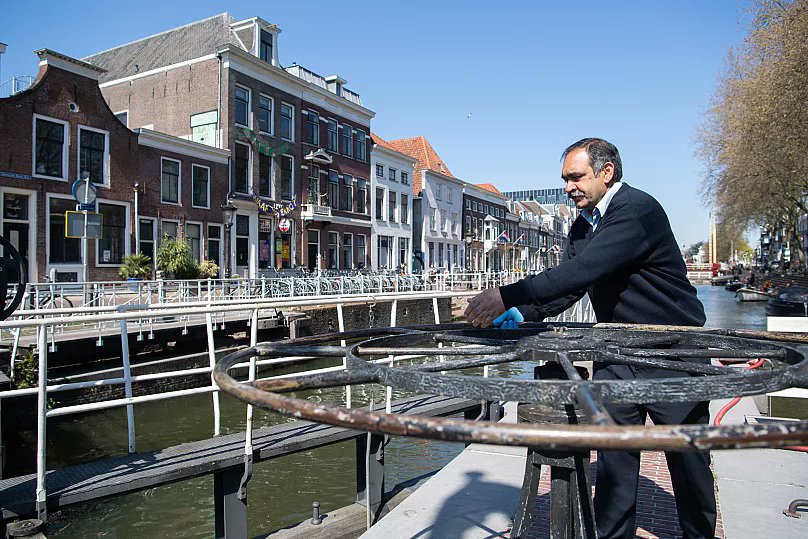
Migrating fish in Utrecht were getting stuck at a canal lock. Two ecologists fixed the problem with a doorbell.
It's called the Visdeurbe, or the "fish doorbell."
Every spring, fish migrate through the city's canals to spawn in shallow upstream waters. But the old Weerdsluis lock, built in the 1600s, stays mostly closed in early spring because boat traffic is low.
Fish pile up against the gate with nowhere to go. Predators find them, and many don't make it.
Two ecologists in Utrecht had an idea. Put an underwater camera on the lock, livestream it, and let anyone on Earth press a digital doorbell when they see fish waiting.
The lock keeper opens the gate when enough people have rung in.
In 2024, the doorbell was pressed 150,000 times by viewers from Germany, the US, the Netherlands, the UK, and dozens of other countries.
Over 20 million people tuned in to watch. Thousands of fish got through: perch, bream, pike, rudd, catfish, even eels.
You don't have to live in Utrecht to help. You can open your laptop right now and help a fish in the Netherlands get to where it's going.
The site is visdeurbel.nl. Ring it.

English
𓆝 retweetet

𓆝 retweetet
The anxious ADHD urge to be incredibly clean in common spaces but have your room look like a storage room and a landfill had a kid
English
𓆝 retweetet

PLEASE SHARE! AI slop has become practically impossible to tell apart with wildlife photography and this is about to introduce SO many real life issues! 🚨🦜
ALL these images in this video are AI generated, but they look EXACTLY like the species down to the feather. 😵💫(1/4)
English
𓆝 retweetet

Long term follow up of a phase 1
trial of an mRNA tumor vaccine shows that 7/8 patients with pancreatic cancer, who mounted an immune response to the vaccine, are still alive 6 years later. This is breathtaking data and shows the promise of mRNA vaccines. nbcnews.com/health/cancer/…
English
𓆝 retweetet

🚨 BREAKING: Today, the Trump administration announced plans to move forward with a new oil and gas lease sale in the Arctic Refuge, ignoring decades of public opposition, scientific concern, and Indigenous leadership.
Read our full press release: bit.ly/4dUHN3w


English
𓆝 retweetet
𓆝 retweetet

The return of climate politics in, like, 5 years is gonna be the mother of all returns of the repressed. People now asleep will wake up screaming
English
𓆝 retweetet


𓆝 retweetet

