proteos

59.2K posts

proteos banner
proteos

proteos

@prtsnf

Blogueur génétiquement modifié & radioactif. Glose sur la politique française et plus spécialement sur l'énergie

Beigetreten Mayıs 2011
107 Folgt655 Follower
proteos retweetet
Terrible Maps
Terrible Maps@TerribleMaps·
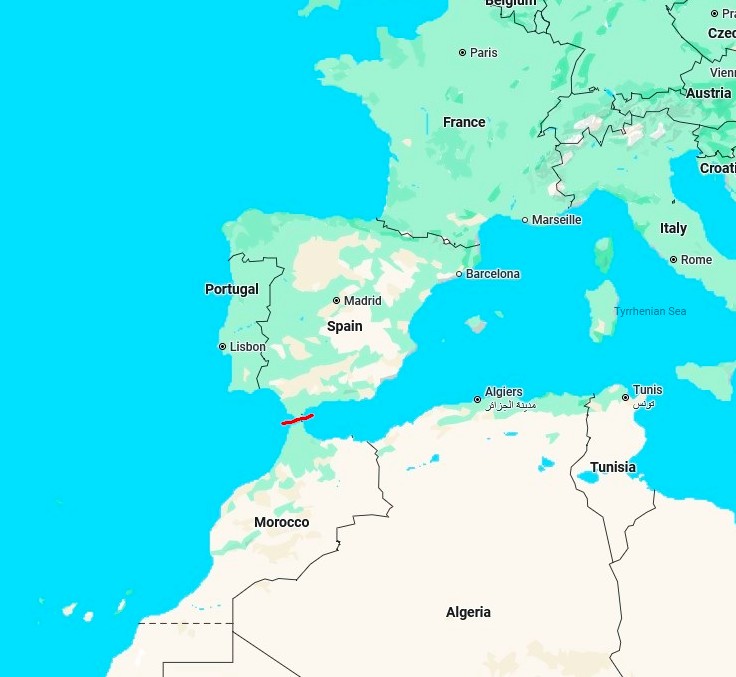
Big opportunity for Spain to charge €2 million per ship here
Terrible Maps tweet media
English
146
205
5.7K
259.2K
proteos retweetet
Robin Rivaton
Robin Rivaton@RobinRivaton·
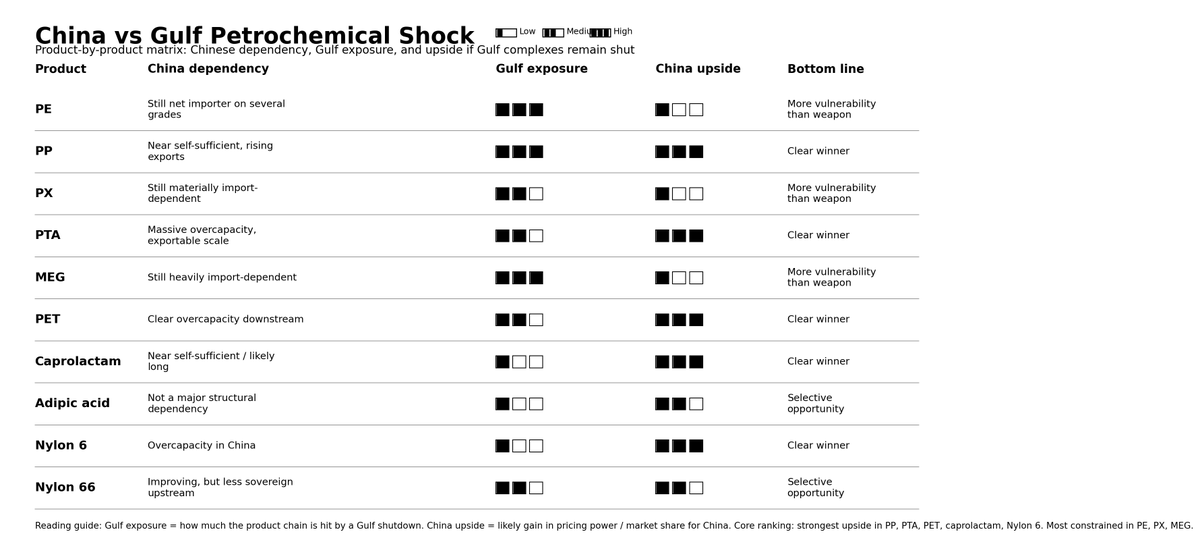
I was in Brussels two days ago to speak about China, and several key figures from business and politics told me the same thing: the oil shock is deeply unsettling East Asia, and China in particular. Not really. Yes, China is deeply dependent on imported crude. But no, it is not a helpless pure importer. First, China’s dependence on Iranian crude is often overstated: Iranian barrels account for only a little over 10% of China’s crude imports, not of its total oil consumption, and the exposure is concentrated above all in the so-called teapot refineries, the independent refiners that have long relied on discounted sanctioned crude. Second, China is also a very large producer in its own right: roughly the world’s 4th-largest natural gas producer and about the 5th-largest producer of petroleum and other liquids. In 2024, China produced more than 4.2 million barrels per day of crude oil and condensates, and about 5.3 million b/d of total liquids. That does not eliminate import dependence. But it gives Beijing a much thicker shock absorber than most people assume. The key point is this: China’s oil vulnerability is no longer just about transport fuel. Its oil system is increasingly tied to industry, and especially to petrochemicals: plastics, synthetic fibers, intermediates, and industrial feedstocks rather than simply gasoline and diesel. That changes everything. For years, analysts looked at Chinese oil demand mainly through cars, trucks, aviation, and construction. But the structure has shifted. The International Energy Agency has been explicit: China’s oil-demand growth is now dominated by petrochemical feedstocks. In fact, the IEA noted that demand for petrochemical feedstocks such as naphtha, LPG and ethane in China in 2023 was about 1.7 million b/d higher than in 2019. Without that petrochemical expansion, China’s total oil consumption would have remained comfortably below pre-Covid levels. So the real story is not “China needs oil because Chinese households keep consuming more fuel.” The real story is: China needs oil because it built an enormous industrial transformation machine, and a growing share of that machine sits in the petrochemical chain. This is why China can look paradoxical. On one side, EV adoption, high-speed rail, and structural economic changes are flattening demand for gasoline and diesel. On the other, petrochemicals keep pulling in crude and feedstocks because China keeps adding cracking, aromatics, PTA, polyester, plastics and synthetic materials capacity. This matters enormously in a Middle East shock. If Gulf supplies are disrupted, many countries suffer as fuel importers. China suffers too, obviously. But China is in a different category because it has four cushions at once: domestic production, strategic stocks, pipeline diversification, and a giant industrial system capable of reallocating molecules and prioritising sectors. China is the world’s largest importer of oil that passes through Hormuz, yet also one of the economies best placed to cope with a disruption there. That is not because dependence vanished. It is because Beijing spent years building buffers against exactly this scenario. And those buffers are not theoretical. China has expanded domestic upstream output, diversified pipeline supplies from Russia, Central Asia and Myanmar, accumulated large stocks, frozen some fuel exports when needed, and electrified parts of its economy fast enough to reduce pressure on the transport side of oil demand. But here is the deeper implication: petrochemicals make China both more exposed and more powerful. More exposed, because industrial feedstocks still require imported hydrocarbons. More powerful, because once those molecules arrive, China has one of the world’s largest integrated systems for converting them into higher-value downstream products. On several chains, especially where China has built massive recent capacity, they can seize market share when other petrochemical centers are disrupted more severely than China is. It wins big where it already has exportable overcapacity, especially PP, PTA, PET and much of the nylon-6 chain. It wins far less, or may even suffer, where it still depends on imports or external low-cost feedstocks, especially PE, PX and MEG.
Robin Rivaton tweet media
English
10
28
96
8.7K
proteos retweetet
🅶🅾🆁🅺
🅶🅾🆁🅺@Raclure03·
C'est pour bientôt ...
Français
15
241
1.1K
71.8K
proteos retweetet
proteos
proteos@prtsnf·
@babils Réaction trollesque mise à part, sa propale ne suffit pas. La réalité, c'est qu'il y a de moins en moins besoin d'ingénieurs en France à mesure que les activités de type industriel sont localisées ailleurs. Ça dépasse largement le cadre de la fiscalité du travail.
Français
0
0
0
29
proteos retweetet
babils
babils@babils·
le frérot, justement, au cours d'une conférence disait : l'industrie de l'eau, c'est la seule où, pour une famille moyenne (3,5/4p, quoi, j'suis vieux), on te livre 1/2 tonne de marchandise prête à consommer à domicile, tous les jours
Français
2
4
16
1.5K
proteos
proteos@prtsnf·
@DL_1980 @pbeyssac Si on laisse de côté les appréciations péjoratives, son départ est dû au même problème qui a fait que Le Point a pris son mégaphone pour faire valoir son point de vue. Dès lors qu'il y a une proportion suffisante de gens qui font du pov-pushing, le pratiquer est obligatoire.
Français
2
0
2
129
DL🇺🇦
DL🇺🇦@DL_1980·
@pbeyssac @prtsnf Après il a un tel melon que ce n’est pas la première personne que j’imagine faire des compromis
Français
1
0
2
829
proteos
proteos@prtsnf·
@babils Il suffit de leur interdire de partir, voyons.
Français
0
0
2
45
babils
babils@babils·
Souveraineté technologique : « Une nation qui laisse partir ses ingénieurs affaiblit sa capacité à se défendre » #utm_source=le%3Alec0f&utm_medium=click&utm_campaign=share-links_x-social-network" target="_blank" rel="nofollow noopener">lesechos.fr/idees-debats/c…
Français
1
0
2
587
proteos retweetet
fblr
fblr@SakumiBLR·
...et la réalité des situations
fblr tweet media
Français
3
4
15
519
proteos
proteos@prtsnf·
Le problème dans son discours, c'est qu'il admet que le fameux principe protège les Français. Or dans la réalité, il n'en est rien. Et prôner un principe d'innovation n'y changera rien. Il faut bien abroger la Charte de l'Environnement qui est juste nuisible.
France Inter@franceinter

Arnaud Rousseau, président de la FNSEA, souhaite supprimer le principe de précaution de la Constitution, “devenu un principe d’inaction” et le remplacer par un “principe d’innovation”. ➡️ radiofrance.fr/franceinter/po…

Français
0
1
3
114
proteos
proteos@prtsnf·
L'UFC Que Choisir estime que le nouveau forfait Free qui propose de la data gratos à l'étranger est «à rebours de l'intérêt général» quechoisir.org/actualite-free… Moi qui croyais que les assoces de consommateurs défendaient les consommateurs…
Français
0
3
7
288
proteos retweetet
babils
babils@babils·
La Suisse évoque la possible annulation de sa commande de systèmes de défense aérienne Patriot auprès des États-Unis opex360.com/2026/04/02/la-…
Français
0
1
2
148
proteos retweetet
Watt The Duck
Watt The Duck@sjowall69·
« L’UFC-Que Choisir alerte sur un modèle qu’elle juge en décalage avec les impératifs de sobriété numérique. L’association rappelle notamment les conclusions d’un rapport commun de l’Arcep et de l’Ademe, selon lesquelles la réduction de l’empreinte carbone du numérique passera nécessairement par plus de sobriété. »
🄱🄴🄽🄹🄰🄼🄸🄽 📀🏇🏼@starks_

L’UFC-Que Choisir salue un forfait mobile « impressionnant » mais qui « ne va pas dans le bon sens » La France, ce pays de gros casse-couilles universfreebox.com/article/593017… @UniversFreebox

Français
10
12
98
10.4K
proteos
proteos@prtsnf·
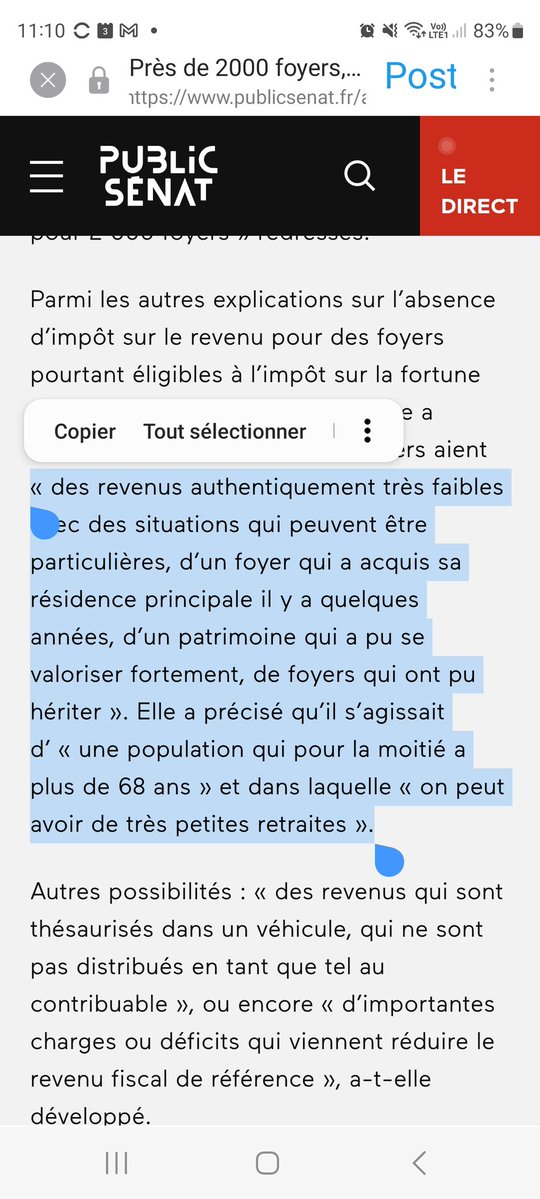
D'ailleurs que pleins d'actes soient facturés augmente la productivité: facturer la même chose à tout le monde simplifie notoirement les choses Et à la fin de l'article, on voit que maintenant, plus besoin d'embaucher des toubib, ce sont les fuites de données qui servent!
Français
0
0
0
34
proteos
proteos@prtsnf·
On voit qu'il y a tout de même plusieurs ingrédients pour rendre cette fraude possible. 1) Le tiers payant. Sinon certains patients diraient non 2) La mauvaise organisation du système FR: pas de file d'attente #xtor=CS2-765-[twitter]-" target="_blank" rel="nofollow noopener">franceinfo.fr/enquetes-franc… via @franceinfo
Français
2
0
0
126