@katase_manaka Mornin' Miss Manaka... not exactly park music? youtube.com/watch?v=yjr1qE…

YouTube
English
Jeff Quitney 🇺🇦
100.7K posts
@quickfoundnet
https://t.co/Jdvq8hlYqS



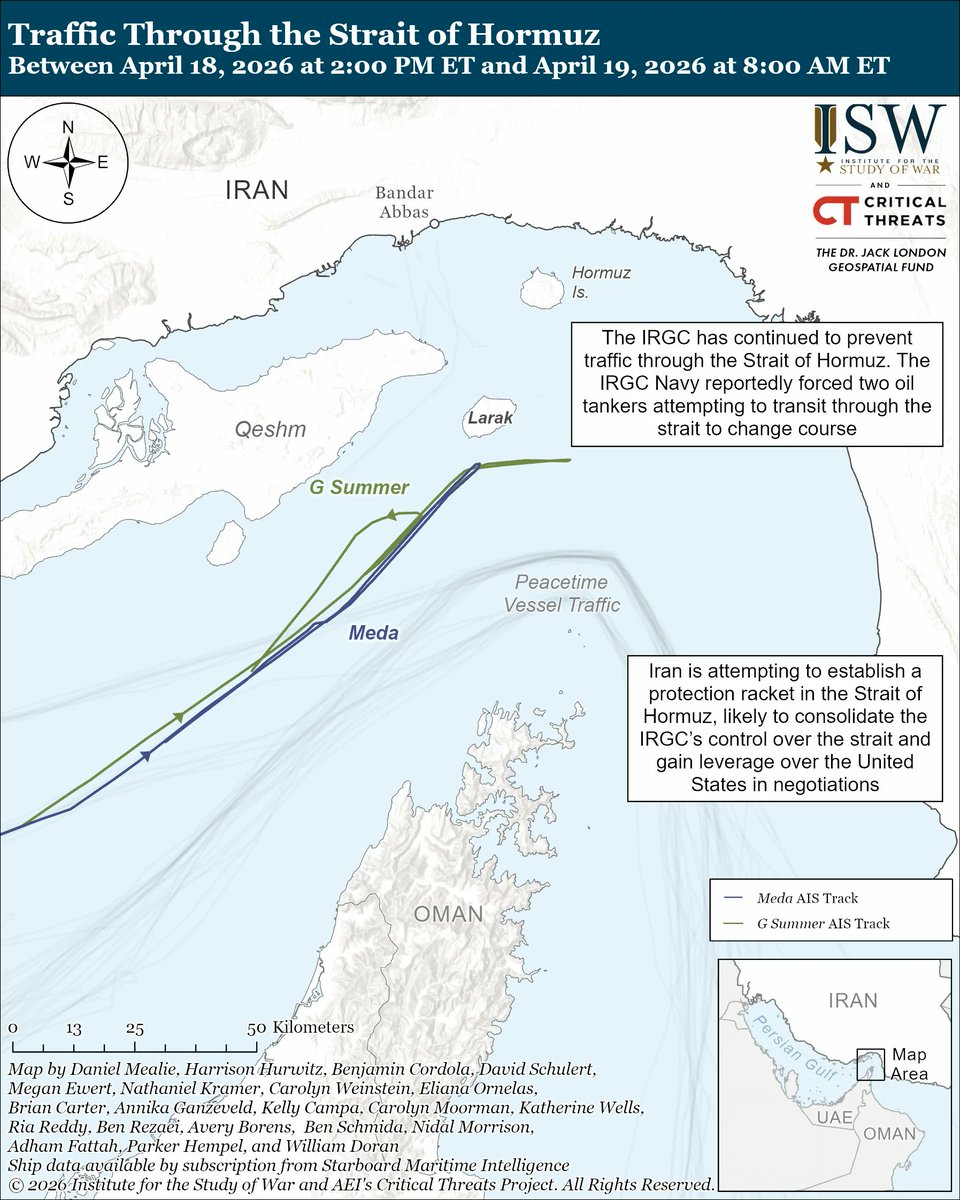
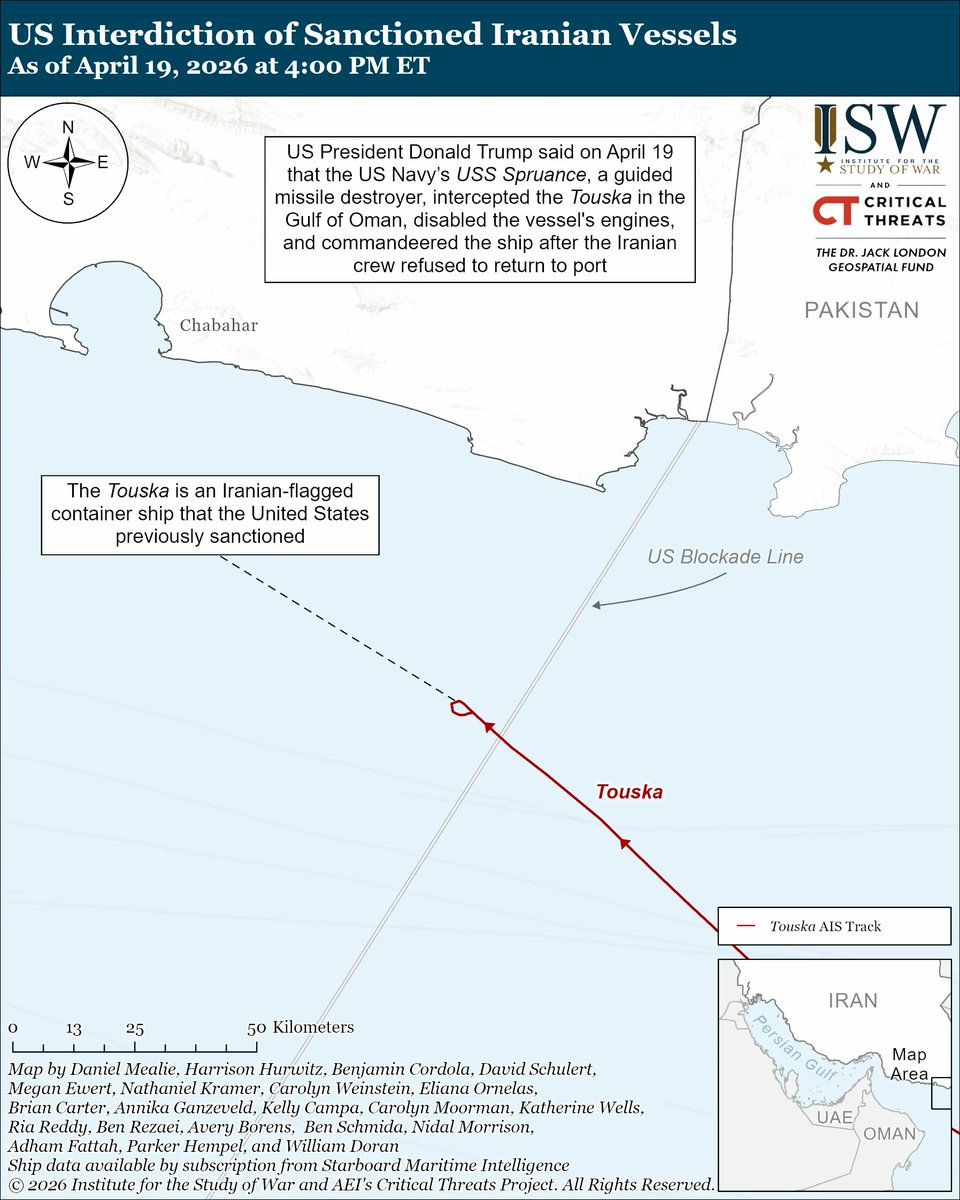
NEW: Any US settlement or resolution of the conflict that enables Iran to control traffic through the Strait of Hormuz would represent a major US defeat and set a precedent with critical implications for global trade, given the strait’s role as a critical energy chokepoint. Any US acceptance of Iran’s ability to regulate transit would undermine the principle of freedom of navigation through the Strait of Hormuz and enable Iran to condition access to the strait on compliance with its demands, thereby enabling Tehran to exert persistent pressure on the global economy and the United States and its allies. Iran is attempting to establish a protection racket in the Strait of Hormuz by granting priority transit to vessels that pay fees and comply with Islamic Revolutionary Guards Corps (IRGC) protocols as part of its effort to try to consolidate control over the strait. Iran has also continued to prevent non-Iranian-linked vessels from transiting the strait. US forces seized an Iranian-flagged container ship for the first time during the war. Commercially available shipping data indicates that the US Navy also forced at least three Iranian or Iranian-linked ships to change course toward Iranian ports on April 19. US Vice President JD Vance, US Special Envoy to the Middle East Steve Witkoff, and Jared Kushner are expected to travel to Islamabad, Pakistan, to engage in negotiations with Iran on April 21. ISW-CTP has not observed any Iranian sources confirming Iran’s participation in the negotiations as of 6:00 PM ET on April 19, however. Incomplete reporting about the damage that the US-Israeli combined force inflicted on Iran’s ballistic missile and drone programs precludes the development of a quantitative assessment about the threat that Iranian missiles and drones still pose. A statement released by Iranian-backed Iraqi militia Kataib Hezbollah on April 18 appears to confirm that IRGC Quds Force Commander Brigadier General Esmail Ghaani discussed preparations for renewed conflict with the United States and Israel during his meetings with Iraqi militia leaders in Baghdad on April 18. Ghaani may have specifically discussed enhancing coordination between Iraqi militias and other Axis of Resistance groups against the United States, Israel, and the Gulf states in the event of renewed conflict.


NEW: The Iranian political officials who will reportedly negotiate with the United States in Islamabad, Pakistan, on April 21 neither have the authority to independently determine Iran’s negotiating positions nor are driving decision-making in Tehran. Other Key Takeaways: US Special Envoy to the Middle East Steve Witkoff and Jared Kushner will attend the talks. Iran’s negotiating delegation is expected to include Foreign Minister Abbas Araghchi and Parliament Speaker Mohammad Bagher Ghalibaf. The upcoming talks appear focused on extending the ceasefire, which is set to expire on April 22. Iranian sources familiar with the negotiations stated that Iran expects that the ceasefire will be extended and that additional talks will occur if the negotiations on April 21 go well. The Iranian negotiating team does not have the authority to independently determine Iran’s negotiating positions, however. IRGC Commander Major General Ahmad Vahidi and other senior members of the IRGC have consolidated control and wielded significant influence over the negotiations process thus far. Iran is attempting to establish a protection racket in the Strait of Hormuz, likely to consolidate the IRGC’s control over the strait and gain leverage over the United States in negotiations. Iran has reportedly decided to give vessels that pay a “security” fee and adhere to Iranian protocols priority to transit through the strait. The IRGC has continued to prevent traffic through the Strait of Hormuz. The IRGC Navy reportedly forced two oil tankers attempting to transit through the strait to change course. Many vessels that intended to transit through the strait have turned around.

The dream of China surpassing the U.S. as the world’s largest economy is fading. In 2021, China’s GDP was about 78% of the U.S.; by 2024, that share had fallen to roughly 64%, back to around 2017 levels, with the gap between the two economies doubling in just a few years.



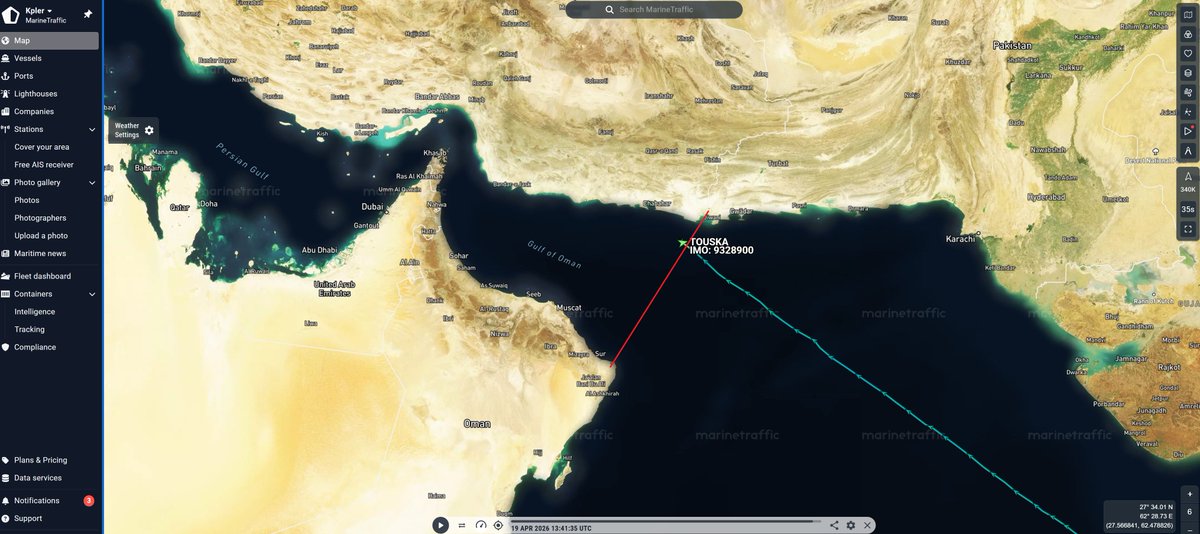
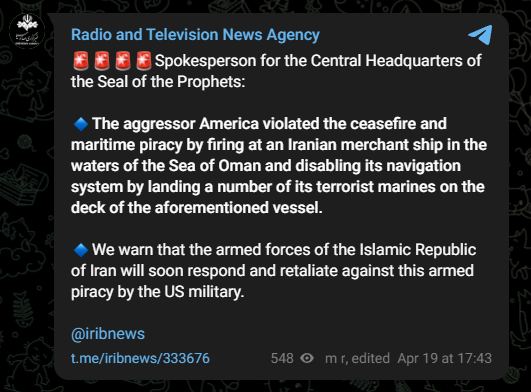
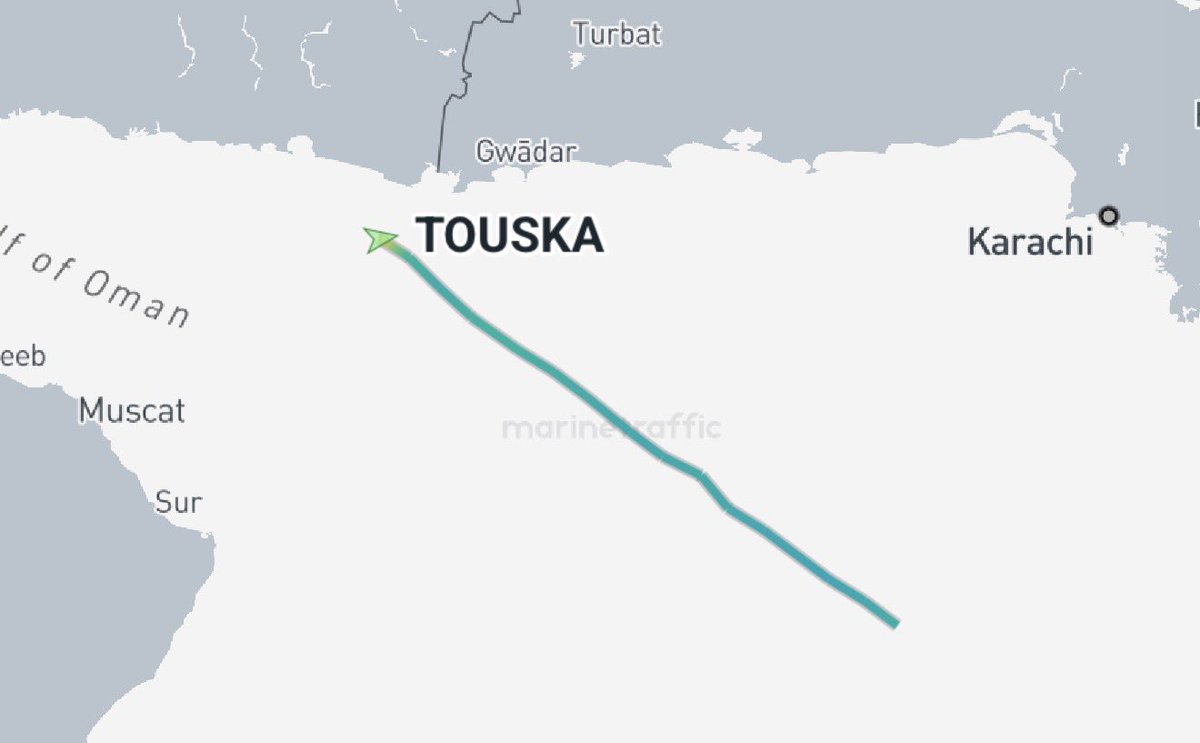
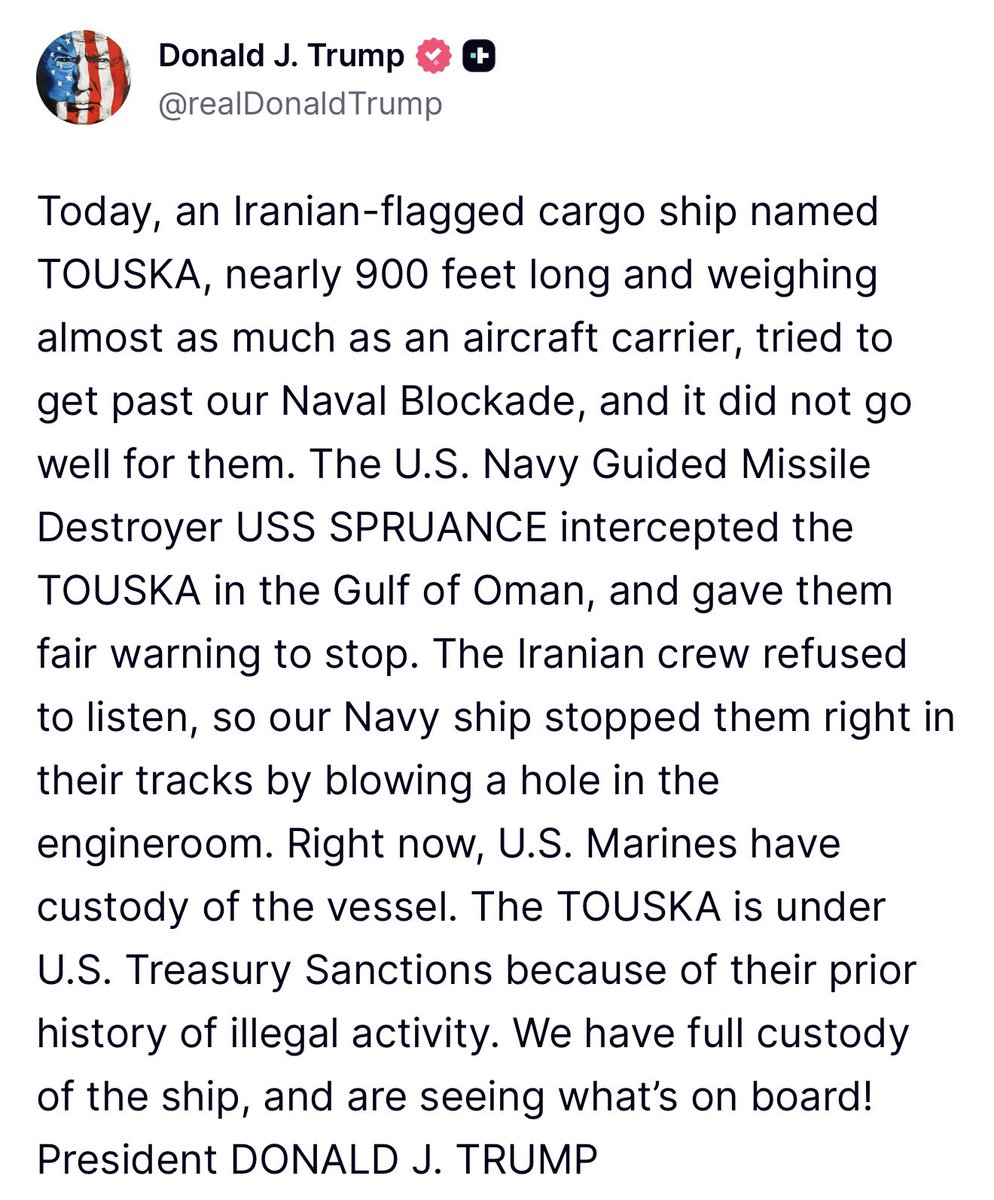
TRUMP ON SOCIAL MEDIA: The U.S. Navy Guided Missile Destroyer USS SPRUANCE intercepted the TOUSKA in the Gulf of Oman, and gave them fair warning to stop. The Iranian crew refused to listen, so our Navy ship stopped them right in their tracks by blowing a hole in the engineroom. Right now, U.S. Marines have custody of the vessel.
🇺🇸🇮🇷Trump says he'll send negotiators to Pakistan, BUT Iran denies planned talks and suspects U.S. is preparing a surprise attack. My story on @axios axios.com/2026/04/19/ira…