
Mike Herring retweetet
Mike Herring
1.8K posts






Mike Herring retweetet

we live on a planet where trees warn each other of danger through underground networks. where octopuses dream. where elephants return to the bones of their dead and stand over them in silence. where bees communicate through dance, showing each other where to fly. where flowers bloom...where crows remember human faces -especially those who were cruel to them - and pass that memory on to their young. where ants build entire cities. where cats purr at a frequency that can help heal bones. where forests, after fires, grow flowers first.
quote@itsmubashi
Daily reminder :
English
Mike Herring retweetet

@RyanHoliday I’ve done the same periodically over the last six months in my neighborhood on the south side of Chicago. I think of the people who came before me that contributed to the aesthetics. My small thanks - the least I can do.
English

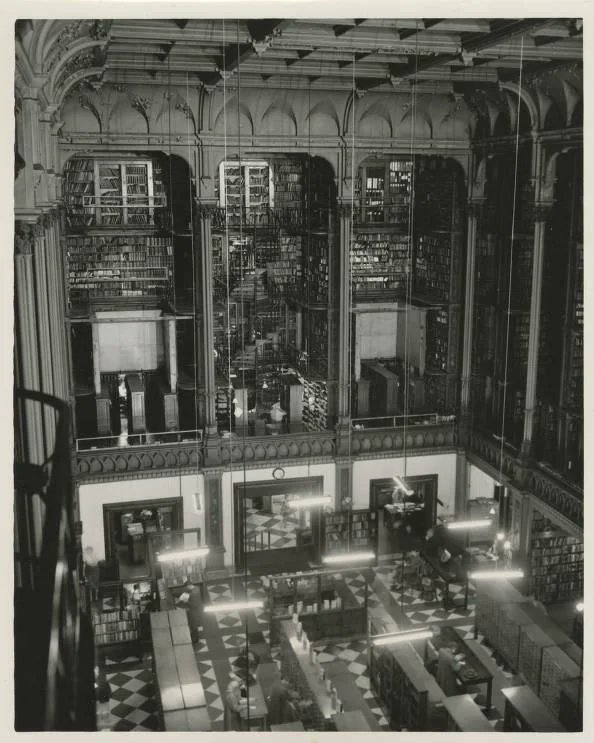
@NMTimMcGrew I have similar worries. Need to build: ‘in this place we read and write and interact without machines.’ Check your phone at the door, no computers or wi-fi, just thousands of books and free notepads for writing by hand.
How to make something like that take off?
English

This, right here, is the canary in the coal mine for higher education. For my upper-level in-person teaching, I've switched to in-class, no-device, open notes essay exams. Online humanities courses at any significant scale are dead, and publicly available LLMs are the reason. Our fundamental skills -- reading, writing, reasoning, remembering -- are decaying at an alarming rate. We are losing a generation, and when that generation is grown, there will be virtually no one left to teach basic skills to the next.
I love the good things that generative AI can do. Some of them are absolutely amazing. I use these tools to create projects that I think will be groundbreaking. But we are facing an extinction event for higher education.
And with the best will in the world, my colleagues don't have a plan. They mill around, acknowledging that, yes, there are problems, and opining that perhaps we should move to in-class exercises that incorporate AI and ask students to think about the outputs. There is no coherent university-wide policy. There is no movement to recover the lost tools of learning.
I mention memory palaces, but most of my colleagues have never heard of them. Those who have think that I'm trying to be clever, recommending going backward in order to go forward. How quaint! It does not occur to them that training young people in such skills might become a lynchpin of civilizational survival.
Intensive reading, effortful study, deep learning -- a few individuals will always gravitate toward these things. But at scale, all of this is dying. We are drowning ourselves face-down in the shallows.
φάσκοντες εἶναι σοφοὶ ἐμωράνθησαν
Dr. Sally Sharif@Sally_Sharif1
I just gave a closed-book, pen-and-paper midterm exam in my 300-level course at UBC with 100 students. All exams were graded by an experienced graduate-level TA according to a rubric. *** The average was 64/100.*** My class averages at UBC are usually 80-85. Context: • This was the first midterm, covering ONLY 4 weeks of material. • Students had a list of possible questions in advance: no surprise questions. • Questions included (a) 3 concept definitions, (b) 3 paragraph-long questions, and (c) a 1.5-page essay. • I have taught this class multiple times. Nothing in my teaching style changed this semester. • We read entire paragraphs of text in class, so students don't have to do something on their own that wasn't covered during the lecture. • Students take a 10-question multiple-choice quiz at the end of every class (30% of the final grade). • Attendance is 95-99% every class. Attention during lectures and participation in pair-work activities are very high → anticipating the end-of-class quiz. *** But unfortunately, I suspect many students are not reading the material on the syllabus. They are asking LLMs to summarize it instead.*** After the midterm, students reported: • They thought they knew concept definitions but couldn't produce them on paper. • They thought they understood the arguments but struggled to connect them or identify points of agreement and disagreement. My view: It might be “cool” or “innovative” to teach students to summarize readings with ChatGPT or write essays with Claude. But we may be doing them a disservice: reducing their ability to retain material, think creatively, and reason from what they know. If you only read what AI has summarized for you, you don’t truly "know" the material. Moving forward: We have a second midterm coming up. I don't know how to convey to students that the best way to do better on the exam is to rely on and improve their own reading skills.
English
Mike Herring retweetet

🚨BREAKING: MIT hooked people up to brain scanners while they used ChatGPT.
What they found should concern every single person reading this.
ChatGPT users showed 55% weaker brain connectivity than people who didn't use it. Not after years. After just four months.
Here's how they tested it. 54 people were split into three groups: one used ChatGPT to write essays, one used Google, and one used nothing but their own brain. They wore EEG monitors that tracked their brain activity in real time across four sessions over four months.
The brain-only group built the strongest, most widespread neural networks. Google users were in the middle. ChatGPT users had the weakest brains in the room. Every time.
Then the memory test hit. Participants were asked to recall what they'd just written minutes earlier. 83% of ChatGPT users couldn't quote a single line from their own essay. They wrote it. They couldn't remember it. The words passed through them like they were never there.
It gets worse. In the final session, ChatGPT users were told to write without AI. Their brains were measurably weaker than people who never used AI at all. 78% still couldn't recall their own writing. The damage didn't go away when the tool was removed.
Meanwhile, brain-only users who tried ChatGPT for the first time? Their brains lit up. They wrote better prompts. They retained more. Their brains were already strong enough to use AI as a tool instead of a crutch.
The researchers also found that every ChatGPT essay on the same topic looked almost identical. More facts, more dates, more names. But less original thinking. Everyone using ChatGPT produced the same generic output while believing it was their own.
MIT gave this a name: cognitive debt. Like financial debt, you borrow convenience now and pay with your thinking ability later. Except there's no way to pay it back.
The question isn't whether ChatGPT is useful. It's whether the price is your ability to think without it.

English
@voravault @bitbrunchpod I’ve noticed Claude has lowered the bar for what humans must provide to put him to work. Originally you had to type out prompts, ideas - you had to create words to engage it.
Now it offers you menus so you just have to click a couple times to put it to work on complex tasks.
English

@bitbrunchpod This is something pretty meta we have been getting on about lately:
That natural language is now the language of the machines: words themselves
And those who are the most powerful with words, i.e. philosophers will inherent the world.
English
ChatGPT trains on every conversation you have.
By default.
Google got sued for using Gemini on across all of Gmail, reading your emails, medical records, and finances without asking.
Your AI knows your fears, your plans, your half-formed ideas.
And you don't own any of it.
English
Mike Herring retweetet

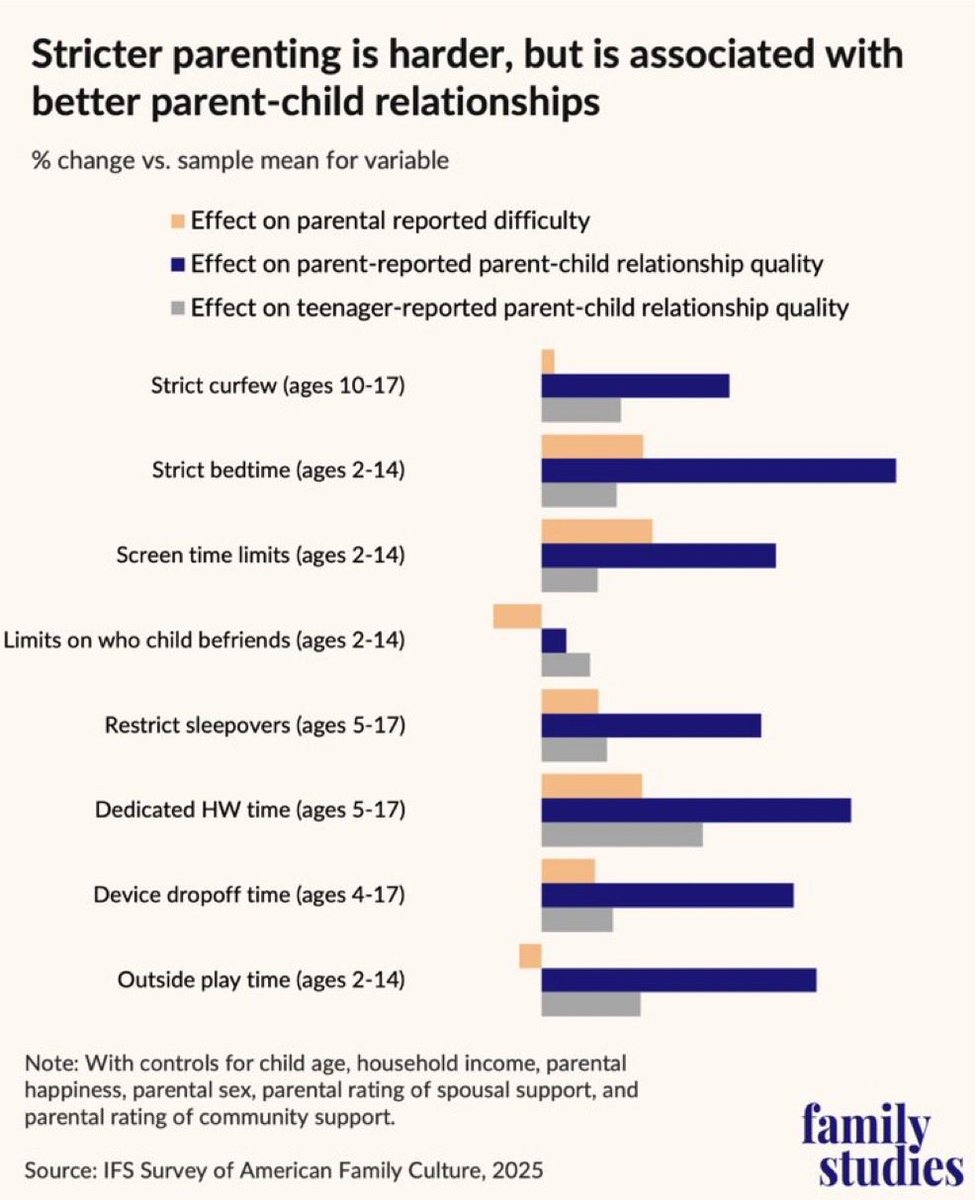
We now have evidence that gentle parenting doesn’t work.
Here’s an uncomfortable truth about parenting no one wants to say out loud:
The data is not kind to gentle parenting.
According to teenagers, strict curfews. strict bedtimes, screen limits, device drop off times, dedicated homework blocks, and sleepover restrictions IMPROVE higher relationship quality.
And yes, parenting difficulty goes up.
Of course it does. Leadership is harder than appeasement.
For the past decade we have been sold a watered down, Instagram friendly version of “gentle parenting” that often collapses into boundary avoidance, endless negotiation and emotional processing without enforcement. Parents terrified of saying no because they do not want to rupture connection.
But connection without authority is not connection. It is dependency.
When parents impose structure, the relationship improves.
Teenagers report better parent child relationship quality in homes with curfews and rules. Younger kids report better relationships in homes with screen limits and bedtimes. Even device drop off times correlate positively.
Why?
Because structure is not cruelty. Structure is love made visible.
A bedtime says: your brain matters more than your entertainment.
A screen limit says: your dopamine system is not fully developed and I will guard it until it is.
A curfew says: your safety matters more than your social standing.
That is not authoritarianism. That is caring.
Boundaries create friction. Friction creates growth. The parent absorbs the short term discomfort so the child does not pay the long term cost.
Children do not experience well calibrated limits as rejection. They experience them as stability. The human brain craves predictability. Predictability reduces anxiety. Reduced anxiety strengthens attachment.
That is why relationship quality goes up.
Notice something else in the data. The strongest effects are around time structure. Bedtime. Homework. Devices. Outside play. These are environmental constraints. They scaffold executive function.
The winning formula is not tyranny.
It is high warmth plus high structure.
The modern failure mode is high warmth plus low structure. That is just abdication of responsibility wrapped in empathy.
Children need leadership, not negotiation. They need adults who can tolerate their anger. They need boundaries that do not move every time emotions spike. They need someone whose prefrontal cortex is fully myelinated.
The harder path produces the stronger bond.
Because when a child feels that someone is strong enough to hold the line, they relax. And relaxed nervous systems build durable relationships.
English
@scstanel @readswithravi Been thinking about ‘Timshel’ for the last 25 years.
English

@readswithravi Finished reading East of Eden by Steinbeck recently, but I'm actually glad i read it later in life as it probably made a much greater impact.
It's full of wisdom around human character and acceptance of life for what it is. Great read!
English

What’s a book you think everyone should read at least once in their lifetime?
English
@LEEBEY I was there yesterday - it's not great. To read the text you have to stand at a precise location on Stony Island and look directly at the southwest corner of the structure. It's a shame; someone should have realized the flaw before they started building.
English
Mike Herring retweetet

@SCHDETF Thanks for your updates. Your account helped me decide to dca into SCHD in my HSA over the last 18months. 🙏🏼🙏🏼🙏🏼
Wondering if you know how these Q1 dividend increases compare with prior years. Is this activity “normal” (just SCHD doing its thing) or is this unusual?
English

🚨 $SCHD Dividend Update
☑️With $CVX announcing a dividend increase that brings the total to 22 $SCHD holdings that have raised their dividends so far in time for the Q1 payout.
☑️Chevron $CVX announced a 4.1% dividend increase this morning.
The Q1 payout is starting to look solid.
I’ll be kicking off my analysis soon and working toward an estimate.
SCHD STAN | Craig@SCHDETF
🚨 Another $SCHD Dividend Update! Two more dividend raises to add to the list That brings the total to 21 dividend increases so far impacting $SCHD Q1 payout. ☑️ East West Bancorp announced a 33% dividend increase. $EWBC has a 0.60% weight in $SCHD. ☑️ Murphy Oil announced a 7.7% dividend increase. $MUR has a 0.16% weight in $SCHD. Haven’t had the chance to update the list below. Since I just updated this afternoon! 👇
English
Mike Herring retweetet

A lot of people I hear from (some I know) seem to always live on the edge when it comes to their money, moving from one idea and opportunity to the next as attention shifts between big ideas. They’re chasing the big outcome with blinders on, looking for that one big leap into riches. You only need to see the bias that develops and grows on X around themes, until it’s too late. I certainly did a lot of this in my early years.
Sometimes they get close and sometimes they temporarily achieve far more than expected. Success creates a hero complex that consumes them and the network effect of reinforcement compounds it. But because everything is always in such hectic motion, always at risk, one forgets how to formalize their win. What’s gained in one season or theme, is often quickly handed back before the theme runs its course, as all sense of discipline and logic escapes them. Then the cycle repeats, they move on to the next idea looking for that escape level wealth, and again suddenly believing it’s their only chance to make it big or a way to get it all back.
What I’ve come to appreciate later in life is that risk alone is not a wealth strategy. It's more akin to an income source. You need a compounding strategy running alongside the speculation, something relatively predictable and structurally boring. People shy away from this because it seems (on the surface) that you can’t get rich or leverage it. But without that parallel system, there’s nowhere for winnings to go except right back into the same volatile arena they came from. And without a home, your risk is just amplified to scale at another level, but without any newfound level of risk appreciation and with a belief that the idea will just keep on giving. The problem isn’t risk itself, it’s the absence of a place to crystallize the outcome of that risk and therefore it often runs it's course, the full cycle.
I think real wealth is something that is not constantly at risk. Something stable and dependable. Something that emerges at the point where volatility is converted into something that can quietly grow on its own. A mechanism that allows temporary wins to turn into a permanent foundation. Risk then becomes something that feeds the foundation versus something that is never quite yours.
English
Mike Herring retweetet

I Like You – an almost unbearably lovely vintage illustrated ode to friendship themarginalian.org/2019/09/02/i-l…
English
Mike Herring retweetet

The Flex Loan, a new type of payday loan pioneered by Advance Financial in Tennessee, allows residents to borrow up to $4,000 at a 279.5% interest rate.
It has burdened low-income borrowers while generating huge profits for lenders.
propublica.org/article/flex-l…
English
Mike Herring retweetet

Longevity is a game of avoiding chronic disease for as long as possible. The more diseases you accumulate over time, the shorter you will live.
Subsistence populations are largely free of chronic disease, and despite wildly different diets, there’s one metric they share 👇
English
Mike Herring retweetet

Rand Paul is correct, and I don't understand why more Democrats don't champion this same message.
Alex Tabarrok@ATabarrok
Good quote from Rand Paul. Congress is too weak.
English
Mike Herring retweetet

Everyone should read this. If you align “hard” with a political party you have turned off your brain and outsourced your thinking to others. Data is clear on both sides of aisle. Think for oneself.
Steve Stewart-Williams@SteveStuWill
Warning: Political Ideology May Impair Your Ability to Reason “[I]f you’re not careful, ideology won’t just shape your opinions; it’ll hijack your ability to reason altogether.” [Link below.]
English
Mike Herring retweetet


@Eric_Erins @MontanaParlay I live in a different condo building on the same block if you want to know anything more about the area drop me a dm. We love it here.
English

@MontanaParlay Nah it’s a condo. But you’re looking at heat and water being included which in our winters is no small thing. Given the size I don’t think that’s a crazy fee personally
English
The urge to put a complete lowball offer out on this to see what happens
Midwest Antiquarian@Eric_Erins
This 3/4 bedroom apartment is back on the market reduced to $320K. Built in 1906 but seemingly renovated sometime in the 70's or 80's? Great bones. Huge apartment. HOA seems a little high but probably reasonable given the age of the building and the size zillow.com/homedetails/55…?
English