UXtigers

1.5K posts

UXtigers banner
UXtigers

UXtigers

@uxtigersdotcom

Dr. Jakob Nielsen's new articles about user experience, often the intersection of UX and AI

Beigetreten Ağustos 2023
119 Folgt199 Follower
UXtigers
UXtigers@uxtigersdotcom·
#Google’s #Lyria #music model has received an upgrade to 𝗟𝘆𝗿𝗶𝗮 𝟯 𝗣𝗿𝗼: it now generates songs up to 3 minutes long (up from 30 seconds before). I do like its songs, but 𝗟𝘆𝗿𝗶𝗮 𝗶𝘀 𝘂𝘀𝗲𝗹𝗲𝘀𝘀 𝗳𝗼𝗿 𝗺𝘆 𝗰𝗿𝗲𝗮𝘁𝗶𝘃𝗲 𝗽𝘂𝗿𝗽𝗼𝘀𝗲𝘀, because it doesn’t respect my creative intent but does its own thing. I give it lyrics, only to be told that it won’t generate a song based on my prompt, but “here’s something similar.” Yes, it’s a nice song about the same topic, but not my words! Bad Google! Lyria 3 Pro is a no-go for me, because it doesn’t obey my creative intent. H𝘂𝗺𝗮𝗻𝘀 𝗺𝘂𝘀𝘁 𝗯𝗲 𝗶𝗻 𝗰𝗵𝗮𝗿𝗴𝗲 𝗼𝗳 𝗔𝗜, not the other way around. I don’t care if it’s The Beatles reincarnate; I won’t use a song without my lyrics.
UXtigers tweet media
English
0
0
0
6
UXtigers
UXtigers@uxtigersdotcom·
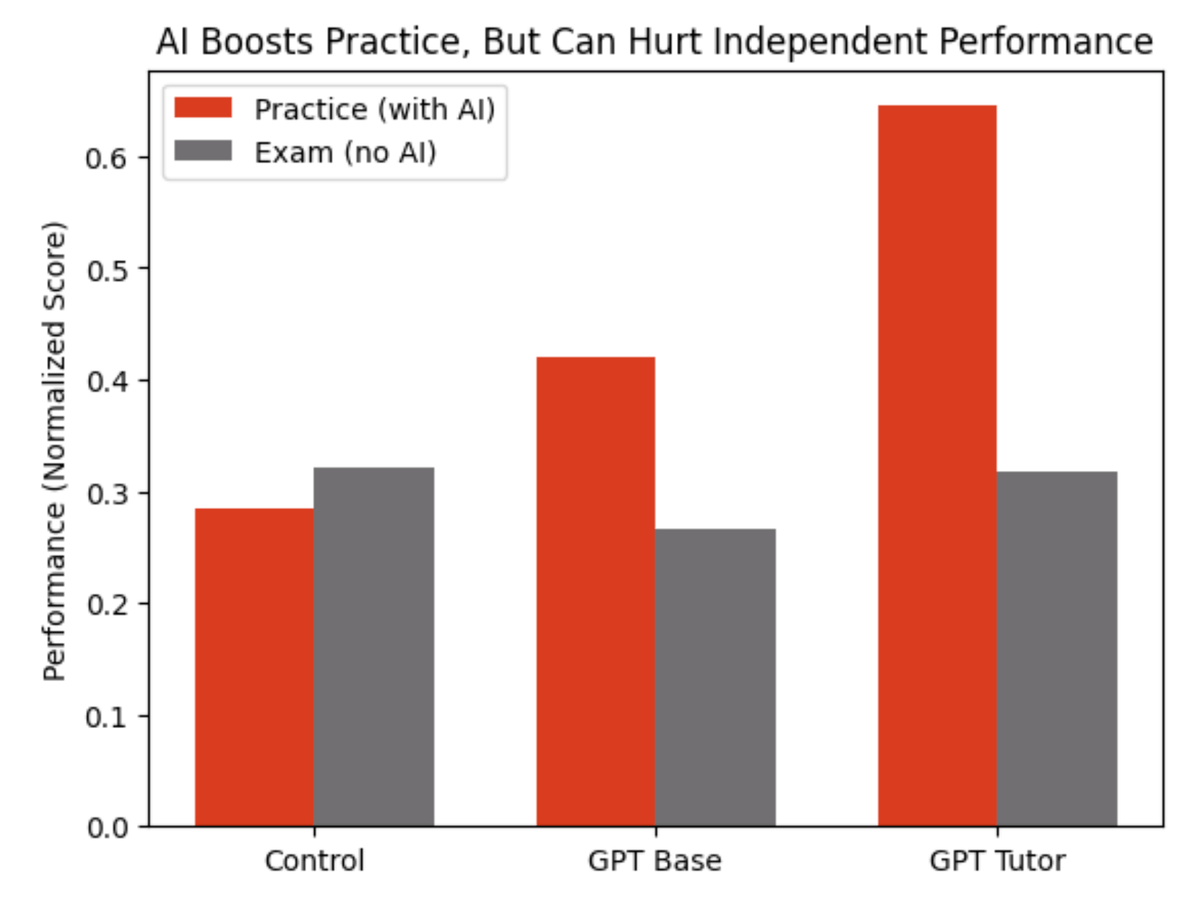
But it is ridiculous to have the assessment of the students be without AI access, given that every single job they will be doing after school will be *with* AI. It’s like having a course for warehouse workers where you teach them how to use a forklift, but then grade them on how well they lift heavy boxes unassisted.
English
45
1
44
11.1K
Anand Sanwal
Anand Sanwal@asanwal·
Wharton researchers gave nearly 1,000 high school math students access to ChatGPT during practice problems Result: chatGPT is the perfect trap. Look at the red bars. Students with ChatGPT crushed their practice sessions. The basic ChatGPT group solved more problems and those on the "tutor" version did even more. Now look at the gray bars. That's the exam. No AI allowed. The ChatGPT group scored 17% worse than kids who practiced with zero technology. And the fancy tutor version? No better than working alone. The researchers called AI a "crutch." When they analyzed what students actually typed into ChatGPT, most of them just wrote - “What’s the answer?” The kicker: students who used ChatGPT believed it hadn't hurt their learning. They were confidently wrong. This is the AI trap in education. Outsourcing your thinking. Of course, lots of half-baked AI literacy curricula being rolled out in schools now Let’s of course ignore that basic literacy (the ability to read) is possible for <50% of 8th graders Source: Bastani et al. (2025), "Generative AI Can Harm Learning," PNAS
Anand Sanwal tweet media
English
160
932
3K
383.8K
UXtigers
UXtigers@uxtigersdotcom·
@GlennHasABeard @LudovicCreator Superb image of gradient between two illustration styles within a single character. Would work well for a book cover.
English
0
0
0
11
UXtigers
UXtigers@uxtigersdotcom·
@Artedeingenio Much as we celebrate the multi-shot capabilities of the leading video models, it’s good to be reminded of the beauty of long continuous shots. Well done.
English
1
0
2
402
OscarAI
OscarAI@Artedeingenio·
This time I used CapCut to generate this video with Seedance 2 Fast. You already know how much I love war cinema, and a handheld POV shot always looks incredible, but don’t worry, I already recreated the Normandy landing with Kling 3.0, so I’m not doing it again now 🙂 I’m sharing the prompt in the post below 👇
English
18
33
241
25.4K
UXtigers
UXtigers@uxtigersdotcom·
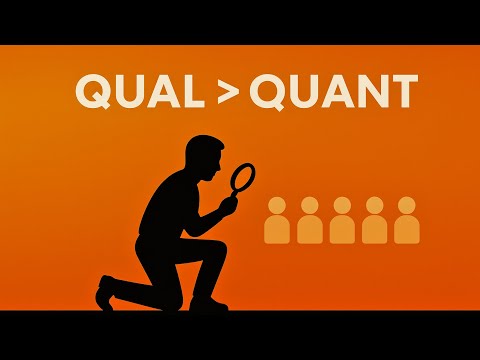
For 37 years, my position has been unwavering: qualitative user research is vastly superior to quantitative research because it tells us WHY users behave as they do. My core slogan is "Why Beats What." Quantitative data can tell you what happened (maybe that 73% of users failed a task) but this information is useless for redesign. Qualitative observation, watching even a few users attempt tasks, reveals why they failed, providing the deep, actionable insights needed to actually improve a design. This principle is the foundation of my “discount usability” movement from 1989. The most cost-effective approach is not one large study, but many small, iterative ones. Testing with just 5 users will reveal about 85% of the usability problems in an interface. The goal is to find and fix these problems in rapid cycles, which is a process fueled entirely by qualitative insight. The rise of AI, with its probabilistic and unpredictable nature, only strengthens this argument. AI's variability creates chaos for quantitative measurement, making direct observation of user coping strategies more critical than ever. Therefore, I recommend that most of your user research budget (around 90%) should be dedicated to qualitative studies. The remaining 10% for quantitative methods like large-scale surveys or benchmarking is a luxury that should only be afforded by UX teams at a high level of UX maturity. Your research strategy must match your organization’s maturity. If you are just starting out, your budget should be 100% qualitative. Your goal is to find major problems cheaply to demonstrate the immense ROI of usability. Do not waste a single dollar on metrics until you have a stable team and a systematic process. Use qualitative methods to find the “why,” and you will build products that users can actually use. My full article about Qual vs. Quant 👉 uxtigers.com/post/qual-quant And a short music video 👉 youtu.be/StUIWLLvGRk
YouTube video
YouTube
UXtigers tweet media
English
0
0
0
20
UXtigers
UXtigers@uxtigersdotcom·
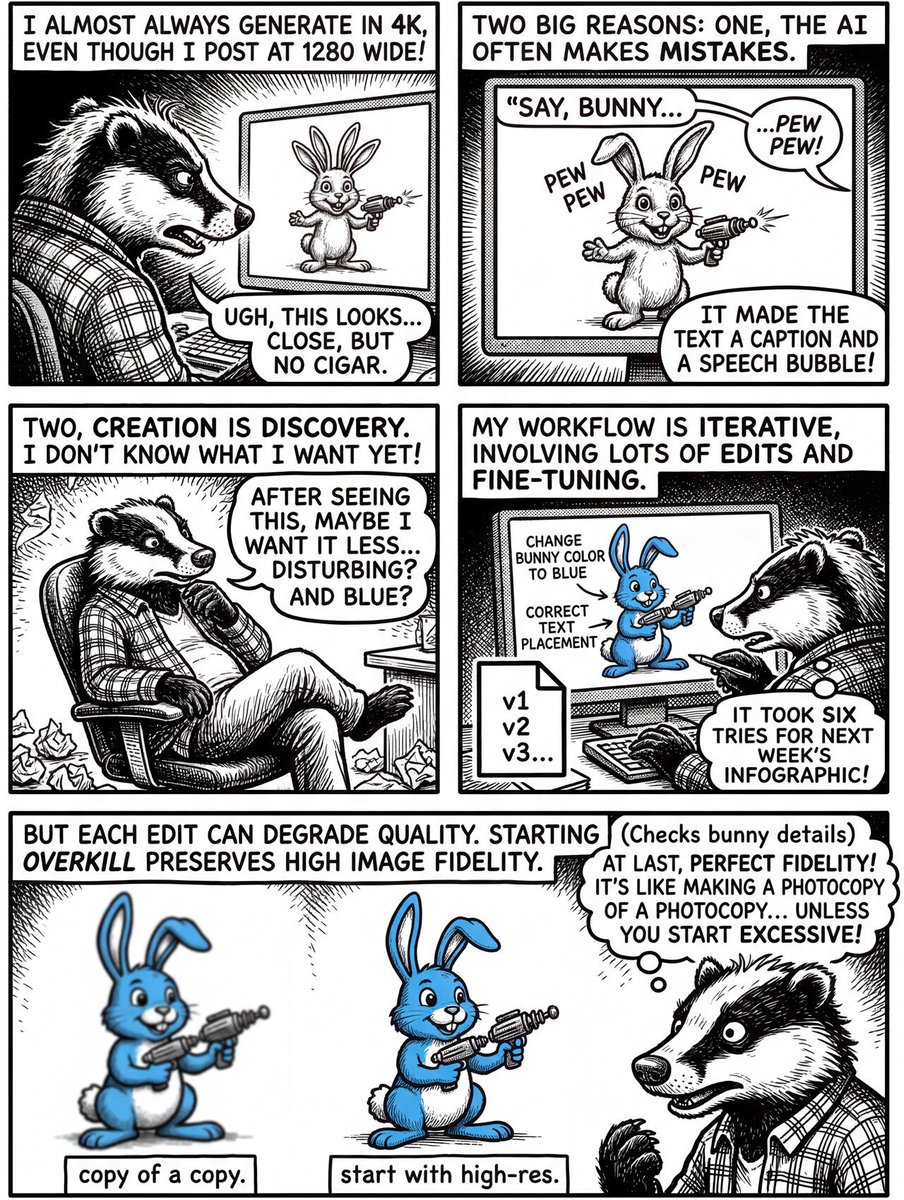
Tip of the day: When generating comic strips or other elaborate illustrations with AI models (such as Nano Banana 2), make them in 4K resolution, even if you publish online in a much lower resolution. You will usually want to proceed through several iterations, and starting with better quality than you need makes for a better end result. More details 👉 uxtigers.com/post/ux-roundu…
UXtigers tweet media
English
0
0
0
23
UXtigers
UXtigers@uxtigersdotcom·
@Artedeingenio @Zopia_AI True. I only noticed because I was watching a second time. First time through, you focus on the action, not the details.
English
0
0
1
10
OscarAI
OscarAI@Artedeingenio·
I think people should know about this new app, @Zopia_AI It feels different from everything else out there. I created this amazing animated short from a single image in just a few minutes. That said, I did tweak the final edit a bit by adding a soundtrack I liked more. I really recommend checking it out.
English
17
11
170
8K
UXtigers
UXtigers@uxtigersdotcom·
@LudovicCreator Roman Empire, cyberpunk, Japanese swords. That’s an alternate history novel in the making. You already have the cover illustration: start writing 😆
English
1
0
1
23
LudovicCreator
LudovicCreator@LudovicCreator·
QT Your Centurion
LudovicCreator tweet media
English
8
9
78
2.5K
UXtigers
UXtigers@uxtigersdotcom·
@egeberkina I remember when Nokia was king of mobile. Sadly, your picture is a good metaphor for what happened.
English
1
0
1
70
OscarAI
OscarAI@Artedeingenio·
With AI, you can create animated shorts as wonderful as this one. I’m sure if you show it to your kids, they’ll love it. Among many other uses, AI art is excellent for creating children’s content. It can bring joy to so many people, both parents and kids. 👉 Tomorrow I’ll explain to my subscribers how I made this.
English
13
8
91
4.2K
Suno
Suno@suno·
Meet Suno v5.5: More expressive, more you. Use your voice, your sound, and your taste to make music that's unmistakably yours, in the best and most personal Suno experience yet.
English
213
316
1.8K
311.5K
UXtigers
UXtigers@uxtigersdotcom·
I made a cover with Suno's new version 5.5 of a song I had originally made with Suno 5.0. This video compares the two, verse by verse. Which version sounds better? Let me know in the comments. I only cut together clips from the last half of my original song. Dance intro: Kling 3 Singing lip synch animation: HeyGen Avatar IV B-roll in Suno 5.0 clips: Veo 3.1 End sequence: Seedance 2.0 (Seedance 2 didn't allow me to animate the initial dance sequence, because it refuses image-to-video generations that show a realistic person, even though the avatar singer in this video is 100% an AI creation that I made with Nano Banana 2, and does not show a copyrighted music-label singer.) #AI #music #songs #AImusic #Suno #GUI
English
1
0
1
86
UXtigers
UXtigers@uxtigersdotcom·
Most people in rich countries could afford $50/month for AI when/if they get enough value from it. In min-income countries many people will be able to afford this as well after GDP doubles, which is a likely effect of AI. We could have 2 billion users paying $50/month in 10 years = ~$1T/yr. The rest of the cost of superintelligence compute will have to come from enterprise and either cheap subs or non-subscription revenue from the 7 billion poor people.
English
0
0
0
32
Olivia Moore
Olivia Moore@omooretweets·
Most people underestimate how early we are in consumer AI. Only 10% of the global population uses ChatGPT weekly - and it’s the #1 product by a large margin. We are still in the era where most consumer AI products are paid subscriptions. This is great in many ways - and it’s proven that among people who can pay for software, AI increases willingness to pay 10x. The $200 / month power user is real. But…the vast majority of people actually can’t pay for software, and AI has not yet changed that. I’m excited to see what other business models emerge as consumer AI evolves (ChatGPT testing ads is one!) - and what product experiences this opens up that we haven’t seen yet.
English
66
13
274
16.2K
UXtigers
UXtigers@uxtigersdotcom·
@suno Video comparing the same song made with Suno 5.5 (blue dress singer) and Suno 5.0 (red dress singer). I do think 5.5 has a richer sound. (This is only part of the song. The full version is on the UX Tigers YouTube Channel.)
English
3
0
7
1.2K
UXtigers
UXtigers@uxtigersdotcom·
@suno So far, only tried a cover of one of my best songs from version 5.0, and the version 5.5 cover does seem like a major upgrade! Will absolutely make a new song soon, to really put the new model through its paces.
English
0
0
0
406
UXtigers
UXtigers@uxtigersdotcom·
Absolutely. However, the real solution should be to simplify the system and make it more customer oriented. Doing so requires abolishing health insurance so that customers pay directly for routine care. Only catastrophic events (heart surgery and such) should be subject to insurance and all its overhead. Not expecting this to happen any time soon in the United States, given the entrenched special interests.
English
0
0
1
46
Justine Moore
Justine Moore@venturetwins·
I cannot wait until an AI agent can just navigate the healthcare system for me. It's like a part time job if you've got anything going on - endless phone calls (during business hours!), portal messages, and follow-ups. I feel like it's beyond time to delegate this 🫠
English
53
6
235
16.9K
UXtigers
UXtigers@uxtigersdotcom·
@ivanka_humeniuk @dreamina_ai Those Greek soldiers climbing up backwards on the rope ladder into the Trojan Horse. Hilarious, if it wasn't so bad. I hope this is just a temporary matter of too little compute for the release version.
English
1
0
1
89
Ivanna | AI Art & Prompts
Ivanna | AI Art & Prompts@ivanka_humeniuk·
Ngl, I'm pretty disappointed after the official release of Seedance 2.0 on @dreamina_ai . 💔 I did SO many tests before the drop, and the pre-release model was absolutely mind-blowing. But yesterday's official launch? There's definitely a downgrade, tbh. Here’s what’s broken rn: 🚩 Prompt adherence: Ignored. The exact same prompts that worked flawlessly a few days ago now give completely different/worse results. 🚩 Camera control: Nerfed. The model just can't pull off the complex angles and camera movements it used to. 🚩 Physics & Audio: Human movements look way less realistic/stiff, and the audio quality took a hit too. 🚩 Artifacts: My prompts are meticulously timed (from 1s to 15s). Why am I suddenly getting 3 seconds of just pure black screen? 💀 Look, I 100% support tweaking models to avoid copyright/IP issues. I’m all for it. But fixing copyright shouldn't completely break body physics, sound, camera dynamics, and introduce wild visual glitches. Please @dreamina_ai , bring back the magic of that pre-release model! We know how insanely good it can be. 🙏
English
43
15
205
17.5K