
Angehefteter Tweet
sillo
475 posts
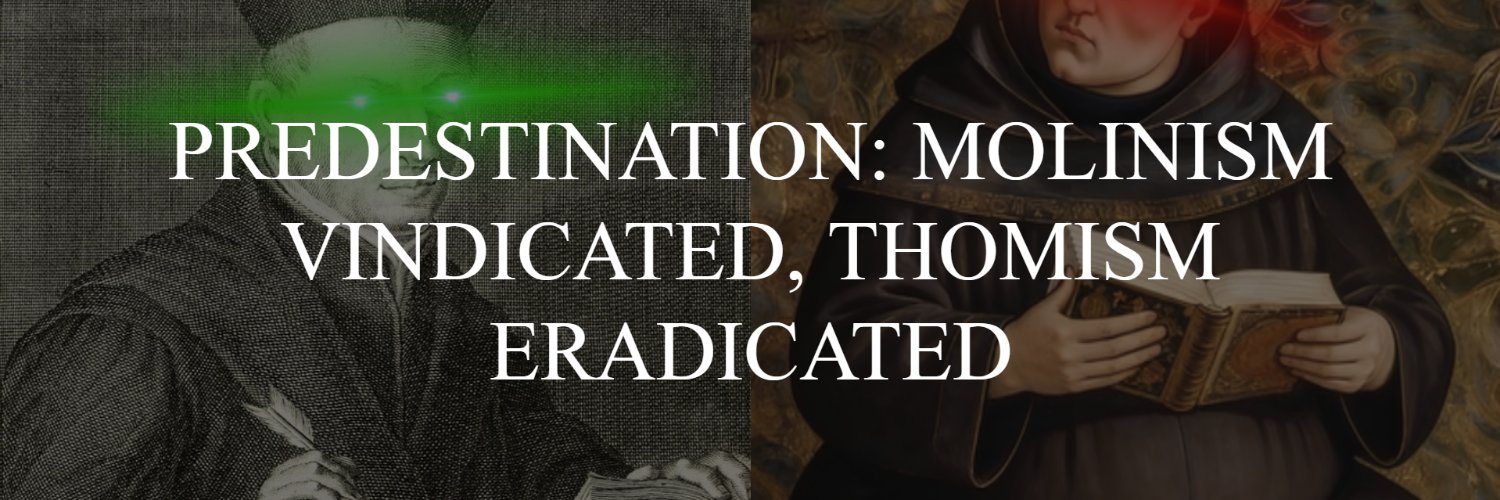

@Gr0mGr0m @Rogue0572 @OtherSide61 what's the objective justification for why this strawman is morally abhorrent
English

@Rogue0572 @OtherSide61 Christians will always side with fellow Christians in the 3rd world over their own countrymen, and that is why Christian NGOs are responsible for mass immigration and the destruction of civilization.
English

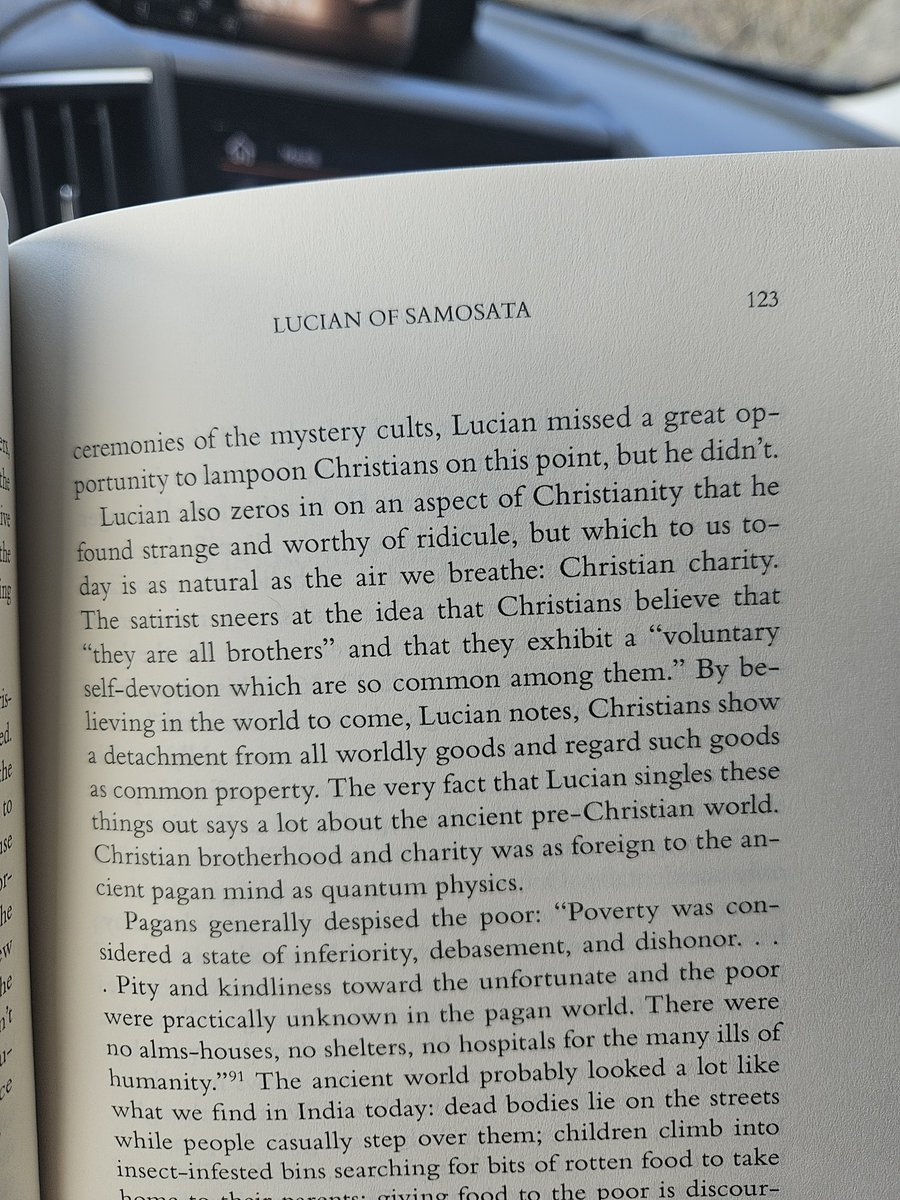
A 2nd-century pagan writer mocked Christians because they cared for the poor and adopted unwanted children.
It just goes to show how radical Christianity was in such a dark and unforgiving world. By shining their light, Christians quickly converted an entire empire.
English

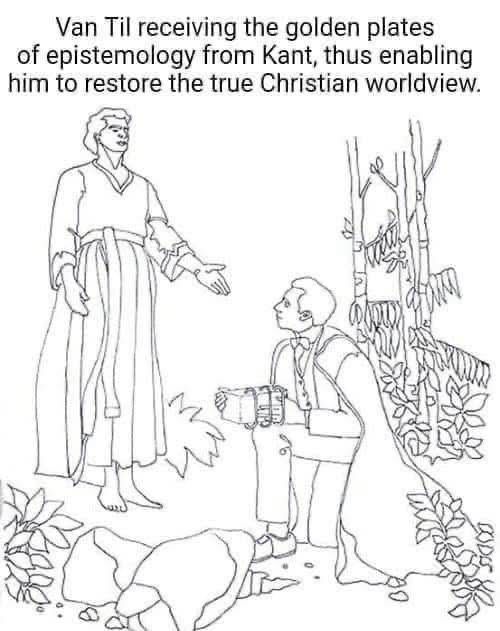
The Orthodox Church did not have an epistemology until Immanuel Kant invented Transcendental Idealism. This is uncontroversial!
English

St Augustine on the transmission of sin via sexual intercourse.
This is indeed an Orthodox position.

English

It's actually a quite simple argument.
"Does Augustine admit the Holy Spirit only owes his existence to the father?"
"Yes"
"In the Filioque does the Holy Spirit oh his existence to the actors of Spirating?"
"Yes
"So the Son as well"
"Yes"
So you are against Augustine. Got it.

English

English

@vaticansillo @mattjhedges11 @sincead33 @emuse1955 If it not be of much trouble, could you provide the very source text for this?
English

Only listened up to @emuse1955 opening statement so far and his fundamental theology is fantastic. This is why Catholics who engage Protestants need to be reading Scheeben, Franzelin, Lagrange, etc.
youtube.com/live/nn8BYrFdM…
YouTube
English
@OpStCyprian @Maccabeus24 how many times do you have to get refuted before you stop pushing the same arguments
English
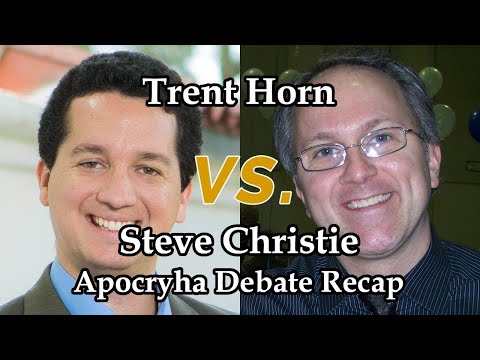
@Maccabeus24 The canon was settled during the Second Temple Era.
Trent Horn vs Steve Christie Apocrypha Debate Recap & Discussion
youtu.be/Z2kVhBs7btM
YouTube
English
Yes, the faith of Abraham, Isaac, & Jacob is Jewish. Christianity is Jewish. Protestantism is the purest expression of Christianity.
Fr Calvin Robinson ©️®️@calvinrobinson
Protestantism is Jewish.
English

Papism as a system is the greatest theological “loophole” out there, second only to Seventh-day Adventism alleging to have the equivalent of the theological god particle (aka The Great Controversy Theme).
Joel couldn’t even so much as utter this to Robinson’s face.
Someone’s Ned Flanders@RefNedFlanders
Between this video and the one with Jake Shields, it’s clear that @JoelWebbon won’t ever really stand up for something to even a co-host. @calvinrobinson is basically calling him a heretic and Joel just sits there. Cowards.
English
@OrthodoxLatin88 The argument is that when Augustine speaks of guilt, he uses the term "reatus" to refer to a liability rather than a moral guilt, which is "culpa"
English

@vaticansillo If this is true was st Augustine wrong to claim we are guilty, (culpable) for original sin?
Also if we are not guilty in any sense, why would we be punished?
English
Saint Augustine’s teaching on original sin is received at trullo through Carthage. We are born guilty of original sin, meaning we are culpable for and liable to Adam’s sin and we are deprived of grace, not personally guilty or responsible. On this basis we are condemned in Adam.
English

Anyone who believes that St Maximos's point is that the Son is a hypostatic, eternal cause of the Spirit is smoking crack, I'm sorry. He does in fact produce an apology to the East for the 'filioque' that asserts that what Rome is doing with that (at his time) is NOT in fact this construction. How people end up reading him any other way is a straight up mystery to me.
English

Through the son; not from you fucking retard. You don’t have max so stop claiming him
Papism Enjoyer@papism101
@beckevangelista Are you retarded? youtu.be/x6CcNU3YcX0?t=…
English
@m966021 @YariLogos the clown you're talking to hates his own tradition and doesn't know what nuance is
English

@YariLogos That's not unusual. You just don't receive absolution. And it isn't ecumenism.
English

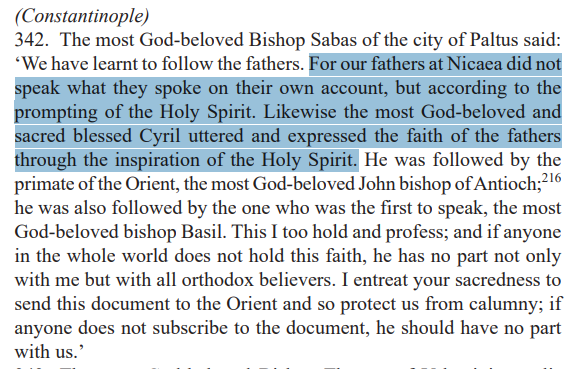
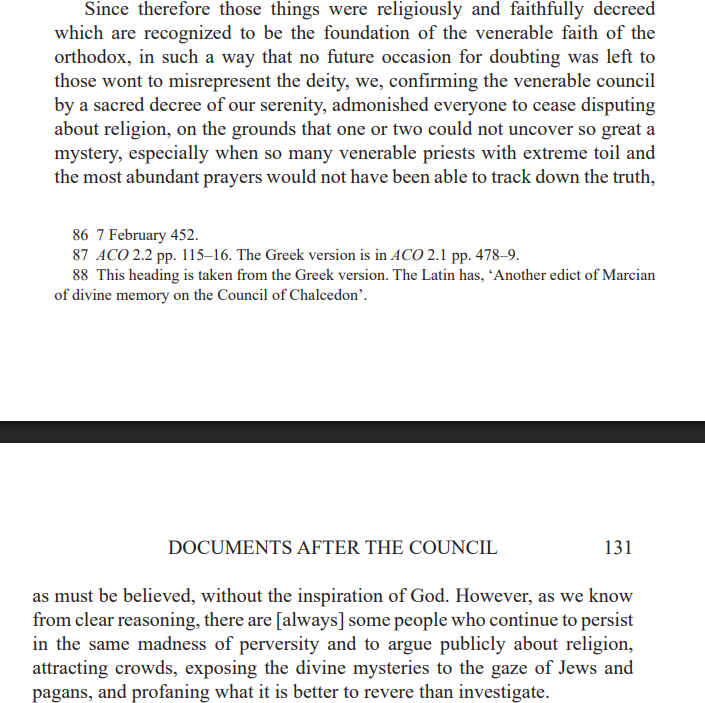
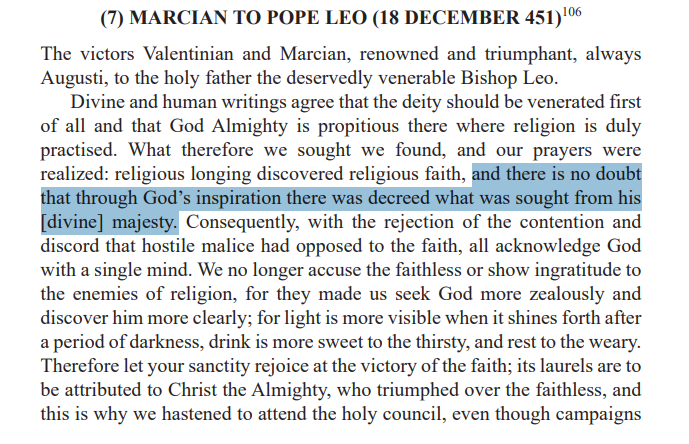

Yes, he does say this.
“where the Church is already known as the infallible instrument of the Holy Spirit for proposing revealed doctrine, it is evident that such testimony is not merely human, but is the speech of the Holy Spirit through the Church, since the speech of the Holy Spirit once made through the prophets and apostles (cf. Heb. 1:1) is now proposed by the same Spirit through the Church. The divine locution, moreover, is the formal motive of faith. Therefore, in this sense, the testimony of the Church, insofar as it is the testimony of the Holy Spirit rather than of men, pertains to the formal motive of faith.” (Cardinal Franzelin, Tractatus de Divina Traditione et Scriptura [Rome: ex Typographia Polyglotta, 1875], pg. 693; emphasis mine).
In context, Franzelin is following Cardinal Lugo, who states the same thing, and even shows how the analogy of a king and his messenger works against the Thomist position:
“Therefore, just as the testimony of the royal ambassador enters partially into the formal reason of human faith, so the human testimony of the Church enters partially into the formal reason of Christian faith. To say that the testimony of the royal ambassador is nothing but the application of the king's testimony, and not part of the formal reason of assent, seems to be playing with words, since in fact one partially relies upon the authority of the messenger in order to believe that the king has promised his coming.” (Juan de Lugo, Disputationes scholasticae et morales: Tractatus de Virtute Fidei Divinae, disp. 1, §5)
Scotus, Durandus, Cardinal Lugo, and those of similar opinions have a much more difficult time attempting to escape this circle (as Reginald Garrigou-Lagrange acknowledges in On Divine Revelation: The Teaching of the Catholic Faith, trans. Dr. Matthew K. Minerd [Emmaus Academic, 2022], pg. 738).
I originally heard about these sources from the footnotes in Lagrange's work, btw. He agrees with the way I am interpreting these authors.
English
@OrthodoxLatin88 That's liability not culpability, culpability is inherently moral. A lot of Augustinians emphasize this.
English
@vaticansillo If you have to bear the natural punishment for Adam’s sin, (death, suffering, passions) aren’t you being held culpable? This is Not in the personal moral culpability sense of guilt. This is a guilt that is tied to our fallen state, in other words a lacking of goodness in it.
English
@OrthodoxLatin88 They're bound by original sin but that doesn't imply a moral culpability
English
@vaticansillo That’s the point. they’re guilty, ie liable to, or culpable for the original sin because of they’re privation of grace and they’re concupiscence.
English

Charitably refuting Astro and the belief that predestination after the consideration of merits (post praevisa merita for the ostentatious) is a "Pelagian" anathematization of the Gospel: 🧵🧵🧵
Astro (John of St. Thomas's Top Guy)@Thomisticae
🧵 Eastern "Orthodoxy" is the modern-day Pelagianism heresy! The Eastern "Orthodox Church" officially anathematized the Gospel of Jesus Christ and taught Pelagian heresy in 1672 Council of Jerusalem under Patriarch Dositheus of Jerusalem.
English
@brycejofficial I don't know how "ens" is being derived from a Greek text. I was referring to his usage of "πρᾶγμά," which he also uses referring to the essence.
And ens refers to being, which a formal aspect is without. Ens could be used to designate lesser things within one thing.
English
If you read Tome 3 regarding the distinction, youd know its referred to as an ens, not res, because an ens explains aspects of the res but not the res itself, which is a formal actual distinction.
sillo@vaticansillo
@quasischoolman @brycejofficial He uses "thing" in a technical manner, designating the energies as lesser type of thing than the essence, which is as a thing. And he defines formal distinction here but he doesn't actually employ it in his argumentation, at least in this work.
English
@OrthodoxLatin88 It says that infants are baptized for the remission of original sin
English
@vaticansillo Read canon 2. It literally says infants need to be FORGIVEN of original sin. How can you be FORGIVEN of something you are not guilty of, culpable for, or liable to. Again we do not say we are personally guilty. We are corporately guilty due to the fact we are liable to death.
English
@quasischoolman @brycejofficial An animal can be rational or irrational
English

@vaticansillo @brycejofficial also, wth separable? How on earth are they separable?
English
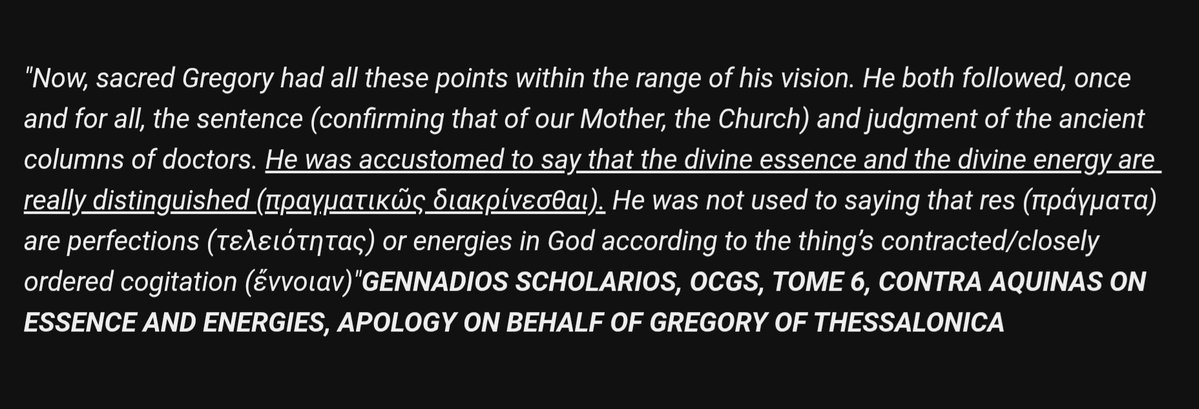
@quasischoolman @brycejofficial Animality and rationality are separable and not really identical.
English
@vaticansillo @brycejofficial But Socrates' animality and rationality are said by all (afaik) to be really identical. In fact, the Thomists don't admit that to be a real composition, unlike the Scotists. Yet you would agree that Socrates' animality and rationality aren't absolutely identical.
English
@RootedZoomer @QuarterZipped @michaelhitack "agnostic about God's existence," what is wrong with this guy
English


Good. Now we can stop pretending you had any relevance or value to the movement, and you're not even funny.
I'll pray for you, but enough is enough.
@michaelhitack
Mike@michaelhitack
Leo is a traitor. I consider the chair of St. Peter to be vacant.
English