Ken

454 posts

Ken banner
Ken

Ken

@web4ken

Web3 Dev & Researcher | BTC holder | Building Mine Bitcoin Hub | Validator @cryptocom (Yummy Capital)

UAE Beigetreten Haziran 2014
252 Folgt564 Follower
Angehefteter Tweet
Ken
Ken@web4ken·
🚨 Crypto.com is going to mint 70 billion CRO. But wait… HOW?! A lot of people are shocked today – not so much by what Crypto.com announced (which is weird, honestly), but by the fact that this even possible in the first place Okay, let's break it down step by step 1. The Original CRO (Ethereum CRO) · CRO started as an ERC-20 token on Ethereum, with a max supply of 100 billion · In 2021, 70 billion tokens were burned Nice and simple, right? Well… hold on 2. Enter Cronos PoS (The Birth of CRO2) · Crypto.com launched Cronos PoS, its own blockchain, with a “native” CRO token · For users, it seemed like the same CRO. But technically, it was an entirely new asset · Crypto.com provided a migration tool to swap CRO from Ethereum to Cronos PoS 👉 Important: This wasn't a bridge – it was a one-way ticket. You BURNED your CRO on Ethereum and received new CRO on Cronos PoS But here's the kicker: Can you send these CRO back to Ethereum? No Someone might say: "But I can deposit my CRO into Crypto.com and withdraw it on Ethereum!" Sure, because Crypto.com still holds some of the original CRO. But there's no mechanism to actually send YOUR burned CRO from PoS back to Ethereum So let's call this new Cronos PoS CRO… CRO2 3. Then Came Cronos EVM · Cronos EVM is an Ethereum-compatible chain · Assets are transferred here via IBC from Cronos PoS · Meaning? CRO on Cronos EVM = CRO2 4. Then Came Veno Finance · Veno is a liquid staking protocol for Cronos PoS · It issues LCRO or rather, LCRO2 – because it's derived from CRO2 5. And Finally… Cronos zkEVM This is where it gets REALLY messy. Stay focused · Cronos zkEVM introduced a new token: zkCRO · It's backed by LCRO2, so let's call it zkCRO2 Now, when you deposit CRO from Ethereum into zkEVM, you get two options: 1️⃣ Receive CRO → This is real CRO, and you can withdraw it back to Ethereum 2️⃣ Receive zkCRO (zkCRO2) → You just swapped real CRO for a token that… · Can't be sent back to Ethereum · Can only be withdrawn to Cronos EVM as LCRO (LCRO2) TL;DR 1️⃣ Ethereum = Real CRO 2️⃣ Cronos PoS = CRO2 3️⃣ Cronos EVM = CRO2 + LCRO2 4️⃣ Cronos zkEVM = Both real CRO & CRO2 (as zkCRO) If you picked zkCRO, you've been rugged. You gave away real CRO (with a max supply) and got back a token with infinite minting potential. I warned you all so many times about this. But here we are. Enjoy your new 70 billion CRO2 💰 For those dreaming of hitting 1,000,000 tokens – well, congratulations! Crypto.com will happily help you by dumping their unlocks on you every month
English

21
33
146
17.1K
Ken
Ken@web4ken·
@stacy_muur Glad I exited at $50 😌
English
1
0
0
216
Stacy Muur
Stacy Muur@stacy_muur·
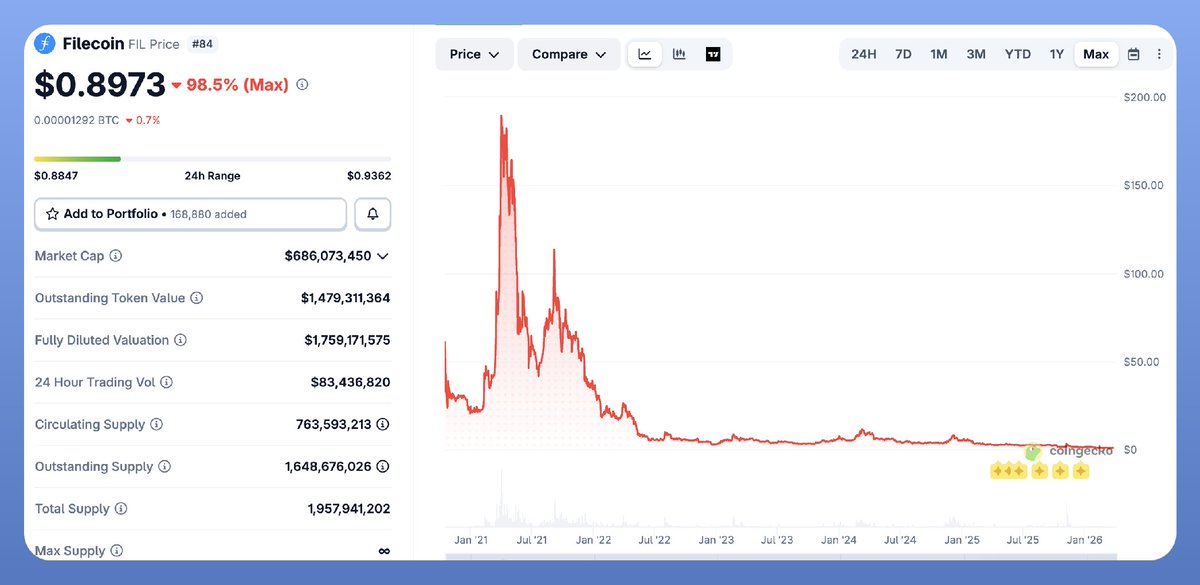
If you invested $10,000 in Filecoin $FIL in 5 years ago today, you would have $47 today. That would be enough to buy a 10TB hard drive and store your own data like a normal human being.
Stacy Muur tweet media
English
171
160
2.5K
186.1K
Ken
Ken@web4ken·
@layer3 @GoMining Love seeing more people step into BTC mining 🔥 If you're new — you're early. Join us at Mine Bitcoin Hub (link in bio) 😎
English
0
0
0
97
Layer3
Layer3@layer3·
Your onchain history just earned you a Bitcoin miner — powered by @GoMining. Yes, seriously.
English
8
7
60
8.8K
Ken
Ken@web4ken·
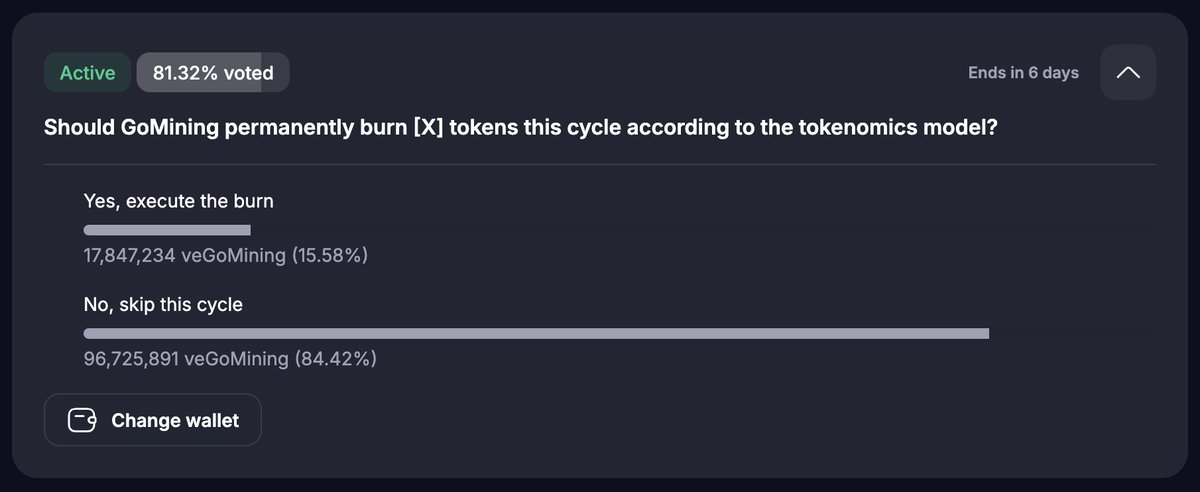
And now the funniest part. The same system shows ~85% of "holders" voting AGAINST token burns 🤡 Totally organic governance. Nothing to see here.
Ken tweet media
English
1
0
1
25
Ken
Ken@web4ken·
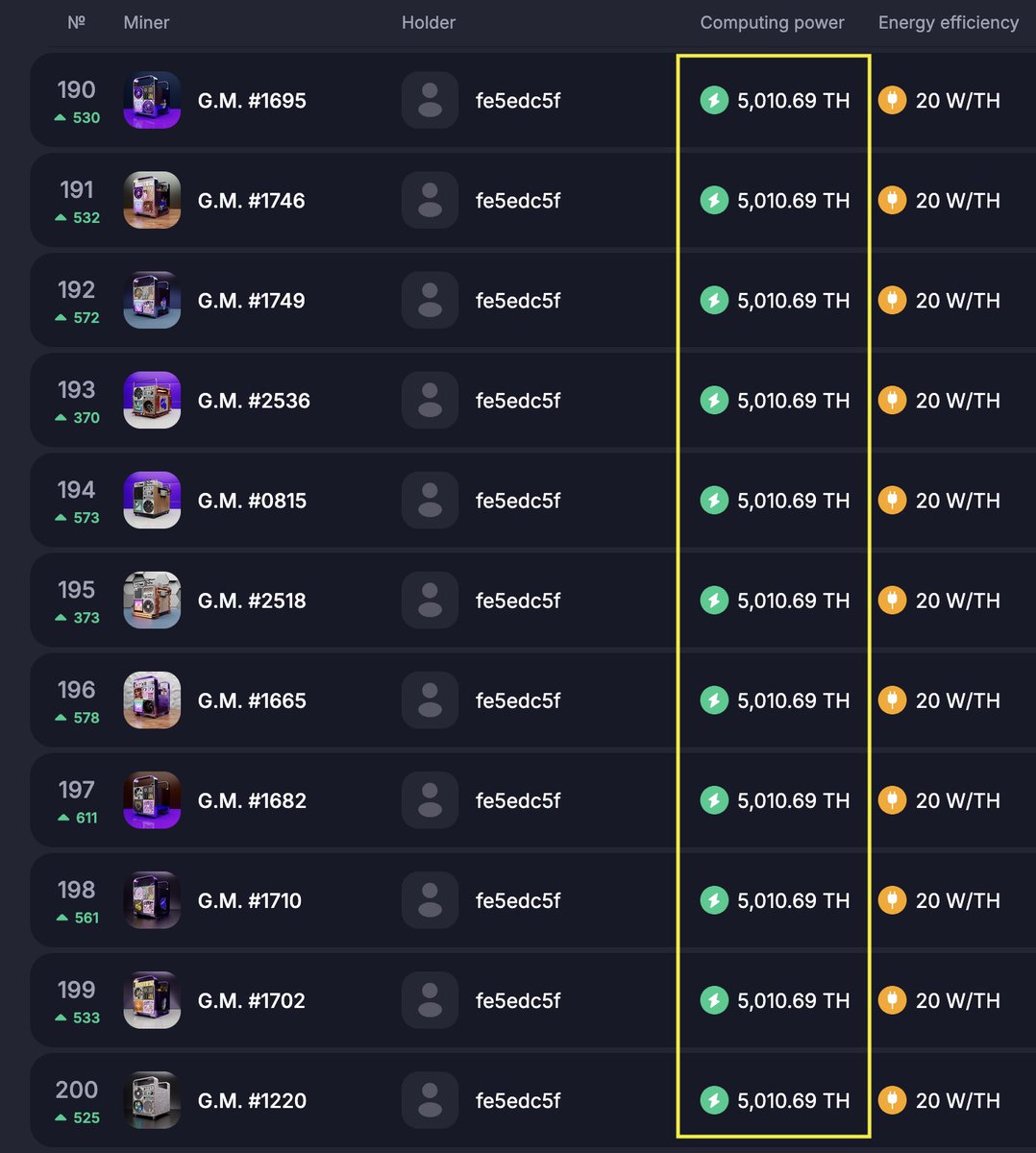
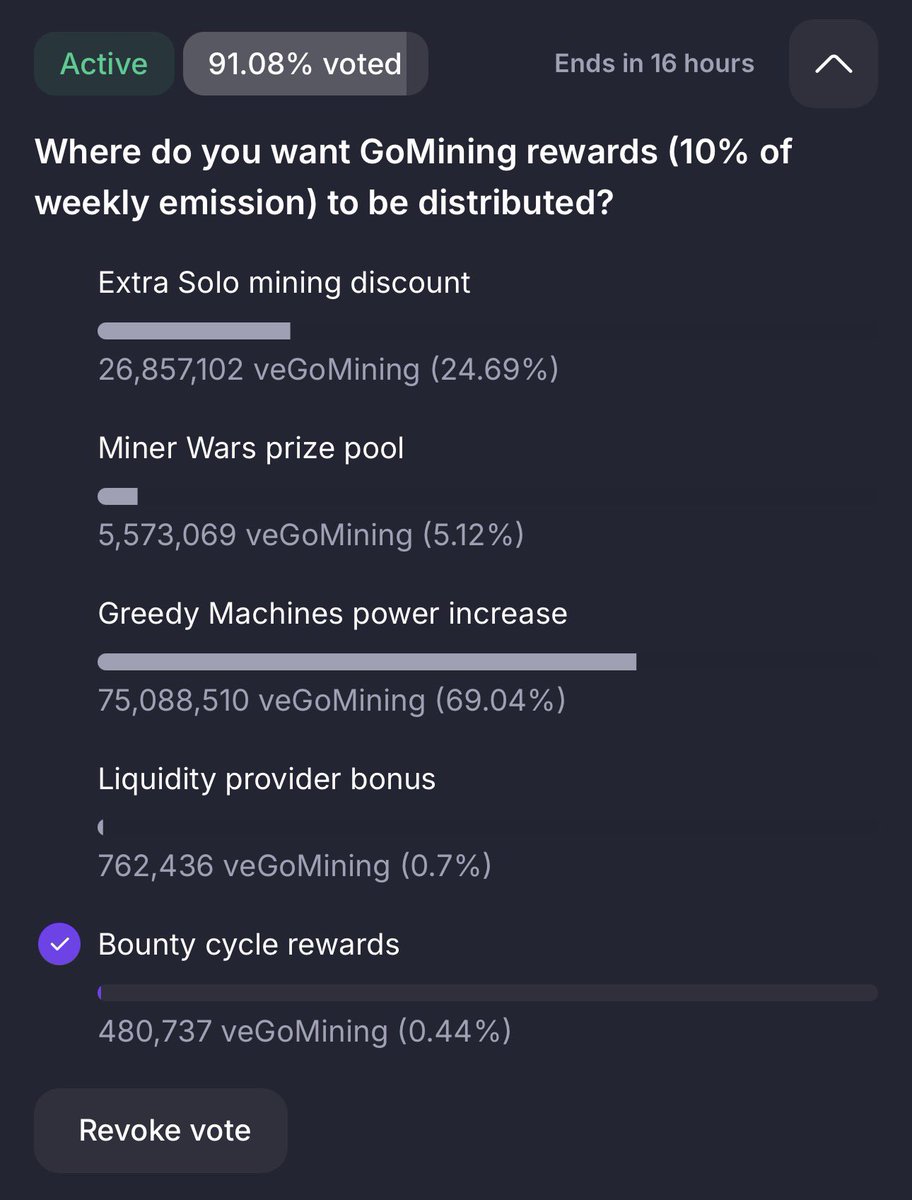
Last week, ~329K tokens were distributed via GoMining rewards. With their setup, a significant portion was effectively redirected away from regular Greedy holders, estimated impact: 10.69 x 123 ~ 1315 TH ≈ 44K tokens!
Ken tweet mediaKen tweet media
English
1
0
0
33
Ken
Ken@web4ken·
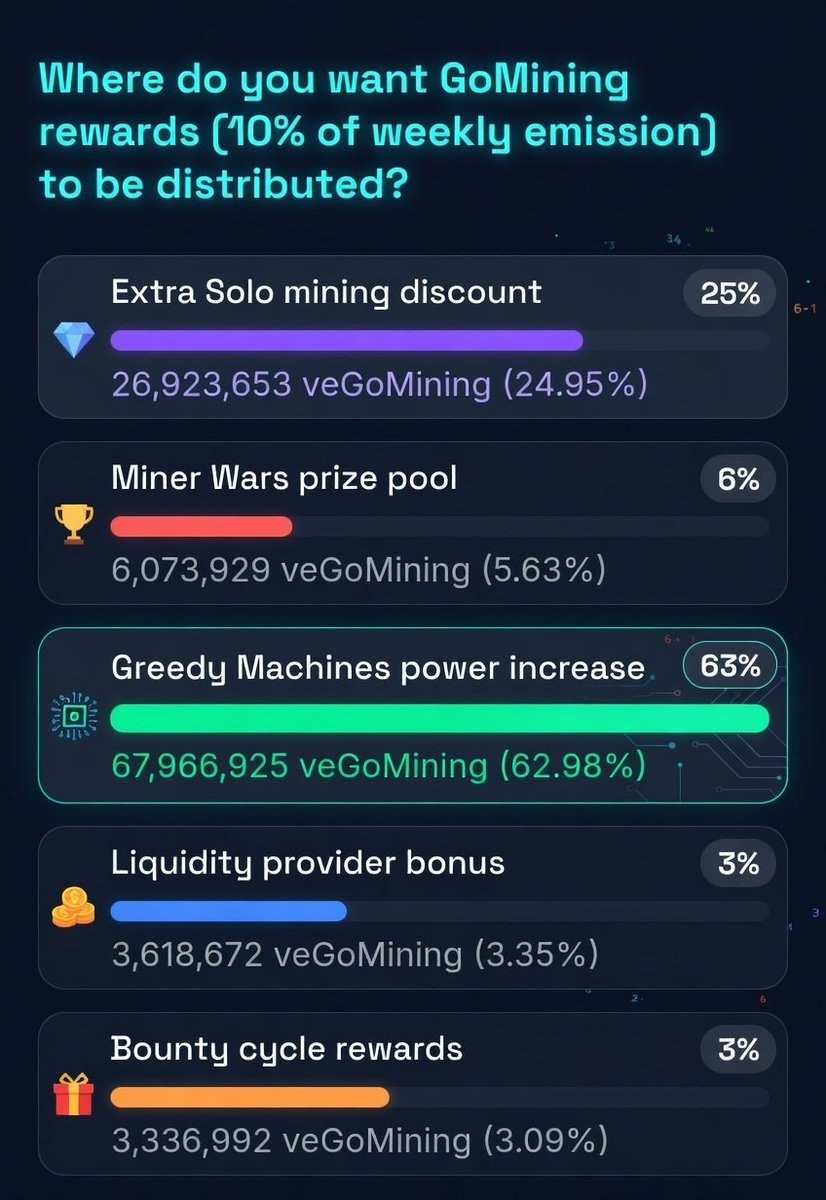
Many noticed how GoMining rewards distribution suddenly changed. Not random. Not whales. I've said it before in Mine Bitcoin Hub, this is driven by the team. And the mechanics behind it are actually very simple👇
Ken tweet media
English
2
0
3
103
LordSnake 🇪🇦🐍
LordSnake 🇪🇦🐍@criptoworlduser·
🤔Unfortunately, it appears that whales are withdrawing their support for the bounty. Liquidity also lacks significant support. A few whales are steering the results towards their greedy machines. #Gomining
LordSnake 🇪🇦🐍 tweet media
English
11
0
22
450
Ken
Ken@web4ken·
@zacodil @minchoi Phew, I've been looking for this for a long time. I thought the problem was on my end 😅
English
0
0
0
45
Min Choi
Min Choi@minchoi·
RIP OpenClaw 💀 Claude now has > Voice mode > Agent Teams > 38+ Connectors > Cowork Projects > Scheduled tasks > Plugin Marketplace > Persistent memory > 1M Context window > Dispatch for remote control > Channels for Telegram & Discord > Claude can use computer to run apps💀
Claude@claudeai

You can now enable Claude to use your computer to complete tasks. It opens your apps, navigates your browser, fills in spreadsheets—anything you'd do sitting at your desk. Research preview in Claude Cowork and Claude Code, macOS only.

English
336
315
2.8K
275K
Ken
Ken@web4ken·
@GoMining This doesn't really make sense. As long as the team can mint tokens at any time, "burns" are meaningless 🫤
English
2
0
1
573
GoMining
GoMining@GoMining·
⏳ Epoch 6 is complete. Epoch 7 begins. Another checkpoint in GoMining’s tokenomics cycle: 🔥70,000,000 $GOMINING burned 💰 60,200,000 minted 📉 Net result: 9,800,000 fewer tokens in circulation Burn > Mint — exactly how the system is designed to work. Epoch 7 starts now ⚡
GoMining tweet media
English
56
141
616
16.5K
Ken
Ken@web4ken·
@zacodil It's not just DeFi protocols with a single admin key risk, centralized token models can look pretty similar under the hood, right @GoMining? 👇 x.com/web4ken/status…
Ken@web4ken

Interesting concept, but... the contract owner (an EOA) can mint unlimited tokens anytime — similar to how $CRO supply quietly surged once everyone thought it was hard-capped 👇 x.com/web4ken/status… Even if the team never intends to abuse it, one day they could propose "new tokenomics" minting 1B tokens — and since they hold most voting power, it would still pass. Just like @MultiversX did recently. 🚨 "Burn & Mint" sounds good, but without on-chain enforcement it's just marketing. Worse — a single compromised or offended employee with that private key could mint and drain liquidity overnight. @gomining maybe it's time for a multi-sig at least?

English
0
0
0
23
Vadim
Vadim@zacodil·
The Resolv USR exploit wasn't a bug - it was a feature working exactly as designed. And that's the problem. How USR minting works: you deposit USDC, then an off-chain service with a privileged key decides how much USR to mint for you. The contract checks the minimum but has no maximum. No cap. No ratio to collateral. Whatever the key holder says - gets minted. You could deposit $1 and mint billions. This design was live since day one. It wasn't a code bug. The threat model was simply: "the key won't leak." It did. Attacker got the key. Deposited $200K across two txs, minted 80M unbacked USR. Dumped on DEXes, walked away with ~$23M in ETH. Single point of failure: one private key, no on-chain sanity checks. No max mint ratio, no multisig, no timelock. One compromised key = unlimited money printer. The contract worked perfectly. That's the scariest part.
Vadim tweet media
Resolv Labs@ResolvLabs

We are currently investigating a security incident involving unauthorized minting of USR. At this stage: The collateral pool remains fully intact. No underlying assets have been lost. The issue appears isolated to USR issuance mechanics. Our immediate priority is to: 1) Contain the incident 2) Assess impact 3) Ensure legitimate users are not affected We are actively investigating and will share more updates shortly.

English
77
81
708
171.2K
Hatom Labs
Hatom Labs@HatomProtocol·
🚨 Protocol Update #12 We are excited to share a new protocol update with our community, designed to keep everyone informed and aligned on the next steps in our journey toward what we believe will reshape the way we view and interact with our financial systems, creating a better and more inclusive future. The past year has been turbulent for crypto and the sentiment across non-major blockchains has taken a severe beating. At worst we have seen disastrous liquidation events and collapsing companies, which has translated into uncertainty and doubts for the survival of DeFi, as the already thin liquidity gets squeezed further and the already tight noose around survivors gets pulled ever tighter. We have also observed that these events have shifted the user perspective and risk appettite regarding decentralized finance, and realize the importance to pivot towards those needs to stay competitive and on top of the modern day DeFi-scene. At Hatom, we can’t pretend that the environment was friendly to us. We felt the weight and negativity of a bear market, but to withstand the volatile liquidity cycles is nothing new in crypto. Thus we remain confident that whether it’s a bear market or a bull market, there is always a time to build. Above it all, we want to emphasize that our commitment remains unchanged: to build new products, strategically deploy our infrastructure to new ecosystems, and stay at the forefront of DeFi innovation. With this spirit in mind, we want to share the most important update upfront. Hatom is expanding beyond the MultiversX ecosystem and entering the @StellarOrg Ecosystem. Alongside this expansion, we are building a new suite of DeFi products designed to deliver meaningful value to Stellar’s growing DeFi sector, while strengthening Hatom’s revenue generation and long-term foundations. To support this build, we have secured a $135,000 grant from the Stellar ecosystem. This funding is dedicated to accelerating the development of our new product layer, without adding unnecessary pressure on our treasury. In markets like these, sustainable execution is a competitive advantage, and this partnership allows us to move faster while maintaining the standards we consider non-negotiable. We are excited to have the Stellar Foundation as a partner in our journey and we are confident that together we will achieve great things in the years ahead. In this protocol update, we will break down this expansion, the new product suite, and what it means for Hatom going forward. A New Chapter for Hatom We announced a few months ago that Hatom would expand to a new chain. Since then, we have been in dozens of conversations with multiple Foundations, working to secure the right partnerships and close the right deals. Saying these conversations were easy would be a lie. Closing deals in Web3 requires patience, persistence, and often nerves of steel. Most of these discussions moved slowly. Some progressed well, but due to extreme market conditions, several Foundations changed their stance and ultimately stepped away. This created constant pressure on our side, especially because we had already started developing the new smart contracts before finalizing an agreement, as we wanted to move quickly and stay ahead of the curve. As these conversations unfolded, one reality became increasingly clear: in most ecosystems, the backbone of DeFi is already in place. Lending protocols exist. Liquid staking exists. Core liquidity venues exist. And this situation brought us to a crossroads: • Deploy the same products again and fight for liquidity in an environment that is no longer a blue ocean, adding more pressure to the ecosystem and to users, or • Go back to the drawing board and design a new suite of products built to solve specific gaps in the next ecosystem we would enter. Long-term success is not something you force with shortcuts. It is something you earn through the right decisions, especially when conditions are difficult. Sometimes, taking the longer route is the only way to increase the probability of building something that can stand the test of time. And that is exactly what we chose to do with this new expansion to the Stellar ecosystem. Instead of replicating the same stack and competing in the exact same liquidity race, we made the decision to step back and design a product direction that fits both the market we are entering and the market we are leaving behind. A direction that increases the probability of real adoption, creates sustainable revenue, and gives Hatom the ability to grow beyond a single cycle. Why Stellar? Stellar has quietly built what most chains still struggle to assemble into one coherent system: real-world financial rails plus an asset-native network design. It is also important to understand the scale and maturity of the network. Stellar is one of the longest-running ecosystems in the industry, launched in 2014, and it has consistently remained among the most established projects in crypto. Today, Stellar sits around a $8.5B+ fully diluted valuation and remains a top-20 project, reflecting both durability through multiple cycles and a large, global footprint. It is a chain that was built around issuing assets, moving value efficiently, and integrating with real distribution, not around speculative throughput narratives. That shows up in the ecosystem DNA: a truly spectacular RWA environment with the biggest players in the sector present on chain, stable assets, settlement, on/off ramp compatibility, and a long-standing focus on payments and compliant asset flows. Now that foundation is being paired with Soroban, which effectively turns Stellar from “rails” into “rails plus programmable capital” and unlocks a new wave of applications that can actually sit on top of those rails: vaults, structured products, credit primitives, and tokenized positions. What makes this compelling isn’t one feature, but a combination of multiple factors such as: 1) A chain designed for assets, not just tokens Stellar’s architecture has always centered on issued assets and their lifecycle. That matters when your roadmap is vaults, tokenized shares, and RWA-aligned structures, because you need clean issuance mechanics, predictable settlement, and a strong base for integration. 2) Stable settlement that can scale with real usage DeFi products don’t scale on volatility alone. They scale on settlement quality. When your core product is vault-based capital allocation, you want a stable unit of account, deep liquidity corridors, and an environment where “holding capital on-chain” makes sense. 3) A serious path into tokenization and RWAs Stellar is explicitly positioning itself as a home for tokenized real-world assets, and more importantly, it has the distribution mindset to support that direction. RWAs don’t become real through whitepapers, but through real rails, issuance standards, and ecosystems that can attract serious operators. 4) A clean base liquidity primitive USDC being native on Stellar gives vault-based products a straightforward starting point: stable deposits, stable accounting, stable settlement, and a clear base for strategy denomination. That is the foundation you want if you’re building products meant to survive more than a single cycle. On top of this, over $360M worth of stablecoins are currently present on the chain which provides us with a clear indicator that there might be a demand for programmable yield to be generated on all these assets. 5) Ecosystem support at the right phase Stellar DeFi is early relative to what the chain is capable of, which creates an asymmetric opportunity for builders. The ecosystem is at the stage where primitives, standards, and integrations are still being defined and that is exactly when a team can shape the category instead of fighting for marginal market share in a saturated environment. From Primitives to Products Since the inception of Hatom, we have focused on building the core pillars of any ecosystem: our lending protocol and the liquid staking solution has been providing lots of value along the years, together with millions of dollars in rewards for our users. But as the market matured, we started to realize something important: being the foundation is not enough anymore. The DeFi world is not at the stage where users only need primitives. In most ecosystems, the primitives already exist. Lending exists. Staking exists. DEX liquidity exists. The next phase belongs to the protocols that can take these primitives and turn them into clear, structured, and accessible financial products, designed to work not only in perfect market conditions, but especially during harsh conditions. And if there is one major wave that is shaping the next generation of DeFi, it is the RWA wave. We are moving into an era where value is not only created from inflationary token rewards, but from structured exposure to assets and yield that originate outside of pure crypto speculation. This is why the next product suite we are crafting is designed to be more than “features”. It is designed to be a new product layer for Hatom. The Product Suite: Vaults, Multiply, Leverage The new suite of products we are bringing to Stellar is built around three pillars: • Vaults • Multiply • Leverage We want to slow down here and explain each one properly, because our goal is not only to ship, but the goal is that our users understand what we are building, why it matters, and how it will create value. 1) Vaults - The Foundation of the New Hatom Product Layer When people hear “vault”, they often assume it is just a place to deposit and earn yield. That is not what we mean. A vault is a product that allows Hatom to do something much bigger: package strategies into a single position. Instead of users having to understand where the yield comes from, how to allocate capital, how to rebalance, when to exit, and how to manage risk, the vault becomes a structured product that handles this on behalf of the user, based on transparent rules. In simple terms: • You deposit an asset (starting with stable assets like USDC) • You receive vault shares, which represent your position • The vault allocates capital into a defined strategy • Over time, as the strategy generates yield, the value of your shares increases • When you withdraw, you redeem your shares and exit the vault This is a product with high potential on Stellar as it’s an ecosystem built around real world assets, settlement, and real-world distribution. This makes it a natural environment for tokenized assets to exist and grow. And the reality is that RWAs will not come as one magic token that everyone uses. They will come as a growing universe of different instruments, different issuers, different yield sources, different liquidity profiles, and different risk models. Vaults are the bridge that makes this usable. Vaults allow us to: • package RWA and DeFi aligned opportunities into clear products • enforce exposure limits, caps, and risk tiers • allow users to access DeFi and RWA yields through one position, without becoming experts in the underlying market. This is why vaults are the foundation. They are how we transform complex financial opportunities into a product that users can actually adopt. 2) Multiply - Capital Efficiency Layer Multiply is considered a more sophisticated product, so let’s be very clear. Multiply is a capital efficiency product designed to help users do something that advanced DeFi users already do manually, but in a safer and more structured way. In traditional DeFi, a user who wants higher efficiency might: • deposit collateral • borrow against it • redeposit what they borrowed • repeat the process to increase exposure. This manual approach creates a huge amount of operational risk. Most users do not fail because the strategy is bad. They fail because execution is complex, ratios become unsafe, markets move faster than their reaction time, and liquidation thresholds are misunderstood. Multiply turns this into a product. Instead of users manually looping, Multiply allows them to enter a position where the looping is automated under strict constraints. The value Multiply brings is not only in “more exposure”. It is also in: • reducing operational mistakes • improving execution quality • allowing capital to be used more efficiently inside structured strategies • creating a safe, controlled way for users to scale positions they already understand. Multiply becomes a natural extension of Vaults because once vault strategies exist, users will want an option to scale exposure in a controlled way, without needing to manage complexity themselves. 3) Leverage - Structured Exposure for Real Market Conditions Leverage exists everywhere. That is not the innovation. The innovation is leverage that is designed to survive harsh market conditions, with clear constraints, controlled execution, and transparent rules. Leverage positions will allow users to: • deposit collateral • borrow under defined conditions • execute spot exposure • hold a structured position with enforceable risk boundaries. The reason we are building leverage as a product is simple. In bear markets, users become cautious, and in bull markets, users become aggressive. In both environments, leverage will be used. The difference between protocols that fail and protocols that survive is whether leverage exists as chaotic user behavior, or as a structured product with guardrails. Leverage will bring value through: • clarity of risk boundaries • predictable mechanics • clean on-chain accounting and position tracking • the ability to build more advanced strategies on top of it over time. And when combined with vaults, leverage becomes something even more powerful. It becomes a tool that allows Hatom to craft structured positions that can scale as the ecosystem matures. This suite of new tools is not being built to chase a trend, but because we understand the shift in DeFi. The next generation of users will not onboard through complexity, but through products that allow them flexibility and ease of use. And this is only the beginning. Starting with Vaults, Multiply, and Leverage allows us to establish the structured product layer first: the user-facing interfaces, the automation layer that keeps strategies operating, and the risk framework that makes capital efficiency scalable. This is where we believe the highest immediate value can be delivered on Stellar, and that is where our full focus is right now. At the same time, we are aware that the most logical continuation of this journey, once this foundation is live and proven in production, is to also deploy our lending protocol on Stellar at a point in the future. Not as a distraction from the current build, but as the natural next step that deepens liquidity, expands capital efficiency, and completes the long-term product stack. HTM - The Value Flywheel In the latest market conditions, thousands of assets bled heavily as investors rotated toward certainty, de-risked portfolios, and sought exposure to safer positions. In periods like this, volatility is punished broadly, liquidity disappears first from smaller markets, and even strong projects get dragged by macro pressure rather than fundamentals. HTM was no exception. We designed HTM to become the heart of the Hatom ecosystem, with a clear objective: the value created by our products should compound into a flywheel that strengthens the token over time. But it is important to separate design from environment as even the best token model is still exposed to the health of the ecosystem it operates in, especially when that ecosystem’s liquidity and market depth compress aggressively. This is exactly what happened on MultiversX over the last cycle. When Hatom was scaling, the MultiversX ecosystem was operating at a completely different macro level, closer to the ~$1.5BM range. After the most recent downturn, it compressed toward roughly ~$120M levels. MultiversX wasn’t the only ecosystem that suffered, but that compression matters because it reduces risk appetite, squeezes liquidity, and narrows the surface area for DeFi growth. The downstream impact is real: less volume, less activity, less revenue, and weaker market structure across the board, which inevitably affects HTM as well, regardless of how strong the original token design is. Despite the challenging period, the next phase we are stepping into changes the foundation of the business. We are building a product suite designed to unlock diversified fee streams across a broader surface area: structured products, automation, and capital routing. That means revenue generation becomes more repeatable, more resilient, and less dependent on a single market narrative. A protocol that earns across multiple products and conditions is fundamentally harder to break, and that is exactly the direction we are taking. What we built so far created the basis of a flywheel. The difference now is that the flywheel becomes materially stronger because it will be powered by multiple engines, not one. HTM was always designed to sit at the core of the Hatom ecosystem and capture value as the protocol expands and in the next chapter, that positioning becomes even more explicit. As we introduce Vaults, Multiply, and Leverage, HTM will be placed strategically at the center of how the system operates, ensuring that as usage grows, demand mechanics strengthen alongside it. We are also strong believers that when MultiversX returns to its growth path, we expect our side of the business to accelerate again and the flywheel to re-engage. But this time, it won’t be the only driver. Hatom will also have a second ecosystem contributing revenue, users, and activity, which means HTM benefits from a broader base of demand and a stronger, more diversified business model. MultiversX Remains Home MultiversX has been our home for many years, and we are proud to say it will remain the ecosystem where Hatom was born, tested, and grew into what it is today. Everything we have built so far, our resilience as a team, our community, our identity as a protocol, has been shaped inside MultiversX. At the same time, we have to be honest about what it means to build DeFi products in a fast-moving industry. Not every variable is under your control. Liquidity cycles, ecosystem participation, market sentiment, and the presence of the right partners at the right time can accelerate growth, or slow it down significantly, regardless of how strong the product itself is. And when your mission is long-term, you cannot afford to depend on a single environment to carry the full weight of your expansion. That is why we are expanding our field of activity. But we want to make one thing unambiguous: We are not leaving MultiversX. Hatom will remain active on MultiversX, and our core products will continue to be maintained, supported, and operated at full capacity, with the same standards and the same commitment as always. This includes our lending protocol, our liquid staking solution, the TAO Bridge, and the USH stablecoin, all of which will remain live and continuously maintained on MultiversX without any changes to their operations. Our decision to expand is not a decision to abandon. It is a decision to grow. And we also believe this is healthy for MultiversX in the long run. A protocol that expands successfully does not drain value from its origin ecosystem, it strengthens it. It creates broader awareness, attracts new users, builds credibility across markets, and increases the surface area of integrations and partnerships that can flow back into the original chain. MultiversX will remain a core pillar of our journey, and we will continue supporting its growth in the years ahead: through product maintenance, continued innovation, and by ensuring that Hatom remains a strong and active contributor to the ecosystem. The Road Ahead In the last couple of months, we have been deliberate about avoiding strict public deadlines. Not because we lack direction, but because we understand the reality of what we are building. When you are designing new primitives, coordinating with multiple teams, and closing ecosystem-level deals in parallel, timelines can shift for reasons that have nothing to do with execution quality and we would rather be accurate than optimistic. For that reason, we will not publish a fixed launch date at this stage. That said, we can share the execution range we are working against internally. Based on the architecture already drafted, our technical team estimates roughly three months to build and integrate the full product suite, followed by an additional one to two months for audits, fixes, and testing before any production deployment. It is also important to clarify what this build entails. Some early work had been initiated to translate parts of our existing stack for EVM environments, but our strategy has evolved. Our focus is now on Stellar first, and specifically on the new product layer: vaults, strategy adapters, and automation infrastructure. These products are not a simple port, and development will move forward from scratch, with full focus on the Stellar suite. Moving forward, we also want to improve the way we communicate progress. The community deserves updates that are consistent and measurable, not occasional announcements when something is already finished. Starting from this point, we will publish a monthly development update outlining what has been completed, what is currently in development, and what is scheduled next. The direction is clear, the funding is secured, and the build is already in motion. Now it’s time to execute and prove it through consistent delivery. To everyone who stayed close through the difficult times: Thank you! Your support matters more than you think. We’re entering the next phase stronger, sharper, and more focused than ever, and we’re looking forward to building it together. 🔥
Hatom Labs tweet media
English
26
57
203
17K
CoinBaron
CoinBaron@CoinBaron·
1.16B $CRO Unlocked 🔓
CoinBaron tweet media
English
28
12
133
8.3K
Ken
Ken@web4ken·
@Johyo_cro When they launched, they made a "bug" in the UI code that caused the APY to be displayed 10 times higher. I think they're now trying to trap people again
English
0
0
3
111
MARIUS | GoMining Ambassador
MARIUS | GoMining Ambassador@MARIUS_5000·
@JDubmeta @carsandcrypto78 It’s all about voting, GM is not controlling it, it’s the users choice, and most likely few whales had the vote on bounty and it expired or they purposely moved it to greedy . Hope the community gets more involved in voting
English
4
0
5
98
JDub
JDub@JDubmeta·
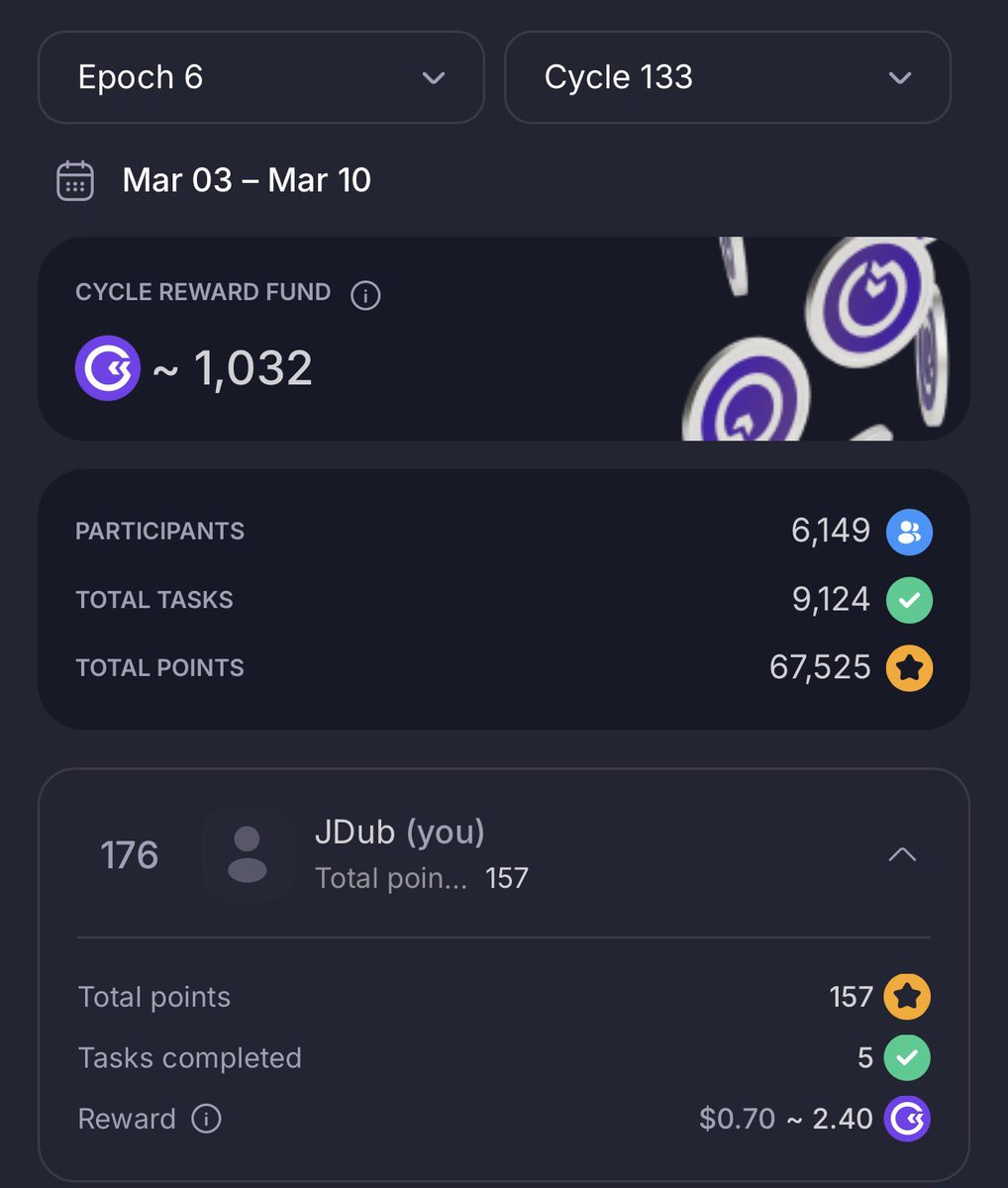
🚨 GoMiners 🚨 We need to make Bounty worth the grind again. This cycle’s rewards are extremely low. People are putting in real effort qualifying for Reddit tasks, bringing in referrals, using X even though we no longer get any points for promoting on X but we keep the community alive and pushing for points yet the payout barely reflects the work. For example, I have 150 points this cycle and it’s only worth about $0.70. Last year, 50 points alone could earn around $1, which made the grind feel worthwhile and motivated people to stay active, promote GoMining, and bring new users into the ecosystem. When rewards are meaningful, people are more willing to: • Market GoMining on social media • Refer new users • Stay engaged with the community If we want the platform to keep growing, we need to restore incentives that reward the people helping expand the community. GoMining shouldn’t only feel rewarding for whales with Greedy Miner Collection It should also support everyday people investing smaller amounts and putting in the effort to grow the ecosystem. If you agree, join the movement and vote for Bounty. Let’s make the grind worth it again and continue building a stronger GoMining community together. ❤️✊ @GoMining $gominingtoken #bounty
JDub tweet mediaJDub tweet mediaJDub tweet media
English
18
2
27
1.2K
Ken
Ken@web4ken·
🥇GOLD: ATH 🥈SILVER: ATH ☠️ETH:
Ken tweet media
CY
0
0
0
95
Ken
Ken@web4ken·
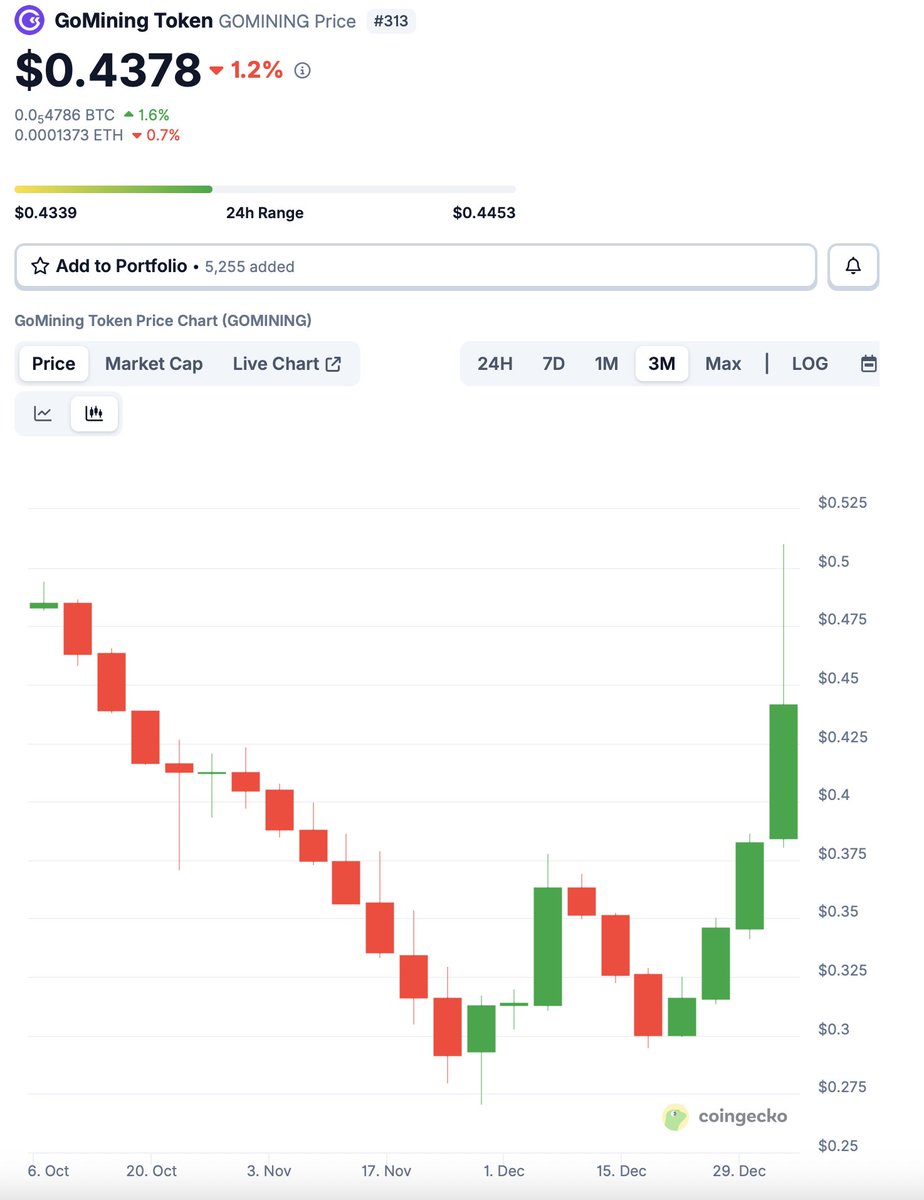
Hey @grok, edit this so it shows the maximum $GOMINING price by the end of 2026.
Ken tweet media
English
2
0
3
283
haenko(⋈,🇺🇦)
haenko(⋈,🇺🇦)@haenko21·
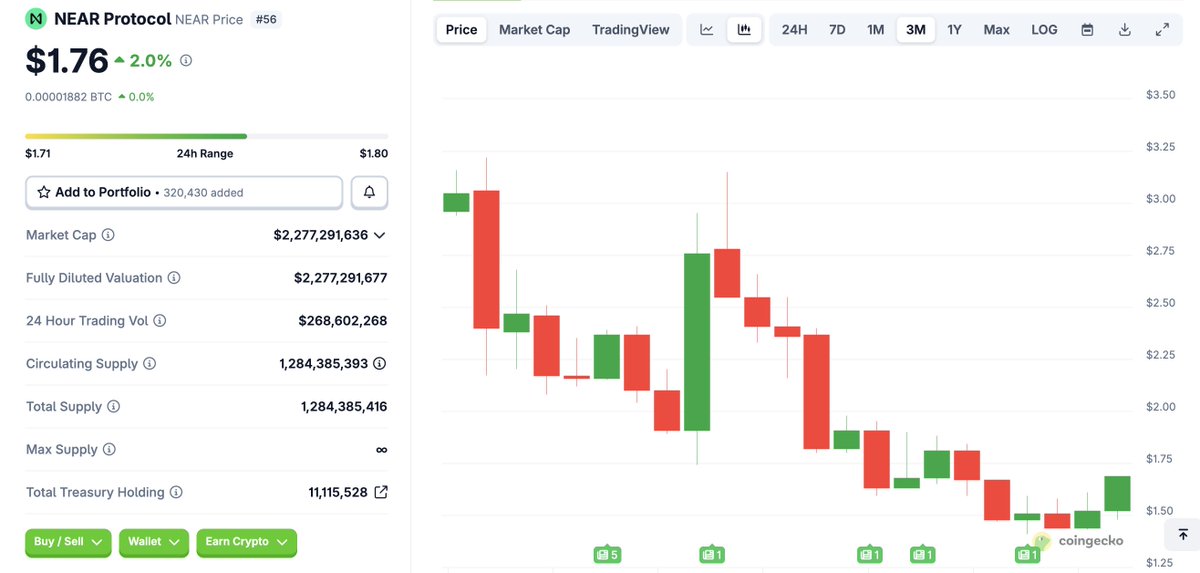
Hey @grok, edit this so it shows the maximum $NEAR price by the end of 2026.
haenko(⋈,🇺🇦) tweet media
English
10
1
77
13.7K
Mihai | XOXNO.com 🔥🛠️
@web4ken @MultiversX @circle @wormhole Let’s hope the new DAO incentives in $EGLD will encourage people to bridge some liquidity for safe yields :) My job so far has been to ensure that if someone hears of us later on, they have a way to bring some stables from anywhere they might be.
English
2
6
29
420
Mihai | XOXNO.com 🔥🛠️
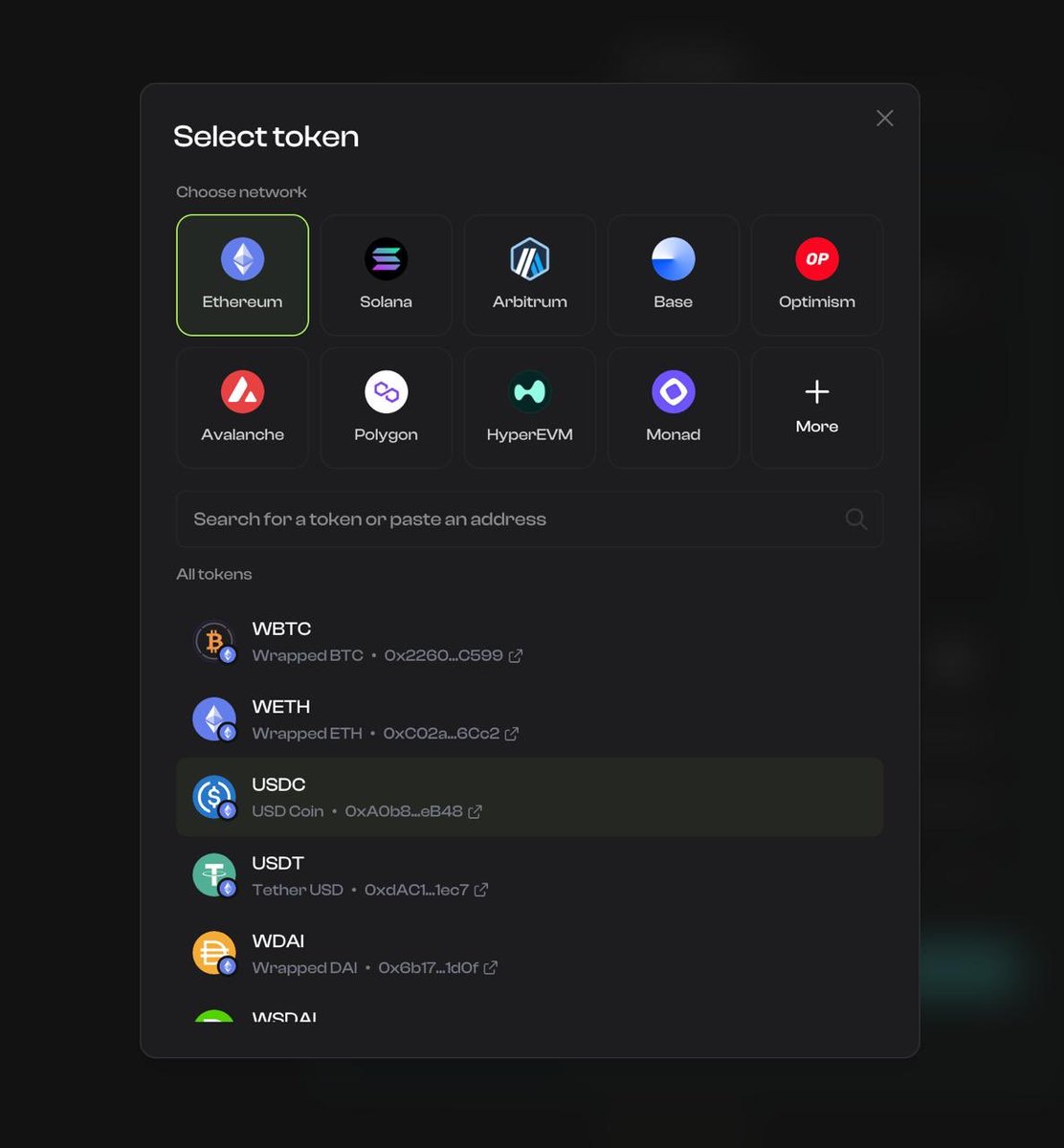
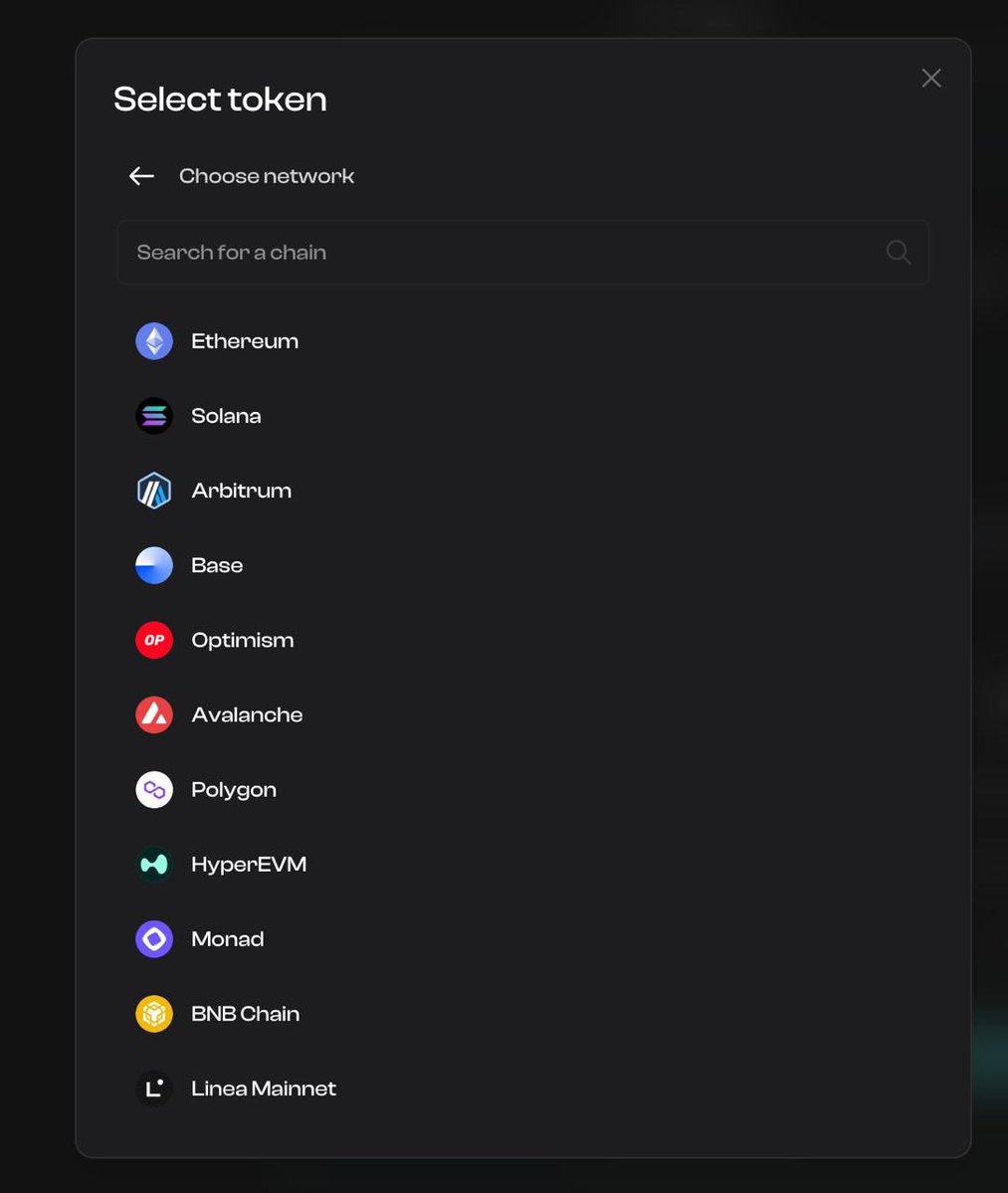
Soon, the @MultiversX community will be able to bridge $USDC from any @circle supported CCTP V2 chain in one click. We also support @wormhole across all their available EVM chains and Solana, so tokens like $USDT and others can be bridged. No more limited options for liquidity inflows.
Mihai | XOXNO.com 🔥🛠️ tweet mediaMihai | XOXNO.com 🔥🛠️ tweet mediaMihai | XOXNO.com 🔥🛠️ tweet media
English
58
135
478
47.5K