121prodata Ltd - Spencer Clarke

3.8K posts

121prodata Ltd - Spencer Clarke banner
121prodata Ltd - Spencer Clarke

121prodata Ltd - Spencer Clarke

@121prodataLtd

Corporate & Telephone Preference Service #TPS #CTPS checker & #API + data, direct & digital marketing advice & outsourcing inc. #GDPR #ePrivacy support

Cheltenham, England Se unió Kasım 2011
4.3K Siguiendo1.3K Seguidores
121prodata Ltd - Spencer Clarke
@jditommaso72 First offence, contrary to law 15.3 - Players involved in all stages of the ruck must have their heads and shoulders no lower than their hips. Free kick Gloucester...?
English
1
0
0
138
Justin Di Tommaso
Justin Di Tommaso@jditommaso72·
Rugby incident at breakdown Dickson a former Harlequins scrum half as TMO #HARvGLO
GIF
English
3
0
48
4K
121prodata Ltd - Spencer Clarke
121prodata Ltd - Spencer Clarke@121prodataLtd·
The Real Plot Twist DUAA means PECR fines are rising to GDPR levels. From £500k → up to £17.5m or 4% of global turnover. Screen your calling lists. Protect your budget. TPS/CTPS checking isn’t optional anymore. #pecr #compliance #tps #ctps
English
0
0
0
15
121prodata Ltd - Spencer Clarke
121prodata Ltd - Spencer Clarke@121prodataLtd·
2️⃣ Protect Your Momentum Sales momentum is fragile. One “I’m reporting you to the ICO!” can smash it instantly. TPS & CTPS checking keeps you focused on people who actually want to talk. Simple. Smart. Compliant. #sales #eprivacy #tps #ctps
English
0
0
0
12
121prodata Ltd - Spencer Clarke
121prodata Ltd - Spencer Clarke@121prodataLtd·
1️⃣ “Buzzkill” Post 🚫 Nothing kills a salesperson’s buzz faster than calling someone who never wanted the call. TPS & CTPS checking = fewer complaints, more real conversations, and zero ICO headaches. #tps #ctps #pecr #compliance
English
0
0
0
10
Sama Hoole
Sama Hoole@SamaHoole·
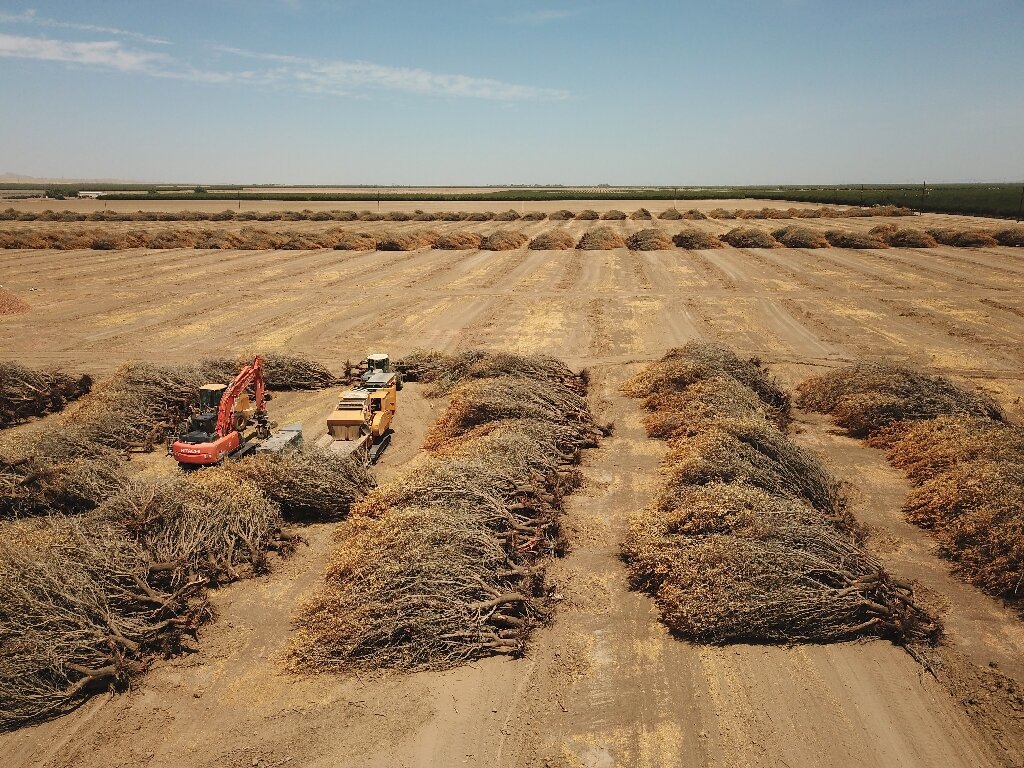
California's Central Valley produces 80% of the world's almonds. Each almond requires 3.2 gallons of actual irrigation water to grow. Not rainfall. Actual tap water pumped from aquifers. One gallon of almond milk requires 162 gallons of irrigation water. Compare that to dairy milk at 8 gallons of tap water per gallon, with the rest being rainfall that falls on pasture anyway. But here's where it gets properly grim. Almonds bloom for exactly three weeks in February. During those three weeks, California needs every pollinating bee in North America transported to the Central Valley or the crop fails entirely. Commercial beekeepers truck in 31 billion honeybees. That's two-thirds of America's entire managed bee population, all concentrated in one valley for three weeks. The bees are packed into trucks, driven across the country, dumped into almond groves drenched in pesticides, worked to exhaustion, then packed up and shipped to the next crop. The mortality rate is catastrophic. Beekeepers report losing 30 to 50% of their hives annually. That's billions of bees dead. Not from natural causes. From being used as disposable pollination machines for your almond milk. The pesticides don't help. Almond groves are sprayed with neonicotinoids which scramble bee navigation systems, fungicides which weaken their immune systems, and herbicides which eliminate the wildflowers they'd normally forage on between almond blooms. Meanwhile the aquifer depletion is permanent. The Central Valley has sunk 28 feet in some areas from groundwater extraction. That water took 10,000 years to accumulate. It's being drained in decades for almond milk. Your vegan latte killed more bees and used more water than a year's worth of dairy milk. But it's got "plant-based" on the label so you're definitely saving the planet.
Sama Hoole tweet media
English
2.9K
21.5K
69.6K
5.1M
121prodata Ltd - Spencer Clarke
121prodata Ltd - Spencer Clarke@121prodataLtd·
@MarioNawfal I think you'll find that the birthplace of the Industrial Revolution was - England not Europe. Lancashire, Derbyshire, and Shropshire, as well as cities like Manchester (often called the world's first industrial city), Birmingham and Derby.
English
0
0
0
44
Mario Nawfal
Mario Nawfal@MarioNawfal·
🇪🇺 EUROPE DIDN’T “LOSE” INNOVATION - IT REGULATED IT TO DEATH Europe - the birthplace of the Industrial Revolution - is now sleepwalking through the AI and automation age while the U.S. and China sprint ahead. Europe doesn’t suffer from a lack of ideas. It suffers from a lack of oxygen. The heart of the problem: Innovation doesn’t survive in an environment where capital, labor, and risk-taking are structurally discouraged. European scientists generate ideas. European companies commercialize them - in the United States. The chilling statistics: — Only 1 in 10 unicorns is European, and nearly 30% relocate to the U.S. — Private-sector R&D in Europe sits at 2.2% of GDP - vs. 3.5% in the U.S. — Germany, Italy, France collect 40%+ of GDP in taxes, while the U.S. and China stay under 30%. — STEM labor shortages now function as a ceiling on growth. — And Europe’s PISA scores - the foundation of future talent - are in freefall. Europe has savings. It has talent. What it lacks is a climate that rewards either. This is the argument circulating in Brussels: China picks winners. The U.S. invests through defense. Europe must do the same. Except that’s the wrong lesson. China’s success came after decades of ferocious capital accumulation before the state started gaming the system. Beijing didn’t conjure prosperity by picking winners; it picked winners because it was already prosperous enough to absorb failure. Europe is trying to run the sequence in reverse - building a top-down innovation ecosystem on top of stagnation. It isn’t lack of subsidies. It isn’t weak industrial policy. It’s the thing European politicians refuse to touch: — overregulation — confiscatory taxation — rigid labor laws — bloated welfare states — an allergy to scale, failure, and disruption Europe wants American-style innovation without American-style risk tolerance. It wants Chinese-style productivity without Chinese-style capital accumulation. That’s not how revolutions happen. Europe doesn’t need a new industrial plan. It needs to stop suffocating the one it already has. The tragedy isn’t that Europe can’t innovate. It’s that Europe refuses to get out of the way of the people who still can and want to. And every day, more and more of those people are done dealing with this. Source: @ZeroHedge, Mihai Macovei via The Mises Institute
Mario Nawfal tweet media
English
118
395
1.5K
65.8K
PREM Rugby
PREM Rugby@premrugby·
Things are getting spicy in the West Country Derby 👀 #PREMRugbyCup
English
12
7
221
102.3K
PREM Rugby
PREM Rugby@premrugby·
George Barton, STOP THAT! 😤 The touch, and then the 50:22 from the @gloucesterrugby fly-half 👏
English
5
2
81
29.4K
Inevitable West
Inevitable West@Inevitablewest·
🚨BREAKING: Over 800,000 Brits have now signed a petition opposing dystopian digital ID in just hours Britain is saying NO to communism.
Inevitable West tweet media
English
2.6K
14.6K
90.1K
2.1M
121prodata Ltd - Spencer Clarke retuiteado
RAF Cosford
RAF Cosford@RAF_Cosford·
Today is Battle of Britain Day, when we remember The Few, who defended our nation and fought against tyranny. We must never forget the sacrifice they made for our freedom. #LestWeForget #BoB85 #battleofbritainday
English
174
2.4K
10.3K
347K
121prodata Ltd - Spencer Clarke retuiteado
INEOS Grenadiers
INEOS Grenadiers@INEOSGrenadiers·
An incredible guard of honour for @GeraintThomas86 ahead of the final stage of his career 👏👏👏 Wonderful scenes to kick off the #ToBM finale in Newport 🏴󠁧󠁢󠁷󠁬󠁳󠁿
English
58
743
8.8K
400.9K
121prodata Ltd - Spencer Clarke retuiteado
Martin Lewis
Martin Lewis@MartinSLewis·
CONFIRMED: Energy Price Cap to rise 2% on 1 Oct - with a chunk of the rise on the Standing Charge hitting lower users! Your brief need-to-knows... Ofgem's Price Cap dictates the rate all homes, except in Northern Ireland, on standard tariffs pay. That’s the 2/3rd of domestic properties who aren't on fixes or special deals . The regulator has just announced it will rise at the upper end of predictions, UP 2% for the 1 Oct to 31 Dec Price Cap. DITCH THE CAP IF YOU CAN! Now we know the Cap will be at the current rate or higher until at least the end of the year, it's easy to compare to the cheapest fixes... - They are on average nearly 17% less than the Oct Cap rate (c£250/yr cheaper on a typical bill) - And have guaranteed rates, so you know they won't rise for at least a year. That means for those on a capped tariff, switch to a fix and your energy use immediately costs less, and is guaranteed to do so until at the very least the 31 Dec, but almost certainly well beyond that too... Analyst's current predictions are that the Cap will drop slightly in Jan (down 2%ish) then a rise again in April (up 5% ish) - though this involves some crystal ball gazing as much can change. As your cheapest fix depends on your location, usage, payment type (sadly there are no non-Smart Prepay fixes) use a whole-of-market comparison like our ' Cheap Energy Club' moneysavingexpert.com/cheapenergyclu… to compare and find yours. (it also looks at the more innovative but complex time-of-use and EV tariffs too). LOWER USERS HARDER HIT BY THE CAP RISE I was pleased to see the regulator press release has finally stopped leading on the meaningless 'annualised typical use' figure and instead has copied my past phrasing saying "This means from October to December, a typical household on a default tariff will pay £102 for what currently costs £100 per month." Yet the impact is not uniform. While half this rise is due to wholesale costs increasing slightly on average over the assessment period, the rest is due to 'network and policy costs' increases, and they are lumped into the daily Standing Charge. The average Standing Charge is rising 4.5% for electricity users and 14% for gas. To put it in context if it stayed at this level over a year, you'd pay a horrific £320 a year (on average for Direct debit) just for having the facility of gas or electricity even if you didn't use it. That means lower users will be disproportionately hit, with some facing effective rises of 5% or more. Yet perversely, higher users gain, as the rate for each unit of gas you use is being cut. So high users who use a lot of gas may see a rise of just 1%ish. This is a moral hazard. And especially terrible for many older people who only use their gas in winter. The Standing Charge needs to be reworked. I will continue to campaign for that. There are plans for firms to be forced to offer low or no standing charge tariff option by the start of next year (hopefully via the Price Cap) but it is not 100% locked in.
Martin Lewis tweet media
English
165
162
366
234.7K