Patrick O'Brien

285 posts

Patrick O'Brien

Patrick O'Brien

@AllTheTokens

Level 33 Loop Engineer with a degree in tokenmancy. Certified by ∞.

Australia Se unió Ocak 2026
99 Siguiendo10 Seguidores
Zack Korman
Zack Korman@ZackKorman·
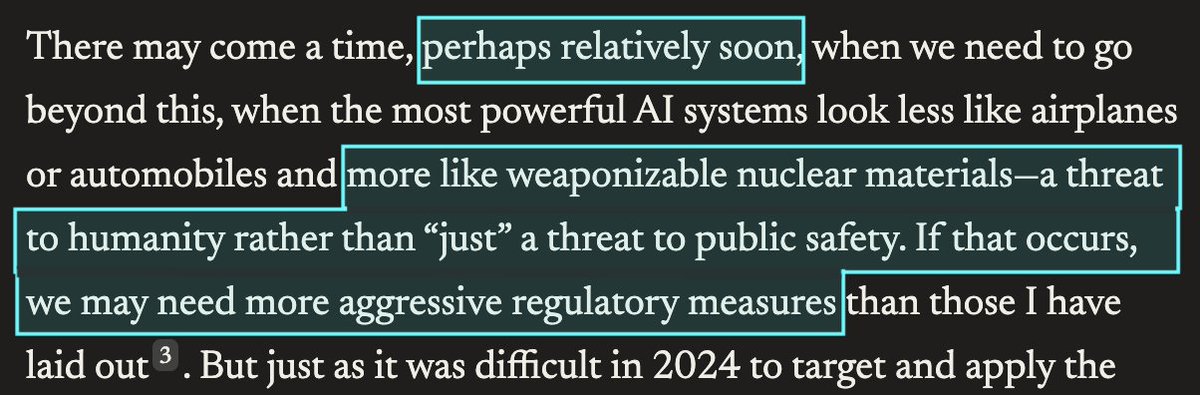
More of you need to read Dario's writing before you go to bat for Anthropic. The dude doesn't want you to have the best AI models.
Zack Korman tweet media
English
13
6
48
1.7K
Noam Shazeer
Noam Shazeer@NoamShazeer·
I’m excited to share that I’ll be joining OpenAI and look forward to working with the exceptional team there. It was a difficult decision to move on. I’m incredibly proud of the amazing team at Google and everything we’ve built together. It has been an honor and a pleasure to work with all of you.
English
813
700
12.8K
6M
Tushar Mathur
Tushar Mathur@tusharmath·
# Desktop Apps Are the Wrong Interface for Coding Agents The new trend in coding agents is to build a desktop application. I think this will become obsolete faster than almost anything else in developer tooling. The reason is simple: a desktop app for a coding agent is almost always a worse IDE. Developers already live inside IDEs. IDEs have years of accumulated capability: code navigation, refactoring, debugging, terminals, search, source control, settings, keybindings, themes, language servers, and muscle memory. But perhaps the most important thing they have is the ecosystem of extensions. A new desktop app has to recreate all of this, and it almost never can. So the user is asked to leave a powerful environment and move into a weaker one, just to use an agent. That is a bad trade. The main reason this trade exists is because of TUIs. TUIs were always an imperfect interface for coding agents. In some ways, they are an ironic way to interact with a modern software system. They do not have native scrolling. Styling is limited. Rich layouts are hard. It is difficult to add visual detail without the whole thing becoming clumsy. But TUIs had one important advantage: they ran inside the IDE. That mattered more than almost everything else. As a developer, I could still see the code. I could see the files changing. I could use my editor, my shortcuts, my extensions, my terminal, my source control, and my existing mental model of the project. The agent was not asking me to move somewhere else. It was sitting inside the place where I already worked. Desktop apps break that workflow. They try to solve the limitations of TUIs by creating a richer interface, but in doing so they leave the IDE behind. The result is often a more polished surface-level product, but a worse developer experience overall. It feels better in a demo, but worse in the actual loop of coding. Most capabilities that make a coding agent useful can be added to the IDE itself. Maybe not perfectly. Maybe the integration is not first-class at the beginning. But even a rough integration inside the IDE is often better than a polished standalone app outside it, because it fits into the developer’s existing workflow. For agentic coding, I think the better interface is much simpler: a shell-based tool that runs inside the IDE terminal. Something like ForgeCode. It does not try to replace the IDE. It sits where developers already work. It can read the repository, make changes, run commands, open diffs, and stay close to the code without asking the user to switch contexts. That feels like the right abstraction. The IDE remains the place where code is understood and edited. The agent becomes a powerful process inside that environment, not a separate application competing with it. For everything else, the right interfaces are probably web and mobile. A web app is useful for reviewing work, managing tasks, looking at runs, sharing context, collaborating with teammates, and operating across machines. A mobile app is useful because agents change the relationship between developer and computer. If the agent can keep working asynchronously, the user should be able to review, approve, reject, redirect, or comment from anywhere. But the desktop app sits in an awkward middle. It is not as capable as the IDE, not as accessible as the web, and not as convenient as mobile. It tries to become the developer’s new home, but developers already have one. The future of coding agents is not a new desktop IDE-lite. It is agents embedded into the places developers already are: the IDE terminal for active work, the web for coordination, and mobile for supervision. The winning product will not ask developers to move into a worse environment. It will meet them where they already work.
English
2
0
4
908
Patrick O'Brien
Patrick O'Brien@AllTheTokens·
Calling all Linux users of Codex. If you want Codex App to appear on Linux, you need to sign up for the waitlist here to show there is demand: openai.com/form/codex-app/ - Otherwise, we're going to be waiting until Christmas.
English
0
0
0
45
Patrick O'Brien
Patrick O'Brien@AllTheTokens·
@thsottiaux Where do I see the resets? I use Codex CLI... I don't see anything about a reset token?
English
1
0
0
704
John A De Goes
John A De Goes@jdegoes·
Whether they like it or not, every developer should be paying attention to OSS coming out of @vercel. I might quibble with a few choices here or there, but Eve looks like a strong entry to the opinionated agent framework space.
Vercel@vercel

Introducing eve, an agent framework. 𝚊𝚐𝚎𝚗𝚝/ 𝚊𝚐𝚎𝚗𝚝.𝚝𝚜 𝚒𝚗𝚜𝚝𝚛𝚞𝚌𝚝𝚒𝚘𝚗𝚜.𝚖𝚍 𝚝𝚘𝚘𝚕𝚜/ 𝚜𝚔𝚒𝚕𝚕𝚜/ 𝚜𝚊𝚗𝚍𝚋𝚘𝚡/ 𝚜𝚌𝚑𝚎𝚍𝚞𝚕𝚎𝚜/ Like Next.js, for agents. vercel.com/blog/introduci…

English
1
0
7
1.6K
Patrick O'Brien
Patrick O'Brien@AllTheTokens·
@BeauJohnson89 Because Claude is painful to use. It's slow as hell and tries to be too smart. I'd much rather use GPT 5.5 with a good pipeline.
English
0
0
0
87
Beau Johnson
Beau Johnson@BeauJohnson89·
mark my words claude FABLE is coming back it will be available to everyone worldwide it will be available on a new subscription tier ($1000/mo) MASSIVE volume on polymarket is a good indicator its not a matter of IF but WHEN you better be ready with this hits opus 4.8 is great but nothing like fable
Beau Johnson tweet media
English
23
0
53
14.7K
Ursula von der Leyen
Ursula von der Leyen@vonderleyen·
Important G7 session on AI. AI is developing exponentially. It is the most important technology of our time. It comes with immense potential, but also risks for free, democratic societies. I believe Europe and the US should work together on AI. Together, we represent 70% of the world market. We have complementary strengths, shared security interests, and a common responsibility to lead. So we should deepen our cooperation. Invest together. Accelerate adoption everywhere, from industry to healthcare. And ensure that the most powerful models are trustworthy and safe.
Ursula von der Leyen tweet media
English
779
279
1.4K
213.9K
Bloomberg
Bloomberg@business·
OpenAI CEO Sam Altman and Anthropic CEO Dario Amodei were among tech bosses at a G7 working lunch on AI, as the US decision to restrict access to Anthropic's most advanced models causes tension among allies bloom.bg/4edq2wa
English
168
495
2.9K
1.4M
Patrick O'Brien
Patrick O'Brien@AllTheTokens·
@DanielleFong I mean... The fact that you made this post proves you're retarded, so your opinion is moot.
English
0
0
0
8
Hunter Bown
Hunter Bown@goodhunt·
can't tell if i'm getting dumber or if models suck today or both
English
9
0
27
5.2K
Patrick O'Brien retuiteado
Zack Korman
Zack Korman@ZackKorman·
GLM-5.2 has yet to disappoint at agent escapes / bypasses. Also “Let me write the PoC” damn I love this thing.
Zack Korman tweet media
English
15
7
121
5.2K
Patrick O'Brien
Patrick O'Brien@AllTheTokens·
@karankendre Why would I use this? So Elon can steal my business? Seems like a bad idea.
English
0
0
1
183
Patrick O'Brien
Patrick O'Brien@AllTheTokens·
@Jeyffre You're missing tokens per second and how many parallel agents you can run.
English
0
0
0
233
Jeffrey Scholz
Jeffrey Scholz@Jeyffre·
1 - So GLM 5.2 is 700b parameters (ish) 2 - 4x DGX Sparks can supposedly handle up to 700b parameters (give or take) 3 - GLM 5.2 is supposedly in striking distance of the performance of GPT 5.5 and Opus 4.8. In my brief tests, it's really not shabby at all. 4 - So for $20k, you can get near the frontier on your table. 5 - Extrapolate the trend, and you could have mythos/5.5 pro - class models in your dining room for the cost of a cheap car less than five years from now. Even without extrapolation, we're already the near frontier running locally. 6 - Paying real api costs, I could easily blow through $3,000 per month coding and running agents. The machine pays for itself in 6-7 months conservatively. 7 - In 3-5 years, most power users of AI will self-host. 8 - Am I missing something?
English
246
96
1.9K
188.7K
Patrick O'Brien retuiteado
Fabio Guzman
Fabio Guzman@FGuzmanAI·
56,000+ tokens/sec at just 80 MHz. 🤯 I burned a full Transformer with KV cache into a custom chip. Designed gate by gate as a 100% digital integrated circuit. Prototyped on a FPGA. (No GPU. No CPU) Just pure digital silicon running @karpathy microGPT, spelling out names on a tiny LCD. This is GateGPT 👇
English
163
569
4.9K
711.5K
Patrick O'Brien retuiteado
Brian Roemmele
Brian Roemmele@BrianRoemmele·
Mind-blowing hardware breakthrough: An open source garage engineer burned a full AI Transformer model (with KV cache) directly into a custom digital chip: WITH NO GPU, NO CPU, NO CLOUD. Just pure silicon running microGPT at 56,000+ tokens/sec on only 80 MHz! And uses less energy than a calculator. Prototyped on FPGA, now spelling names on a tiny LCD. This is GateGPT and a big future of on-device AI is here. This can and will scale to far larger models. Insane efficiency. Pure digital magic.
Fabio Guzman@FGuzmanAI

56,000+ tokens/sec at just 80 MHz. 🤯 I burned a full Transformer with KV cache into a custom chip. Designed gate by gate as a 100% digital integrated circuit. Prototyped on a FPGA. (No GPU. No CPU) Just pure digital silicon running @karpathy microGPT, spelling out names on a tiny LCD. This is GateGPT 👇

English
55
256
1.6K
86.6K