AppsUnify

15.4K posts

AppsUnify banner
AppsUnify

AppsUnify

@AppsUnify

AppsUnify drives innovation through mobility by developing mobile solutions for all platforms and form factors covering all device manufacturers.

United States Se unió Mart 2015
6K Siguiendo5.5K Seguidores
Tweet fijado
AppsUnify
AppsUnify@AppsUnify·
AppsUnify is a leading Mobile Apps Development company with highly skilled Application Designers and Software Engineers that have been successful at delivering Apps covering most Industries, Platforms, and Devices. #AppsUnify
AppsUnify tweet media
English
0
0
2
461
AppsUnify retuiteado
Python Programming
Python Programming@PythonPr·
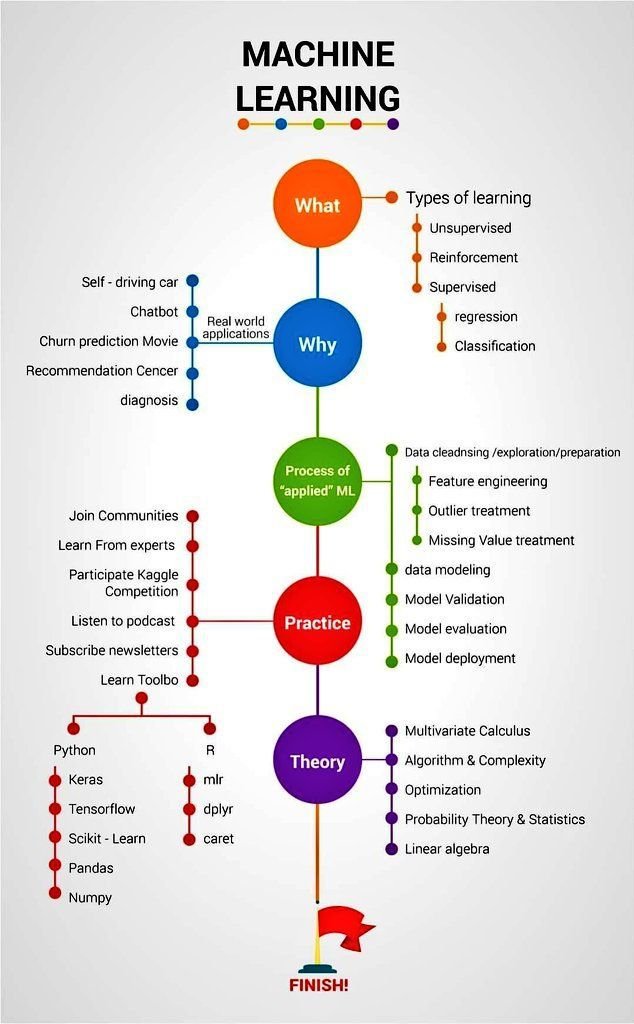
Machine Learning
Python Programming tweet media
English
1
47
201
4.7K
AppsUnify retuiteado
Neo Kim
Neo Kim@systemdesignone·
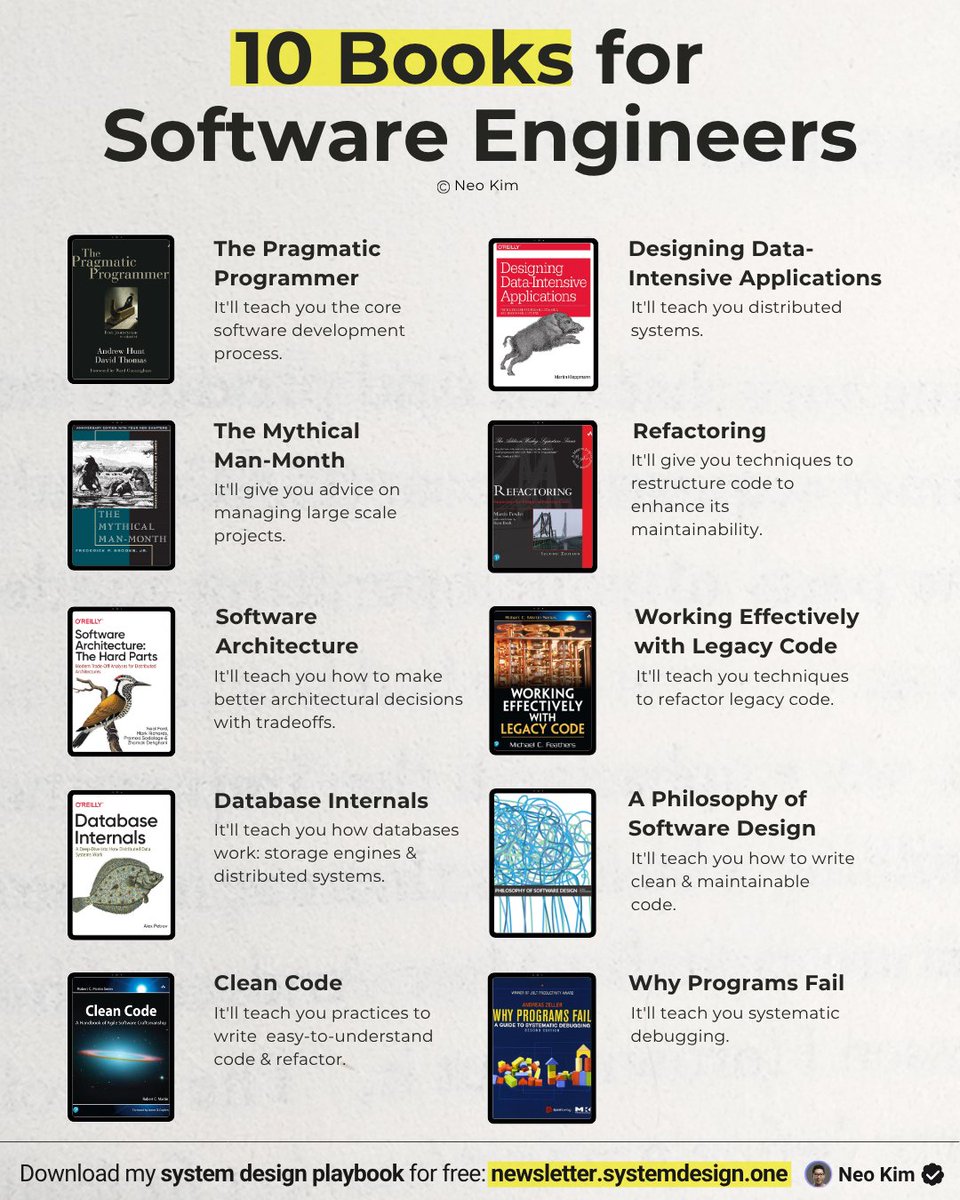
If you want to become a 10x software engineer, read these 10 books: 1 The Pragmatic Programmer 2 Designing Data-Intensive Applications 3 The Mythical Man-Month 4 Refactoring 5 Software Architecture - The Hard Parts 6 Working Effectively with Legacy Code 7 Database Internals 8 A Philosophy of Software Design 9 Clean Code 10 Why Programs Fail What else would you add? === 💾 Save this for later & RT to help others become good software engineers. 👤 Follow @systemdesignone + turn on notifications.
Neo Kim tweet media
English
20
125
636
31.5K
AppsUnify retuiteado
Nikki Siapno
Nikki Siapno@NikkiSiapno·
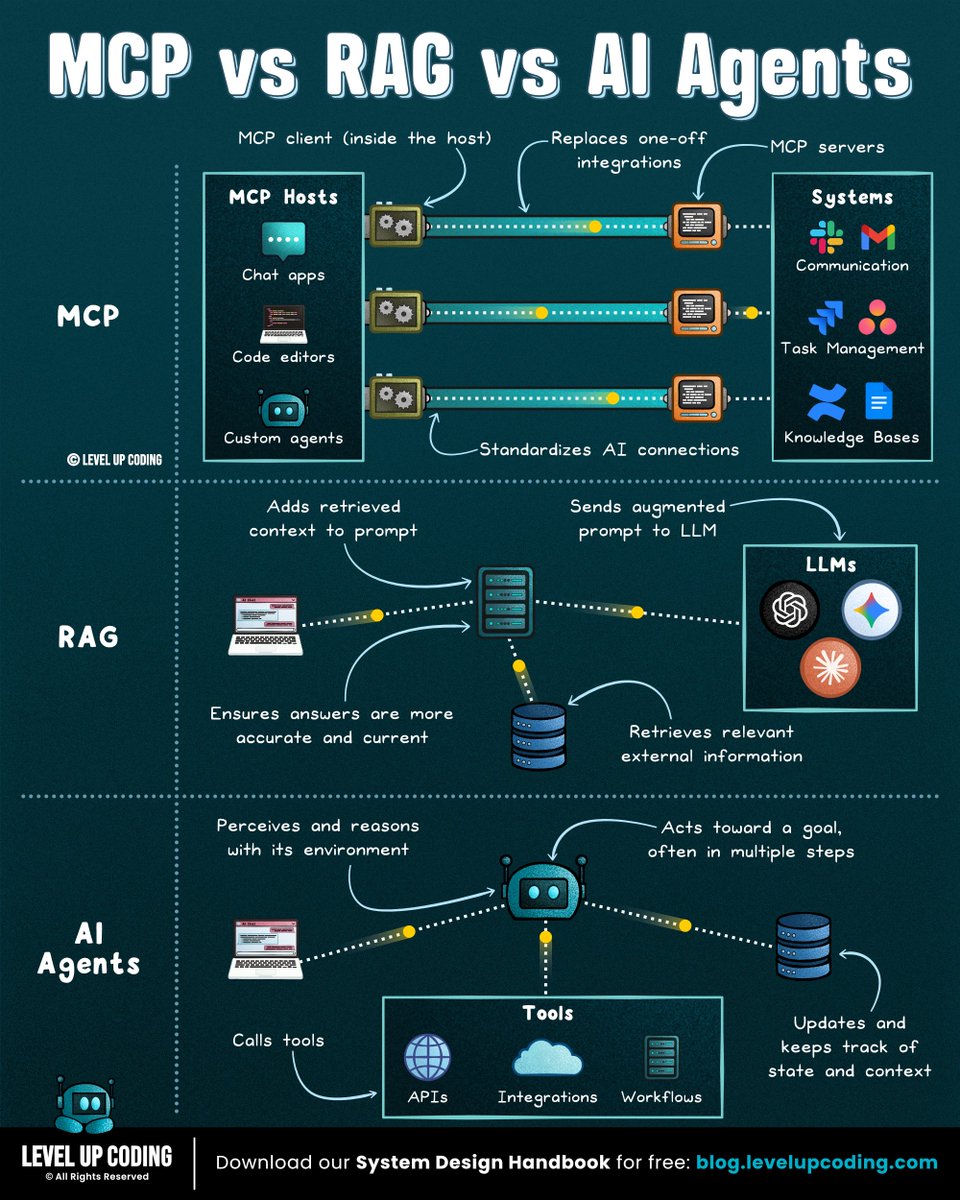
MCP vs RAG vs AI Agents To understand modern AI systems, you need to understand how these three pieces fit together. 𝗥𝗔𝗚 = “𝗚𝗶𝘃𝗲 𝘁𝗵𝗲 𝗺𝗼𝗱𝗲𝗹 𝗯𝗲𝘁𝘁𝗲𝗿 𝗮𝗻𝘀𝘄𝗲𝗿𝘀” RAG retrieves relevant data, injects it into the prompt, and generates a grounded response. It’s best when your problem is answering questions using your docs, reducing hallucinations, or showing sources and citations. RAG improves what the model knows, not what it can do. If you’re building with these patterns, here's a great guide on scaling multi-agent RAG systems: lucode.co/multi-agent-ra… 𝗠𝗖𝗣 = “𝗦𝘁𝗮𝗻𝗱𝗮𝗿𝗱𝗶𝘇𝗲𝗱 𝘁𝗼𝗼𝗹 𝗮𝗻𝗱 𝗱𝗮𝘁𝗮 𝗮𝗰𝗰𝗲𝘀𝘀” MCP is a standardized interface between LLMs and external systems like APIs, databases, and apps. Use it when your model needs to query data, call services, or interact with real systems (Slack, GitHub, etc). MCP doesn’t decide actions, it defines how tools are exposed. 𝗔𝗜 𝗔𝗴𝗲𝗻𝘁𝘀 = “𝗠𝗮𝗸𝗲 𝘁𝗵𝗲 𝗺𝗼𝗱𝗲𝗹 𝘁𝗮𝗸𝗲 𝗮𝗰𝘁𝗶𝗼𝗻” Agents operate in a loop: observe → plan → act → repeat, often using tools and memory. Use them when your problem requires multi-step reasoning, tool usage with verification, or full task execution. Agents start where RAG stops, turning decisions into actions and outcomes. The simple mental model: RAG → knowledge layer MCP → tool layer Agents → execution layer Not every system needs all three explicitly, but complex ones often combine them. If you want to see what this looks like in practice, this guide walks you through building a scalable multi-agent RAG system. Check it out: lucode.co/multi-agent-ra… What else would you add? ♻️ Repost to help others learn AI. 🙏 Thanks to @Oracle for sponsoring this post.
Nikki Siapno tweet media
English
12
151
530
16.4K
AppsUnify retuiteado
Chanchal patel
Chanchal patel@PatelChanc97066·
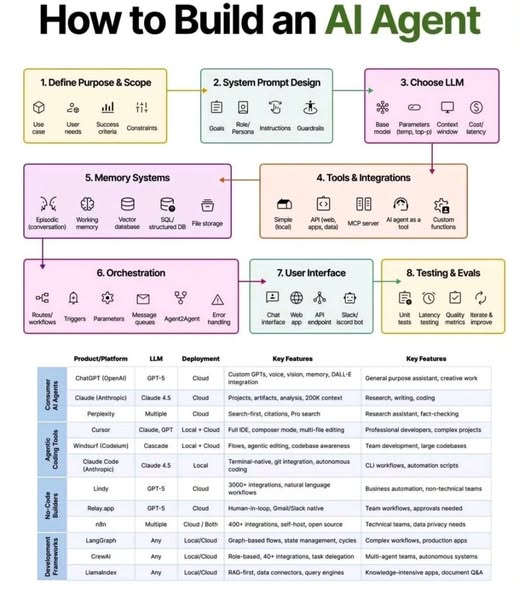
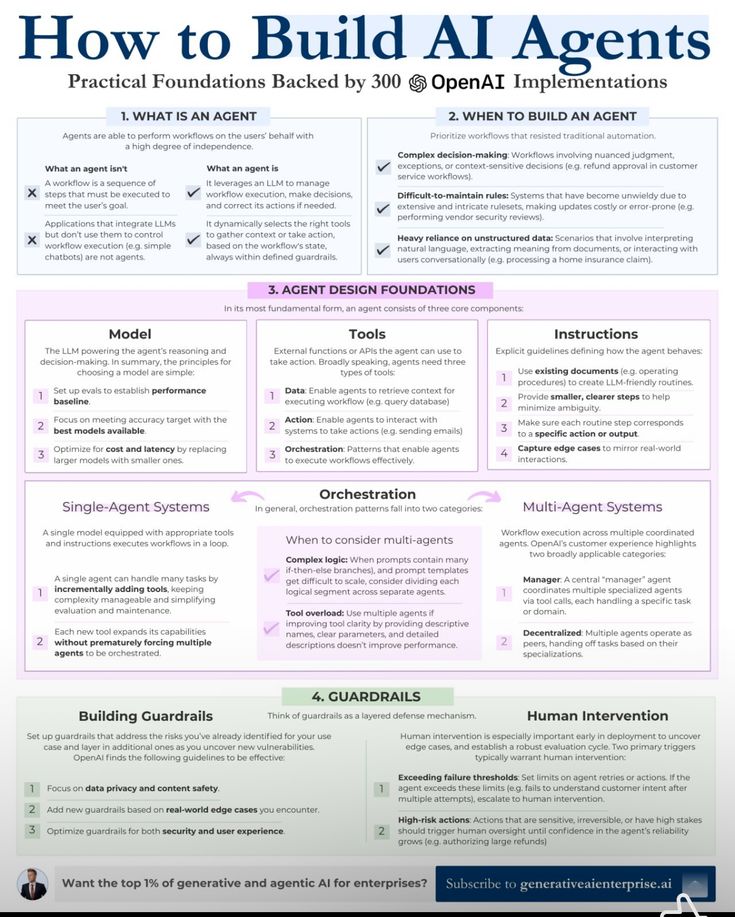
How to build AI agents 📚📘
Chanchal patel tweet media
English
20
72
209
3.6K
AppsUnify retuiteado
Uday👨‍💻
Uday👨‍💻@uday_devops·
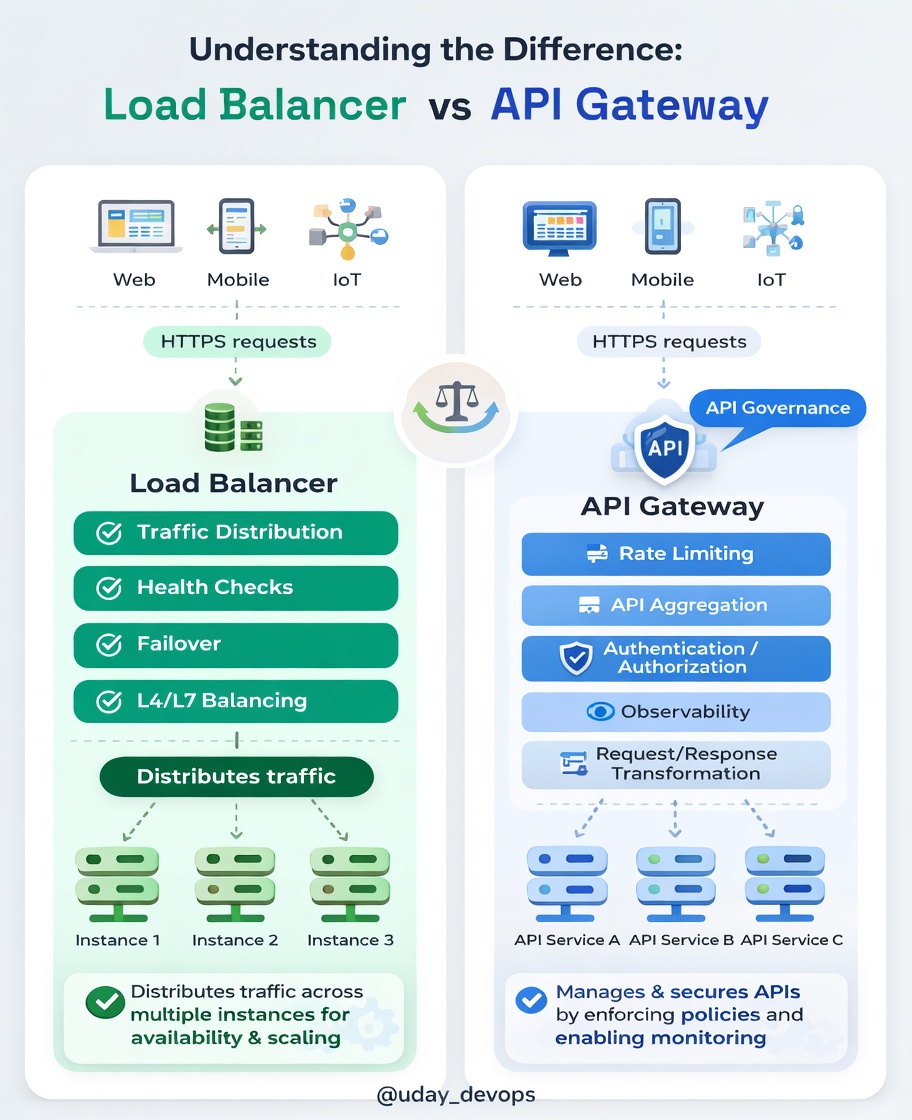
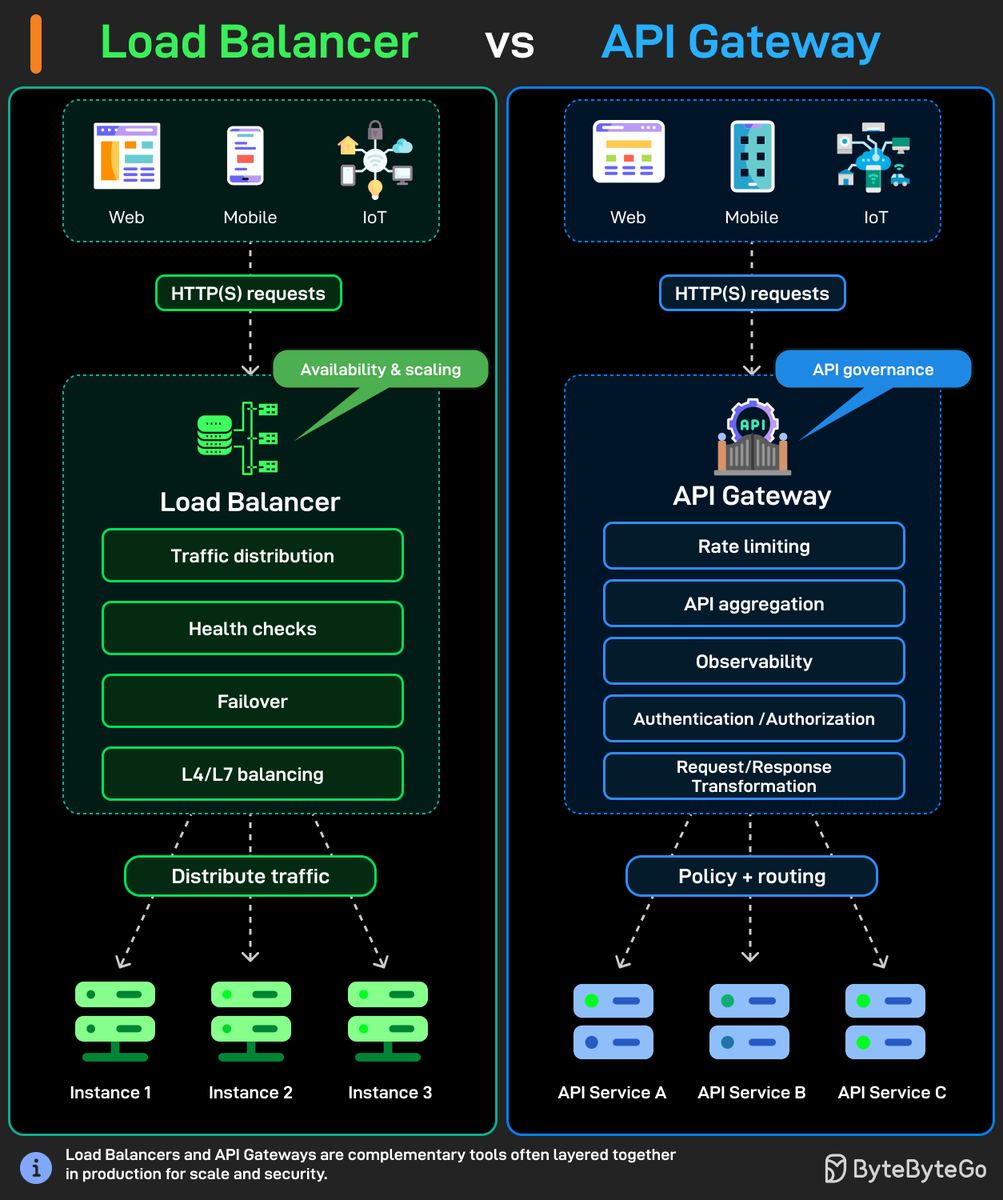
𝗟𝗼𝗮𝗱 𝗕𝗮𝗹𝗮𝗻𝗰𝗲𝗿 𝘃𝘀 𝗔𝗣𝗜 𝗚𝗮𝘁𝗲𝘄𝗮𝘆 𝗞𝗻𝗼𝘄 𝘁𝗵𝗲 𝗗𝗶𝗳𝗳𝗲𝗿𝗲𝗻𝗰𝗲! I often see these two concepts used interchangeably, but they solve very different problems in modern architectures. 𝗟𝗼𝗮𝗱 𝗕𝗮𝗹𝗮𝗻𝗰𝗲𝗿 𝗙𝗼𝗰𝘂𝘀: Traffic distribution & reliability Distributes incoming requests across multiple servers Ensures high availability & fault tolerance Performs health checks & failover Works at Layer 4 (TCP) & Layer 7 (HTTP) 𝗔𝗣𝗜 𝗚𝗮𝘁𝗲𝘄𝗮𝘆 𝗙𝗼𝗰𝘂𝘀: API management & control Handles authentication & authorization Applies rate limiting & throttling Aggregates multiple services into one endpoint Transforms requests/responses Provides observability & monitoring 𝗞𝗲𝘆 𝗜𝗻𝘀𝗶𝗴𝗵𝘁:  A Load Balancer sits in front of infrastructure, while an API Gateway sits in front of services. They’re not competitors, they often work together in real-world systems. 𝗪𝗵𝗲𝗻 𝘁𝗼 𝘂𝘀𝗲 𝘄𝗵𝗮𝘁? ✔️Use a Load Balancer for scaling & availability ✔️Use an API Gateway for API governance & control ✔️Use both for production-grade microservices architecture
Uday👨‍💻 tweet media
English
11
84
399
10.3K
AppsUnify retuiteado
Nandkishor
Nandkishor@devops_nk·
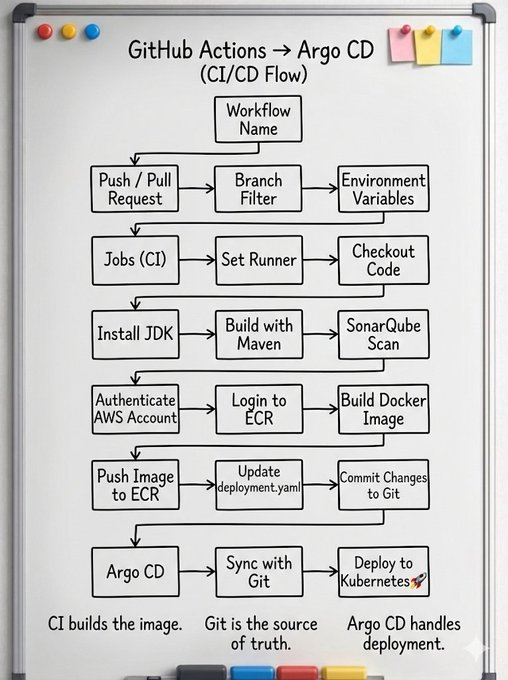
GitHub Actions → Argo CD (CI/CD Flow) Workflow Name ↓ Push / Pull Request ↓ Branch Filter ↓ Environment Variables ↓ Jobs (CI) ↓ Set Runner ↓ Checkout Code ↓ Install JDK ↓ Build with Maven ↓ SonarQube Scan ↓ Authenticate AWS Account ↓ Login to ECR ↓ Build Docker Image ↓ Trivy Security Scan ↓ Push Image to ECR ↓ Update deployment.yaml ↓ Commit Changes to Git ↓ Argo CD ↓ Sync with Git ↓ Deploy to Kubernetes → CI builds the image. → Git is the source of truth. → Argo CD handles deployment. 🎉 Congratulation app deployed to Kubernetes Feel free to add more steps if I missed anything 👇
Nandkishor tweet media
English
6
68
321
11.6K
AppsUnify retuiteado
Aurimas Griciūnas
Aurimas Griciūnas@Aurimas_Gr·
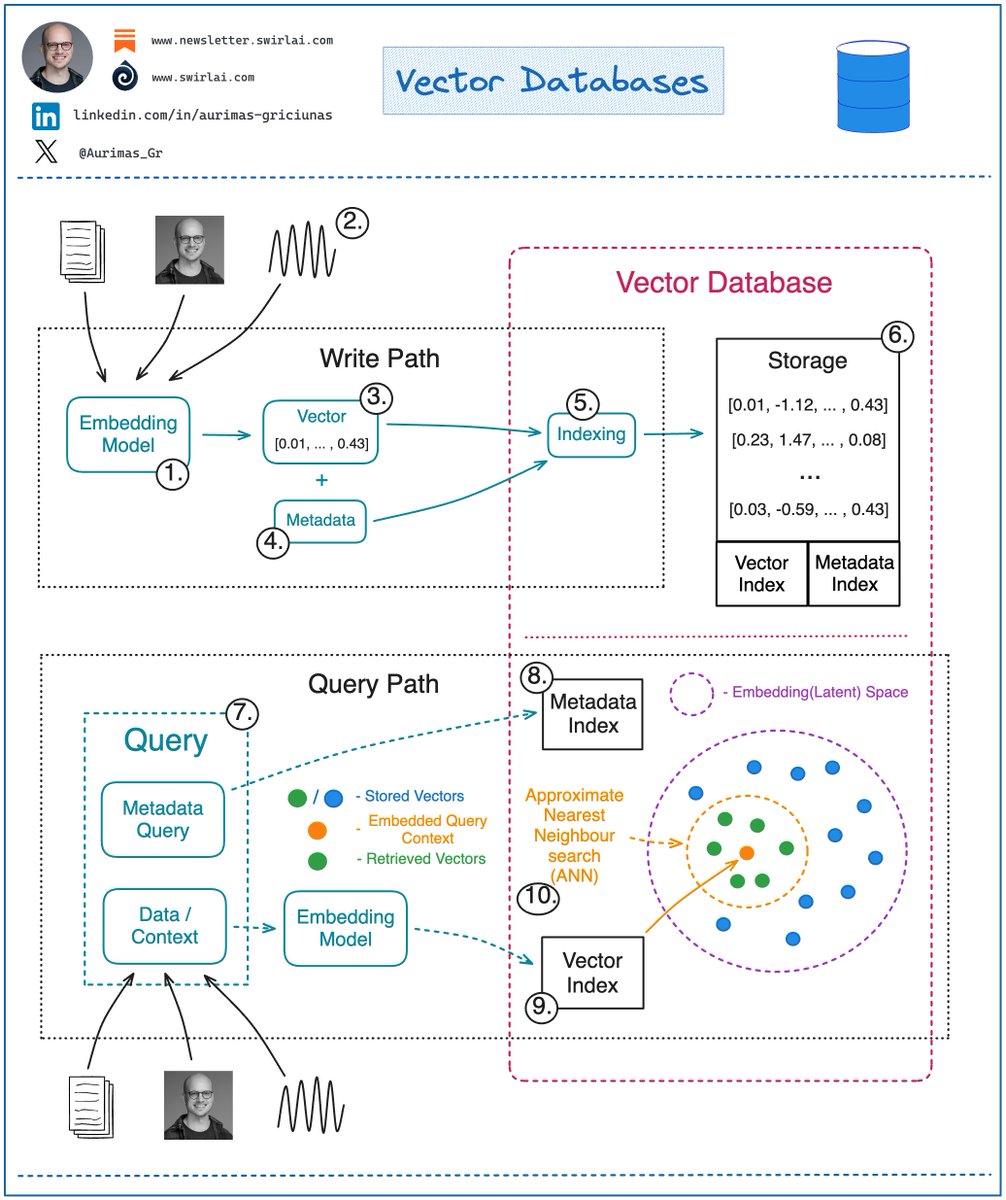
Fundamentals of a 𝗩𝗲𝗰𝘁𝗼𝗿 𝗗𝗮𝘁𝗮𝗯𝗮𝘀𝗲. With the rise of GenAI, Vector Databases skyrocketed in popularity. The truth - Vector Databases are also useful outside of a Large Language Model context. When it comes to Machine Learning, we often deal with Vector Embeddings. Vector Databases were created to perform specifically well when working with them: ➡️ Storing. ➡️ Updating. ➡️ Retrieving. When we talk about retrieval, we refer to retrieving set of vectors that are most similar to a query in a form of a vector that is embedded in the same Latent space. This retrieval procedure is called Approximate Nearest Neighbour (ANN) search. A query here could be in a form of an object like an image for which we would like to find similar images. Or it could be a question for which we want to retrieve relevant context that could later be transformed into an answer via a LLM. Let’s look into how one would interact with a Vector Database: 𝗪𝗿𝗶𝘁𝗶𝗻𝗴/𝗨𝗽𝗱𝗮𝘁𝗶𝗻𝗴 𝗗𝗮𝘁𝗮. 1. Choose a ML model to be used to generate Vector Embeddings. 2. Embed any type of information: text, images, audio, tabular. Choice of ML model used for embedding will depend on the type of data. 3. Get a Vector representation of your data by running it through the Embedding Model. 4. Store additional metadata together with the Vector Embedding. This data would later be used to pre-filter or post-filter ANN search results. 5. Vector DB indexes Vector Embedding and metadata separately. There are multiple methods that can be used for creating vector indexes, some of them: Random Projection, Product Quantization, Locality-sensitive Hashing. 6. Vector data is stored together with indexes for Vector Embeddings and metadata connected to the Embedded objects. 𝗥𝗲𝗮𝗱𝗶𝗻𝗴 𝗗𝗮𝘁𝗮. 7. A query to be executed against a Vector Database will usually consist of two parts: ➡️ Data that will be used for ANN search. e.g. an image for which you want to find similar ones. ➡️ Metadata query to exclude Vectors that hold specific qualities known beforehand. E.g. given that you are looking for similar images of apartments - exclude apartments in a specific location. 8. You execute Metadata Query against the metadata index. It could be done before or after the ANN search procedure. 9. You embed the data into the Latent space with the same model that was used for writing the data to the Vector DB. 10. ANN search procedure is applied and a set of Vector embeddings are retrieved. Popular similarity measures for ANN search include: Cosine Similarity, Euclidean Distance, Dot Product. How are you using Vector DBs? Let me know in the comment section!
Aurimas Griciūnas tweet media
English
10
145
537
21.1K
AppsUnify retuiteado
Alex Xu
Alex Xu@alexxubyte·
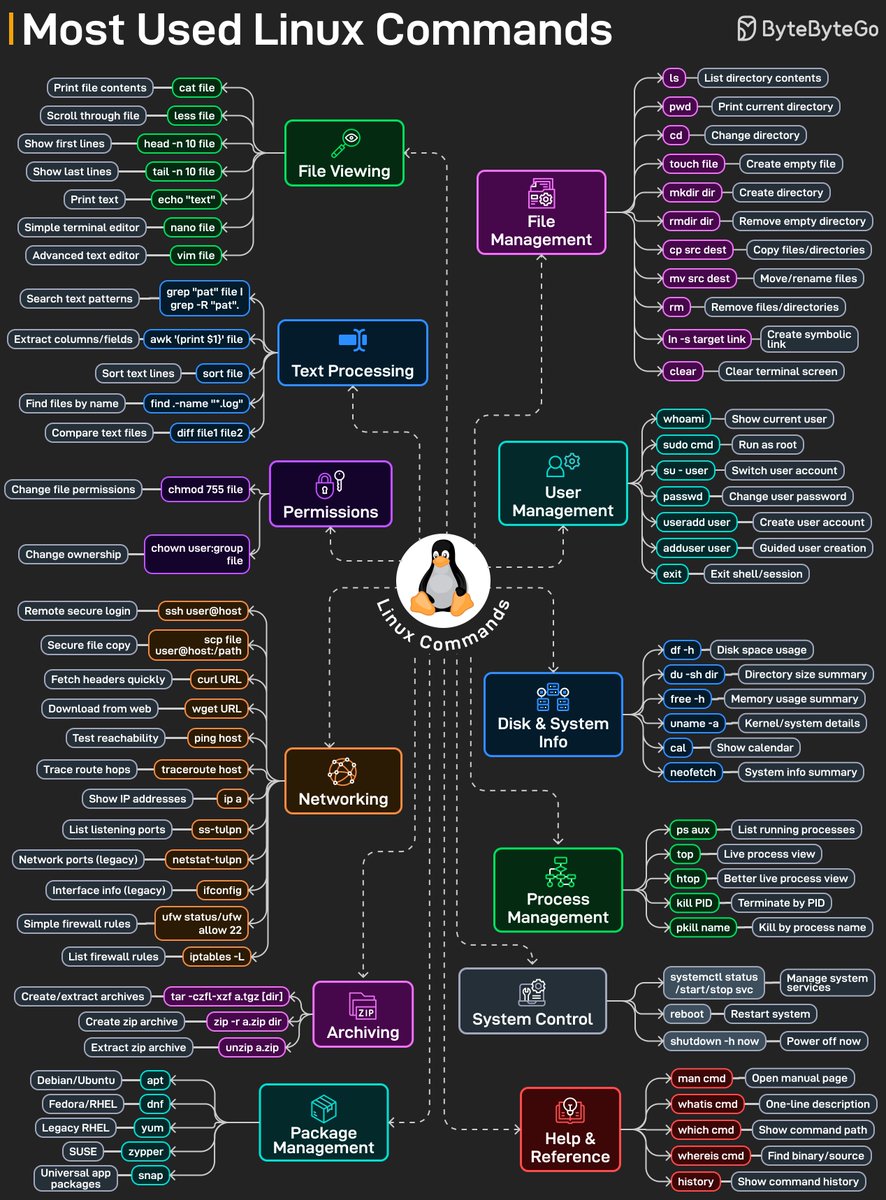
A Cheat Sheet on The Most-Used Linux Commands
Alex Xu tweet media
English
7
174
831
29.2K
AppsUnify retuiteado
Python Programming
Python Programming@PythonPr·
RAG vs Agentic RAG
Python Programming tweet media
English
5
124
691
26K
AppsUnify retuiteado
Alex Xu
Alex Xu@alexxubyte·
REST vs gRPC
Alex Xu tweet media
Latviešu
4
146
920
39.8K
AppsUnify retuiteado
Nikki Siapno
Nikki Siapno@NikkiSiapno·
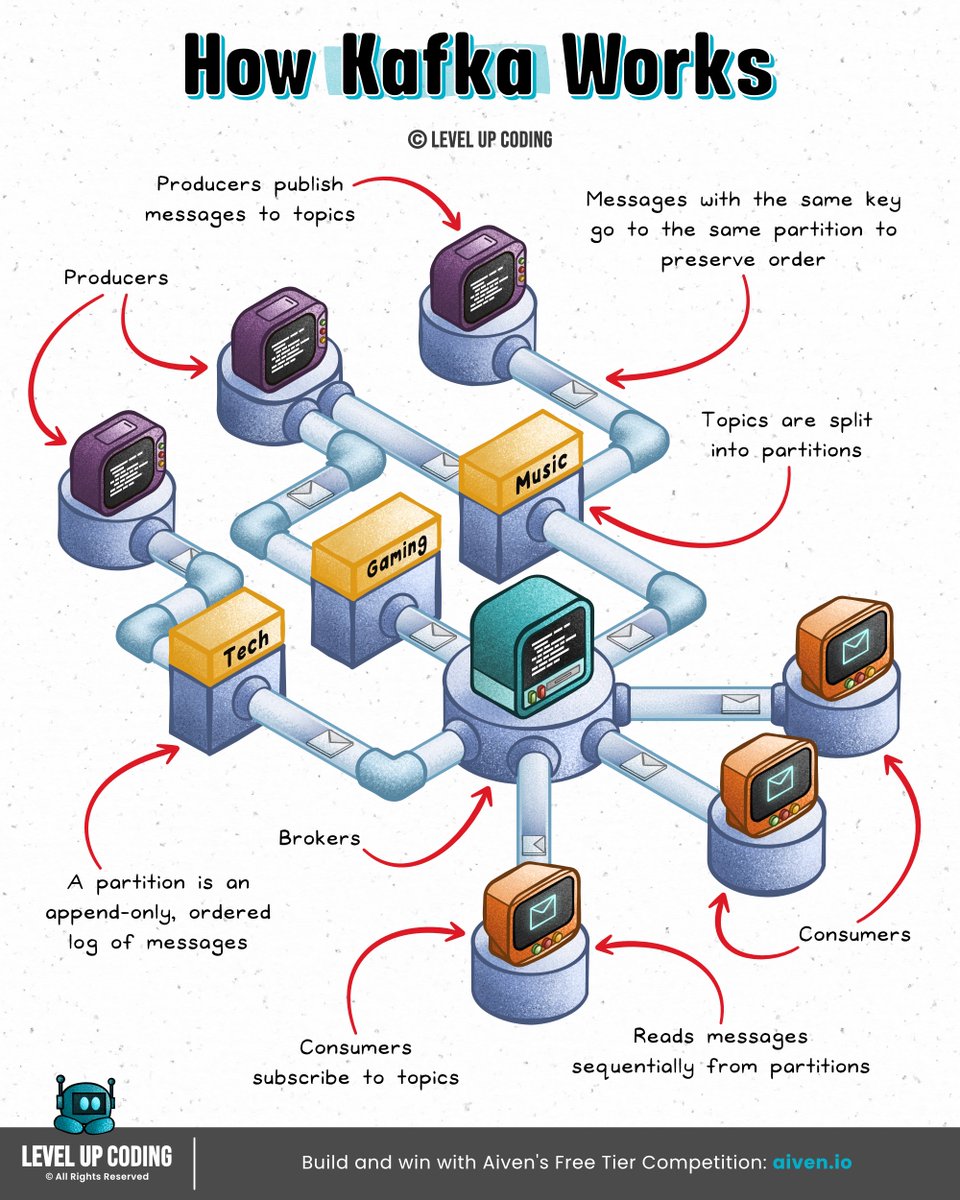
How Kafka works (clearly explained in under 2 mins): First, did you hear about the Aiven Free Tier Competition? They're providing prize money for the best project built using their free tiers (including Kafka, Postgres, and more). If you’ve been meaning to get hands-on with Kafka, this is a great way to do it. Check it out → lucode.co/aiven-free-tie… At its core, Kafka is a distributed commit log. It stores streams of events in append-only logs that multiple systems can read from independently. Here’s a simple mental model to understand it: 𝟭) 𝗣𝗿𝗼𝗱𝘂𝗰𝗲𝗿𝘀 𝘄𝗿𝗶𝘁𝗲 𝗲𝘃𝗲𝗻𝘁𝘀 ↳ Applications publish events like order_created to a topic 𝟮) 𝗧𝗼𝗽𝗶𝗰𝘀 𝗮𝗿𝗲 𝘀𝗽𝗹𝗶𝘁 𝗶𝗻𝘁𝗼 𝗽𝗮𝗿𝘁𝗶𝘁𝗶𝗼𝗻𝘀 ↳ Each partition is an ordered, append-only log ↳ Events are stored with sequential offsets 𝟯) 𝗕𝗿𝗼𝗸𝗲𝗿𝘀 𝘀𝘁𝗼𝗿𝗲 𝘁𝗵𝗲 𝗱𝗮𝘁𝗮 ↳ Kafka runs as a cluster of servers (brokers) ↳ Partitions are distributed across them for scalability 𝟰) 𝗖𝗼𝗻𝘀𝘂𝗺𝗲𝗿𝘀 𝗿𝗲𝗮𝗱 𝘁𝗵𝗲 𝘀𝘁𝗿𝗲𝗮𝗺 ↳ Services subscribe to topics and read events sequentially ↳ Consumer groups allow parallel processing at scale Two important design ideas make Kafka powerful: Decoupling → producers and consumers never talk directly Durability → events are stored on disk and replicated across brokers That’s why Kafka is often used as the event backbone for microservices, analytics pipelines, and real-time systems. What else would you add? —— ♻️ Repost to help engineers learn Kafka. 🙏 Thanks to @aiven_io for sponsoring this post. ➕ Follow me ( Nikki Siapno ) to improve at system design.
Nikki Siapno tweet media
English
2
64
316
34.7K
AppsUnify retuiteado
Alex Xu
Alex Xu@alexxubyte·
Load Balancer vs API Gateway
Alex Xu tweet media
English
9
161
1.1K
41.7K
AppsUnify retuiteado
Nikki Siapno
Nikki Siapno@NikkiSiapno·
Top 12 API Security Best Practices: • Add rate limiting and throttling • Monitor and log activity • Use an API gateway • Encrypt data at rest • Validate all inputs • Version your APIs • Whitelist allowed clients • Use HTTPS • Enforce authentication • Enforce authorization • Manage dependencies proactively • Run regular security audits What else should make this list? —— 👋 PS: Get my FREE 142-page System Design Handbook when you join my free weekly newsletter. Join 31,000+ engineers → lucode.co/system-design-… —— ♻️ Repost to help others learn API security.
Nikki Siapno tweet media
English
11
113
456
15.8K