
Arab Intelligence - المخابرات العربية

42.4K posts

Arab Intelligence - المخابرات العربية banner
Arab Intelligence - المخابرات العربية

Arab Intelligence - المخابرات العربية

@Arab_Intel

Page d'information | Veille politico-stratégique, affaires militaires, terrorisme, pensée Arabe et Histoire des mouvements de libérations nationaux.

OSINT / GEOINT Se unió Mart 2020
20 Siguiendo66.5K Seguidores
Arab Intelligence - المخابرات العربية
🔴 🇮🇱 🇵🇸 #ALERTE | La Knesset adopte à la majorité un projet de loi autorisant la peine de mort par pendaison contre certains prisonniers palestiniens. Une députée, les larmes aux yeux de joie, annonce l’adoption du texte. Itamar Ben-Gvir et plusieurs ministres célèbrent en ouvrant des bouteilles d’alcool.
Français
3
7
30
7.8K
Arab Intelligence - المخابرات العربية
📢 La page recrute des rédacteurs • community manager • chargés de communication 📌 Pour Arab Intelligence et une association (think tank de réflexion) basée à Paris. Rejoindre notre équipe c'est : 🎁 Des droits : • faire partie d'un cercle solidaire • bénéficier d'un large réseau de journalistes, professeurs, officiers, députés etc. • bénéficier d'une formation et développer ses connaissances techniques et théoriques en relations internationales et en science politique. • soutien pour les stages et les alternances 💼 Des devoirs : • une présence à tous les événements organisés par nos structures • accomplir les tâches mentionnées dans la charte • faire preuve d'initiative • avoir un intérêt pour les relations internationales, la science politique et la lecture • excellentes qualités rédactionnelles, rigueur académique et un minimum de connaissances sur les sujets traités • adopter un comportement respectueux et une tenue professionnelle.
Arab Intelligence - المخابرات العربية tweet media
Français
1
1
11
2.9K
Arab Intelligence - المخابرات العربية
🇸🇦🇮🇷 | Les exportations de brut de l’Arabie saoudite depuis ses ports de la mer Rouge se rapprochent de l’objectif du royaume, fixé à 5 millions de barils par jour, selon les dernières données de suivi des mouvements de navires. Le royaume a doublé ses exportations de brut depuis Yanbu en un peu plus de deux semaines. Avec la hausse des flux, ces redirections devraient compenser près de 45 % des expéditions perdues du golfe Persique ce mois-ci. (Bloomberg)
Arab Intelligence - المخابرات العربية tweet media
Français
1
5
8
2.3K
Arab Intelligence - المخابرات العربية
📝 On notera par ailleurs que les États-Unis abattent des drones iraniens bon marché avec des missiles pouvant coûter plus d’un million de dollars, ce qui pousse les startups de défense et les grands industriels à se lancer dans la course à des alternatives moins coûteuses. Une entreprise texane vise notamment à produire un missile à 10 000 dollars, tandis que l’entreprise estonienne Frankenburg Technologies affirme avoir été submergée de demandes de la part de pays du Golfe après avoir vendu ses intercepteurs à deux États. Les missiles moins chers sont généralement adaptés à la défense à courte portée et ne disposent pas de toutes les capacités des systèmes haut de gamme comme le Patriot, bien que des responsables du Pentagone aient indiqué que les petites entreprises offrent de nouvelles options en termes d’accessibilité financière et de capacité de production à grande échelle.
Arab Intelligence - المخابرات العربية@Arab_Intel

🇺🇦🇸🇦🇦🇪🇶🇦🇯🇴 | Ukraine–Golfe : Kiev exporte son savoir-faire militaire en échange de sécurité énergétique L’Ukraine a signé des accords de défense à long terme avec l’Arabie saoudite, les Émirats arabes unis, le Qatar et la Jordanie, a annoncé lundi le président ukrainien Volodymyr Zelensky. Ces accords portent sur une coopération stratégique dans les domaines des technologies militaires, de l’énergie et du commerce pour une durée d’au moins dix ans. Zelensky a précisé que l’Ukraine cherche à renforcer ses capacités anti-balistiques et à sécuriser ses approvisionnements énergétiques, notamment en diesel. En échange, Kiev fournira son expertise et ses technologies en matière de drones.

Français
0
3
12
2.5K
Arab Intelligence - المخابرات العربية retuiteado
turkish intelligence
turkish intelligence@turkish_intell·
📝 The significance of these agreements lies not only in their diplomatic dimension, but in their structural scope: Ukraine is seeking to transform a war of survival into a strategic security export platform. The framework agreements concluded under the impetus of Volodymyr Zelenskyy with Saudi Arabia, the United Arab Emirates, Qatar, and Jordan are part of a long-term (≈10-year) cooperation logic, aimed at structuring a durable exchange space in military technologies, energy, and investment. This is not a formal military alliance, but an integrated security cooperation architecture oriented toward the co-production of capabilities. At the core of this strategy is a transformation of the Ukrainian model: Kyiv no longer positions itself as a mere recipient of assistance, but as a provider of contemporary warfare solutions. Ukraine is leveraging a comparative advantage acquired in a high-intensity environment (drones, electronic warfare, low-cost interception), to offer not only systems, but a complete combat ecosystem: doctrine, detection chains, short innovation cycles, and civil-military integration. This approach goes beyond the traditional logic of arms exports and resembles the diffusion of “operational know-how.” Conversely, the Gulf states are pursuing a strategy of military upgrading and greater strategic autonomy. Their interest in Ukrainian expertise is driven by the evolution of the regional threat environment: proliferation of drones, saturation of defenses, and vulnerability of energy infrastructure and maritime routes. In this context, Ukraine’s experience provides directly transferable lessons, grounded in repeated engagements against large-scale and technologically diverse attacks. For these states, the objective is not merely the acquisition of equipment, but the internalization of adaptive doctrines suited to contemporary conflicts. At the same time, the energy dimension constitutes a structuring lever of these agreements. Ukraine’s vulnerability, heightened by the destruction of its refining capacities and its increased dependence on imports, requires securing critical flows, particularly diesel, which is essential for sustaining the war effort and ensuring economic stability. The Gulf partners provide a guarantee of logistical continuity, effectively turning energy into a strategic variable of indirect support to the front. Taken together, this forms an asymmetrical but coherent strategic exchange: energy resources, capital, and industrial access in return for operational expertise, military innovation, and the transfer of know-how. At the systemic level, these agreements reflect a broader shift: the war in Ukraine is acting as an accelerator in the reconfiguration of defense value chains. It is fostering the emergence of a transregional cooperation space based on pragmatic logic, where states prioritize operational effectiveness and rapid access to critical capabilities over strict politico-military alignment. Finally, this dynamic contributes to a redefinition of Ukraine’s position within the international system. Kyiv is seeking to establish itself durably as a security-producing actor, capable of exporting capabilities, structuring industrial partnerships, and influencing military doctrines beyond its own theater of operations. In the medium term, if these agreements translate into industrial co-development, technology transfers, and a scaling-up of production capacities, they could contribute to the emergence of an Eastern Europe–Gulf military-technological axis, with significant implications for the diffusion of combat technologies and for power balances across multiple regions.
Arab Intelligence - المخابرات العربية@Arab_Intel

🇺🇦🇸🇦🇦🇪🇶🇦🇯🇴 | Ukraine–Golfe : Kiev exporte son savoir-faire militaire en échange de sécurité énergétique L’Ukraine a signé des accords de défense à long terme avec l’Arabie saoudite, les Émirats arabes unis, le Qatar et la Jordanie, a annoncé lundi le président ukrainien Volodymyr Zelensky. Ces accords portent sur une coopération stratégique dans les domaines des technologies militaires, de l’énergie et du commerce pour une durée d’au moins dix ans. Zelensky a précisé que l’Ukraine cherche à renforcer ses capacités anti-balistiques et à sécuriser ses approvisionnements énergétiques, notamment en diesel. En échange, Kiev fournira son expertise et ses technologies en matière de drones.


English
0
2
1
1.4K
Arab Intelligence - المخابرات العربية
🇺🇦🇸🇦🇦🇪🇶🇦🇯🇴 | Ukraine–Golfe : Kiev exporte son savoir-faire militaire en échange de sécurité énergétique L’Ukraine a signé des accords de défense à long terme avec l’Arabie saoudite, les Émirats arabes unis, le Qatar et la Jordanie, a annoncé lundi le président ukrainien Volodymyr Zelensky. Ces accords portent sur une coopération stratégique dans les domaines des technologies militaires, de l’énergie et du commerce pour une durée d’au moins dix ans. Zelensky a précisé que l’Ukraine cherche à renforcer ses capacités anti-balistiques et à sécuriser ses approvisionnements énergétiques, notamment en diesel. En échange, Kiev fournira son expertise et ses technologies en matière de drones.
Arab Intelligence - المخابرات العربية tweet media
Français
0
6
16
5.6K
Arab Intelligence - المخابرات العربية
🇦🇪 | Les Émirats arabes unis envisagent d’investir 12 milliards de dollars sur cinq ans dans le secteur spatial, en s’appuyant sur 170 institutions de recherche et développement, avec pour objectif de s’imposer comme un acteur majeur et d’intégrer le top 10 mondial.
Arab Intelligence - المخابرات العربية tweet media
Français
5
2
9
1.7K
Arab Intelligence - المخابرات العربية
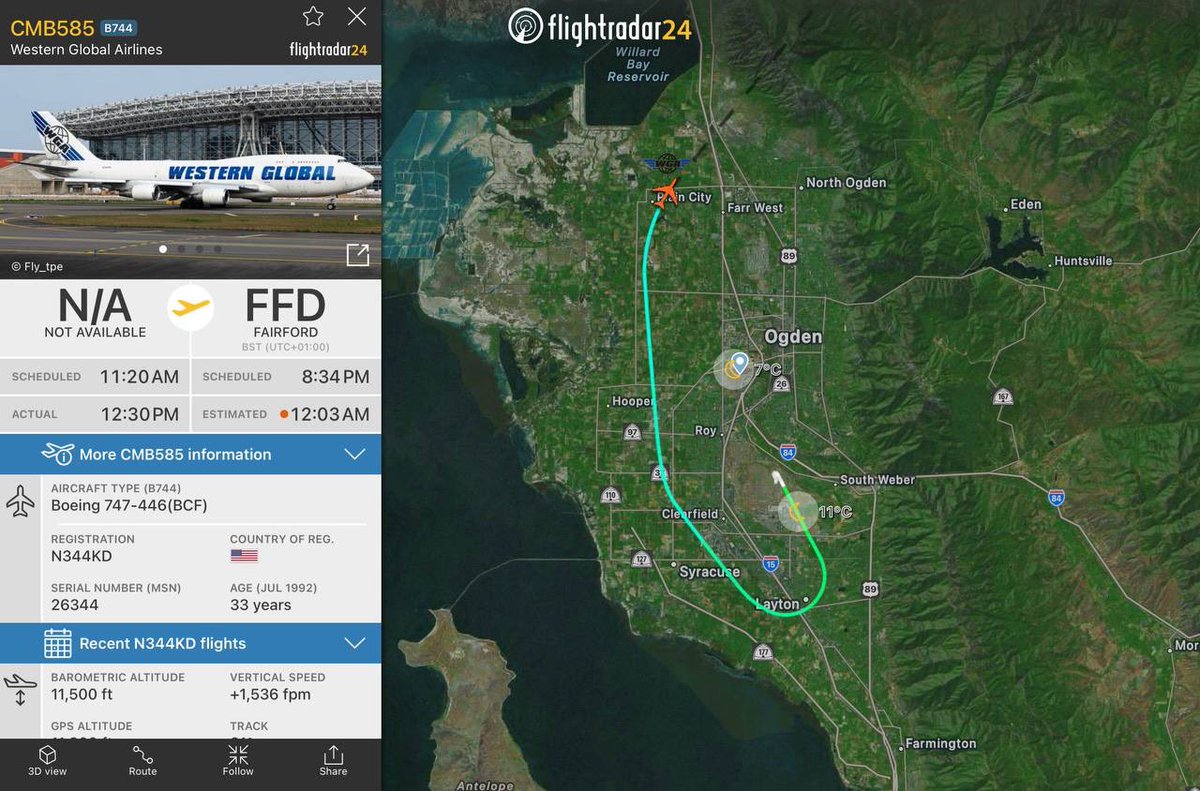
🇺🇸🛫🇬🇧🇮🇷 | Un avion cargo Boeing 747 de Western Global Airlines, couramment utilisé pour la logistique militaire sous contrat, a été suivi au départ de la base aérienne de Hill, dans l’Utah (États-Unis). L’appareil serait en route vers la base de la RAF Fairford, dans le Gloucestershire (Royaume-Uni), une base clé opérée par les États-Unis et fréquemment utilisée pour le déploiement de bombardiers et d’équipements logistiques. 📝 Ce type d’avion est souvent utilisé pour transporter du matériel militaire et des fournitures, y compris des armes, dans le cadre de contrats avec le gouvernement américain ou le secteur de la défense. Ce mouvement intervient dans un contexte de rapports plus larges faisant état d’un renforcement du positionnement des forces américaines, potentiellement lié à des préparatifs d’opérations au Moyen-Orient, bien que cela reste non confirmé.
Arab Intelligence - المخابرات العربية tweet mediaArab Intelligence - المخابرات العربية tweet media
Français
0
6
16
3.4K
Arab Intelligence - المخابرات العربية
🇷🇺🇺🇦 | Moscou tente de construire « l’anneau d’Azov » afin de maintenir le contrôle sur les territoires occupés dans le sud de l’Ukraine, selon Reuters. Des routes et des voies ferrées sont en cours de construction, et un axe de plus de 600 km est en train d’être créé, reliant directement l’ensemble à la Russie.
Arab Intelligence - المخابرات العربية tweet media
Français
3
14
48
6K
Arab Intelligence - المخابرات العربية
🇮🇶🇺🇸🇮🇷 Deux C-17 de l’US Air Force ont été observés hier sur la base aérienne Victoria à Bagdad. Ils participent probablement à l’évacuation des installations médicales de la base. Les hélicoptères HH-60M, aperçus précédemment et ciblés par un drone FPV d’une milice pro-iranienne, ne sont plus présents. Aucune trace de brûlure n’a été observée. Il est possible que les C-17 aient été envoyés spécifiquement pour évacuer ces hélicoptères. La présence d’avions de transport stratégique dans une zone exposée à la menace de drones FPV représente un risque important pour ces appareils. Les C-17 ne semblent pas stationnés et ont probablement déjà quitté la zone.
Arab Intelligence - المخابرات العربية tweet media
Français
0
5
18
2.8K
Arab Intelligence - المخابرات العربية retuiteado
turkish intelligence
turkish intelligence@turkish_intell·
🇬🇧🇺🇸🇮🇷 | The US Air Force has deployed additional tankers to the Diego Garcia base in the Indian ocean. This could suggest that bombers could be deployed here from the US or UK. Currently all bombers taking part in the bombing campaign against Iran are deployed to Fairford, England. As operations are expected to continue for weeks, setting up an second bomber base will increase the resilience and capacity of the bomber force.
turkish intelligence tweet media
English
0
1
2
1.1K
Arab Intelligence - المخابرات العربية retuiteado
turkish intelligence
turkish intelligence@turkish_intell·
🇸🇦🇺🇸🇮🇷 | The destroyed USAF E-3G at Prince Sultan airbase. The loss of the aircraft goes beyond the dolmar value of the aircraft. The USAF had only 16 of such aircrafts, and desptite their age provide a significant role in the American air doctrine. The E-3 was not at its usual emplacement. It was a few hundred meters west. This loss is a further proof that the dispersion of grounded aircraft is not enough to avoid losses, even against an opponent with limited strike capabilities. Coordinates : 24°03'49.48"N 47°32'45.67"E
turkish intelligence tweet media
English
0
4
6
1.7K
Arab Intelligence - المخابرات العربية
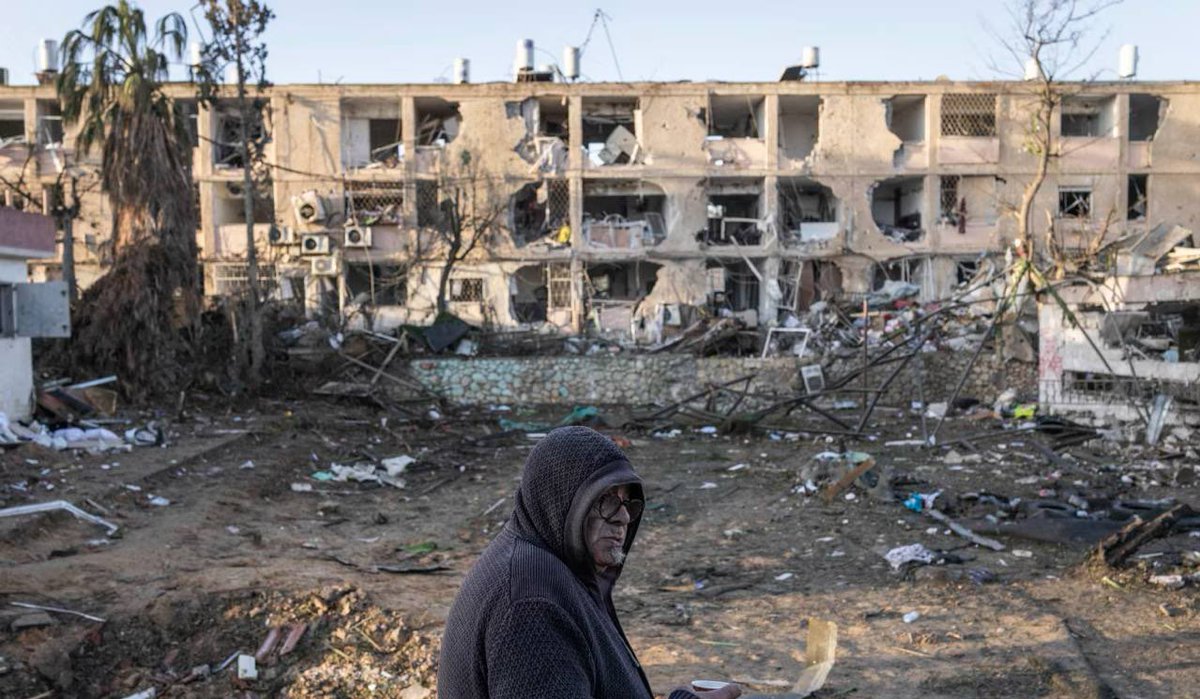
L’analyse décrit la reprise en main totale par l’État ukrainien de son secteur des drones, avec une interdiction stricte d’exportation sans validation officielle, y compris vers les pays du Golfe pourtant très demandeurs. Il explique la pression directe du SBU sur les entreprises, l’extension du contrôle aux structures à l’étranger et le climat de crainte qui bloque toute activité internationale. Il montre aussi les conséquences concrètes : arrêt des négociations, paralysie d’entreprises comme Skyfall et redirection de la demande vers des industriels occidentaux, tandis que Kiev transforme ces technologies en outil stratégique et diplomatique.
turkish intelligence@turkish_intell

Strategic brief: Ukraine blocks drone exports to the Gulf to preserve its advantage over Russia 1/2 Ukraine is currently engaged in a particularly strict phase of reasserting control over its drone ecosystem, signaling a shift toward full state management of technologies now deemed critical. The Security Service of Ukraine (SBU) has imposed a formal ban on all export activities by industry players, whether drone manufacturers or interception system developers, unless explicitly approved within a state-sanctioned framework. This decision comes amid heightened regional tensions, as Gulf monarchies actively seek solutions capable of countering strikes attributed to Tehran, thereby increasing the strategic and diplomatic value of these technologies. In the country’s main industrial hubs, notably Dnipro and Lviv, the message delivered to companies is unequivocal and rooted in a logic of direct deterrence. Several executives report having received explicit warnings from the SBU, going well beyond mere regulatory reminders. These interactions are described as at times harsh, clearly aimed at preventing any independent international initiative. Any attempt to engage commercially without prior authorization now exposes companies to immediate responses from the security services, with some officials even referring to existential risks for the survival of their businesses. This tightening reflects a clear intent to lock down a sector that has become central to Ukraine’s operational advantage. One of the most structuring aspects of this policy lies in its extraterritorial extension. Ukrainian companies with structures within the European Union, previously used as relays to circumvent domestic constraints, are now fully integrated into Kyiv’s control perimeter, provided they develop or operate technologies derived from the battlefield. This approach neutralizes outsourcing strategies and imposes continuity of jurisdiction regardless of the geographic location of production capabilities. As a result, industrial arrangements with European or Middle Eastern partners have become significantly more complex, if not impractical, without political approval. Beyond the formal framework, the entire sectoral climate has shifted. Stakeholders describe an atmosphere marked by caution, even fear, leading to a drastic reduction in interactions with foreign partners. Written communications are avoided, contacts are limited, and some companies have stopped responding to international inquiries altogether. This withdrawal does not reflect a lack of commercial interest, but rather an operational constraint imposed by the security services, effectively freezing export dynamics. The effects of this lockdown are already visible in ongoing negotiations. Several advanced discussions, particularly with clients in Southeast Asia and the Gulf, have been abruptly suspended. The case of Skyfall illustrates this paralysis: despite advanced talks surrounding its Vampire bomber drone, the company is now entirely unable to pursue any export activity. The involvement of Ukraine’s Minister of Digital Transformation, Mykhailo Fedorov, in the company’s financial structuring has not led to any relaxation of restrictions, underscoring the transversal, non-negotiable, and systemic nature of the SBU’s measures. This tightening is part of a broader strategy to sanctuarize technologies developed since the beginning of the conflict. FPV drones, interception systems, and fiber-optic guided solutions are now considered major strategic assets, whose uncontrolled proliferation could erode Ukraine’s tactical advantage against Russian forces. In this context, Kyiv seeks to transform its operational edge into a lever of power by strictly conditioning access to these technologies.

Français
0
1
8
3.1K
Arab Intelligence - المخابرات العربية retuiteado
turkish intelligence
turkish intelligence@turkish_intell·
Strategic brief: Ukraine blocks drone exports to the Gulf to preserve its advantage over Russia 1/2 Ukraine is currently engaged in a particularly strict phase of reasserting control over its drone ecosystem, signaling a shift toward full state management of technologies now deemed critical. The Security Service of Ukraine (SBU) has imposed a formal ban on all export activities by industry players, whether drone manufacturers or interception system developers, unless explicitly approved within a state-sanctioned framework. This decision comes amid heightened regional tensions, as Gulf monarchies actively seek solutions capable of countering strikes attributed to Tehran, thereby increasing the strategic and diplomatic value of these technologies. In the country’s main industrial hubs, notably Dnipro and Lviv, the message delivered to companies is unequivocal and rooted in a logic of direct deterrence. Several executives report having received explicit warnings from the SBU, going well beyond mere regulatory reminders. These interactions are described as at times harsh, clearly aimed at preventing any independent international initiative. Any attempt to engage commercially without prior authorization now exposes companies to immediate responses from the security services, with some officials even referring to existential risks for the survival of their businesses. This tightening reflects a clear intent to lock down a sector that has become central to Ukraine’s operational advantage. One of the most structuring aspects of this policy lies in its extraterritorial extension. Ukrainian companies with structures within the European Union, previously used as relays to circumvent domestic constraints, are now fully integrated into Kyiv’s control perimeter, provided they develop or operate technologies derived from the battlefield. This approach neutralizes outsourcing strategies and imposes continuity of jurisdiction regardless of the geographic location of production capabilities. As a result, industrial arrangements with European or Middle Eastern partners have become significantly more complex, if not impractical, without political approval. Beyond the formal framework, the entire sectoral climate has shifted. Stakeholders describe an atmosphere marked by caution, even fear, leading to a drastic reduction in interactions with foreign partners. Written communications are avoided, contacts are limited, and some companies have stopped responding to international inquiries altogether. This withdrawal does not reflect a lack of commercial interest, but rather an operational constraint imposed by the security services, effectively freezing export dynamics. The effects of this lockdown are already visible in ongoing negotiations. Several advanced discussions, particularly with clients in Southeast Asia and the Gulf, have been abruptly suspended. The case of Skyfall illustrates this paralysis: despite advanced talks surrounding its Vampire bomber drone, the company is now entirely unable to pursue any export activity. The involvement of Ukraine’s Minister of Digital Transformation, Mykhailo Fedorov, in the company’s financial structuring has not led to any relaxation of restrictions, underscoring the transversal, non-negotiable, and systemic nature of the SBU’s measures. This tightening is part of a broader strategy to sanctuarize technologies developed since the beginning of the conflict. FPV drones, interception systems, and fiber-optic guided solutions are now considered major strategic assets, whose uncontrolled proliferation could erode Ukraine’s tactical advantage against Russian forces. In this context, Kyiv seeks to transform its operational edge into a lever of power by strictly conditioning access to these technologies.
turkish intelligence tweet media
English
1
1
1
4.4K
Arab Intelligence - المخابرات العربية
🇺🇸🇮🇷 | Les États-Unis ont utilisé des centaines de missiles de croisière Tomahawk lors des frappes contre l’Iran, avec plus de 850 déjà lancés à ce jour. Ce chiffre est plusieurs fois supérieur au volume acquis chaque année par le Pentagone, qui achète généralement environ 90 missiles par an, bien que la capacité de production soit nettement plus élevée. Des analystes estiment que le Pentagone dispose d’environ 3 100 missiles Tomahawk au total, ce qui suscite des inquiétudes quant au rythme d’épuisement des stocks dans le cadre du conflit. (CBS)
Arab Intelligence - المخابرات العربية tweet media
Français
2
20
86
11.3K
Arab Intelligence - المخابرات العربية
🇮🇱🇮🇷 | Israël adapte sa stratégie antimissile face à un conflit prolongé Israël a commencé à rationner ses intercepteurs de missiles les plus avancés face aux attaques continues de missiles et de drones iraniens, choisissant de préserver ses systèmes haut de gamme comme Arrow, tout en s’appuyant davantage sur des défenses de niveau inférieur. Les responsables israéliens utilisent de plus en plus des versions améliorées de systèmes comme David’s Sling et Iron Dome pour intercepter des menaces à plus longue portée, avec des résultats mitigés. De récentes frappes de missiles balistiques iraniens ont réussi à percer les défenses, avec notamment des impacts directs signalés dans des villes comme Dimona et Arad. Cette évolution met en lumière la pression croissante qui pèse sur les capacités de défense aérienne d’Israël, alors que la poursuite des salves met à l’épreuve les stocks d’intercepteurs et soulève des inquiétudes quant à la soutenabilité des stratégies actuelles dans un conflit prolongé.
Arab Intelligence - المخابرات العربية tweet media
Français
1
9
51
7.5K
Arab Intelligence - المخابرات العربية
🔴 🇺🇸 🇸🇦 | Le président américain Donald Trump à propos du prince héritier saoudien Mohammed bin Salman : 🎙️ « Il ne pensait pas qu’il serait en train de me lécher le cul, vraiment pas… et maintenant il doit être gentil avec moi… il a intérêt à l’être, il doit l’être. »
Français
9
43
109
32.9K
Arab Intelligence - المخابرات العربية
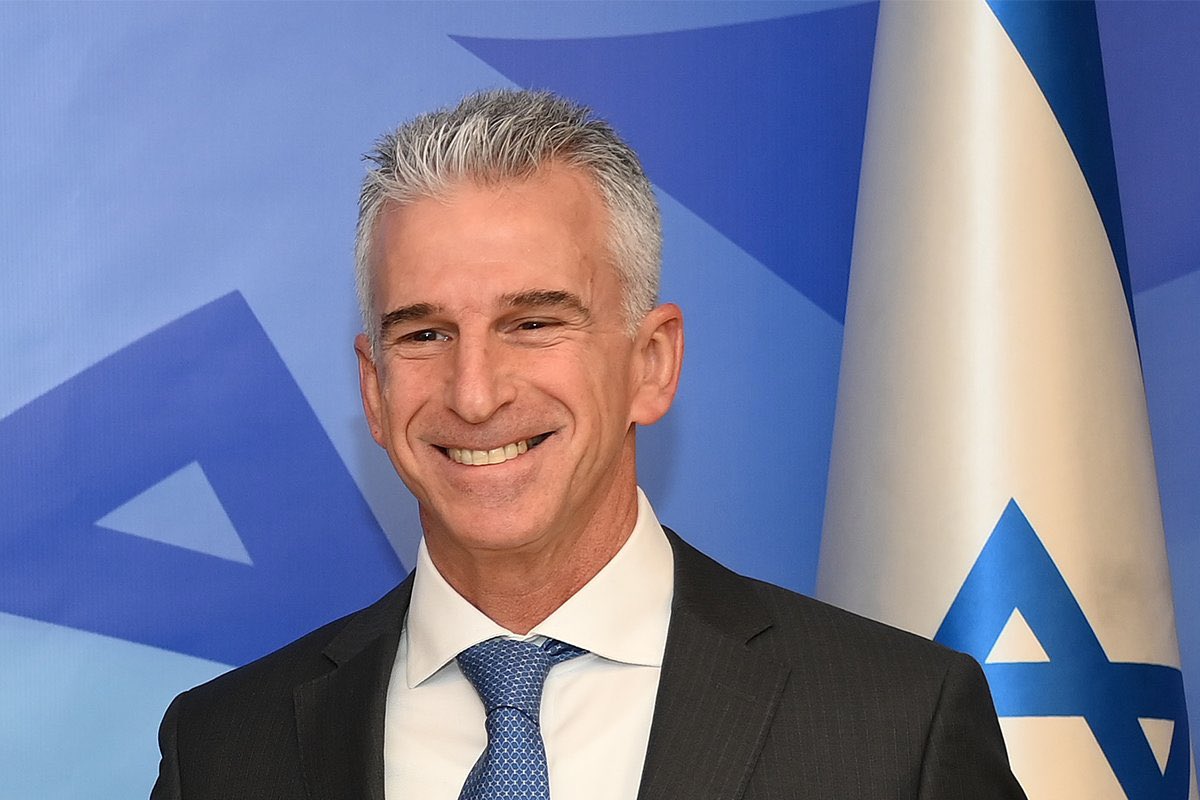
🔎 Cette analyse met en lumière une phase de tensions internes au sein du renseignement israélien, où les divergences ne portent plus seulement sur l’Iran, mais sur l’interprétation des évaluations passées. Le Mossad se retrouve au cœur d’une controverse liée à la relecture de ses analyses, accusées d’avoir été transformées en prévisions erronées. Cette situation révèle une compétition entre services pour le contrôle du récit et la préservation de leur crédibilité. Elle ouvre également un espace politique, où ces fractures peuvent être mobilisées pour redistribuer les responsabilités au sommet de l’État.
turkish intelligence@turkish_intell

🔎🇮🇱🇮🇷 | The current sequence resembles a phase of internal conflict within the Israeli intelligence community, where the central issue is no longer solely the conduct of the war against Iran, but how prior assessments are now being revisited and redistributed in terms of responsibility. In this context, the Mossad, led by David Barnea, is increasingly exposed to indirect criticism, accused of having overestimated the vulnerability of the Iranian regime prior to the outbreak of hostilities. Facing this pressure, the service is moving away from its long-standing posture of discretion: in recent days, individuals close to its leadership have multiplied exchanges in Jerusalem with specialized journalists in order to counter what they perceive as an unfavorable narrative in the international press. The turning point stems from an article published by The New York Times on March 22, parts of which are reportedly based on information originating from the Israeli military’s operations directorate. This account suggests that, prior to the war, the Mossad had assessed that a rapid collapse of the Tehran regime was plausible. It notably refers to a meeting held in January 2026 between Israeli officials—including Mossad representatives—and CIA Director John Ratcliffe, along with members of the agency and the National Security Council. The objective of this exchange was to identify the conditions necessary for the regime’s fall, but its current portrayal tends to transform a strategic assessment exercise into a near-certain prediction of collapse. Until now, the Mossad had deliberately avoided highlighting its role, primarily for operational reasons related to the protection of hundreds of officers deployed inside Iran. This restraint contrasted with the more assertive communication strategy of the air force, military intelligence, and the operations directorate, which have been more vocal about their actions. The shift in posture now observed reflects a necessity: to reestablish the actual nature of the analyses produced and to prevent them from being reframed as a strategic misjudgment. According to the line defended by the service, the work in question fell within a conditional analytical framework rather than a forecast of rapid collapse. The scenario developed relied on a precise and indirect sequence: it envisioned the possibility of triggering, over time, a chain reaction within Iranian society, leading large segments of the population to mobilize in major urban areas against the regime. However, this mechanism depended on specific conditions, particularly the psychological and material impact of U.S. and Israeli strikes. A central element of this controversy lies in the temporality of the scenario. The Mossad insists that this dynamic was only envisaged for the post-conflict phase, once Iranian public opinion had fully absorbed the scale of the destruction inflicted. It was therefore not an immediate effect of military operations, but a delayed process, unfolding over the long term and potentially extending up to a year. This dimension is essential: it distinguishes a model of gradual destabilization from a hypothesis of rapid tipping point, now attributed to the service in certain media interpretations. The current tensions thus reflect a gap between the production and appropriation of intelligence, where an exploratory scenario is reinterpreted as a firm prediction. In a context of uncertainty regarding the strategic outcome of the war, this reframing fuels competition between agencies for control of the narrative and the preservation of their institutional credibility. This internal fragmentation also provides political leverage to Prime Minister Benjamin Netanyahu. In the event of insufficient results, particularly regarding objectives tied to dismantling Iran’s nuclear and ballistic capabilities these divergences allow him to argue that decisions were made on the basis of questionable assessments.
Français
1
2
7
3.1K
Arab Intelligence - المخابرات العربية retuiteado
turkish intelligence
turkish intelligence@turkish_intell·
🔎🇮🇱🇮🇷 | The current sequence resembles a phase of internal conflict within the Israeli intelligence community, where the central issue is no longer solely the conduct of the war against Iran, but how prior assessments are now being revisited and redistributed in terms of responsibility. In this context, the Mossad, led by David Barnea, is increasingly exposed to indirect criticism, accused of having overestimated the vulnerability of the Iranian regime prior to the outbreak of hostilities. Facing this pressure, the service is moving away from its long-standing posture of discretion: in recent days, individuals close to its leadership have multiplied exchanges in Jerusalem with specialized journalists in order to counter what they perceive as an unfavorable narrative in the international press. The turning point stems from an article published by The New York Times on March 22, parts of which are reportedly based on information originating from the Israeli military’s operations directorate. This account suggests that, prior to the war, the Mossad had assessed that a rapid collapse of the Tehran regime was plausible. It notably refers to a meeting held in January 2026 between Israeli officials—including Mossad representatives—and CIA Director John Ratcliffe, along with members of the agency and the National Security Council. The objective of this exchange was to identify the conditions necessary for the regime’s fall, but its current portrayal tends to transform a strategic assessment exercise into a near-certain prediction of collapse. Until now, the Mossad had deliberately avoided highlighting its role, primarily for operational reasons related to the protection of hundreds of officers deployed inside Iran. This restraint contrasted with the more assertive communication strategy of the air force, military intelligence, and the operations directorate, which have been more vocal about their actions. The shift in posture now observed reflects a necessity: to reestablish the actual nature of the analyses produced and to prevent them from being reframed as a strategic misjudgment. According to the line defended by the service, the work in question fell within a conditional analytical framework rather than a forecast of rapid collapse. The scenario developed relied on a precise and indirect sequence: it envisioned the possibility of triggering, over time, a chain reaction within Iranian society, leading large segments of the population to mobilize in major urban areas against the regime. However, this mechanism depended on specific conditions, particularly the psychological and material impact of U.S. and Israeli strikes. A central element of this controversy lies in the temporality of the scenario. The Mossad insists that this dynamic was only envisaged for the post-conflict phase, once Iranian public opinion had fully absorbed the scale of the destruction inflicted. It was therefore not an immediate effect of military operations, but a delayed process, unfolding over the long term and potentially extending up to a year. This dimension is essential: it distinguishes a model of gradual destabilization from a hypothesis of rapid tipping point, now attributed to the service in certain media interpretations. The current tensions thus reflect a gap between the production and appropriation of intelligence, where an exploratory scenario is reinterpreted as a firm prediction. In a context of uncertainty regarding the strategic outcome of the war, this reframing fuels competition between agencies for control of the narrative and the preservation of their institutional credibility. This internal fragmentation also provides political leverage to Prime Minister Benjamin Netanyahu. In the event of insufficient results, particularly regarding objectives tied to dismantling Iran’s nuclear and ballistic capabilities these divergences allow him to argue that decisions were made on the basis of questionable assessments.
turkish intelligence tweet media
English
0
1
3
4.5K