Tweet fijado

The CRASH is imminent! - The End of the US Real Estate cycle - 18.6 Year Cycle. 📉🏘️
The 18.6 year US real estate cycle is coming to its end. This cycle has played out over 200 years and will most likely continue, as that is what cycles do, until one day they break. There will be a point in time when this cycle will no longer play out as anticipated. But so far the market has proven it is something to follow.
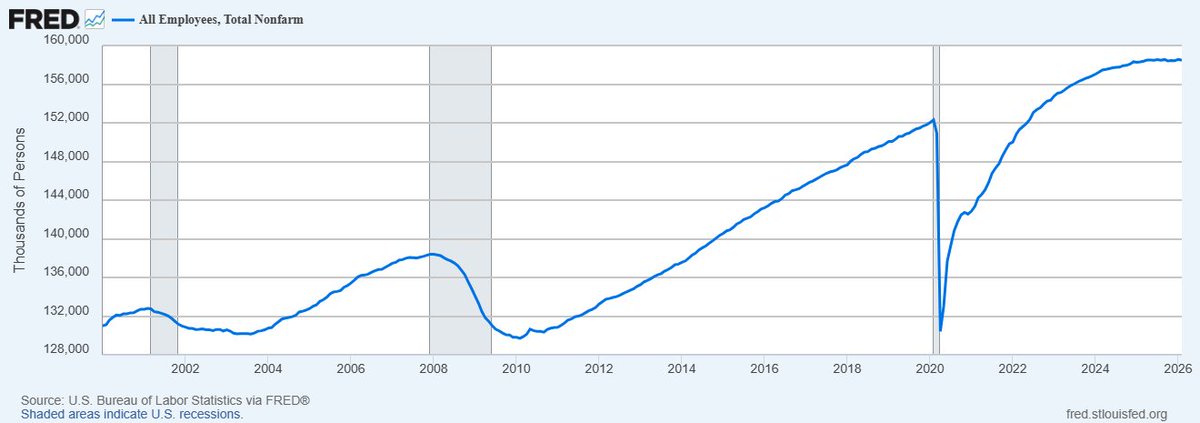
🏛️The housing market, or what it actually is, the land market, is what drives the global economy. The real estate market value is close to 400 trillion US dollars. Almost 4 times more than the second largest asset in the world, which is oil at around 110 trillion. When the real estate market goes down in value, people take less risk as their safe haven no longer increases in value. There are a lot of reasons why the real estate cycle is ending, not only based on the 18.6 year cycle. If you take a look at Nonfarm Payrolls you can see that the job market is starting to slow down. Jobs are still being created, but not at the same pace as before, and that shift is important. The real estate market depends heavily on people having stable income. When payrolls start rolling over, even slightly, it means fewer people can afford homes, and eventually that pressure builds up.
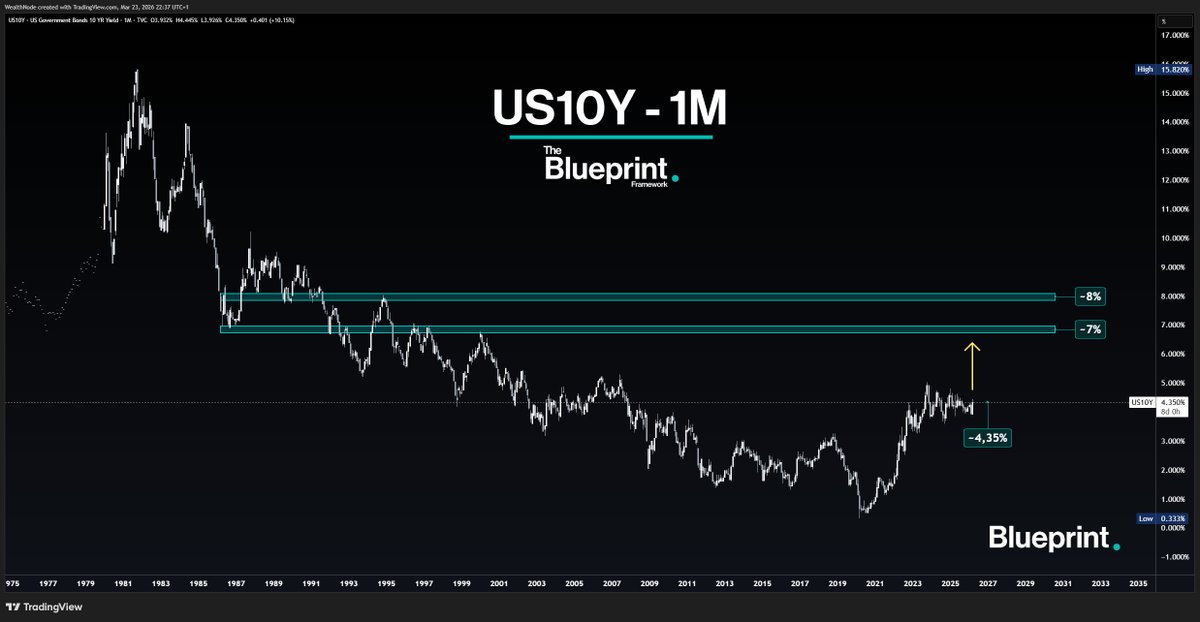
📈At the same time, the US10Y has been high, and it is looking like it wants to go higher from here. This directly impacts mortgage rates. When the 10 year yield goes up, borrowing money becomes more expensive, which means monthly payments on houses increase a lot. Even if prices stay the same, fewer people can afford to buy. This slowly drains demand from the market.
Another thing that has grown a lot in recent years is the Private Credit Market. This is basically lending happening outside of traditional banks. It has been a way to keep money flowing into the system, especially into businesses and real estate. The problem is that a lot of this debt is tied to higher interest rates today. If companies or property owners can’t refinance or handle the higher costs, it can lead to stress, defaults, and forced selling. It doesn’t always break instantly, but it adds pressure under the surface.
In the final phase of the 18.6 year cycle, things usually don’t just collapse right away. First, you often see a push higher in certain areas. Commodities start to move, inflation picks up, and assets like oil tend to spike late. That’s often one of the last signals before things turn. We are already seeing parts of this with agriculture starting to move, which likely reflects rising inflation pressures.
After that phase, the pressure starts to show more clearly. Housing activity slows, jobs weaken, and debt becomes harder to manage. Then eventually, the market rolls over. Not always all at once, but in a sequence.
💸When the real estate cycle ends, there is almost no asset that won’t go down. There is no safe haven. Not gold, not silver, not Bitcoin. Everything tends to sell off hard, at least in the initial phase. The dollar will most likely be the best place to sit. The narrative will likely be that you should move into gold during a recession. It might also be that wars have ended and that there is nothing to worry about anymore. Don’t fall for it.
That’s why this phase is important. It’s not just about prices going up or down, it’s about understanding what is happening underneath the surface.
📊It is important to point out that when the real estate market tops, the stock market usually tops around 1 year after. Keep in mind this does not have to play out the exact same way, but if it does, we might see a stock market top around October this year. It could also be the case that we have already topped. It is incredibly hard to know where the top will be, and no one can predict it.
If the top is not in, I expect a strong rally that will be aggressive and volatile. When will this happen? To begin with, I think we get a bounce from current levels. We might go down a few percentages more, but not much more than that. Then we get a rally for a few weeks. Whether this turns into a larger rally, I don’t know yet. To me, it is more likely that we rally for a few weeks, then top out and continue down. Sometime during June or late summer, we could start the bigger rally, if the larger top is not already in.
📌Anyhow, the markets have been going up for many years. You can see that almost every index has made gains of 50–100% over the past few years. I have been a strong bull since 2022 and became more cautious in 2025. Now I am definitely leaning more bearish, as almost everything from the ending phase of the 18.6 year cycle has played out.
In the end, regardless of how this last rally (if we get one) plays out, I think the market is very likely to go down over the coming years. Yes, years. I don’t expect a huge catastrophic drop any time soon. I think that will occur later, more likely 2027–2028. I think the stock market could find a bottom around 2029. There will be volatile periods, sideways periods, and bear market rallies along the way.
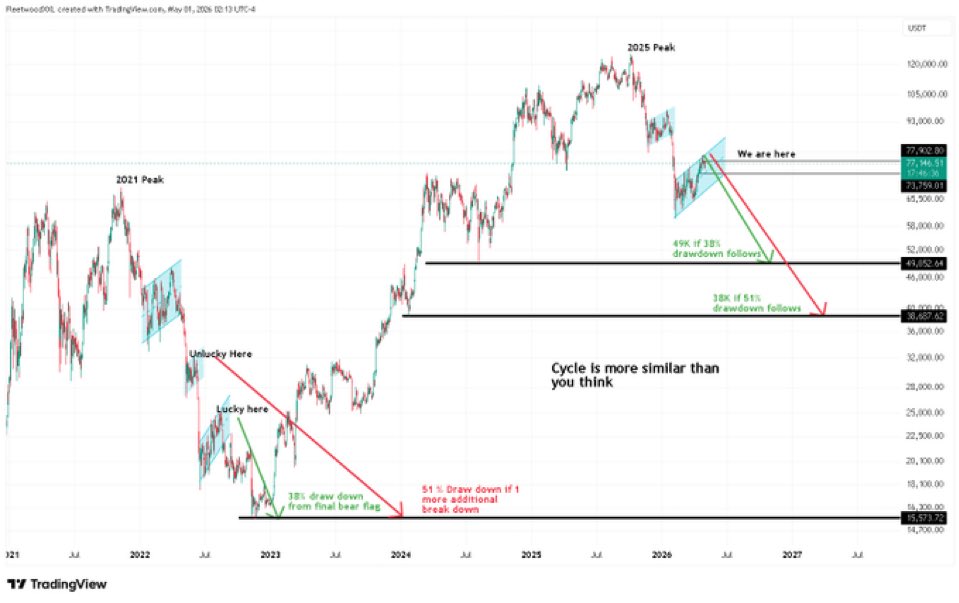
🎯The downside targets are based on historical drawdowns, where the average is around 50% from the top. Sometimes less, sometimes more. It is also based on areas where a lot of volume has taken place, along with Fibonacci and VPVR levels. Of course, these targets do not have to be met, and they do not need to happen exactly in January 2029 either. But it is my estimate of where things could be heading.
💰When we get closer, you can start to DCA in. But until then, I don’t see a reason to do so.
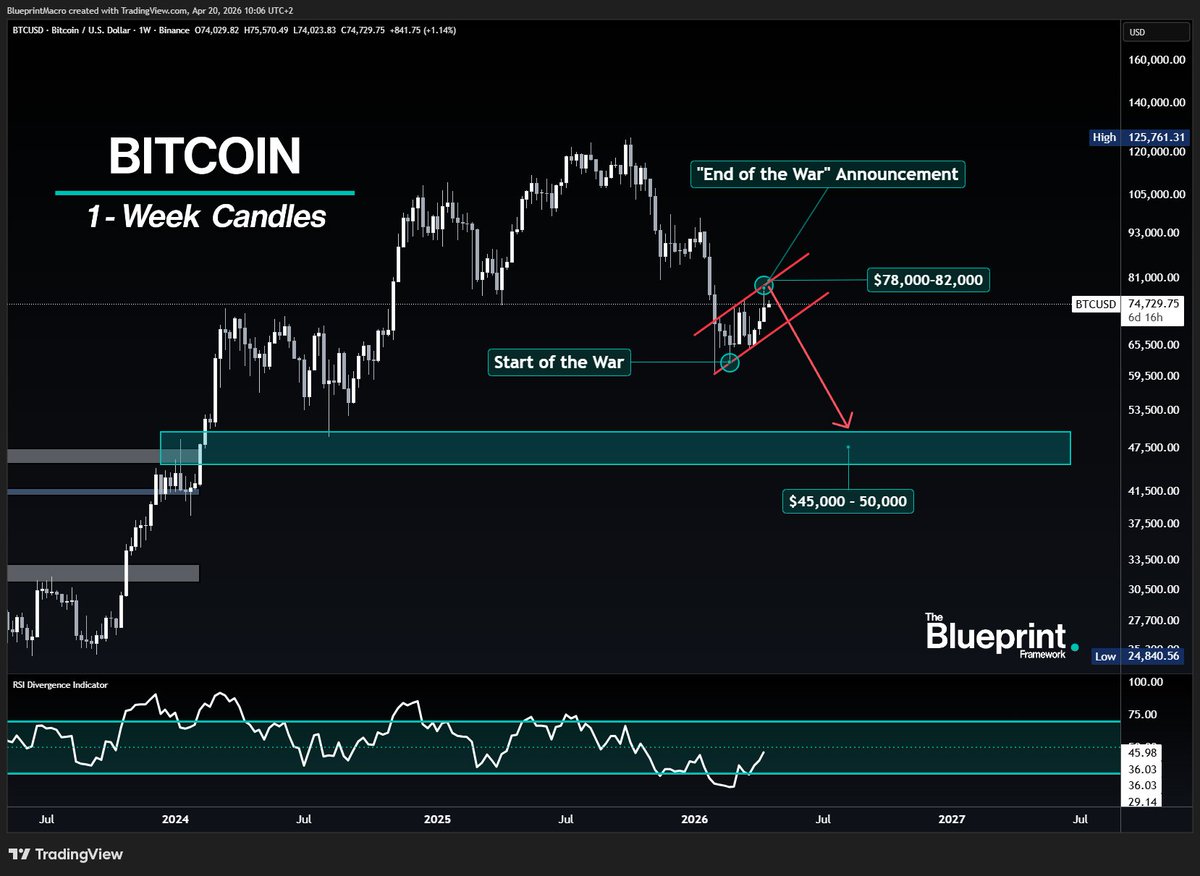
Regarding Bitcoin, and its 4 year cycle, I do think it is possible that it bottoms earlier than expected. It is supposed to bottom in October this year, but since many people expect this, I think it could happen earlier. I also think we may not see a new ATH from that low. If the short-term rally becomes extreme, it could still happen, but most likely not.
So what am I saying? I don’t think Bitcoin will see a new ATH until much later, maybe 2029–2030. Whether it will ever see a new ATH again is also a question, and only time will tell.
I am still very bullish on other blockchains like ETH, SOL, and other protocols. But these will most likely not see new ATHs for several years.
What most people have learned over the last 15 years is to DCA into the S&P 500, funds, or ETFs. This has worked for a long time and will likely continue to work over the long term. But if you expect to be in profit within 5 years by DCA’ing every dip from here, I am not sure that will be the best approach.
There will always be people saying “buy the dip” and “buy the fear”. And yes, it has worked many times. But sometimes, it’s better to wait. That’s at least how I see it.
⌛️Things almost always take longer to play out than expected.
tradingview.com/chart/SPX/iAqY…
…tate.propertysharemarketeconomics.com/18-point-6-pro…
#crash #realestate #sp500 #btc #nasdaq #macro


English