Christ The King

10.1K posts

Christ The King banner
Christ The King

Christ The King

@Catholic_State

PLEASE RETWEET MY TWEETS BECAUSE I AM SHADOW-BANNED!!! May God reward you!

Se unió Aralık 2021
198 Siguiendo1.8K Seguidores
Tweet fijado
Christ The King
Christ The King@Catholic_State·
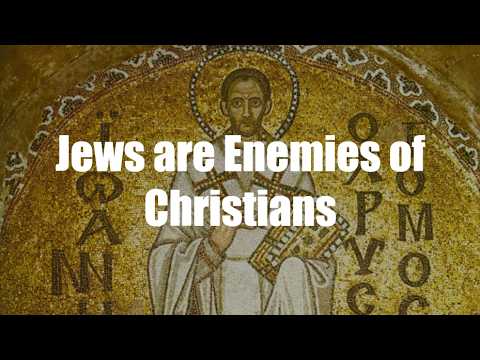
For 2,000 years, Catholic sources taught that Jews who rejected Christ are theological enemies of Christianity. This video documents Scripture, Church Fathers, Doctors, Councils & Popes on Jewish opposition to the Gospel. youtu.be/gHwX2enny-E?si…
YouTube video
YouTube
English
69
599
2.1K
31.9K
Christ The King
Christ The King@Catholic_State·
It's the so-called "Hebrew Catholics" that cherry-pick. Here is a DOGMA declared in the Council of Florence. do you assent? "It firmly believes, professes and teaches that the legal prescriptions of the old Testament or the Mosaic law, which are divided into ceremonies, holy sacrifices and sacraments, because they were instituted to signify something in the future, although they were adequate for the divine cult of that age, once our lord Jesus Christ who was signified by them had come, came to an end and the sacraments of the new Testament had their beginning. Whoever, after the passion, places his hope in the legal prescriptions and submits himself to them as necessary for salvation and as if faith in Christ without them could not save, sins mortally. It does not deny that from Christ’s passion until the promulgation of the gospel they could have been retained, provided they were in no way believed to be necessary for salvation. But it asserts that after the promulgation of the gospel they cannot be observed without loss of eternal salvation. Therefore it denounces all who after that time observe circumcision, the sabbath and other legal prescriptions as strangers to the faith of Christ and unable to share in eternal salvation, unless they recoil at some time from these errors." This includes "Hebrew Catholics" participating in seder meals, celebrating Hannukah, and other practices of Judaism. Here's what the Angelic doctor of the Church said on the matter: "On the contrary, The Apostle says (Galatians 5:2): “If you be circumcised, Christ shall profit you nothing.” But nothing save mortal sin hinders us from receiving Christ’s fruit. Therefore since Christ’s Passion it is a mortal sin to be circumcised, or to observe the other legal ceremonies. I answer that, All ceremonies are professions of faith, in which the interior worship of God consists. Now man can make profession of his inward faith, by deeds as well as by words: and in either profession, if he make a false declaration, he sins mortally. Now, though our faith in Christ is the same as that of the fathers of old; yet, since they came before Christ, whereas we come after Him, the same faith is expressed in different words, by us and by them. For by them was it said: “Behold a virgin shall conceive and bear a son,” where the verbs are in the future tense: whereas we express the same by means of verbs in the past tense, and say that she “conceived and bore.” In like manner the ceremonies of the Old Law betokened Christ as having yet to be born and to suffer: whereas our sacraments signify Him as already born and having suffered. Consequently, just as it would be a mortal sin now for anyone, in making a profession of faith, to say that Christ is yet to be born, which the fathers of old said devoutly and truthfully; so too it would be a mortal sin now to observe those ceremonies which the fathers of old fulfilled with devotion and fidelity. Such is the teaching Augustine (Contra Faust. xix, 16), who says: “It is no longer promised that He shall be born, shall suffer and rise again, truths of which their sacraments were a kind of image: but it is declared that He is already born, has suffered and risen again; of which our sacraments, in which Christians share, are the actual representation.” Reply to Objection 1. On this point there seems to have been a difference of opinion between Jerome and Augustine. For Jerome (Super Galat. ii, 11, seqq.) distinguished two periods of time. One was the time previous to Christ’s Passion, during which the legal ceremonies were neither dead, since they were obligatory, and did expiate in their own fashion; nor deadly, because it was not sinful to observe them. But immediately after Christ’s Passion they began to be not only dead, so as no longer to be either effectual or binding; but also deadly, so that whoever observed them was guilty of mortal sin. Hence he maintained that after the Passion the apostles never observed the legal ceremonies in real earnest; but only by a kind of pious pretense, lest, to wit, they should scandalize the Jews and hinder their conversion. This pretense, however, is to be understood, not as though they did not in reality perform those actions, but in the sense that they performed them without the mind to observe the ceremonies of the Law: thus a man might cut away his foreskin for health’s sake, not with the intention of observing legal circumcision." -Summa Theologica I-II, Question 103. Article 4. Do you "Hebrew Catholics" assent to this dogmatic teaching of the Church? Or have you chosen to not give up the old leaven in avor of the new leaven?
English
0
1
1
40
Yarden James Zelivansky
A lot of people paddling antisemitism are QTing this saying they don’t know any catholic who espouses antisemitism. Saying this on twitter mean you are either deranged to the extent you should probably not be allowed in society or you’re intentionally dishonest.
U.S. Conference of Catholic Bishops@USCCB

Catholics are called to reject antisemitism and the lies and conspiracies that fuel it, and to stand clearly against hatred and violence directed toward our Jewish brothers and sisters. To defend religious freedom with integrity, we must also reject antisemitism. @ArchbishpSample @archdpdx Watch the full video at: ow.ly/sYF550Yw6cA

English
20
2
51
2.8K
Christ The King
Christ The King@Catholic_State·
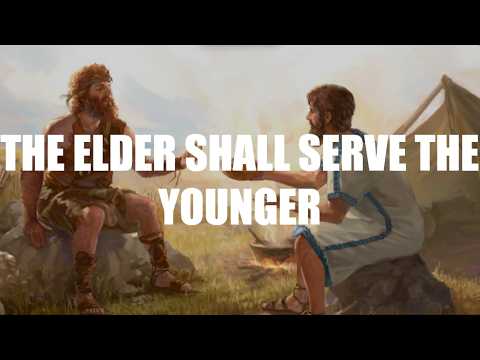
"The elder shall serve the younger." For 1,900 years, Christian Fathers, Doctors, Councils & Popes read Genesis 25:23, 33–34, Romans 9:10–13, and Hebrews 12:16–17 as the foundational oracle of the Church superseding the Synagogue, the Younger Brother receiving the inheritance of the Elder Brother. youtu.be/CkljrPrdR0w?si…
YouTube video
YouTube
English
0
1
6
175
Christ The King
Christ The King@Catholic_State·
Technically speaking, there is nothing incorrect theologically of what he is saying. The problem is threefold: 1. What does he mean by "antisemitism"? 2. What about the Truth of the theological enmity between Judaism and Catholicism? 3. Where is the call to conversion for the Jews?
English
1
2
15
420
U.S. Conference of Catholic Bishops
Catholics are called to reject antisemitism and the lies and conspiracies that fuel it, and to stand clearly against hatred and violence directed toward our Jewish brothers and sisters. To defend religious freedom with integrity, we must also reject antisemitism. @ArchbishpSample @archdpdx Watch the full video at: ow.ly/sYF550Yw6cA
English
3.6K
1.8K
7.4K
1.2M
chizitobandito
chizitobandito@chizitobandito·
@Catholic_State @DrDeepstate Will check it out, thanks. And your biblical approach I feel is the way to go, keep your integrity without getting too political. Like I’ve seen you say, Christ is the focal point.
English
1
0
1
6
Christ The King
Christ The King@Catholic_State·
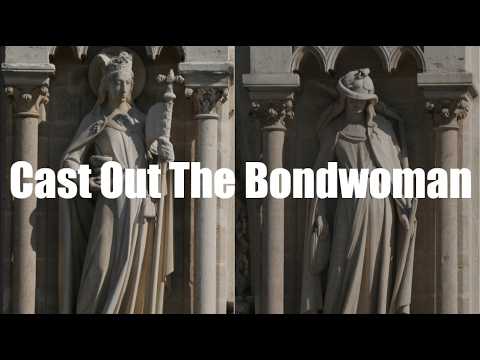
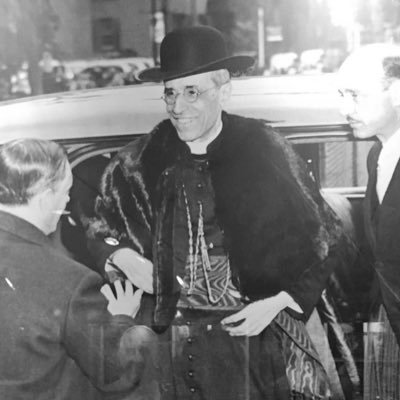
St. Paul's allegory of Hagar & Sarah in Galatians 4:21–31 is the Church's own legal argument for supersessionism: Hagar is the Jews and Sarah is Christians. Chrysostom, Augustine, Ambrose, Aquinas, the Council of Florence, and Pius XII all agree: the bondwoman is cast out. The Church alone inherits. youtu.be/8mNZIabw6b0?si…
YouTube video
YouTube
English
1
4
15
264
Christ The King
Christ The King@Catholic_State·
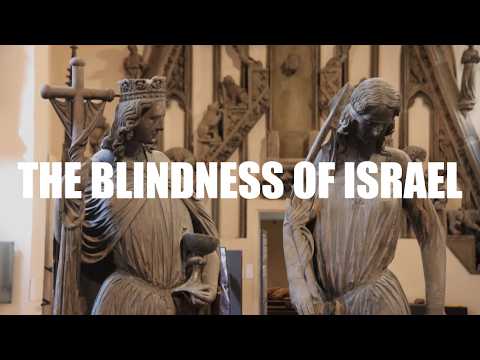
The veil Moses wore became a symbol of spiritual blindness. St. Paul reveals in 2 Corinthians 3: when Moses is read by the Jews, the veil remains upon the heart—until conversion to Christ removes it. Here's Traditional Catholic teaching on the spiritual blindness of Israel and Ecclesia et Synagoga. youtu.be/Mc4WRdDPlWo?si…
YouTube video
YouTube
English
0
2
7
183
Devon Stack
Devon Stack@Black_Pilled·
American jews pretend they helped found the country and it was always based on "judeo-christian values" - The reality is after being thrown out of Eastern Europe for being undesirables, they moved their criminal enterprises to America around 1900 and began to buy influence.
Devon Stack tweet media
English
75
532
2.1K
40.9K
PaulsCorner-VerseQuest
PaulsCorner-VerseQuest@TNTJohn1717·
Romans 9-11 and the Lie That Israel Was Replaced Main Passage: Romans 9-11 Introduction One of the surest ways to tell whether a man is going to let the Bible speak for itself is to put him in Romans 9 through 11 and watch what he does. Those three chapters are not side notes, not marginal comments, not speculative footnotes, and not theological wallpaper. They are the Holy Ghost’s extended treatment of Israel’s calling, Israel’s stumbling, Israel’s present blindness, and Israel’s future restoration. If a man can read Romans 9 through 11 honestly, without dragging in a system to flatten it, twist it, or suffocate it, then he is going to come away knowing one thing beyond all argument: God is not finished with Israel. But if a man is determined to protect replacement theology at all costs, then he is going to start spiritualizing, dodging, redefining, and changing categories so fast you would think he was trying to escape a burning building. That is because these chapters do not leave much room for his game. They say what they say, and they say it so plainly that a child could follow the line if the child were willing to believe the Book. The whole replacement theology scheme rests on one rotten assumption. It assumes that because many Jews rejected Jesus Christ, God therefore canceled His national promises to Israel and transferred them to the Church. That sounds neat to a man who likes tidy systems, but it falls apart the minute you read Paul. Paul does not say Israel was replaced. Paul does not say the Church inherited the covenants by cancellation. Paul does not say God finally gave up on Israel and moved on to a better people. What Paul says is, “Hath God cast away his people? God forbid” (Romans 11:1). That one sentence alone ought to put half the debate in a coffin. But because men are determined to resist what God says, they do not stop there. They bring in Galatians 3, or Ephesians 2, or Hebrews 8, and then pretend those passages erase what Romans 9 through 11 plainly teaches. They do not. They never did. They never will. If the Holy Ghost took three chapters to explain the issue, then no man has the right to walk in with one favorite verse, rip it out of context, and use it like a crowbar against the whole passage. There is something else under this debate that needs to be said plainly. After watching this thing for years, it becomes hard to miss that many of the people who are obsessed with erasing Israel out of God’s program are not just making an innocent mistake in exegesis. There is often a bitterness under it, a hardness under it, a hostility under it, and sometimes a flat-out hatred under it that reveals the condition of the heart more than the meaning of the text. I am not saying every confused person who repeats replacement theology is malicious. Some people are parroting what they were taught. Some are still learning. Some have never had the chapters laid out carefully for them. But the men and women who get angry that God keeps His word, who grind their teeth over the idea that Israel still matters in prophecy, who act like God’s faithfulness to Abraham is some personal insult to them, those people are not just wrestling with a doctrine. There is something sour in the spirit there. The peace of God does not produce that reaction. The love of God does not produce that reaction. A man can disagree and still keep his soul. But when the thought of God being faithful to Israel makes him boil, that tells you there is more going on than careful Bible study. 1. Romans 9 Opens with Israel’s National Position, Not the Church Replacing Them Romans 9 does not begin with the Church replacing Israel. It begins with Paul’s grief over Israel. He says, “I say the truth in Christ, I lie not, my conscience also bearing me witness in the Holy Ghost, That I have great heaviness and continual sorrow in my heart” (Romans 9:1-2). Why? Because his brethren according to the flesh had
PaulsCorner-VerseQuest tweet media
English
87
73
212
56.6K
Christ The King
Christ The King@Catholic_State·
👉 christtheking.info/catholic-resou… 1/ Romans 9-11 and "the lie that Israel was replaced." Let's go through this carefully, because 2,000 years of Catholic tradition has something to say about every claim in this post. 🧵 2/ First, the framing: you accuse replacement theologians of "spiritualizing, dodging, redefining." But you never once interact with the Church Fathers — the men who were closest to the Apostles, who spoke Greek as their native tongue, and who read Romans 9-11 before your system existed. 3/ St. Justin Martyr (100–165 AD) wrote his Dialogue with Trypho — a direct engagement with a Jewish interlocutor — and argued comprehensively that the Church is the true Israel, the seed of Abraham, and the heir of the promises. This is from the generation after the Apostles. 4/ St. Melito of Sardis (~180 AD) wrote Peri Pascha, one of the most striking early Christian documents we possess. He argues that Israel's institutions — the Passover, the temple, the priesthood — were types that found their reality in Christ. The type passes when the reality arrives. That's not "replacement." That's fulfillment of the type's entire purpose. 5/ Tertullian's An Answer to the Jews (written before he fell into Montanism) argues systematically that the old Law has been superseded, that the Gentiles have received what Israel forfeited, and that the Church fulfills the promises. He's not "bitter." He's exegeting. 6/ St. Cyprian of Carthage compiled his Three Books of Testimonies Against the Jews — an entire catena of Scripture passages demonstrating that the Church, not ethnic Israel, is the heir of the covenant promises. This was mainstream Christian theology in 250 AD. 7/ St. John Chrysostom — perhaps the greatest preacher in Church history and a man of extraordinary pastoral charity — wrote his famous homilies Against the Jews precisely to warn Christians away from attending synagogue worship, because he understood it as a rival, now-defunct, system. His concern was theological, not ethnic. 8/ St. Augustine's Treatise Against the Jews and his broader theology of history (developed at length in The City of God) presents Israel as a witness people — preserved, but in a state of spiritual blindness, as a living testament to the truth of Scripture. Augustine did not expect a future national restoration. He expected Jewish conversion to Christ. 9/ St. Jerome, the greatest biblical scholar of the ancient world, the man who gave us the Latin Vulgate — the very Bible from which you quote — read Romans 9-11 without arriving at dispensationalism. He too saw the promises as fulfilled in Christ and the Church. 10/ This is not a fringe position. This is the unanimous tradition of the Fathers. When the Catena Bible — which compiles patristic commentary on every verse — is consulted on Romans 9-11, you do not find a single Father teaching a future ethnic national restoration of Israel separate from conversion to Christ. 11/ Now to Romans 11:1 — "Hath God cast away his people? God forbid." You treat this as a slam-dunk for your position. But read what Paul says next. He points to himself as proof: "I also am an Israelite." The remnant that God has not cast away is the Jewish believers in Christ. That's the argument. 12/ Romans 11:5 confirms it: "Even so then at this present time also there is a remnant according to the election of grace." The remnant is the Church drawn from Israel — not a future national program. Paul is explaining why the Gospel going to the Gentiles doesn't mean God broke faith with Abraham. 13/ Romans 11:26 — "all Israel shall be saved." This is your anchor verse. But the Fathers read "all Israel" as the totality of the elect, both Jew and Gentile, the full number of those predestined — or alternatively, as a future mass conversion of Jews to Christ at the end of time. Neither reading produces a separate national covenant or a restored Jewish kingdom. 14/ St. Thomas Aquinas, the Common Doctor of the Church, addresses this in his commentary on Romans. He does not introduce dispensationalism. He reads Paul's argument as concerning the mystery of election and the grafting of the Gentiles — with the hope of Jewish conversion to Christ, not a restoration of Mosaic institutions. 15/ The entire framework you are defending — that God has a separate prophetic program for ethnic Israel distinct from the Church — was systematized by John Nelson Darby in the 1830s. It has zero patristic support. Zero. You can search the entire corpus of the Church Fathers and you will not find it. 16/ You say men who hold fulfillment theology are "protecting a system." But your system is the novelty. The burden of proof is on the position that appeared 1,800 years after the Apostles, not on the position held universally by the men who learned from them. 17/ The Epistle of Barnabas — one of the earliest Christian documents outside the New Testament — argues that the Jews misread their own covenant by taking it carnally rather than spiritually, and that Christians are the true inheritors of the covenant because they received it in its spiritual reality. 18/ St. Irenaeus of Lyon, writing against the Gnostics in the second century, defends the unity of the two Testaments and the continuity of God's plan — but that plan culminates in Christ and the Church, not in a future Jewish national state. His Against Heresies is a sustained argument for this. 19/ Let's talk about what the medieval Church taught. St. Bernard of Clairvaux, who preached the Crusade and was one of the most influential churchmen of the 12th century, wrote about the Jews — he defended them from mob violence, but he had no concept of a future restoration of Israel outside of conversion to Christ. 20/ St. Thomas Aquinas, in his Summa Theologica and his commentary on Romans, addressed the Jewish question at length. His position: the Old Law was given by God, was holy and good, but is now dead — and to Judaize, to return to its observance, is spiritually dangerous. There is no Thomistic dispensationalism. 21/ The Disputation of Paris (1240), the Disputation of Barcelona (1263), the Disputation of Tortosa (1413–1414) — in all of these, Catholic theologians engaged Jewish scholars directly on the meaning of their own scriptures, arguing that the Messiah had come and that the promises were fulfilled. Not once was a future national restoration of Israel offered as common ground. 22/ Pope Innocent III, Pope Gregory IX, Pope Innocent IV, and many other medieval popes issued extensive legislation concerning Jews — none of it premised on the idea that God had an active, ongoing national covenant with ethnic Israel. The theological framework was always: the Old Covenant is fulfilled; conversion to Christ is the path of salvation for Jewish people as for everyone else. 23/ Now you say that people who get "angry" at God's faithfulness to Israel reveal something wrong in their spirit. But consider: the Church Fathers were not angry at God. They loved God and they loved the truth. Their writings adversus Judaeos were written out of a conviction that the Gospel is for all men — including Jews — and that the synagogue, by rejecting Christ, had become spiritually desolate. That's not hatred. That's theology. 24/ Chrysostom's homilies, which are admittedly harsh in tone, were written in Antioch where Christians were actively attending synagogue services. His pastoral concern was that his flock not be led away from Christ. That context matters enormously when reading his language. 25/ The Good Friday prayer of the traditional Roman Rite prayed for the conversion of the Jews — pro perfidis Judaeis — where "perfidis" carried the theological meaning of "unbelieving," not the modern pejorative sense. The Church prayed for their conversion. That is the Catholic posture: not hatred, not a parallel covenant, but prayer and hope for their coming to Christ. 26/ Pope St. Pius X, when Theodor Herzl came to him in 1904 asking for support for Zionism, refused. His position was clear: the Church could not endorse a Jewish national restoration in the Holy Land, because the Church does not recognize a continuing special national role for the Jewish people outside of Christ. This is not obscure — it's documented in Herzl's own diary. 27/ Cardinal Merry del Val confirmed the same position publicly. Pope Benedict XV's spokesman similarly told Zionists that the Holy See could not support their movement. This was the consistent Vatican position into the 20th century — not because of any ill will toward Jewish people, but because it was theologically incoherent with what the Church believed about the fulfillment of the Old Covenant. 28/ Fr. Denis Fahey's The Kingship of Christ and the Conversion of the Jewish Nation represents the pre-Vatican II Catholic synthesis: the Jewish people are called to conversion to Christ. That is God's plan for them. Not a national restoration. Not a separate covenant. Conversion. 29/ The whole edifice of your argument rests on reading "Israel" in Romans 9-11 as permanently, always, and exclusively referring to ethnic national Israel. But Paul himself destabilizes this in Romans 9:6 — "For they are not all Israel, which are of Israel." Paul draws a distinction within ethnic Israel between those who are truly Israel and those who are not. The elect remnant, not the ethnic totality, is the true Israel. 30/ Romans 9:8 makes it even clearer: "That is, They which are the children of the flesh, these are not the children of God: but the children of the promise are counted for the seed." Fleshly descent from Abraham does not constitute membership in the covenant people. This is Paul's argument, not a Gentile imposition on his text. 31/ Galatians 3:29: "And if ye be Christ's, then are ye Abraham's seed, and heirs according to the promise." This is not a "crowbar" — it is Paul himself saying that being in Christ is what makes one an heir of the Abrahamic promise. This directly addresses your framework. 32/ Galatians 6:16 — "the Israel of God" — applied to the Church. You will work hard to get around this verse, but its plain meaning has been obvious to Catholic exegetes for two millennia. 33/ Ephesians 2:11-22 — the dividing wall broken down, the two made one new man in Christ, no longer strangers to the covenants. Paul is not describing a temporary parenthesis. He is describing a permanent new creation in which ethnic distinctions are not the organizing principle of covenant membership. 34/ Hebrews 8:13 — "In that he saith, A new covenant, he hath made the first old. Now that which decayeth and waxeth old is ready to vanish away." The inspired author calls the Mosaic covenant old, decaying, and vanishing. This is Scripture, not replacement theology propaganda. 35/ The Haydock Commentary — a magnificent compilation of Catholic biblical scholarship — treats all of these passages in their proper theological context. The Catena Aurea of St. Thomas Aquinas does the same for the Gospels. These tools exist precisely so that individual readers do not have to reinvent exegesis from scratch with a modern study Bible and a dispensationalist framework borrowed from 19th-century Protestantism. 36/ You accuse fulfillment theologians of protecting a system. But what system appeared first? The system held by Ignatius of Antioch, Justin Martyr, Irenaeus, Tertullian, Cyprian, Chrysostom, Augustine, Jerome, Aquinas, Bellarmine, and every Council of the Church — or the system invented by John Nelson Darby, popularized by the Scofield Reference Bible, and embedded in American evangelical culture in the 20th century? 37/ The Scofield Reference Bible — the single most influential vehicle for dispensationalism — was first published in 1909. It introduced footnotes that treated Israel and the Church as permanently distinct peoples with permanently distinct programs. This was a novelty dressed up as biblical recovery. The Fathers would not have recognized it. 38/ St. Robert Bellarmine, one of the greatest theological minds of the Counter-Reformation, wrote extensively on eschatology. He did not produce anything resembling dispensationalism. His framework was the traditional Catholic one: the Church is the new Israel, the promises are fulfilled in Christ, and the end of history will involve a great apostasy and the coming of Antichrist — not a rapture, not a tribulation period, not a restored Jewish kingdom. 39/ Francisco Suárez, the great Jesuit theologian, similarly addressed eschatological questions with great precision. No dispensationalism. No separate prophetic track for ethnic Israel. The theological tradition is uniform on this. 40/ St. Francis de Sales, Doctor of the Church and one of the most gentle and charitable figures in Catholic history, wrote on the Jews. His framework was evangelization and conversion — not affirmation of a parallel covenant or a future national program. 41/ St. Lawrence of Brindisi, another Doctor of the Church and a Hebrew scholar who debated Jews directly from their own scriptures, argued for the fulfillment of the Old Covenant in Christ. He did this with great learning and charity. He did not produce dispensationalism. 42/ The Council of Florence (1442) taught that the Mosaic Law, once promulgated, cannot be observed without spiritual peril — that it is now dead. This is a Council of the Church. It is not a marginal opinion. It directly contradicts any framework that treats Mosaic institutions as having a future restoration. 43/ Now — Paul's grief in Romans 9:1-3. You treat his grief over Israel as evidence that God must have an ongoing national plan for them. But Paul's grief is precisely because so many of his kinsmen are outside of Christ. His grief would be unnecessary if they were fine on a separate covenant track. His grief is the grief of an evangelist for the lost. 44/ Romans 10:1 — "Brethren, my heart's desire and prayer to God for Israel is, that they might be saved." Not "that they might receive their national promises." Saved. Through Christ. This is the whole point of Romans 10 — that Israel has not attained righteousness because they sought it through works of law rather than through faith in Christ. 45/ Romans 10:12-13 — "For there is no difference between the Jew and the Greek: for the same Lord over all is rich unto all that call upon him. For whosoever shall call upon the name of the Lord shall be saved." No difference. The same Lord. The same path. Paul is not teaching a two-track system. 46/ The olive tree analogy of Romans 11 — natural branches broken off, wild branches grafted in — does not teach a future restoration of an ethnic national program. It teaches that Israel's unbelief opened the door to the Gentiles, and that Jews can be grafted back in — by faith in Christ. Not by ethnicity. Not by nationality. By faith. 47/ Romans 11:23 — "And they also, if they abide not still in unbelief, shall be grafted in: for God is able to graft them in again." The condition is abiding not in unbelief. That means coming to faith. That means conversion to Christ. The door is open — through the same door everyone else walks through. 48/ This is exactly what the Fathers taught. The conversion of the Jews at the end of time — a hope held by many in the Catholic tradition — is a conversion to Christ, not a restoration of a Mosaic national program. These are not the same thing. Dispensationalism conflates them constantly. 49/ St. Augustine believed a great conversion of the Jews would occur near the end. But he understood it as conversion to Christ through the preaching of Elijah — not a national political restoration, not a rebuilt temple, not a reinstitution of animal sacrifice. The traditional Catholic eschatology and the dispensationalist one are fundamentally different visions. 50/ The claim that anyone who resists your reading is motivated by "bitterness" or "hatred" is worth examining. The Church Fathers, the medieval theologians, the great Doctors of the Church, the popes — all of whom held fulfillment theology — were they all bitter? Was Augustine bitter? Was Thomas Aquinas bitter? Was Robert Bellarmine bitter? Or is it possible that a serious, learned, charitable reading of Scripture simply arrives at different conclusions than yours? 51/ There is a tradition of 2,000 years of Catholic biblical scholarship, patristic commentary, conciliar teaching, and papal theology waiting to be consulted. It does not support your framework. It consistently, unanimously, and across every century supports the fulfillment of the Old Covenant in Christ and the Church as the New Israel. 52/ If you are genuinely interested in letting the Bible speak for itself — read it through the eyes of the men who received it from the Apostles. Read Justin Martyr on Romans. Read Chrysostom on Romans. Read Augustine on Romans. Read Aquinas on Romans. Then come back and tell us where they went wrong. 53/ The resources are here. Two thousand years of the Church reading Scripture. Not a system invented in 1830. Not footnotes from a Scofield Bible. The actual tradition.
English
3
1
11
246
Christ The King
Christ The King@Catholic_State·
Five centuries before Christ, Daniel predicted the exact era of the Messiah — His coming, His death, the fall of the Temple, and the spiritual desolation of the Jews. The Church Fathers, the Councils, and the Popes have said the same thing for 2,000 years. The numbers point to Jesus. youtu.be/TIBY_ySDIoo?si…
YouTube video
YouTube
English
2
15
59
1.8K
American Reform
American Reform@AmericanReform_·
Nostra Aetate is RUPTURE with Catholic tradition and the unanimous teaching of the Fathers. Great contrast, @ExUtopo . Here’s further confirmation of the authentic sense of NA #4. — John Paul II’s address in the Roman Synagogue on April 13, 1986. “It is not permissible to say, despite the Church’s awareness of her own identity, that the Jews are ‘reprobate or accursed,’ as if this were taught, or could be deduced from the Sacred Scriptures, both the Old and the New Testament”.
Utopus@ExUtopo

Fr. Cornelius à Lapide, S.J. on the rejection of the Jewish synagogue as alluded to in Galatians 4:29–30 compared with the Second Vatican Council’s Nostra Aetate.

English
4
12
49
2.3K
Christ The King
Christ The King@Catholic_State·
Follow me on my other social media: @TheCatholicState" target="_blank" rel="nofollow noopener">facebook.com/@TheCatholicStinstagram.com/the_catholic_s… t.me/thecatholicsta… thecatholicstate.locals.com @catholicstate" target="_blank" rel="nofollow noopener">substack.com/@catholicstate gab.com/TheCatholicSta… @thecatholicstate?si=KFuATrDXZ6weqFIF" target="_blank" rel="nofollow noopener">youtube.com/@thecatholicstrumble.com/c/TheCatholicS… bitchute.com/channel/HWMC26… @ChristTheKing" target="_blank" rel="nofollow noopener">odysee.com/@ChristTheKing
English
0
1
2
99