

Counterpoint
1.1K posts

Counterpoint
@CounterpointBD
A weekly newspaper offering bold opinion, critical analysis & fresh perspectives. Print every week. Online daily. #CounterpointBD
Se unió Mayıs 2025
1 Siguiendo426 Seguidores
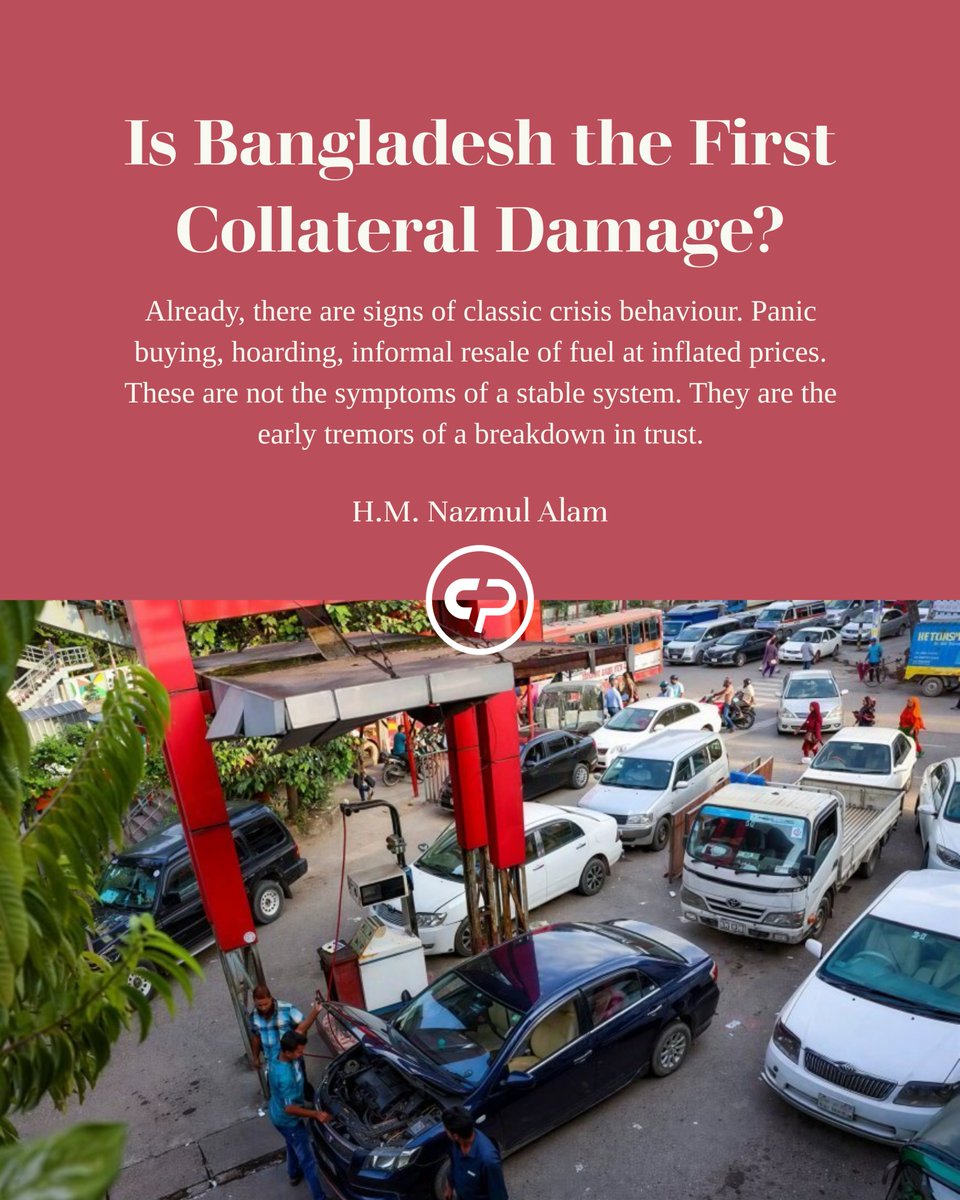
The image is almost cinematic. Long queues of motorbikes curling around petrol pumps in Dhaka, bamboo barricades guarding empty stations, dispensers wrapped in plastic like relics of a vanished normalcy.
A man waits two hours for fuel to travel 22 kilometres. Behind him, dozens return empty-handed.
The city, once defined by its relentless motion, begins to slow. Streets thin out, not by design but by depletion.
This is not fiction. It is a warning.
Recent reporting by The Independent UK, alongside detailed data from Bonik Barta, presents a stark possibility that would have sounded alarmist only months ago.
Bangladesh, a country of 175 million people, may find itself among the first casualties of a prolonged US-Iran conflict, not through bombs or sanctions, but through the quiet suffocation of energy.
The Strait of Hormuz, that narrow artery through which nearly 90% of Asia’s crude oil flows, has once again become a geopolitical choke point.
When it tightens, countries like Bangladesh, heavily dependent on imported fuel, feel the pressure almost immediately. The numbers tell a story that rhetoric cannot conceal.
Bangladesh imports roughly 95% of its fuel. Its reserves, at certain points in recent weeks, have hovered around levels sufficient for barely 10 to 14 days.
Diesel stocks have dropped to around 115,000 tones, while octane reserves linger at levels covering just a couple of weeks of demand.
Yet, in the face of these figures, the official line insists that there is no crisis.
This dissonance between reality and rhetoric is not merely a political inconvenience. It is a dangerous gamble.
Denial has never been a substitute for preparedness. It neither fills fuel tanks nor reassures markets. Instead, it risks deepening panic.
Already, there are signs of classic crisis behaviour. Panic buying, hoarding, informal resale of fuel at inflated prices, and rising tensions at petrol pumps.
These are not the symptoms of a stable system. They are the early tremors of a breakdown in trust.
The deeper problem, however, predates the current war. The crisis is not being created in real time. It is being exposed.
For years, Bangladesh has steadily increased its dependence on imported energy, particularly liquefied natural gas.
According to Bonik Barta, local gas production has declined by approximately 37% over the past eight years.
From a peak of around 2.7 billion cubic feet per day in 2018, output has fallen to nearly 1.7 billion cubic feet. This decline has not been offset by aggressive exploration or investment.
Instead, it has been compensated through imports. Imports that are now vulnerable.
The structure of this dependency is revealing. Bangladesh signed long-term LNG deals with Qatar and Oman, and supplemented these with purchases from the volatile spot market.
Over seven years, the country spent nearly Tk 199,706 crore on LNG imports.
For the current fiscal year alone, the projected cost exceeds Tk 51,000 crore. These figures might have been sustainable under stable global conditions.
They are not sustainable under geopolitical shock.
When LNG cargoes suddenly cost two or even three times their previous price, the strain is immediate. Foreign exchange reserves come under pressure.
Subsidy burdens balloon. Fiscal space shrinks. And the government is forced into a reactive posture,
scrambling to secure supplies at any cost.
This is precisely what is unfolding now.
The BNP-led government, still consolidating its authority after a turbulent political transition, finds itself navigating a crisis that demands both immediate action and long-term vision.
In the short term, it has turned to the spot market, sought alternative suppliers from countries as diverse as Nigeria and Australia, and attempted to secure external financing.
These are necessary but insufficient measures. The more pressing question is whether there is a coherent strategy beyond firefighting.
Is there a plan for demand management that goes beyond symbolic measures? Is there a roadmap for reducing import dependence?
Is there a credible effort to accelerate domestic exploration, despite years of stagnation?
Is there an institutional mechanism to prevent syndicates from distorting supply during crises?
Or is the approach still anchored in the hope that the storm will pass?
The temptation to rely on hope is understandable. The global energy system has a history of self-correction.
Prices rise, supply adjusts, tensions ease. But hope is not a policy. And Bangladesh’s vulnerability is structural, not cyclical.
Consider the broader implications. Energy is not just about transport or electricity. It is the lifeblood of industry, agriculture, and urban life.
A prolonged disruption would mean reduced industrial output, particularly in energy-intensive sectors like textiles.
It would mean irregular power supply, affecting both households and businesses. It would mean rising costs of production, feeding into inflation.
It would mean a slowdown that could ripple through employment and social stability.
In extreme scenarios, the phrase “grinding to a halt” ceases to be metaphorical.
The irony is that Bangladesh has faced warnings before. The Russia-Ukraine war in 2022 offered a preview of how global conflicts can disrupt energy markets.
Prices surged, supply chains tightened, and countries scrambled to adapt. That moment should have triggered a strategic rethink.
Instead, as energy experts have repeatedly pointed out, the response remained largely tactical.
Exploration projects stalled. Planned drilling targets were missed. Infrastructure for gas transmission remained incomplete, with discovered reserves in places like Bhola still disconnected from the national grid.
Even tenders for offshore exploration failed to attract sustained investment.
In effect, the country continued to withdraw more energy than it discovered, bridging the gap with imports.
This model works until it doesn’t.
The current crisis is that moment of reckoning. It exposes the fragility of a system built on external dependence and internal inertia.
It forces a confrontation with uncomfortable questions. Why has domestic exploration lagged for so long? Why has energy diversification been slow?
Why does policy often react to crises rather than anticipate them?
And perhaps most importantly, can the current leadership break this pattern?
The BNP government faces a test that is as much about governance as it is about energy. It must move beyond denial and engage with the reality of the situation.
This does not mean creating panic. It means building credibility. Transparent communication, clear policy direction, and visible action can do more to stabilize public confidence than blanket assurances.
At the same time, it must think beyond the immediate crisis. Conservation measures, including work-from-home policies and reduced non-essential consumption, can provide short-term relief.
But long-term resilience requires deeper reforms. Accelerated exploration of domestic gas fields. Investment in renewable energy.
Development of storage infrastructure to buffer against supply shocks. And a regulatory framework that curbs market manipulation.
None of these are quick fixes. But they are necessary.
The geopolitical context adds another layer of urgency.
The US-Iran conflict may or may not escalate further. The Strait of Hormuz may reopen fully or remain partially constrained.
These are variables beyond Bangladesh’s control. What is within its control is how it prepares.
History often remembers wars not just by their direct participants, but by their unintended victims.
Economies that falter, societies that strain, governments that stumble under pressure.
In that sense, the idea of Bangladesh as a potential “first casualty” of this conflict is less about sensationalism and more about structural vulnerability.
The question, then, is not whether the crisis exists. It clearly does.
The question is whether Bangladesh is willing to acknowledge it, confront it, and learn from it. Because if the response remains rooted in denial, the queues at petrol pumps may only be the beginning.
English
That assessment was made with a partial closure and a partial price spike. A prolonged closure, through the northern hemisphere summer with European storage at multi-year lows, with the fertilizer shock landing in retail prices by August with Goldman's recession probability, is already at 30%.
English
There is a scenario, not a fringe scenario, a plausible and discussed scenario among energy security analysts where the Strait of Hormuz remains effectively closed through summer 2026. The IEA has already called the current disruption the worst energy security crisis ever recorded.
English
Many of us observing this unjust war imposed on the revolutionary Islamic Republic of Iran are getting our reports from the global corporate media outlets that historically manufacture consent in favor of their financial and political sponsors on the side of the aggressor -- namely the Genocidal Entity in Occupied Palestine (GEOP) and their loyal and equally genocidal and supremacist American minions and attack dogs.
They do so by sourcing and deploying intellectually dishonest, rather than credible and fair-minded analysts. By either devaluing or simply omitting perspectives that challenge their intellectually dishonest narratives, they aim to benefit a particular ecosystem of power and its nodes that patronize those propaganda and disinformation outlets from multiple sectors and directions, especially in times of perpetual wars for profit and power.
Driven by the typically uncritical acceptance of those narratives, everyone tends to count missiles, monitor sirens, and observe the spectacular launch of interceptors.
However, not many are performing the critical calculation that genuinely indicates who is winning this conflict regardless of kill counts or territorial control.
Here is the statistic that will generate the discomforting combination ranging from shock and disbelief to cognitive dissonance with a powerful dose of confirmation bias.
Emerging facts indicate that Iran is currently earning more per barrel of oil than it did before the first missile was launched by the GEOP-American nexus. The current 10-day “pause” in the name of “continued negotiations” is happening when the 10-year Treasury yield crossed 4.4% with the no man's land at 4.5%.
Naturally, the American minions of GEOP are desperately worried that the economy will really fail. This clearly suggests that their decisions are tied to the financial market and that this war is also a financial instrument.
Either way, a lucrative revenue stream for Iran has been generated not in spite of the war on Iran, but as a result of it. Bloomberg reported on March 26 that Iran has been selling crude oil to China at the narrowest discount to Brent in over ten months.
Brent crude closed on Friday, March 27 at US$112 a barrel. That is a 51% increase in a single month. This 51% is not a ceiling, it is the floor in light of the escalating reality without a visible off-ramp for the aggressors. Additionally, Brent crude range surpassed US$119 a barrel, which is more than 100% above pre-war levels over 52 weeks.
The previous record for a disruptive surge was 46% in 1990 when the same aggressors attacked Iraq for the first time. This time however, it is not a disruption. It is a structural fracture in the energy ecosystem that held the world economy together since 1973. It is the most severe such shutdown in the history of the modern energy market that took only 30 days to take shape.
Unlike 1990, this is a criminal campaign against an anti-imperialist revolutionary Islamic republic established and sustained by popular sovereignty. It is a war against Iran and its allies of the Muqawama capable of controlling two of the most consequential choke points in global energy and other commodities -- namely, the Strait of Hormuz in the Persian Gulf, and the Bab Al-Mandab Strait connecting the Red Sea with the Gulf of Aden.
As of today, tanker traffic through the Strait of Hormuz has dropped by 97% since the aggression started on February 28. Recent Ansarullah attacks indicate similarly dramatic decline in tanker traffic across the Bab Al-Mandab Strait soon enough.
It was also the week when Goldman Sachs raised its US recession probability to 30% with an increasingly high probability of an upward trajectory. Privately, their analysts speaking to institutional clients are modeling scenarios where an increasingly likely prolonged closure pushed the price oscillating between US$112 and US$200 with both choke points compromised, as 10 million barrels of daily oil production from Kuwait, Iraq, Saudi, and other Gulf fiefdoms disappears entirely.
The US$200 scenario will lead to American gas prices breaching US$10 per gallon nationwide. The S&P will lose 15% or more within 48 hours of a confirmed full closure. The Federal Reserve will face the most impossible monetary policy dilemma since the stagflation of the 1970s: Raise rates to fight inflation caused by those energy prices or cut rates to fight the recession also caused by the same energy prices?
Europe will enter a technical recession before the summer as global food prices also spike because sulphur and urea fertilizer exports from the Gulf, representing 50% of the global supply, remain blocked.
All of this naturally coincided with the week the IEA described this as the worst energy security crisis ever recorded.
Currently, the aggressor is spending US$650,000+ for each interceptor missile, the side resisting their aggression is deploying drones at a cost of US$20,000+ each.
The financial implications of this asymmetric exchange are more than likely to fund the next 84 waves. This is not a coincidence; it is a strategic decision in the revolutionary Islamic Republic’s master class in asymmetric warfare with real life military, geographic, and economic consequences their arrogant adversaries underestimated.
In this brief, I will discuss how this actionable strategy operates, why the GEOP-American air defense did not fail due to technological failures but rather due to mathematics, what Russia's role in drone production means for the trajectory of the conflict, and why a fertilizer supply shock that is currently not being discussed is set to impact food prices across the Northern Hemisphere by September of this year.
Strategy Unpacked: Iran
The revolutionary Islamic Republic’s asymmetric strategy is informed by an attrition architecture that involves coordinated salvos for maximum exposure and surgical penetration informed and tempered by the particular phase of a war brutally imposed on its people and its allies in the region.
By deploying new and highly advanced weapon systems within those contextualized salvos, Iran is rewriting the rules of military engagement designed to bankrupt the genocidal GEOP-American defense infrastructure whilst simultaneously choking the global energy supply.
They are not only attacking the enemy’s weapons, but also the enemy’s force multipliers in order to degrade and subvert their capability to militarily, politically, and economically wage war according to their assumptive timeframes.
For example, by ensuring that the GEOP-American enemy does not have a single fully intact, fully operational air strip anywhere in the Persian Gulf region capable of sustaining continuous drone reconnaissance missions, a battlefield reality as of Thursday March 26th -- Iran damages the enemy’s aerial infrastructure so that they cannot see what’s coming next.
Iran achieved this by not launching waves of ballistic missiles and waves of trackable salvos with predictable arcs the GEOP-American defense batteries are designed to neutralize. Instead, the IRGC opened with a single Shahed drone flying low along the Persian Gulf coastline slipped underneath the radar coverage envelope of a tactical operations center operated by the enemy.
Undetected, it triggered alarm, and subsequently no interceptor battery engagement. The drone found the exterior wall of the building and detonated inside, causing multiple casualties. The dignified enemy protocol that followed completed the distraction.
Leveraging the misdirection, the IRGC opened with a saturation attack that deployed Shahed-136 loitering munitions, 11 to 12 foot wingspans, a 110lb warhead in the nose, preloaded GPS flight paths, flying low, flying slow in swarms of 40, 60, sometimes 80 drones at a time.
Once those swarms started flooding the enemy’s defense perimeter, forcing the enemy’s defense systems into maximum tempo engagement cycles, burning through highly expensive interceptor magazines, the radar operators were simply overwhelmed with target overload. Then, in the widow meticulously engineered by the chaos, the Fateh-313 came in to completely destroy the target.
Cluster munitions add another winning dimension to Iran’s strategic defense by executing successful attrition. Cluster munitions are not precision weapons.
Precision weapons are built to hit one specific target with minimum collateral effect. Cluster munitions are built to saturate an area, to create dozens or hundreds of simultaneous impact points across a broad geographic zone, to overwhelm point defense systems, to force a defender to respond to simultaneous threats at once rather than a single concentrated strike.
Iran deploys them as a clear and present statement through a weapons system, rather than a diplomatic communique, that a seismic change in the rules of engagement is necessary in light of the existential crisis of its popular sovereignty as a revolutionary society.
The Iranian strategic doctrine that has governed its use of military force for four decades is built on that single principle. That principle is executed not by emotion or panic but an elegantly crafted calibrated response in agile phases designed to quickly adapt to battlefield dynamics, and overcome that existential crisis in order to defend, maintain, and enhance its popular sovereignty.
Driven by a diligently engineered cost imposition strategy, this exemplifies but one bespoke operation within highly sophisticated systems warfare that reinforces strategic attrition and asymmetry, and by doing so, delivers the decisive combination of psychological, moral, and tactical victory by “not losing” as a severely sanctioned yet somehow emerging economy from the Global South.
Iran is demonstrating just how well prepared they were for this war against nuclear superpower adversaries who were carefully stewarded to underestimate the cohesive synergy of their strategic, intelligence, institutional, industrial, and military capabilities required to successfully execute this defensive, asymmetric, and well-rehearsed war of attrition.
In other words, Iran is executing a deliberate, coordinated, multi-layered military campaign designed to impose maximum costs while protecting its most critical assets -- until the overall cost of aggression far exceeds whatever “benefit” imagined by the aggressors.
Strategy Unpacked: GEOP-America Nexus
Together, the Genocidal Entity in Occupied Palestine and its American puppets are following a strategic logic of their own, targeting nuclear and ballistic infrastructure to prevent Iran from emerging from this war with the ability to produce a weapon that would permanently alter the regional balance of power, whilst attempting to terrorize the Iranian people into “regime change” by literally destroying their families and the civil infrastructure their lives depend on.
The strategic logic of the GEOP-American aggressor was clean and confident. They had done something like this before. Back in June of 2025, a 12-day precision air campaign had dismantled the crown jewels of Iran's nuclear program at Natanz and Isfahan. The playbook worked, so they ran it again bigger this time with a political objective layered on top of the military one.
In the opening hours of the February campaign, they eliminated Ali Khamenei himself as the key component of their Decapitation Strategy. His son Mojtaba was elected as the new Leader of the Islamic Revolution. He was assessed as injured and disfigured by the otherwise fatal attack on his immediate family, and thereby more fragile, more politically isolated, and more susceptible to pressure.
Hezbollah had already been degraded into a shadow of its former capability after two years of Israeli campaign strikes. Hamas had been dismantled piece by piece.
On paper, Iran was more exposed than at any point since the 1979 revolution. The math added up. Every projection made sense.
In other words, the math looked perfect on a spreadsheet right up until the moment it destroyed everything. The math proved to be catastrophically and fundamentally wrong because Iran did not fight the way the war games predicted.
Now the United States is caught between its commitments to GEOP master, its relations with Gulf minions, its domestic politics, and the physical reality of having hundreds of soldiers in range of Iranian missiles and Special Forces.
Most people who never test their assumptions tend to uncritically accept the GEOP-American narrative. They see things the same way. Iran fires. The GEOP intercepts. America provides intelligence support, the occasional diplomatic warning, and bombs to please its boss. Repeat until someone blinks.
That's the frame. That's what the headlines are feeding us every morning. And most of them are factually accurate, at least from a super high level perspective.
That said, none of these positions are simple. None of these decisions are easy. Now the GEOP-American aggressor knows that come tomorrow morning and many mornings after that, there will be another series of well thought-out and agile waves adapting to the changes brought about by each new wave.
Because the scale of what's happening deserves a proper accounting before we interrogate what it means. Including March 26, we witnessed 84 synergized attack waves, each with a unique purpose.
At 26 days into a campaign designed to last 12, the United States and their GEOP boss have struck approximately 6,000 targets across Iranian territory. In response, Iran has launched over 18,800 drone attacks and 357 ballistic missile strikes against the UAE alone.
Add GEOP, Bahrain, Qatar, Kuwait, Saudi Arabia, and Jordan -- and what emerges is not a decisive air campaign but an astronomically expensive war of attrition against an opponent that has been preparing for exactly this fight for years.
Here are the real numbers leading up to the inflection point discussed below.
The Pre-Inflection Waves
On March 25 alone, 9 waves struck the GEOP in a single day. Four targeted greater Tel Aviv. Four hit the south. One struck the north. According to GEOP Occupation Forces tracking data, roughly 40% of all incoming fire since the war started, has been aimed at one metro zone, greater Tel Aviv, home to 4 million people.
That's not random. That's a targeting doctrine. The revolutionary Islamic Republic isn't mixing weapons by accident. It's combining ballistic missiles and Shahed-type Kamikaze drones inside the same salvos, deliberately varying speeds, altitudes, and flight paths so that no single defense layer can track everything at once.
The 81st wave alone hit more than 70 separate targets across GEOP simultaneously. Haifa, Beersheba, and both sides of Tel Aviv. The 82nd wave targeted what Iran's IRGC publicly called military command and control centers and nuclear linked industries.
That is not a country firing randomly out of rage. That's a country executing a coordinated attrition doctrine. On the genocidal Apartheid Entity’s side, the numbers are equally devastating.
Each David's Sling interceptor deployed by the GEOP costs US$320,000. Each A3 costs US$650,000. Iran's Shahed drones run somewhere between US$20,000 and US$30,000 per unit. Iran has launched more than 3,000 of them since February 28.
The GEOP has spent at least five to ten times more money per engagement than Iran spends on the weapon that triggered it. Every single intercept is a net financial win for Iran.
Now, the infrastructure damage, this is where the surface story gets genuinely alarming, regardless of which side we’re following.
The Bazan Group oil refinery in Haifa Bay is one of the GEOP’s most important industrial complexes. Jet fuel for the air force, diesel for armored vehicles, gasoline for civilians. Iran's military has publicly stated it is targeting fuel depots used by the GEOP's fighter jets and shipyards maintaining naval vessels for eastern Mediterranean operations.
On March 19, six separate missile barges hit northern region of the GEOP in one day. The Bazan refinery took damage. Its second strike in under a year. No less than 12 fire and rescue teams deployed. The refinery disclosed to the Tel Aviv Stock Exchange, that critical infrastructure belonging to the GEOP’s Natural Gas Lines Company, the gas system that powers Bazan's production units, had been damaged.
Professor Marcelo Sternberg at Tel Aviv University has publicly described the facility as a time bomb. He warned that a direct hit on the primary distillation units could release toxic clouds severe enough to force mass evacuation across the entire Haifa Bay area.
The GEOP’s shelter situation deserves its own paragraph.
Tel Aviv municipality official Shai Gateno told the Knesset that 11% of the city's residents cannot reach a certified shelter within a reasonable time during a siren. That’s 11% of a major city under daily bombardment. South Tel Aviv shelters are overcrowded, vandalized, and in some cases dangerous to enter. The city has 560 fixed protection facilities and 20 portable shelters. It is not enough.
That is an accurate picture of a country absorbing serious damage, burning through interceptors at catastrophic cost, with civilian infrastructure degrading in real time.
But here's where the standard analysis stops and where the actual story begins. Because there's one number almost nobody is putting next to the missile count. One data point that reframes every exchange, every intercept, every burning refinery, every Goldman Sachs recession warning.
The Strait of Hormuz has been functionally sealed since the Revolutionary Islamic Republic closed it on March 4. Tanker traffic has dropped to almost nothing. Brent crude has risen more than 60% above pre-war levels. The IEA has called this the worst energy security crisis on record.
Iran, the country absorbing more than 8,000 air strikes, confirmed by US Central Command General Brad Cooper, is the only major oil exporter still pumping crude through that Strait. They're not just surviving the disruption. They designed it to transform the disruption into a structural crisis they can leverage.
Before February 28, Brent crude sat between US$69 and US$72 a barrel. By March 20 it had surged past US$116. By March 26, it topped US$118. On its worst single day, it briefly crossed US$119, more than 60% above pre-war levels.
The Strait of Hormuz carrying roughly 20% of global oil consumption has been functionally closed. Qatar Energy declared force majeure on all liquefied natural gas contracts. European gas prices surged more than 20% in a matter of weeks.
The world is paying an energy war premium, a massive one, a historic one. And Iran sells oil. Bloomberg reported on March 26 that Iran has been selling crude, mostly to China, at the slimmest discount to Brent in over 10 months. Not at a wartime fire sale discount.
At near market price in a market Iran's own military operation has pushed to a multi-year high. The IEA is calling this the worst energy security crisis ever recorded. Iran is under that crisis earning hundreds of millions of dollars in extra revenue.
This is what it actually means structurally. The GEOP-American nexus is spending US$320,000 per David Sling interceptor. US$650,000 per A3. The US Congress is looking at a potential supplemental war appropriation of up to US$200 billion. Iran launched 3,000 plus drones at roughly US$20,000 to US$30,000 each.
Six American service members have been confirmed killed as several killzones await them within the Strait and its shores. An F-35 made an emergency landing on March 19th after a suspected hit by Iranian forces.
The asymmetry is not just tactical. It is financial. It is existential. Iran has engineered a situation where every missile it fires costs a fraction of every missile The GEOP-American nexus fires back and simultaneously drives up the price of the one export keeping Iran's economy alive. This is not luck. It requires a moment of intellectual honesty to acknowledge it. This is coherent strategy.
And now Russia. Most people covering this conflict frame it as Iran versus the GEOP with American air and hot air support on the margins. That framing is missing a third actor whose fingerprints are on nearly every upgraded weapon system Iran has deployed since this war began.
Western officials and analysts quoted in the Financial Times confirmed that Russia has been helping Iran with intelligence and with improved drones know-how, specifically upgraded Shahed type systems assessed as materially more capable than earlier Iranian versions.
Analyst Antonio Gustozi told the Financial Times directly, "Iran doesn't need more drones, it needs better drones." And that is what Russia is providing. Scholar Nicole Grafski confirmed those Russian variant drones already exceeded what Iran was manufacturing domestically.
An Atlantic Council analysis found that nearly 90% of all Shahed assembly now takes place inside Russia. Iran designed the weapon. Russia industrialized the production line. And now Moscow is shipping the upgraded version south.
On March 18, the GEOP’s air force struck Bandar-e Anzali, a port city on Iran's Caspian Sea coast. This was their military strike ever conducted in the Caspian. They destroyed an Iranian Navy corvette, four missile boats, multiple auxiliary vessels, a naval command center, and a shipyard.
US Defense Secretary Pete Hegseth identified Bandar-e Anzali as the primary corridor for Russian weapons flowing into Iran. In 2023 alone, Iran moved more than 300,000 artillery shells and 1 million rounds of ammunition to Russia through that corridor. Now, the pipeline runs south. Upgraded drones and equipment flowing from Moscow to Tran.
Kremlin spokesperson Dmitri Pescov warned Russia would view further military escalation in the Caspian extremely negatively. Maria Zakarova, Russia's foreign ministry spokeswoman, called Bandar-e Anzali an important logistics hub supporting Russian-Iranian trade. Ukraine's president Zelensky said on March 24th that Kiev has irrefutable evidence Russia is actively helping Iran strike American positions across the region. This is not a two-sided war.
It is a three-actor conflict where one actor is invisible in most Western coverage. One is absorbing billions in military spending. And one, the one everyone assumes is losing, is watching its national revenue climb with every interceptor the GEOP-American nexus fires. That's the layer underneath. Here's what almost nobody's talking about. Fertilizer.
The global fertilizer market right now is going to hit food prices in ways that most financial coverage hasn't caught up to yet. It connects directly back to every missile fired at the Bazan refinery. The Gulf region supplies roughly 45% of global sulfur. Asian nations alone depend on Gulf producers for 35% of their Urea, 53% of their Sulfur, and 64% of their Ammonia.
These are not commodities you can substitute overnight. These are the chemical inputs that go into the fertilizers that go into the food that gets planted in the northern hemisphere spring window. That planting window is right now, March, April, and May.
Morning Star analyst Seth Goldstein has projected that nitrogen fertilizer prices could double from 2024 levels as a direct result of this supply disruption. Double from an already elevated baseline, landing in the middle of the spring planting window across North America, Europe, and South Asia.
California gasoline crossed US$5 a gallon in the second week of March. Those are the numbers that made the financial news. The fertilizer shock did not yet. But food prices are a lagging indicator.
The disruption happens now in the supply chain. The price spike hits retail shelves in late summer and fall. By the time it's visible in CPI reports, the planting decisions that set it in motion are already 6 months in the past. You can't unplant a season. And here's the wild card inside the wild card. Europe entered this crisis structurally weakened in ways that make the comparison to 2022 almost meaningless.
Gas reserves at the beginning of 2026 set at 46 billion cubic meters. That compares to 60 billion the year before and 77 billion in 2024. Qatar Energy declaring force majeure on LNG contracts doesn't just hit spot prices. It hits the refill trajectory for storage that Europe was already struggling to rebuild after the 2022 shock. European gas prices surged more than 20% in weeks.
The continent that spent three years building resilience against Russian energy dependency has now walked directly into a Middle Eastern energy dependency crisis it had almost no preparation for. Here's the part that should make you genuinely uncomfortable.

English
Shahidul Alam is a photographer and intellectual for whom I have deep respect. When he speaks of complicity, of our own roles in the theatre of power, I listen.
But when he asks me to appreciate the gestures of the newly elected Prime Minister Tarique Rahman as a “break from a damaging norm,” I must refuse.
Not because I enjoy cynicism, but because I have seen this play before.
Alam points to small gestures. The Prime Minister has reduced his motorcade from thirteen vehicles to four. He has ordered his portraits removed from billboards. He works from the Secretariat, not from a distant Prime Minister’s Office. He dresses simply. He follows traffic signals.
These are indeed performances.
Alam argues they are a different kind of performance -- one that signals a new relationship to power, a cultural shift in the making. I argue they are the same old theatre, just with better lighting.
The Stage
Picture a morning in Dhaka. The Prime Minister’s convoy moves through the capital, reduced to four cars. No roads are blocked. Traffic flows at 5.3 kilometres per hour, up from 4.5, according to a report submitted to his office.
A banner bearing his photograph, spotted in front of Police Plaza at Hatirjheel, is removed within hours. The Prime Minister arrives at the Secretariat at 9:10am, where he works long hours, sometimes sixteen in a single day. His office plants a sapling and unveils a commemorative stamp. The cameras roll. The headlines praise humility.
Now picture another scene.
On April 1, the Dhaka Metropolitan Police begins a citywide campaign to clear footpaths and roads of illegal encroachment. Mobile courts jail twenty-three people on the first day, collect fines totalling 192,000 taka, seize goods. Vendors who have nowhere else to go watch their makeshift stalls dismantled. The drive continues for days.
51 people are jailed. Fines total 261,000 taka. And then, as authorities themselves acknowledge, similar eviction drives in the past “failed to sustain results, with footpaths returning to previous conditions within days”.
These two scenes are not unrelated. The first is the performance of humility. The second is the performance of order. Both are visible. Both are dramatic.
And both, in the framework of performative governance as theorized by urban scholar Ananya Roy, create a state of permanent exception -- where the poor are always vulnerable to discretionary enforcement, while those with connections remain protected. The gesture and the crackdown are two acts of the same play.
The Script
Alam’s examples of Tarique Rahman’s gestures are drawn directly from the Prime Minister’s own press briefings. The story of the banner at Hatirjheel was released by his Additional Press Secretary. The traffic speed increase from 4.5 to 5.3 km/h was cited by the same official.
The sixteen-hour workday was framed by his office as “a message to the countrymen.” Even the removal of portraits was a story the government chose to tell, complete with the detail that the Prime Minister noticed the banner while leaving his residence.
This matters. A gesture that is not merely performed but also broadcast, narrated, and celebrated by the state’s own communication machinery is not a spontaneous act of humility. It is a carefully staged signal. And signals, in the economy of performative governance, are currency. They buy time. They reset expectations. They allow the state to claim transformation without delivering it.
The Cycle
The footpath evictions that began on April 1 were announced in a public notice issued on March 23. The notice gave shop owners until March 31 to clear out. On April 1, the mobile courts arrived. This is the same script I described in my original op-ed: A deadline, a raid, a headline, a quiet return.
By April 4, within days of the eviction drive, footpaths in areas including Indira Road, Bangla Motor, Moghbazar, and Dhaka Medical College Hospital were already being reoccupied. The only difference is the name of the prime minister.
Traffic congestion in Dhaka costs the economy an estimated 550 billion taka every year. A BUET study places daily losses at 1.53 billion taka from wasted working hours, fuel costs, accidents, pavement damage, and pollution. A World Bank report notes that Dhaka loses approximately 3.2 million work hours daily to traffic. The reduction of VIP protocol is a welcome gesture.
But it does not build a single new footpath. It does not create a single vending zone. It does not address the structural reality that only 7 to 9% of Dhaka’s land is allocated to roads, far below the international benchmark of 25 %.
The Prime Minister has also directed action on rising coarse rice prices. His press secretary claimed an “immediate positive impact” on the market. Yet inflation in January 2026 stood at 8.58%, the highest since May 2025, with food prices continuing to strain household budgets. A gesture does not fill a stomach.
The Uncomfortable Question
Alam writes that “symbols shape culture, and culture is part of what needs to shift.” I agree. But symbols shape culture only when they precede systems.
A prime minister who removes his own portraits but does not dismantle the patronage networks that erected them has changed nothing.
A government that reduces VIP protocol but continues to evict vendors without rehabilitation has merely exchanged one performance for another.
Alam asks me to appreciate the signals from the top.
I ask him: What would count as evidence that these signals are not just better-dressed substitutes?
A vending zone built and maintained. A footpath that stays clear without weekly raids. A price control mechanism that works without press releases. An inflation rate that falls without a spokesperson claiming victory. These are not radical demands. They are the minimum expectations of governance.
The Curtain
We are not enemies in this argument. Alam and I share a frustration with the cycles of spectacle that have trapped Bangladesh for decades. Where we differ is in our willingness to applaud the same old performance simply because it has a new lead actor. The burden of proof is not on the sceptic. It is on the performance.
Until the gestures translate into outcomes -- until the footpaths stay clear, the prices stay stable, the traffic moves, and the vendors have a place to sell -- I will continue to watch. Not cheering, not dismissing, but watching. Because the theatre of the streets has run for too long.
It is time for governance without a script.

English

In this episode of J&J Fireside, Jyoti Rahman and Md Rubaiyath Sarwar turn their attention to a region too often overlooked in Bangladesh’s foreign policy thinking: Africa.

English
Out of 133 ordinances promulgated by the interim government, Parliament is not taking steps to enact 20 into law. As a result, these ordinances will automatically cease to have effect.
The list includes ordinances related to the Human Rights Commission, the Anti-Corruption Commission, and the prevention of enforced disappearances, as well as two key ordinances concerning the judiciary -- one on the appointment of Supreme Court judges and another on establishing an independent Supreme Court secretariat.
These soon-to-lapse ordinances are closely related to the urgent legal, institutional, and constitutional reforms that have been under discussion since August 2024.
They were intended to help establish a governance structure accountable to the people and to promote a system of responsible government and separation of powers. In that sense, their significance is comparable to that of constitutional reforms.
The five ordinances mentioned above introduced significant amendments to the law and established new legal measures. For example, the Human Rights Commission Ordinance and the Anti-Corruption Commission (Amendment) Ordinance enhanced the independence of these two commissions and expanded their powers, making them more effective institutions.
Through these changes, efforts were made to bring various agencies, security forces, and other state institutions under greater accountability.
If the Human Rights Commission Ordinance becomes ineffective, the current commission may need to be reconstituted. As a result, like the Anti-Corruption Commission, the Human Rights Commission could also be compelled to resign.
The recommendation of the parliamentary special committee to repeal the two judiciary-related ordinances is equally concerning, as these were promulgated to enhance the independence of the judiciary.
The ordinance establishing an independent Supreme Court secretariat was particularly important, as it aimed to fully vest authority over the subordinate courts in the Supreme Court.
It is also linked to the implementation of a Supreme Court judgment concerning Article 116 of the Constitution.
Beginning with the Fourth Amendment to the Constitution in 1975, and through successive amendments to Article 116, authority over the subordinate courts was shifted from the Supreme Court to the President, or effectively to the Ministry of Law. After August 5, 2024, these successive amendments to Article 116 were challenged in a public interest litigation.
The court annulled the amendments and restored authority over the subordinate courts to the Supreme Court. In the same case, the court also directed the Ministry of Law to take steps to establish a separate secretariat for the judiciary within three months of the court’s judgment.
Subsequently, the ordinance establishing a separate secretariat was issued. Under this ordinance, several steps have already been taken.
A secretary for the secretariat has been appointed, and pursuant to the ordinance, a committee was formed to develop the human resources organogram.
The committee has held multiple meetings, finalized the organogram, and a significant number of personnel have already been appointed.
In addition, several technical steps have been completed for financial budgeting purposes. Budget allocations for the secretariat have been made up to June of the current fiscal year, and work is ongoing based on these allocations.
Preparations are also underway to release the budget for the next fiscal year.
In other words, significant progress has been made under this ordinance since its issuance. Both formal and practical measures have been taken to establish the secretariat, which is already operational.
If this ordinance were to become ineffective, the secretariat’s status would be put into uncertainty, potentially creating a vacuum and administrative complications.
Since the Supreme Court’s ruling imposes a legal obligation to establish a separate secretariat, a question arises as to how the Ministry of Law would fulfill this obligation if the ordinance becomes ineffective.
Failure by the Ministry to comply could constitute contempt of court, thereby giving rise to potential difficulties.
It is essential to consider whether, at the very outset of the current government’s tenure, this could trigger an unnecessary and entirely avoidable conflict between the judiciary and the executive over a matter of significant importance.
The ordinances concerning the Human Rights Commission, the Anti-Corruption Commission, and the prevention of enforced disappearances, along with the ordinances on the appointment of Supreme Court judges and the establishment of an independent Supreme Court secretariat, are all directly aimed at protecting citizens’ rights, ensuring accountability within the governance structure, and maintaining the separation of powers.
Therefore, the significance of these ordinances is in no way less than that of constitutional reforms. Rendering them ineffective is deeply disappointing from the perspective of citizens.
The extensive reform efforts undertaken since 2024 to restructure the country’s governance system have, at the very outset of the new government, faced a substantial setback.
Surely, the people would expect that Parliament will give this matter the attention it rightfully deserves.
English
The US President Donald J. Trump's 19-minute address to the nation on the evening of April 1 was a routine performance of the kind the megalomaniac is notorious for. It was hyperbolic, pretentious, disrespectful of his Democratic predecessors, and most importantly, pompous about America’s unparalleled greatness.
His audience all over the world had waited with bated breath expecting that Trump, the mercurial character that he has always been, could surprise them by his sudden declaration to end the war with or without some innovative face-saving device. But what happened was exactly the opposite.
Probably the only person who had read Trump’s mind perfectly was the Iranian President, Masoud Pezeshkian. Just prior to Trump’s address he wrote an open letter addressed to the American public (which he shared on X), to caution them against ‘the machinery of [Trump’s] misinformation’ and to ‘look beyond.’
Sounding more like a scholar of American politics he wrote: ‘Portraying Iran as a threat is neither consistent with historical reality nor with present-day observable facts. Such a perception is the product of political and economic whims of the powerful -- the need to manufacture an enemy in order to justify pressure, maintain military dominance, sustain the arms industry, and control strategic markets. In such an environment, if a threat does not exist, it is invented.’
It may be noted that the letter was sent in the background of Trump’s false claim in his Truth Social post on March 25 that Iran had requested for a ceasefire.
The tone of Pezeshkian’s letter was polite but matter-of-factly. Its essential argument was that Iran had constantly been bullied through all kinds of sanctions and military threats and still it had never retaliated militarily or otherwise. Yet ‘as a proxy for Israel’ and ‘by manufacturing an Iranian threat, [the Trump administration] seeks to divert global attention away from its crimes toward the Palestinians.’
To sensitize the Americans to see the realty for themselves he wrote: ‘Observe the many accomplished Iranian immigrants -- educated in Iran -- who now teach and conduct research at the world’s most prestigious universities, or contribute to the most advanced technology firms in the West. Do these realities align with the distortions you are being told about Iran and its people?’
Trump either did not read the letter, or pretended not to have read it, for it would have otherwise disturbed his thought process geared to prove Iran as an unadulterated villain. In his address Trump proposed an even more deadly use of America’s incendiary power, which going by the record of the past 34 days of war, looked more like one of his daydreams.
But given Trump’s desperation to retrieve his ever-dwindling popularity one may as well visualize a more grotesque escalation. Or, who knows, he may have mindfully engineered a huge boost for America’s arms and intelligence industry through his rhetoric.
There cannot be any doubt that the United States is a superpower, quite comparable to Great Britain at the height of its imperial glory. The Chinese who come next in terms of power and influence is still a distant second, America’s 31 trillion-dollar economy versus China’s 21 trillion dollars.
Besides, in terms of social presence, such as, cinema, music, literature, popular culture, and so on, America is globally present which China is not. America’s biggest advantage is its English language, which is the lingua franca of the world. Even China recognizes that though it was never colonized by England; in technical terms, by none.
Against this background Trump is a disaster for America and its Iran war has pushed it to a point where presumably every ordinary man across the world has started mocking the American power by mistaking Trump to be the personification of the United States. Mercifully the unprecedented display of popular anger against him on 28 March 2026 has salvaged the situation for the country to some extent.
The world is reassured that all is not over.
The reordering of the world order, which is seemingly on, has to be a slow process, and it is not good for anybody in the world to witness a dramatic collapse of the United States which will throw the world into a veritable chaos. One need not shed tears for the demise of the American Century but let it be a slow death, not a cardiac arrest.
Returning to Trump’s address to the nation the following may be underlined as its essential message:
(a) it was vitriolic against the previous Democratic presidencies, President Barack Obama's in particular
(b) it was hyperbolic about American power as displayed in Iran which had been reduced to a 'stone age' situation
(c) there was no mention of China, Russia, and leave alone India (the so-called fourth largest economy of the world)
(d) the American allies, particularly, the European ones, were indirectly ridiculed for not bothering to protect even their own interests
(e) the opening of the Strait of Hormuz is not America's job; it is the job of those countries which depend on Middle East’s petrol and gas, which America did not, rather it was the biggest reservoir of these natural resources, and with the addition of the Venezuelan oil fields America was in an even better stead
(f) Trump’s MAGA rhetoric was trumpeted in deafening decibels. That the latter was meant to reassure his MAGA voters is evident given the popular protests against his regime which had the potential to be electorally disastrous at the midterm polls barely six months away.
Against this backdrop what kind of peace negotiations could be underway in Pakistan could be anybody's guess. If Trump wanted America to be on the negotiating table from a position of strength that sounded most unrealistic. It may only remind one of the famous dictum of Sir Winston Churchill: In defeat, defiance (his other dictums were: In war, resolution; in victory, magnanimity; in peace, goodwill).
Notably, about the ‘resolution’ dictum in war, Trump has proved himself to be a chameleon. He changes his stance so often that some have even started using Trump as a verb: ‘don’t Trump your position’ may now mean, don’t change your position so frequently.
One of India’s noted strategic thinkers, Pravin Sawhney, in his Force podcasts has been arguing that where America has failed and Iran has succeeded is because of their contrasting war strategies.
While the Iranians, with the help of Russians and Chinese, are deploying a 21st century strategy the Americans are still basking in the glory of their twentieth century game plan banking on their globally spreads bases and so on.
Sawhney also emphasizes the point that Iran instead of using the GPS system of the United States is using its Chinese version called BeiDou Navigation Satellite System (BDS) which provides a centimetre level accuracy. In the recent India-Pakistan military clash (Operation Sindoor) Pakistan had the relative advantage vis-a-vis India for the same reason, argued Sawhney.
Let me end this essay with a personal lament for the United States, a country I have not only academically studied but have also intimately known as a young man through my coast-to-coast travel in buses in the mid-seventies about which I wrote in one of my Dhaka Tribune articles sometime ago.
As such, I was most disappointed by the hooliganism of the Trumpian mob that vandalized the Capitol Hill at the news of the Republican defeat in the presidential election of 2021 (my Dhaka Tribune articles were published on November 10, 2020 and 12 January 12, 2021).
All said and done, America is still the beacon of hope for all the democratic forces everywhere in the world. And please note, Donald Trump is not the beginning and end of America.

English
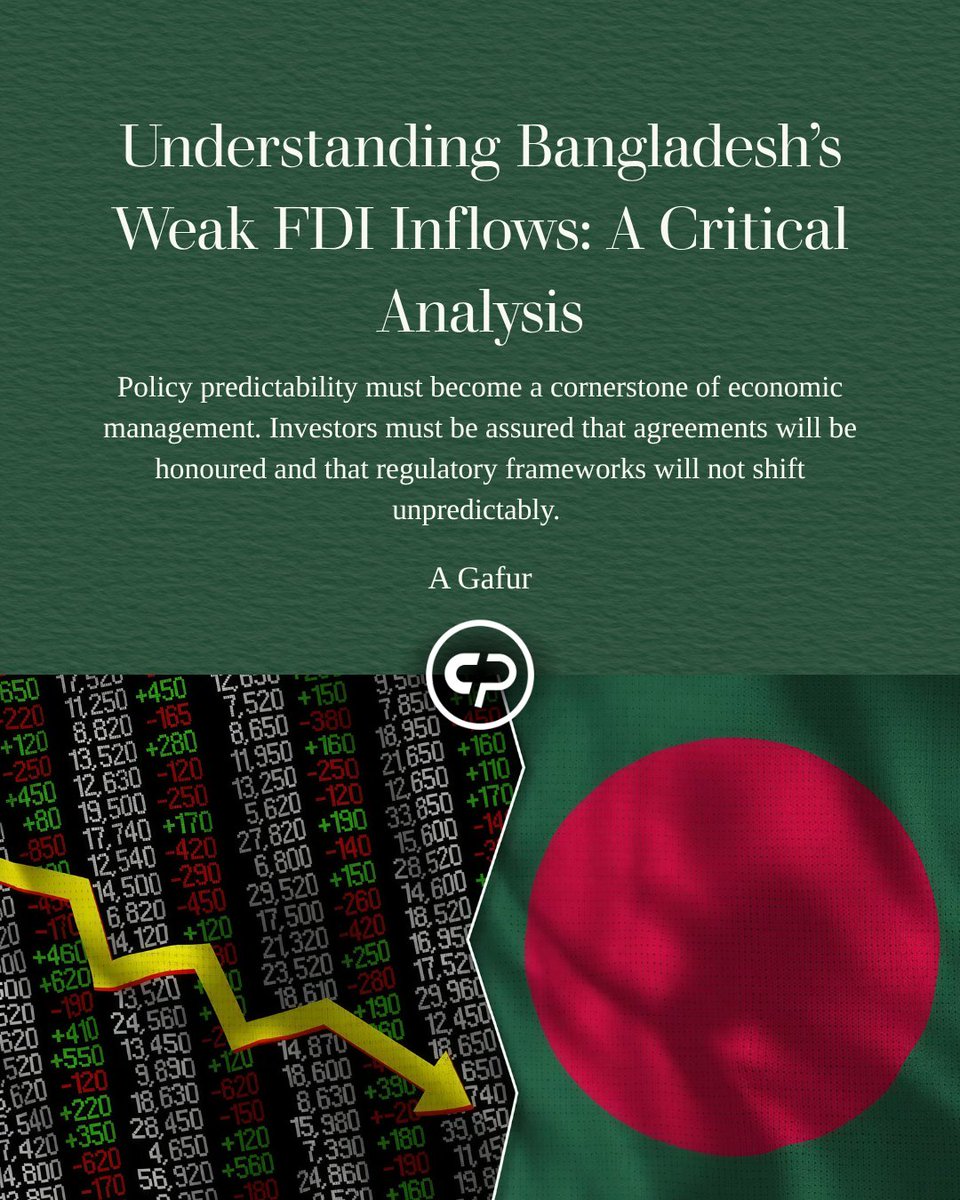
Despite strong fundamentals, Bangladesh continues to lag in attracting high-quality foreign investment, as concerns over policy predictability and institutional trust shape investor decisions.
Read more: [link in the comment]
#Bangladesh #FDI #InvestmentClimate #EconomicPolicy #GlobalEconomy #BusinessEnvironment
English
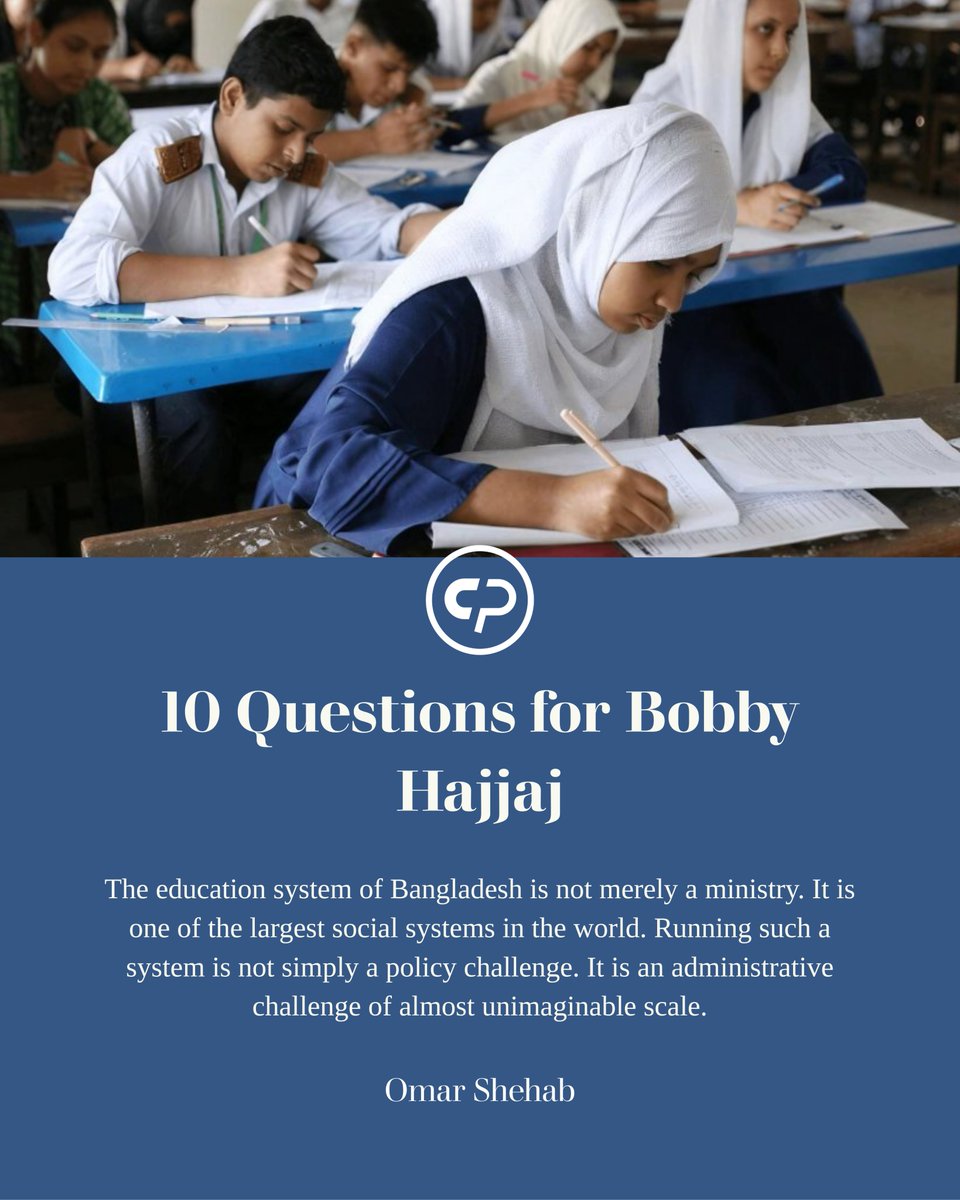
If changing the education system for the better is the goal, one must start with listening to the teachers, serving them well and improving their lives.
Read more: [Link in the comments]
English
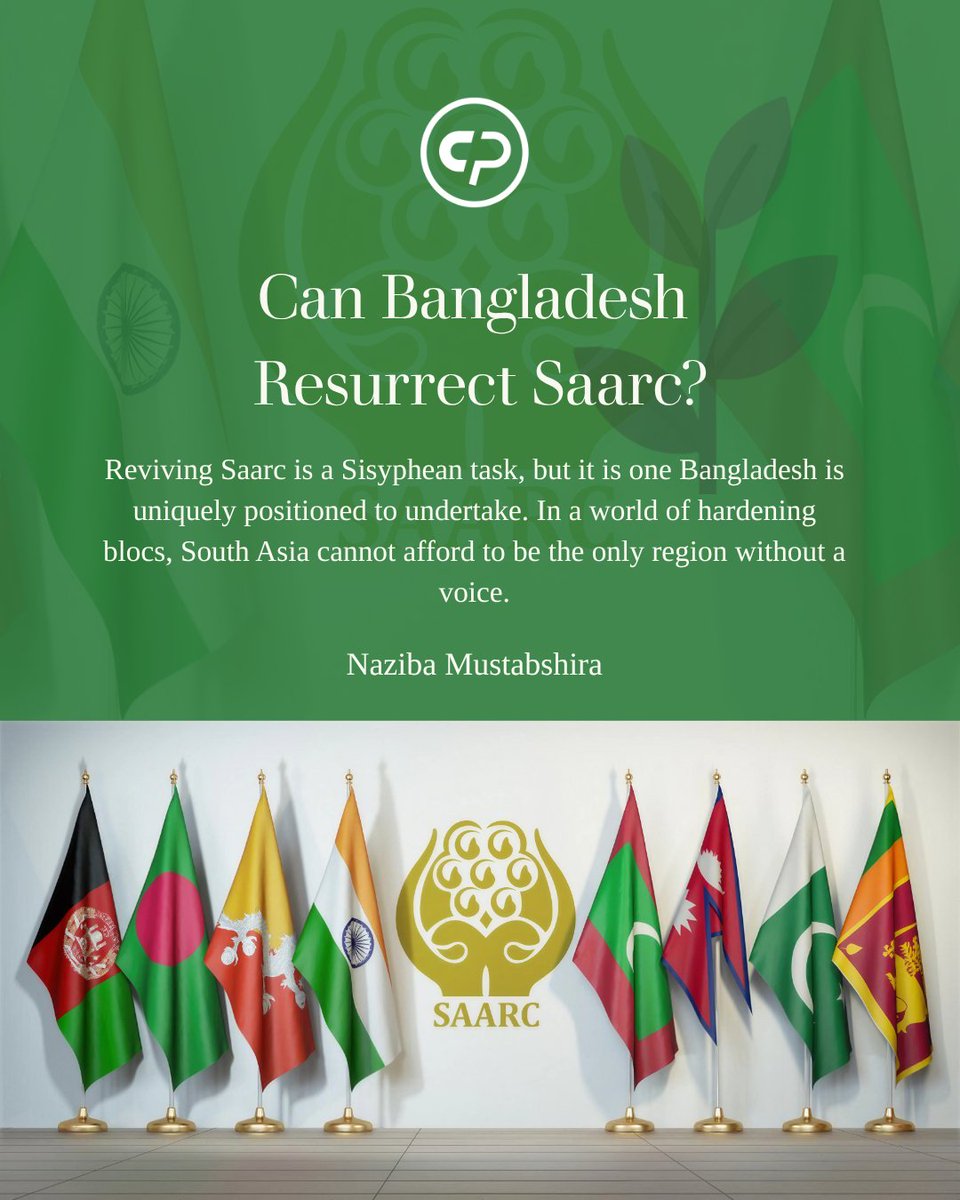
With SAARC long stalled, Bangladesh is testing whether regional cooperation can be revived through pragmatic, non-political engagement amid shifting geopolitical currents.
Read more: [link in the comment]
#Bangladesh #SAARC #SouthAsia #RegionalCooperation #Geopolitics #Diplomacy
English
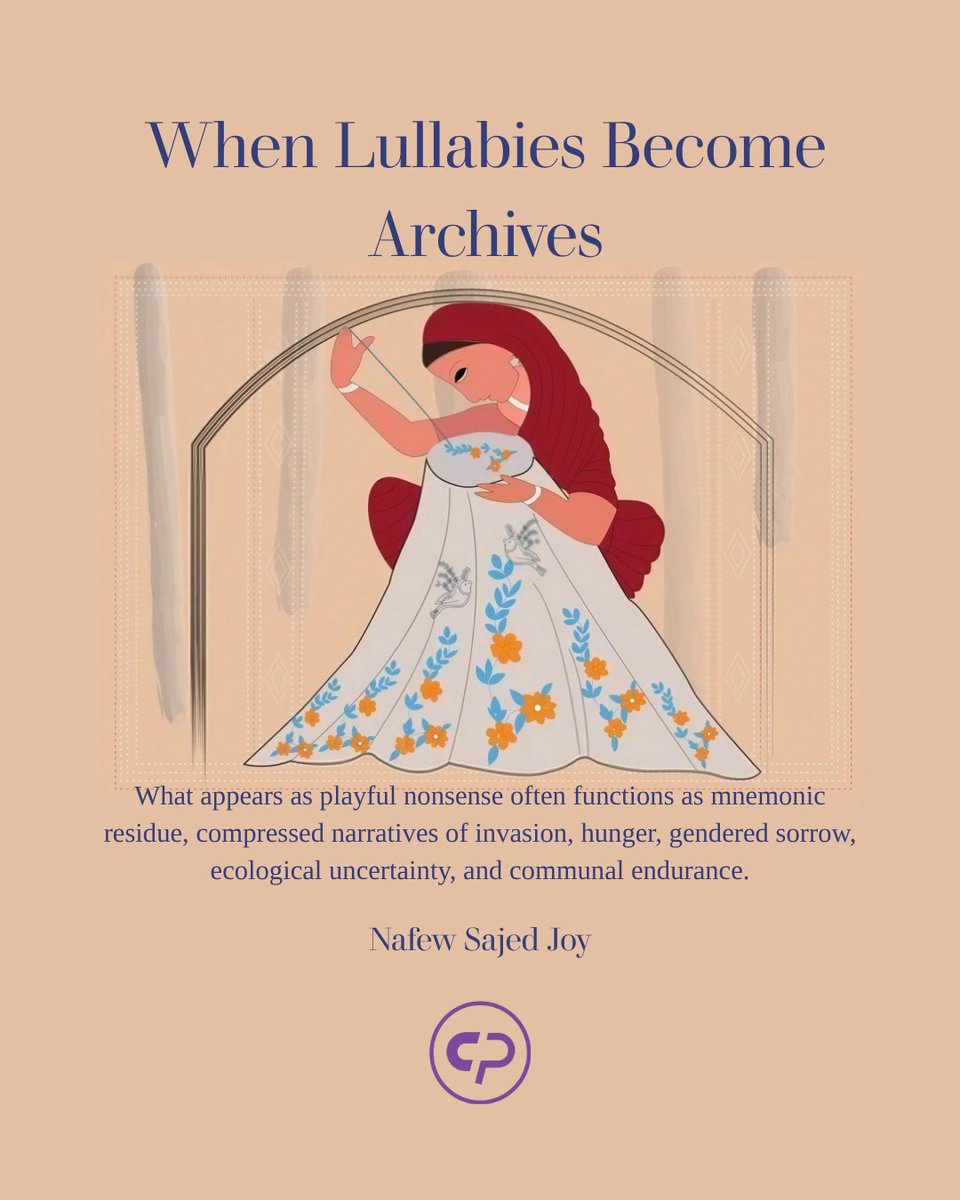
What if lullabies were never just lullabies?
Bengali folk rhymes carry echoes of war, famine, resistance, and memory—hidden in plain sight.
Read more: [link in the comment]
#FolkCulture #Bengal #History
English
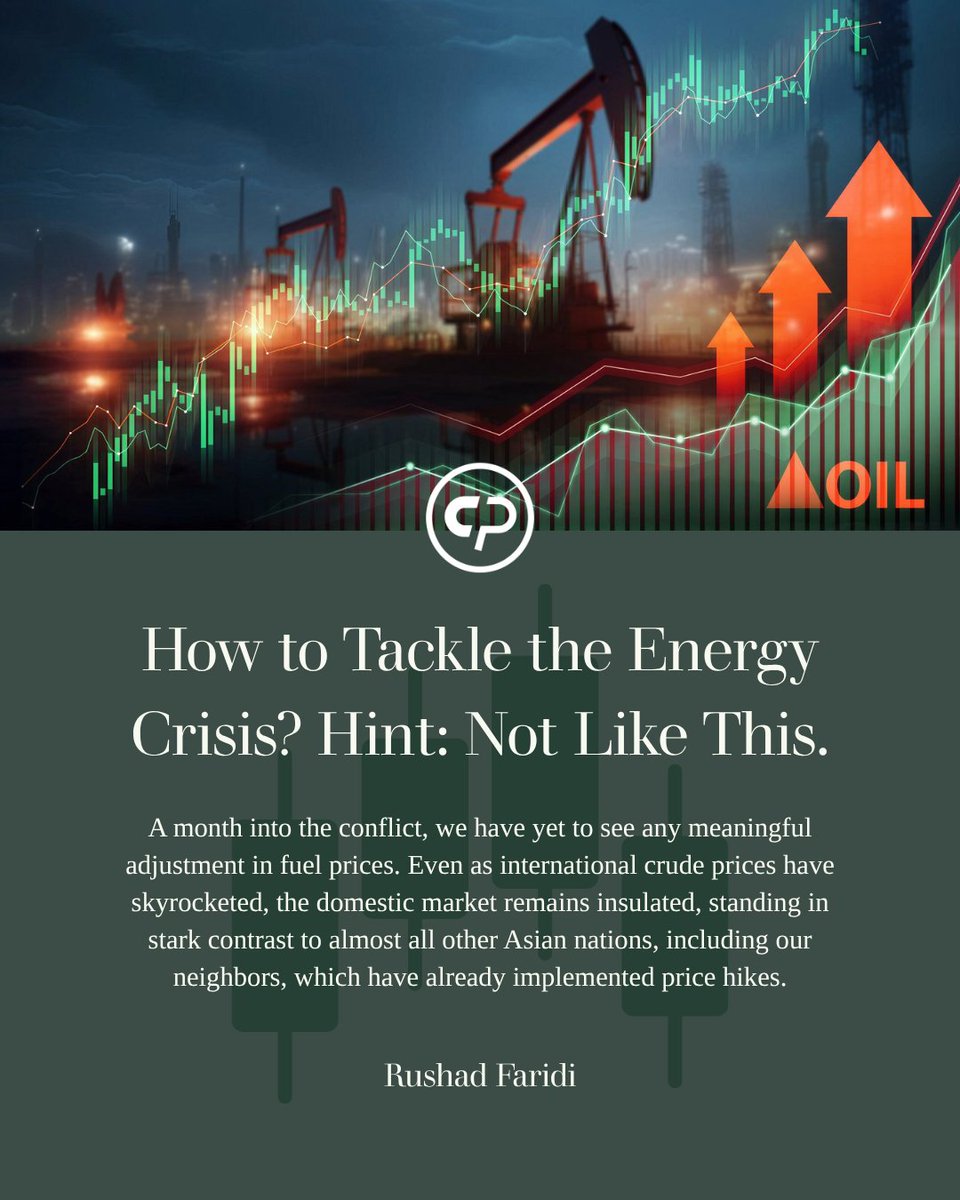
As tensions in the Strait of Hormuz jolt global energy markets, Bangladesh faces a stark reckoning with its heavy fuel import dependence and policy gaps.
Read more: [link in the comment]
#Bangladesh #EnergyCrisis #FuelPolicy #RenewableEnergy #EconomicResilience #SouthAsia
English