
James Raussen retuiteado
James Raussen
5.4K posts


James Raussen
@JamesRaussen
Managing Director, FDI, Cross-Cultural Issues, Healthcare, (all things Southeast Asia, Bourbon, English Literature), Native Ohioan.
Southeast Asia Se unió Mart 2017
130 Siguiendo579 Seguidores

James Raussen retuiteado

Jonathan Haidt dropped the most damning tech truth:
ByteDance gives Chinese kids a safe, limited TikTok that builds focus.
Western kids get the brain-frying addictive weapon.
Silicon Valley bosses do the exact same: no phones for their own kids, nanny contracts, and elite screen-free schools. They engineered the addiction. They just refuse to let it destroy their children.
This isn’t a glitch. It’s the plan.
The people hijacking your kids’ attention are ruthlessly protecting their own. That double standard should make every parent furious.
This one genuinely made me furious. I’ve gone much stricter on screens at home since. The hypocrisy is impossible to unsee.
Where do you draw the line with your kids — total ban, tight limits, or let them scroll?
English
James Raussen retuiteado

James Raussen retuiteado

James Raussen retuiteado

“If you get hung up on pleasure, you’re doomed. If you pursue joy, you will get everlasting happiness”
~ George Lucas
English
James Raussen retuiteado

In 1977, Viktor Frankl revealed how some people survive unimaginable suffering & others don’t.
It’ll change how you see pain.
His ideas:
- You always have one last freedom
- Despair = suffering without meaning
- Why purpose keeps people alive
15 lessons on meaning & suffering:
English
James Raussen retuiteado
The reason why China don’t livestream for their rocket launches is to avoid embarrassment like this. Issues starts after 33 seconds.
English
James Raussen retuiteado

Would highly recommend you watch David Foster Wallace talking about boredom, and why some people now find it so hard to read.
Sorely wish he were around today to hear his views on TikTok and the like.
English


James Raussen retuiteado

You get a phone call.
Report to Beijing.
China's NDRC wants to see you.
You sit down across from them. They know everything.
The restructuring.
The Singapore move.
The $75 million from Benchmark.
The $2 billion from Meta.
The 80 employees you laid off in Beijing.
The product you made unavailable in China.
They ask questions. You answer.
The meeting ends.
You are exit-banned from China.
No charges. No arrest. No trial. No timeline.
You can travel anywhere inside the country.
Shanghai. Shenzhen. Chengdu. Wherever you want.
You just can't leave.
Your name is Xiao Hong. You go by Red. You're 32.
This is how you got here.
You grew up in central China. Studied engineering.
Built apps. You were good at it.
Then you built Manus.
An AI agent that doesn't just talk - it works.
A digital employee with no borders, no visa, no nationality.
$100 million in revenue in 8 months.
But you're Chinese.
And America just banned Americans from investing in Chinese AI.
Overnight, your company is un-investable.
So you do what every smart founder on earth does.
You incorporate in Singapore.
Americans do this with Delaware.
Europeans do this with Ireland.
Indians do this with Dubai.
It's not a crime. It's a strategy.
Your lawyers told you to do it. Your investors told you to do it. Everyone told you to do it.
You move the whole company. Singapore. Tokyo. San Francisco.
You shut down the Beijing office.
Lay off 80 people in China.
Make your product unavailable in the Chinese market.
Clean break. Global company now.
Benchmark writes you a $75 million check.
Then Meta calls.
$2 billion.
Full acquisition. VP title.
Your AI goes into Facebook. Instagram. WhatsApp. Billions of users.
You're 32 and you just built the biggest Chinese-to-American AI exit in history.
Your mom is proud of you.
You fly back to China. To see family. To close out the old life.
You don't think twice.
It's home. You've been going home your whole life.
Then you get the call.
And now you're sitting across from the NDRC in Beijing and they're telling you that you can't leave.
Beijing's message is simple.
You were born here.
You built this here.
You learned here.
The code started here.
The IP started here.
A Singapore address doesn't make you Singaporean.
A Cayman holding company doesn't make you stateless.
A Meta business card doesn't make you American.
They're calling it 'Singapore washing.'
You just became the example.
The US told you to leave China.
China told you that you never left.
Two superpowers. Two sets of rules.
Both applied to you. Neither asked.
Your AI is live in 50 countries right now.
No passport. No visa. No restrictions.
Serving millions of people while you sit here.
You built the thing that goes anywhere on earth.
You're the one who can't.
English
@SaraHigdon @MsMelChen You make a very good point. Decentralized power on a large scale is necessary. John Stuart Mill and DeTocqueville both warn of the tyranny of the majority, which can be muted in smaller subdivisions given the right conditions.
English

True liberty can’t happen on a large scale because it requires people to share the same values, and that kind of thing can only happen on small scales. But, we can vastly deregulate, and decentralize, power and allow for liberty centric communities to thrive. I’ve seen a lot of projects happening in Texas right now to build essentially libertarian cities, which are like a commune, but based on capitalism, or what the free state project is doing in New Hampshire is another example. Last we have Prospera Honduras, which is a free social economic zone that is self governing.
English

Growing up means abandoning the childish fantasy that sees liberty as a natural phenomenon that emerges only once the State is minimized and individuals are simply left to their own enlightened self-interest.
It means finally coming to terms that liberty is only possible within strategic bounds, built on a substrate of constraints.
Balaji@balajis
Libertarianism in theory requires Lee Kuan Yew in practice. Order and borders are prerequisites for liberty and prosperity. Tolerance and internationalism enables trade and capitalism. Pragmatism about the scope of the state minimizes the scope of the state.
English
James Raussen retuiteado

James Raussen retuiteado

At 95, I'm still smokin'! 😝
I’ve learned two things:
Never waste a good cigar.
Never trust anyone who says you should ‘act your age.’ 😉👍🏻

English
@charlesmurray Best character development by far, in any book is Anna Karenina. Not 1, but 6.
English
Dostoyevsky is for reading in college, so can talk about the Grand Inquisitor into the wee hours. Tolstoy is the good stuff. I learned this from my college girlfriend’s father, who was Harvard’s famous Russian lit professor. Later, I discovered he was (surprise!) right.
Paul Krause@paul_jkrause
The Brothers Karamazov or Crime and Punishment, which is the better read?
English
James Raussen retuiteado

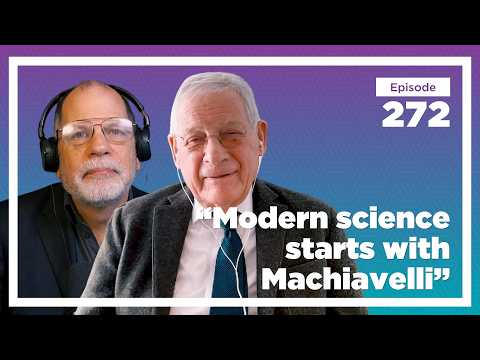
Harvey Mansfield is a legend at Harvard. For 61 years his classes were famous for being both highly demanding and oversubscribed.
Now 93, he’s released a new book The Rise and Fall of Rational Control based on his lectures from Government 1061, his signature course. That book, and this conversation with @tylercowen, begins with Machiavelli, who Mansfield credits with laying the foundation for all modern science.
0:00:00 - Machiavelli’s "Effectual Truth"
0:05:50 - Conspiracy as the basis for all politics
0:15:12 – Shakespeare and the vulgarity of democracy
0:21:12 - The future of Straussianism
0:44:58 - Why the supply of Great Books has dried up
0:49:37 - Rational control vs. spontaneous order
0:52:56 – Hearing Winston Churchill speak
0:57:20 – How students at Harvard have changed
1:02:34 – Death’s influence on politics
Watch the full conversation here or wherever you get podcasts:
youtube.com/watch?v=qIcNig…
YouTube
English
James Raussen retuiteado

MIT econ chair says rent control is terrible. His framing is milquetoast. Rent control proponents should be treated like flat earthers, climate change deniers, moon landing hoax believers. They reject science and reason to promote one of the worst policies.
Jonathan Berk@berkie1
"There is now unambiguous, solid economic evidence, not just abstract economic theory, that rent control would make the affordability problems facing [Massachusetts] worse, not better." - Jon Gruber, Chairman of the Economics Department at MIT
English
James Raussen retuiteado

@MsMelChen Read “Modern Times” by Paul Johnson, he literally describes that in the 1950’s and 60’s universities and papers suppressed news coming in from Eastern Europe and Asia. They were so good at it, that a portrait of Mao in a classroom was deemed acceptable.
English
The NYT cannot help but romanticize commie regimes - especially Cuba's
It uses the emotionally loaded term "abandonment" to lament the supposed betrayal, like a family turning its back on a troubled relative or a beleaguered symbol of resistance cruelly forsaken.
The whole thing is dripping with the kind of sanctimonious leftist framing that treats the brutal, one-party dictatorship as an "ideological lodestar," conjuring images of "longhaired guerrillas" and "revolutionary nostalgia."
Like clockwork, it dutifully recites the Castro regime's "triumphs" such as eradicating illiteracy and universal healthcare, heralding it as a "unyielding bastion of resistance" against US policies while overlooking the abject human cost.
Genuinely, what the hell is the point of literacy and healthcare when people are starving?
Generations have been living in poverty, crushed under surveillance and censorship, dissidents beaten and disappeared. Blackouts are routine and basic goods are fantasies. A young Cuban's prospects are either to beg tourists for soap or join insurgencies to prop up narco-tyrannies elsewhere in Latin America or flee as a refugee.
Cuba is nothing more than yet another failed socialist experiment. Will Western lefties finally square their cognitive dissonance with reality?
Not going to hold my breath. ¡Cuba libre!

English