JastSolar

6.2K posts

JastSolar

JastSolar

@JastSolar

I just like video games, anime, and manga. I love Waifus and fanservice from booba to loli. Nobeta from Little Witch Nobeta is my number 1 and I love her dearly

With Nobeta. Se unió Haziran 2023
829 Siguiendo252 Seguidores
JastSolar retuiteado

ばんび
ばんび@bambi2000line·
ブラックマジシャンガール
ばんび tweet media
日本語
4
109
844
11.9K
JastSolar retuiteado
NyanChuu🔮🇯🇵🍭
NyanChuu🔮🇯🇵🍭@tanpukunokami·
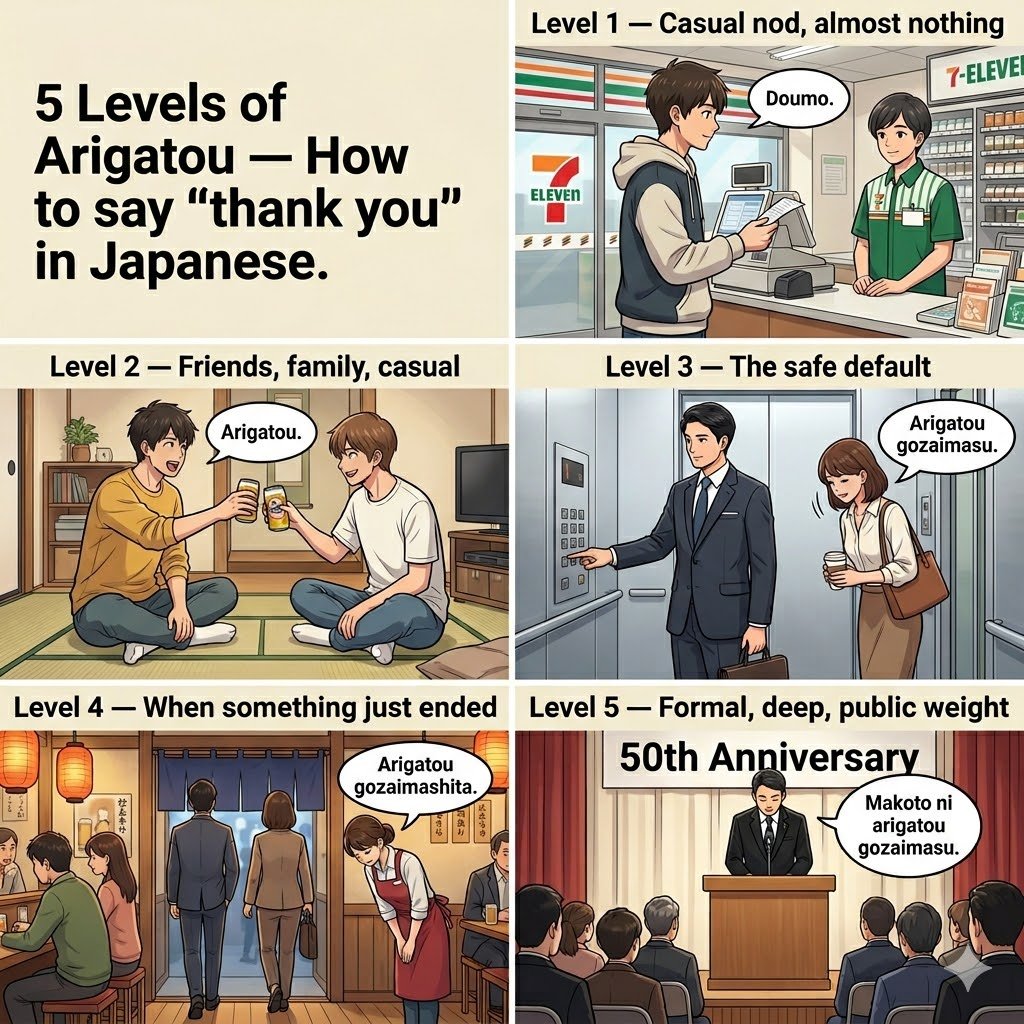
You probably learned that "thank you" in Japanese is arigatou gozaimasu. There are 5 levels. Pick the wrong one, and you'll sound rude, weirdly formal, or like you're trying way too hard. Here's how it works. Level 1 — Doumo (どうも) You drop coins on the counter at 7-Eleven. The clerk hands you the receipt. You say doumo. That's it. "Got it. Thanks." Almost no weight. Level 2 — Arigatou (ありがとう) Your friend hands you a beer. You say arigatou. Same energy as "thanks, man." Level 3 — Arigatou gozaimasu (ありがとうございます) A stranger holds the elevator for you. You say arigatou gozaimasu. Polite. Respectful. Neutral. The safest default in Japanese society. Level 4 — Arigatou gozaimashita (ありがとうございました) You finish dinner. As you leave, the staff bows and says arigatou gozaimashita. Past tense. Built into the word: "This is over, and we are grateful for it." Level 5 — Makoto ni arigatou gozaimasu (誠にありがとうございます) A CEO opens his speech at the company's 50th anniversary. Makoto ni arigatou gozaimasu. "Truly, thank you." Used when gratitude has public, formal weight. That's the 5. Beyond them, there's osoreirimasu (恐れ入ります). A thank-you mixed with apology. Used when someone goes out of their way for you, and your gratitude carries: "I'm sorry I made you do that." Five levels. One word, arigatou, branching into five different shades. Each level says something the words themselves don't. Who you are. Who they are. What just happened. Next time someone in Japan thanks you, listen to which level they used. That's where the real message is.
NyanChuu🔮🇯🇵🍭 tweet media
日本語
85
191
1.5K
37.2K
JastSolar retuiteado
Were In Stock
Were In Stock@WereInStock·
Dark Magician Girl
Were In Stock tweet media
English
1
203
1.8K
17.7K
JastSolar retuiteado
ふであこ本店
ふであこ本店@huddeakko·
モモイの萌え萌えキュンは万病に効く
ふであこ本店 tweet media
日本語
2
310
2.3K
51.3K
JastSolar retuiteado
Illya Von Einzbern
Illya Von Einzbern@MagicalJunie·
💖✨Good Perfect Morning My Fellow Bestie's🥰Take A Good Look At This Amazing And Lovely Looking ART😁I Hope You All Have The Sweetest Day In The World And Make Sure You Stay Healthy With Nice Fresh Water Stay Safe🌟Blahhhh How Do I Look Are You Satisfied Or What Hehe✨💖
Illya Von Einzbern tweet media
English
24
18
83
646
JastSolar retuiteado
はこオヤジ42
はこオヤジ42@hakomarublog·
動画で見るとSwitch2の高画質ぶりがわかるね。 #ラヴアールKEM #ラヴアール
日本語
1
41
559
35.8K
JastSolar retuiteado
Cozz Afterlife
Cozz Afterlife@moefumofuoh·
Silenced for being too based. Retweet for oomfs please!
Cozz Afterlife tweet media
English
40
277
1.2K
17.5K
JastSolar retuiteado
FIRE
FIRE@TheFIREorg·
New data from FIRE finds that Americans agree more than they realize on who should oversee social media use by children. 69% of Americans say parents — not social media companies or the government —should be trusted with that responsibility.
FIRE tweet media
English
26
122
417
17.1K
JastSolar retuiteado
Chibi Reviews
Chibi Reviews@ChibiReviews·
Akihiko Kondo is a Japanese man famous for being "Hatsune Miku's husband". He has been causing panic among parents by taking his life-sized Miku doll to public places. He has now doubled down and will continue because it ain't illegal
Chibi Reviews tweet media
English
66
87
1.1K
21.3K
JastSolar retuiteado
Y.N
Y.N@2NL1HD3NKy3au7H·
#姫乃樹凜世 #ラヴアールKEM #ラヴアール #NintendoSwitch #NintendoSwitch2 おやす凜世
Y.N tweet media
日本語
5
2
15
118
JastSolar retuiteado
ナハ78
ナハ78@kyoukosirahuji·
ヴヴヴ…BMG
ナハ78 tweet media
日本語
16
1.7K
16.8K
156.3K
JastSolar retuiteado
NyanChuu🔮🇯🇵🍭
NyanChuu🔮🇯🇵🍭@tanpukunokami·
You won't believe this, but... In Japan, one word means sorry, thank you, excuse me, please, hello, hesitation, and goodbye. All of it. Same word. Sumimasen. The waiter brings your food. Sumimasen. (Thanks.) You bump into someone on the train. Sumimasen. (Sorry.) You stop a stranger to ask for directions. Sumimasen. (Excuse me.) Someone holds the elevator for you. Sumimasen. (Thank you.) You need to interrupt your boss. Sumimasen. (Pardon me.) You arrive late. Sumimasen. (My apologies.) You want to politely turn something down. Sumimasen, but... (Sorry, but...) Tourists hear it everywhere and think Japanese people apologize too much. They're missing the point. The word comes from sumu, an old verb that means "to be over." Sumimasen is the negative form. It literally means "it isn't over." Something between us isn't finished yet. There's still a balance to settle. Someone holds the door? The kindness isn't over. You owe something back. You bump into someone? The wrong isn't over. You stop a stranger to ask for directions? You took their time. Not over. It's not really sorry. It's not really thank you. It's the feeling of carrying a debt you haven't paid yet. One word, used everywhere, because nobody in Japan really thinks they're fully even with anyone. That's a whole worldview in one word. 🇯🇵
NyanChuu🔮🇯🇵🍭 tweet media
English
185
276
1.8K
38.3K