John Healey

13.8K posts

John Healey banner
John Healey

John Healey

@JohnColonelputt

Old school gentleman, Brexit supporter, wry sense of humour… #NeverLabour #ReformMember #NetZero=Scam #StarmerOut, No DMs 🏴󠁧󠁢󠁥󠁮󠁧󠁿 🇬🇧

Se unió Ocak 2017
6.8K Siguiendo6.1K Seguidores
John Healey
John Healey@JohnColonelputt·
@Matt_Pinner "Well, by the dirt 'neath my nails / I guess he knew I wouldn't lie / 'I guess you're tired,' / He said, kinda sly" The lyric is from Bob Dylan's 1964 song "Motorpsycho Nightmare" on the album Another Side of Bob Dylan.
English
0
0
2
40
John Healey
John Healey@JohnColonelputt·
@Amy_90_x Start of the Asparagus season, buying mine tomorrow...
English
0
0
0
20
🦋 Amy 🦋
🦋 Amy 🦋@Amy_90_x·
St George's Day tomorrow
🦋 Amy 🦋 tweet media
English
47
365
1.2K
11.6K
John Healey retuiteado
Lee Harris
Lee Harris@LeeHarris·
I honestly can't believe we are in a situation where Keir Starmer misled the house AGAIN. He said Olly Robbins said "No pressure existed whatsoever" But everyone knows that's another LIE. Watch for yourself. The man is a *compulsive liar*. He's a disgrace. GET HIM OUT!
English
106
1.4K
5.6K
72.8K
John Healey retuiteado
Jim Chimirie 🇬🇧
Jim Chimirie 🇬🇧@JChimirie66677·
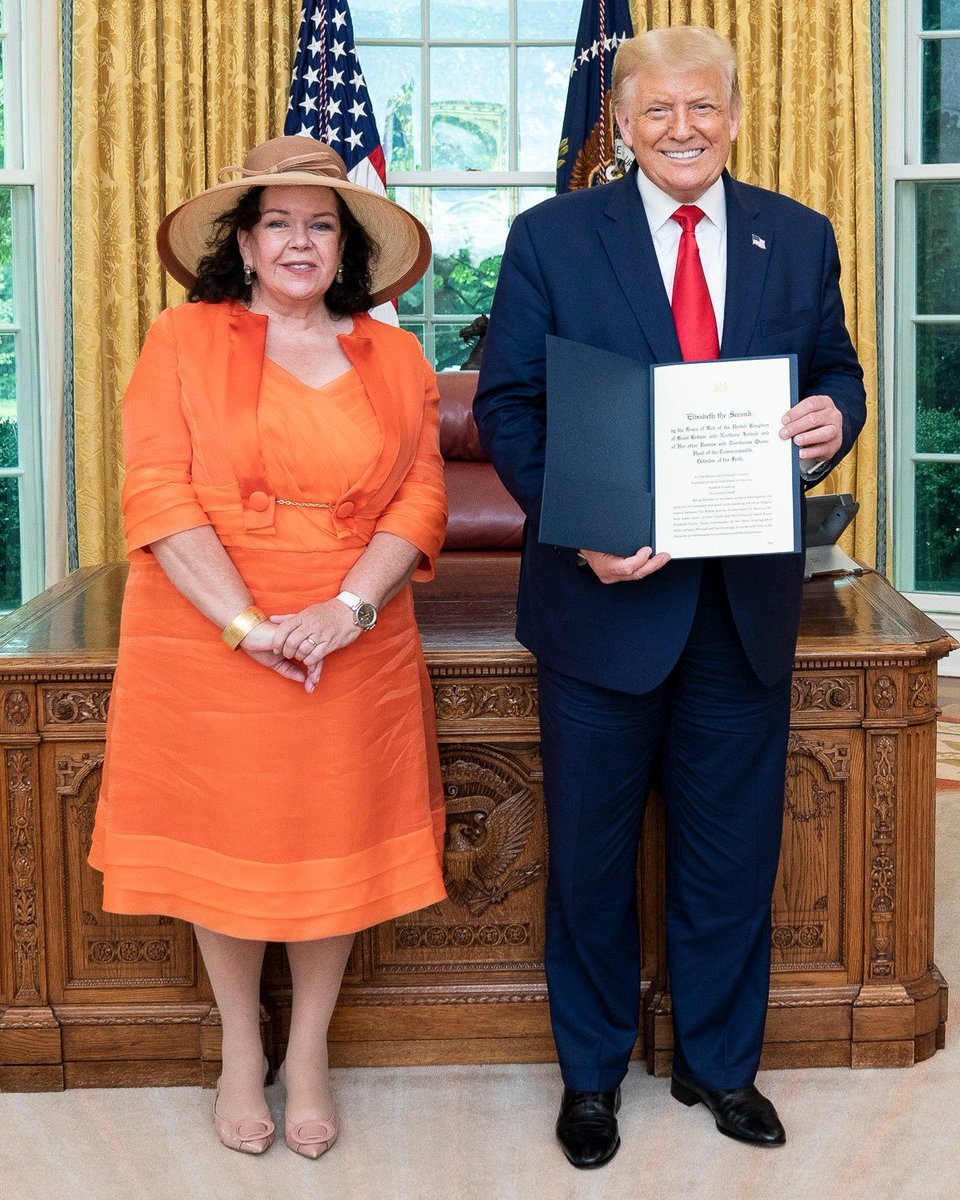
@EdwardJDavey, with respect, that analysis is back to front and the facts don't support it. Trump did not ask for Mandelson. He asked for Dame Karen Pierce to stay. She was already in post, already trusted by the incoming administration, already known to Trump personally, and his team had made clear they wanted continuity. A senior Trump campaign adviser described her as professionally universally respected and lamented her removal. Trump himself has since said the Mandelson appointment was a mistake. Starmer did not replace Pierce to flatter Trump. He replaced her despite Trump's preference. The decision to install Mandelson was driven entirely from the British side, by people around Starmer who wanted that specific figure in that specific post for reasons that have never been satisfactorily explained. So the question is not why Starmer tried to appease Trump. The question is why he overruled Trump's own preference, removed a diplomat the Americans trusted, and installed a man the security services had said should not be cleared, in the face of warnings about Russia and China connections that were sitting in his own due diligence report. That is not appeasement of Trump. That is something else entirely. And it is the question nobody in Parliament has yet succeeded in getting Starmer to answer. "Trump did not ask for Mandelson. He asked for Dame Karen Pierce to stay."
Jim Chimirie 🇬🇧 tweet media
English
140
738
1.9K
50.4K
Mahik Rani
Mahik Rani@MahikRani50377·
How many of these have you actually used in real life? Be honest👀
Mahik Rani tweet media
English
2.8K
198
1.7K
49.8K
John Healey
John Healey@JohnColonelputt·
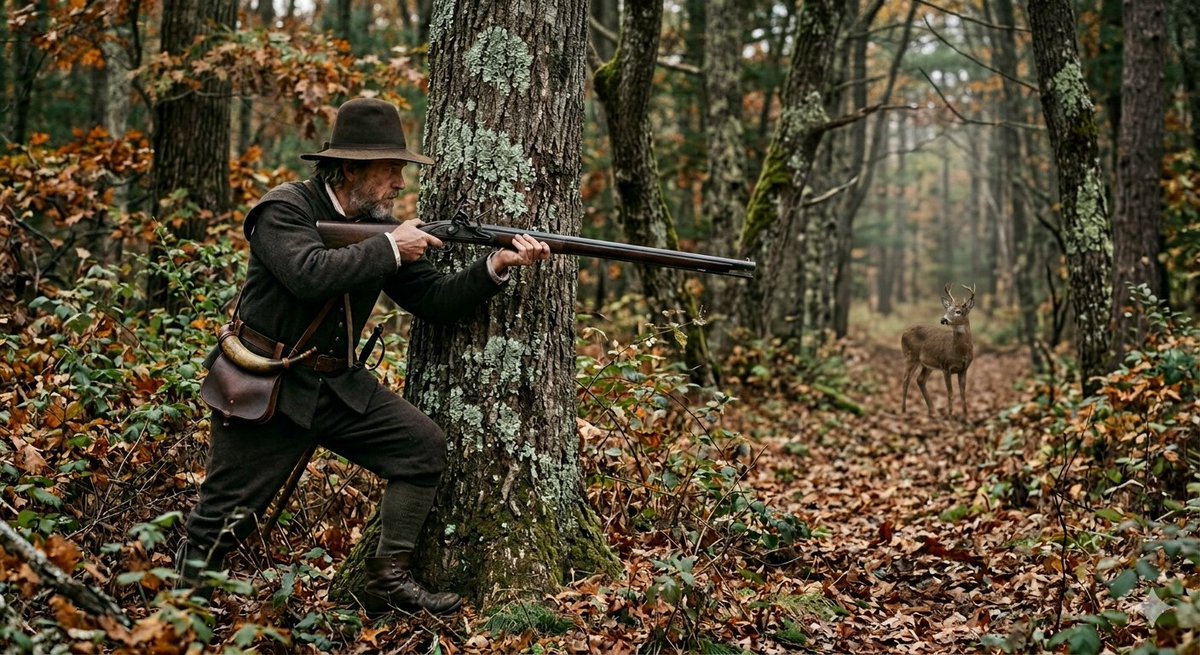
@Geniustechw Boxing Day for me! A reminder to follow the local hunt, it's a great Christmas family tradition...
English
1
1
8
209
Genius Tech
Genius Tech@Geniustechw·
What’s the FIRST thing that comes to MIND when you see this?
English
1.6K
70
430
52.4K
John Healey retuiteado
Mr PitBull
Mr PitBull@MrPitbull07·
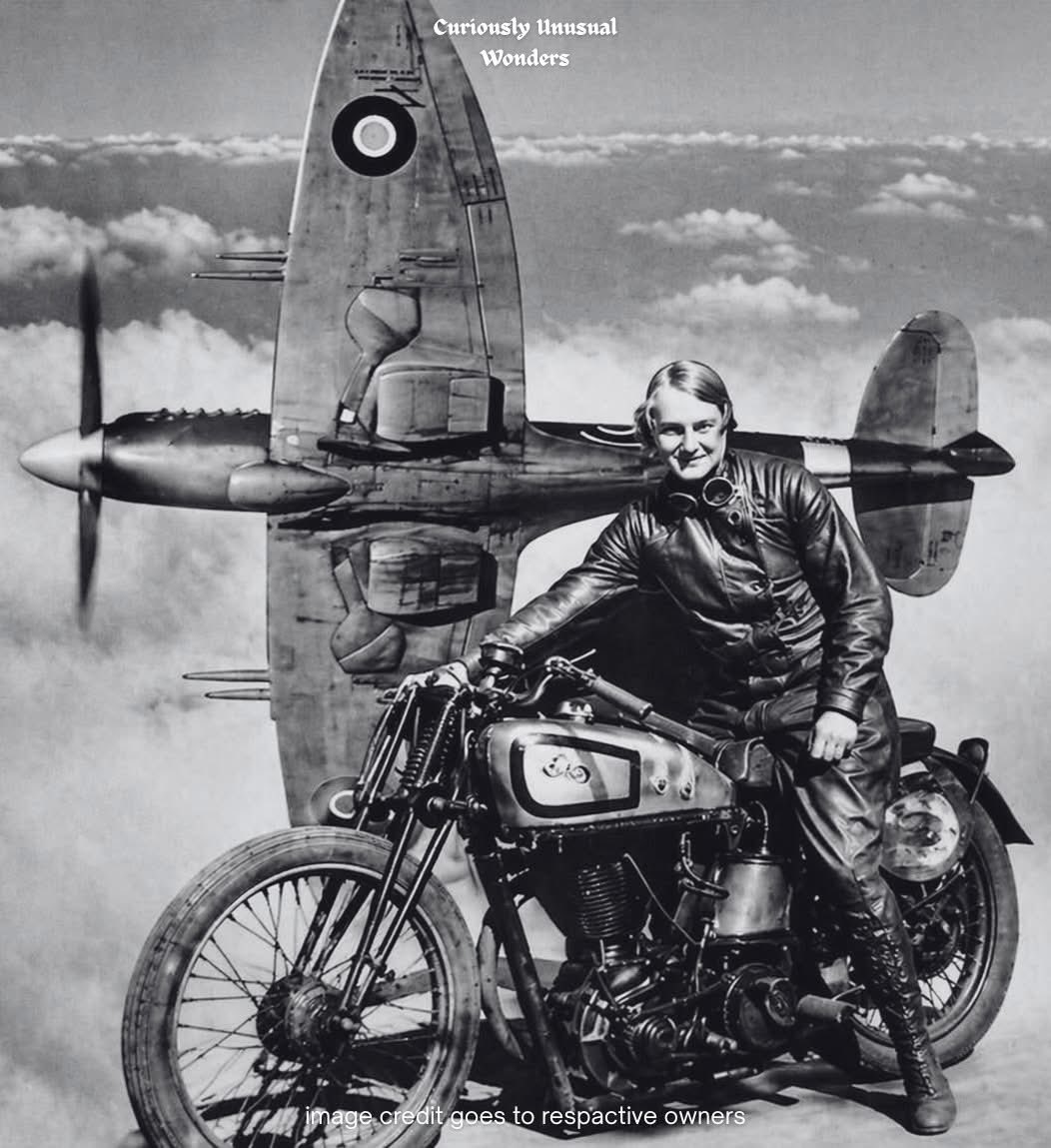
Every time a German Messerschmitt pilot wanted to escape a Spitfire on his tail, he did the same thing. He pushed the nose down. In a dive, the German engine kept running — it used fuel injection. The British Spitfire's engine cut out. For one and a half seconds the Merlin went dead, the aircraft shuddered, and by the time it caught again the German was gone. Worse: if a German was behind a British pilot and the British pilot dove to escape, the German could follow and keep shooting while the British engine was silent. Pilots were dying because of a carburetor. The engineers at Farnborough knew about the problem. They were working on a long-term solution — a redesigned carburetor that would take years to perfect and manufacture. A woman named Beatrice Shilling fixed it with a washer. She was born in Hampshire in 1909 and was the kind of child who spent her pocket money on Meccano sets and tools. At fourteen she bought her first motorbike. Her mother, with the inspired instinct of someone who understood what her daughter actually was, found the Women's Engineering Society and arranged an apprenticeship at an electrical firm. She went to Manchester University — one of the first two women ever to study engineering there — graduated with a degree in electrical engineering, stayed another year for a master's in mechanical engineering, and in 1936 joined the Royal Aircraft Establishment at Farnborough as a scientific officer. By the late 1930s she was one of the best carburetor engineers in Britain. She was also one of only three women to hold the British Motorcycle Racing Club's Gold Star — awarded for lapping the Brooklands racing circuit at over 100 miles per hour on a motorcycle. She had reportedly told her future husband, an engineer named George Naylor, that she wouldn't marry him until he earned his own Brooklands Gold Star first. He earned it. They married in 1938. The problem with the Merlin was specific and lethal. The SU carburetor used a float chamber to regulate fuel flow. Under negative g-forces — the forces experienced in a sudden dive — the fuel flooded to the top of the float chamber and starved the engine for 1.5 seconds. Just enough time for a German pilot to turn the tables entirely. The RAF had known about this since the Battle of France. The formal solution — a redesigned pressure carburetor — was in development but wouldn't be ready for years. Shilling was thirty-one years old, working in carburetor research, and she designed a fix in weeks. A brass thimble with a precisely calibrated hole in the center — later simplified to a flat washer — fitted inline in the fuel line just before the carburetor. It restricted maximum fuel flow to just enough to prevent flooding without cutting off power. The key breakthrough: it could be fitted without taking the aircraft out of service. No downtime. No factory return. The old guard at the RAE looked at it and called it a plumbing fix. They called her a plumber. The first batch of 5,000 units was made by a Birmingham firm that normally manufactured plumbing fixtures, which they found embarrassing. The RAF pilots who flew Spitfires with Messerschmitts on their tails called it something else. They called it Miss Shilling's Orifice. With deep affection. By March 1941 she had organized a small team and was personally touring RAF fighter stations across England — traveling between bases on her old racing motorcycle — fitting the device to every Merlin engine they could reach. Squadron leaders all over the country were demanding installations. The word spread faster than the official channels could keep up with. The Germans noticed. They couldn't explain why British fighter pilots had suddenly started following them into dives. They were baffled by the new aggression. They didn't know about the washer. (More story replies)
Mr PitBull tweet media
English
108
1.2K
5.7K
395.9K
John Healey retuiteado
Sama Hoole
Sama Hoole@SamaHoole·
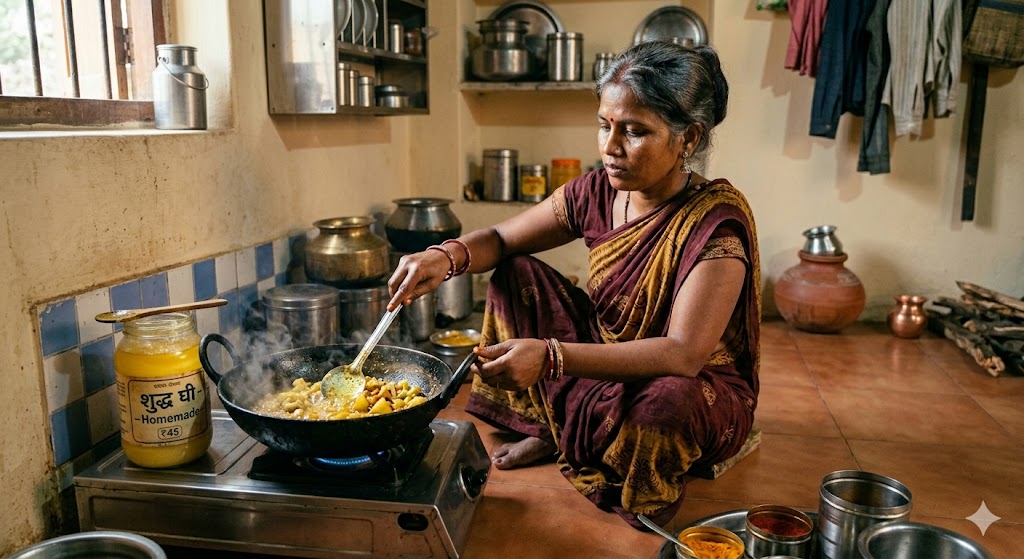
Your grandmother cooked in butter. Or ghee. Or lard. Or tallow. Whatever fat came off the animal that lived near her. Your mother cooked in margarine, or vanaspati, or whatever the TV advert told her was modern. You cook in refined sunflower oil. Three generations. Three cooking fats. One global cardiovascular epidemic that nobody can quite explain. India is the cleanest example of the pattern, because the timeline is compressed and the documents still exist. For four thousand years, Indian cooking ran on ghee. Clarified butter from the cow. Central to Ayurveda, essential to every dal, every sweet, every samosa. It kept for months without a fridge. It carried the fat-soluble vitamins from the grass the cow ate. Then in 1937, a Dutch trading company partnered with Lever Brothers and launched Dalda. Dalda was hydrogenated vegetable oil dressed up as ghee. Cottonseed, later palm. Cheap. Modern. Scientific. The first proper multi-media ad campaign India had ever seen. Short films in cinemas. Painted vans touring villages. Street-side sampling. Leaflets at the market. The message was always the same. Real ghee is expensive. Dalda is progress. By 1950, Dalda was in half of urban Indian kitchens. By 1980, vanaspati ghee accounted for the majority of household cooking fat in the country. Three generations of Indian mothers fed their children a product that was roughly 40% trans fat by weight. Trans fats are, by a wide margin, the most cardiovascular-damaging substance ever put into the human food supply. India's heart disease rates climbed through the 70s, 80s, and 90s to among the highest on earth. Type 2 diabetes, almost unknown in the traditional population, became endemic. The Indian Heart Association started running national campaigns. The government finally restricted industrial trans fats in 2021. Eighty-four years after Dalda launched. But the cultural damage was done. Desi ghee, the thing Indian kitchens had run on for four millennia, became a special-occasion food. Something for Diwali. Something grandmother used to make. The everyday cooking moved to refined sunflower, refined soybean, refined palm. Not even the Dalda tin with the green palm tree. The ghee survived only in a small fraction of households still making it the traditional bilona way, from A2 milk, slowly, by people who mostly call it a hobby. The same advert ran everywhere. The product name changed. The outcome did not. Britain got margarine. America got Crisco. India got Dalda. The campaigns were successful. The trans fats arrived. The cardiac wards are now monuments to that success. The traditional fat is still being made. It used to be called Tuesday.
Sama Hoole tweet media
English
26
156
584
44.6K
John Healey retuiteado
Sama Hoole
Sama Hoole@SamaHoole·
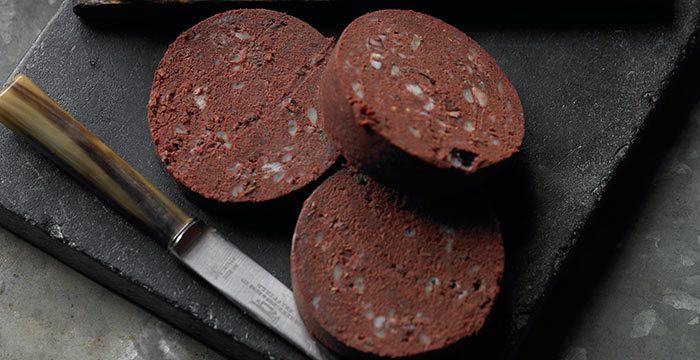
Black pudding is one of the very few offal foods in Britain that survived the 20th-century collapse of traditional cooking. When the British kitchen turned against liver, kidney, heart, tongue, tripe, sweetbreads, faggots, and trotters, black pudding somehow got through. The generation that grew up in the 1970s rejecting their grandmothers' offal made an unspoken exception for the thick black disc on the breakfast plate. It survived by stowing away inside the Full English, carried through the century by the cultural weight of a breakfast format no government campaign has managed to dismantle. The recipe has not changed in six hundred years. Fresh pig's blood, pinhead oatmeal, beef suet, onion, salt, pepper. Stuffed into a natural casing, coiled into a ring, simmered until it sets. Stornoway defends its version under PGI. Bury uses pearl barley and eats it boiled with mustard. Every butcher from Morecambe to Fraserburgh has a recipe his father handed him. A ring from a decent butcher costs about £5. Per 100 grams it delivers substantial heme iron in the form the human gut actually absorbs, substantial B12, complete protein, and the specific lipid profile of real rendered suet. Approximately 20% of British women of childbearing age are anaemic. The NHS response is ferrous sulphate tablets at £4 a month, which cause nausea, constipation, and dark stools, and must be taken for six months to correct a deficiency that two slices of black pudding a week would correct in a fortnight. Faggots went. Brains went. Tripe went. Sweetbreads went. Black pudding stayed. It stayed because the British breakfast refused to let it go. Eat it. Support the butcher who makes it properly. That is what kept it here in the first place.
Sama Hoole tweet media
English
313
445
2.6K
103.9K
John Healey
John Healey@JohnColonelputt·
100%
Chris Martz@ChrisMartzWX

How do I know that the climate *crisis* is a scam? Here are five reasons: 1️⃣ None of the politicians, celebrities, or “scientists” yammering about it have altered their lifestyles an inch. If they opted to forgo using O&G products, then I’d take them seriously. Actions speak louder than words. 2️⃣ Climate conferences aren’t being held virtually on Zoom using their large meeting extensions. It’s doable, they just choose not to. They like to fly overseas to lecture us about reducing our “carbon footprint” all the while they do nothing to lower their own. 3️⃣ Wealthier alarmists are still living on or buying oceanfront property. If ocean levels were really rising at a catastrophic rate (as opposed to the gradual increase that is actually occurring), then they would move inland and banks would not approve loans. 4️⃣ Alarmists rarely, if ever criticize China and India, and they always come up with all sorts of wonderful excuses as to why those nations get a free pass to continue emitting so-called “carbon pollution.” 5️⃣ The only solutions they offer involve increased governmental power. Higher taxes. EV mandates. Restrictions or bans on the energy sectors they don’t like. And, as an added bonus, no real-world data proves, much less suggests that we are facing an “existential crisis.” Even the IPCC doesn’t use such rhetoric because it isn’t based on science. I don’t deny that climate change exists. It always has. And, I don’t even deny that at least some of the increase in temperatures is anthropogenic. But I just don’t care because it isn’t that big of a deal. Extreme weather cannot be taxed away. Our vulnerability will continue to increase so long as we build in disaster-prone areas. Politicians cannot take our wallets and set a thermostat on the planet.

QST
1
1
1
66
John Healey retuiteado
Sama Hoole
Sama Hoole@SamaHoole·
Throughout history: The rich ate meat. The poor ate grains. Modern dietary guidelines: Eat less meat. Eat more grains. We've been told the peasant diet is optimal and the aristocrat diet is dangerous. By people who profit when you're sick and weak. jointheruminati.com/meat-restricti…
English
8
72
413
10.6K
John Healey retuiteado
Sama Hoole
Sama Hoole@SamaHoole·
The school textbooks tell you the settlers crossed the Atlantic for religious freedom. Some of them did, partly. What the textbooks leave out is the thing that sits in the actual letters, in the sailors' accounts, in the merchant pamphlets circulating in English ports from the 1580s onwards: a major reason people came to America was the wild game. Meat you could take. Meat nobody owned. Meat that walked into camp. For a population legally separated from the animal for five hundred years, this was the whole pitch. Consider what they were leaving. A family in a Devon cottage in 1618 eats pottage. Oats, barley, an onion, whatever greens grew near the back door. No meat in it this week. No meat in it last week. There will be meat in it on Christmas Day, God willing, if the chicken is still alive by then. The deer in the forest at the end of the lane have been the king's property under the Forest Laws since 1066. Taking one is a hanging offence. The father has never taken one. His father never took one. The institutional memory of not taking one goes back five hundred and fifty-two years. Then the stories arrive. From sailors. From ship's captains. From merchants returning through Bristol and Plymouth. The birds come in flocks that darken the sky for three days. Not an afternoon. Three days. Passenger pigeons in numbers later estimated at three to five billion in a single flock, making a sound early settlers compared to the roar of a river that refused to stop. A man with a net could take five hundred in an afternoon. The king of England had no claim on the sky over Massachusetts. The rivers, the captains said, ran so thick with salmon that the water appeared to boil. The deer walked into camp, looked at the fire, and were shot. The oysters on the Atlantic shore came the size of dinner plates, piled in reefs you could lean over the side of a boat to harvest. Turkeys weighing thirty pounds stood in clearings with the fearlessness of an animal that had never been hunted by anything on two legs. Bison herds on the plains took four hours to cross a ford. And nobody, crucially, owned any of it. The father in Devon lies awake that night thinking about the sky going dark for three days. He is also thinking about religious freedom. Theological persecution was real. The Mayflower passenger list included genuine dissenters. That was part of it. It was not, for most of them, the biggest part. The biggest part was that the animals in the captain's story belonged to nobody, and the family had been watching animals that belonged to somebody else walk past their cottage for twenty generations. Between 1620 and 1640, roughly 20,000 people made the crossing. By 1700, 250,000. By 1900, fifty million Europeans had crossed, most of them peasants from cultures where meat had been restricted for centuries, most of them arriving within the first generation at a standard of eating their grandparents would not have believed. A labourer in Pennsylvania in 1750 was eating more meat per week than an English nobleman had eaten in 1450. An Irish emigrant's grandchild in Boston in 1900, whose great-grandmother had starved in 1847 while Irish cattle were shipped past the coffin ships to English markets, was eating steak on a Tuesday and not thinking about it. At the centre of the great migration was hunger. Specifically, hunger for meat. Enforced since 1066, reinforced by Enclosure for another four hundred years, reinforced by the quiet understanding that the venison belonged to the lord and the pottage belonged to you. They crossed an ocean because, finally, you could go somewhere the deer walked into camp and the pigeons blocked out the sun and nobody had a legal claim on any of it. You could eat like a lord without owing a lord anything. They crossed an ocean for that. And having got to it, they did not give it back.
Sama Hoole tweet media
English
205
1.6K
7.6K
260.4K
John Healey retuiteado
Sama Hoole
Sama Hoole@SamaHoole·
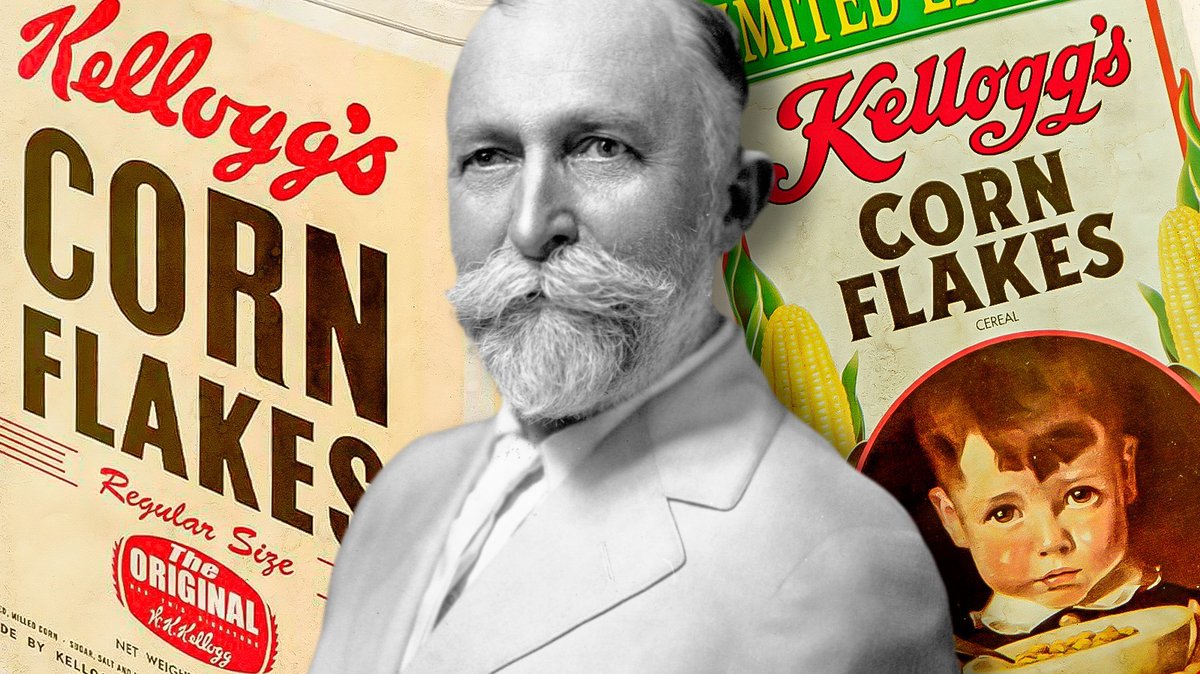
Things that were invented by a man who believed masturbation caused insanity and meat caused lust: - Corn flakes - Granola - Peanut butter - Soy milk - Imitation meat - The term sanitarium - A machine that pumps fifteen quarts of water per minute into the human colon Breakfast is a religious ritual you have forgotten the origin of. The priest is Dr John Harvey Kellogg. The sacrament is a dry cornflake. The purpose is to stop you doing something you almost certainly are not currently doing.
Sama Hoole tweet media
English
29
94
518
14K
RS Archer
RS Archer@archer_rs·
Americans if visiting Scotland this year and you are tempted to order Haggis in a restaurant (and you should) please make sure to order, net-caught free range Haggis not the farmed type. There is a massive difference in taste. Don't be conned into eating the tourist Haggis.
RS Archer tweet media
English
165
140
1.3K
40.4K
John Healey retuiteado
Sama Hoole
Sama Hoole@SamaHoole·
In 1927, the last wild European bison was shot in the Białowieża Forest on the border of Poland and Belarus. By that point, every European bison left on earth was in captivity. Zoos. Private collections. A handful of animals, scattered across the continent, descended from the last wild populations that had survived in Eastern European forests until the First World War. A Polish zoologist named Jan Sztolcman convinced the International Society for the Protection of the European Bison to attempt a restoration. He had twelve animals to work with. Twelve. Every European bison alive today is descended from those twelve. The population now stands at approximately 9,500, split across free-roaming herds in Poland, Belarus, Germany, Romania, and a handful of other countries. The Białowieża Forest alone carries over 700. They have reclaimed their ecological role. The forest clearings they maintain support plant communities that had started to disappear in their absence. The soil they disturb with their hooves is more fertile than the surrounding woodland floor. The scratching posts they create, where they rub off their winter coats, have become habitat for a specific assemblage of insects and birds. Twelve animals in 1927. An ecological keystone species, restored, within a century. This is what happens when a ruminant is allowed to do what a ruminant does. It did not require a startup. It required twelve animals and patience.
Sama Hoole tweet media
English
26
523
2.3K
37.3K
John Healey retuiteado
Sama Hoole
Sama Hoole@SamaHoole·
Here's what would happen if the planet were to turn vegan tomorrow. The first thing to go would be 70% of agricultural land. Hillsides, uplands, semi-arid rangelands, boreal tundra, alpine meadows, Mediterranean scrub. Land that cannot grow crops. Land where nothing edible to humans has ever been grown. The grazing animals are removed. The land produces no human food. The 1.3 billion people whose food systems depend on those landscapes are now in trouble. The second thing to go would be the functional soil of the remaining 30%. Industrial arable relies on synthetic nitrogen derived from natural gas. Without animal manure, there is no organic alternative at scale. Without ruminants cycling nutrients through pastures, the fertility of the remaining arable land depends entirely on a fossil fuel input the same policy has usually committed to eliminating. The two commitments are in direct conflict. One of them has to give. Usually it's the soil. The third thing to go would be the food. Roughly 1.3 billion people globally are pastoralists or semi-pastoralists whose diets are majority animal source. They cannot be fed by the arable system. The arable system cannot even feed the people currently depending on it in dry years. A Sahelian drought year, a Punjab wheat failure, a Ukrainian harvest disrupted by anything, and the margin disappears. The fourth thing to go would be the micronutrients. B12, retinol, heme iron, K2, bioavailable zinc, DHA, choline and several amino acids in usable ratios are either absent or poorly absorbed from plant foods. The plant-only diet works, at population scale, only with continuous supplementation produced by industrial processes, shipped globally, consumed individually. Remove the supplements, or the shipping, or the industrial base, and the deficiencies begin. The fifth thing to go would be the textile system. Wool, leather, silk, lanolin, tallow, casein, bone meal, beeswax, down, horn, sinew, rennet. Every one of these is either eliminated or replaced with a petrochemical or engineered alternative. The replacements are more polluting, less durable, and less biodegradable by every available metric. The sixth thing to go would be the landscapes. Every grazed landscape in the world, from the British uplands to the Alps to the pampas to the steppe, loses its character within a decade. Scrub, bracken, fire cycle, erosion, loss of ground-nesting birds, loss of wildflowers, loss of the small villages built around the herds, loss of the cultures that built the villages. The seventh thing to go would be the carbon. Grazing ruminants sequester carbon into pasture soils at rates that globally exceed the emissions from the ruminants themselves, when the system is functioning. Remove them and the pasture reverts, over time, to lower-carbon states. The soil releases what it was holding. The biogenic loop is replaced by fossil fertiliser inputs with no sink on the other end. The eighth thing to go would be the food security buffer. Livestock are, among many other things, a famine insurance policy. When the crop fails, the animal can still be eaten. She walks to market. She carries her value with her. Remove her and the thin margin that has kept rural communities alive through failed harvests for ten thousand years disappears. The ninth thing, eventually, would be the political system that tried to mandate this. Because nobody stays in government when the food stops arriving. None of this is speculation. The partial experiments have been run. Soviet collectivisation of the steppe. The Sahel settlement programmes. The Oostvaardersplassen rewilding. Each of them, on a smaller scale, produced a version of the same outcome. The planet cannot turn vegan. The planet has been a partnership between humans, grasslands and grazing animals for the entire span of human civilisation, and most of human prehistory before that. The partnership is not optional. The people proposing to end it have not thought it through. The grass, the ruminant and the farmer have.
Sama Hoole tweet media
English
12
359
926
13.6K
John Healey
John Healey@JohnColonelputt·
I remember it well...
Sama Hoole@SamaHoole

If you are old enough to remember driving in Britain in the 1980s, you will remember the windscreen. You could not see through it by July. A journey from Leeds to London in August ended with a front bumper that looked like it had been through a war and a windscreen that needed a proper scrubbing with a sponge at the services. Insects on the headlights. Insects in the wing mirrors. Insects packed into the radiator grille so densely that mechanics had to fish them out. This was simply the weather of the British summer, the cost of moving through a country that was still, in living memory, full of flying things. Get in a car now. Drive the same route. Stop at the services. The windscreen is clean. The Bugs Matter survey, run by Kent Wildlife Trust and Buglife since 2004, has been measuring exactly this. Volunteers clean their numberplate, drive a journey, count the splats on a grid. Between 2004 and 2021, the UK average fell by roughly 59 per cent. England alone: 65. Kent: over 70. The 2024 update found a further 63 per cent drop on top of that. The windscreen phenomenon has the data to back it up now. And not just the insects. Between 1970 and 2024, the UK Farmland Bird Index fell by 62 per cent. Turtle doves down 99. Grey partridge down 94. Tree sparrow down 90. A generation of British children has grown up without ever hearing a turtle dove call, because there are, in functional terms, no turtle doves left to call. Defra's own bulletin lists the causes without embarrassment. Loss of mixed farming. The switch from spring to autumn sowing, which took away the winter stubble the small birds had been feeding on since the Neolithic. The grubbing up of hedgerows to make fields bigger for bigger machines. Increased fertiliser. Increased pesticide. Specifically, the pesticides. Neonicotinoids on oilseed rape. Glyphosate sprayed as a pre-harvest desiccant on wheat and barley. Chemicals applied in combinations and volumes that would have seemed psychotic to a farmer in 1950, applied to grow the crops that feed directly into the plant-based shakes marketed to people who believe they are helping the environment. The insects died in the fields where the crops were grown. The birds that used to eat the insects, starved. The windscreen, accordingly, is clean. None of this happened on the permanent pasture that cattle graze. A herb-rich meadow grazed by cattle has more pollinators, more ground-nesting birds, more beetles, more everything per hectare than the arable field next door. The South Downs and the Welsh uplands and the Cotswold commons where sheep and cattle have been grazing for a thousand years are the places British biodiversity is still, just, holding on. The countryside did not empty because of the cow. It emptied because we replaced the cow with the combine harvester, the meadow with the oilseed rape, and the hedgerow with another half-acre of monoculture that needed spraying fourteen times a season to keep it alive. When someone tells you eating a steak is destroying British wildlife, ask them what was on the field before it became the soy farm, the rape farm, the wheat farm that produced the oat milk in their fridge. It was grass. And on the grass, there were cattle. And when the cattle were there, the windscreen needed cleaning.

English
0
0
0
14
John Healey retuiteado
Sama Hoole
Sama Hoole@SamaHoole·
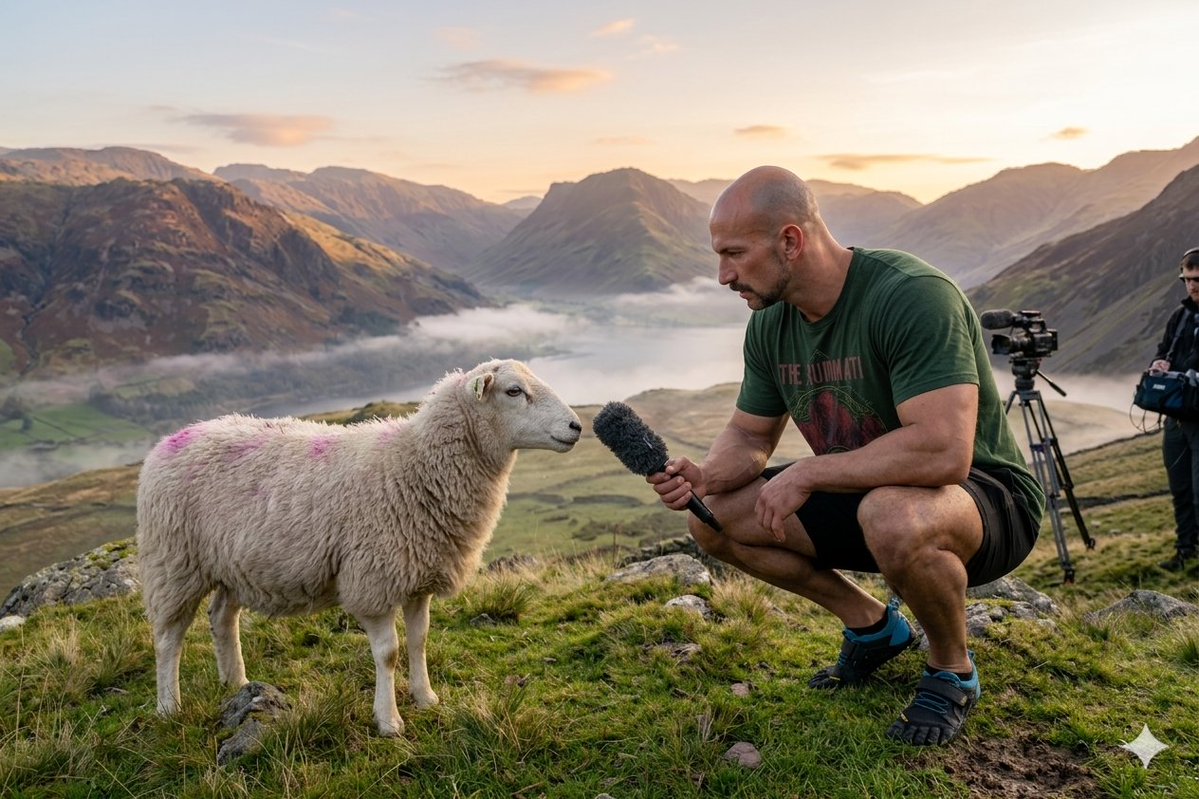
In a rare and frankly unearned moment of access, we sat down with Doris, a six-year-old Texel ewe resident on a Lake District fell at 400 metres, to discuss the accusations currently being levelled at British sheep. "Doris, thank you for agreeing to this interview." Doris looked at me, then resumed grazing. "There's a strong public argument that sheep have destroyed the British uplands." Doris raised her head. She regarded the hillside around her, which carries tormentil, bird's-foot trefoil, eyebright and roughly thirty other wildflower species whose existence depends on her family having kept the vegetation short for a thousand years. Then she looked back at me with what I can only describe as quiet scepticism. "Some campaigners suggest that removing sheep would allow nature to return." Doris walked a short distance to a patch of bracken. She sniffed it without interest. Bracken is toxic to her. It would consume this hillside within a decade of her removal. What the campaigners picture, when they imagine a sheep-free Britain, would not exist. What would exist is scrub. "Sheep numbers have declined 27% since the 1990s." Doris was aware. Brian maintains a spreadsheet. The campaigns against sheep farming have succeeded in reducing sheep farming. The environmental indicators the campaigns said would improve have got worse. Curlew down 65%. Upland wildflower diversity declining. Doris did not gloat. Doris is not that kind of sheep. "Some say sheep contribute little to the nation's food supply." Doris regarded the fell. 32 degrees of slope. Peaty acidic soil. No arable potential of any kind. The land produces one thing humans can eat, and the thing it produces passes through Doris. 300 million kilograms of lamb and mutton a year, from land a tractor cannot approach, by an animal that requires nothing beyond what the hillside provides. Doris blinked slowly. "The carbon footprint of sheep has been described as significant." The soil carbon beneath Doris has measurably increased over the seven years she has been on this fell. She is part of a closed carbon loop. The Land Rover that carried the researcher to measure her is not. "Anything you would like the British public to understand?"* Doris walked away. Not rudely. She had completed her morning loop and was due at the water trough. She reached it, drank, and lay down in the shade of the stone wall. In lying down, she did the one thing she was placed on this fell to do. Which is to be a sheep, on a specific hillside, maintaining a landscape that does not maintain itself, producing food a nation is fed by, and existing quietly in a system that has worked for a thousand years. Brian noted the lying-down in the spreadsheet. It has been a productive morning. The campaigners against upland sheep farming were elsewhere. Doris will be here tomorrow. The fell will still need her.
Sama Hoole tweet media
English
15
246
1.2K
12.2K