PeterK

871 posts

PeterK

PeterK

@KharchenkoLab

Computational biologist. PI at Altos Labs. Formerly from the wonderful DBMI at the Harvard Medical School. Expressed thoughts and opinions are my own.

Altos Labs, San Diego Se unió Ekim 2017
39 Siguiendo4.1K Seguidores
PeterK retuiteado
Teng Gao
Teng Gao@tGaoTeng·
Ever stare at your spatial DE results and wonder if something's off? Segmentation errors might be the culprit. Our new paper shows how pervasive this problem is - and introduces a fix using matrix factorization of local molecular neighborhoods. nature.com/articles/s4158…
English
1
5
12
961
PeterK
PeterK@KharchenkoLab·
As part of our embryo clonal tracing and perturbation efforts with @adameykolab, a quick twittorial from Sergey on generating stable and informative representations of clonal fate variations from sparse and noisy barcode-based lineage tracing data.
Sergey Isaev@sv_isaev

(1) Hi, X! Don't miss Igor's thread about our recent preprint, it’s a very cool reading! Here I will try to go a bit deeper into the computational part of the study — our new method clone2vec, how we developed it, what it does, and what it doesn't do. Grab a drink, and let's go!

English
2
0
5
3K
PeterK
PeterK@KharchenkoLab·
Our pre-print with @adameykolab on continuous spectra of progenitor fates during mammalian development. Using multiplexed clonal tracing, mosaic perturbations, and robust computational representations, we look at spatial and temporal modulation of cell fates in mouse embryos.
Igor Adameyko@adameykolab

(1) How can we build complex structures from a limited set of progenitors and cell types? In our new preprint, we describe patterns of cell fate decisions during early development and (in some cases) identify molecular correlates of different behaviors. biorxiv.org/content/10.110…

English
0
1
7
1.6K
PeterK retuiteado
EngeLab
EngeLab@lab_enge·
Great to be part of this collaboration with @baryawno and @KharchenkoLab among others! Joint single-cell WGS/mRNA seq is an important tool to understand evolutionary processes in tumors!
Karolinska Institutet@karolinskainst

Transformation of fetal Schwann cell precursors (SCPs) may represent one possible mechanism of tumour initiation in #neuroblastoma with chromosome 17 aberrations as a characteristic element. New KI study published in Molecular Cancer @BioMedCentral. doi.org/10.1186/s12943…

English
0
1
2
1.2K
PeterK
PeterK@KharchenkoLab·
Happy to see our work with Jimmie Ye's lab on coordinated variation of different cell types in healthy and diseased individuals published! At the core of it is the scITD tool for tensor decomposition, rotation and interpretation strategy. Great effort by @J_E_Mitchel et al.!
Nature Biotechnology@NatureBiotech

Coordinated, multicellular patterns of transcriptional variation that stratify patient cohorts are revealed by tensor decomposition go.nature.com/47ARizC

English
1
13
46
12.5K
PeterK retuiteado
Lappalainen Lab
Lappalainen Lab@tuuliel_lab·
New preprint 🎉 led by @AervaI 👇! We introduce an approach to prioritize biological driver genes by recalibrating differential expression fold changes with population variance. This extracts new meaning out of DE analysis, which is a cornerstone of computational biology!
Philipp Rentzsch@AervaI

Very happy to share our latest work from my postdoc with @tuuliel_lab on recalibrating gene expression changes relative to natural dosage variance: biorxiv.org/content/10.110…

English
0
10
60
8.5K
Peter J Park
Peter J Park@peter_j_park·
Thanks, @zakkohane, for making @HarvardDBMI a wonderful place to be! I'm grateful to all my brilliant trainees. Former trainees in academia: @KharchenkoLab, @EAliceLee2, @ngehlenborg, @isidrolauscher, @dcgulhan, @jakelee0711, @yanmei_dou, @jinkukkim, @joshuawkho +others not on X!
Isaac Kohane@zakkohane

Congratulations to @peter_j_park member of the 2024 @iscb Class of Fellows. Beyond all his well-known scientific achievements, Peter invested more than was asked for in teaching, in community support and mentorship. @HarvardDBMI is fortunate to have him as founder faculty.

English
12
6
57
12.9K
Isaac Kohane
Isaac Kohane@zakkohane·
Congratulations to @peter_j_park member of the 2024 @iscb Class of Fellows. Beyond all his well-known scientific achievements, Peter invested more than was asked for in teaching, in community support and mentorship. @HarvardDBMI is fortunate to have him as founder faculty.
English
2
4
41
16.9K
PeterK retuiteado
Jay Shendure
Jay Shendure@JShendure·
Our latest out today in @Nature. We profiled 12 million single cells from mouse embryos spanning gastrulation to birth, defined cell type tree from zygote to birth, and unexpectedly found crazy fast changes within first hour of extrauterine life. OA PDF: rdcu.be/dyDAg
Jay Shendure@JShendure

Excited to share our lab's latest preprint, led by @CXchengxiangQIU, @bethkarenmartin & Ian Welsh of @jacksonlab. We set out to build a single cell roadmap for all of mouse prenatal development, from single cell zygote to free-living pup. Preprint: tinyurl.com/2nhe4mm9 1/n

English
15
153
577
90.1K
PeterK
PeterK@KharchenkoLab·
@BoWang87 I think the date of bioRxiv posting should be treated by us and the journals as the date of record for manuscripts! Though I heard that in physics this has led to flag planting, where people would post a nearly empty paper claiming an interesting result and then slowly revise it
English
1
0
5
1.5K
Bo Wang
Bo Wang@BoWang87·
Absolutely! I’ve seen it happen three times in my lab in the last year: We post our papers as preprints and share our codes on GitHub early, but then others slightly modify our work and get published first. Meanwhile, our papers languish in long review processes. To add insult to injury, our submissions are criticized or even rejected for lacking novelty due to these “similar” papers. I’m eager for advice from fellow scientists, especially in the computational biology field. Suggestions range from avoiding preprints entirely to sharing papers without codes. It’s incredibly disheartening, especially for students, to witness this cycle.
Pieter Dorrestein@Pdorrestein1

@J_my_sci It depends. I personally prefer to preprint but we have noticed some labs repeating our experiments by monitoring our preprints. This is starting to happen to other labs as well as publishing can take months to years after submission while other journals it can take days.

Vaughan, Ontario 🇨🇦 English
14
22
156
104.1K
PeterK retuiteado
Fei Chen Lab
Fei Chen Lab@insitubiology·
Excited to share two new papers, published today in @Nature! Check them out here: (1) Slide-tags, a new method to unite single-cell and spatial profiling: nature.com/articles/s4158…
English
4
91
341
56.6K
PeterK retuiteado
Ming "Tommy" Tang
Ming "Tommy" Tang@tangming2005·
6 papers for ligand-receptor interaction for single-cell data 👇
English
1
43
188
71K
PeterK retuiteado
StarkLab
StarkLab@stark_lab·
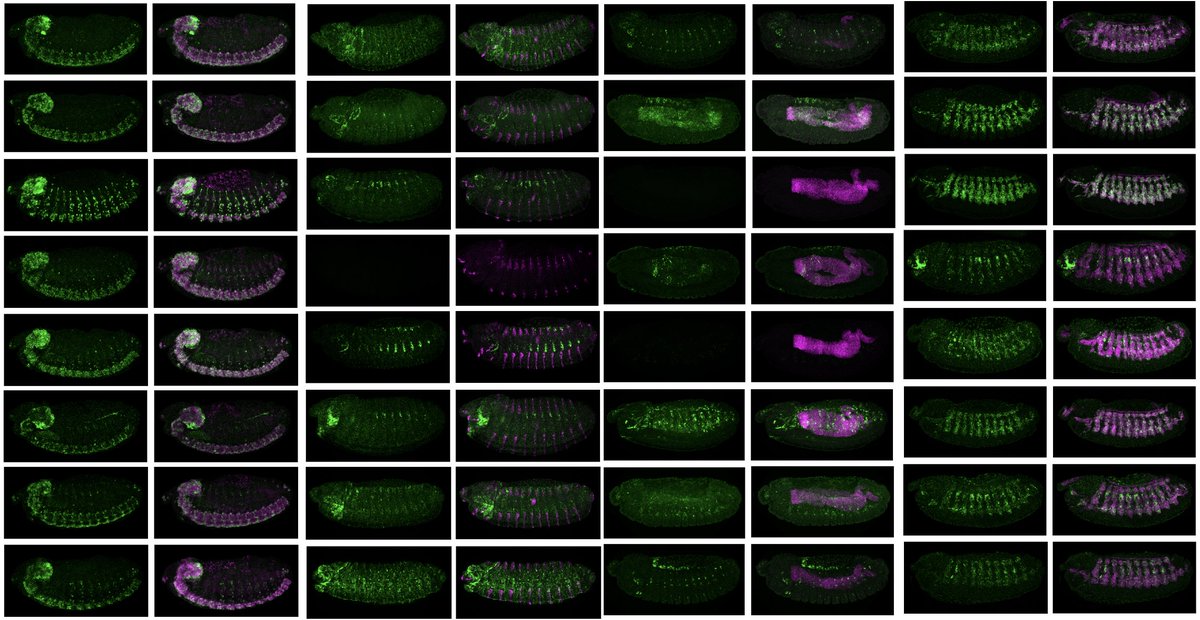
We are very excited to present a major breakthrough achievement – the de novo design of synthetic enhancers for selected tissues in fruit fly embryos in vivo using deep- and transfer learning, @deAlmeida_BPet al published today in @Nature nature.com/articles/s4158…. Thread 👇(1/N)
StarkLab tweet media
English
21
196
664
134.9K
PeterK retuiteado
Ang Cui, Ph.D.
Ang Cui, Ph.D.@AngCuiPhD·
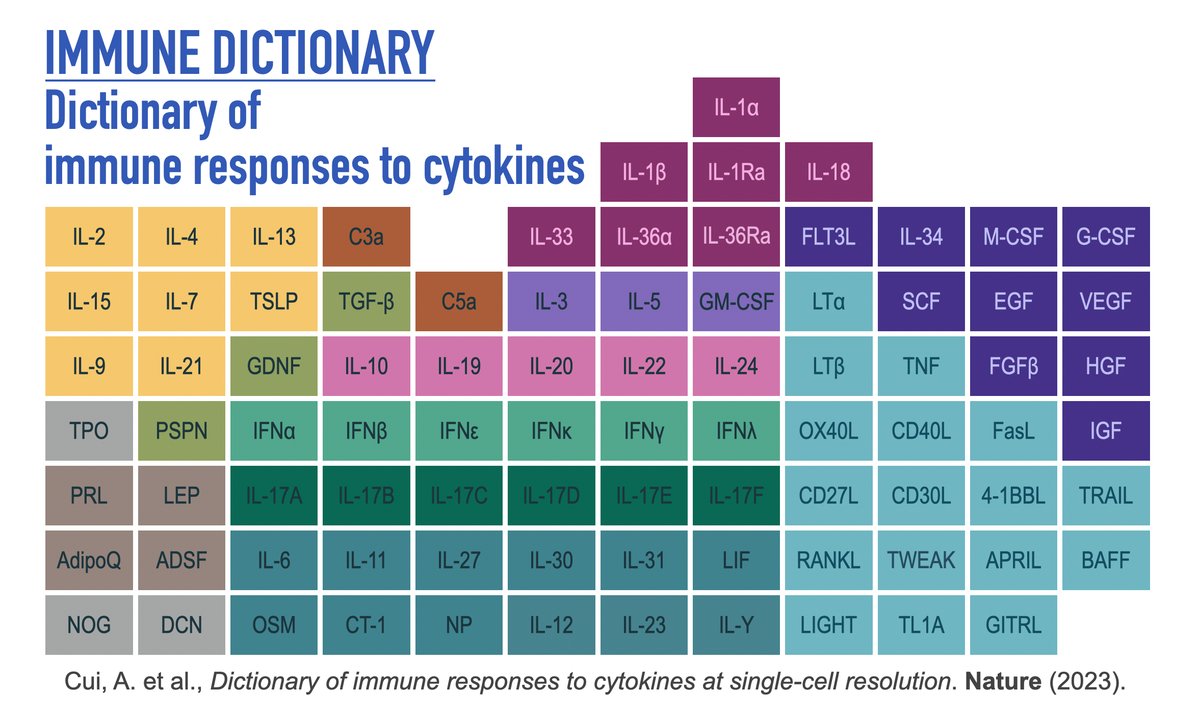
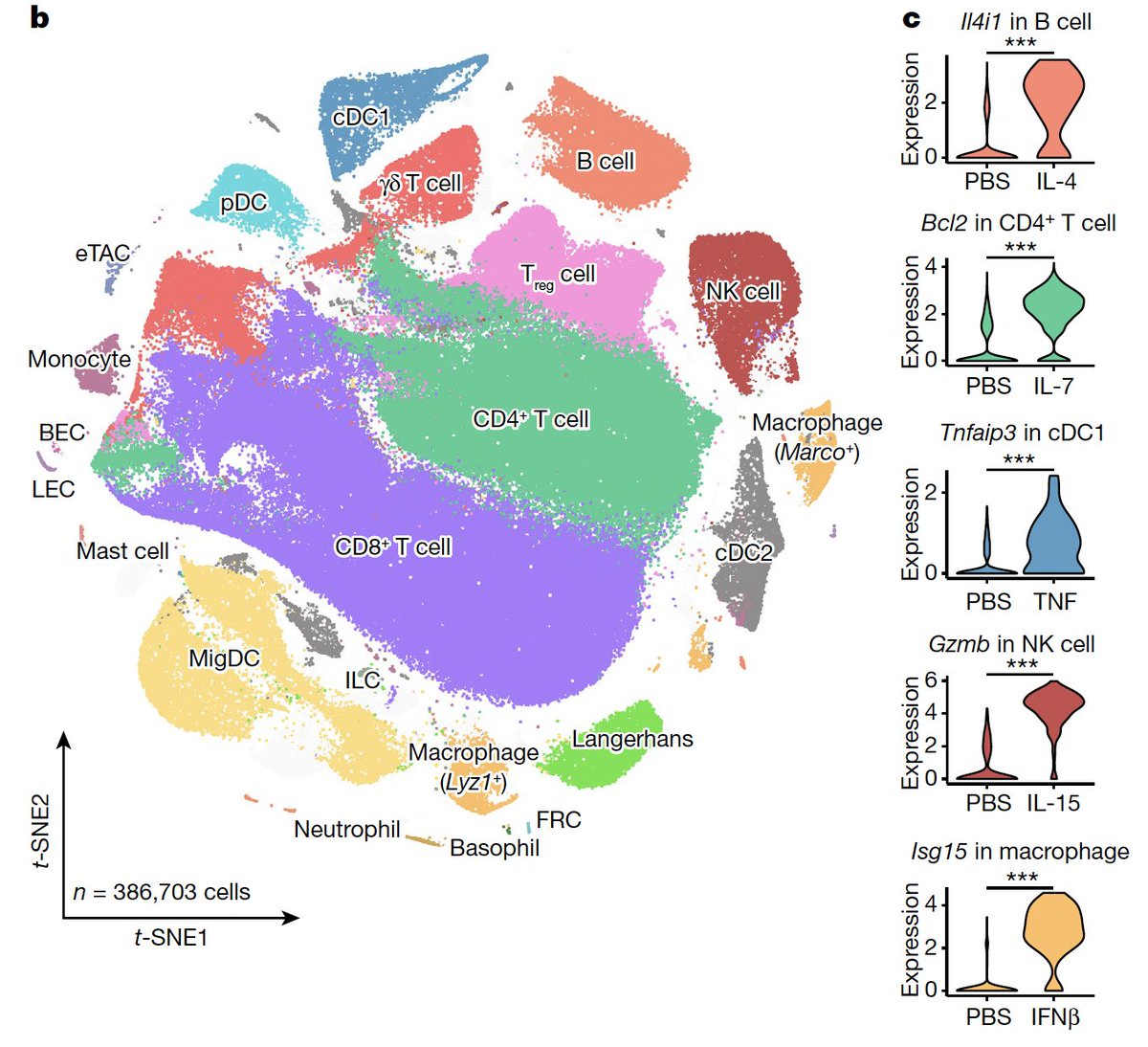
We profiled #scRNAseq of 386,703 cells and uncovered 17+ immune cell types in lymph nodes. Well-known cytokine-responsive genes, such as Il4i1 in response to IL-4, Tnfaip3 in response to TNF, are robustly upregulated in our dictionary. #ImmuneDictionary 6/
Ang Cui, Ph.D. tweet media
English
1
4
38
5.8K
PeterK retuiteado
antisense.
antisense.@razoralign·
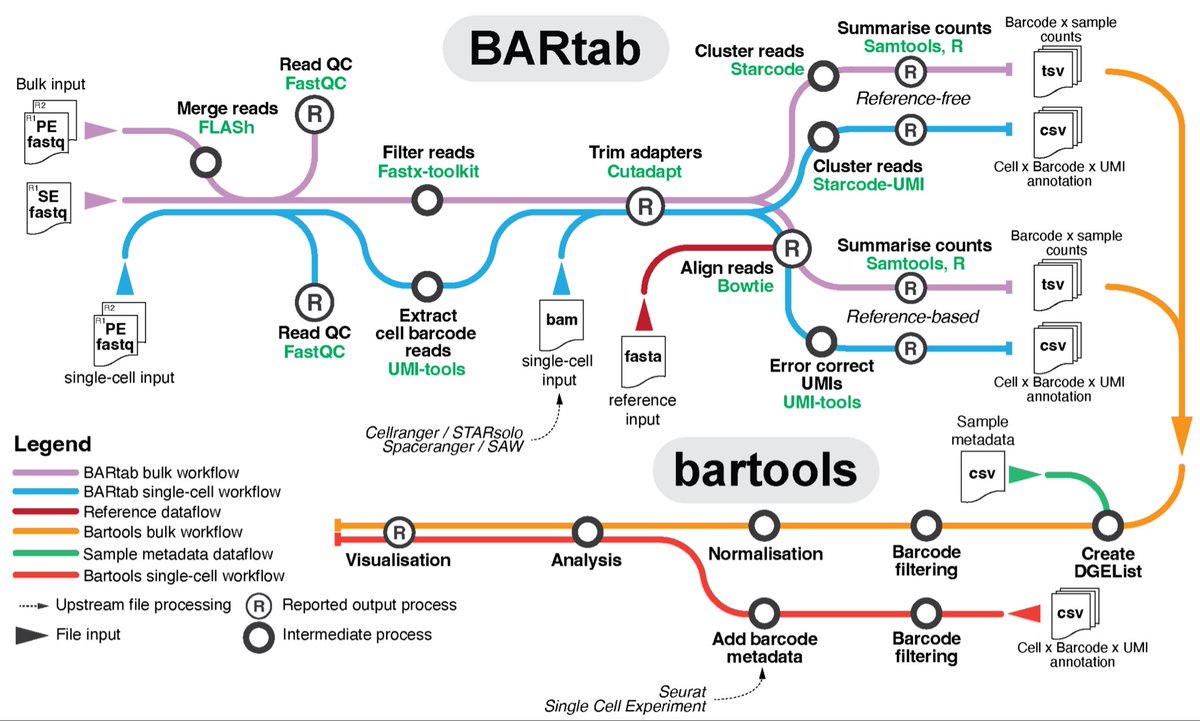
BARtab & bartools: an integrated Nextflow pipeline and R package for the analysis of synthetic cellular barcodes in the genome and transcriptome biorxiv.org/content/10.110…
antisense. tweet media
English
0
20
59
9.2K