

Math Files
18K posts
Math Files
@Math_files
Life is nonlinear. So handle it using Math.
Se unió Haziran 2020
7 Siguiendo198.7K Seguidores

√1 = 1
√(1 + 3) = √4 = 2
√(1 + 3 + 5) = √9 = 3
√(1 + 3 + 5 + 7) = √16 = 4
√(1 + 3 + 5 + 7 + 9) = √25 = 5
√(1 + 3 + 5 + 7 + 9 + 11) = √36 = 6
√(1 + 3 + 5 + 7 + 9 + 11 + 13) = √49 = 7
√(1 + 3 + 5 + 7 + 9 + 11 + 13 + 15) = √64 = 8
√(1 + 3 + 5 + 7 + 9 + 11 + 13 + 15 + 17) = √81 = 9
√(1 + 3 + 5 + 7 + 9 + 11 + 13 + 15 + 17 + 19) = √100 = 10

In the 1960s, a direct flight to Neptune would have taken nearly 30 years. That was longer than most spacecraft could survive. Reaching the outer planets seemed almost impossible.
But one engineer, working quietly with a pencil, found a way around this problem.
Gary Flandro, a scientist at NASA’s Jet Propulsion Laboratory, was asked to study how spacecraft might travel to the distant planets despite the limits of rocket technology at the time. Fuel was scarce, and engines were not powerful enough for such long journeys.
Flandro turned to a clever idea from physics called a gravity assist, sometimes known as a planetary slingshot. The concept is simple in principle. When a spacecraft passes close to a large planet, the planet’s gravity pulls it in and then flings it forward. In doing so, the spacecraft steals a tiny bit of the planet’s motion around the Sun. The planet slows down by an amount too small to notice, but the spacecraft gains a huge increase in speed without using any fuel.
With only paper, pencil, and the limited computers of 1965, Flandro calculated the future positions of Jupiter, Saturn, Uranus, and Neptune. What he found was remarkable. In the late 1970s, these giant planets would line up in a rare formation. This alignment would allow a single spacecraft to travel from one planet to the next, gaining speed at each step.
This opportunity appears only once every 176 years.
Flandro showed that a spacecraft could use Jupiter’s gravity to reach Saturn, then use Saturn to reach Uranus, and finally use Uranus to reach Neptune. This chain of boosts would cut the travel time to Neptune from about 30 years down to just 12.
This elegant piece of mathematics changed everything.
It became the foundation for the Voyager 1 and Voyager 2 missions, both launched in 1977. Thanks to this precise planning, the two spacecraft sent back the first close images of the outer planets. They later continued their journey beyond the solar system, becoming the first human-made objects to enter interstellar space.
All of it began with a simple insight, worked out by hand, that turned an impossible journey into a reachable one.

English
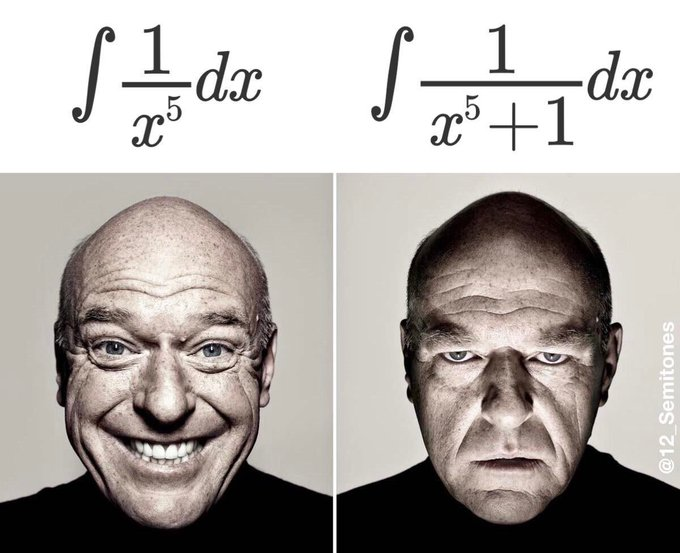
A maths professor, a maths PhD student and a maths undergraduate were traveling in a train and from the train window they saw a black cow.
Undergraduate says: all cows are black here!
PhD students says: no! At least one cow is black here.
Professor says: you are both wrong! At least one side of one cow is black here.
English
The term "bosons" was coined by the physicist Paul Dirac in 1945 to honor the Indian physicist Satyendra Nath Bose.

English


"If the proof is correct then no other recognition is needed."
- Grigori Perelman

English


