

Michael de Monte
38.5K posts

"The beauty of their women and the taste of their food made Brits the best sailors in the world."
English
@rec777777 @Alexarmstrong I find that the easiest way to demolish this lie, especially with Labour/LibDem types, is to say: -
"really? I thought that you were opposed to George Osbornes policies & "austerity."
English

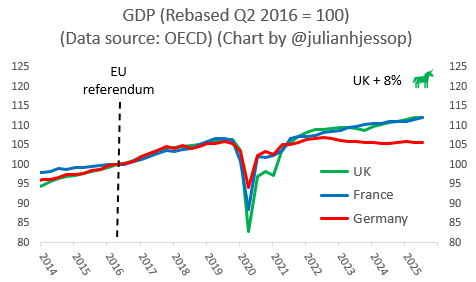
Blatant lie from Bill @Alexarmstrong about the economic impact of #brexit
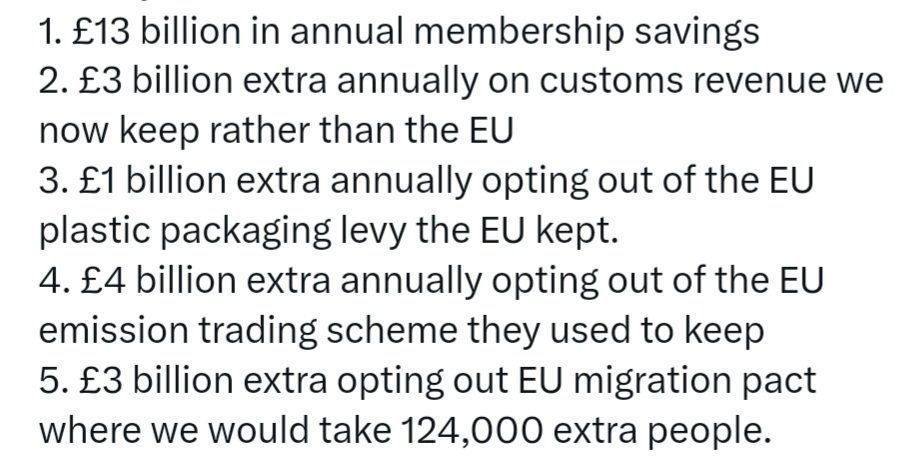
We've done better than any EU member in the G7 since we left and saved £billions in fees. We have 6 years of data now to prove it
8% better GDP than France or Germany if we stayed in is ridiculous
English
@AnnaSobriety @GaardenTrasch There is no doubt that, as they used to say in the more colourful sections of Parliament, that Keir is a man of bottom, as attested by no less a judge than Lord Mandelson.
English

@GaardenTrasch @MichaeldeMonte2 I’m led to believe that, although you wouldn’t think it from the front, that his bijou pied a terre has quite a commodious back part capable of accommodating many people in need of refuge. But his humility prevents him from advertising the fact, so it remains a hidden attribute.
English
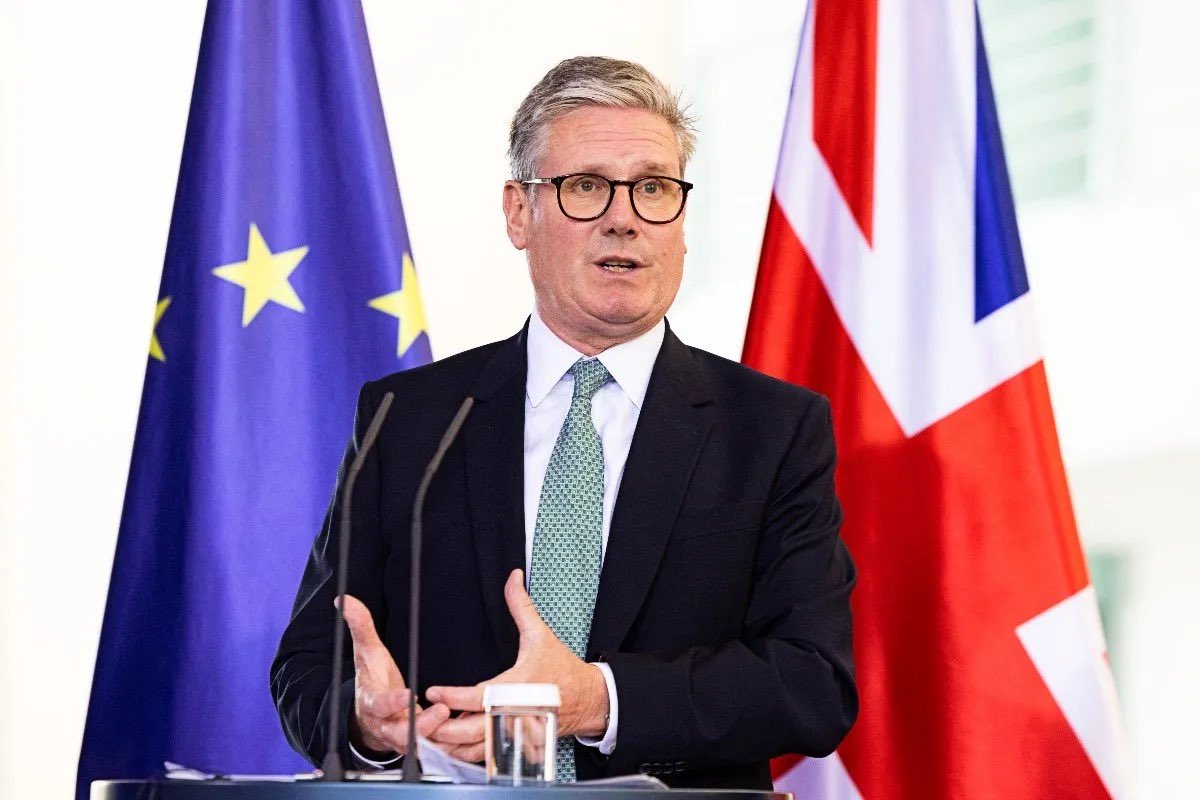
If Keir does not eventually get a big job as an EU Commissioner or an ECJ judge as a reward for implementing the EU’s UK reset, there really is no justice in this world.
English
Michael de Monte retuiteado

Karl Marx's body is in his grave, London.
Nietzsche's body is in his grave, Lützen
Muhammad's body is in his grave, Medina
Buddha's body is in his grave, Pingliang
But, if you travel to Christ's grave in Jerusalem, it's empty, & has been for 2,000 years.

English
@JChimirie66677 The Starmer Governments legal position is advised by the Attorney General, Lord Hermer, who is of course lawyer for Gerry Adams.
You cannot hate this Government enough.
English

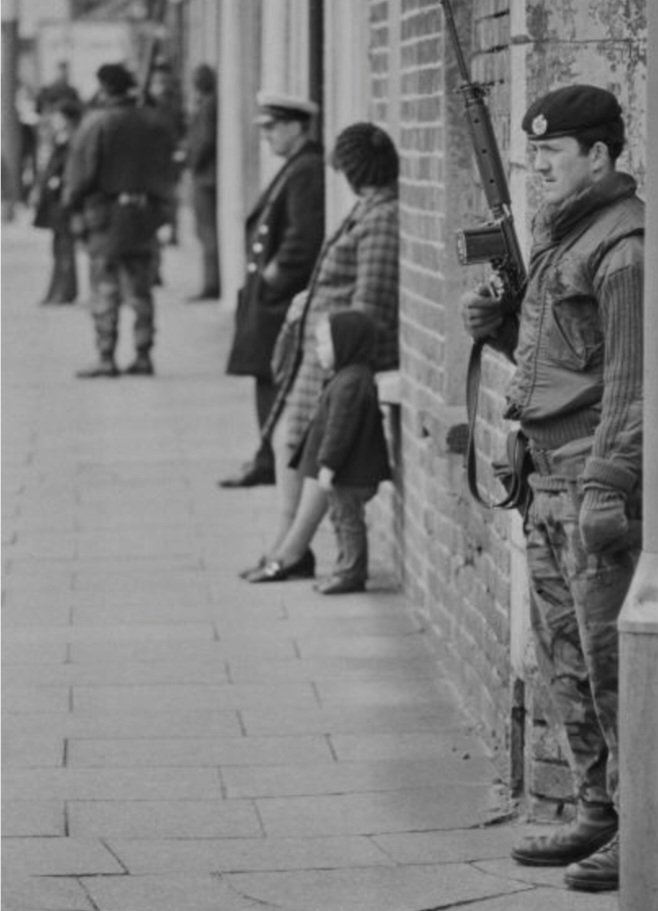
Three former soldiers will appear at Belfast magistrates court on April 20th. One is charged with a killing that took place in May 1972. He is not accused of acting outside his orders. He is accused of acting within them. The distinction no longer appears to matter.
This is the reality behind Labour's Northern Ireland Troubles Bill, a piece of legislation dressed in the language of reconciliation that functions, in practice, as an engine of persecution. The state that sent these men to Northern Ireland, that gave them their orders, that relied on their judgment in circumstances no minister has ever faced, is now the state that funds the machinery pursuing them through the courts half a century later.
That is not a technicality. It is the central fact. Taxpayer money flows to the lawyers challenging the actions of soldiers whose actions were sanctioned by the taxpayer. The government calls this justice. General Sir Peter Wall, who commanded the British Army for four years, calls it something without moral backbone. He is right.
The operational consequences are already visible. Elite soldiers are leaving the SAS and SBS rather than face the prospect of prosecution decades hence for missions carried out under government orders. The crisis has become sufficiently acute that reservists are being brought into the regular SAS to fill roles vacated by those walking out. Britain's most capable fighting force is being quietly hollowed out by a bill whose architects appear indifferent to the result. Seven former SAS commanders have warned that the legislation is doing the enemy's work, that operational secrets exposed through inquiries give hostile states a narrative of lawless troops. Moscow, Tehran and Beijing do not need to discredit British special forces. Westminster is doing it for them.
The asymmetry at the heart of this legislation is not incidental. It is structural. IRA members were released under the Good Friday Agreement. Many destroyed evidence, stayed silent, or received letters guaranteeing they would not be pursued. Soldiers kept records, gave statements, and remained traceable. Decades later, only one group remains available for scrutiny. Not because they are more culpable, but because they are more reachable.
The Coagh ambush of June 1991 illustrates the logic perfectly. Three IRA men were stopped by the SAS on their way to murder someone. A coroner ruled the force used was justified. Years later a family challenged that ruling, arguing the soldier should have paused after each shot to consider whether to fire the next one. A judge described that argument as ludicrous and utterly divorced from reality. The challenge continues, funded by legal aid, heard at the Court of Appeal just days ago. No verdict ends the process. The process is the punishment.
Keir Starmer has said publicly he is absolutely confident there will be no vexatious prosecutions. Three soldiers will be in a Belfast court in sixteen days. His confidence has not reached them.
The government insists its bill provides robust protections for veterans. General Sir Nick Parker, who oversaw the final operations in Northern Ireland, says ministers do not understand the duty of the state to stand by those who serve it. The duty to stand by those who serve is contractual, not sentimental. A soldier who follows orders in a war the state authorised cannot later be offered up as payment for political convenience.
What is being constructed here is not a legacy process. It is a permanent legal industry, sustained by public money, targeting the most traceable participants in a conflict the state itself waged. The soldiers kept their records. That is now their liability.
A serious country does not behave this way. This one, apparently, does.
"Keir Starmer has said publicly he is absolutely confident there will be no vexatious prosecutions. Three soldiers will be in a Belfast court in sixteen days. His confidence has not reached them."

English
Michael de Monte retuiteado

@MrBoldOne @EmiratesFACup Enjoy your quadruple, pal.
English

BREAKING: Devil is dead. Ayatollah Alireza Arafi, second highest leader of Iran, responsible for making anti women law & killing of thousands of Iranian women for not wearing Burqa & Hijab, has been killed in overnight US-Israel strikes on Tehran.
English
@GaardenTrasch @AnnaSobriety Andrew tells me that Keir brings his forensic skills to his interaction with Ukrainian youth, when he is initially gently probing but then deeply penetrative with his insight.
English
@MichaeldeMonte2 @AnnaSobriety Quite so, Monte. Many people don’t realise how much Keir and Manu have done to attract disaffected youth to the centre left, including outreach in all sorts of places.
English
@johnredwood Because lies, half truths and untruths are all that they have John
English
Why do people put out lies about loss of GDP and trade from Brexit based on out of date wrong forecasts? The official numbers for trade and GDP over the last ten years show no Brexit losses, with the UK outperforming Germany for GDP.
English

Outstanding. Is the Brixton sports centre built after the riots still open?
Stakeholder Consultant@echetus
Exciting to see “the youth clubs” in the wild in 2026
Kyoto-shi Nakagyo, Kyoto 🇯🇵 English
@ZealouslyQuoted That's English for you.
Why Arkansas (R Can Saw) & Kansas (Can Zuss)?
Why "Giant" with a G not a J?
English

@MichaeldeMonte2 Interesting! If I ever meet an aussie or kiwi thom Ill probably make a thom thumb joke. If you pronounce it Tom why do you spell it thom?
English
Hold on. Do brits write Tom as Thom?
English
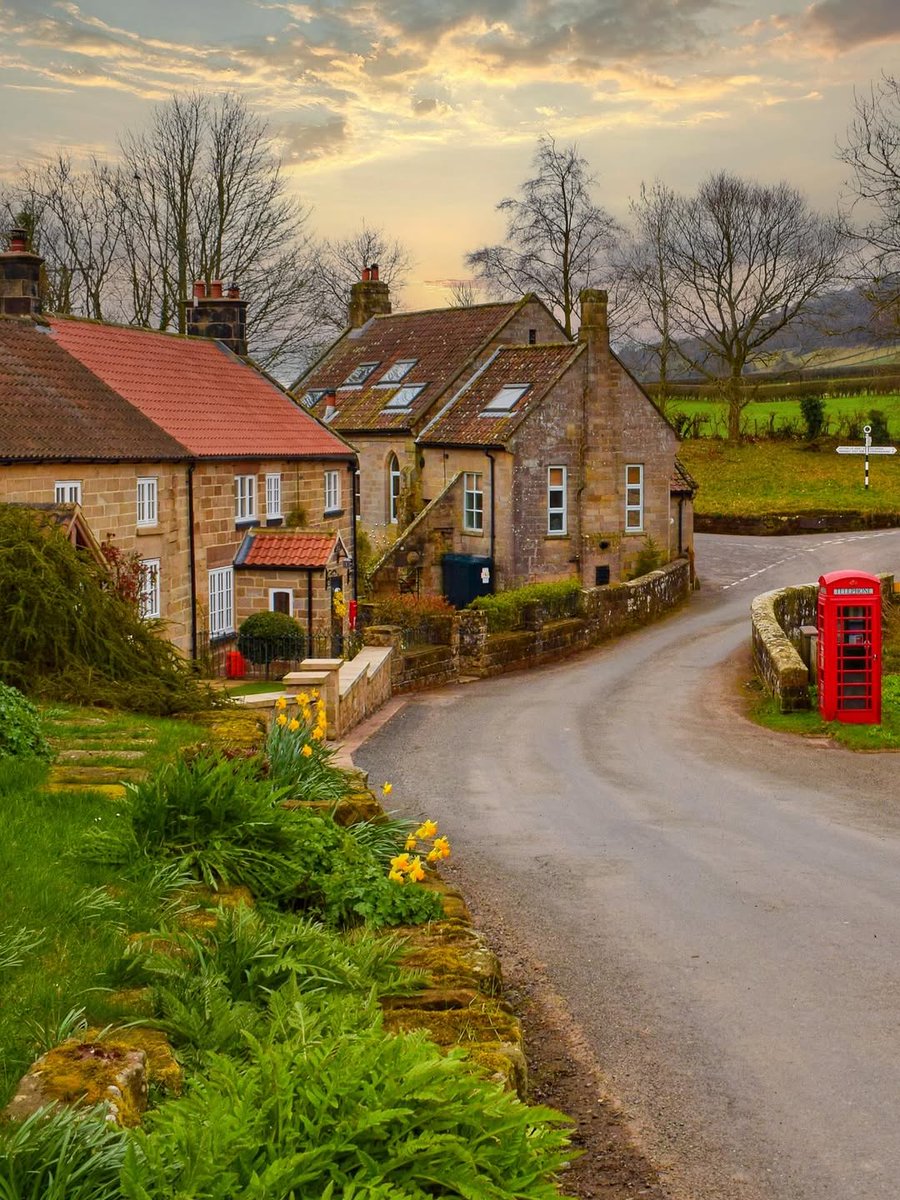
@visitnorthyork The view of Lancashire from the Pennines
English

What’s the greatest thing Yorkshire has ever given the world?
Yorkshire and The Humber, England 🇬🇧 English
@supersilverfox @iainmartin1 @GavinBarwell @edvaizey @SirSimonClarke How on earth can facts be "ridiculous"?
English

@iainmartin1 @GavinBarwell @edvaizey @SirSimonClarke Ridiculous to suggest European food standards are lower.
English

There is nothing “absurd” about thinking that locking the UK into a continent that is getting almost all its big strategic bets for the future wrong would be a catastrophic mistake.
Yes the world is changing. But that means we need more robust borders, more flexible labour markets, more dynamic capital markets, cheaper energy, a positive attitude to AI and tech…ie all the key things the EU isn’t doing well or at all, and that Brexit allows us to pursue.
Gavin Barwell@GavinBarwell
I guess Seb has to pretend he thinks this if he wants to be selected as a Conservative MP, but it's absurd. The world is *much* less conducive to a free trading, go it alone UK than it was in 2016 - which is why public opinion has shifted decisively in the opposite direction
English
Michael de Monte retuiteado

Michael de Monte retuiteado

Good Friday reminds us of Jesus Christ’s sacrifice. May this day further deepen the values of harmony, compassion and forgiveness. May brotherhood and hope guide us all.
English
