
Nereide
63.7K posts

Nereide
@Nereide
Physicist interested in Astrophysics & Particle Physics| Research in Math & Science Edu| Math & Science Writer| Teacher & Teacher Trainer| WomenInSTEM
Italy Se unió Haziran 2007
79 Siguiendo7.9K Seguidores
Nereide retuiteado
After more than fifty years, four human beings have left Earth orbit and are now traveling toward the Moon aboard a brand-new spacecraft. #ArtemisII🚀❤️
This isn’t just a successful launch. It’s the moment we have quietly resumed a journey we abandoned in December 1972, when the last Apollo crew returned to Earth. Since then we’ve explored with robots, but never again with humans this far out.
Artemis II is not a landing yet — it’s a test flight. But it may be the most meaningful test we’ve run in half a century, because it’s answering the real question: are we actually ready to go back into deep space, this time to stay?
As Orion moves away from Earth, it’s hard not to feel the weight of it. Every time humans choose to climb into a vehicle like this, they’re reminding the rest of us that some things are still worth the risk — simply because they lie beyond what we already know.

English
Nereide retuiteado
1/6
Everything is ready for @NASAArtemis II test flight — we're nearing the starting line.
The countdown is underway at the @NASAKennedy. It started ticking down yesterday at 4:44 p.m. EDT to a targeted launch time of 6:24 p.m. on Wednesday, April 1.
nasa.gov/blogs/missions…
It will be the first time humans fly aboard the SLS rocket and Orion spacecraft on a ~10-day test flight around the Moon — NASA’s first crewed lunar flyby in more than 50 years.
#ArtemisII #NASA #MoonToMars

English
Nereide retuiteado
🧵1/6
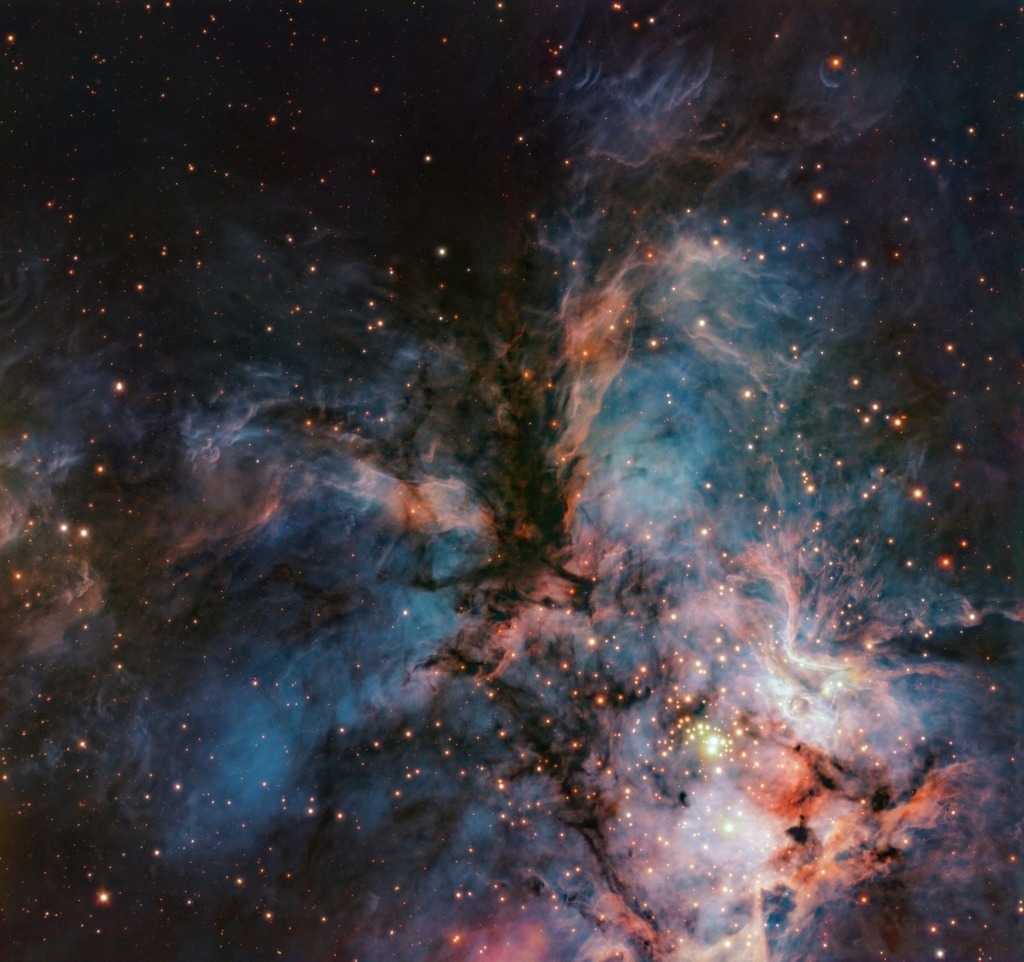
This VLT image shows RCW 36, a young massive star cluster in Vela.
Dark clouds look like a bird’s head and body, with bright filaments like wings.
Below, a blue nebula glows from massive newborn stars.
eso.org/public/images/…
#Astronomy #galactic #universe #space
English
Nereide retuiteado
🧵1/6
Since 2012, astronomers have been tracking a gas cloud called G2 orbiting the supermassive black hole Sgr A* at the center of our galaxy at very high speeds.
Later they identified a similar earlier cloud named G1.
Now they’ve found a third one: G2t. 🔭 🧪 ⚛️
➡️ eso.org/public/images/…
#astronomy #science #space #cosmology #universe

English
Nereide retuiteado
1/5
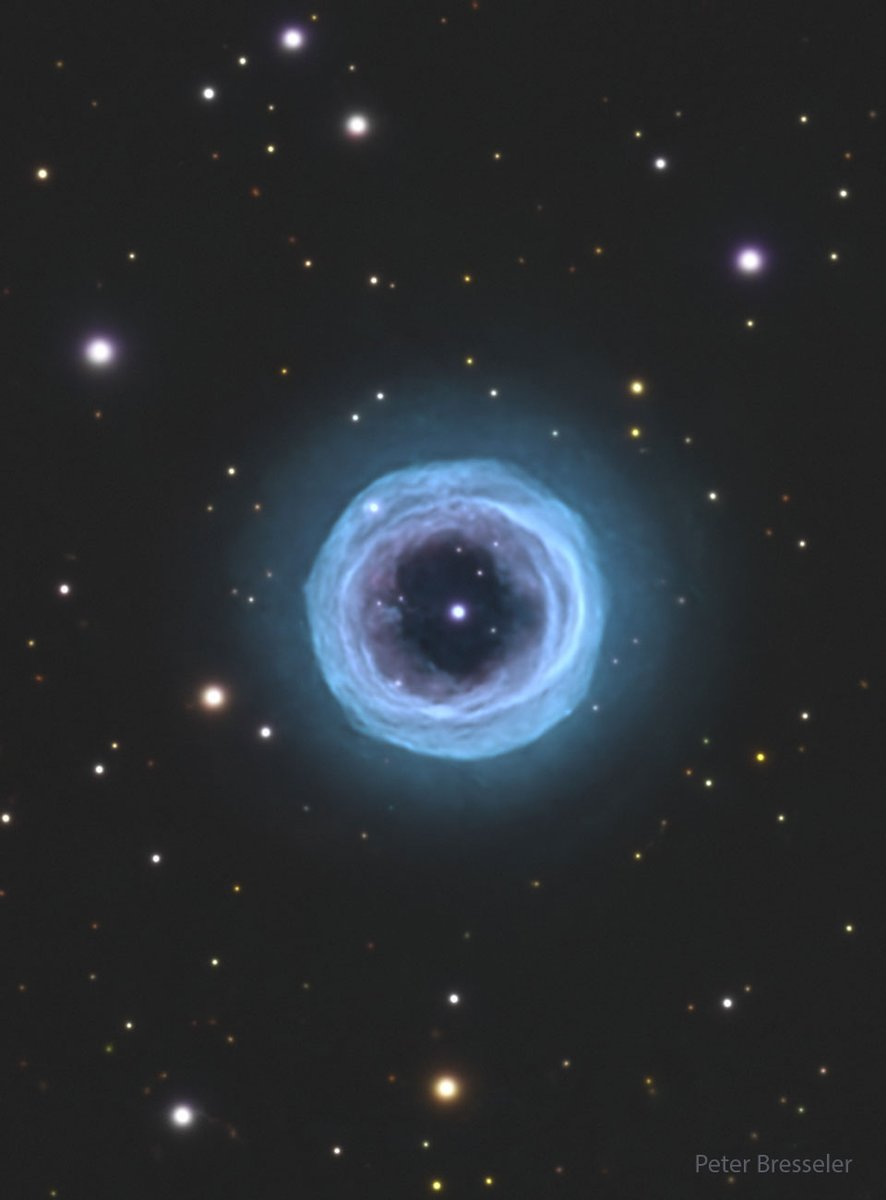
It looks like a cosmic eye staring back at us from space… but it's not!
Meet Shapley 1 (also known as the Fine Ring Nebula), one of the most perfectly symmetric and beautiful planetary nebulae in the sky.
➡️ apod.nasa.gov/apod/ap260304.…
Image credit: Peter Bresseler
#universe #astronomy #space #science
English
Nereide retuiteado
🧵1/7
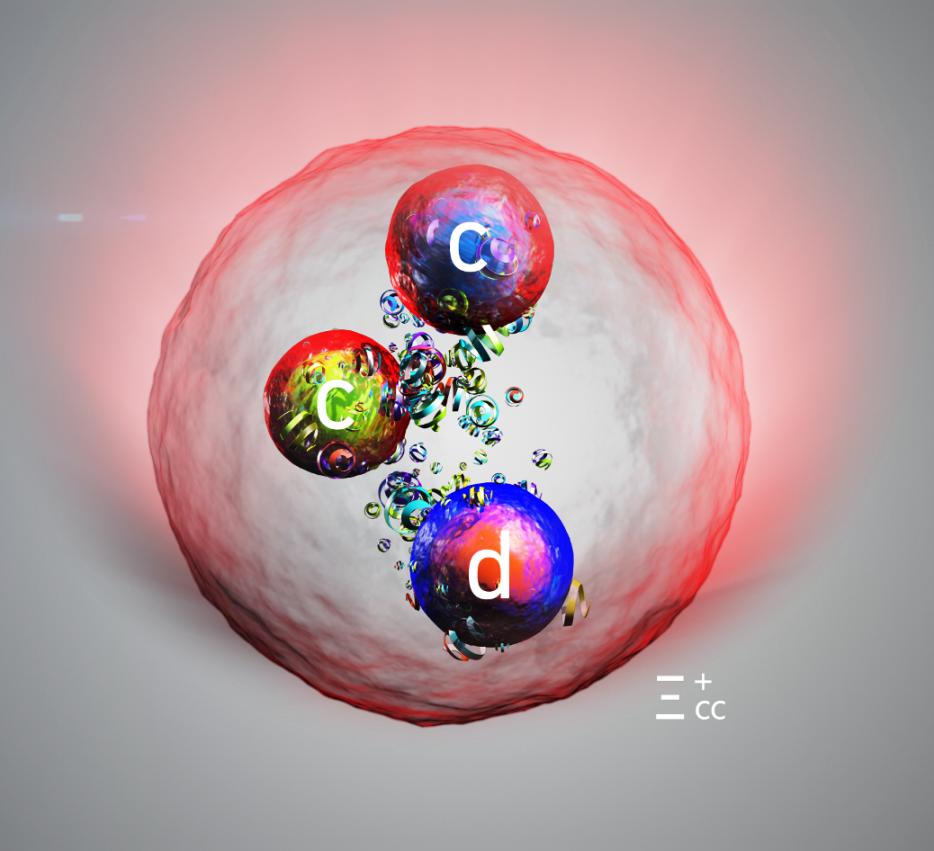
At #CERN they discovered a new particle, a heavier "cousin" of the proton.
The LHCb experiment announced it at the Rencontres de Moriond Electroweak meeting on 17 March 2026.
➡️ home.cern/news/news/phys…
Artist’s impression of the newly discovered baryon (Credit: CERN)
#physics #science
English
Nereide retuiteado
1/5
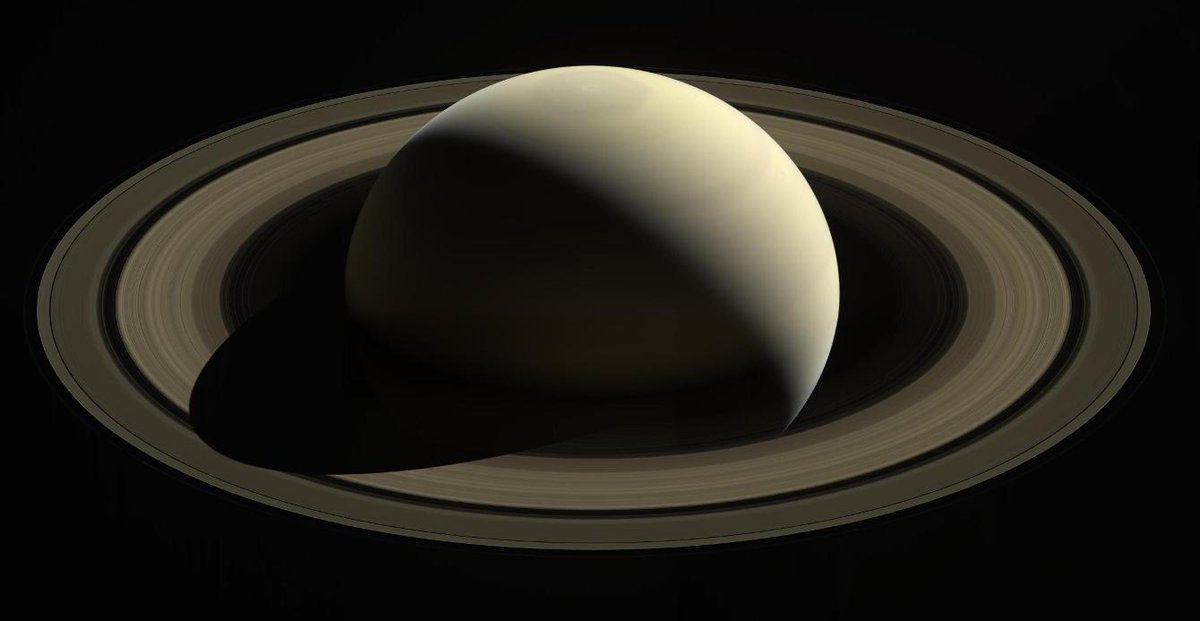
Great! Saturn keeps collecting more moons.
The Minor Planet Center quietly released MPEC 2026-F14 on March 16, 2026, confirming 11 additional small satellites.
That brings Saturn’s total to 285, leaving Jupiter well behind in the rankings.
#universe #astronomy #science
English
Nereide retuiteado
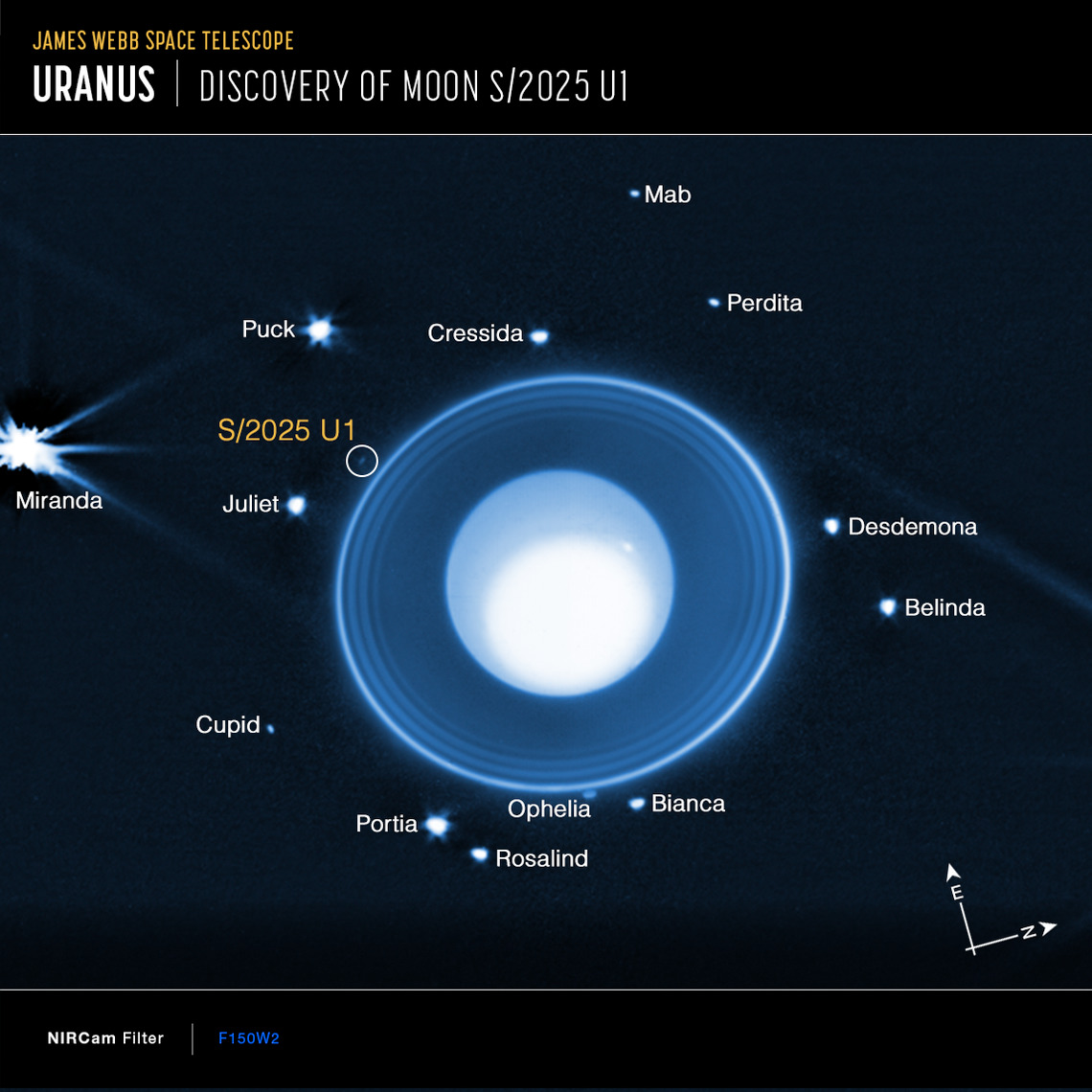
Update March 2026: In August 2025, the discovery of a faint new moon around #Uranus, was announced. That pushed the known count of its moons to 29.
Provisionally designated S/2025 U1 (all of Uranus's moons are named after characters from Shakespeare and Alexander Pope), it appeared in #JWST NIRCam images taken Feb. 2, 2025.
Maryame El Moutamid’s team at Southwest Research Institute (SwRI) found it orbiting ~56,000 km from the planet, between the orbits of Bianca and Ophelia near the inner rings. Roughly 10 km wide, it’s one of the smallest Uranian moons—too dim and close for earlier missions like Voyager 2 to see.
Its gravity may help shape the nearby rings.
SwRI release➡️swri.org/newsroom/press…
Image credit: NASA, ESA, CSA, STScI, M. El Moutamid (SwRI), M. Hedman (University of Idaho)
English
Nereide retuiteado
1/5
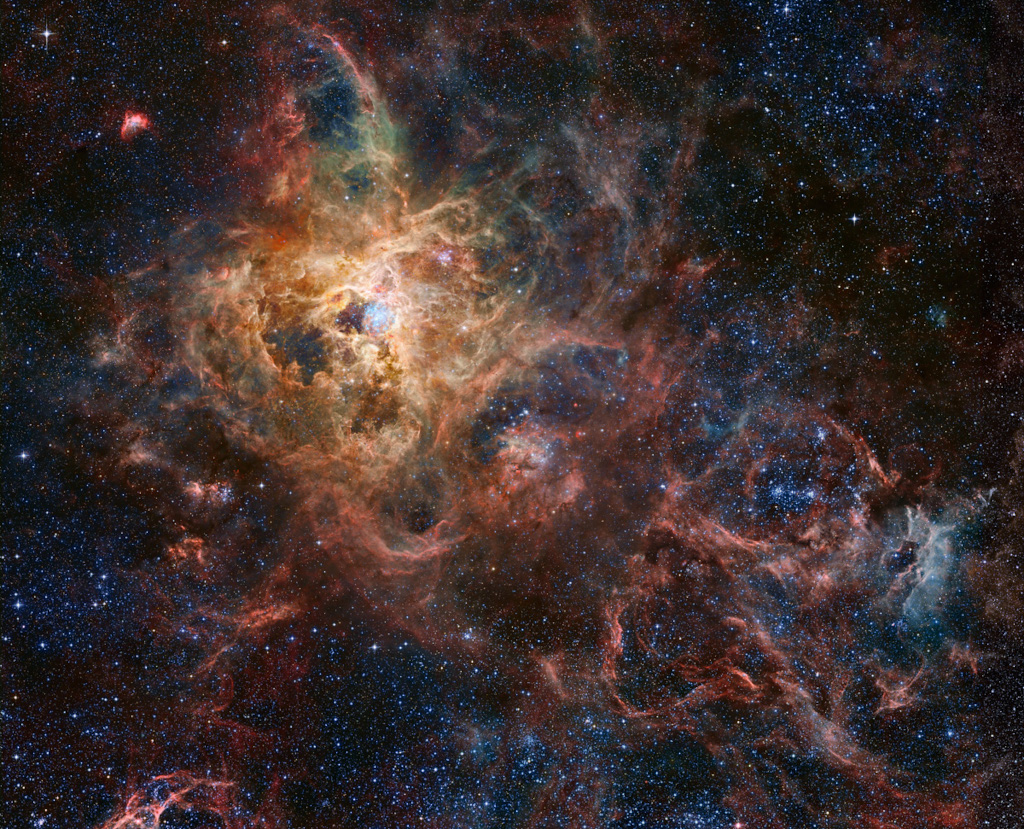
This spectacular, composite image from multiple data sources (#Hubble, #ESO, #JWST, amateur data), assembled and processed by Robert Gendler, shows the Tarantula Nebula (30 Doradus, NGC 2070)
➡️apod.nasa.gov/apod/ap220916.…
#Universe #Astronomy #Science #Space
English
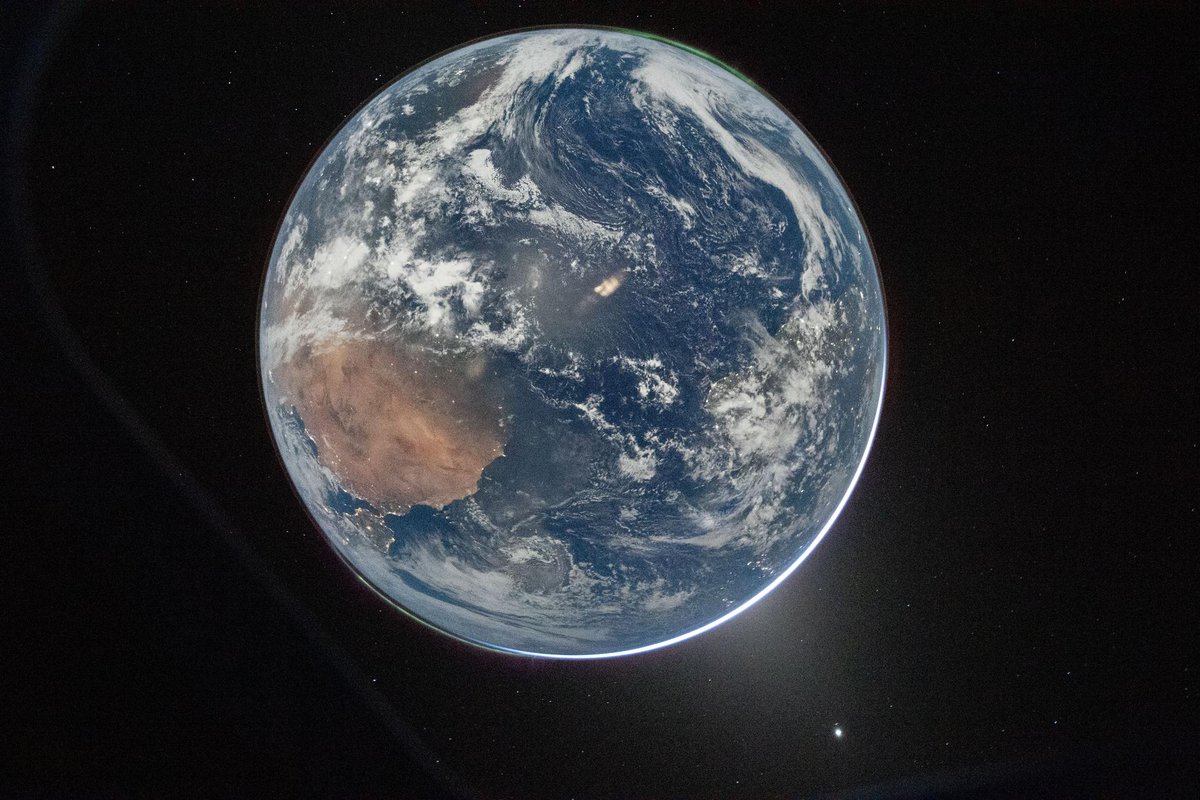
Sì, è una foto scattata con Nikon D5, 14-24mm a 22mm, ISO 51.200 e 1/4 di secondo. La Terra era backlit (il Sole era dietro il pianeta rispetto alla navicella), quindi la luce era molto bassa e serviva spingere ISO e tempo di esposizione per catturare l’alone atmosferico e le aurore.
Il recupero in post-produzione è stato buono.
Sul GPS: ovviamente manca. La foto è stata scattata a decine di migliaia di km dalla Terra, nelle ore successive al translunar injection burn. Il GPS non funziona a quelle distanze e NASA non lo include nei metadati.
Italiano

@Nereide a dir la verità è una foto con un tempo lungo ad un valore ISO folle e con un grandangolo, "recuperata" molto bene (però nei dati EXIF della NASA mancano le coordinate GPS 😀)
Italiano
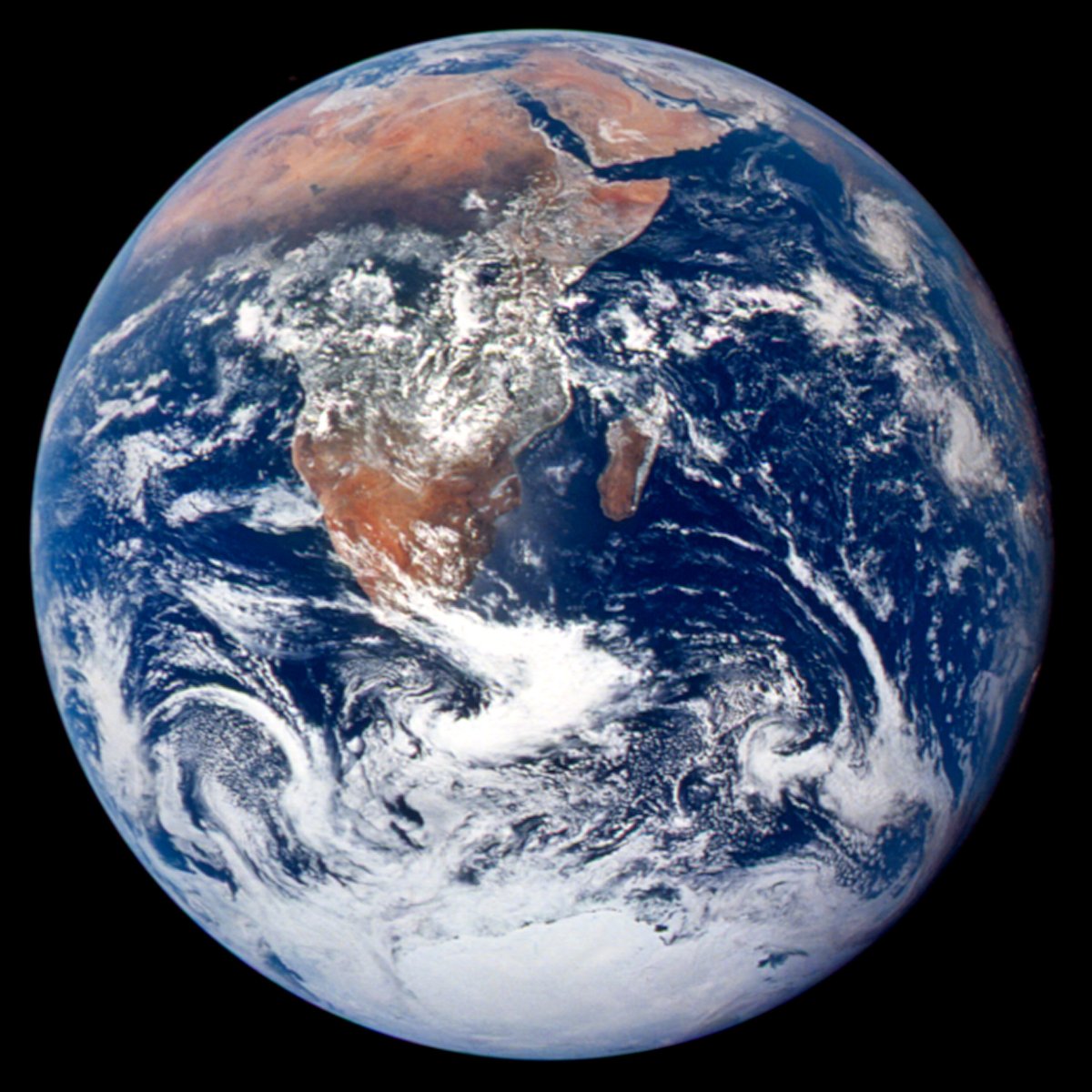
No, actually in both photos Earth is illuminated by the Sun. The difference in brightness is mainly due to the position of the spacecraft. In the 2026 photo (right), the Earth is backlit — the Sun is behind the Earth from the spacecraft’s perspective — while in the 1972 Blue Marble (left), the Sun was almost behind the spacecraft, so the Earth was more directly lit.
English

@Nereide Maybe the second picture looks darker because the Earth in this case was lighted by the Moon, and not by the Sun like in the older picture.
English
For me it’s a quiet but powerful reminder that we finally stepped back out beyond low Earth orbit with people on board.
Apollo 17 was the last time we did this, and then… nothing for more than half a century.
The Artemis II image is just proof that we’re once again capable of leaving our immediate neighborhood and looking back at home from that deeper perspective.
The technology has changed, the crews are more international, but the feeling is the same: that small, beautiful, lonely planet is still ours, and we’re still learning how to appreciate it from afar.
English

@Nereide After 54 years, what does it mean to see humans taking full-disk photos of Earth from deep space again?
So poignant view!
English
The biggest thing that jumps out at me is the pair of auroras — you can clearly see both the northern and southern lights glowing at the same time, plus that delicate blue atmospheric halo all the way around the planet.
There’s also a hint of zodiacal light in the background. In 1972 the Earth was captured with the Sun almost directly behind the spacecraft, so we got this perfect, vibrant, sunlit view.
The Artemis II image is backlit, which gives us a different view: you see the thin glow of the atmosphere against the black of space and the faint city lights on the night side near the edge. It feels more… fragile, somehow.
English

@Nereide What new details can we see in the 2026 full-disk Earth photo that weren’t obvious in the 1972 Blue Marble?
English
It’s mainly down to the optics and the distance at the moment the shutter clicked. Apollo 17 was taken at around 29,400 km from Earth with a relatively “normal” focal length lens on a Hasselblad, so the planet pretty much filled the frame.
The Artemis II shot was captured a bit farther out, after the big translunar injection burn, and the Orion cameras have a wider field of view.
That extra space around the planet makes it look smaller, even though the actual distance isn’t dramatically greater. It’s the same planet — just framed differently.
English

@Nereide Why does the Earth appear noticeably smaller in the 2026 Artemis II photo than in the classic 1972 Blue Marble from Apollo 17?
English
@pe_blanch Indeed!
Both auroras at once in the Artemis image.
That’s what makes this 2026 shot so special.
Really glad you noticed!
English

Nereide retuiteado

"We can see the Moon out of the docking hatch right now. It's a beautiful sight."
Flight day 3 is in the books, and our @NASAArtemis II crew is now closer to the Moon than to Earth. Check out highlights from our lunar mission. What’s been your favorite moment so far?
English
Nereide retuiteado
1/2
Earth's rotation stabilized on the night sky.
Using a camera scanning the landscape of Tivoli, Namibia, Bartosz Wojczyński focused on the sky.
He created a timelapse spanning 24 h that has a focal point in the sky rather than on the land.
#scritturebrevi #ventaglidiparole
English
Nereide retuiteado
Question: If chimps are so much like us, why are they endangered while humans dominate the globe?
Goodall: Well, in some ways we're not successful at all. We're destroying our home. That's not a bit successful.
— Jane Goodall, born 3 Apr 1934.
#scritturebrevi #VentagliDiParole

English