blablablub
42 posts

blablablub
@OffchainDex
sharing technical insights about Hydranet, a platform working on seamless blockchain interoperability.
Se unió Haziran 2025
25 Siguiendo92 Seguidores

@geoburke @BitmanTW @moneyfet1sh @PortaltoBitcoin hey @geoburke i´d like to make a comparison video of the Portal wallet and Hydranets atomic swap DEX but unfortunately when i open the Portal extension im only greeted with error messages. Any news when it will be working again?
English

Portal Wallet (@PortaltoBitcoin) is secure, multichain, and AI-powered, built to be the only wallet you’ll ever need.
- 3,000+ tokens across all major blockchains, desktop & mobile
- Built-in swaps (P2P & AMM) with no centralized custodians
- AIgent alerts for trend shifts, momentum breaks, and tailored opportunities
- Smart automation to trigger trades or transfers based on your rules
- Lightning management blending non-custodial sovereignty with custodial convenience for seamless BTC payments
Your assets, your rules.
With security, flexibility, and intelligence in one wallet.

English

👋 Hey, hier ist das BTC-ECHO YouTube Team!
Wir starten eine neue Video-Serie über spannende Coins und Krypto-Projekte - aber dieses Mal entscheidet ihr, womit wir anfangen! 🚀
👉 Welcher Coin oder welches Projekt interessiert dich derzeit am meisten?
Was sollte durch die Decke gehen - oder ist gerade völlig overrated?
Wir analysieren für euch, was hinter dem Projekt steckt, welches Potenzial es hat (oder nicht hat) - und was den Kurs steigen lassen könnte. 💥
📩 Schreibt uns in die Kommentare eure Vorschläge - wir sind gespannt! 👇
Deutsch

Obviously im biased towards Hydranet, but here are some concerns i have about Portal.
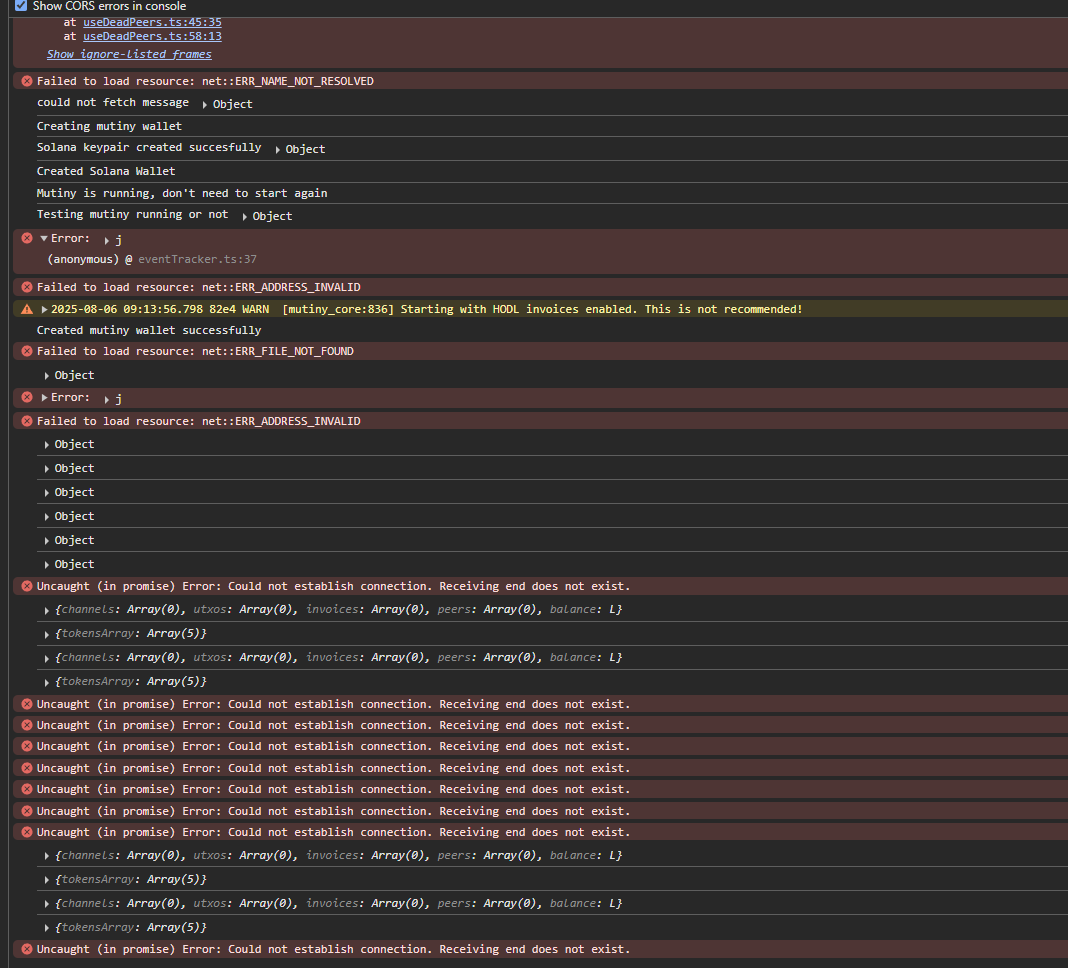
Screenshot 1:
Their wallet application is based on mutinyWallet, as can be seen in their Extension code (Google doesnt allow code obfuscation, so everything can be inspected).
MutinyNet has discontinued the development of their wallet x.com/BitcoinNewsCom… and the last code push was one year ago github.com/MutinyWallet/m…
Why did Portal decide to build on a project that was discontinued due to technical issues?
Hydranet on the other hand built their own tailored browser based Lightning wallet based on LDK.
Screenshot 2:
While Portal claims to have developed advanced technologies like Bitscaler and hub-less transfers, their code hints that this in not the case. Also no one has ever seen anything Bitscaler related in real life / testnet, its all buzzwords and a 10 page whitepaper so far, at least i couldn't find anything that demos it.
Same applies to their "swap-sdk" "Last updated 1 year ago", couldnt get anything running, see Screenshot 4.
Screenshot 3:
In the past months, i have tried to test and use the Portal browser extension multiple times, but i was never able to make a swap, nor can i really find any recent demo videos demonstrating it.
Currently their extension seems to be disabled.
Other things:
- Does Portal only allow for simple swaps, or do they also have classical orderbook trading like Hydranet?
- Why did Portal decide run a Validator network, when off-chain atomic swaps make that unnecessary, because the users wallet can do all the validation.


English

A Comparison between two cross-chain solutions:
@PortaltoBitcoin vs @TheHydranet :
A Comparison of Swaps and User Control
In the rapidly evolving world of cryptocurrency, Portal to Bitcoin and Hydranet offer trustless, decentralized solutions for cross-chain swaps. Both prioritize user control but differ in scope, technology, and accessibility. This post compares their features to help you decide which aligns with your needs. Lets Dig In
Portal to Bitcoin: Custody-less interoperability
Portals protocol focused on enabling swaps between Bitcoin (including Ordinals and Runes) and EVM-based assets without intermediaries like bridges or wrapped tokens. It appeals to Bitcoin users seeking trustless cross-chain functionality.
How It Works: Using BitScaler and Portal OS, Portal facilitates atomic swaps—direct, trustless trades where either both parties receive their assets or neither does. Swaps from BTC to EVM chains involve on-chain transactions on the EVM side, which may increase costs and delay confirmation times.
User Control: The custody-less design ensures users retain full control of their Bitcoin throughout the swap process, aligning with Bitcoin’s ethos of self-sovereignty.
Current Status: Portal is in public beta and requires users to download software, potentially limiting accessibility compared to browser-based solutions.
Hydranet: A Trustless Multi-Chain Settlement Layer
Hydranet is a decentralized trading network acting as a trustless bridge between chains, allowing seamless asset movement with full user control. It supports Bitcoin via the Lightning Network and Smart contract chains through the Lithium Network.
How It Works: Hydranet enables trustless, peer-to-peer swaps using HTLCs (Hashed Time-Locked Contracts) for security. Bitcoin transactions leverage the Lightning Network for near-instant, gas-free swaps, while EVM swaps occur off-chain via the Lithium Network, also gas free. Its multi-hub design ensures resilience—as long as one hub is active, the network persists. Tokenomics with the HDN token incentivize participation, with plans for the network to be fully run by its users.
User Control: Hydranet offers self-custody both on-chain and off-chain. Users manage their private keys and execute trades independently, with Bitcoin enthusiasts benefiting from Lightning Network channel management without third-party reliance.
Current Status: Hydranet is in public beta with its token (HDN) live on exchanges like MEXC and Uniswap. Its browser-based interface ensures accessibility from any device without software downloads.
Comparison: Portal to Bitcoin vs. Hydranet
Here’s how the two platforms stack up:
Scope
Portal: BTC, Ordinals, Runes swaps with EVM chains Hydranet: Multi-chain trading, bridging and tx's across chains (BTC, EVM)
Decentralization
Portal: Node-based system with MP-HTLCs; developer-led in beta, with potential for broader node participation post-beta.
Hydranet: Launches with one hub, then open-sources code, allowing anyone with HDN collateral to run hubs or watchtowers for full decentralization.
Governance
Portal: Developer-led (beta phase)
Hydranet: DAO with HDN token holders
Censorship Resistance
Portal: High for swaps; software download may limit node diversity.
Hydranet: High for swaps; resilient with a multi-hub network
Swap Security
Portal: MP-HTLC P2P atomic swaps
Hydranet: HTLC P2P atomic swaps
Accessibility
Portal: Software download required
Hydranet: Browser-based
Status
Portal: Public beta
Hydranet: Public beta, live HDN token
Use Cases
Portal: P2P swaps with native assets (BTC, Ordinals, EVM tokens)
Hydranet: P2P swaps, self-custody multi-chain bridging, off-chain scaling for instant transactions, with potential applications in POS settlements
Both platforms are in early stages, evolving toward their final forms. Consider your priorities—Bitcoin specificity versus multi-chain flexibility, software downloads versus browser access—when choosing between them.
Who do you think does it better? Who has the best chance at disruption? Tell me in the comments.
This content is for informational purposes only and not financial advice.
English

Personal Bug Bounty
Challenge: Find and demonstrate a way to lose funds due to actions in the Hydranet Wallet on Testnet.
Where: wallet.hydranet.ai (Testnet funds included)
Conditions: The loss must occur unintentionally (e.g., NOT due to deliberate actions like corrupting browser local storage, sending funds to incorrect addresses, modifying code, or sharing your seed phrase).
You must provide a reproducible method to trigger the issue.
Submit detailed logs and the Testnet seed phrase to our dev team for verification.
Reward: 15k of my personal HDN.
PS: We will have an official bug bounty program at a later stage
English

The Hydranet Testnet Beta is ongoing and its still easy to get into the top 20 wallets.
wallet.hydranet.ai

English

@MiniMoonSoon Any so called Titan (hub provider.) The hub consists of the Lightning and Lithium Routing nodes, orderbook and rental manager.
Read more here: docs.hydranet.ai/hydranet-ecosy…
English

The inbound liquidity problem:
One downside of payment channel solutions like Lightning and Lithium is the inbound liquidity problem.
When receiving funds off-chain, the receiving wallet needs a peer that provides liquidity from its side of the channel.
To solve this issue, Hydranet has developed an elaborated Channel Renting Service, that allows requesting temporary inbound liquidity from a well connected Lighting & Lithium node.
This service is offered in exchange for a small rental fee, that depends on the current price of the involved assets, gas fees, rental duration, available liquidity and rental amount.
When using our Simple Swap UI, the rental fee will be calculated, paid off-chain and the rental will be executed automatically.
Users can then opt in to extend the rental period, if they plan to do more trading activities with the rented assets.
More advanced users can also use the Channel section to manually rent channels.
As always this service and the funds involved are fully non-custodial.
Advancements in the Lightning protocol like Slicing and zero-conf channels will further improve the UX.

English

Watch the guide on how to use the testnet beta and try it out yourself at wallet.hydranet.ai
Special thanks to Victo for the voiceover!
English

Core Features of the Lithium payment channel protocol, that enabled Bitcoin Lightning compatibility on any EVM chain:
- A single contract per chain, no contract creation fees for end users
- Supporting multiple assets like ERC20 tokens per single channel, greatly reducing gas fees
- Cooperative and unilateral withdrawals giving users access to their funds at any time
- Liquidity pools to reduce frequent on-chain deposits
- Dual funding with a single transactions, further reducing gas fees
- Hashlock payments using SHA256 offering Lightning compatibility for cross-chain swaps
- A sophisticated dispute mechanism, allowing watchtowers to earn revenue from preventing fraudulent actors in the network
English

@PortaltoBitcoin Why not just go fully non-custodial? What are the implications of custody-less?
English

🔒 𝗦𝗲𝗰𝘂𝗿𝗶𝘁𝘆 𝗬𝗼𝘂 𝗖𝗮𝗻 𝗧𝗿𝘂𝘀𝘁
Our infrastructure is built on a 𝗰𝘂𝘀𝘁𝗼𝗱𝘆-𝗹𝗲𝘀𝘀 𝗺𝗼𝗱𝗲𝗹, ensuring that users maintain control over their assets throughout the swapping process. This 𝗺𝗶𝗻𝗶𝗺𝗶𝘇𝗲𝘀 𝗿𝗶𝘀𝗸𝘀 associated with traditional custodial services, 𝘀𝘂𝗰𝗵 𝗮𝘀 𝗵𝗮𝗰𝗸𝘀 𝗼𝗿 𝗺𝗶𝘀𝗺𝗮𝗻𝗮𝗴𝗲𝗺𝗲𝗻𝘁 𝗼𝗳 𝗳𝘂𝗻𝗱𝘀.
🔑 𝗞𝗲𝘆 𝗦𝗲𝗰𝘂𝗿𝗶𝘁𝘆 𝗙𝗲𝗮𝘁𝘂𝗿𝗲𝘀
⚡ 𝗡𝗼𝗻-𝗖𝘂𝘀𝘁𝗼𝗱𝗶𝗮𝗹 𝗧𝗿𝗮𝗻𝘀𝗮𝗰𝘁𝗶𝗼𝗻𝘀: Users retain ownership of their assets, significantly reducing the risk of loss
🔄 𝗔𝘁𝗼𝗺𝗶𝗰 𝗦𝘄𝗮𝗽𝘀: Designed to ensure that both parties fulfill their obligations, or the transaction is reversed, protecting users from counterparty risk
English

A sign of trust in the Lightning Network and off-chain solutions is the fact that Binance stores Bitcoin worth 35 million USD in active channels.
Hydranet is using the same cryptographic concepts like HTLCs for it´s Lightning-like EVM implementation called Lithium.
1ml.com/node/03a1f3afd…
English

By the way, a great place to get more statistical insights and trends about the ever-growing Lightning Network is 1ml.com/trends
Use wallet.hydranet.ai to become part of this network straight from your browser and use Lightning without requiring any technical know-how.
English

Hydranet uses Hashed Timelock Contracts (HTLCs) to enable atomic cross chain swaps.
The exact same technology that secures the 425 million USD Lightning Network.
How does it work:
1. Users funds are stored in a 2-of-2 multisig address(Lightning) or a classic smart contract (Lithium), which happens on-chain to proof the existence and ownership of funds. This is called a "Channel".
2. The user can now transact an indefinity amount of transactions forth and back with the channel peer, no more blockchain transactions and therefor gas fees occur.
3. The user can withdraw the funds any time to the blockchain in a mutual withdrawal transaction or in a force closure, which will punish any cheater in the network.
As it would not be viable for a users to open a new channel to every peer they want to trade with, Lightning and Lithium allow routing of funds across multiple network participants, also secured by HTLCs.
These Lightning and Lithium Routing Nodes will have no custody over any funds, but benefit from routing and trading fees in return for providing efficient liquidity.
Any transfer across any number of participants is atomic, which means that either everyone gets their desired amount of funds, or everything is reverted.
As Hydranets Lithium is designed to be compatible with Bitcoin Lightning, the atomic transfers can not only happen on the same chain, but also across different chains.
In the screenshot you can see a swap from HDN on Arbitrum to USDC on Ethereum to Bitcoin, all in one single atomic transfer.

English

Explore Hydranet’s Layer 3 tech, powered by Bitcoin’s Lightning Network for fast, secure, low-cost cross-chain trading.
Learn how the mobile beta wallet enables Bitcoin-Ethereum atomic swaps.
Request your testnet funds directly in the app at wallet.hydranet.ai
Follow for more technical details and educational content.
English

The Hydranet Wallet runs a lightning node in your browser and you will also never have to worry about losing your channel state thanks to its automated backup and restore mechanism.
Simply import your seed phrase on a different device and continue where you have left off, even on mobile.
Channel data is signed, sent to a backup server, validated and stored for your wallet to retrieve it whenever needed.
Of course this is fully non custodial.
For better privacy in a later stage, the data will also be encrypted and stored in our decentralized Titan and Guardian network.
Try it out yourself at wallet.hydranet.ai and experience how atomic cross chain swaps give you the CEX feeling with the DEX security.

English

@_VALKlNG @PortaltoBitcoin check out hydranet.ai and wallet.hydranet.ai to experience an even better Bitcoin Lightning based project ;) oh an best thing about it, no TGE, no pre-allocation and already tradeable on MEXC and Uniswap sitting at just 7 million $ market cap
English

Just last month, I started my Web3 journey. I didn’t know much, just vibes and curiosity.
Now I fully understand what @PortaltoBitcoin is building and why it matters.
They’re making it possible to use real BTC across other chains like Ethereum and Solana with no bridges, no wrapped tokens, and no middlemen. Just safe, trustless swaps powered by atomic swap tech.
I’ve learned a lot, stayed consistent, and now I’m fully aligned with their mission to unlock Bitcoin’s true potential.
Still bullish, still learning, and ready to do even more this month, especially with $PTB TGE getting closer


English

What happens in these 30 seconds:
- setup of a multi-chain crypto wallet from a random seedphrase
- connecting to the bitcoin blockchain
- connecting to the lightning network and downloading the required channel graph
- connecting to Ethereum and Arbitrum and getting balances
- getting the Lithium channel graph via subgraph
- requesting and receiving testnet funds from our faucet on-chain
- querying the backend for fees and available liquidity
- calculating the amounts for the swap
- depositing HDN in the Lithium smart contract via an Arbitrum onchain transaction
- sending a Lithium HDN offchain transaction to pay for the fees
- setting up an inbound lightning channel with 0-confs
- executing an atomic swap between HDN and Bitcoin
English

1500 HDN for the first person who shares a record doing this below 30 seconds. Must be a fresh wallet! No cheating, will check timestamps in the logs ;)
wallet.hydranet.ai
@TheHydranet
English