Profound Autism Alliance

708 posts

Profound Autism Alliance banner
Profound Autism Alliance

Profound Autism Alliance

@ProfoundAutism

Inclusive research and collaborative, targeted advocacy for those with profound autism.

Se unió Ağustos 2022
131 Siguiendo448 Seguidores
Profound Autism Alliance
Profound Autism Alliance@ProfoundAutism·
Caregivers of people with profound autism are stretched beyond what most people can see. This Profound Autism Day, we want you to know about Caregivers Connected, a confidential space to connect with others who truly understand. Learn more: ow.ly/7Nhs50YvAiH
Profound Autism Alliance tweet media
English
0
2
9
237
Profound Autism Alliance
Profound Autism Alliance@ProfoundAutism·
People with profound autism should have places to turn for support. Too often, they do not. This Profound Autism Day, it is important to recognize that individuals and their caregivers are facing increasing isolation across the country. This must change.
Profound Autism Alliance tweet media
English
1
3
9
127
Profound Autism Alliance
Profound Autism Alliance@ProfoundAutism·
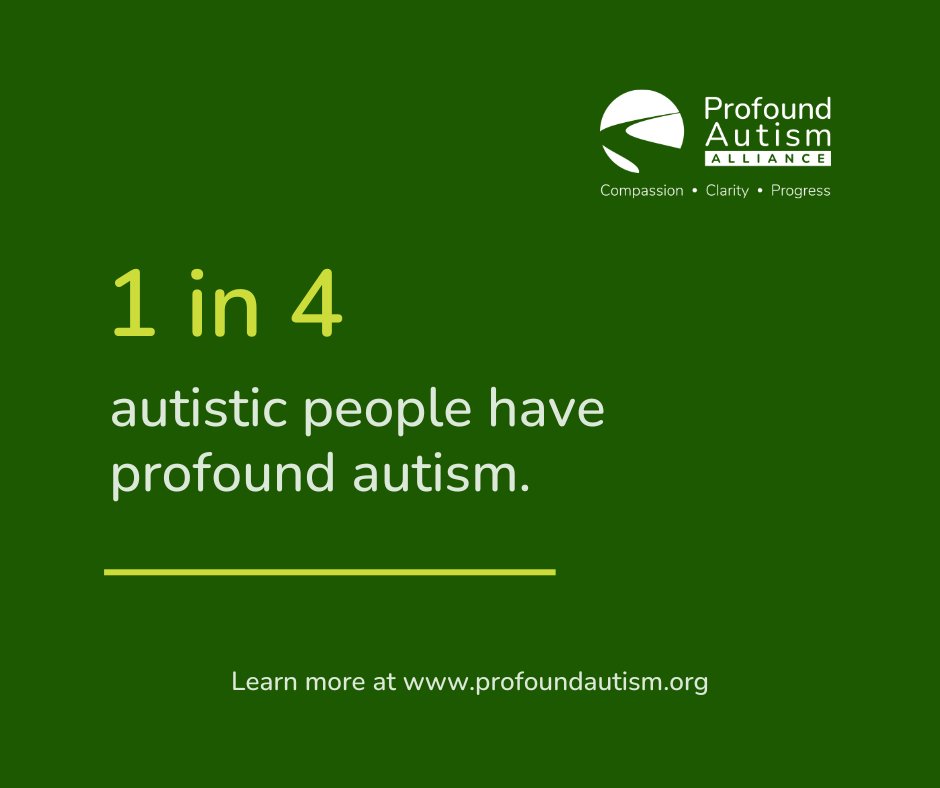
Today is Profound Autism Day. In 2023, the CDC reported that 26.7% of people with autism have profound autism. Its most recent report did not track this data. That matters. Ask Congress to ensure it is tracked: ow.ly/h0il50Yvl2I #profoundautism
Profound Autism Alliance tweet media
English
0
7
6
304
Profound Autism Alliance
Profound Autism Alliance@ProfoundAutism·
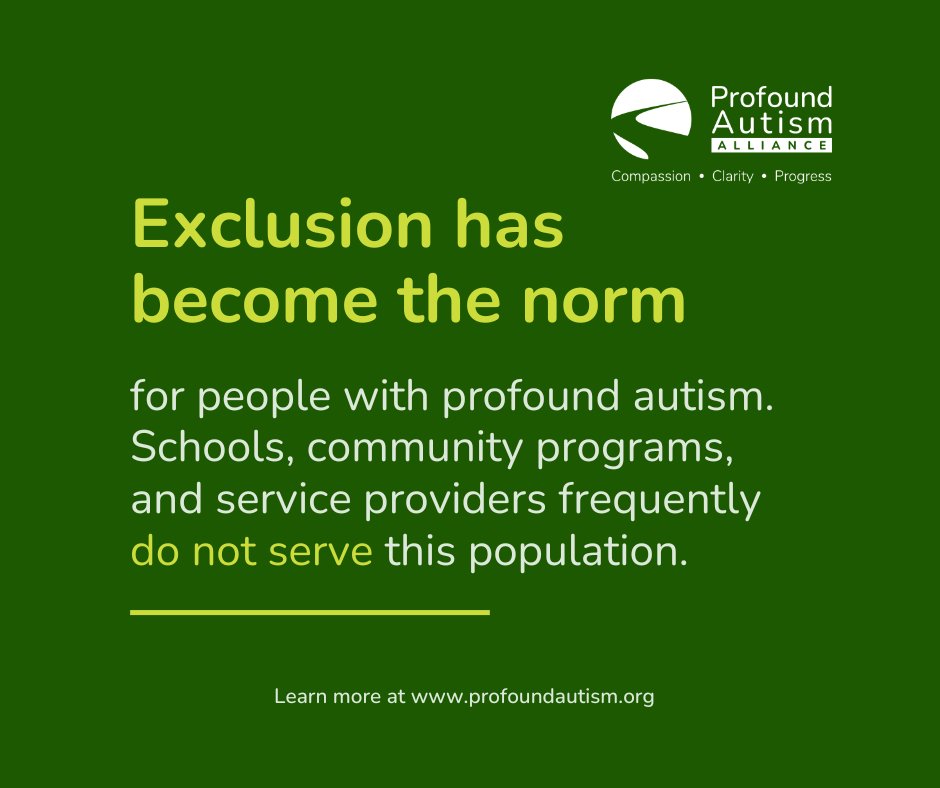
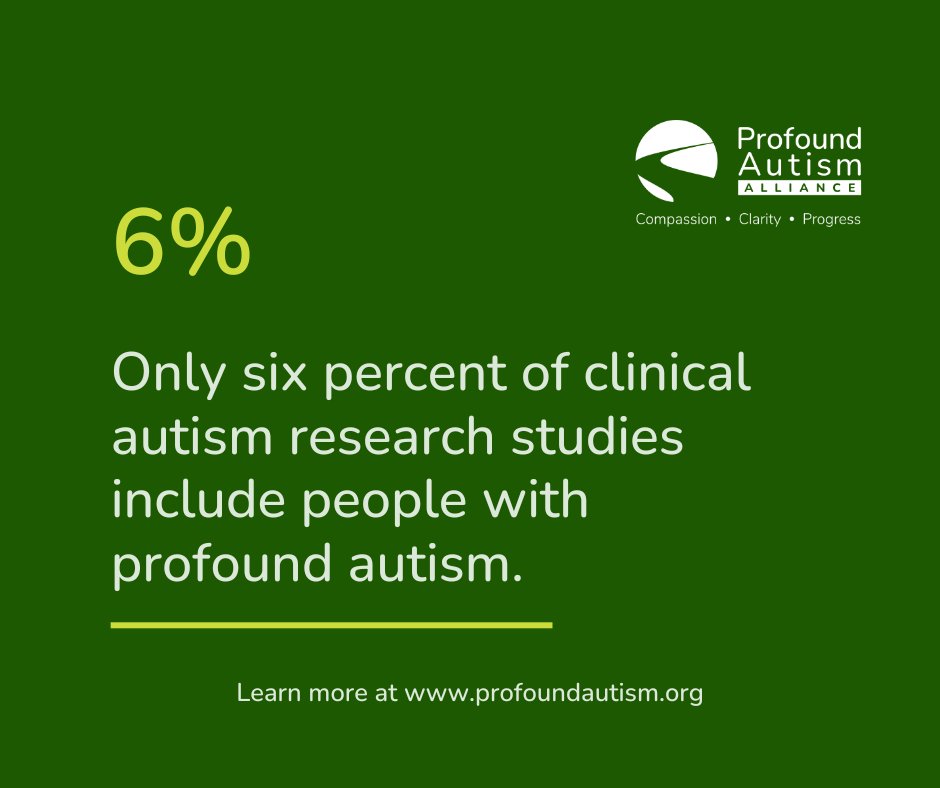
Today is Profound Autism Day. Individuals who require care all day, every day, remain underserved and underrepresented in research, services, and policy. Families face significant strain. Workforce shortages persist. We can do better. Learn more: ow.ly/ruQm50Yvae5
Profound Autism Alliance tweet media
English
0
5
10
120
Profound Autism Alliance
Profound Autism Alliance@ProfoundAutism·
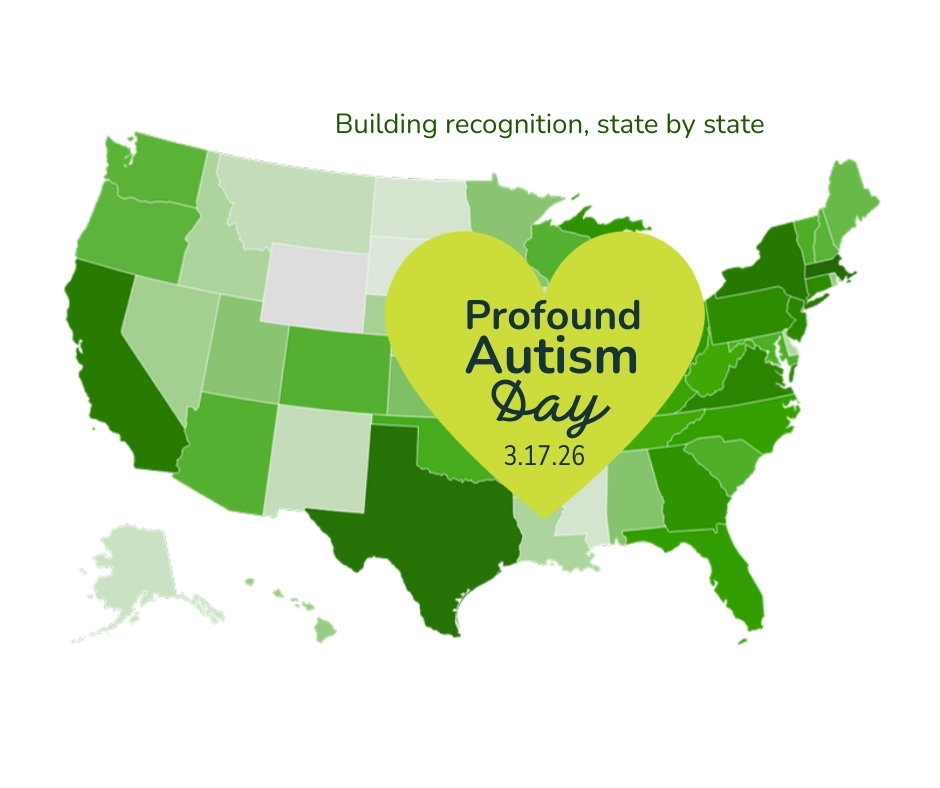
At Profound Autism Alliance, we believe profound autism deserves recognition all day, every day. Tomorrow, we come together to recognize Profound Autism Day. Join us March 17. Learn more: ow.ly/Rf1650Yv2Xw
English
0
2
5
77
Profound Autism Alliance retuiteado
Simon Baron-Cohen
Simon Baron-Cohen@sbaroncohen·
Thanks Steve. The need for subgrouping the autism spectrum remains an urgent issue if we are to make scientific progress and if we are to serve autistic people by tailoring support services based on their widely varied needs autismresearchcentre.com/content/upload…
Steven Pinker@sapinker

Sir Simon Baron-Cohen, one of the world's experts, made this point 16 years ago. nytimes.com/2009/11/10/opi…

English
10
23
165
28.8K
Profound Autism Alliance retuiteado
Michael Lombardo
Michael Lombardo@mvlombardo·
Excited to share our latest work describing our perspective on stratifying autism by a type I vs type II distinction in early development. rdcu.be/e7KyD
English
1
10
18
3K
Profound Autism Alliance
Profound Autism Alliance@ProfoundAutism·
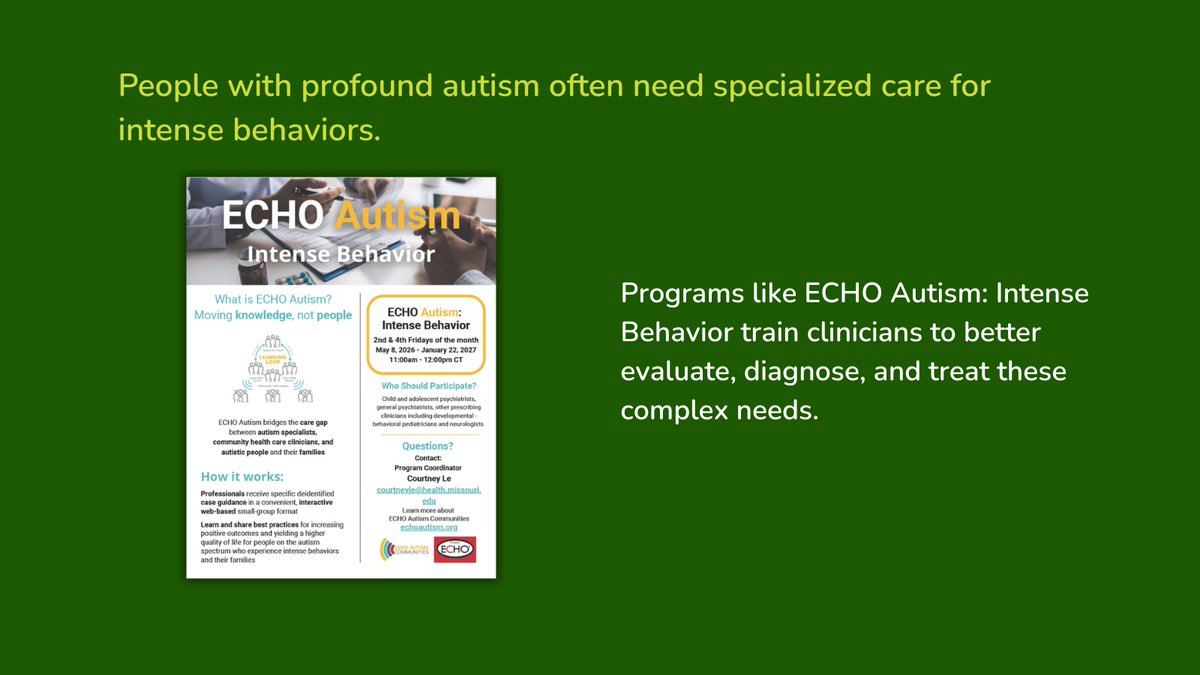
6 days until Profound Autism Day Many people with profound autism experience intense behaviors such as self-injury or aggression. Programs like ECHO Autism: Intense Behavior help train physicians to better treat them. Learn more ow.ly/c7ry50YssqX #ProfoundAutismDay
Profound Autism Alliance tweet mediaProfound Autism Alliance tweet mediaProfound Autism Alliance tweet mediaProfound Autism Alliance tweet media
English
0
4
8
219
Profound Autism Alliance
Profound Autism Alliance@ProfoundAutism·
A message regarding the rescheduling of the March 2026 Interagency Autism Coordinating Committee, from its incoming chair, Sylvia Fogel, M.D.
Profound Autism Alliance tweet media
English
2
2
4
184
Profound Autism Alliance retuiteado
Sylvia Fogel MD
Sylvia Fogel MD@FogelSylvia·
Qestion: What do you think should be the research and other priorities of the federal government on autism? My Answer: "There are many urgent research priorities. But the one that speaks most directly to me—as both a clinician and the parent of a 17-year-old son with profound autism and serious co-occurring medical conditions—is the need to translate what we already know into treatments that can be tested in nimble, adaptive clinical trials. An adaptive clinical trial design is a pre-planned study approach that allows investigators to focus on a responding subgroup as data emerge—so that in a heterogeneous condition like autism, the trial can efficiently identify and study the subset of individuals most likely to benefit from a given intervention while maintaining scientific rigor. Over the past two decades, hundreds of scientific papers have linked autism with mitochondrial dysfunction, oxidative stress, and immune dysregulation. These cellular and subcellular findings likely intersect with the co-occurring conditions so common in autism—seizures, gastrointestinal disease, chronic pain syndromes. Yet much of this work remains siloed, rarely translated into testable treatment strategies. Another complexity is that autism is biologically heterogeneous and we lack robust biomarkers that reliably define subgroups. So we really need to consider using more adaptive trial designs when considering treatment trials for core symptoms or co-occurring conditions. In clinical practice, the tools we have to address underlying physiology are limited, and we lack high-quality data to guide standards of care. As a parent, that gap is not abstract. There was a period when my son experienced such severe total-body pain—intense gastrointestinal pain and relentless headaches—that he screamed for hours each day. I am being literal. Caregivers approached me in tears; sometimes we cried together. For months he could not leave the house or attend school. We saw specialist after specialist at top medical centers. Nothing helped. I spent hours each day simply holding him and bearing witness to his suffering. It was gut-wrenching. Years later, when his immune dysregulation was effectively treated, the pain stopped—quickly. Many families are not so fortunate. A key research question is whether some severe dysregulation and self-injury— including repetitive head-banging—can be driven or worsened by untreated neuroimmune dysfunction, neuroinflammation, and unrecognized pain. Individuals with autism and their families deserve more than siloed findings—they deserve translation into testable interventions and better care. Autism does not have a single cause, nor does it look the same in every individual. Our federal research agenda must continue to include rigorous population-level data and sophisticated genetic analysis—but it cannot stop there. We also need sustained investment in long-term studies that follow the same group of individuals over time—tracking their individual biology and outcomes—to better understand how underlying medical conditions and cellular physiology shape the course of autism in real life. That means focusing deliberately on subgroups—those marked by regression, seizure disorders, severe gastrointestinal disease, metabolic dysfunction, immune dysregulation, and neuroimmune changes. If we are serious about precision, we have to study the biology that differentiates one trajectory from another. Another area that has been under-studied and under-funded and highlights the issue of vastly different trajectories for different individuals with autism, is neurodevelopmental regression. Neurodevelopmental regression is when children lose speech, eye contact, motor coordination, and relatedness, often over a short period of time. Although research varies, it is reported by 30-40% of parents and a 2019 research study from UC Davis MIND suggests that it may be even more common. This traumatic and devastating phenomenon has received little attention in prior IACC reports. At the same time, science alone is not enough. Service system coordination and lifespan supports remain urgent and central priorities. For many families, the daily crisis is not theoretical—it is access: access to knowledgeable medical care, effective therapies, coordinated transitions across systems and ages, crisis stabilization services, appropriate housing, and meaningful caregiver support. These are not peripheral concerns; they are core quality-of-life issues. We have significant work ahead to identify gaps, align systems, and build structures that truly support individuals with autism—and the families who shoulder so much of the care."
English
5
10
24
760
Profound Autism Alliance retuiteado
Sylvia Fogel MD
Sylvia Fogel MD@FogelSylvia·
The first meeting of the newly appointed IACC, originally scheduled for March 19, has been postponed. Some members of the autism community have expressed concern. Please know that we are actively working to reschedule the meeting and will share the new date as soon as possible. I recognize the urgency of the issues facing the autism community, and I understand this delay may feel discouraging. IACC members will come to the meeting with a strong sense of purpose and determination. Together we bring clinical expertise, research experience, advocacy perspectives, and lived experience, and we are committed to carrying out the statutory responsibilities entrusted to the committee by Congress through the Autism CARES Act. We look forward to beginning this work together and advancing the priorities that matter most to the autism community. Please feel free to share this post so others in the autism community are aware. Further information will be shared through official HHS channels as it becomes available.
English
5
15
28
2K
Profound Autism Alliance
Profound Autism Alliance@ProfoundAutism·
Pulu is accused of driving 25-year-old Moser, 22-year-old Mosa’ati Moa and 39-year-old Tim Jones to his home, leaving them in the running car for more than four hours resulting in their deaths, which were likely caused by carbon monoxide poisoning. ow.ly/Xh8N50YnXOv
Profound Autism Alliance tweet media
English
0
3
2
138