SNA Report

55.2K posts

SNA Report banner
SNA Report

SNA Report

@ShingetsuNews

Independence. Dedication. Fearlessness. Tired of MSM Propaganda? Free Daily Email News: [email protected] https://t.co/Gkj6hZ497A

Tokyo Se unió Şubat 2011
447 Siguiendo15K Seguidores
SNA Report
SNA Report@ShingetsuNews·
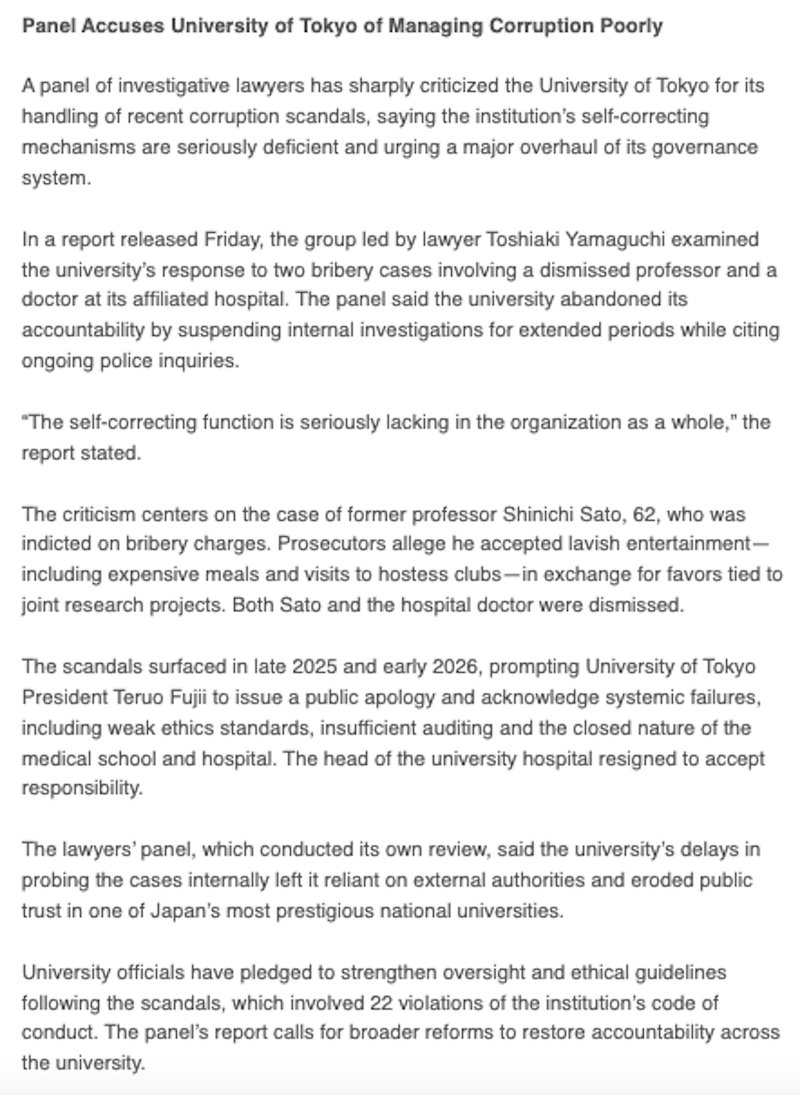
From today's "Japan and the World." Free email newsletter, available by writing to editor@shingetsunewsagency.com
SNA Report tweet media
English
0
0
0
236
SNA Report
SNA Report@ShingetsuNews·
From today's "Japan and the World." Free email newsletter, available by writing to editor@shingetsunewsagency.com
SNA Report tweet media
English
0
0
0
242
SNA Report
SNA Report@ShingetsuNews·
58 Years Ago Today: On March 28, 1968, radical students at the University of Tokyo, primarily from the medical faculty, forced the cancellation of the university's graduation ceremony through disruptive protests. The action was part of growing campus unrest over issues including poor working conditions for medical interns, authoritarian university governance, and broader opposition to the Vietnam War and Japan's alignment with the United States. This disruption drew sharp domestic criticism. University administrators and conservative voices condemned the students for denying fellow graduates their ceremonial rite of passage and undermining academic order. Many ordinary citizens and media outlets expressed outrage at the escalating militancy that disrupted normal university life. Critics argued the protest tactics prioritized radical political demands over respect for institutional traditions and the rights of non-activist students, amid broader debates on the 1968 student movement—widely seen by contemporaries and later analysts as signaling deepening generational conflict and challenges to postwar Japanese authority structures. #Japan #Students #TokyoUniversity
SNA Report tweet media
English
0
2
4
419
SNA Report
SNA Report@ShingetsuNews·
8 Years Ago Today: On March 27, 2018, former senior Finance Ministry bureaucrat Nobuhisa Sagawa, a central figure in the Moritomo Gakuen land sale scandal, stonewalled questions during sworn testimony before the Diet, repeatedly dodging inquiries by citing fear of possible future prosecution. Sagawa denied that Prime Minister Shinzo Abe or Finance Minister Taro Aso had ordered the falsification of official documents related to the heavily discounted sale of state land to a nationalist school operator with ties to Abe's wife. He claimed the alterations were done internally at the ministry level. This performance drew sharp domestic criticism. Opposition parties and media outlets accused him of evasive and contradictory answers, labeling it a deliberate cover-up to shield political leaders. Public distrust in the government deepened amid perceptions of cronyism and bureaucratic opacity. Critics argued the testimony prioritized protecting the Abe administration and ministerial interests over transparency and accountability, amid broader debates on the scandal's handling—widely seen by opposition voices and analysts as undermining public trust in democratic institutions and the rule of law. #Japan #ShinzoAbe #Transparency
SNA Report tweet media
English
0
0
0
260
SNA Report
SNA Report@ShingetsuNews·
101 Years Ago Today: On March 26, 1925, after a long struggle marked by decades of popular campaigns and repeated failures, the Universal Male Suffrage Bill passed the House of Peers, clearing a major obstacle in Japan's Taisho-era push for democratic reform. The legislation, which eliminated property and tax qualifications, extended the vote to all men aged 25 and older, dramatically expanding the electorate from roughly three million to over twelve million voters. This breakthrough drew sharp domestic criticism from conservatives and some elites who feared the influx of working-class and rural voices would destabilize imperial order. In exchange for passage, the government simultaneously enacted the repressive Peace Preservation Law to curb radical leftwing activities. Critics argued the paired measures prioritized controlled democratization and state security over genuine expansion of political freedoms, amid broader debates on the limits of Taisho democracy—widely seen by later historians as a partial and fragile step toward mass participation that coexisted with growing authoritarian controls. #Japan #Voting #Elections
SNA Report tweet media
English
0
0
2
354
SNA Report
SNA Report@ShingetsuNews·
ARAGHCHI AND ME: Back in 2011, I had some news stories where I sometimes interviewed the Iranian Ambassador in Japan. He was a career diplomat named Abbas Araghchi. Today, he is the Iranian Foreign Minister and one of the most prominent members of the Iranian government. We met maybe half a dozen times and were on speaking terms. In this shot, I met him as he entered the Japan Foreign Ministry building in Tokyo. He wondered why I was there and gave me this cautious look as he passed. What is he like? Quiet, serious... Kind of an all-business demeanor. I wasn't surprised that he went on to be promoted. He seemed like the sort of person who was on the rise.
SNA Report tweet media
English
0
0
4
872
SNA Report
SNA Report@ShingetsuNews·
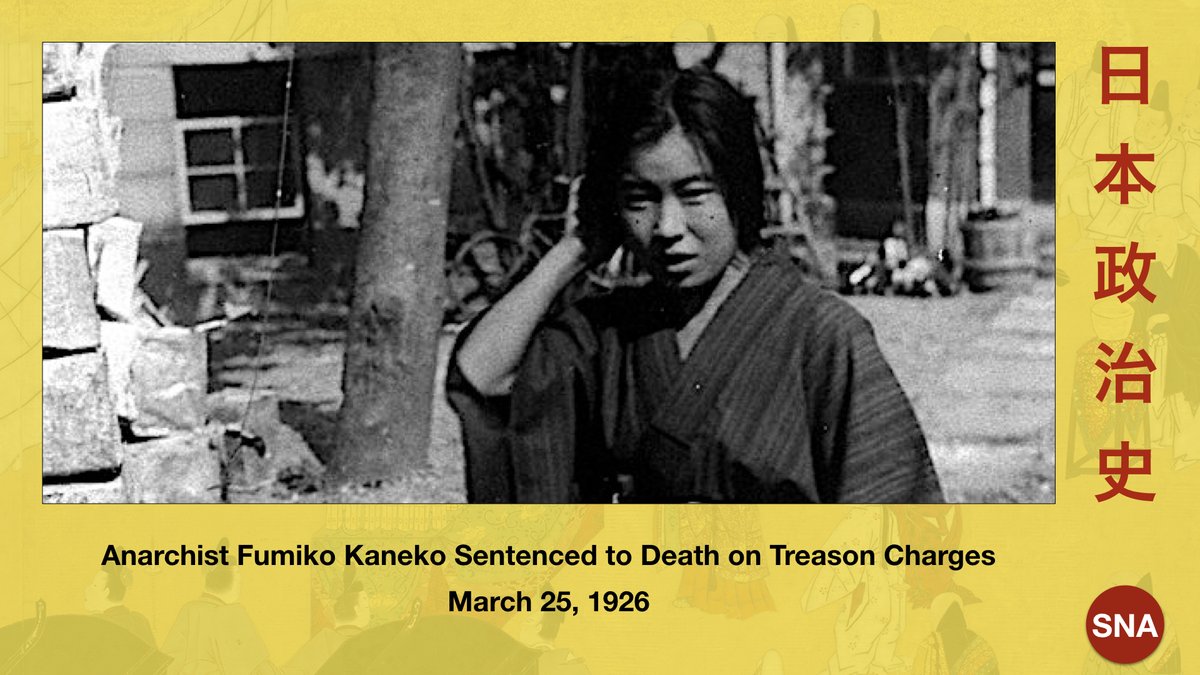
100 Years Ago Today: On March 25, 1926, Japanese anarchist Fumiko Kaneko was sentenced to death on high treason charges alongside her partner, Korean revolutionary Pak Yeol, for an alleged plot to assassinate the emperor and crown prince using bombs. The pair, arrested after the 1923 Great Kanto Earthquake amid anti-Korean and anti-leftist hysteria, confessed to the conspiracy despite lacking any actual explosives or feasible plan. Their trial became a platform for Kaneko to publicly denounce the Imperial system and assert radical nihilist-anarchist beliefs. This ruling drew sharp criticism from later historians and activists who viewed it as a politically motivated show trial exploiting vague treason laws to suppress dissent. Critics argued the harsh sentences prioritized state security and imperial authority over justice and individual rights, amid broader debates on the repressive nature of prewar Japan's thought control and use of capital punishment against ideological opponents. #Japan #Anarchism #Nihilism
SNA Report tweet media
English
0
1
2
334
SNA Report retuiteado
William Andrews
William Andrews@TokyoStages·
@ShingetsuNews P.S. Note that the image is not a United Red Army incident, but the Mitsubishi Heavy Industries bomb from 1974 carried out by the East Asia Anti-Japan Armed Front, though members of the two groups did interact. Cultural memory of the militant past is messy and the incidents blur.
English
0
1
1
338
SNA Report retuiteado
William Andrews
William Andrews@TokyoStages·
@ShingetsuNews It’s also not insignificant that the sentences were never carried out. All New Left convicts on death row have been left to die of natural causes. This makes the sentences performative, whereby the state can appear strong, while avoiding the politically sensitive consequences.
English
1
1
2
358
SNA Report
SNA Report@ShingetsuNews·
39 Years Ago Today: On March 24, 1987, Japanese courts confirmed death sentences for the first time against members of New Left terrorist groups, specifically upholding capital punishment for two radicals involved in the 1970s United Red Army (Rengo Sekigun) and related militant actions, including deadly attacks and prison escapes tied to the group's violent revolutionary campaign. This development drew sharp domestic criticism. Civil liberties groups, progressive intellectuals, and opposition voices condemned the rulings as a harsh escalation in the state's crackdown on left-wing radicals, arguing that the death penalty for political violence risked politicizing justice and reviving memories of wartime repression. Public debate highlighted concerns over prolonged trials, potential miscarriages linked to coercive interrogations, and the broader suppression of dissent in a society still grappling with the legacy of 1960s-70s student movements and urban guerrilla activities. Critics argued the confirmations prioritized state security and anti-terror measures over humanitarian principles and due process safeguards, amid broader debates on the death penalty's application to ideological crimes—widely seen by human rights advocates and legal experts as raising serious questions about proportionality and the risk of abusing capital punishment against political opponents in postwar Japan. #Japan #Terrorism #DeathPenalty
SNA Report tweet media
English
1
3
6
440
SNA Report
SNA Report@ShingetsuNews·
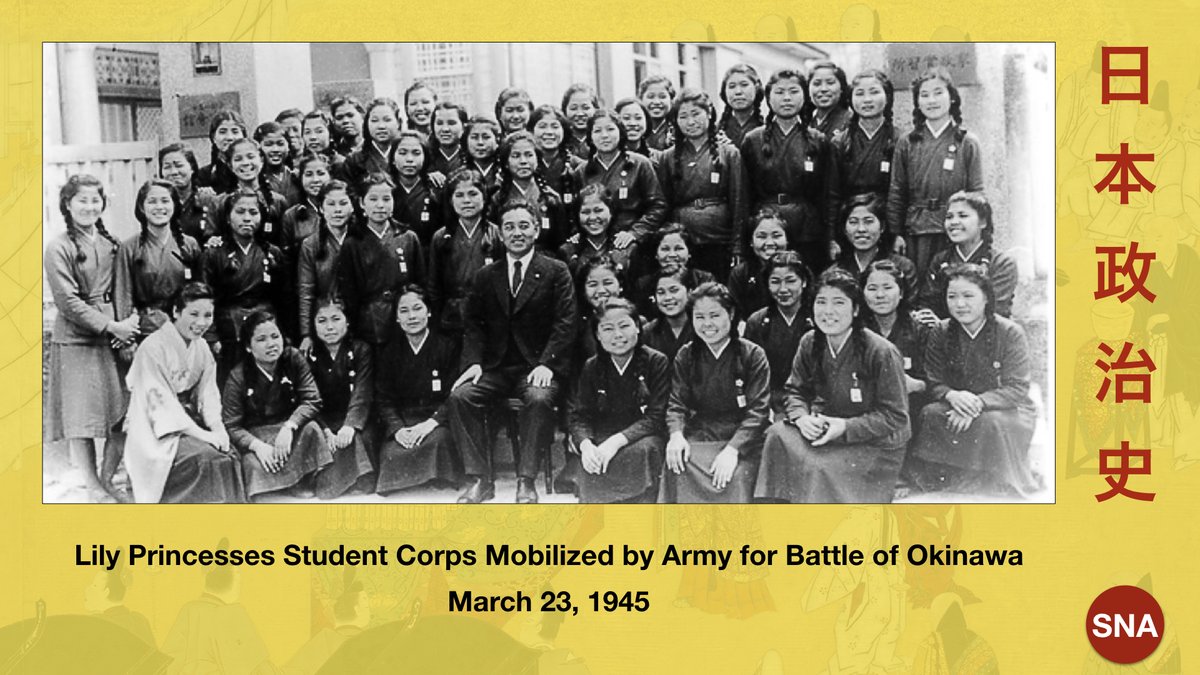
81 Years Ago Today: On March 23, 1945, the Imperial Japanese Army mobilized the Himeyuri Student Corps (also known as Lily Princesses Student Corps or Princess Lily Corps), conscripting 222 female high school students aged 15-19 and 18 teachers from Okinawa's First Prefectural Girls' High School and Okinawa Women's Normal School into a nursing unit for the impending Battle of Okinawa. Late that night, as US forces began intense air raids and naval bombardment, the young women were ordered to report to the Haebaru Army Field Hospital, believing they would serve in safe Red Cross facilities away from combat. This mobilization drew profound and enduring criticism. Survivors and postwar accounts highlighted the deception—students were thrust into frontline cave hospitals performing gruesome tasks like amputations, burying dead, and transporting munitions under relentless shelling—exposing the military's exploitation of civilian youth, especially girls from elite schools, with no legal basis for such conscription. Public memory in Okinawa has long condemned it as a tragic symbol of wartime desperation, civilian suffering, and the human cost of militarism, fueling antiwar sentiment and resentment toward mainland Japan's policies that treated Okinawa as expendable. Critics argued the action prioritized military survival over human lives and ethical principles, sacrificing innocent adolescents in a hopeless defense amid broader debates on the war's brutality. 136 of the 222 young students died brutally in the ensuing battle. #Japan #Okinawa #Battle
SNA Report tweet media
English
0
0
2
297
SNA Report
SNA Report@ShingetsuNews·
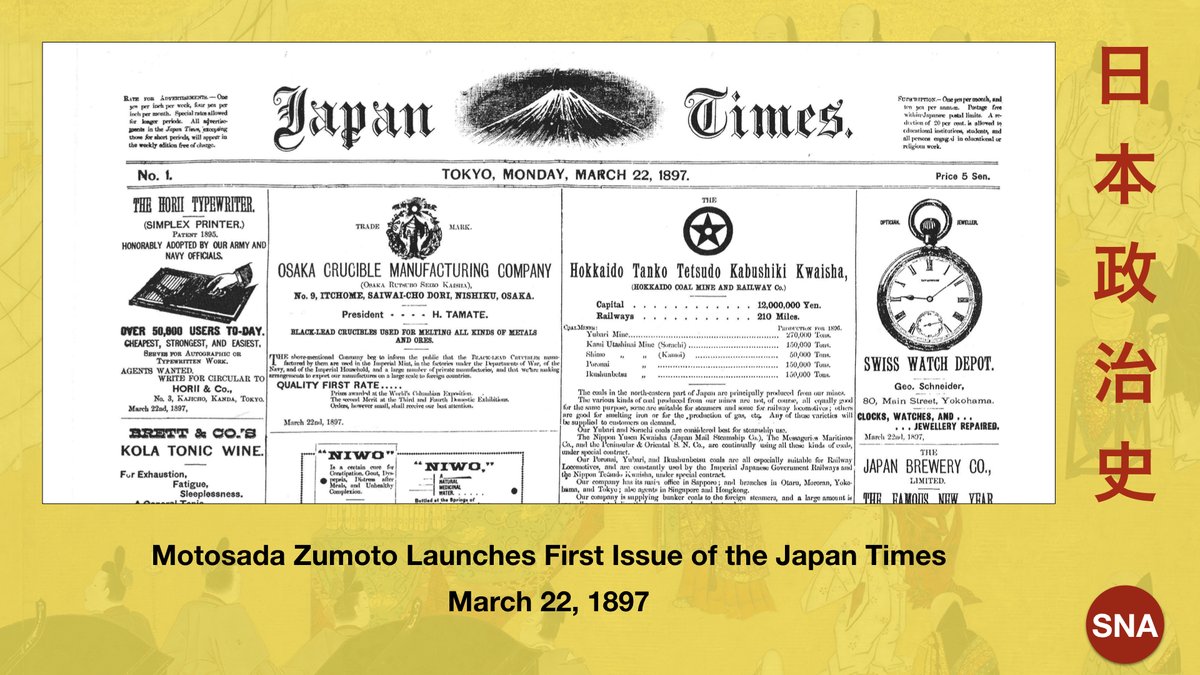
129 Years Ago Today: On March 22, 1897, Motosada Zumoto, a former secretary to Prime Minister Hirobumi Ito, launched the first issue of "Japan Times" as editor-in-chief, with Sueji Yamada as president. This marked the founding of Japan's oldest surviving English-language newspaper, aimed at conveying Japanese perspectives to Western audiences, clearing up misunderstandings between Japan and foreigners, and enabling Japanese readers to engage with global news in English amid the Meiji era's push for modernization and international integration. This initiative drew sharp domestic criticism in some circles. Intellectuals and nationalists questioned the newspaper's semi-official ties to the Meiji government and figures like Ito and Yukichi Fukuzawa, viewing it as a propaganda tool to present Japan as a "civilized" Western-style nation-state, potentially at the expense of authentic Japanese identity or independence from state influence. Early skepticism arose over its role in shaping Western perceptions to support Japan's diplomatic goals, including rapprochement with powers like Britain, amid broader unease about Westernization's cultural impacts during rapid reforms. Critics argued the launch prioritized strategic alignment with Western powers and governmental interests over independent journalism or traditional values, amid broader debates on media's role in imperialism and modernization—widely seen by later scholars as serving as a semi-official organ to advance Japan's expansionist ambitions under the guise of civilizational progress. #Japan #Media #JapanTimes
SNA Report tweet media
English
0
0
1
302
SNA Report
SNA Report@ShingetsuNews·
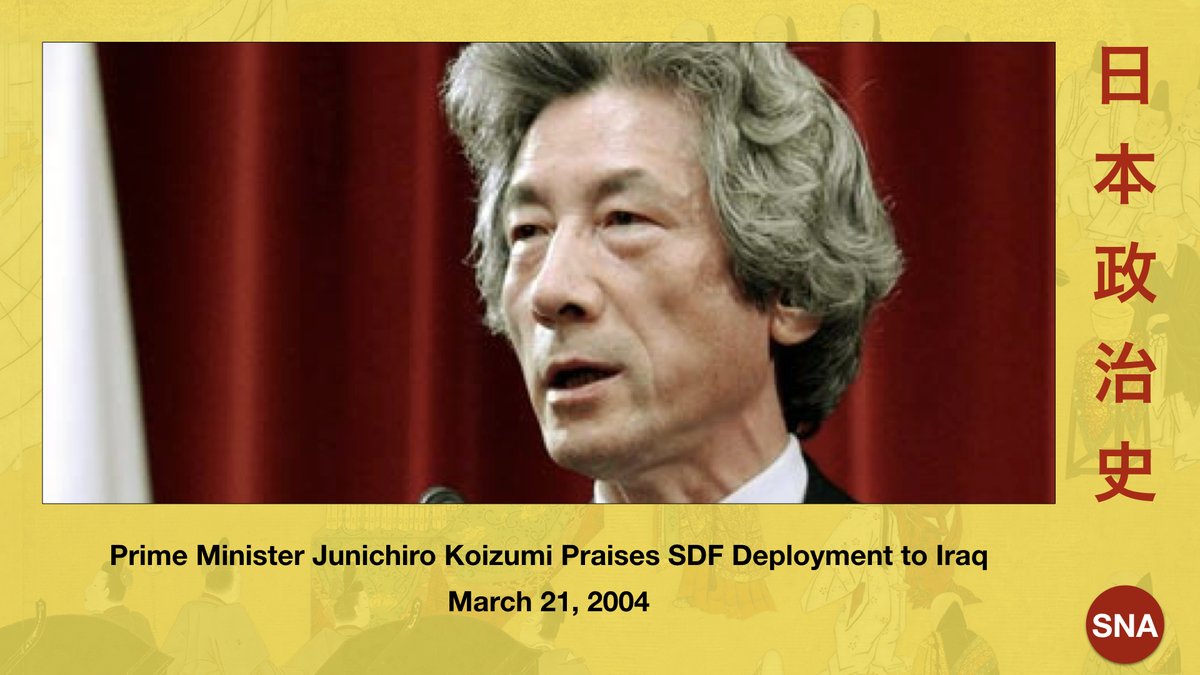
22 Years Ago Today: On March 21, 2004, Prime Minister Junichiro Koizumi praised the deployment of Japan's Ground Self-Defense Forces (SDF) to southern Iraq for humanitarian and reconstruction assistance, highlighting their contributions in non-combat roles amid the ongoing US-led occupation and emphasizing the importance of Japan's international responsibility and alliance commitments following the troops' arrival in early 2004. This stance drew sharp domestic criticism. Public opposition to the SDF dispatch remained strong, with polls throughout early 2004 showing majority reluctance or disapproval (often around 60% opposed in various surveys), contributing to fluctuations in Koizumi's cabinet approval ratings, which had already dipped amid the controversial decision and hovered in the low-to-mid 40s in some reports. Antiwar protests persisted, and opposition parties condemned the deployment as unconstitutional, prioritizing US relations while supporting an illegal war and dismissing the democratic sentiment of the clear majority of the Japanese people on the issue. #Japan #IraqWar #Democracy
SNA Report tweet media
English
0
3
0
329
SNA Report
SNA Report@ShingetsuNews·
31 Years Ago Today: On March 20, 1995, members of the Aum Shinrikyo doomsday cult, led by Shoko Asahara, carried out a coordinated terrorist attack by releasing sarin nerve gas on five subway trains across three Tokyo Metro lines during morning rush hour, targeting central stations like Kasumigaseki near government offices. The attack killed 14 people and injured over 6,000, causing symptoms like blindness, vomiting, convulsions, and long-term health issues among survivors and first responders. This event shocked Japan, a nation known for low crime and social harmony, sparking widespread horror, fear, and criticism of authorities for failing to act decisively on prior warnings about Aum's activities, including the 1994 Matsumoto sarin incident. Public outrage targeted the cult's recruitment of educated youth, its apocalyptic ideology blending Buddhism and doomsday prophecies, and perceived intelligence lapses that allowed the group to amass chemical weapons. Critics argued the event exposed vulnerabilities in Japan's surveillance of fringe religious groups, societal disillusionment in the post-bubble economy, and inadequate emergency response preparedness. #Japan #Tokyo #AumShinrikyo
SNA Report tweet media
English
1
3
3
417
SNA Report
SNA Report@ShingetsuNews·
23 Years Ago Today: On March 19, 2003, Prime Minister Junichiro Koizumi publicly expressed unequivocal political support for US invasion of Iraq. Koizumi described it as his "political decision" to back the US position. This stance drew sharp domestic criticism. Public opposition to the war was overwhelming, with polls showing around 80% against a US-led attack in early 2003, contributing to a drop in Koizumi's approval ratings. Antiwar protests continued in Tokyo, and opposition parties condemned the support as lacking UN Security Council authorization, viewing the invasion as a violation of international law and the UN Charter. Critics argued the move prioritized the US alliance over pacifist and democratic principles, amid broader debates on the war's legality—widely seen by many experts, including UN Secretary-General Kofi Annan, as violating the UN Charter. #Japan #IraqWar #Koizumi
SNA Report tweet media
English
0
0
3
340
SNA Report
SNA Report@ShingetsuNews·
97 Years Ago Today: On March 18, 1929, construction of the original official residence of the Prime Minister of Japan was completed in Nagatacho, Tokyo's Chiyoda Ward. Designed by architect Muraji Shimomoto of the Ministry of Finance's Building Division, the two-story Art Deco-style building features a brick exterior, reinforced concrete structure, grand reception halls, private quarters, and administrative spaces. Inspired by Frank Lloyd Wright's Imperial Hotel, it symbolizes Japan's parliamentary democracy. The first prime minister to use the residence was Giichi Tanaka. The building witnessed key historical moments, including the 1932 assassination of Tsuyoshi Inukai and the near assassination of Keisuke Okada four years later. Damaged in 1945 air raids, it was restored. By the late 1990s, aging infrastructure and security needs led to a new five-story office building adjacent, completed in April 2002 with modern features like solar panels. The 1929 structure was renovated and repurposed as the Sori Daijin Kotei (Prime Minister's Official Residence), preserving its historical significance. Today, the complex blends tradition and functionality, though some leaders avoid residing there due to reputed hauntings from its turbulent past. #Japan #Kotei #PrimeMinister
SNA Report tweet media
English
0
0
1
455
SNA Report
SNA Report@ShingetsuNews·
81 Years Ago Today: On the night of March 16–17, 1945, the United States Army Air Forces executed a major incendiary bombing raid on Kobe, Japan's sixth-largest city and a key port and industrial center. As part of the strategic bombing campaign under Major General Curtis LeMay's XXI Bomber Command, 307 to 310 B-29 Superfortress bombers dropped over 2,355 tons of incendiary bombs—primarily M-69 napalm clusters—on the densely built urban areas. The attack began after midnight, with bombers flying at low altitudes of 5,000 to 9,000 feet to maximize fire spread in Kobe's wooden residential and commercial districts. Strong winds fueled a firestorm that engulfed much of the city, particularly the port and central zones, destroying approximately 3 square miles or 21% of the built-up area. An estimated 51,000 to 56,000 buildings were leveled, leaving tens of thousands homeless. Casualty figures vary, but Japanese records and postwar estimates report around 8,841 confirmed deaths, with over 10,000 injured, primarily civilians from burns, smoke inhalation, and collapsing structures. The toll was lower than Tokyo's March 9–10 raid due to partial prior evacuations, some air-raid preparations, and Kobe's topography aiding escape to nearby hills. The raid targeted war-related industries like shipbuilding and steel, but also devastated civilian neighborhoods. This assault followed the pattern set in Tokyo, Nagoya, and Osaka earlier in March, shifting to area incendiary bombing to "demoralize" the population through mass murder and cripple production. It was one of the heaviest single raids on Japan at the time, with contemporary reports describing it as dropping a record tonnage on a major city. Kobe endured additional large raids on May 11 and June 5, 1945, contributing to a total civilian death toll exceeding 7,000–8,000 across the US bombing campaign. #Japan #Kobe #Bombing
SNA Report tweet media
English
0
0
1
273
SNA Report
SNA Report@ShingetsuNews·
141 Years Ago Today: On March 16, 1885, an unsigned editorial titled "Datsu-A Ron" ("Departing from Asia") appeared in the newspaper Jiji Shimpo, founded and edited by the influential Meiji-era intellectual Yukichi Fukuzawa. Widely attributed to Fukuzawa himself, the piece argued that Japan should mentally and politically dissociate from its "bad friends" in Asia—specifically the conservative, stagnant governments of Qing China and Joseon Korea—and align itself with the allegedly progressive, civilized nations of the West. Fukuzawa, a leading Enlightenment thinker, educator, and founder of Keio University, viewed Western civilization as an unstoppable force sweeping eastward through improved global communication and transportation. He described how Eastern societies inevitably followed Western trends, but lamented that China and Korea remained mired in outdated Confucian traditions, arrogance, cruelty, and resistance to reform. Japan, having rapidly modernized since the Meiji Restoration, risked being tainted by association with these "hopelessly backward" neighbors, potentially inviting Western intervention or loss of independence. To avoid this fate and secure national sovereignty, Fukuzawa urged Japan to "erase from our minds our bad friends in Asia" and embrace Western standards of law, education, and morality. The editorial reflected broader anxieties amid unequal treaties with Western powers, ongoing treaty revision efforts, and fears of colonization. Fukuzawa's stance was pragmatic rather than imperialist; he advocated alignment with the West to protect Japan, not conquest of Asia. Published anonymously to mitigate controversy, it initially attracted little immediate attention and sparked no major contemporary debate. In later decades, particularly after Japan's imperial expansion, "Datsu-A Ron" was reinterpreted as a foundational text justifying detachment from Asia and alignment with colonial powers, influencing nationalist ideologies. Today, "Datsu-A Ron" remains a landmark in Japanese intellectual history, symbolizing the Meiji era's urgent quest for modernization, national survival, and identity amid global power shifts. It continues to provoke debate on Orientalism, Asian solidarity, and the roots of Japan's imperial ambitions. #Asia #Japan #Orientalism
SNA Report tweet media
English
0
1
5
369
SNA Report
SNA Report@ShingetsuNews·
Supporters of former Brazilian President Jair Bolsonaro took to the streets in Sao Paulo, Rio de Janeiro, and Brasilia, protesting against President Lula da Silva's government and the Supreme Court. The rallies, drawing thousands, denounced alleged political persecution amid Bolsonaro's ongoing hospitalization for a lung infection. Demonstrators waved flags and chanted for his release from jail, where he faces charges related to the 2022 election. Police reported minor clashes but no major violence. Bolsonaro's condition has improved slightly, though he remains in intensive care. #Brazil #Protest #Bolsonaro
English
0
0
0
249