
Tweet fijado
SOL
7.7K posts


SOL
@SpectralAnt
“I have offended god and mankind by doing so little with my life”
Astral Plane Se unió Nisan 2019
527 Siguiendo146 Seguidores
SOL retuiteado

SOL retuiteado
SOL retuiteado

SOL retuiteado

SOL retuiteado

Went down the rabbit hole on this. Your brain is physically thicker in some regions and thinner in others right now, shaped by what you’ve spent your life repeating. The parts you use most have been reinforced. The parts you don’t have been quietly stripped for parts.
London taxi drivers are the starkest brain scans of this in action. They spend 3 to 4 years memorizing 25,000 streets to pass a licensing exam called “The Knowledge.” About half fail. Eleanor Maguire’s team at University College London found their spatial memory region had grown larger than the general population. The longer they’d been driving, the bigger it got. But the front of that same brain structure shrank in proportion. On visual memory tests, they scored worse than bus drivers who drove the same hours on fixed routes. More navigation memory came at the cost of other kinds of memory.
Every repetition wraps another layer of fatty insulation called myelin around the nerve fibers involved. That makes signals along those paths travel faster. A 2022 Oxford study confirmed this insulation grows along pathways where the same cells fire together repeatedly, which is what neuroscientist Donald Hebb predicted back in 1949. Your brain builds faster highways on routes you use most. Roads you abandon get slower.
This process has no preference for what’s good for you. The same wiring that makes a musician’s fingers faster also locks in addiction. Repeated drug use rewires the reward system so deeply that just walking past the bar where you used to drink can trigger cravings years later. Chronic pain runs on the same loop: pain signals that fire over and over strengthen those pathways until the brain keeps producing pain long after the injury heals.
Every worry you replay on loop is doing the same thing to your brain that a pianist’s practice does to theirs. Repetition rewires. It doesn’t ask permission first.
Path of Men@PathOfMen_
Repetition rewires the brain. Repetition rewires the brain. Repetition rewires the brain. Repetition rewires the brain. Repetition rewires the brain. Repetition rewires the brain. Repetition rewires the brain. Repetition rewires the brain. Repetition rewires the brain.
English
SOL retuiteado

JUST FYI...
There is more evidence of @realDonaldTrump being a pedophile revealed in the last year, than there is evidence of Iran having nuclear weapons/capabilities within the past 30 years.
Think about that. Take all the time you need.
English

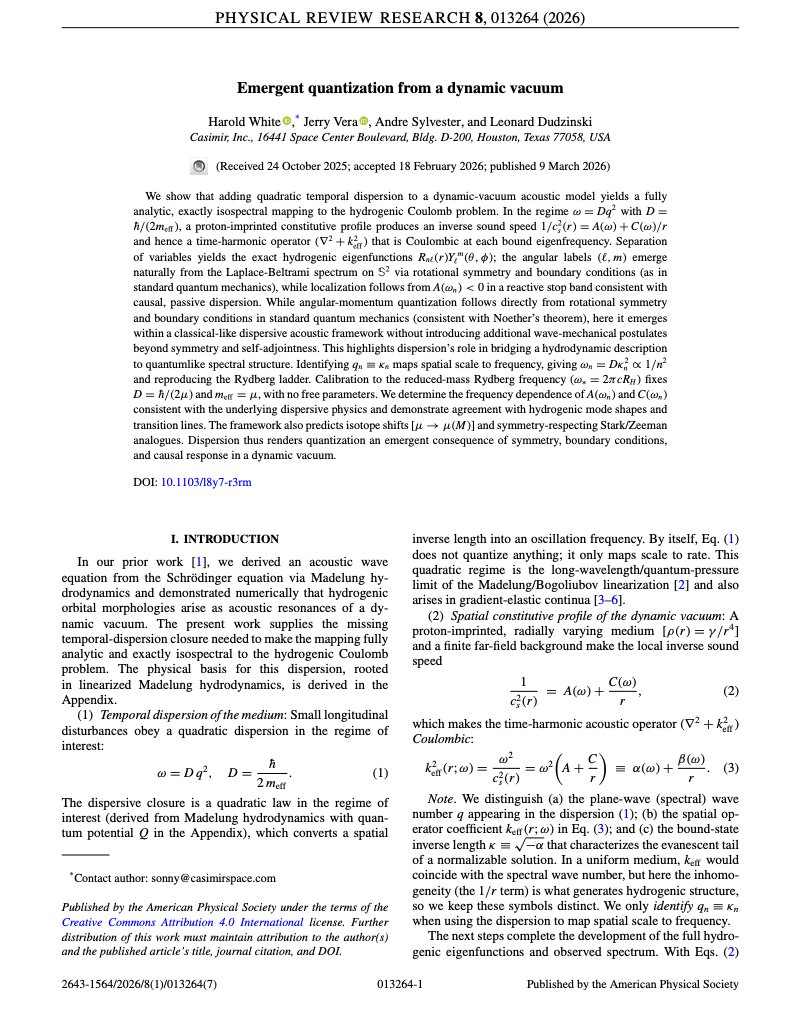
BREAKING: While a new War for Oil erupts in the Middle East
A Physics Paper just quietly dropped TODAY that will eventually make Oil, and the entire current Energy Industry, irrelevant.
Ushering in the era of Zero-Point Energy
@EagleworksSonny
Here is the breakthrough🧵
English
SOL retuiteado



SOL retuiteado

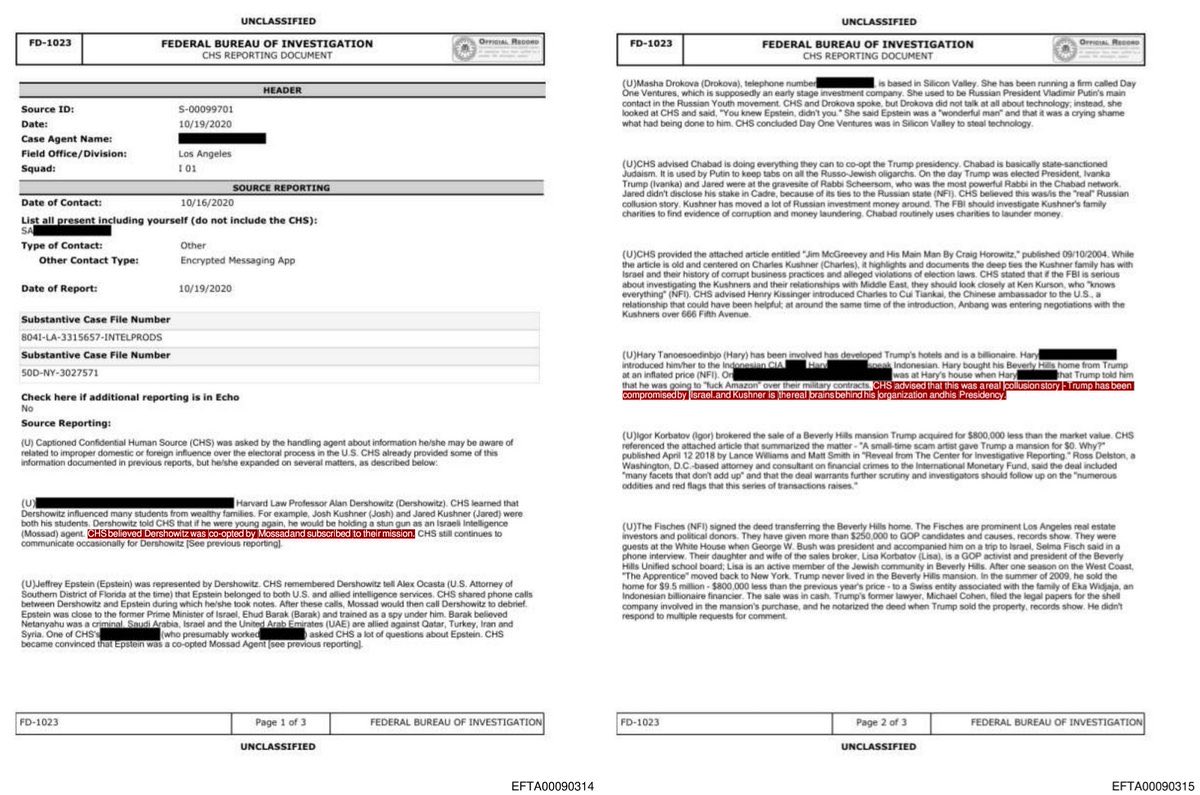
FBI | 🇺🇸🇮🇱 A source claims that Donald Trump was “compromised by Israel,” and Jared Kushner (Trump’s son-in-law) is the “real brain” behind his organization and presidency, manipulating him in the interest of Israeli influence.
The documents suggest links to Chabad-Lubavitch - a religious network described as a tool for monitoring oligarchs and politicians, including through suspicious financial operations and corruption. Other information includes alleged connections between Epstein and Mossad, his training by former Israeli Prime Minister Ehud Barak, and questionable real estate transactions by Trump and Kushner, including sales below market value.
Sources also point to possible influence from foreign powers - Russia, the UAE, and Saudi Arabia - on the Trump administration. The FBI documents reveal a map of potential connections, manipulation, and strategic influence behind his presidency.

English
SOL retuiteado

nobody talks about how genuinely wild music is at a fundamental level. an instrument disturbs air molecules. those molecules cross a room and reach your ear. your ear transforms that into electricity.
that electricity shifts your consciousness. and without any coordination, without any shared culture or language, every single human society that has ever existed found their way to this. that is one of the most profound things about being human.
English
SOL retuiteado
The actual research is wild. Every time you push down a feeling, your brain has to choose between suppressing that emotion and recording what’s happening around you. It picks the suppression. The memory doesn’t get saved.
A 2000 Stanford study confirmed this: people told to hide their emotions while watching a film remembered far fewer details than people who just reacted naturally. Suppressing emotions uses up mental energy, and that leaves less brain power for saving new memories.
Brain scans show why. A 2012 study found that suppression quiets the hippocampus (your brain’s memory-recording center) right when it should be saving information. The two brain regions that normally team up to lock in memories stop talking to each other.
Over time it gets worse. Suppression keeps cortisol (the stress hormone) elevated, and cortisol shrinks the hippocampus. Chronically stressed people can lose 10 to 15% of its volume. Just three weeks of high cortisol can shrink the tiny connection points between brain cells by about 20%. The good news: studies show this shrinkage can partially reverse once stress levels drop. Not necessarily permanent.
A Finnish study of 1,137 older adults tracked over roughly a decade found that habitual emotion suppressors had nearly 5x the risk of developing dementia, even after controlling for genetics, smoking, obesity, and education.
There’s a better way to handle emotions that doesn’t cost you your memory. It’s called cognitive reappraisal: instead of bottling the feeling, you reframe what’s causing it. (“This meeting isn’t a threat, it’s practice.”) A 2003 Stanford/UC Berkeley study found reappraisers had more positive emotion, better relationships, and higher wellbeing. Suppressors got the opposite on every measure. And reappraisal carries zero memory cost.
The difference comes down to timing. Suppression kicks in after the emotion has already fired, so your brain is fighting its own response while simultaneously trying to record the moment. Reappraisal changes how you interpret the situation before the emotion fully activates. Same event, same person, but your hippocampus stays free to do its actual job: recording your life.
syl ♡ 𐔌՞. .՞𐦯@sylviapuffs
SUPRESSING YOUR EMOTIONS CAUSES MEMORY LOSS WTF???
English
SOL retuiteado

CIA have done so much damage to humanity over the decades, it’s insane.
Shining Science@ShiningScience
🚨 CIA faces furious backlash after hidden document with potential cure for cancer is declassified after 60 years. The document, produced in February 1951 and declassified in 2014, summarizes a Soviet scientific paper that examined striking similarities between parasitic worms and cancerous tumors.
English
SOL retuiteado
I CANNOT emphasize enough, how desperate they are to contain a mass awakening.
When people realize our entire history, our reality, our medicines, our media, and more, has been managed and policed by a secret society then there will be no going back
English
SOL retuiteado

THE VATICAN JUST SEALED ITS ARCHIVES. ASK YOURSELF WHY.
March 2, 2026. 4:00 PM.
At 6:12 AM Rome time, Pope Francis ordered the immediate closure of the Vatican Secret Archives to all researchers, scholars, and diplomats.
No explanation. No timeline. No precedent in 400 years.
The last time the Vatican sealed its archives was 1633 — when they buried the truth about Galileo.
Today, they’re burying something far worse.
THE EPSTEIN-VATICAN WIRE
The DOJ files released March 1 contain 14 wire transfers between Epstein’s Butterfly Foundation and IOR — the Vatican Bank.
Total amount: $47 million between 2008 and 2017.
The Vatican Bank — the most secretive financial institution on Earth. No external audits. No public records. No oversight.
$47 million from a convicted sex trafficker. And not one question asked.
The transfers were labeled “charitable donations to youth programs.”
Read that again.
THE CARDINAL
One name appears on both the Epstein flight logs AND the Vatican’s internal communications: Cardinal Angelo Becciu.
Becciu was convicted of financial crimes by the Vatican in 2023. But his Epstein connection was never investigated.
He flew to Little St. James 3 times — in 2012, 2014, and 2016. Each trip was logged as “interfaith dialogue mission.”
On the island. With Epstein. For interfaith dialogue.
Becciu reported directly to Pope Francis. He managed the Vatican’s $700 million investment portfolio. He controlled which “charities” received funding.
And $47 million of Epstein’s money flowed through his office.
THE 3 AM SHREDDING
Italian intelligence sources confirm: at 3:14 AM this morning, Vatican security activated the “Protocol Omega” document destruction procedure.
12 industrial shredders. 3 incinerators. Running for 6 hours straight.
The smoke was visible from the Tiber River.
The last time Protocol Omega was activated? April 2005 — the day Pope John Paul II died.
They’re not mourning today. They’re destroying evidence.
THE GLOBAL PATTERN
— Feb 14 — Swiss Alps bunker raided. Epstein tapes recovered.
— Feb 21 — Tel Aviv server seized. More tapes.
— Feb 28 — Tehran facility secured by US military. Last copy.
— Mar 1 — DOJ releases operational files. Vatican Bank named.
— Mar 2 — Vatican seals archives. Shredders running at 3 AM.
Every institution that touched Epstein’s money is now in panic mode.
Wall Street. Hollywood. The British Crown. The US government. And now — the Vatican.
The oldest, most powerful institution on Earth is running scared.
Because God doesn’t care about your robes, your titles, or your 2,000-year-old walls.
Justice has no borders. And no sanctuary.
The grand jury meets March 7.



English
SOL retuiteado

SOL retuiteado

While everybody is focusing on Iran the DOJ is deleting the Epstein files. The Mission successful
Coinvo@Coinvo
BREAKING: 🇺🇸 DOJ has deleted over 65,000 pages of the Epstein files.
English
SOL retuiteado

🚨Researchers just found something in birdwatchers' brains that explains why the rest of us feel perpetually exhausted no matter how much we rest.
Your brain was never designed for the world you're currently living in.
Every notification, every scroll, every open tab, every conversation happening simultaneously across five different apps — your nervous system is processing all of it as low-grade threat. Not dramatically. Not in a way you'd notice moment to moment. But underneath your conscious awareness, your threat-detection architecture is running constantly, scanning for danger in an environment that delivers synthetic urgency at a rate no human nervous system in history has ever had to manage.
The result is a specific kind of exhaustion that sleep doesn't fix. You wake up tired. You finish a vacation and feel like you need another one. You sit down to do one thing and your attention fractures within minutes without you choosing to let it. Willpower isn't the problem. The hardware is genuinely overtaxed.
Birdwatching, of all things, turns out to be one of the most precisely calibrated antidotes to this that exists in the natural world. And understanding why requires understanding something most people have never heard of: Attention Restoration Theory, developed by psychologists Rachel and Stephen Kaplan in the 1980s.
The Kaplans identified two completely different attentional systems in the human brain. The first is directed attention — the kind you use to write emails, solve problems, make decisions, have difficult conversations. It's effortful, voluntary, and finite. It depletes. Use it long enough without rest and you get what the Kaplans called directed attention fatigue: shortened fuse, poor decisions, inability to concentrate, emotional dysregulation. Sound familiar?
The second system is involuntary attention — the kind that activates when something in your environment effortlessly captures your focus without you deciding to pay attention. A flicker of movement in peripheral vision. An unexpected sound. A pattern that doesn't quite fit the background. Your brain orients toward it automatically, below the level of conscious effort, and the directed attention system gets to rest while the involuntary system takes over.
Natural environments are almost uniquely engineered to trigger involuntary attention constantly — and at just the right intensity. A bird moving through branches activates your visual tracking system. Its call pattern engages your auditory cortex in a way that's stimulating without being alarming. The unpredictability of when and where it will appear next keeps your attention engaged without demanding effortful concentration. You're not trying to pay attention. You can't help it. And while that effortless engagement is happening, the cognitive machinery you've been flogging all day quietly restores itself.
This is what researchers call "soft fascination" — engagement that absorbs attention without consuming cognitive resources. It's the precise opposite of doom-scrolling, which delivers constant stimulation while simultaneously demanding rapid processing, comparison, emotional reaction, and decision-making. Social media feels like rest because it requires no physical effort. Neurologically, it's directed attention in a costume.
The autonomic nervous system piece of this study is where it gets genuinely striking. Your autonomic nervous system has two branches that are constantly negotiating control of your body. The sympathetic branch — fight-or-flight — accelerates heart rate, sharpens threat focus, redirects blood to muscles, suppresses digestion and immune function. The parasympathetic branch — rest-and-digest, or calm-and-recover as the study puts it — does the opposite. It slows the heart, deepens breathing, activates digestion, runs cellular repair, consolidates memory, regulates emotion.
Modern life is a sustained sympathetic state. The threats aren't predators. They're deadlines and social comparison and financial uncertainty and information overload — none of which you can sprint away from, but all of which your nervous system treats with the same basic chemistry it evolved to handle lions with. The adrenaline has nowhere to go. The cortisol accumulates. The parasympathetic system never fully takes over because the environment never fully signals safety.
What's different about birdwatching as a parasympathetic activator is the specificity of why it works at a biological level. Human beings co-evolved with birds for millions of years. Before we had weather apps, birds told us whether a storm was coming — their behavior changes hours before pressure drops. Before we had security systems, birds told us whether a predator was nearby — their alarm calls and sudden silence are among the most reliable threat signals in any ecosystem. The phrase "dead silence in the forest" isn't metaphorical. When birds stop, something dangerous is present.
Your nervous system still speaks this language fluently. When birds are present, calling, moving normally, foraging — your brain interprets that as genuine environmental safety information. Not symbolically. Chemically. The parasympathetic system receives a signal that the environment has been cleared by some of the most sensitive threat-detection organisms in it. Your shoulders drop. Your breathing slows. Your heart rate variability — one of the most precise markers of parasympathetic tone and overall health — improves.
A 2022 study out of King's College London found that seeing or hearing birds was associated with improved mental wellbeing that lasted hours beyond the encounter itself.
The effect was present even in people with depression.
Researchers tracking moment-to-moment mood in real time found that bird encounters produced measurable wellbeing improvements regardless of other environmental factors — and crucially, regardless of whether the person considered themselves a "nature person."
The attention network strengthening the new study identifies goes even deeper than restoration. The default mode network — the brain's baseline activity during unfocused rest — is increasingly understood to be critical for creativity, self-reflection, empathy, and long-term planning. Chronic directed attention fatigue suppresses it. You stop daydreaming. You stop having ideas in the shower. Your inner life gets quieter in a way that feels like efficiency but is actually depletion.
Birdwatching, by toggling between soft fascination and genuine rest, allows the default mode network to activate properly. The irregular rhythm of it — moments of alert attention when a bird appears, followed by quiet waiting — mirrors the kind of natural attentional cycling the brain evolved to operate within. You're not forcing focus. You're not forcing rest. You're doing exactly what your brain was built to do in an environment it spent millions of years calibrating to.
The tragedy is that we look at birdwatching and see a hobby for retirees. We see binoculars and field guides and a demographic associated with slowing down.
We don't see what we're actually looking at — one of the most neurologically sophisticated recovery tools available to a species that has constructed an environment almost perfectly designed to destroy its own attention.
The birds were always telling us something.
We just stopped listening.
The Curious Tales@thecurioustales
🚨 NEW STUDY: Birdwatching strengthens attention networks in the brain - strengthening the body’s calm-and-recover state.
English
SOL retuiteado

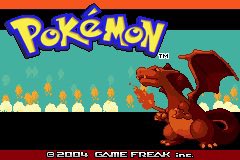
Me in 2004: Playing Pokemon Fire Red and listening to my dad give me updates on the Iraq War
Me in 2026: Playing Pokemon Fire Red and listening to my dad give me updates on the Iraq War
Time is a circle
English
SOL retuiteado
There are 7 billion versions of Earth right now. One for every human nervous system rendering it.
Yes, your brain has never once, in your entire life, shown you the world as it actually is.
Every single thing you've ever seen, touched, smelled, or believed was real?
A construction. A highly convincing hallucination assembled inside roughly 1.4 kg of electrochemical tissue that has never directly touched reality and never will.
The deeper implication of this runs so far beyond philosophy that most people stop engaging with it the moment it starts threatening their comfortable assumptions. So let's go there anyway.
Neuroscientist Anil Seth calls conscious experience a "controlled hallucination." But that framing still doesn't fully land for most people because we treat the word hallucination as a malfunction — something that happens to people who are unwell.
Strip that stigma away and what remains is staggering: the brain iis a prediction engine. It doesn't wait for sensory data to arrive and then interpret it. It generates a model of what it expects to be there, sends that model out ahead of incoming signals, and then only updates when the prediction errors become too loud to ignore.
You are, at all times, living approximately 80 milliseconds in the past — and inside a story your brain wrote before your eyes even opened.
The color red you see isn't in the apple. The apple emits no redness. Photons at roughly 700 nanometers enter your eye, stimulate certain cone cells, and your visual cortex translates that signal into a subjective experience your particular nervous system calls red.
Someone with different cone receptors — or a mantis shrimp with sixteen photoreceptor types compared to your three — inhabits a genuinely different visual universe while looking at the exact same apple. Neither is seeing "the real apple." Both are seeing what their biology decided was worth rendering.
The philosopher Thomas Nagel once asked what it is like to be a bat.
The question sounds playful until you realize he was pointing at something structurally thought provoking:
"there is no view from nowhere."
Every consciousness has a species-specific, individual-specific interface with reality. And interfaces, by definition, are not the thing itself. A GUI on your computer shows you folders and icons. Behind it is machine code, electrical states, binary operations — none of which look anything like the folders. The interface was designed for usability, not transparency.
Your perceptual system was designed for survival, not truth.
Evolution rewarded useful perception. Ancestors who correctly modeled a rustling bush as a predator — even when it wasn't — survived longer than those who needed certainty before reacting. The bias toward false positives is baked into your biology. Which means you are structurally, neurologically, evolutionarily inclined to see threats, patterns, and meanings that may have no basis in external reality. Your anxiety isn't irrational. It's an overactive survival interface interpreting a modern world through ancient rendering software.
Donald Hoffman, a cognitive scientist at UC Irvine, spent years building mathematical models to test whether accurate perception of reality would confer evolutionary advantages. His conclusion: organisms tuned to perceive reality as it actually is consistently lose, in evolutionary simulations, to organisms tuned to perceive fitness-relevant information. Seeing the truth is expensive. Seeing what keeps you alive is efficient. So that's what got selected for — relentlessly, across millions of years.
What you're left with is a species that experiences a seamlessly rendered simulation of reality and has almost no intuitive access to the machinery generating it.
And yet, the simulation is consistent enough across human nervous systems that we built civilization inside it. We agreed, implicitly, on what tables feel like and what gravity does and what fire means. Shared hallucination became culture, became language, became science — which is, ironically, the only tool we've developed precise enough to start revealing the hallucination for what it is.
Meditation practitioners figured out a version of this without the neuroscience. Sit still long enough and observe the contents of your mind without identifying with them, and the constructed nature of experience starts to become viscerally apparent. Thoughts arise. The sense of "I" that seems to be watching them also arises. The boundary between self and world — which feels so absolute in ordinary waking life — starts to look like another rendering decision, not a metaphysical fact.
The self is part of the simulation too.
Most people stop at the philosophical discomfort this creates and retreat back into practical reality — bills to pay, emails to answer, a life to live inside the model.
That's fine. Functional. But there's a version of absorbing this that produces something closer to radical humility.
If your perception is an interface, your beliefs about other people are low-resolution renders.
Your certainty about what someone meant, what they intended, who they are — all of it filtered through a system that prioritizes your survival narrative over their actual inner life. Every conflict you've ever had lived, at least partly, inside mismatched simulations that neither party could fully step outside of.
Every opinion you hold with absolute confidence was formed by a brain that has never once had unmediated access to the thing it formed an opinion about.
That doesn't make truth impossible. It makes humility the only honest starting point.
W e live so deep inside the map that most people die never having questioned whether the territory looks anything like what they spent their whole life navigating.
Kekius Maximus@Kekius_Sage
Scientist claims: Nothing we see is real — everything we experience is part of a mental “visualization tool” we use to interact with the world.
English
SOL retuiteado

🚨 BREAKING: Rep. Ted Lieu says the full Epstein files contain information that Donald Trump RAPED minors.
So he started a war to distract us from his crimes.
Never stop speaking about Epstein.
English