Tim Harrison

218 posts

Tim Harrison banner
Tim Harrison

Tim Harrison

@TimHarrisonSQA

Software Quality Assurance professional with 15 years of experience. President of SQA².

Dallas/Fort Worth, TX Se unió Mayıs 2024
20 Siguiendo16 Seguidores
Tim Harrison
Tim Harrison@TimHarrisonSQA·
AI-generated code doesn't come with a QA team attached. I've been in conversations with engineering leaders who are shipping faster than ever thanks to AI coding assistants. The code volume is up. The test coverage is not. That gap is where production incidents live. Here's what I see consistently: teams assume that because AI wrote clean-looking code, it's been validated. It hasn't. AI-generated code can compile perfectly and still contain flawed business logic, missed edge cases, and integration assumptions that fall apart in real environments. The output looks confident. That's not the same as correct. My team's job doesn't change when the code was written by a model instead of a developer. We still define what "working" means, build the test strategy, and own the quality signal before anything ships. If anything, the volume of AI-generated code makes systematic QA more critical, not less, because the surface area grows faster than any single team can review manually. The question I'd ask any engineering leader right now: who on your team is accountable for quality when no human wrote the function you're about to deploy? #SoftwareTesting #QualityAssurance #AIEngineering #TestAutomation

Tim Harrison tweet media
English
0
1
1
5
Tim Harrison
Tim Harrison@TimHarrisonSQA·
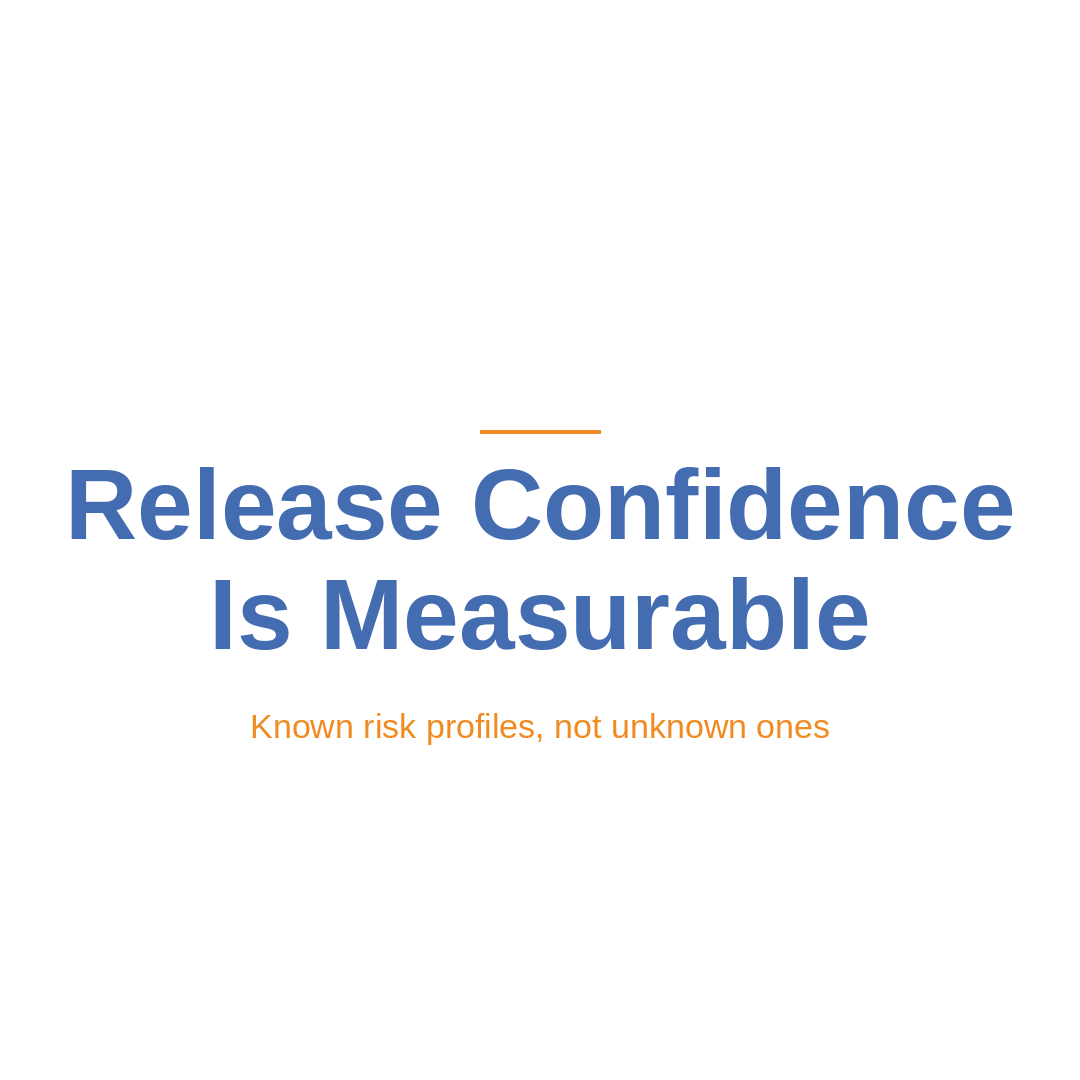
Six months into a QA engagement, release day changes character entirely. Early on, teams often treat QA as a final checkpoint, a last scan before shipping. The result is a release process that feels fragile, where engineering leads are bracing for production alerts instead of watching dashboards with confidence. That anxiety is expensive, not just emotionally, but in real engineering hours spent firefighting. A pattern I see consistently is that as an engagement matures, QA stops being reactive and becomes structural. Test coverage expands beyond the happy path. Regression suites stabilize. The team starts shipping with known risk profiles instead of unknown ones. A common shift I observe is when a team moves from deploying every two to three weeks, because releases feel risky, to deploying weekly, because the signal from QA is trustworthy enough to act on. Release confidence is not a feeling. It is a measurable state: defined test coverage, a stable automation suite, documented edge cases, and a shared understanding between QA and engineering of what "done" actually means. If your team still considers release day a high-stress event six months from now, the QA process is the variable worth examining. #QualityAssurance #SoftwareTesting #EngineeringLeadership #ReleaseManagement
Tim Harrison tweet media
English
0
1
1
5
Tim Harrison
Tim Harrison@TimHarrisonSQA·
Most abandoned cart analyses stop at UX. Mine go deeper. When I review checkout drop-off with e-commerce teams, the pattern is almost always the same: the happy path works fine. It's the edge cases that bleed revenue. A guest user who applies a discount code after selecting a shipping method. A mobile shopper who switches payment types mid-flow. A customer whose address fails validation against a third-party API that happens to be rate-limited. These scenarios rarely make it into a standard QA pass. My team tests checkout flows the way a skeptical customer uses them, not the way a developer built them. We map test matrices around payment method combinations, session state transitions, and API failure modes. A single checkout flow can have dozens of logical branches that only surface under specific conditions, and each untested branch is a potential exit point for a buyer who was already committed. One pattern I see often: teams discover checkout bugs through revenue reporting, not QA. By then, the cost isn't just the fix. It's the customers who didn't return. If your cart abandonment rate climbed after your last checkout release and edge case coverage was thin, that's worth a conversation. #Ecommerce #QAStrategy #SoftwareTesting #CheckoutOptimization
English
0
1
1
6
Tim Harrison
Tim Harrison@TimHarrisonSQA·
User Acceptance Testing is where software either earns business confidence or quietly builds risk. Too often, UAT becomes a rushed sign-off at the end of a release. Business stakeholders are asked to “take a look,” environments aren’t stable, test scenarios aren’t tied to real workflows, and feedback comes too late to matter. The result is predictable: production issues, frustrated teams, and lost trust. A solid UAT process changes that. When UAT is structured, business-driven, and aligned to real outcomes, it becomes a validation of value, not just functionality. Stakeholders know exactly what they’re validating, why it matters, and what “done” actually means. At SQA², we treat UAT as a partnership between the business and delivery teams. We help define clear acceptance criteria, map test scenarios to real business use cases, and ensure environments and data reflect production realities. Our QA 2.0 approach brings quality upstream, so UAT isn’t discovering surprises, it’s confirming readiness. When UAT is done right, releases move faster, confidence goes up, and the business signs off knowing the software supports how they actually operate. That’s the difference between testing to ship and testing to succeed.
English
0
2
1
11
Tim Harrison
Tim Harrison@TimHarrisonSQA·
Sticking with the status quo in QA is the most expensive decision you’ll make this year. Teams often assume their current quality approach is “good enough.” But complacency in QA doesn’t preserve stability, it just quietly erodes it. Ignoring the cracks in your process won’t make them disappear. It only delays the moment you realize: • Critical functionality never worked as intended • Defects have been escaping for months • Rework is silently eating your margins Quality isn’t the cost center. Rework is. This is why shifting left with QA 2.0 matters. Integrate quality as the first step. Expose issues early. Reduce the cost of late-stage fixes. Strengthen how your teams deliver, not just how they test. If you don’t challenge your QA status quo today, it becomes your problem tomorrow. Shift left with QA 2.0 and avoid the disaster.
English
0
1
1
8
Tim Harrison
Tim Harrison@TimHarrisonSQA·
We once inherited an automation framework with a 1.5% pass rate. That’s not a typo. And it’s a stark reminder of what happens when automation is built without the right foundation. Automation can be a powerful asset, but only when it’s designed by skilled QA professionals who understand maintainability, scalability, and long-term ROI. Without that, your test suite becomes a liability, not an asset. Pass rates drop. Confidence erodes. And the value of your investment vanishes. We’re revitalizing this framework, but it’s a heavy lift that could’ve been avoided with the right expertise from the start. Companies need to ask themselves: - Are we building automation with the future in mind? - Do we have the right people behind it? - Are we measuring the real value it brings? Automation isn’t just about coverage, it’s about trust in your systems and confidence in your releases. Choose your QA partners wisely. Your ROI depends on it!
English
0
1
1
18
Tim Harrison
Tim Harrison@TimHarrisonSQA·
In enterprise software development, it’s easy to get caught up in optimizing how we work and lose sight of why we work. Concepts like shift-left testing, DevOps automation, and agile transformations dominate conversations in boardrooms and team stand-ups alike. But amid this drive for better, faster, and more efficient processes, it’s crucial to remember one fundamental truth: Process improvement is not the goal, business success is. The Role of QA and Process in the Bigger Picture Quality Assurance, like every other function in a technology organization, exists to support the broader mission of the company. Whether that mission is to deliver exceptional customer experiences, drive revenue growth, or disrupt an industry, QA must align its goals with those of the business. Too often, process initiatives become siloed efforts, pursued for their own sake rather than as enablers of business value. Shift-left testing, for example, is a powerful strategy to prevent defects and reduce costs. But if implementing it delays product releases or creates friction between teams, it may do more harm than good in the short term. Striking the Right Balance Enterprise organizations must walk a fine line between improving how they build software and ensuring they continue to deliver value to customers. This balance requires: - Pragmatism over perfection: Not every process change needs to be implemented immediately. Incremental improvements often yield better long-term results. - Collaboration over control: QA, development, product, and operations must work together, not in silos. Process changes should be co-created, not imposed. - Outcomes over outputs: The ultimate measure of success isn’t how well a process is followed. It’s whether the software meets customer needs and drives business results. Avoiding the “Bull in a China Shop” Mentality Change agents in software development must be careful not to bulldoze their way through organizations in the name of improvement. While passion for better practices is commendable, it must be tempered with empathy, communication, and a deep understanding of business priorities. Leaders should ask: - Will this change help us deliver value faster? - Does it align with our strategic goals? - Are we bringing people along on the journey? If the answer to any of these is “no,” it may be time to rethink the approach. The Long Game Process improvement is a marathon, not a sprint. The most successful enterprise organizations are those that evolve their practices over time, learning from each release, each customer interaction, and each internal challenge. By keeping business success at the center of every decision, leaders can ensure that their software development processes are not just efficient—but effective.
Tim Harrison tweet media
English
0
1
1
26
Tim Harrison
Tim Harrison@TimHarrisonSQA·
Quality is not an accident. It's a result of clear processes, intentional planning, and ongoing improvement. Too often, businesses treat quality as something that should "just happen." But without understanding where your processes stand today, you can’t improve them. And without improvement, you risk missed deadlines, unexpected costs, and disappointed customers. The challenge? Most business leaders don't have time to think deeply about quality operations. It's not the fire you're putting out today, but it's quietly impacting your budget, timelines, and bottom line every single day. That’s why it’s essential to have someone you trust take ownership of the assessment and build a roadmap for improvement. You don’t need to handle every detail. You just need the right partner who can. We recently did exactly this for a large enterprise client. We quickly evaluated their current quality maturity, identified gaps, and delivered a targeted, practical plan for improvement. The result? Measurable progress without disruption. If you believe quality is important and want a better way to manage it, let’s connect. We make the process easy and effective for teams that are ready to raise the bar.
English
0
1
1
14
Tim Harrison
Tim Harrison@TimHarrisonSQA·
@ChaseWillden I was an embedded QA Analyst working with the client's engineering team. They were very much aware and driving the effort. I was just strapped in and along for the ride! 🤣
English
0
0
0
20
Chase Willden
Chase Willden@ChaseWillden·
What’s the worst deploy that you’ve had?
English
2
0
0
247
Tim Harrison
Tim Harrison@TimHarrisonSQA·
@SaiduSenpay Go ahead and finish the proverb. "...but oftentimes better than a master of one." I'd rather a full stack developer over an API master. End users of a website won't have a website with an API master. You'll have a good website and API (not masterful) with a full stack dev.
English
1
0
1
15
Said fatah
Said fatah@SaiduSenpay·
Fullstack developer ? you mean jack of all threads master of none.
English
49
9
184
27.5K
Tim Harrison
Tim Harrison@TimHarrisonSQA·
Your processes aren’t protecting quality, they’re suffocating it. The biggest threat to software quality isn’t bad code. It’s rigid processes defended by silo-builders who value control over improvement. Too often, we see process treated like doctrine: unchangeable, unquestionable, and sacred. But in the face of rapid change, what worked yesterday could be your biggest liability today. Organizations stall when teams are more focused on protecting their domain than delivering collective outcomes. Siloed ownership creates friction, delays, and finger-pointing, all at the cost of quality. Real process transformation requires courage. Not the courage to add another checklist, but to challenge the process you already have. If your QA efforts are falling short, it’s likely not your testers. It’s your process. And if you aren’t willing to evolve it, you’re choosing stagnation over excellence. Business leaders: If you want high-quality software, create an environment where every process is open to inspection and no one is above improvement. Transformation starts when ego steps aside and quality takes the lead.
Tim Harrison tweet media
English
0
1
1
22
Tim Harrison
Tim Harrison@TimHarrisonSQA·
You already know quality is critical. You’ve likely said already discussed fixing the challenges created by poor software quality - bottlenecks, slow development, increased costs, customer reputation loss, lost revenue, etc. But knowing isn’t the same as enabling. And without enablement, improvement stalls. Too many teams operate in silos, with quality treated as a final step or worse, someone else’s job. That’s where the real risk lives. When quality becomes a mandate from you as a stakeholder, when you prioritize and champion it across your org, change begins. It signals to your team that quality isn’t optional. It’s embedded. The next step? Partnering with experts who know how to embed that shift-left transformation into your existing process. That’s when things take off. That’s when velocity, confidence, and product integrity align. Stakeholder enablement isn’t a “nice to have.” It’s the ignition switch for meaningful, lasting quality.
English
0
1
1
18
Tim Harrison
Tim Harrison@TimHarrisonSQA·
You’ve got the vision. The market opportunity is there. Your team is talented. So why does growth feel like a constant uphill battle? The truth is, innovation doesn’t just fail because of bad ideas, it fails because of unseen obstacles slowing execution, creating friction, and eroding momentum. These silent killers are lurking in your processes, your technology, and even your team dynamics. In this article, we discuss the roadblocks holding businesses back and how leaders can eliminate them achieve the vision they set out for their business. sqasquared.com/silent-killers…
English
0
1
1
13
Tim Harrison
Tim Harrison@TimHarrisonSQA·
Cost, Quality, Speed - Why You No Longer Have to Choose Just Two For years, business and engineering leaders have accepted a difficult reality: you can optimize for cost, quality, or speed, but not all three. Prioritizing two means sacrificing the third. But is that still true? The way we build and deliver technology has evolved, and the old trade-offs no longer apply the way they once did. Companies that rethink their approach are finding ways to move faster, spend smarter, and deliver better outcomes all at the same time. If you're still making tough trade-offs in your software development process, it’s time to challenge the old rules. Read the full article to explore how companies are navigating this shift. 🔗 sqasquared.com/cost-quality-s… #SoftwareDevelopment #SoftwareTesting #QA #QualityAssurance
English
0
1
1
13
Tim Harrison
Tim Harrison@TimHarrisonSQA·
More people won’t fix your QA bottlenecks. The right skills will. Scaling a software team is not just about adding more people. It is about having the right skills at the right time. Most companies do not have the budget or the need to maintain a full in-house team with every specialized skill set. Performance testing, automation, manual testing, process engineering, and so on - each requires expertise to be done well. But hiring full-time specialists for every area is costly and often impractical. Training an existing team to develop these skills takes time and resources that most companies cannot afford. And even if you do invest in training, demand for these skills fluctuates. One quarter, you may need extensive performance testing. The next, your focus may shift to automation. Keeping a full-time staff for every potential need is inefficient. This is where Fractional QA solves the challenge. Instead of carrying the overhead of specialists you may only need periodically, fractional QA allows you to bring in the exact skills you need, only when you need them. This means your team stays lean, focused, and effective without sacrificing quality. You scale your QA efforts to match your development needs, ensuring your software is tested properly without overspending on unnecessary resources. And when you don’t need those extra hands? You are not paying for them. This is how modern IT teams maintain high-quality standards while staying cost-effective. #QA #SoftwareEngineering #SoftwareDevelopment #FractionalQA
English
0
1
1
21
Tim Harrison
Tim Harrison@TimHarrisonSQA·
If you are too busy fixing bugs, when do you build the future? Endless firefighting leaves no room for innovation. When teams spend all their time fixing bugs and addressing production issues, real progress comes to a halt. Budget cuts often mean fewer resources, but the workload never decreases. Instead of working on the next big feature or optimizing performance, teams are stuck in a reactive cycle. They're patching issues, troubleshooting failures, and pushing hot-fixes just to keep things running. Over time, this takes a toll. Technical debt grows. Innovation stalls. The roadmap shrinks from ambitious goals to just making it through the next release. Companies do not fall behind because they lack ideas. They fall behind because they never have the bandwidth to execute them. This is why @SQAsquared exists, to enable innovation. We take the burden of quality off your development teams so they can focus on building the future instead of fixing the past. By ensuring software quality is handled effectively, we free up engineers to do what they do best: innovate, optimize, and push technology forward. Because if all your time is spent fixing yesterday’s problems, who is building tomorrow’s solutions?
English
0
1
1
13
Tim Harrison
Tim Harrison@TimHarrisonSQA·
Overworked developers do not write better code. They write bigger problems. When budget cuts hit, companies often expect their existing teams to pick up the slack. In software development, that means engineers are not just writing code, they're also testing, debugging, and troubleshooting issues that a proper QA team would have helped with. At first, this might seem like an efficient way to save money. In reality, it leads to slower development, more production failures, and frustrated teams. Developers already operate under tight deadlines and high expectations. When quality assurance resources are cut, they are forced to shift their focus from innovation to damage control. Rushed code reviews, skipped refactoring, and overlooked edge cases become the norm, not the exception. The long-term impact is worse. Burnout increases, leading to higher turnover rates. The product suffers as teams spend more time fixing problems than building new features. Customer satisfaction drops when buggy releases become the standard. What seemed like a simple budget adjustment quickly spirals into a cycle of inefficiency. There is a better way. Instead of overloading your developers, fractional QA services provide the expertise needed to maintain software quality without the full-time cost. By bringing in experienced QA when needed, companies can keep their development teams focused on building, not firefighting. The result? Faster releases, fewer defects, and a team that is actually empowered to deliver great software. Has your team been impacted by budget cuts? How are you handling the increased workload?
English
0
0
0
15