

DimondDev
1.2K posts

@UlenSmartLearn @Astrophysicslad Why do you think so??
Why do you think it can’t get up to 200km/s?
English

Well, if you’re not a scientist or somehow don’t follow science news, you probably wouldn’t know this, but we have sent a spacecraft to study the Sun up close...
It’s called the Parker Solar Probe. Launched in 2018, it’s the fastest human-made object ever, hurtling at over 193 km/s toward the Sun.
This mission utilized a series of Venus flybys and a Top-tier heat shield and it’s now exploring the Sun’s outer atmosphere , the corona , where temperatures soar to millions of degrees, far hotter than the Sun’s surface.
So no, humans haven’t landed on the Sun (obviously because it would vaporize us instantly ) but our man made bots are already getting closer than any human ever could, sending back data that will help us understand solar storms, space weather and even why the Sun’s atmosphere is hotter than its surface.
Scientific discoveries are happening all the time , you gotta stay tuned in all the time..

fishious@fishquichee
Enough about the moon why havent we been to the sun yet
English
@AmlikeJ @Astrophysicslad And you should ask those who tested it's speed
English

@UlenSmartLearn @Astrophysicslad You should rather ask how is it possible bro
English
@remy_makaveli @Astrophysicslad Do you develop those machines or you just believe what you're told
English

@UlenSmartLearn @Astrophysicslad That's exactly why you aren't a scientist or a mathematician
English

there is something in these photos that nobody is talking about.
the earth, seen from the moon’s surface, is a crescent. the same shape we see the moon from earth. which means from where these astronauts stood, our entire world, every human being alive, every city, every ocean, every mountain, was receiving light the same way the moon does.
dependent. reflective. not a source but a receiver. and God placed both of them, earth and moon, in a gravitational relationship so precise that if either one shifted slightly, the conditions for life dissolve completely.
He did not just create them. He positioned them. He calibrated the distance. He calculated the tilt. He set the orbital speed. and then He rested.
what that tells me about God is something i am still processing.
He is not a God who creates carelessly and steps back. He is a God who creates with intention so deep that billions of years later, the greatest scientific mission of our generation goes out there and finds everything exactly where He left it. the craters on that moon are not evidence of chaos.
they are evidence of endurance. of something built to absorb impact and remain.
God put that quality into the moon because it is His own quality. He absorbs everything this world throws at existence and remains. unchanged. unshaken. still in orbit. still faithful. still holding everything He made in the dark.
NASA@NASA
Hello, Moon. It’s great to be back. Here’s a taste of what the Artemis II astronauts photographed during their flight around the Moon. Check out more photos from the mission: nasa.gov/artemis-ii-mul…
English
@trevsenpaii You can't seriously compare Doku and Diaz. Doku is better than most wingers I know including Vin
English

@zondo_sikhumba @SizweDhlomo You can't divide what's not yours in the first place
English

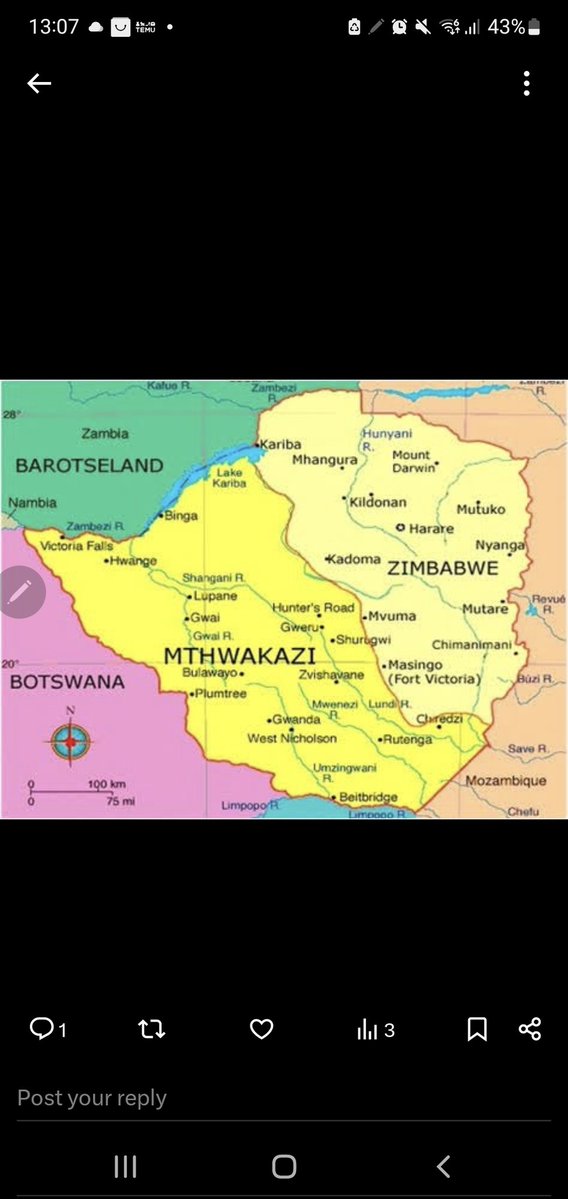

I'm surprised or too old that I used and still use PHP. We manually upload.php files🔥
DROID@droidbuilds
How did he deploy facebook without vercel ?
English

@Laque_davis @BlaiseTaziva Not only Mutisi the whole varakash are mad right now 😅😅😅
English

Kudzi Mutisi, after realizing Joshua 10% Maponga and Rutendo Sanctions Matinyarare, were being paid millions for the same propaganda he is doing for MTN data bundles.

English
@devops_nk When I started learning DevOps. I imagined fork as picking food from a main dish with fork and putting it in your plate. Same as forking someone's repository onto your account "plate"
English

Explain a scenario where you used git fork instead of git clone. Why was forking necessary?
English
@NovaXSpace Moon has lots of Iron. In future maybe 100000 years to come our grandchildren will mine iron on Mars for shelter construction instead of shipping it from Earth
English

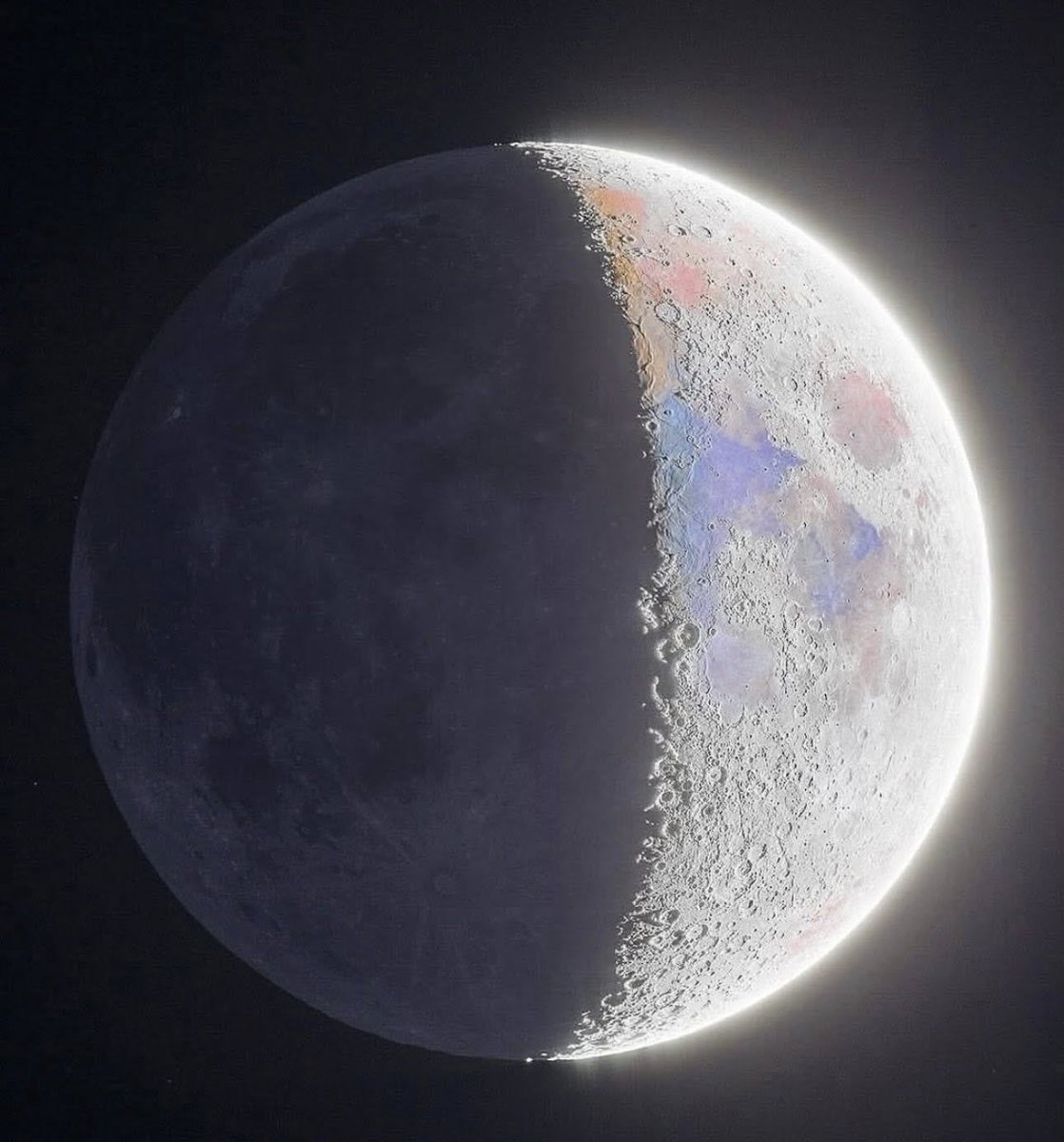
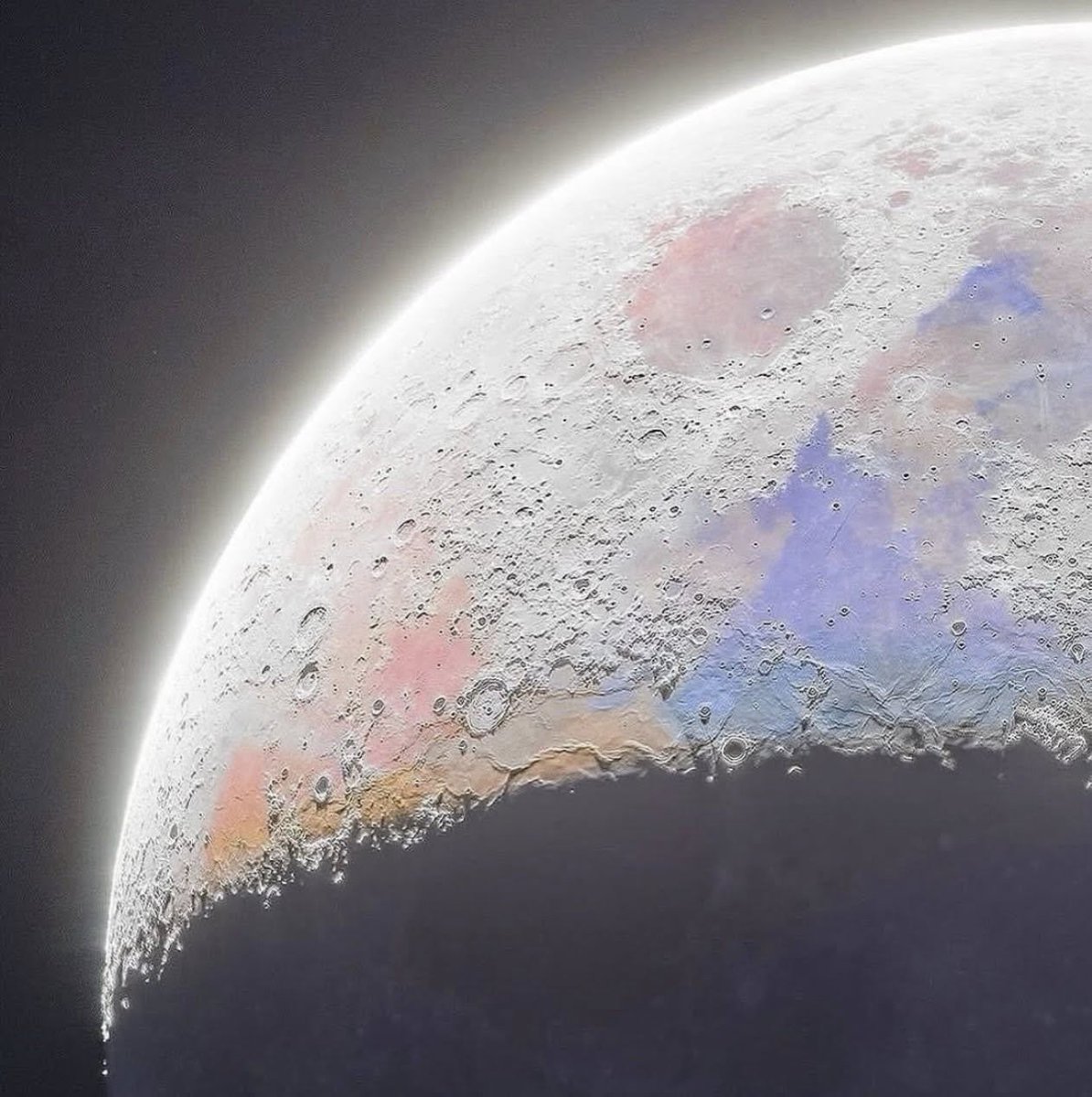
Did you know that the Moon has color? 🌒 🎨
At first glance, it looks gray, but through the lens on the right, its full palette appears: blue from titanium, orange from ancient rocks, and more iron on the far side.
This image was captured by Orion, the Artemis II spacecraft, during a mission that also broke the record for the farthest distance humans have traveled from Earth.
And there’s something beautiful in that. The colors have always been there. We just needed the right way to see them.🌗🌖🌘🌓🌔

English

How about designing an app that works like InDrive or Uber, but for dating? 😂 One person sends a request with their specs and the price they’re willing to spend, then on the other side, people can bid and you choose based on reviews and ratings 😭.
English
@GodlyAction In the beginning was the Word and the Word was with God and the Word was God.
English

The Bible was written on three continents:
- Europe
- Asia
- Africa
In three languages:
- Hebrew
- Aramaic
- Greek
By over 40 different men:
- Kings
- Prophets
- Fishermen
- A doctor
Yet it tells one unified story:
- Creation
- Fall
- Redemption
- Christ
God is incredible.
English

If you are any of these:
Software Developers ✅
Web Developers ✅
Mobile App Developers ✅
Data Analysts ✅
Data Scientists ✅
AI / Machine Learning Engineers ✅
Cybersecurity Analysts ✅
Cloud Engineers ✅
DevOps Engineers ✅
Network Engineers ✅
IT Support Specialists ✅
System Administrators ✅
Product Managers ✅
Project Managers (Tech) ✅
UI/UX Designers ✅
Graphic Designers (Digital) ✅
Product Designers ✅
QA / Software Testers ✅
Technical Writers ✅
Digital Marketers ✅
Social Media Managers ✅
Content Creators (Tech) ✅
Blockchain Developers ✅
Game Developers ✅
Tech Entrepreneurs ✅
No-code / Low-code Builders ✅
Students studying any of the above 🎓
Drop a ❤️ emoji under this post, follow who likes your comment for a follow-back.
Let’s connect 🤝💻
Laptop Lady has something for you .
English

As Artemis II prepares to send humans around the Moon again, one thing is worth pointing out:
That mission quite literally depends on our understanding of gravity working exactly as predicted.
The trajectory isn’t guesswork. It’s calculated so precisely that the spacecraft can loop around the Moon and return to Earth using gravity alone, following a free-return path. No mystery forces. No improvisation. Just physics doing exactly what we expect it to do.
Despite what you may hear from various science deniers, we actually understand gravity extremely well.
Not just in theory, but in practice. We can model it, predict it, and rely on it with extraordinary precision. Everything from planetary motion to spacecraft navigation depends on it. Even your phone’s GPS would drift by kilometers per day if we didn’t correctly account for how gravity affects time itself.
This isn’t guesswork. It’s one of the most thoroughly tested and reliable frameworks in all of science.
⸻
We actually have two incredibly powerful ways to describe gravity.
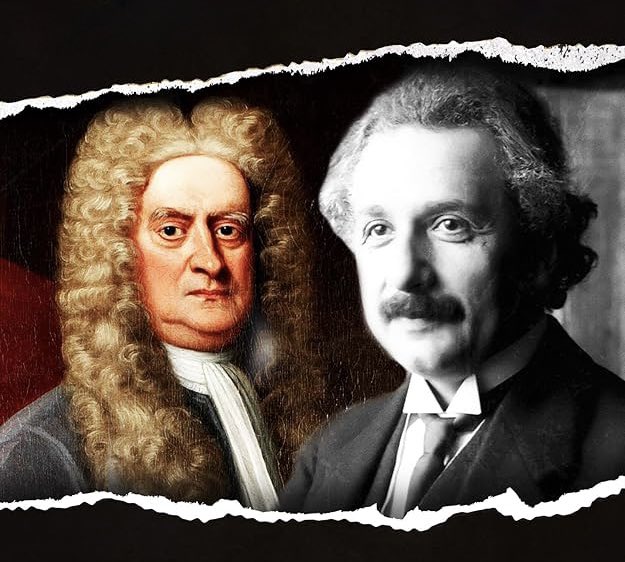
The first is Newton’s law of universal gravitation. It treats gravity as a force between masses, and it works astonishingly well. It predicts falling objects, satellite motion, planetary orbits, even spacecraft trajectories with extreme accuracy. For most real-world situations, including much of astronomy, it’s more than sufficient.
But even Isaac Newton himself knew it wasn’t the full story.
He was uneasy with what his own equations implied, that gravity somehow acts across empty space with no mechanism, no signal, no medium. He referred to this as “action at a distance,” and explicitly rejected the idea as physically unsatisfying, even though the math worked.
Long before Albert Einstein, Newton was already grappling with what we’d now recognize as a kind of action at a distance problem. The equations described what happens with incredible accuracy. The underlying “how” was still missing.
⸻
But Newton’s model does have limits. When gravity becomes very strong, or when objects move at a significant fraction of the speed of light, it starts to drift slightly from reality.
That’s where General Relativity comes in. Einstein’s framework replaces that conceptual gap with something physical: changes in spacetime that propagate at a finite speed.
And here’s the part that often gets missed:
If you take Einstein’s equations and simplify them for weak gravity and low speeds, Newton’s law falls right out of them.
These are not competing ideas. They are layered descriptions of the same reality, each valid in its proper domain.
Which is why the line “gravity isn’t a force” is usually more slogan than understanding.
In many situations, treating gravity as a force is exactly the right tool. What matters is knowing when that approximation holds, and when it doesn’t.
⸻
And there’s a perfect historical example of this in action.
Actually, two of them.
👇
English
@blaqguy14 @City_Xtra @rayan_cherki Cherki has been great but I think O'Reilly is our player of the season.
English
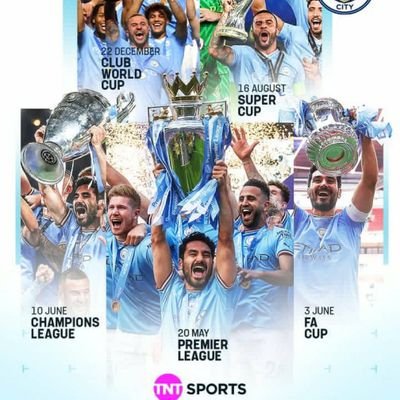
@City_Xtra @rayan_cherki Here’s the big question…….who’s city’s player of the season?
English

Antoine Semenyo on @rayan_cherki: “He’s one of the world’s best. He can literally do anything with the ball, he makes my life easy. I know he’s going to drop, try and find me in behind or play to my feet.
“I remember my first day in training, some of the skills he was pulling up, I thought, ‘What kind of player is he?’ He’s a top player. Creative with the ball and we love it…” [via @HaytersTV]
English

Simple question for engineers:
At what point does a Monolith
become a Microservices problem?
English
DimondDev retuiteado