

Wang Loc
645 posts

Still under 5M impression ✅🧡😉
Say Hi 👋
Let's boost you 💯💥💥💥💥💥💥📈🚀

English



AI agents aren’t just another narrative they’re quietly reshaping how systems interact.
At EthCC, Justin Sun pointed out something that feels obvious once you think about it:
The convergence of blockchain and TradFi isn’t being driven by institutions alone anymore…
it’s being accelerated by autonomous agents.
When machines start handling transactions, payments, and execution logic,
you don’t just need infrastructure you need infrastructure that works at scale, continuously.
That’s where blockchain starts to make more sense than traditional rails.
It’s less about replacing TradFi,
and more about building a layer both humans and machines can rely on.
The interesting part isn’t AI or crypto on their own
it’s what happens when both start operating in the same system.
@trondao @TronDao_VIE @justinsuntron #Trongolbalfriends

English
Getting in is easy. Staying is different.
I wrote this after noticing something that keeps repeating. A project trends on Binance, gets attention, liquidity, users… everything looks strong. Then it tries to expand into places like the Middle East and somehow the momentum just fades. No drama, no bad news. Just less consistency.
It feels like two very different environments.
One rewards speed. The other tests structure.
And that gap is where things quietly break.
From what I understand, this is where $SIGN starts to matter. Not as a growth tool, but as a layer that keeps verification, identity, and credentials consistent when moving across systems. Because what worked in one place doesn’t automatically translate somewhere else if trust has to be rebuilt every time.
That’s the problem.
If Sign can make validated data reusable across contexts, then expansion isn’t about restarting. It becomes a continuation. And in regions where standards and compliance matter more, that difference is not small.
I don’t think most people are looking at this yet. Everyone focuses on getting in.
But staying… that’s a different game.
@Sign $SIGN #Signdigitalsovereigninfra

English
When Data Stops Being Passive and Starts Acting
What’s interesting to me about SIGN isn’t just verification.
It’s control at the moment data is created.
Instead of checking something later, you define upfront who can issue it, under what rules, and what it’s allowed to do next. That changes the role of data completely.
It stops being something static sitting in storage.
It starts behaving.
Because once you can attach logic to it, things shift. Access can be restricted, actions can be triggered, conditions can be enforced… all from the start, not patched in later.
That’s powerful.
But also a bit uncomfortable if you think about it too long.
Because that kind of control cuts both ways. It can make systems cleaner and more predictable, but it can also concentrate authority depending on who defines those rules.
So yeah, I see the value.
I’m just watching who ends up holding that control.
#SignDigitalSovereignInfra $SIGN @Sign

English
$siren và cuộc phiêu lưu về lòng đất

Tài Smile@taihaycuoii
Tài khoản của 700$ nên múc còn gì để x10 đây ta
Tiếng Việt

Gm anh em hôm nay mình sẽ dừng lãi chuỗi ngày với acc x này với lý do mình không còn thời gian để build nữa.
Hữu duyên tặng cho bạn nào cmt vào bài này, mình sẽ random ngẫu nhiên
Ai sẽ là người may mắn được đây?
Chúc bạn một tháng mới đầy niềm vui và tiền vào đầy túi ngày 1/4

Tiếng Việt

When Data Finally Starts Speaking the Same Language
What people miss about SIGN isn’t just the trust angle.
It’s how it quietly deals with data fragmentation.
Right now every app does its own thing. Different formats, different structures, different ways of verifying the same idea. So instead of building real logic, developers spend time translating data just to make systems work together.
That’s where a lot of hidden friction comes from.
SIGN introduces schemas, basically shared formats everyone agrees on. It sounds simple, but once that clicks, something shifts. Apps stop arguing about how data looks and start focusing on what it actually means.
And that changes how systems interact.
Data becomes readable, reusable, and consistent across environments instead of being locked inside each app. Less duplication, less guesswork, less wasted effort.
It’s not flashy, but it fixes something that’s been broken for a long time.
@Sign $SIGN #SignDigitalSovereignInfra

English
When Data Stops Fighting Itself
What people miss about SIGN isn’t just the “trust layer” angle.
It’s how it quietly deals with something uglier: data fragmentation.
Right now every app defines things differently. Different formats, different structures, different ways of verifying the same idea. So instead of building logic, developers end up reverse-engineering data just to make systems talk to each other.
That’s a lot of wasted effort.
SIGN introduces schemas, which sounds simple. Just agreed formats. But once that clicks, something shifts. Apps stop arguing about how data looks and start focusing on what it actually means.
And that changes the workflow more than people expect.
Because now data becomes readable, reusable, consistent across systems instead of being trapped inside each app. Less translation, less duplication, less friction.
It’s not loud, but it’s one of those changes that makes everything else easier to build.
#SignDigitalSovereignInfra $SIGN @Sign

English
When SIGN Starts Looking More Like Evidence Than Identity
A lot of people still box SIGN in as just an identity tool.
That feels too narrow to me.
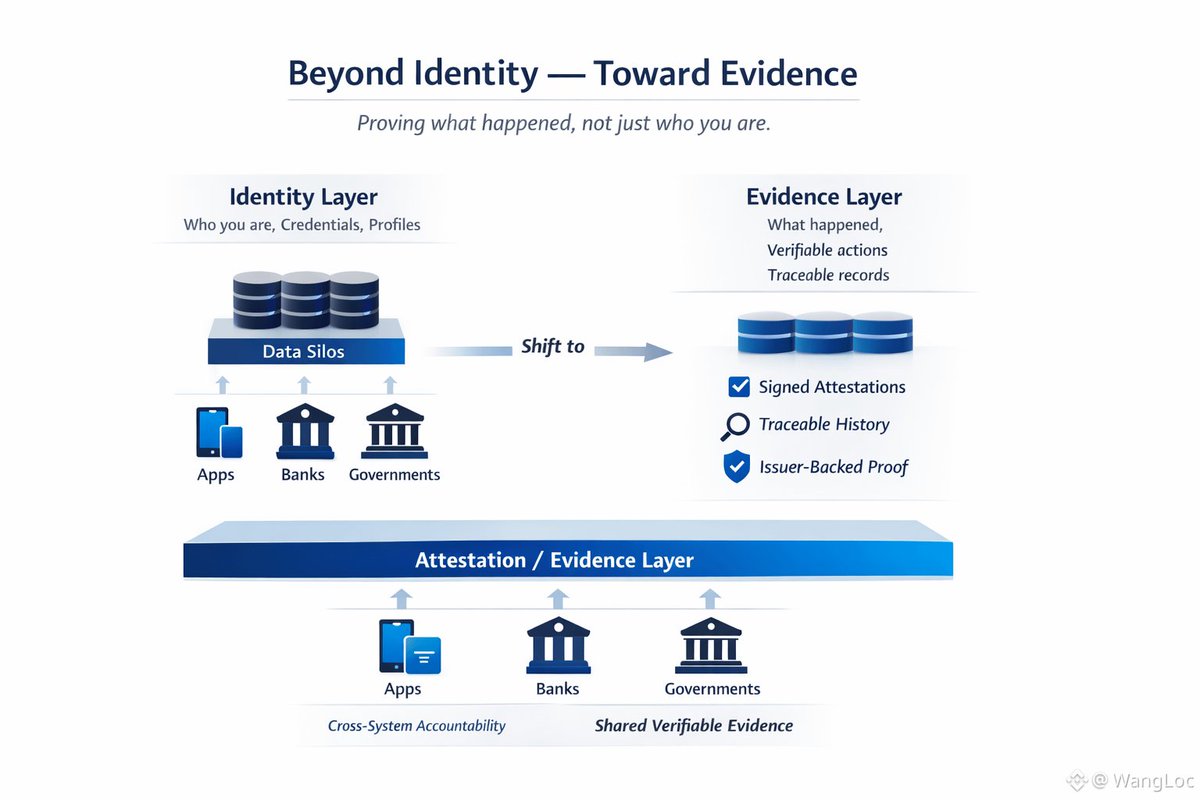
The more I look at it, the more it starts to feel like an evidence layer. Not just proving who someone is, but proving what actually happened, in a way other systems can rely on.
And that matters more once regulators or real institutions get involved.
Because in areas like cross-border payments or public infrastructure, loose data doesn’t cut it anymore. You need a trail. Something tied to a real issuer, something that can be checked later without ambiguity.
That’s where SIGN starts to shift in meaning.
It’s not just about storing information. It’s about anchoring it in a way that makes it usable across contexts. Instead of every app holding its own version of truth, they can reference signed data that already exists.
And that changes things quietly.
Because once systems stop hoarding raw data and start relying on shared, verifiable evidence, accountability starts moving differently too. Less duplication, less guessing, more reliance on what’s already been proven.
It’s a small shift in structure.
But at system level, it adds up.
#SignDigitalSovereignInfra $SIGN @SignOfficial
English
When Attestations Start Feeling Like Clearances
Most teams I talk to still see SIGN as just an attestation registry.
That feels a bit surface-level to me.
In practice, it behaves closer to reusable security clearances. You verify something once, and instead of dragging raw data everywhere, you carry a signed proof that other systems can trust.
And that matters more once things go cross-chain.
Because that’s where everything usually breaks. State mismatches, duplicated checks, assumptions that don’t hold across environments. SIGN cuts through some of that by letting multiple apps rely on the same verified statement instead of rebuilding it every time.
But it’s not all clean.
I still keep coming back to the same questions. Who governs the issuers? Which attestations actually carry weight? And what happens when those proofs go stale?
That’s the trade-off.
Cleaner coordination, but a new layer of responsibility.
#SignDigitalSovereignInfra $SIGN @Sign

English
Câu chuyện có thật!
Có lần bố mẹ ngiu vào sg chơi thấy toàn ở nhà hỏi con ra trường không đi làm hả?
Mình chỉ dám nói con làm online🥲
Tết về quê gia đình ba mẹ ông bà cũng hỏi con dạo này làm gì🥲
2 hôm trước điện ngiu hỏi mình đi làm chưa, bảo nó đừng chơi tiền ảo nha LỪA ĐẢO á

Tài Smile@taihaycuoii
Tạo ra pumb dump tuỳ thích vẫn nhiều anh em bị dính Có ông mất cả vài tỷ mang đi earn lãi suất cao quá h chưa pk sao lấy lại được tiền
Tiếng Việt
When Systems Start Caring About “Still True,” Not Just “Was True”
I didn’t expect SIGN to matter at the lifecycle level, but it does.
Most systems treat actions like one-off events. You claim something, it gets verified, and that’s it. Done. But real systems don’t work like that. Things expire, permissions change, conditions stop being valid.
And that’s usually where problems start.
What I like about SIGN is that it doesn’t treat attestations as static. They can be time-bound, updated, even revoked. So instead of just asking “was this ever true,” the system can ask “is this still true right now.”
That’s a pretty big shift.
Because now you’re not building fixed logic anymore. You’re building something that can react to change, closer to how real-world trust and permissions actually behave over time.
It feels more alive… and honestly more practical.
#SignDigitalSovereignInfra $SIGN @Sign

English
When You Stop Rewriting the Same Rules Everywhere
I’ve rebuilt the same eligibility logic more times than I want to admit.
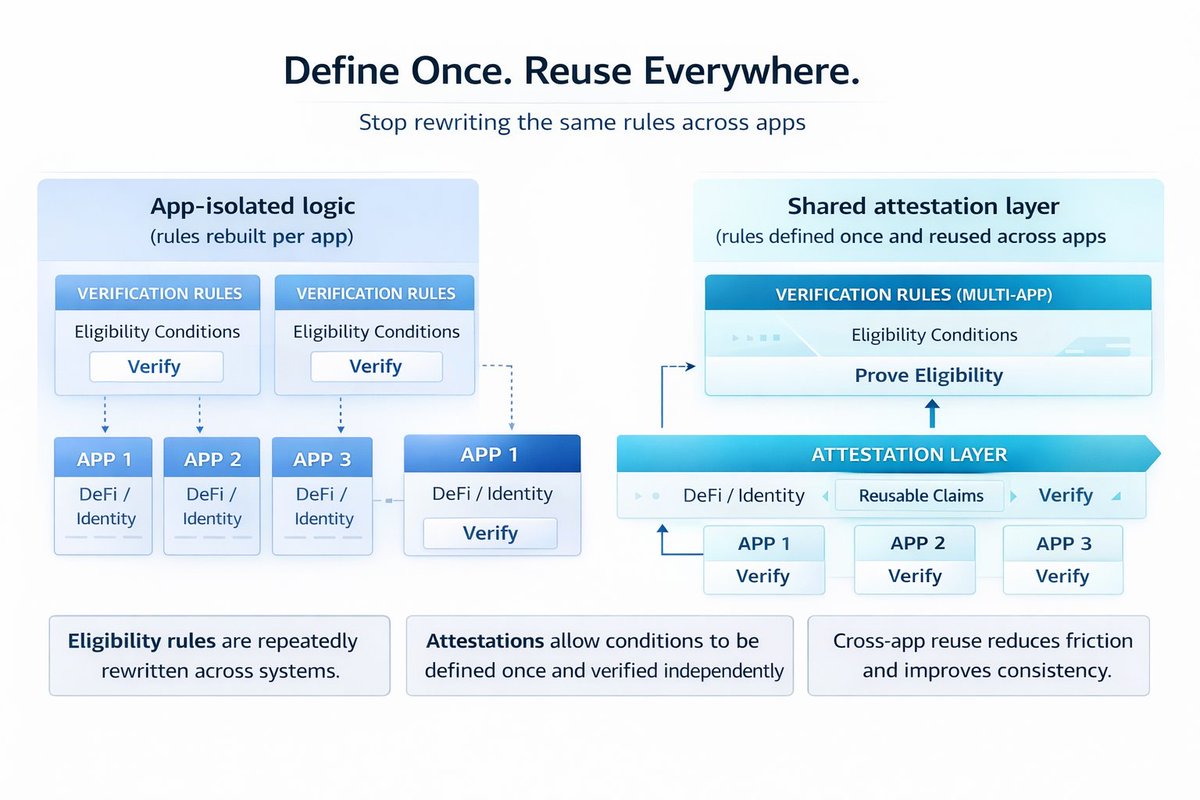
Different chains, different apps… but always the same question underneath. Who qualifies, who doesn’t. And every time, it turns into rewriting the same conditions again in a slightly different way.
What clicked for me with SIGN is how it treats those rules
They don’t have to live inside the app anymore. They can exist as something separate, something verifiable on their own. So instead of redefining “user did X” or “wallet passed Y” every time, you define it once and just reuse it.
That shift feels small at first.
But it changes the workflow more than I expected.
Because now apps don’t feel as isolated. They can share context, real signals that already exist, instead of rebuilding everything from scratch. One system can rely on what another already verified without repeating the whole process.
And that removes a lot of friction, especially once things go cross-chain or multi-app.
It’s not flashy, but it’s one of those changes that makes building feel a lot less painful.
#SignDigitalSovereignInfra $SIGN @Sign
English
What SIGN Actually Feels Like in Practice
I’ve been thinking about SIGN in a simpler way lately.
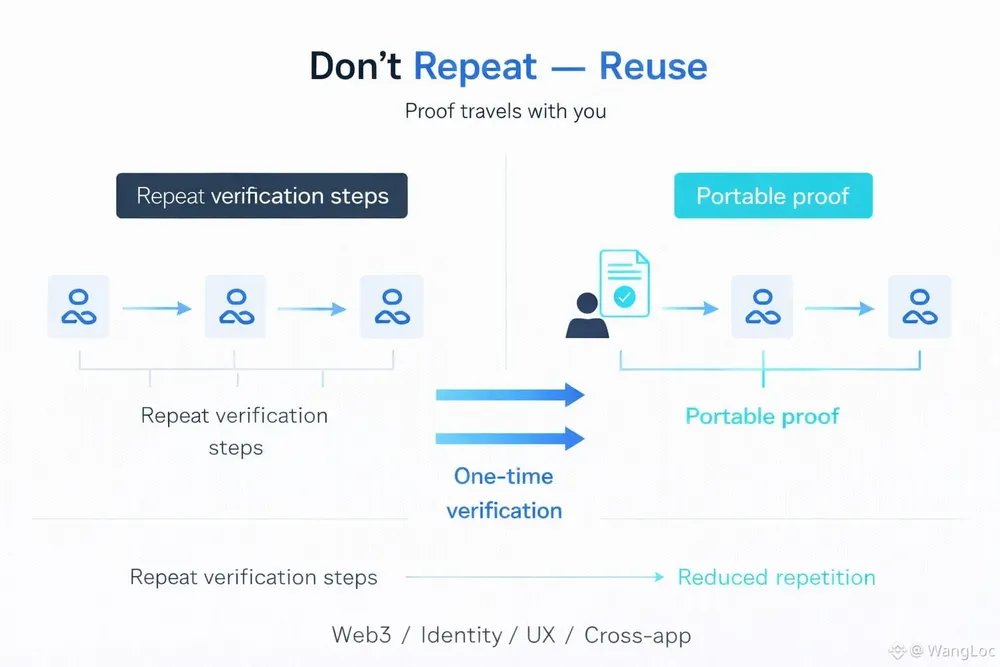
It’s basically turning actions into something you can prove anywhere. Like if you already passed KYC or joined something once, you don’t have to keep doing it again every time you enter a new app. The proof just carries over.
And that alone changes more than it sounds.
Because right now, every project keeps rebuilding the same verification flow. Upload again, sign again, prove again… or worse, send screenshots and forms like it’s still Web2. It’s messy, and everyone just kind of accepts it.
SIGN feels like it’s trying to clean that up.
Instead of repeating the process, systems can just check what’s already been done. That saves time, reduces spam, and probably cuts out a lot of fake activity that slips through when things get rushed.
It’s not flashy, but it feels practical.
And honestly, that’s rarer than it should be.
#SignDigitalSovereignInfra $SIGN @Sign
English