Martin Coll

207 posts

Martin Coll banner
Martin Coll

Martin Coll

@colltoaction

Hyping hypergraphs 🇦🇷

Buenos Aires Se unió Ekim 2023
580 Siguiendo88 Seguidores
Martin Coll
Martin Coll@colltoaction·
@apoth3osis_io @SpeakezTech @JustDeezGuy Sounds the same. From the Lean perspective, MLIR is a monolith accessible only through the formal dialect IR. On the MLIR side, you lower the formal IR dialect to the target architecture. The other end is targeting the architecture without an intermediate dialect.
English
1
0
3
35
The Institute for Applied Ontological Mathematics
If I were building this for public usage I think that would be sound advice. As I understand our current setup, the separation is already there: the Lean ICC formalization IS the formal semantics, verified independently. The Inet dialect would be the compilation target, not the verification layer. Lean proves the reductions correct, Inet MLIR handles lowering to hardware. Two separate concerns, two separate systems, one correspondence theorem connecting them. Does that match what you are describing?
English
1
0
1
18
The Institute for Applied Ontological Mathematics
Yes, HVM4 is our runtime. The current pipeline is Lean ICC terms compiled through a 25-phase SKY combinator pipeline down to interaction nets that execute on GPU via HVM4. The piece I have been wanting to build is exactly what you are describing: the Inet dialect at compile time to replace the hand-written lowering, with HVM4 still handling runtime reduction on GPU. So the compile-time graph rewriting in your dialect would give me verified lowering from Lean to interaction nets, and HVM4 continues to handle the actual parallel reduction. The runtime side you mention as not done yet is interesting. Is the idea that the Inet dialect would eventually have its own runtime path independent of HVM? Or is the intent more that the dialect provides the MLIR-level representation and then backends like HVM handle execution?
English
1
0
1
19
Martin Coll
Martin Coll@colltoaction·
@apoth3osis_io @SpeakezTech @JustDeezGuy That's great to know 😁 The graph rewriting should be implemented both at compile time (Inet dialect) and at runtime (not done yet) in order to implement runtime behavior. Are you using HVM as runtime?
English
1
0
2
20
The Institute for Applied Ontological Mathematics
🙋 There is only one of me so I am not sure that qualifies as community interest but here I am. Last 2+ years spent following the Kenneth Stanley credo for research, in my own way of course as I do still put in 10-12 hours 6-7 days a week. Actively taking all that R&D and applying it as we speak. The ball is firmly in your court :)
English
1
0
0
16
The Institute for Applied Ontological Mathematics
@colltoaction Thanks, and appreciate the kind words on the site. Believe it or not I suffer from Aphantasia to a degree; always drives my wife nuts as somehow my designs come out pretty good, quickly while she belabors the same work :) Your Inet dialect looks like the piece I have been missing. I have Lafont's three combinators formalized in Lean 4 with verified reduction semantics and a GPU execution path through HVM4. The problem I keep hitting is getting from verified ICC terms to a real compilation target without hand-writing CUDA kernels. To get around this I have been waist deep developing LeanCP, a Lean-native C verifier. I can currently do syntactically and semantically verified Lean to C with an independent C verifier and I am trying to extend coverage to all C functions. It works but expanding it is a nightmare. Your dialect would let me sidestep that entire C layer for interaction net computation and go straight from verified Lean ICC terms to MLIR. What I am going to try to do is build an export path from Lean ICC terms to Inet MLIR so the reductions I prove correct can compile to hardware through MLIR instead of through handwritten GPU code. If you could point me at the current state of the dialect, whether the TableGen rewrite patterns are stable, and any gotchas, that could save me weeks. Happy to further discuss and share more about what I have on the Lean side of course. Three groups independently formalizing the same three combinators from different angles seems like something worth devoting proper attention to.
English
1
0
1
33
The Institute for Applied Ontological Mathematics
Absolutely. @colltoaction's Inet dialect is the exact interface point between our verified reduction semantics and your compilation pipeline. Would welcome that connection. Open to any and all help here. The work is progressing, we have been using SKY combinators as a bridge to interaction nets but it has been slow going on the GPU kernel side, which is exactly what the Inet MLIR path would resolve. Honestly there are very few people who seem to realize the size of what is at stake in this space.
English
1
0
1
28
Martin Coll
Martin Coll@colltoaction·
I'm working on a C compiler where the intermediate representation is based on the single-instruction Run language by Dusko Pavlovic. Most features are grammar transformations defined in Lex and Yacc files, and C for the remaining implementation. github.com/titi-org/titi-…
English
0
0
2
2K
Martin Coll retuiteado
Nils Cremer
Nils Cremer@nilscmr·
I'm actively looking for cofounders to build general-purpose, massively parallel computer architectures on the basis of Interaction Nets. If you're talented and have some experience in hardware design, compiler engineering or models of computation feel free to DM me
English
12
23
320
42.6K
Nils Cremer
Nils Cremer@nilscmr·
Abandon curly braces and embrace significant indentation
English
3
0
5
446
Martin Coll retuiteado
Petar Veličković
Petar Veličković@PetarV_93·
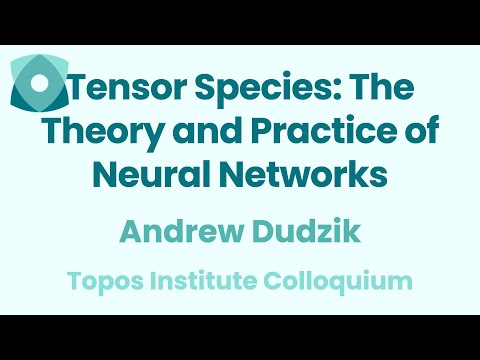
"Tensor Species" by @andrewdudzik 🧮🐒 A great talk at the @ToposInstitute Colloquium, overviewing our team's category-theoretic vision for understanding AI systems through CS primitives... ...casually algebrafying einsums and softmax in the process 🐈 youtube.com/live/xBI03pvUn…
YouTube video
YouTube
English
3
15
78
8.9K
Martin Coll retuiteado
Alessia Galdeman (alessianetwork.bsky.social)
📢If you’re interested in Temporal Networks, consider joining the TENET satellite @NetSciConf in Maastricht!🔎We accept one-page abstracts concerning all aspects of temporal network theory, as well as real-world applications. 📅Deadline: February 7 info 👉🏻 tinyurl.com/27ntstep
English
0
12
18
1.9K
Martin Coll retuiteado
TopoNets
TopoNets@TopoNets·
Another year, another edition!💥 Join #TopoNets25 at @NetSciConf in Maastricht and send us your work on higher-order networks: structure, dynamics, methods, inference, software, topology, #TDA, etc. 📅 Submit by Feb 7th to give a contributed talk: sites.google.com/view/toponets2…
English
0
12
14
4K
Martin Coll
Martin Coll@colltoaction·
✅ Adjoint School application
English
0
0
0
66