Data Explained

1K posts

Data Explained banner
Data Explained

Data Explained

@dataexplain

Data context for breaking news. We add the numbers mainstream media leaves out. Economics, geopolitics, tech, AI. Follow us for analysis, not hot takes.

Se unió Ekim 2025
62 Siguiendo205 Seguidores
Data Explained
Data Explained@dataexplain·
🚛 The Iran war just entered American domestic supply chains. Not a metaphor. A logistics rate announcement. Maersk's own words from their official March surcharge notice: "With approximately 20% of global fuel passing through the Strait of Hormuz, current developments have created an unprecedented cost environment affecting Landside (Inland) and Intermodal operations." What this means in practice: 🚢 Week 1 of the war: emergency ocean freight surcharges 🚛 Week 4: inland fuel surcharges on US truck and rail movements Maersk, Hapag-Lloyd, CMA CGM, and ONE have all implemented inland haulage surcharges. Every container moving from a US port to a warehouse, distribution center, or retailer now carries an additional Iran war cost. The timeline of that cost hitting consumers: Goods booked now → arrive late April → hit retail shelves in May May retail prices → captured in June consumer inflation data The Hormuz closure started as an energy story. It became a financial markets story. It became a food security story. It is now a domestic US logistics story. The cascade keeps moving downstream.
English
0
1
0
78
Data Explained
Data Explained@dataexplain·
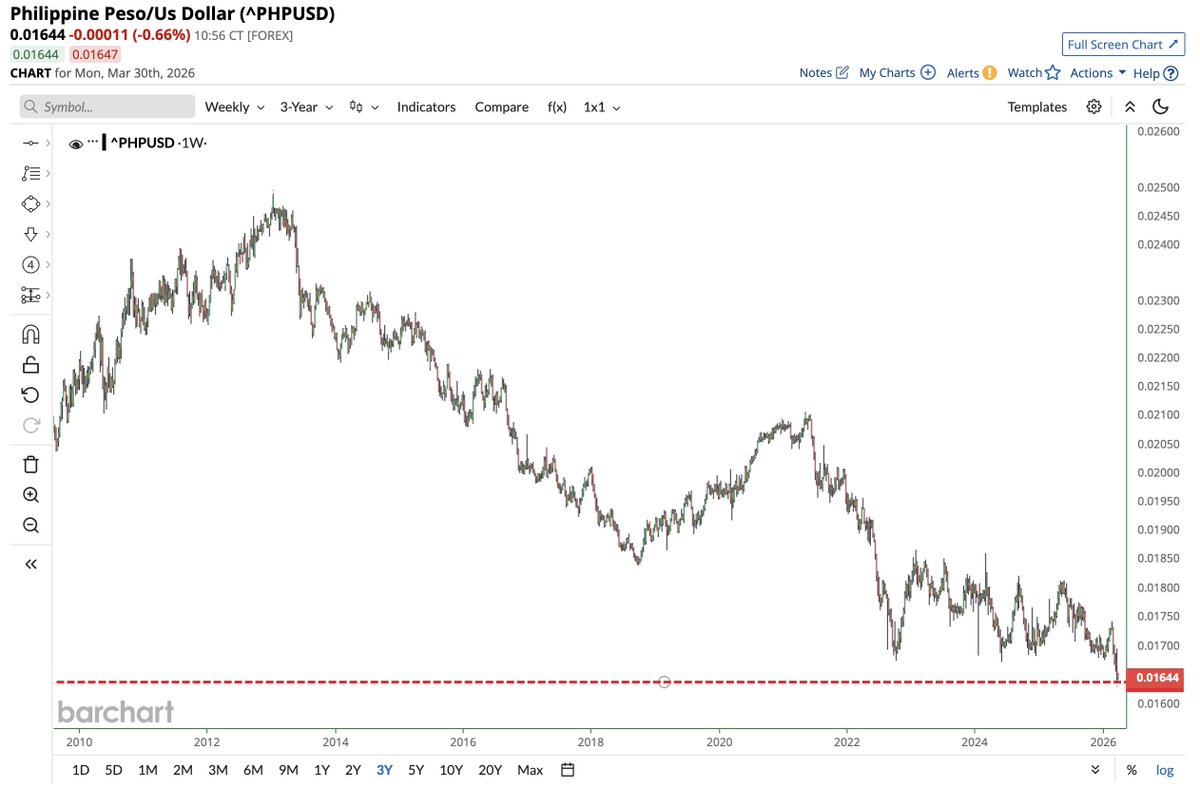
🇵🇭 The peso has been setting record lows every few days since the war began: March 19: ₱60.10 — first time past 60 March 23: ₱60.30 — new record March 27: ₱60.55 — new record March 30: new record today The drivers: oil import bill, surge in dollar demand, inflation expectations. BSP 2026 inflation forecast: 5.1% is already above the target ceiling. Pump prices have more than doubled since February 28. The Philippines declared a national energy emergency. The peso is now pricing in what that declaration meant.
English
0
0
2
365
Barchart
Barchart@Barchart·
BREAKING 🚨: Philippines Philippine Peso has plunged to an all-time low against the U.S. Dollar 📉📉
Barchart tweet media
English
47
223
1.1K
64.9K
Data Explained
Data Explained@dataexplain·
🇺🇸 Today: Golden Pass LNG, Sabine Pass, Texas — first production. The plant: a $10B joint venture. QatarEnergy owns 70%. ExxonMobil 30%. Capacity: 18 million tonnes per year. Also today: 🇶🇦 QatarEnergy's Ras Laffan — the world's largest LNG facility — remains offline. Hit by Iranian missiles. Offline for up to 5 years. $20B/year in lost revenue. Damaged capacity: 12.8 million tonnes per year. The same company. One plant bombed in Qatar. One plant is starting up in Texas. This is what an energy supply chain rebuild looks like in real time. Qatar lost LNG capacity to the war. Qatar's US investment starts producing the same week. The Iran war didn't just disrupt LNG. It may have just accelerated the geographic shift of where the world's gas comes from.
English
0
0
0
482
Data Explained
Data Explained@dataexplain·
🇪🇺 Germany is asking the EU to weaken its own methane emissions rules. The reason: the rules risk blocking the LNG imports Europe desperately needs. Here's the bind: 📋 EU Methane Regulation: requires LNG importers to verify low methane emissions across supply chains. Penalties kick in by 2030. 🇺🇸 Problem: US LNG — now 60%+ of EU supply — likely can't meet those standards. ⚡ Result: Uniper has already delayed signing new LNG contracts because of the regulatory uncertainty. 📊 European gas prices: up 60%+ since the war began 📦 Qatar LNG: offline for up to 5 years 🇳🇴 Norway: already at full capacity In 2022, Europe ditched Russian gas in favor of US LNG to reduce geopolitical dependence. In 2026, it's now considering rolling back its climate standards to keep that US LNG flowing. It traded one dependency for another. Now the new dependency is pressuring its own climate law.
English
0
1
0
239
Bloomberg
Bloomberg@business·
Germany warned the European Union’s rules to curb methane emissions from oil and gas imports risk impeding crucial LNG purchases just as the country seeks to diversify suppliers and cushion the Middle East war’s impact on energy prices bloomberg.com/news/articles/…
English
11
20
59
22.4K
Data Explained
Data Explained@dataexplain·
Oil at $102 is the tell. Every time the ceasefire sentiment briefly pushed Brent below $100 this month, it bounced back. Same pattern. Third time. The equity sell-off is pricing in what oil already knows: the structural disruptions—Qatar LNG offline 3-5 years, fertilizer planting window closing, Maersk inland surcharges live—don't reverse on diplomatic signals.
English
0
0
1
304
Bloomberg
Bloomberg@business·
A cluster of oil platforms off the California coast has begun selling crude for the first time in over a decade, shipping supplies to a Chevron refinery near Los Angeles bloomberg.com/news/articles/…
English
16
44
169
29.9K
Data Explained
Data Explained@dataexplain·
🏦 The IMF just published its full assessment of the Iran war's economic impact. Eight department heads. One document. Today. Their framework: "The shock is global, yet asymmetric." Who gets hurt most: ➡️ Energy importers more than exporters ➡️ Poorer countries more than richer ones ➡️ Thin buffers more than ample reserves The four transmission channels they identify: 🛢️ Energy: 25-30% of global oil, 20% of global LNG through Hormuz. 🚢 Supply chains: freight costs up, delivery times longer, food/fertilizer disrupted 📈 Inflation: food is 36% of consumption in low-income countries vs 9% in advanced economies. 💰 Finance: bond yields rising, credit spreads widening, EM currencies under pressure One detail buried in the blog: 🔬 The Gulf supplies a large share of the world's helium—used in semiconductors and medical imaging. 🔋 Indonesia produces ~50% of the world's nickel (used in EV batteries) but needs Gulf sulfur to process it. That supply is now disrupted. The Hormuz closure isn't just an oil-and-gas story. The IMF just confirmed it's a semiconductor, EV, and food-security story, too. Full WEO numbers: April 14.
English
0
1
3
396
IMF
IMF@IMFNews·
The economic shock from war in the Middle East is global yet uneven: energy importers face more exposure than exporters, poorer countries more than richer ones, and those with thin buffers more than those with ample reserves. Read our blog. imf.org/en/blogs/artic…
IMF tweet media
English
10
126
253
54.2K
Data Explained
Data Explained@dataexplain·
🇵🇭 Philippines: 51 days of fuel stockpile. Sounds like good news. The fine print tells a different story. Philippine oil firms told the Senate last week: Fuel supply is only guaranteed until May. Petron and Shell: end of May Caltex and Jetti: end of April "After that, we're into the abyss." — Senator Win Gatchalian, March 26 2026 What the Philippines is doing to extend the runway: 🇷🇺 Petron bought 2.48M barrels of Russian crude 🚨 First nation to declare a national energy emergency ⚡ Incentivizing electric public transport to cut fuel demand The structural problem: 📊 98% of Philippine oil imports historically from Middle East ⛽ LPG (cooking gas) reserves: just 29 days Brent is at $116 today. The war is in week 5. The 51-day headline is a buffer, not a solution.
English
0
0
1
148
Bloomberg
Bloomberg@business·
The Philippines said it increased its stockpile of petroleum products to 51 days, as the import-dependent nation searches the world for alternative suppliers while the war in Iran continues. bloomberg.com/news/articles/…
English
2
11
41
14.4K
Data Explained
Data Explained@dataexplain·
🇪🇹 Ethiopia just signed $13 billion in investment deals. $10 billion of that: a single Chinese firm, Ming Yang Smart Energy. The projects: renewable energy, hydrogen, and green ammonia. That last one matters more than it might seem. Green ammonia is a synthetic fertilizer's clean alternative. And Ethiopia gets 90%+ of its nitrogen fertilizer from the Gulf through a supply route now severely disrupted by the Iran war. The $10B China deal isn't just a clean energy investment. It's Ethiopia building a domestic fertilizer feedstock capacity at the exact moment Gulf ammonia exports have stopped. The Iran war is reshaping energy and food security strategies across the developing world in real time. Ethiopia's $13B investment week is one data point in that shift.
English
0
0
3
314
Africa Facts Zone
Africa Facts Zone@AfricaFactsZone·
Ethiopia has signed $13 billion worth of deals at a conference in Addis Ababa, Ethiopia. 800 foreign Investors and Businessmen attended the conference. A Chinese firm accounted for $10 billion with ​projects to build infrastructure in renewable ​energy, hydrogen, ⁠and ammonia.
Africa Facts Zone tweet mediaAfrica Facts Zone tweet media
English
18
38
284
9.6K
Data Explained
Data Explained@dataexplain·
The context behind this: 🇪🇺 Euro: $1.20 in late January → $1.15 today 📉 March drop: -2.5% vs USD — worst since July Why Europe is more exposed than the US: ⛽ Imports ~90% of its oil 🔵 Gas storage: 46 bcm entering refill season vs 77 bcm two years ago 📊 PMI: 50.5 in March — barely above contraction 📈 ECB import price forecast: -0.1% in 2025 → +4.3% in 2026 The euro was at its strongest in 5 years just 10 weeks ago. The Iran war erased that in a month.
English
0
0
0
108
Bloomberg
Bloomberg@business·
The euro is heading for its worst quarter since 2024 as war in the Middle East underscores Europe’s dependency on energy imports and rattles the region’s economic outlook bloomberg.com/news/articles/…
English
7
21
78
21.6K
Data Explained
Data Explained@dataexplain·
The one-year scorecard in numbers: 💰 Tariff revenue collected: +$187B in 2025 vs. 2024 (+196%) 👤 Average household cost: $1,500 in 2026 (Tax Foundation) 📉 Trade deficit: down 10 consecutive months 🏭 Manufacturing jobs: down 77,000 (Apr-Dec 2025) Who paid in 2025: businesses (80%) Who's expected to pay in 2026: consumers (80%) Per JPMorgan.
English
0
0
0
395
Data Explained retuiteado
Jack Prandelli
Jack Prandelli@jackprandelli·
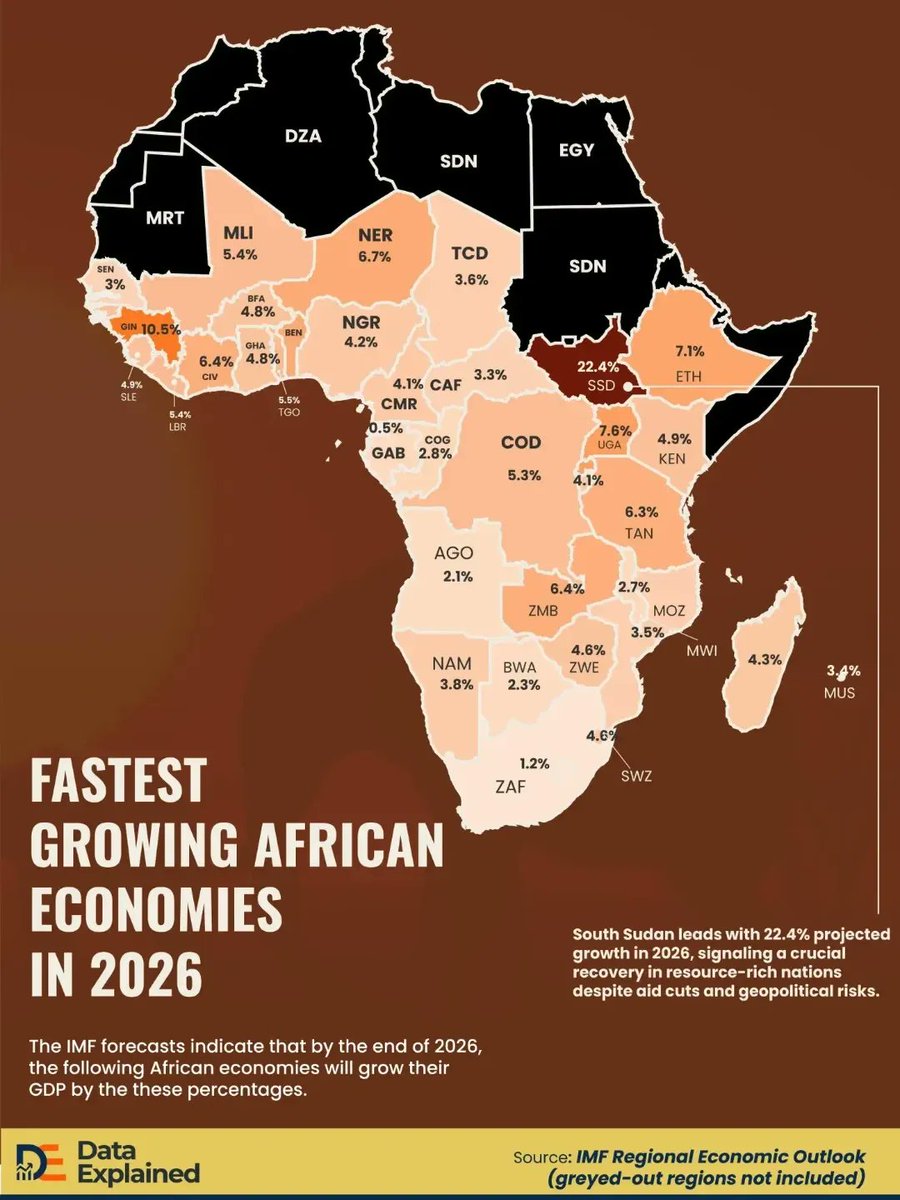
While the world watches the Gulf burn Africa is quietly becoming the fastest growing continent on earth 🇸🇸 South Sudan 22.4% 🔥 🇬🇳 Guinea 10.5% 🇳🇪 Niger 6.7% 🇿🇲 Zambia 6.4% 🇪🇹 Ethiopia 7.1% 🇺🇬 Uganda 7.6% Notice something? The fastest growers are almost all resource rich nations. Oil, Gold, Copper, Critical minerals. With Gulf supply disrupted and commodity prices exploding every barrel, every ounce, every tonne from Africa is suddenly worth a lot more. The Gulf crisis just handed African producers a windfall they didn't ask for.
Jack Prandelli tweet media
English
9
48
97
5K
Data Explained
Data Explained@dataexplain·
The data context here: February consumer inflation expectations (ECB survey, pre-war): 2.5% ECB's own Q2 2026 inflation projection (post-war): 3.1% That 0.6 pp gap reflects the war's inflation repricing in the official ECB forecasts. What makes this particularly significant: The February survey captured essentially zero war impact — 97% of responses came in before February 28. March is the first full post-war consumer expectations reading. The ECB doesn't publish it until April 28. When it does, the number will likely confirm what the projections already show.
English
0
0
0
48
Bloomberg
Bloomberg@business·
Inflation expectations of euro-area consumers jumped in March — a warning sign for the ECB as it assesses the danger of a renewed price spike due to the Iran war bloomberg.com/news/articles/…
English
7
8
21
11.5K
Data Explained
Data Explained@dataexplain·
🚗 The Iran war just stranded a $19 billion industry most people have never heard of. Japan and South Korea's used-car export trade. The numbers: 🇯🇵 Japan: UAE is its single largest used-car market — 224,000 units/year 🇰🇷 South Korea: 1 in 3 exported used cars goes to the Middle East 🚢 Incheon port today: 70%+ of cars stuck in storage 📅 Timing: peak season is March-September. The war started on February 28. What's happening on the ground: ⚠️ Shipping costs: more than doubled ⚠️ War risk premiums: $5,000 deposit per car demanded by some carriers ⚠️ Ships diverting to Pakistan, China, or turning back to Japan ⚠️ ~50 luxury vehicles, including Lamborghinis and Rolls-Royces, are stranded in Sri Lanka, waiting for buyers in Dubai who can't receive them The Strait of Hormuz doesn't just carry oil. It carries the used-car economy of two of Asia's largest exporters, at the worst possible time of year. This is what a supply chain cascade looks like when it reaches industries nobody was watching.
English
0
0
0
150
Reuters Business
Reuters Business@ReutersBiz·
Japan and South Korea's combined $19 billion used-car export industry is in chaos after Iran shut the Strait of Hormuz, leaving shipments stranded at sea, diverted to unexpected ports or recalled home reut.rs/4bOMr0k
English
3
12
45
24.8K
Data Explained
Data Explained@dataexplain·
🇳🇬 Nigeria is one of Africa's largest oil producers. It has just built the continent's biggest refinery. Fuel prices just hit an all-time record. Here's the paradox buried in the data: Dangote Refinery (650,000 bpd) needs 13-15 crude cargoes per month to run. It gets 5 from Nigerian sources. The other 8-10 are imported at global market prices. ⛽ Fuel price before Iran war: ₦830/litre ⛽ Fuel price today: ₦1,400/litre 📈 Wholesale price: up 61% in March alone 📉 Nigeria's 2026 oil budget benchmark: $64.85/barrel 📈 Brent crude today: $116/barrel Making it worse: 🚫 No strategic fuel reserve 🚫 Subsidies removed in 2023, prices hit consumers directly The Iran war didn't just hurt oil importers. It exposed how oil producers can still be energy insecure when their refining infrastructure depends on imported crude priced in a market they don't control. Meanwhile, South Africa, Ghana, and Kenya are all now seeking emergency supply contracts from Dangote, turning Africa's largest refinery into the continent's emergency energy backstop.
English
0
0
0
65
Reuters
Reuters@Reuters·
Fuel prices in oil-producing Nigeria have reached record-high levels, industry figures show, as maximum output from the giant Dangote Petroleum Refinery has failed to shield the country from the energy market impact of war in the Middle East reut.rs/4tgGKzm
English
10
13
47
18K
Data Explained
Data Explained@dataexplain·
🌾 The Iran war's next victim: the 2026 harvest. A thread on the fertilizer shock; nobody is connecting to the oil shock. The Strait of Hormuz doesn't just carry oil. It carries 30% of the global urea trade. 25-35% of globally traded ammonia. 40%+ of the world's sulfur. All of it — effectively stopped. 📈 Urea price Feb 27: $482/ton 📈 Urea price mid-March: $720/ton 📈 That's +50% in under 2 weeks 🇮🇳 India: buys 40%+ of urea from the Gulf 3 urea plants already cutting output Kharif planting season: June-July Crops at risk: rice, corn, cotton, oilseeds 🇺🇸 US: 2 million ton urea shortfall projected this spring 🇪🇹 Ethiopia: 90%+ of nitrogen fertilizer from the Gulf—"the fertilizer isn't there" 🇦🇺 Australia: current stocks run out by mid-April The oil shock hits your gas tank in days. The fertilizer shock hits your grocery bill in months. And there are no strategic fertilizer reserves. No bypass pipelines for ammonia. No quick alternative suppliers. If Hormuz stays closed through planting season, the food price shock of 2026-2027 has already begun.
English
0
0
0
71
Reuters Business
Reuters Business@ReutersBiz·
Indian farmers fear a fertilizer shortage as Middle East conflict disrupts imports from Gulf nations like Qatar and Saudi Arabia, threatening supplies of urea ahead of the June-July planting season for rice, corn, cotton and oilseeds
English
3
8
25
10.5K
CNN International
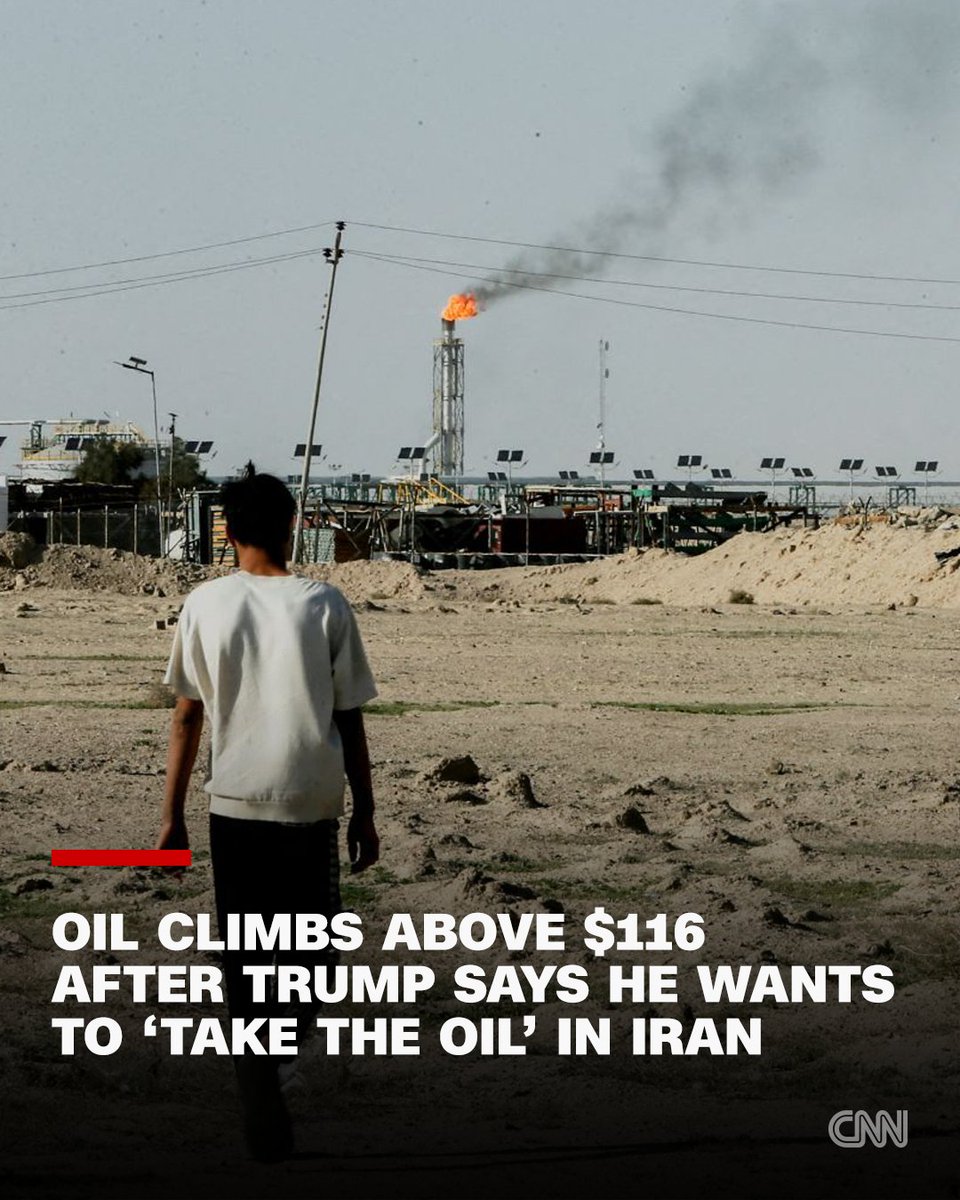
Oil prices rose Monday, with Brent crude crossing $116 a barrel, after comments by President Donald Trump sparked fears that the Middle East conflict may escalate further. cnn.it/48albYX
CNN International tweet media
English
29
26
85
17.6K
Data Explained
Data Explained@dataexplain·
🛢️ Brent crude: $116 this morning. Up 55% in March alone. On track for the steepest monthly rise on record. But here's the number that matters more: 📍 Brent (paper price): +36% since Feb 27 📍 Dubai crude (physical delivery): +76% since Feb 27 The gap between paper and physical is the widest in years. It means the real supply shock is worse than the headline price shows. Brent is still being held down by diplomatic "jawboning." Physical buyers in Asia are already paying the real price. And Goldman Sachs has a warning: If Hormuz stays at 5% capacity for 10 weeks: 💰 Brent is likely to exceed its 2008 record —$147/barrel. Week 5 of the war begins today. Pimco and JPMorgan both warned this morning: Markets are still underestimating the downside.
English
0
0
0
180
Data Explained
Data Explained@dataexplain·
Higher rates should help European banks. That's the paradox here. Banks have gained every quarter since 2022 partly because of rising rates. Why are they down 8.7% now? Because the Iran war isn't a rate story. It's a stagflation story. 📈 Rate hike bets rising → helps margins 📉 Recession risk rising → hurts loan books 📉 Governments absorbing oil shock → sovereign balance sheet stress 📉 Energy-exposed SME defaults → credit deterioration risk When inflation and recession fears arrive together, the rate tailwind that helped banks for 3 years becomes a headwind. That's what 8.7% down this year is pricing in.
English
0
0
0
79
Data Explained retuiteado
Nathan 🔎
Nathan 🔎@NathanpmYoung·
I don't think colonialism explains why Africa has such low growth. Asia had colonialism too.
English
1.4K
660
9.1K
1.6M