

Pudoi Kaisar
50 posts

Pudoi Kaisar
@debankless
building onchain identity on avalanche ◽
Se unió Temmuz 2024
126 Siguiendo17 Seguidores
Pudoi Kaisar retuiteado

Web3 gaming… but actually fun.
No complex setup.
No boring mechanics.
Just run 🏃♂️
Compete on-chain
Win real rewards 💰
Built on Avalanche.
Welcome to the next level.
#Summerdash
English
Nice one @Spark_coded team for actively filtering out bots and extending the prechecker to ensure a fair, transparent distribution for real community members!
Spark@Spark_coded
The first blockchain-friendly personal agent OS is here, and only 2 days left til our TGE at Base! Since sharing the post the other day for the airdrop to leave no one behind, many people submitted their 0x addresses. However, many Sybils came, so we decided to extend the prechecker for 24 hours. Make sure to fill this out for eligibility: checker.sparkswarm.ai (everyone should) 1. We are doing this to filter out as many bots and to share the drop with more real accounts instead. 2. We also asked for the Telegram username (optional). If you join our community, add your username too for extra drops. 3. Those who filled the previous prechecker already will get some extra bonus from filling this and adding their telegrams. (Old entries will be kept, including idearalph posts). Also, slightly higher bonuses will be given for being early. 4. You can still drop wallets underneath this post too btw and then submit those to prechecker, if you've never submitted them before. P.S. We're gonna be giving more multipliers again in these 24 hours for those who QRT this post, and let people know about the final opportunity to enter the drop. With a multiplier of up to 100X, depending on your reach. Spark, as a personal self-improving agent, is now ready to use. You can get it from our bio. It's open source.
English
@Spark_coded Hope there still a space for me
0xb64639273a50b9a0f247101682972755d2653bba
English

The first blockchain-friendly personal agent OS is here, and only 2 days left til our TGE at Base!
Since sharing the post the other day for the airdrop to leave no one behind, many people submitted their 0x addresses.
However, many Sybils came, so we decided to extend the prechecker for 24 hours.
Make sure to fill this out for eligibility:
checker.sparkswarm.ai
(everyone should)
1. We are doing this to filter out as many bots and to share the drop with more real accounts instead.
2. We also asked for the Telegram username (optional). If you join our community, add your username too for extra drops.
3. Those who filled the previous prechecker already will get some extra bonus from filling this and adding their telegrams. (Old entries will be kept, including idearalph posts). Also, slightly higher bonuses will be given for being early.
4. You can still drop wallets underneath this post too btw and then submit those to prechecker, if you've never submitted them before.
P.S. We're gonna be giving more multipliers again in these 24 hours for those who QRT this post, and let people know about the final opportunity to enter the drop. With a multiplier of up to 100X, depending on your reach.
Spark, as a personal self-improving agent, is now ready to use. You can get it from our bio.
It's open source.
English
How to participate:
Connect your wallet
Play the game
Drop your review or feedback in the replies
Play now: summerdash.xyz
#AVAX #SummerDash
English
How to participate:
Connect your wallet
Play the game
Drop your review or feedback in the replies
Play now: summerdash.xyz
#AVAX #SummerDash

English
@Thesummerdash Love the game flow although it looks tiny in my device
English
Pudoi Kaisar retuiteado
One run turns into ten… then you’re chasing your own high score like it owes you money 😮🔥
Summer Dash is dangerously addictive 🏃♂️💨
English
Pudoi Kaisar retuiteado

..:: 🚀 The $CEDO Presale Application Is Now Live!
We’re excited to announce that the $CEDO presale application is officially open to everyone.
🗓️ Application Window: Now until May 17th 15:00 UTC
Secure your spot and position yourself early in the Cedomis ecosystem.
🔐 Apply now: presale.cedomis.xyz
Throughout the presale registration period, we’ll be sharing exclusive insights, participant benefits, and strategic ways to maximize the hidden advantages available to early supporters.
Stay locked🔐 in, the journey is just getting started ::..

English
@Altcoin_daddy @iEx_ec @edenbdn @martinlecl @iExecDev Most crypto projects treat privacy as an afterthought or a gimmick. Here, the three winners all hit on the same point: if data is public by default, you can’t build real-world finance, trading, or even prediction markets on-chain without trust issues or MEV leaks.
English
Pudoi Kaisar retuiteado

How the Winners of the @iEx_ec Vibe Coding Challenge Used Nox Protocol
Privacy in crypto is often talked about as a feature. But in practice, it is much more than that. It changes how products are designed, how users behave, and what kinds of applications can exist on-chain in the first place.That is what made the iExec Vibe Coding Challenge interesting.All three winning projects used iExec Nox, but they did not use it in the same way. They each took the same privacy infrastructure and applied it to a different real-world problem:
Diam by @BangDropID used Nox to build a private OTC trading experience
RWA OS by @0xSelmgx used Nox to build confidential real-world asset operations
DarkOdds by @winsznx used Nox to build a privacy-first prediction market
What stands out is that none of these teams used privacy as a gimmick. They used it to improve how the product actually works.
First, what does Nox Protocol do?
In simple terms, Nox helps developers work with encrypted values on-chain.Instead of sending sensitive data like balances, amounts, or positions in plain text, an app can turn them into confidential handles. The app can then perform certain operations on those encrypted values without revealing them publicly.That matters because most blockchain apps are transparent by default. Anyone can often inspect a wallet, a trade size, or a user’s position. Nox changes that model. It lets builders keep sensitive information private while still using on-chain logic.
That is the foundation all three winning projects built on.
1. Diam: Making OTC trading private
Diam is a confidential OTC trading protocol. OTC stands for over-the-counter trading, which usually means two parties agree on a trade directly instead of going through a public exchange.This is a good use case for privacy because large trades on public markets reveal too much. If someone wants to trade a large position, other traders and bots can react to that information. That can lead to front-running, slippage, and worse pricing.Diam solves this by using Nox to encrypt key trade data before it reaches the chain. In the repo,
the encrypted flow is used for:
sell amounts
minimum acceptable buy amounts
sealed bids in RFQ mode
So while people can see that a trade exists, they cannot see the actual amount or price terms behind it.
What made Diam especially strong is that it did not stop at hiding data. It used Nox as part of the market logic itself. In direct OTC mode, a taker can submit a bid against a maker’s hidden minimum. The contract checks whether that bid is sufficient using confidential logic. If the bid is too low, the system can settle in a way that does not publicly reveal that rejection. That is an important privacy improvement, because normal transaction failure often leaks information.
Diam also adds RFQ mode, where multiple takers can submit sealed bids. The project then uses confidential comparisons to compute a second-price outcome. That brings private price discovery into the protocol, which is much more interesting than just storing hidden balances.The simplest way to describe Diam is this: it used Nox to make trading quieter, fairer, and harder to exploit.
2. RWA OS: Bringing privacy into real-world asset management
RWA OS took a very different path,Instead of focusing on trading, it focused on real-world assets, where privacy is often tied to ownership, compliance, and reporting. In that world, the challenge is not only to hide balances. It is to control who can see what, when they can see it, and how that information is recorded.
RWA OS uses Nox-based confidential token primitives to keep asset amounts private, but the real innovation is the system built around those private amounts.
The project includes flows for:
confidential issuance
confidential transfers
disclosure controls
compliance passports
audit anchoring
settlement vaults
This means the app is not simply saying, “here is a private token.” It is saying, “here is a private asset system with governance and compliance structure around it.”That is what made RWA OS stand out.
A transfer in this system is not just a balance update. It can require disclosure permissions and can be tied to a compliance record. The team also built a model where public settlement assets can be locked and turned into confidential representations. That creates a bridge between regular token flows and privacy-preserving asset operations. In simple language, RWA OS used Nox to answer a more enterprise-style question: how can sensitive asset activity stay private without losing accountability?,That is a strong and practical use of privacy infrastructure.
3. DarkOdds: Private betting with real payout logic
DarkOdds may be the clearest example of using Nox not just for privacy, but for actual product mechanics.
Prediction markets sound simple: users place bets, the market resolves, and winners get paid. But if you want privacy, the problem gets harder very quickly.
If bet sizes are public, users lose privacy. But if everything stays hidden, the protocol still needs to calculate payouts correctly. That means the app needs private computation, not just private storage.
DarkOdds uses Nox to keep individual bet amounts confidential. Users can place bets without revealing their position sizes to the public. But the project goes further than that. It uses a hybrid model where:
individual bets remain private,market-wide pool totals can be revealed in a controlled way,payouts are computed with confidential arithmetic and winners can decrypt their own payout privately.
That balance is important. A prediction market still needs readable odds and usable market behavior, but users should not have to expose their exact stake to everyone. What made DarkOdds stand out is that it solved the hard part: payout logic.
The project uses Nox operations to compute proportional payouts after market resolution. That means privacy is preserved not only when the bet is placed, but also when winnings are calculated and claimed. It also adds selective-disclosure style claim verification, which gives users a way to prove a payout if they need to, without making everything public by default. In short, DarkOdds used Nox to make prediction markets private without breaking the economics of how those markets work.
What these projects show about Nox
Looking at all three winners together, one thing becomes clear: Nox is not just a tool for hiding balances.
It can be used to build:
private trading systems
confidential asset infrastructure
privacy-first market mechanics
That is the real lesson from these repos.
Diam shows that Nox can support confidential deal-making.
RWA OS shows that Nox can support private asset operations with compliance layers.
DarkOdds shows that Nox can support private user positions while still enabling payout logic on-chain.
Each team found a different privacy problem and turned Nox into a real product feature.
The best thing about these three winners is that they make privacy feel useful.
They are not abstract demos. They are product ideas shaped by the reality that users do not always want their financial behavior visible to everyone. In each case, Nox was used to improve how the application behaves, not just how it looks on a technical diagram.
Diam made private trading practical.
RWA OS made confidential asset management structured and accountable.
DarkOdds made private prediction markets more believable as real products.
Together, they show that confidential on-chain applications are moving from concept to execution.
ethereum:0x607f4c5bb672230e8672085532f7e901544a7375


English
@Altcoin_daddy @GholongHQ @Chiliz Love the “living fan economy” angle. Most projects stop at mint. You’re building past it.
Watching this closely 👀
English
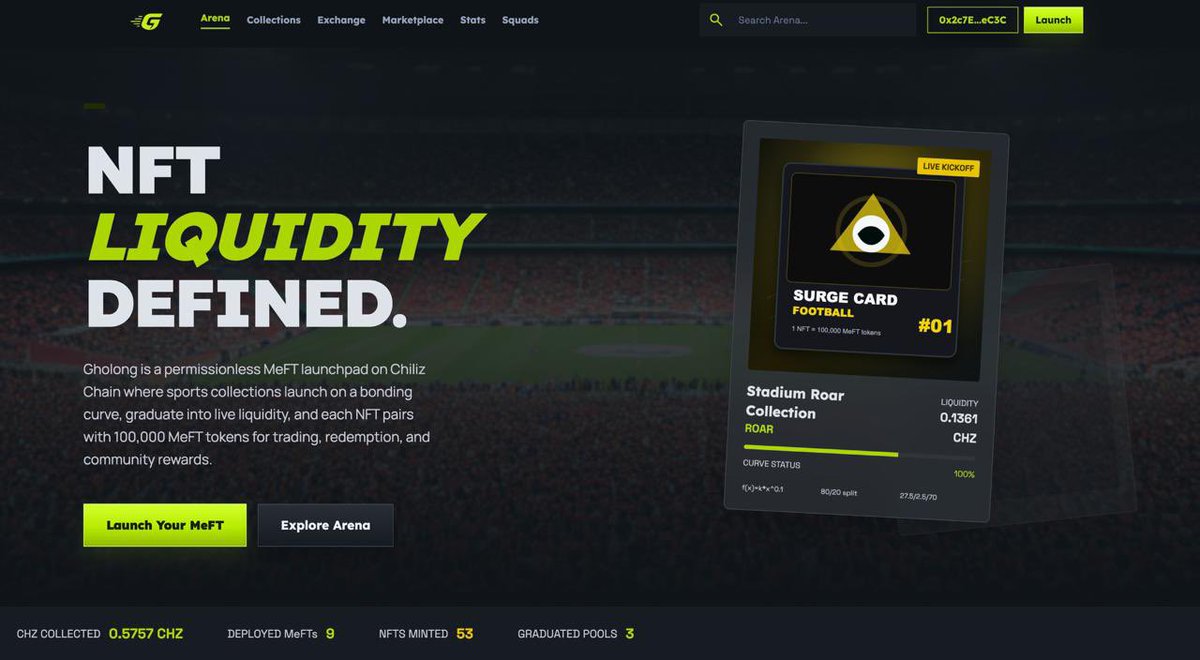
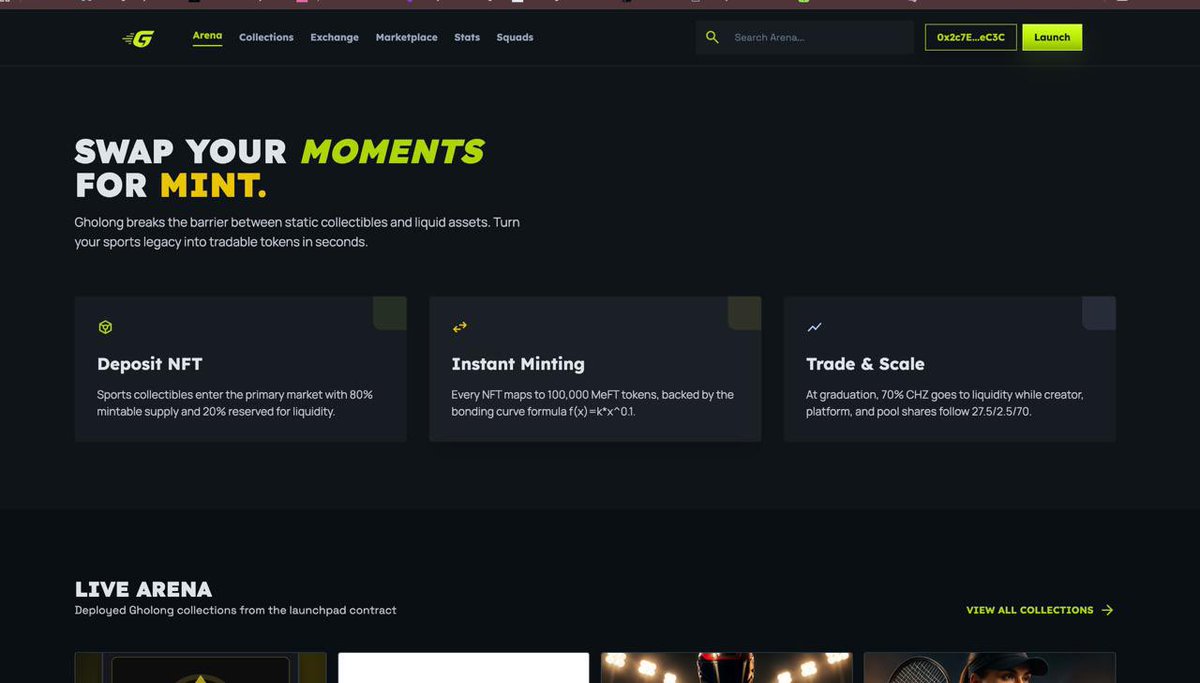
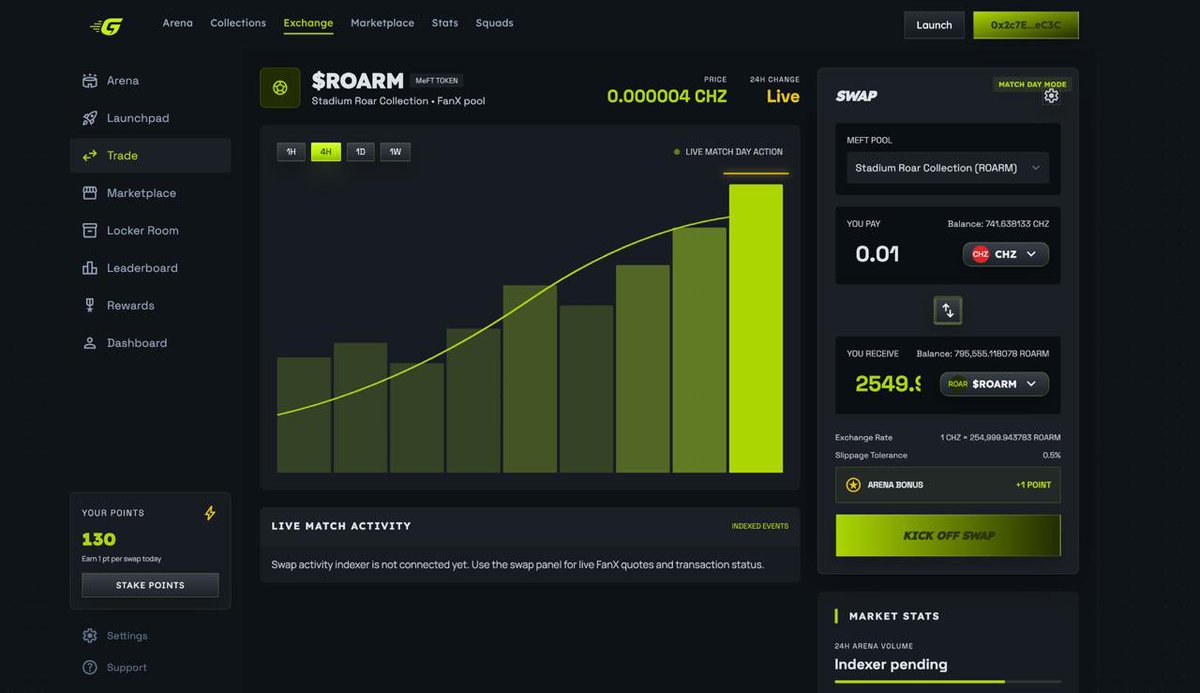
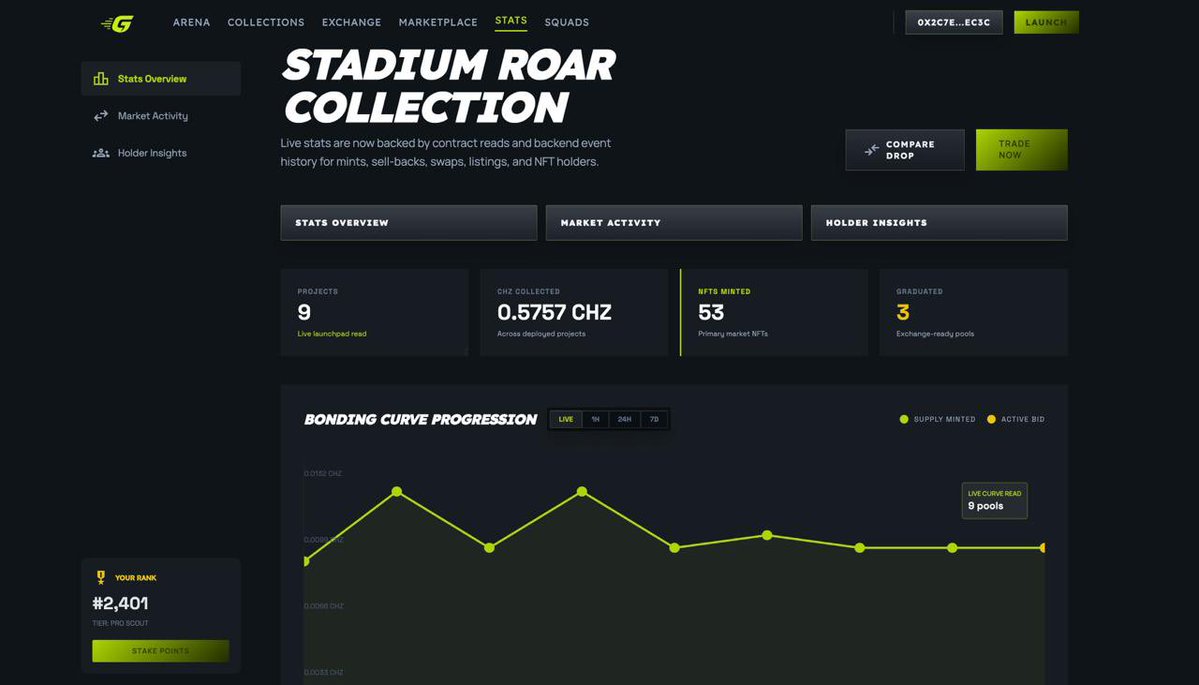
I’m Altcoin-daddy, a Web3 developer, and I’ve been building @GholongHQ on @Chiliz Chain. Gholong was born from a simple frustration: most sports NFTs feel like they stop at mint. A collection launches, people buy in, a little trading happens, and then the experience starts to lose meaning.
I wanted to build something more complete.
Gholong is a sports-focused Web3 platform designed to give digital collectibles a fuller lifecycle, from launch to liquidity, trading, rewards, and ongoing fan utility.
The idea is to create a system where collections don’t just exist as static assets, but become part of a living fan economy. Creators can launch, communities can participate, holders can keep getting value, and the collectible can continue to matter beyond the first sale.
That’s the vision behind Gholong:
making sports collectibles more alive, more useful, and more connected to real participation in Web3.
Still building, still refining, but the direction is clear and special appreciation to @peleroberts and @altugx for their support during the planning phase. $CHZ
English
@Altcoin_daddy @iEx_ec @edenbdn @iExecDev @martinlecl Privacy that doesn’t fight you. NoxPay just got way easier to actually use.
English
Pudoi Kaisar retuiteado
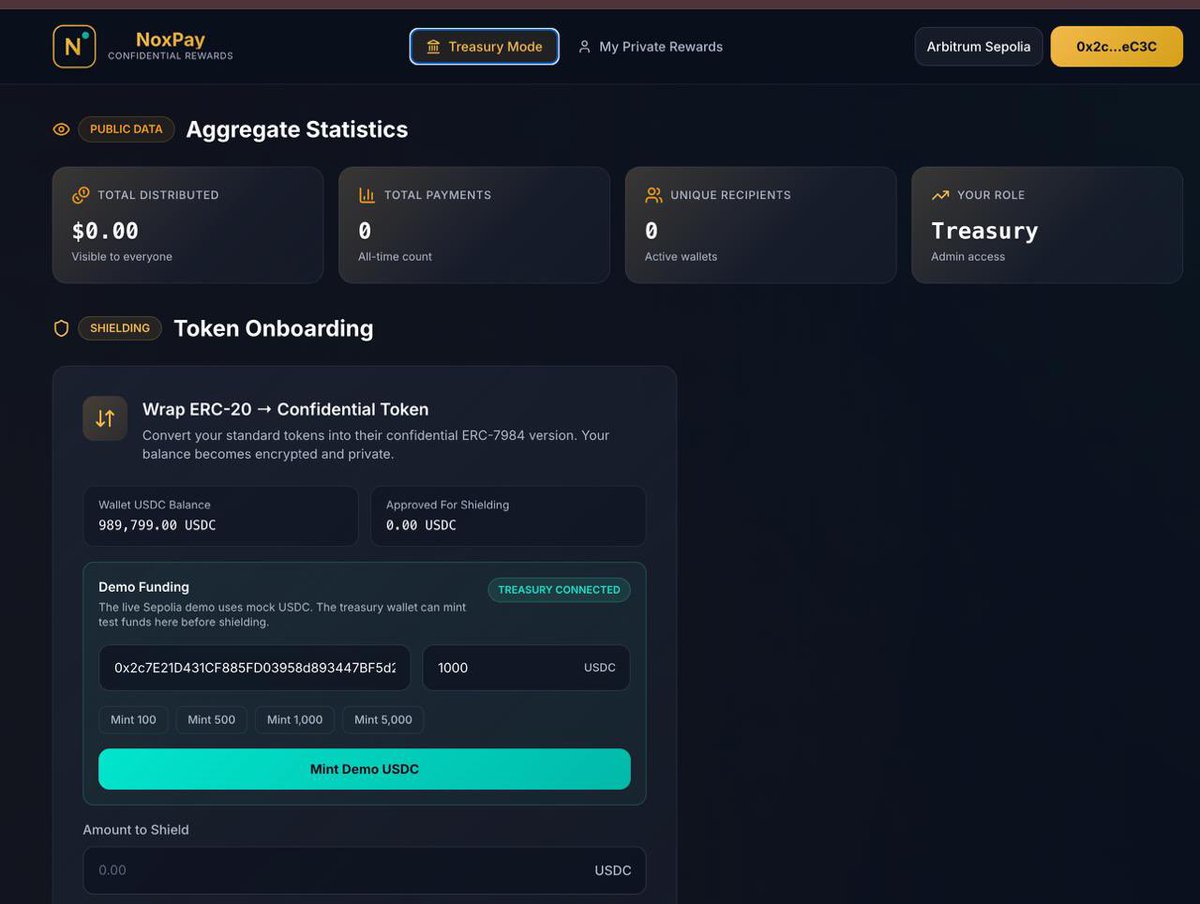
Privacy in #Web3 is not only about encryption. It’s also about whether people can actually use the product without getting confused.I’ve been improving #NoxPay, a private payroll and rewards app built with @iEx_ec Nox Protocol.
In the latest update, I added:
a public demo faucet with limits
one-click “claim + prefill shield” onboarding ,role-based onboarding for treasury, recipient, and auditor flows
clearer treasury readiness checks before payouts , better recipient dashboard clarity,hidden claimable balance summary so private funds can exist without exposing the amount
transaction and treasury payout history
better selective disclosure management
stronger recovery messages for shield, unshield, treasury, and disclosure errors
I made these changes because confidential apps need more than smart contracts. They need good UX.
When users are dealing with encrypted balances, decryption, selective disclosure, and gateway timing, the app has to clearly show what is happening, what is still private, and what to do next.
That’s the direction I’m taking with NoxPay: making private payroll, rewards, and treasury flows easier to test, easier to understand, and more practical onchain. $RLC

English
Pudoi Kaisar retuiteado
When most people think about smart contracts, they think about apps that run on the blockchain without needing a middleman.
That is true.
But there is one important detail many people do not notice at first:
most smart contracts are public.
This means the logic is visible, and in many cases, the data connected to that contract can also be seen by anyone. That openness is one of the reasons blockchain is trusted. People like the fact that transactions can be verified publicly.
But there is also a downside.
When money, balances, payments, or user positions are involved, full transparency can feel like too much. Most people do not want their financial activity to be easy for strangers to track online. Businesses do not want competitors watching every move. Regular users do not want every balance and payment exposed just because they used a blockchain app.
This is where the difference between public and confidential smart contracts becomes important. A public smart contract works out in the open. If you interact with it, a lot of that activity can be traced and inspected. This is great for transparency, but not always great for privacy.
A confidential smart contract is different. It is built to let an app use sensitive data without exposing that raw data on-chain. The contract can still do its job, but the private part stays protected.
That is the simple idea.
So instead of asking users to choose between using DeFi and keeping their financial activity private, confidential smart contracts try to make both possible at the same time.
This matters because many real-world use cases need privacy.Think about private salaries, private payments, hidden wallet balances, or DeFi positions that are not visible to everyone. These are not strange use cases. They are normal situations where people want the benefits of blockchain without losing basic privacy.
That is one reason I find @iEx_ec Nox interesting. It is built around the idea that developers should be able to create blockchain apps that protect sensitive data while still working on-chain. For me, that makes confidential smart contracts feel less like a niche idea and more like an important next step for Web3.
As blockchain grows, more users and businesses will come in. And when they do, privacy will matter more, not less.
Public smart contracts are powerful.
But confidential smart contracts may be what helps Web3 feel more usable for everyday people.

English
Pudoi Kaisar retuiteado
Most DeFi apps today have one big
problem they are too public.
Your wallet activity, balances, deposits, withdrawals, and positions can often be tracked by anyone.That works for transparency. It does not always work for real privacy.
That is why cVault caught my attention.
It is a built with @iEx_ec Nox that shows a different idea,what if a vault could still work on-chain, but your sensitive financial data was not exposed to everyone?
The cVault page describes itself as a:
“Confidential vault” with “Institutional-grade privacy for on-chain vaults”
And it highlights 3 key ideas:
encrypted balances
selective disclosure
cERC-7540 async
To understand why this matters, start with the problem.
In a normal public vault:
people may track your balance
people may see when you deposit
people may see when you exit
people may follow your strategy
That is fine for open systems.
It is not ideal for users, funds, or businesses.
cVault is showing a different model:
the vault stays on-chain,
but the sensitive parts are treated as confidential.
That is the real shift.
Not leave DeFi.
Not hide everything.
But use DeFi without exposing more than necessary.
This is where Nox Protocol comes in.
Nox is iExec’s privacy layer for confidential smart contracts.
cvault.demo.noxprotocol.io
The basic idea is:
smart contracts can work with protected data,while the raw plaintext is not exposed on-chain. So when cVault says encrypted balances, that is a big deal.
In normal #DeFi, balances are often easy to inspect.
With Nox, the goal is that balance-related data can stay protected instead of being visible in the usual public way.
That changes the user experience completely.Then there is selective disclosure.This is one of the most important privacy ideas in Web3.
Privacy does not always mean “nobody sees anything.”
Sometimes it means:
the public cannot see it,
but the right person can.
For example:
A user may want their vault balance hidden from everyone else,
but still be able to show it to:
an auditor
a compliance team
a business partner
an approved institution
That is much more practical than total secrecy or total openness.Nox makes this possible because it is not just about storing data privately. It is about
confidential computation.That means the app can still do useful financial logic with protected data,instead of forcing
everything into public view just to make the contract work.
cVault also mentions cERC-7540 async.
That matters because ERC-7540 is about asynchronous vaults.instead of
everything happening instantly in one step,vault actions can follow a request-and-claim flow.
Why is that useful?
Because some financial systems are not instant,Some vaults need time for:
processing,settlement,valuation and
off-chain coordination,So async vaults fit more realistic financial workflows.Put that together and cVault becomes more interesting
It is not just “a private app.”
It looks like a vault demo combining:
on-chain vault design,async vault flows,
confidential balances, and controlled data sharing. Nox-powered privacy
This is why I think cVault matters.
It challenges the old assumption that DeFi must always mean full public exposure.Instead, it asks ,Can users get the benefits of on-chain finance
without giving up normal financial privacy? ,And honestly, that is the right question.Because real users, businesses, and institutions will not want to move serious capital on-chain if every important detail becomes public by default.
Privacy is not a luxury.
It is part of usable finance.
My takeaway,cVault is a simple but powerful example of what Nox is trying to unlock.Not invisible finance and not shady finance.Just smarter on-chain finance,where privacy is built into the product.
#iExec #NoxProtocol #DeFi #Privacy #Web3 $RLC

English
@Altcoin_daddy @iEx_ec @edenbdn @martinlecl @iExecDev You keep your whole workflow same tools, same language but you unlock privacy where it actually matters. No context switching to some obscure stack.
Privacy as a feature, not a new language. That's what I like.
English
Pudoi Kaisar retuiteado
I’m currently building #NoxPay with @iEx_ec Nox Protocol and one thing I find interesting is how it fits into a normal Solidity workflow. You’re not leaving Solidity behind. You’re not learning a totally new way to build. You still write smart contracts, but now you can add privacy to sensitive parts of your app.
For what I’m building, that matters a lot.
Some user data should not be public on-chain.With Nox, the idea is simple:
the sensitive input gets encrypted first, the contract works with a handle, and the private computation happens without exposing the raw data on-chain.
That makes it easier to think about building things like:
private balances
private payments
confidential user actions
DeFi apps with hidden sensitive data
What I like as a builder is that it still feels familiar:
Solidity for contracts
JS SDK for encryption/decryption
standard wallets for users
privacy added without changing everything ,I’ll be sharing what I’m building, what I learn, and the parts that are easy or confusing as I go.
If you’re also building with Nox or looking for ideas, feel free to reach out.
Let’s build in public. $RLC
English
@Altcoin_daddy @iEx_ec @martinlecl @iExecDev @edenbdn With all the features you listed it's already interesting can't wait to get my hands on it
English
The interesting thing about @iEx_ec Nox Protocol is not just privacy. It is that when developers build with it, the design of Web3 apps starts to change.
In a normal Web3 app, if you pay 5 contributors, anyone can usually track:
who got paid
how much they got
when they got paid
That is fine for some cases, but not for all.
With #Nox, a developer can build the same payment flow in a different way.
Example:
A DAO pays 5 contributors.
The payments happen on-chain.
But the exact amount each person received stays confidential.
Another example is payroll.
In a normal on-chain payroll system, everyone could inspect salary payments.
With Nox, a team could run payroll on-chain while keeping each worker’s pay private. Only the worker, or an approved viewer, can decrypt it.
Another good example is treasury management.
A protocol may want to move funds, assign rewards, or manage internal balances without exposing every sensitive number to the public in real time. Nox makes that kind of design more possible.
This also changes the frontend.
Example:
Instead of showing : 5,701 USDC
the app may first show: •••• USDC
or Encrypted balance
Then the user clicks: Decrypt Balance
Only after authorization does the app reveal the real amount. So the UI is no longer just displaying blockchain data.
It is managing access to private data.
Another example is selective disclosure.
A user may want their balance to stay private from the public, but still allow an auditor, employer, or compliance partner to view it for a limited time.
That is very different from public-by-default crypto apps.
So when developers build with Nox,they are not only changing what the smart contract does.
They are changing:
who can see what
when they can see it
how private data is revealed
how long decrypted data should remain visible
That is why I think Nox is interesting.
It gives developers a way to build apps for cases where full transparency is too much, but off-chain private systems are not ideal either.
Examples of apps this could improve:
private payroll
private contributor rewards
confidential treasury dashboards
private grants
selective audit tools
confidential DeFi products
So the real shift is this:
When developers build with Nox, they are not just adding privacy.They are building a different kind of #Web3 app, one where confidentiality becomes part of the product itself. $RLC
English