Florian Fesseler

1.2K posts

Florian Fesseler

Florian Fesseler

@ffesseler

CTO @ https://t.co/hdtipl0A0t

Paris Se unió Ocak 2011
370 Siguiendo170 Seguidores
Florian Fesseler
Florian Fesseler@ffesseler·
@matter Hi, my inbox feed hasn't refreshed in a few days (on both the mobile app and the web interface). Is there a known issue with this feature?
English
1
0
1
37
Florian Fesseler
Florian Fesseler@ffesseler·
@0xSero @moskstraum21745 Another thing that works great, especially when you’re starting from scratch, is asking to have it explained in increasing levels of complexity
English
0
0
2
76
0xSero
0xSero@0xSero·
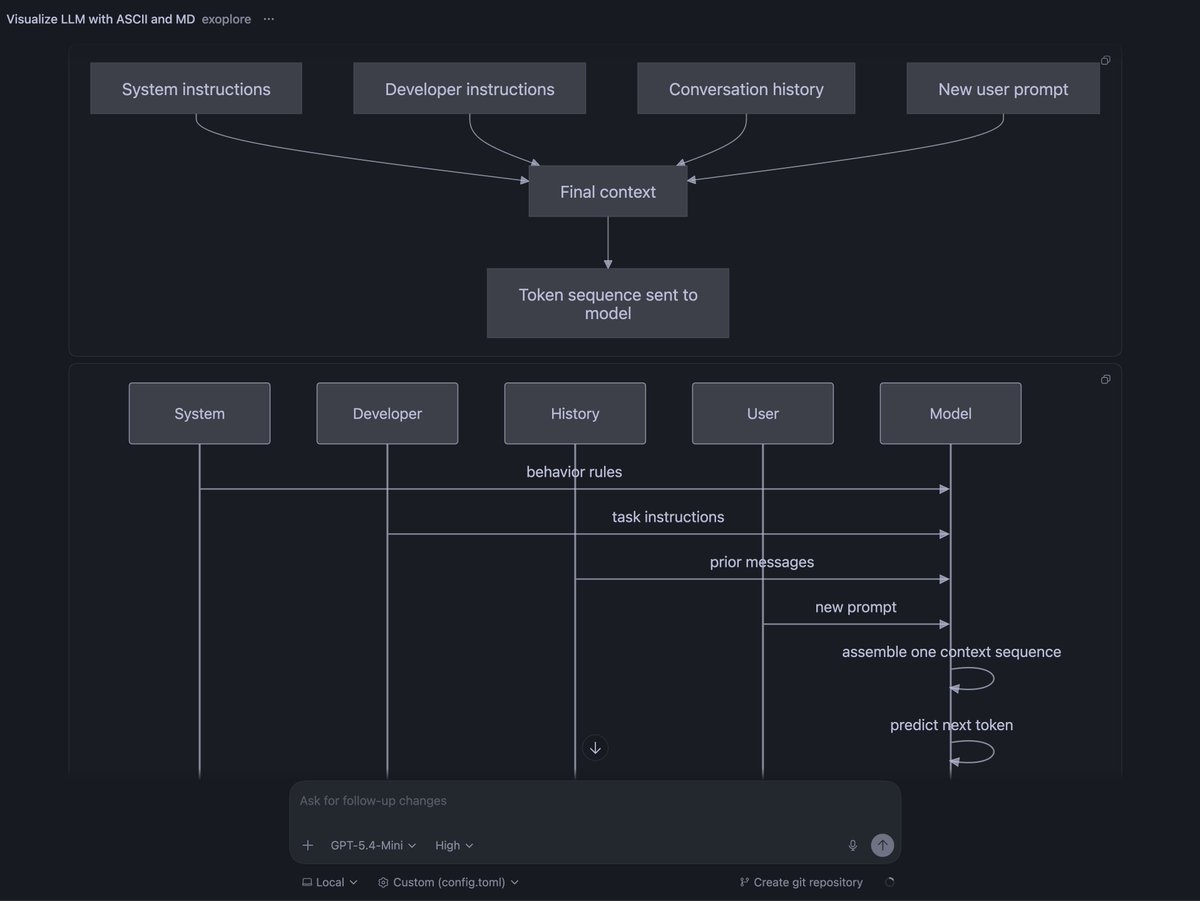
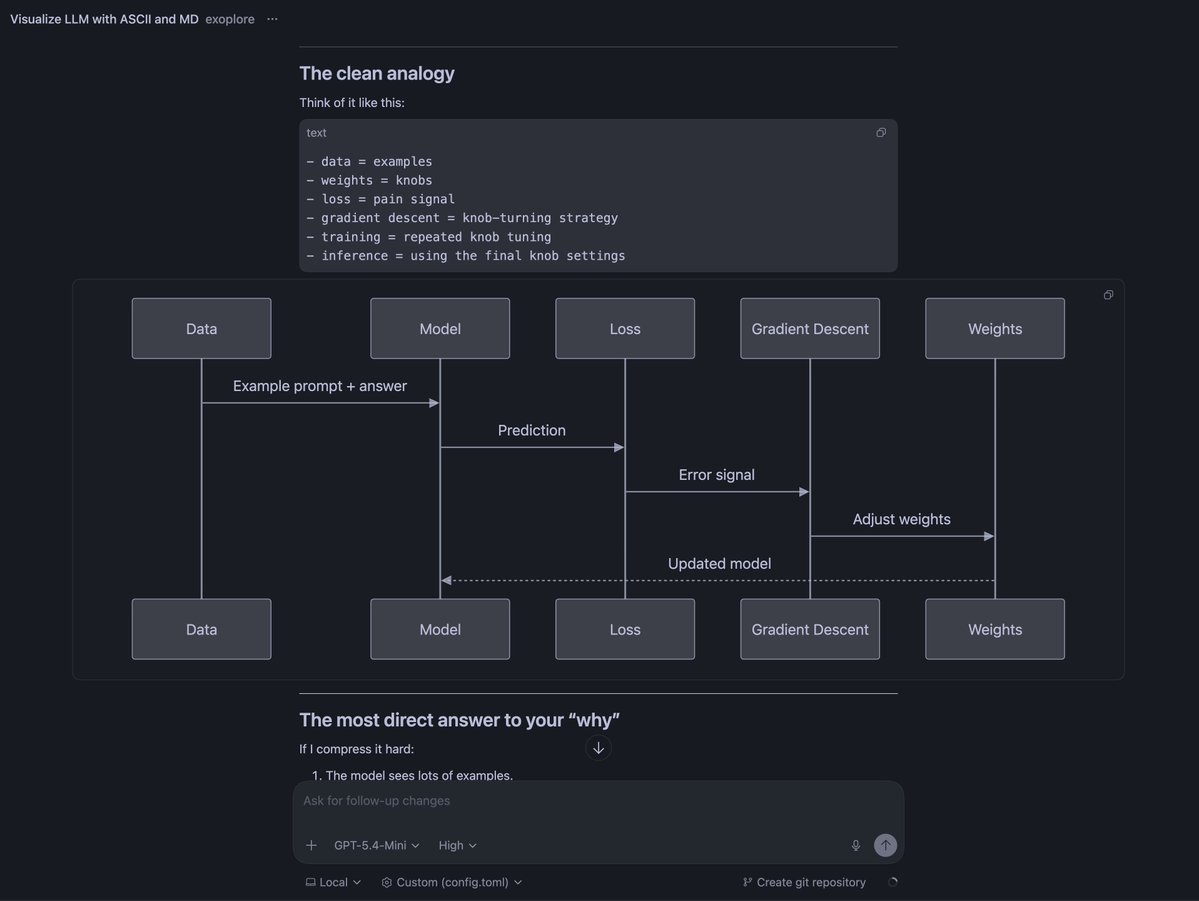
@moskstraum21745 Yes I want to learn about x topic please use markdown diagrams to explain it all to me Then just keep asking questions and going deeper
English
1
0
68
4.5K
0xSero
0xSero@0xSero·
Here's how I learn new information. It costs me a few cents to learn high tailored information around my preferences. An infinitely patient, highly intelligent teacher that can sometimes be wrong, but is mostly helpful. If you ever felt like you were let down by school, try
0xSero tweet media0xSero tweet media0xSero tweet media0xSero tweet media
English
20
49
1.4K
68.5K
Nico Bailon
Nico Bailon@nicopreme·
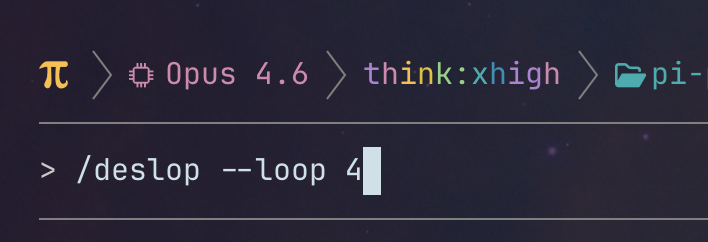
pi-prompt-template-model is a pi extension that lets you create slash commands that switch to the right model and config for the job, then auto switch back when it's done. New release adds `--loop` so you can re-run the same prompt multiple times and it automatically stops early when there's nothing left to change. pi install npm:pi-prompt-template-model github.com/nicobailon/pi-…
Nico Bailon tweet media
Nico Bailon@nicopreme

Just added a convenient way to chain prompt templates (slash commands) in Pi coding agent. Each step runs a different prompt template with its own model, skill, and thinking level. pi install npm:pi-prompt-template-model github.com/nicobailon/pi-…

English
11
5
151
35.9K
Florian Fesseler
Florian Fesseler@ffesseler·
Wow, the Pay-Per-Use X API is so expensive. I burned almost $5 reading only five threads. 🧐
English
0
0
0
18
Florian Fesseler
Florian Fesseler@ffesseler·
It’s basically running git blame on your thoughts instead of on the code: your reasoning flaws are exposed publicly, but it also becomes an extraordinary feedback loop.
Max Wagner@MaxWagnerDev

Just checked out @EntireHQ. I like that you have more context about who wrote what, token usage, prompts. No full Cursor support yet, hoping it will come soon. But worried about, that you can then see all my "wtf you destroyed my whole page layout" prompts publicly forever in git

English
1
0
0
31
Florian Fesseler
Florian Fesseler@ffesseler·
@swyx @ankitxg Whatever level humans intervene in code review, call it the final boss is wrong. There are other steps that remain a bottleneck in the production or execution of applications.
English
0
0
0
26
swyx 🇸🇬
swyx 🇸🇬@swyx·
this is the Final Boss of Agentic Engineering: killing the Code Review at this point multiple people are already weighing how to remove the human code review bottleneck from agents becoming fully productive. @ankitxg was brave enough to map out how he sees SDLC being turned on its head. i'm not personally there yet, but I tend to be 3-6 months behind these people and yeah its definitely coming.
swyx 🇸🇬 tweet media
Latent.Space@latentspacepod

🆕 How to Kill The Code Review latent.space/p/reviews-dead the volume and size of PRs is skyrocketing. @simonw called out StrongDM’s “Dark Factory” last month: no human code, but *also* no human review (!?) in this week’s guest post, @ankitxg makes a 5 step layered playbook for how this can come true.

English
168
70
1.2K
404.6K
Florian Fesseler
Florian Fesseler@ffesseler·
@_colemurray @Ryan_And3rs0n nice to hear scheduled tasks landing soon :) would be great also to ease the creation of different agents according to task type/use cases. I like how Oz do it with skills
English
0
0
1
25
cole murray
cole murray@_colemurray·
sure! it’s more geared towards team use than an individual. you get multi surface usage: slack, web, linear, GitHub, teams multiplayer sessions: everyone can see trace and prompt in the same space multiple sandboxes => isolated reproducible environments coming soon, scheduled tasks
English
2
0
1
30
cole murray
cole murray@_colemurray·
background agents are the path forward as models continue to improve and handle long running tasks, you’ll need multiple isolated machines to keep up remote control to your laptop doesn’t scale
Michael Truell@mntruell

@karpathy One surprising fact: despite requiring a large behavior change, we're seeing the beginnings of a rapid diffusion of cloud agents (perhaps "agent teams" in the Karpathy taxonomy). Cloud usage in Cursor is up ~6x in the past two months and climbing.

English
4
3
30
3.9K
Florian Fesseler
Florian Fesseler@ffesseler·
@_colemurray What should I do if I need other dependencies for my modal image? Do I necessarily have to fork the project and modify .openinspect/setup.sh or modal-infra/src/images/base.py?
English
1
0
0
9
Florian Fesseler
Florian Fesseler@ffesseler·
@gmickel A pattern that also works well is when the developer shares the conversation/session they went through up to the PR. This makes it possible to identify gaps in the reasoning, or sometimes issues with the initial framing that wasn’t quite right.
English
0
0
1
8
Gordon Mickel
Gordon Mickel@gmickel·
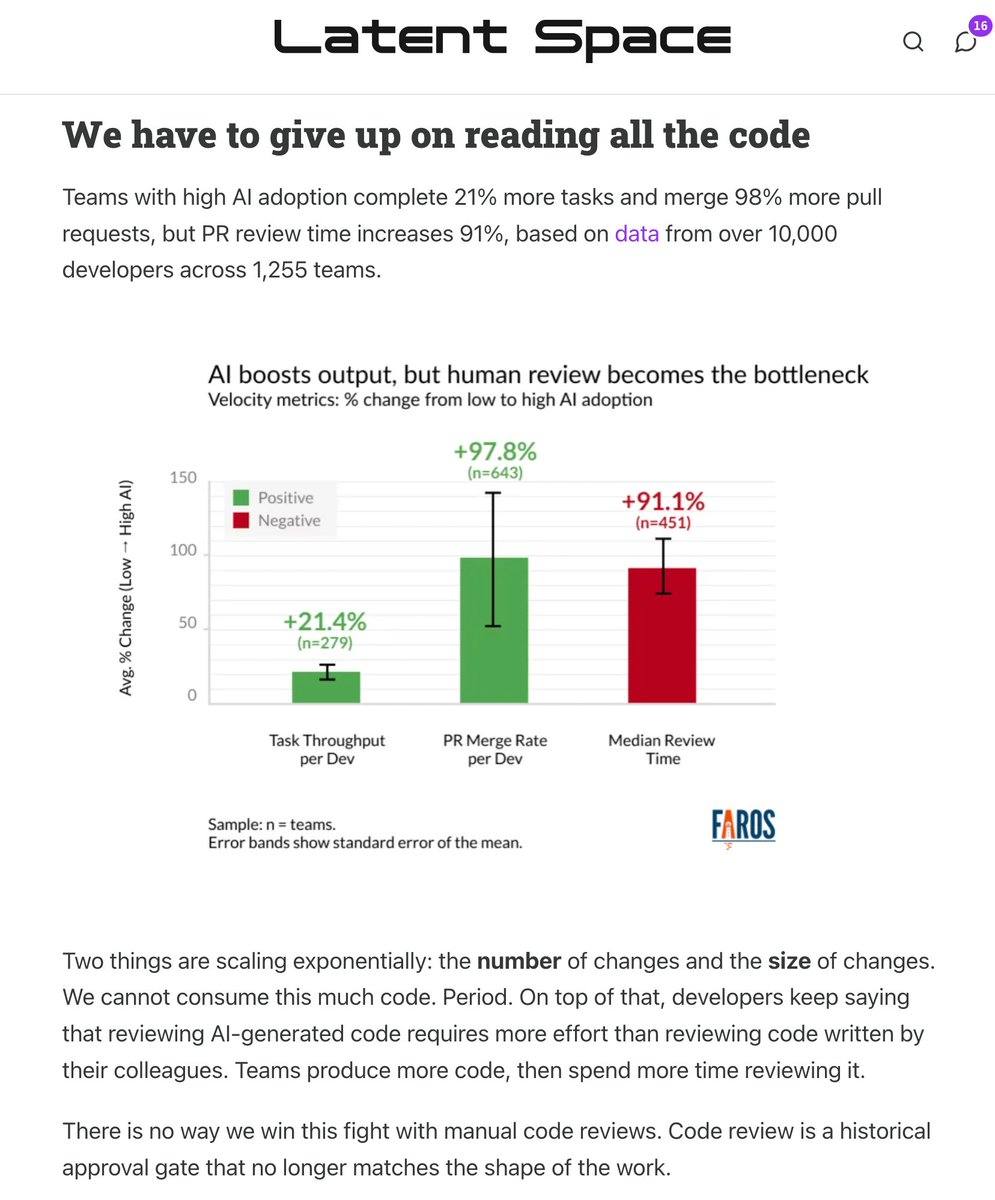
Agentic Engineering: The Boring Stuff #2 Yesterday in the first post in this boring series, I said that planning (req engineering) and reviewing are the bottlenecks. Lets talk about code reviews and what I actually see when working with teams. Every company I work with has the same problem. They roll out tooling, the code is flowing and PRs are piling up. Now their senior engineers are drowning in code reviews, work they didn't really want to do even before the advent of agentic coding... Data backs this up: Faros AI tracked 10000 devs and found that PR review time increased by up to 91% after 'AI adoption'. Teams went from 10-15 PRs a week to 50-100. The obvious answer is: use AI to review the code/PRs. Yes. Do that. We all already do that. Tools like CodeRabbit, Greptile, Codex, Jules, you name it. They'll catch 80% of issues before a human even takes a look. But here's what I tell every team and what I don't see many people talking about: the bigger unlock isn't AI just reviewing your code. It's AI telling you what you, as the human-in-the-loop should review. Before you open the diff, have the model explain the PR to you. What are the critical code paths? What architectural decisions were made? Where does the implementation drift from the plan/spec? Where should your severely limited human attention actually go. This is the easiest way to ensure understanding of the evolving codebase. This is all just a claude -p or codex exec away and takes like 30 seconds to set up. Have it be part of the acceptance criteria that the agent outputs this from the get go. This can completely change how a senior engineer spends their review time. Now of course anyone can fire up Claude Code or Codex and do this manually but you should just automate as much of this as possible. People are lazy. The review stack I currently deploy: Layer 1: Deterministic. Linters, type checking, tests, pre-commit hooks. Non-negotiable, part of the spec's acceptance criteria. If this layer is solid, you already have confidence the code does what it's supposed to do. Layer 2: AI review. Automated on every PR. Cross-model if possible, if Claude wrote it, have GPT review it. Same-model review shares the same blind spots. Automatic review using Greptile, CodeRabbit etc. is also fine. Layer 3: AI-guided human review. Model summarises the PR, surfaces risks, explains decisions, drift, whatever you need. Human focuses on the important things only. One more thing: not all code needs the same review depth. Risk-tier your paths. Auth, API routes, schema changes get the full stack. A docs update or CSS fix can pass with Layer 1 and 2 only. Don't waste senior engineer time on low-risk diffs. And if you really want to close the loop: have the review agent's findings feed back to a coding agent that fixes them automatically. Agent writes, agent reviews, agent remediates. Human only sees clean PRs on critical paths. @ryancarson posted a great deep-dive on implementing this exact loop if you want the specifics. One last thing: when something breaks in production, turn it into a test case. Your Layer 1 should grow from real failures, not just upfront specs. That's how the review burden shrinks over time instead of growing. OpenAI's own team was apparently spending 20% of every Friday cleaning up agent-generated code. That didn't scale so they had to systematize the review, not just the generation. Like I said in the first post of the series, focus on the beginning and end of the lifecycle (spec/review) and not just on the middle. What does your review setup look like?
English
1
0
10
413
Florian Fesseler
Florian Fesseler@ffesseler·
Ideal for searching a specific session when constantly juggling between many agents and you no longer remember which one you created it with github.com/angristan/fast…
English
0
0
1
32
Florian Fesseler
Florian Fesseler@ffesseler·
@aliouftw Gonna use at least the first 2 ! No more "supabase db reset --linked" please :')
English
0
0
1
84
aliou
aliou@aliouftw·
tired of prompt engineering and praying for the agent to read my skills/agents etc. so made a bunch of tools. you shouldn't use them but fork them for yourself 😇 - @aliou/pi-guardrails" target="_blank" rel="nofollow noopener">npmjs.com/package/@aliou… - @aliou/pi-toolchain" target="_blank" rel="nofollow noopener">npmjs.com/package/@aliou… - @aliou/biome-plugins" target="_blank" rel="nofollow noopener">npmjs.com/package/@aliou
English
1
0
2
74
Florian Fesseler
Florian Fesseler@ffesseler·
People wondering why some devs prefer CLI agent other IDE. If there was just one reason, watch this video: youtube.com/watch?v=BsAHun… Lots of cool stuff yes but where does it mainly happen? In 2 strips of 100px wide. Not much in the largest central area.
YouTube video
YouTube
English
0
0
0
40
Florian Fesseler
Florian Fesseler@ffesseler·
@aliouftw ofc just a few days after paying a quarter subscription for glm 4.7
English
1
0
0
53
aliou
aliou@aliouftw·
kimi
Türkçe
1
0
0
83
Florian Fesseler
Florian Fesseler@ffesseler·
@badlogicgames Interesting. I need to check what other agents harness do in their system prompts to prevent that behavior. I'm only see it in pi. I'll send you a session sample in DM if you don't mind. I would be interested to know if that's the kind of behavior you usually see.
English
0
0
0
9
Mario Zechner
Mario Zechner@badlogicgames·
@ffesseler Use your AGENTS.md to tell it how to behave. It depends on your use case(s). pi itself does not instruct the models to do anything like that. What you see is raw model behaviour.
English
1
0
0
28
Florian Fesseler
Florian Fesseler@ffesseler·
@badlogicgames Are there any settings or commands that would make Pi generate fewer documents? It tends to create a large number of documents and recap even for small operations.
English
1
0
0
12
Florian Fesseler
Florian Fesseler@ffesseler·
When the AI coding tool writes everything, our mental map you have about the code becomes fragile. You tell yourself it's "roughly okay" but discover gaps later. I just came across a project that offers a solution for this. Need to try it out: github.com/Michaelliv/men…
English
0
0
0
18