Black Hole

97.6K posts

Black Hole banner
Black Hole

Black Hole

@konstructivizm

Only New Content, news, articles, images, videos, and discussion #space,#FollowMe, #Nature, #astronomy, #Nasa, #astrophotography, #science

France Se unió Mayıs 2010
40.6K Siguiendo845K Seguidores
Tweet fijado
Black Hole
Black Hole@konstructivizm·
🌌🚀 Hey cosmic crew — a good friend is selling the perfect star-gazing launchpad in Lago Vista, TX! Fully renovated 2,000 sq ft modern lake house with a huge deck built for telescopes, minimal light pollution, and killer Hill Country views. Quick drive to Firefly Aerospace ops and Tesla Gigafactory Texas. Picture wrapping up a long day of rocket science… then stepping outside to watch the real stars (or the next Starship test lighting up the horizon). This one feels like it was designed for us. 🔭 Full listing + photos: realtor.com/realestateandh… Who’s ready to claim their slice of Space Country? #StarGazingHome #TexasRockets #AustinSpace #konstructivizm
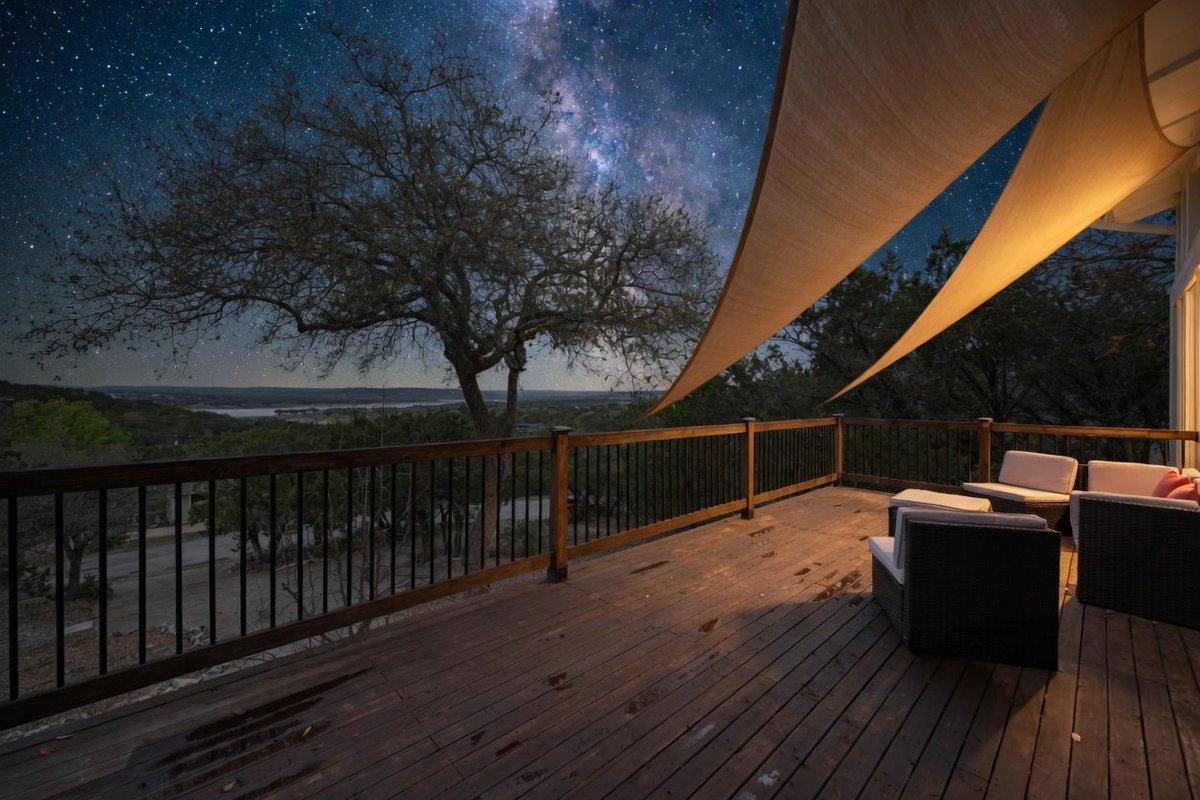
Black Hole tweet media
English
6
14
116
36.2K
Black Hole
Black Hole@konstructivizm·
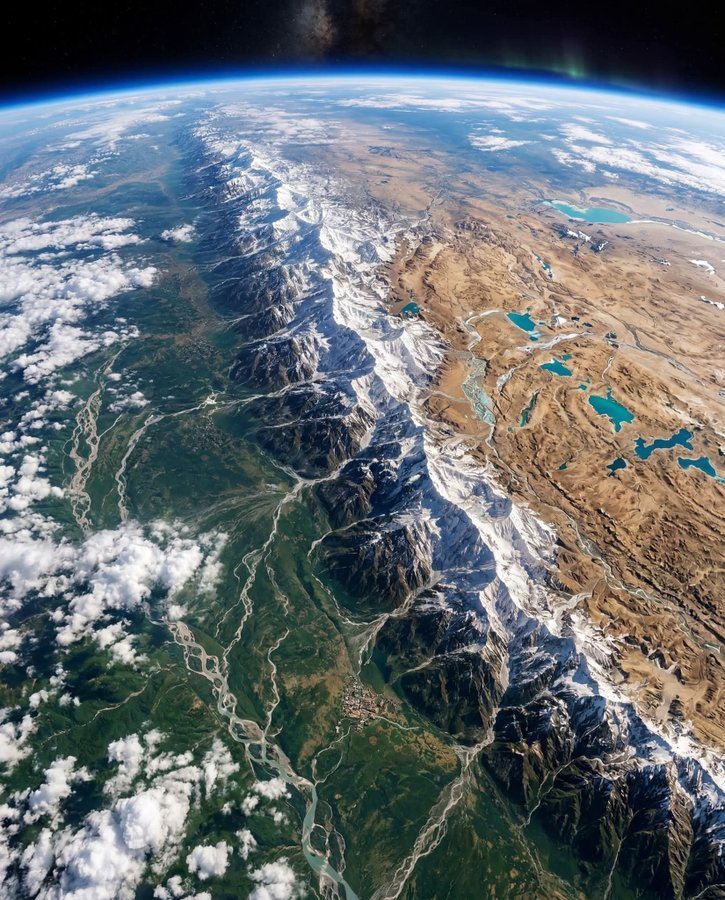
Himalayas as seen from Space ISS
Black Hole tweet media
English
0
1
6
371
Black Hole
Black Hole@konstructivizm·
2 trillion Galaxies in the Observable Universe. 3,000 Planetary Nebulae in the Observable Milky Way.
Black Hole tweet media
English
0
14
48
2.3K
Black Hole
Black Hole@konstructivizm·
Captured in infrared by NASA’s retired Spitzer Space Telescope, this planetary nebula looks like a cosmic flower. It forms when a Sun-like star sheds its outer layers and becomes a white dwarf, offering insight into the future of our own Sun.
Black Hole tweet media
English
0
15
71
2.9K
Black Hole
Black Hole@konstructivizm·
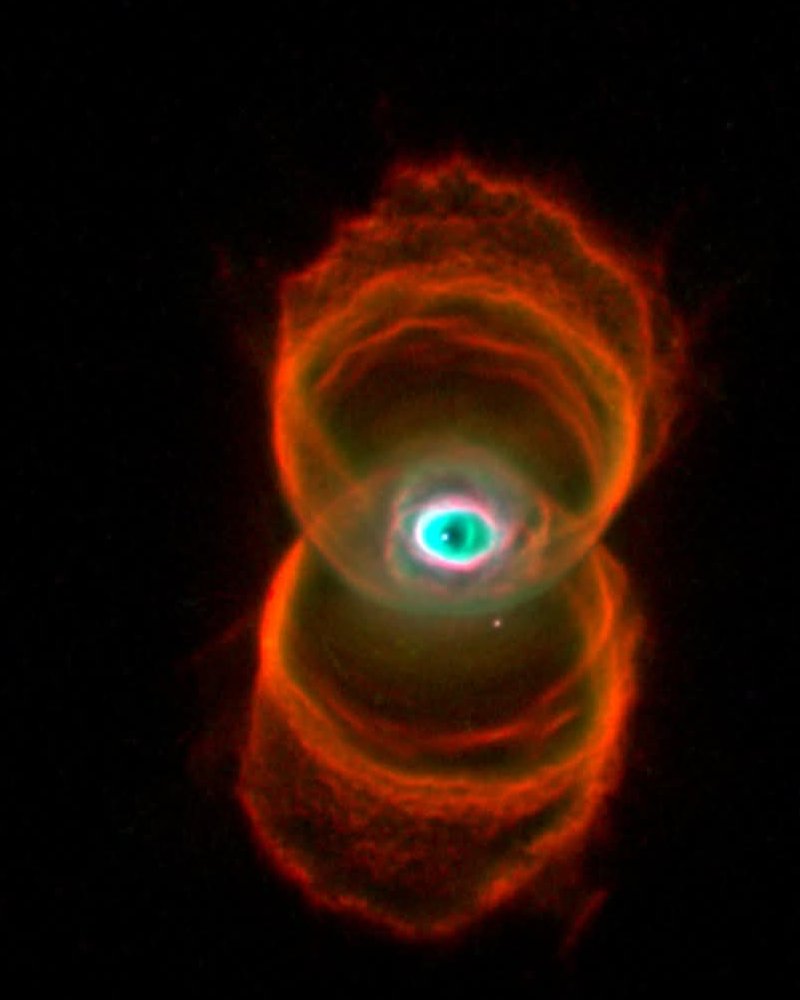
You're looking at the Hourglass Nebula, young planetary nebula located in the Milky Way Galaxy about 8,000 light-years away. Credit: NASA, ESA, Hubble Legacy Archive Processing: Harshwardhan Pathak
Black Hole tweet media
English
3
6
40
2.3K
Black Hole
Black Hole@konstructivizm·
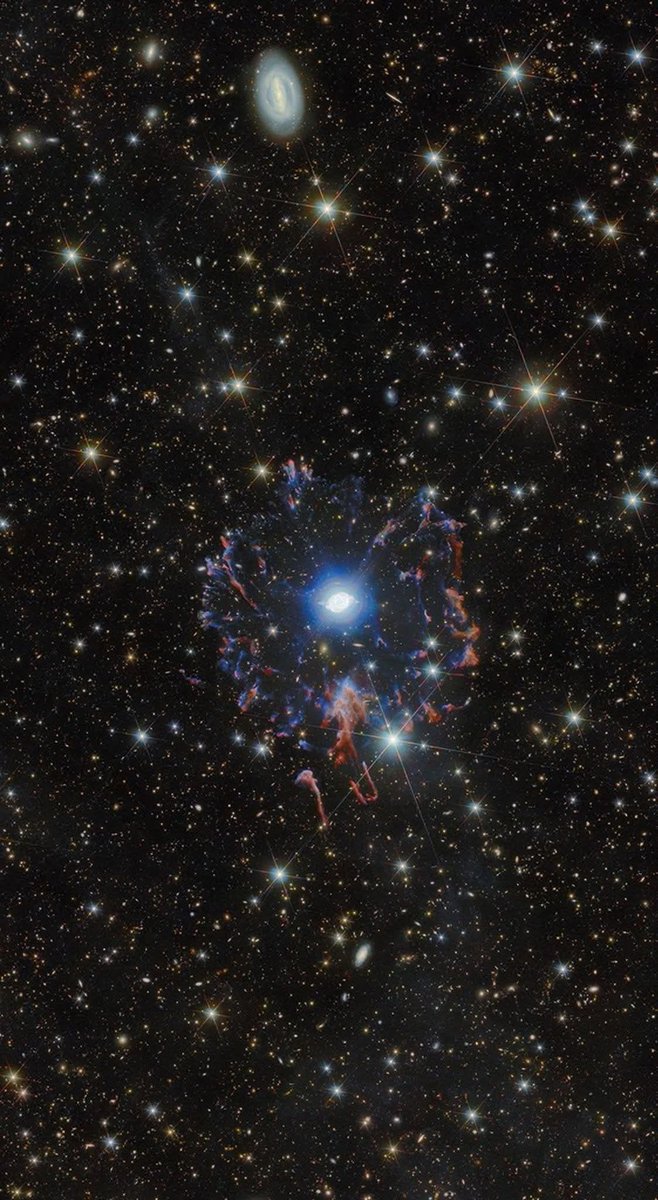
This image combines views from ESA’s (European Space Agency) Euclid and NASA’s Hubble Space Telescope to feature one of the most visually intricate remnants of a dying star: the Cat’s Eye Nebula, also known as NGC 6543. This extraordinary planetary nebula lies 4,400 light-years away in the constellation Draco and has captivated astronomers for decades with its elaborate and multilayered structure. Image Credit: ESA/Hubble & NASA, ESA Euclid/Euclid Consortium/NASA/Q1-2025, J.-C. Cuillandre & E. Bertin (CEA Paris-Saclay), Z. Tsvetanov
Black Hole tweet media
English
3
9
50
2.4K
Black Hole
Black Hole@konstructivizm·
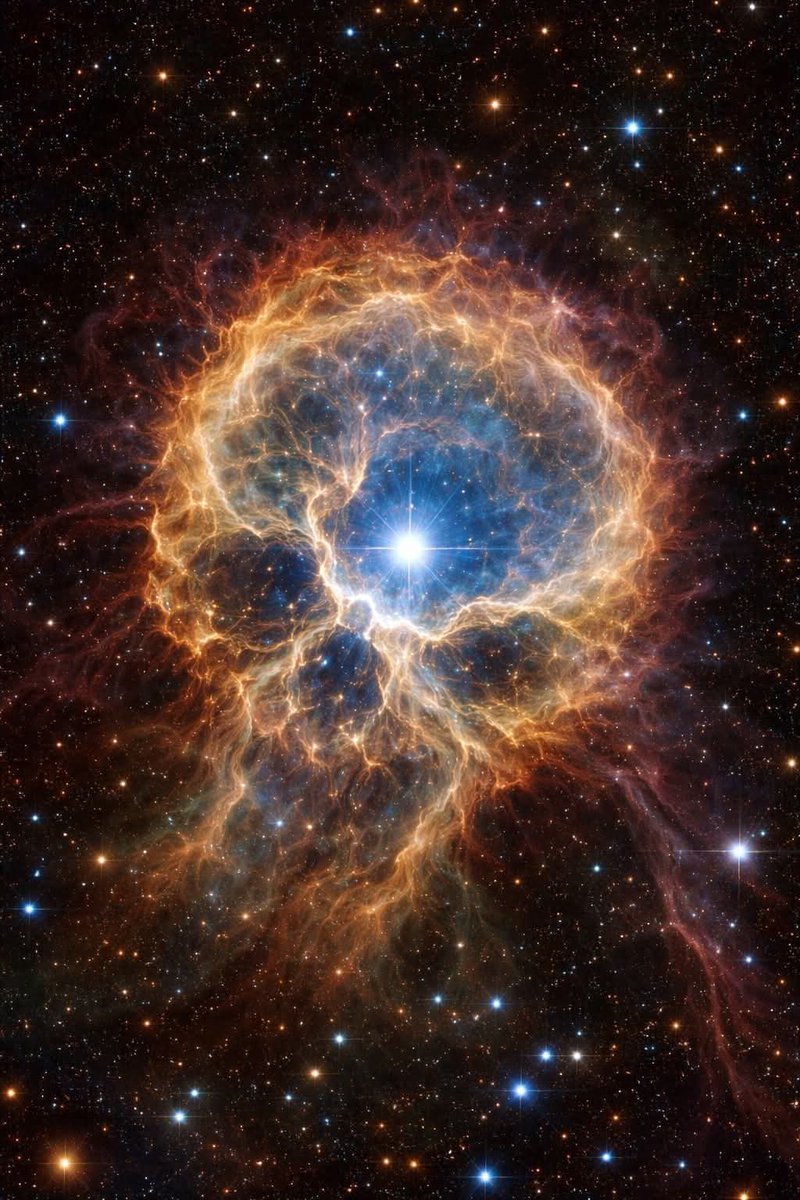
The “Exposed Cranium” Nebula (officially designated PMR 1) has been unveiled in breathtaking, mind-bending detail by NASA's James Webb Space Telescope, thanks to its powerful NIRCam (Near-Infrared Camera) and MIRI (Mid-Infrared Instrument).This eerie planetary nebula, located about 5,000 light-years away in the constellation Vela, looks uncannily like a glowing brain nestled inside a translucent skull—complete with a dramatic dark central lane splitting it into two hemispheres, mimicking the brain's longitudinal fissure.The nebula forms as a dying star reaches the end of its life cycle. Having exhausted its nuclear fuel, the aging star violently sheds its outer layers, hurling expanding shells of gas and dust into space. Intense ultraviolet radiation from the exposed, scorching-hot stellar core lights up these ejected materials, causing them to fluoresce in vivid colors and intricate patterns.Webb's infrared vision pierces through the cosmic veil, revealing layered structures: a ghostly outer bubble (mostly hydrogen from the initial ejection) forms the "skull," while denser, more complex inner clouds—rich in heavier elements—create the textured "brain" appearance. The mysterious dark channel may result from powerful jets blasting material outward from the central star.First glimpsed over a decade ago by the Spitzer Space Telescope, this little-studied object now bursts with unprecedented clarity in Webb's images, showcasing the beautiful yet fleeting final act of a star like our Sun (though this one may be more massive, with an uncertain fate: white dwarf or supernova?).A truly cosmic case of nature imitating anatomy—proof that the universe has a wicked sense of humor.
Black Hole tweet media
English
1
12
39
2.7K
Black Hole
Black Hole@konstructivizm·
Ethereal Beauty: HDW 3 - A huge , timeworn planetary nebula whose intricate, braided shape arises from its passage through interstellar gas. Credit: T.A. Rector (University of Alaska Anchorage) / H. Schweiker (WIYN and NOIRLab/NSF/AURA)
Black Hole tweet media
English
1
4
42
2.6K
Black Hole
Black Hole@konstructivizm·
The Ring Nebula (Messier 57) lies about 2,300 light-years away in the constellation Lyra. It formed when a star similar in mass to the Sun reached the final stage of its life and shed its outer atmosphere into space. As the central star collapsed into a white dwarf, intense ultraviolet radiation illuminated the expanding shell of gas. This glowing gas forms the nebula’s distinctive ring-like appearance when viewed from Earth. The nebula is actually a three-dimensional cloud of expanding gas, but from our viewing angle it appears as a bright ring surrounding the hot central star. The colorful glow comes from ionized elements such as oxygen, hydrogen, and nitrogen. Planetary nebulae like the Ring Nebula show what may eventually happen to stars similar to our Sun billions of years in the future. Sources Hubble Space Telescope Ring Nebula Imaging Program (NASA/ESA), James Webb Space Telescope Ring Nebula Observations 2023, Space Telescope Science Institute Planetary Nebula ...
Black Hole tweet media
English
2
19
57
2.8K
Black Hole
Black Hole@konstructivizm·
Mars from Hope Mars Mission | A view of Mars made from images captured with the EXI camera aboard the UAE's | Hope Mars Mission orbiter on November 22, 2021 from a distance of 20,118 km. Credit: UAE, Hope mission.
Black Hole tweet media
English
2
11
27
2.6K
Black Hole
Black Hole@konstructivizm·
The amazing view of dusty spiral galaxy "NGC1566" .!
Black Hole tweet media
English
3
28
108
3.1K
Black Hole
Black Hole@konstructivizm·
The SpaceX Falcon 9 rocket lifts off from Cape Canaveral in Florida carrying four Crew-12 members to the International Space Station. NASA astronauts Jessica Meir and Jack Hathaway, ESA (European Space Agency) astronaut Sophie Adenot, and Roscosmos Andrey Fedyaev are scheduled to dock to the orbital outpost at 3:15 p.m. EST on Saturday Feb. 14 to begin a long-duration space research mission.
English
1
14
51
3.1K
Black Hole
Black Hole@konstructivizm·
The galaxy NGC 2841 has a relatively low star formation rate compared to other spirals. It was one of several nearby galaxies chosen for a study into star formation one of the most important processes in shaping the Universe. This image shows lots of hot young stars in the disc of NGC 2841, but there are just a few sites of current star formation where hydrogen gas is collapsing into new stars. It is likely that these fiery youngsters destroyed the star-forming regions in which they were formed. Credit: Hubble Space Telescope.
Black Hole tweet media
English
0
8
31
2.4K
Black Hole
Black Hole@konstructivizm·
The well-lit nighttime cityscape of India pictured from the International Space Station as it soared over the Arabian Sea and across the Himalayas...
Black Hole tweet media
English
0
18
52
2.8K
Black Hole
Black Hole@konstructivizm·
The Hubble Space Telescope has given us a stunning close-up of the Small Magellanic Cloud—a neighboring dwarf galaxy roughly 200,000 light-years away.Using its Wide Field Camera 3, astronomers captured this vibrant scene through four specialized filters, each tuned to specific wavelengths of light. The result? A breathtaking, multicolored tapestry where wispy dust clouds glide dramatically across a dazzling sea of stars.The striking red glows come from massive supergiant stars and glowing emission nebulae, where intense stellar radiation lights up the surrounding gas.This zoomed-in view reveals intricate details invisible to the naked eye, showcasing the dynamic beauty of one of the Milky Way's closest galactic companions.Credit: NASA’s Hubble Space Telescope (ESA/Hubble & NASA, C. Murray)Here are some representative images of Hubble views of the Small Magellanic Cloud and similar regions, featuring colorful dust lanes and starry fields:
Black Hole tweet media
English
2
14
37
2.7K
Black Hole
Black Hole@konstructivizm·
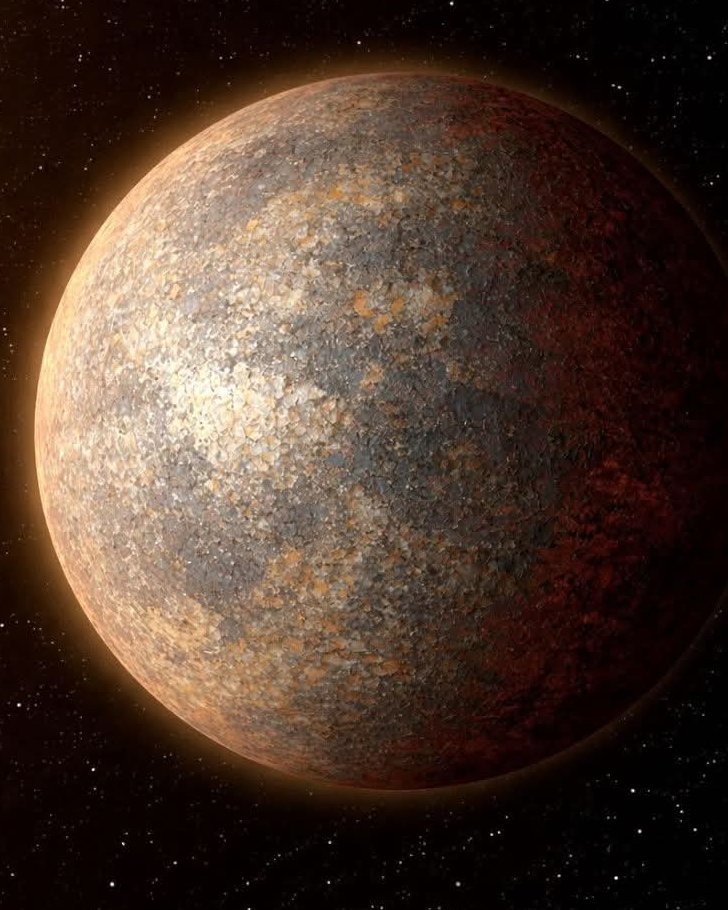
NASA has spotlighted a truly bizarre world: GJ 367 b (also known as Tahay), an ultra-dense exoplanet that stands out as one of the most iron-rich planets ever discovered.This sub-Earth-sized world orbits a dim red dwarf star just 31 light-years away in the constellation Vela—practically next door in galactic terms.Discovered in 2021 by NASA's Transiting Exoplanet Survey Satellite (TESS), GJ 367 b whips around its star in an astonishing 7.7 hours (about 0.32 days), making it one of the shortest-period planets known.What sets it apart? Its extreme density.Refined measurements show:Radius ≈ 0.70 × Earth's (roughly Mars-sized) Mass ≈ 0.63 × Earth's Bulk density ≈ 10.2 g/cm³ — roughly twice Earth's density and very close to pure iron (~7.87 g/cm³, but models account for compression and composition) Interior models suggest the planet is dominated by an iron-nickel core making up ~86–91% of its mass (or radius fraction), with only a thin silicate mantle remaining—if any.This makes GJ 367 b a prime candidate for an "exposed planetary core" or "super-Mercury": likely the stripped-down metallic heart of a once-larger planet whose outer rocky layers were blasted away by intense stellar radiation from its close orbit, or removed through giant impacts.Surface temperatures soar to ~1,500–1,700 K on the dayside—hot enough to potentially melt iron—leaving no atmosphere and a barren, blazing landscape.Two additional low-mass sibling planets were later found in the system (at ~11.5 and 34-day orbits), but GJ 367 b remains the standout oddity.This extreme world offers a rare window into how planets can evolve—or be destroyed—when born too close to their stars.Here are some artistic impressions of GJ 367 b, showing its scorching, iron-dominated surface orbiting ... For comparison, here's Mercury—our solar system's closest analog with its massive iron core: Credit: NASA / TESS, various research teams (Lam et al. 2021, Goffo et al. 2023), and artist concepts from scientific visualizations.
Black Hole tweet media
English
0
14
47
3K
Black Hole
Black Hole@konstructivizm·
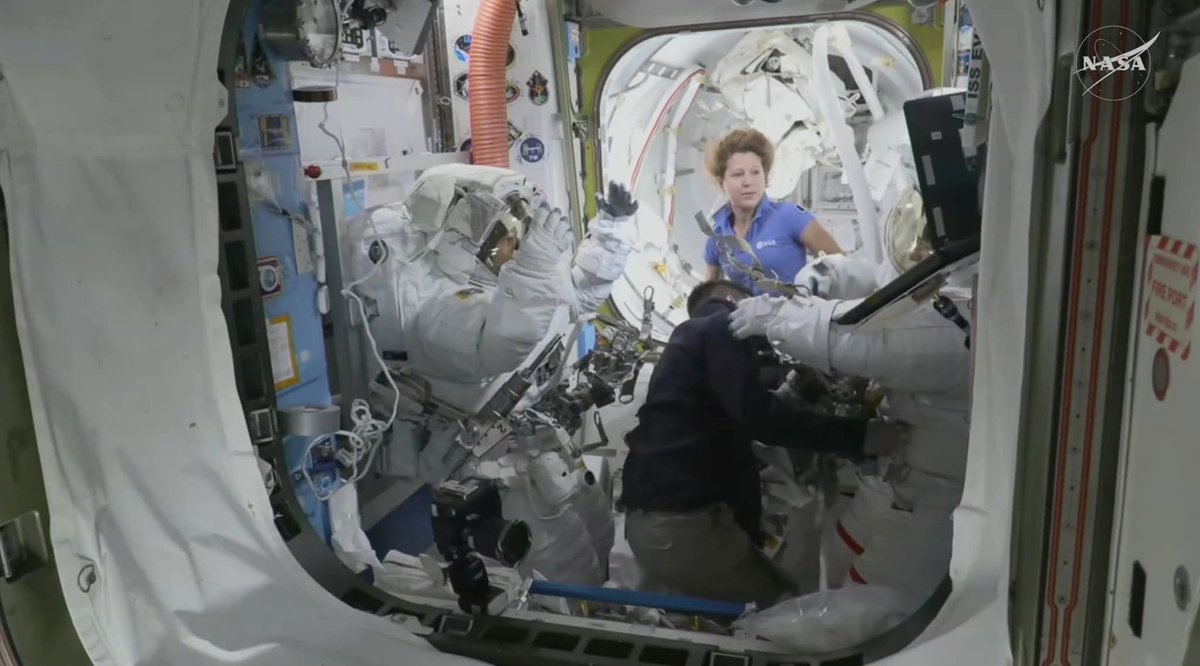
Retour réussi après une mission intense ! Après 7 heures et 2 minutes dans le vide spatial, Jessica Meir (@Astro_Jessica) et Chris Williams (@Astro_ChrisW) sont de retour à bord de la station ! Une sortie extravéhiculaire parfaitement menée, marquée par un travail impressionnant dans l’espace. Une belle démonstration de travail d’équipe...
Black Hole tweet mediaBlack Hole tweet mediaBlack Hole tweet media
Français
0
6
19
2.6K
Black Hole
Black Hole@konstructivizm·
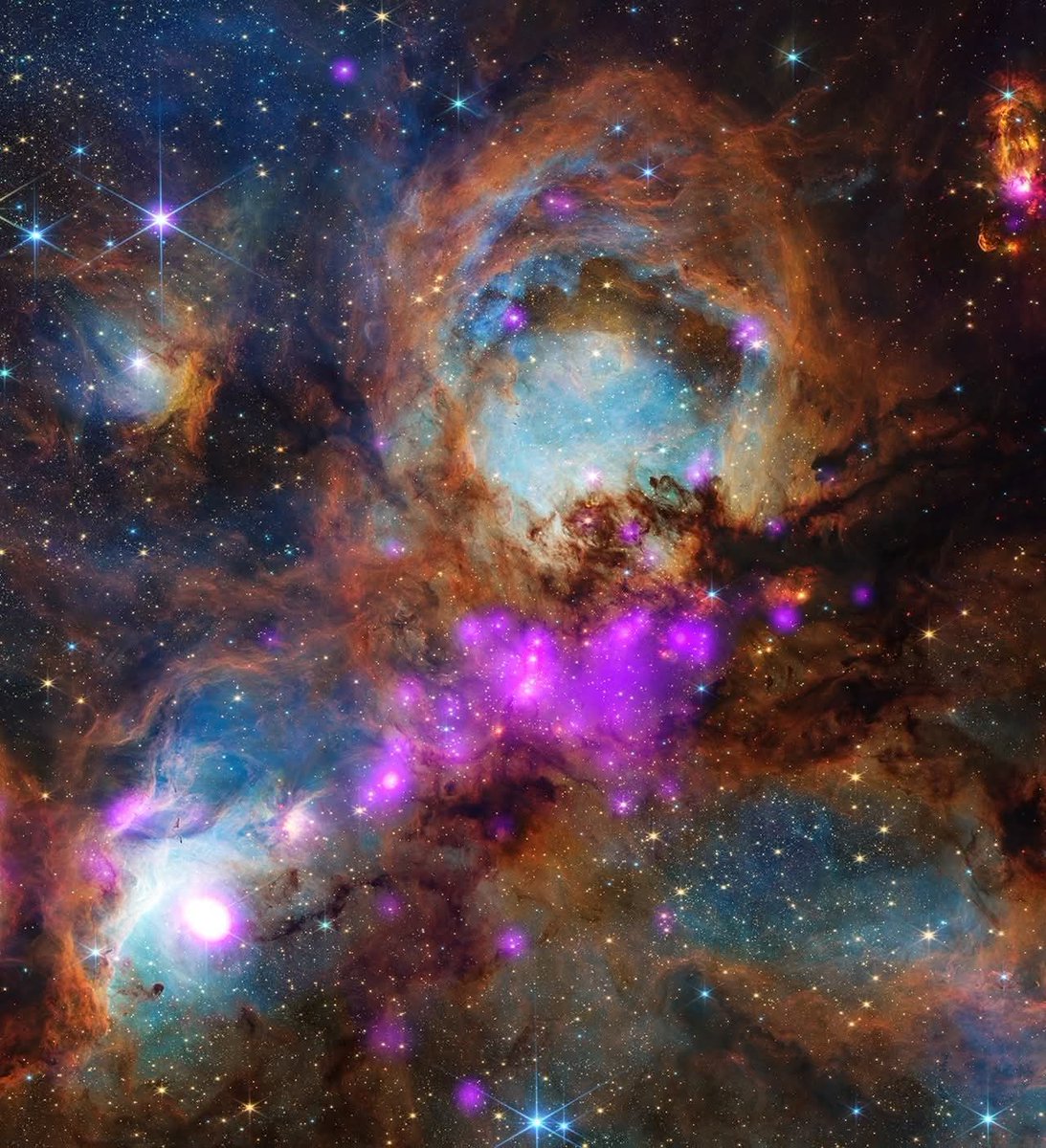
This stunning view of the Cat's Paw Nebula (NGC 6334) spans about 91 light-years across — a ferocious stellar nursery clawing its way through space! This fresh multiwavelength masterpiece combines X-ray data from NASA's Chandra X-ray Observatory (highlighting hot, high-energy spots like young stars and outflows in pink/purple) with deep infrared imaging from the James Webb Space Telescope (revealing warm dust, hidden star-forming regions, and glowing gas in rich reds and oranges).The result? A "paws-itively" explosive glimpse into one of the Milky Way's most active star-birth factories, located roughly 4,000 light-years away in the constellation Scorpius. Massive young stars are blasting away at surrounding gas and dust, sculpting cosmic caverns, igniting new generations of stars, and lighting up the nebula like a fireworks show in infrared.It's telescope teamwork at its finest: Chandra spots the energetic action, while JWST peers through the dust to uncover the hidden drama. Pure cosmic catnip! (Image credit: NASA/CXC & NASA/ESA/CSA/STScI; Chandra X-ray data in pink overlaid on JWST
Black Hole tweet media
English
0
11
33
2.7K
Black Hole
Black Hole@konstructivizm·
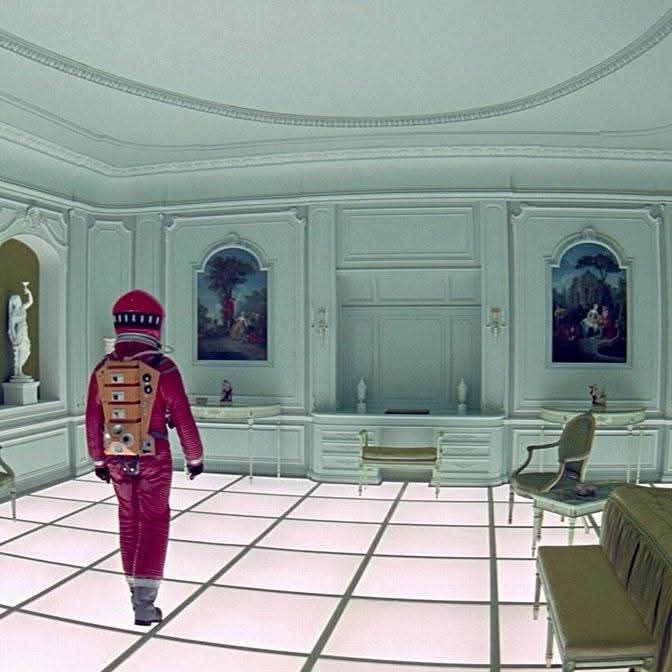
2001: A Space Odyssey (1968) Director: Stanley Kubrick By retro rockets
Black Hole tweet mediaBlack Hole tweet mediaBlack Hole tweet mediaBlack Hole tweet media
English
2
16
97
4.1K
Black Hole
Black Hole@konstructivizm·
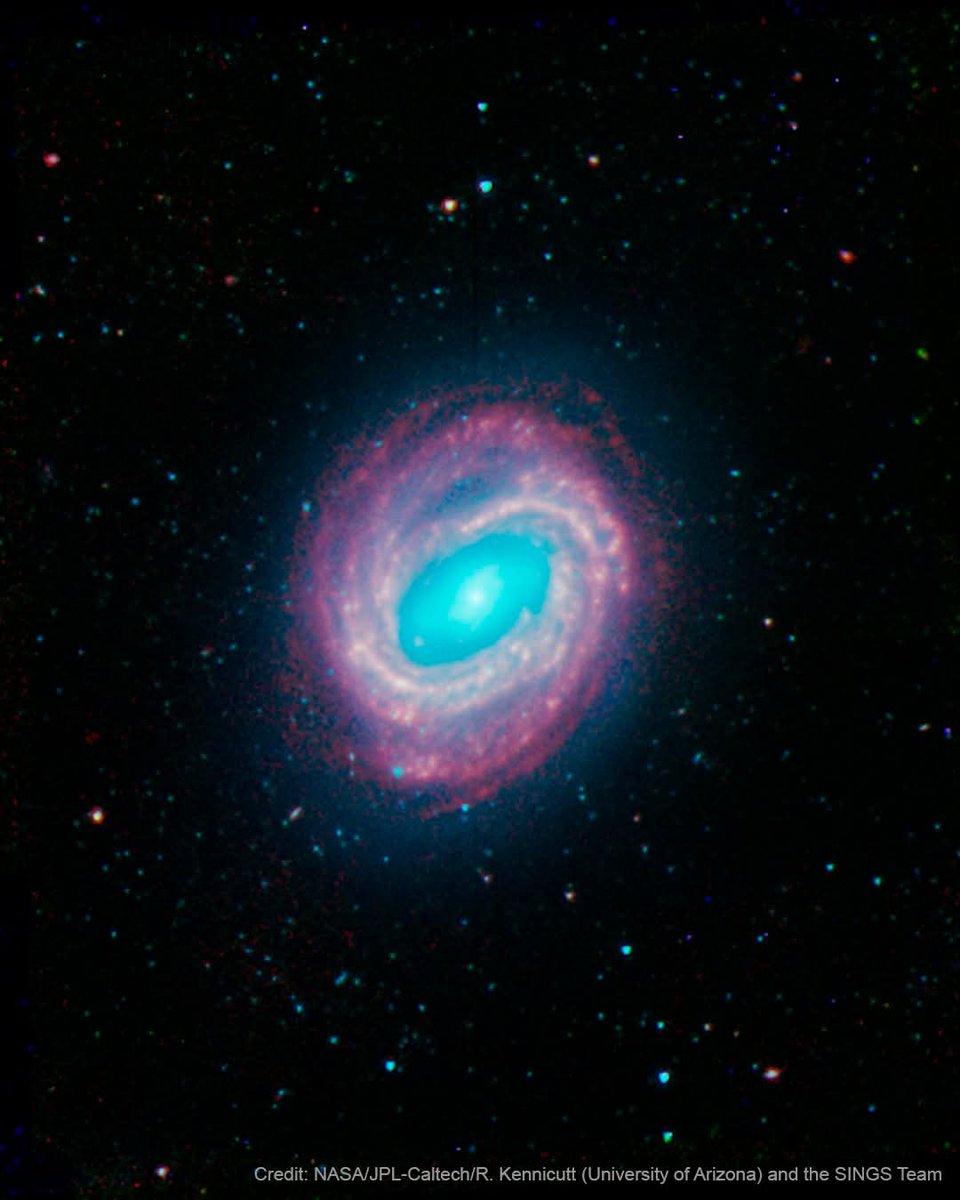
Messier 58 … Fresh off Hubble's stunning new multi-wavelength portrait for the 2026 Messier Marathon, let's flip the script and revisit this barred spiral beauty through the eyes of NASA's retired Spitzer Space Telescope — back in 2006!In this classic infrared glow-up (from the Spitzer Infrared Nearby Galaxy Survey, or SINGS legacy project), Spitzer pierces the dust that visible light struggles with. The reddish-orange hues highlight warm dust lanes — the hidden nurseries where new stars are actively forming. Meanwhile, the cooler blue tones trace the light from older, more mature stellar populations lighting up the galactic disk and arms.It's telescope teamwork at its finest: Hubble reveals the sharp details of star clusters, gas clouds, and that dramatic central bar in visible + UV + IR light, while Spitzer's infrared view unmasks the dusty "star factories" Hubble can only hint at. Together, they paint a fuller, more dynamic picture of how M58 — this 62-million-light-year distant Virgo Cluster resident — is still evolving, birthing stars, and interacting with its crowded cosmic neighborhood.Multwavelength magic turns one galaxy into a whole story! (Image credits: Spitzer infrared view courtesy of NASA/JPL-Caltech via SINGS Legacy Project; Hubble 2026 image: NASA, ESA, D. Thilker (Johns Hopkins University); Processing: Gladys Kober (NASA/Catholic University of America)
Black Hole tweet media
English
1
9
39
2.6K
Black Hole
Black Hole@konstructivizm·
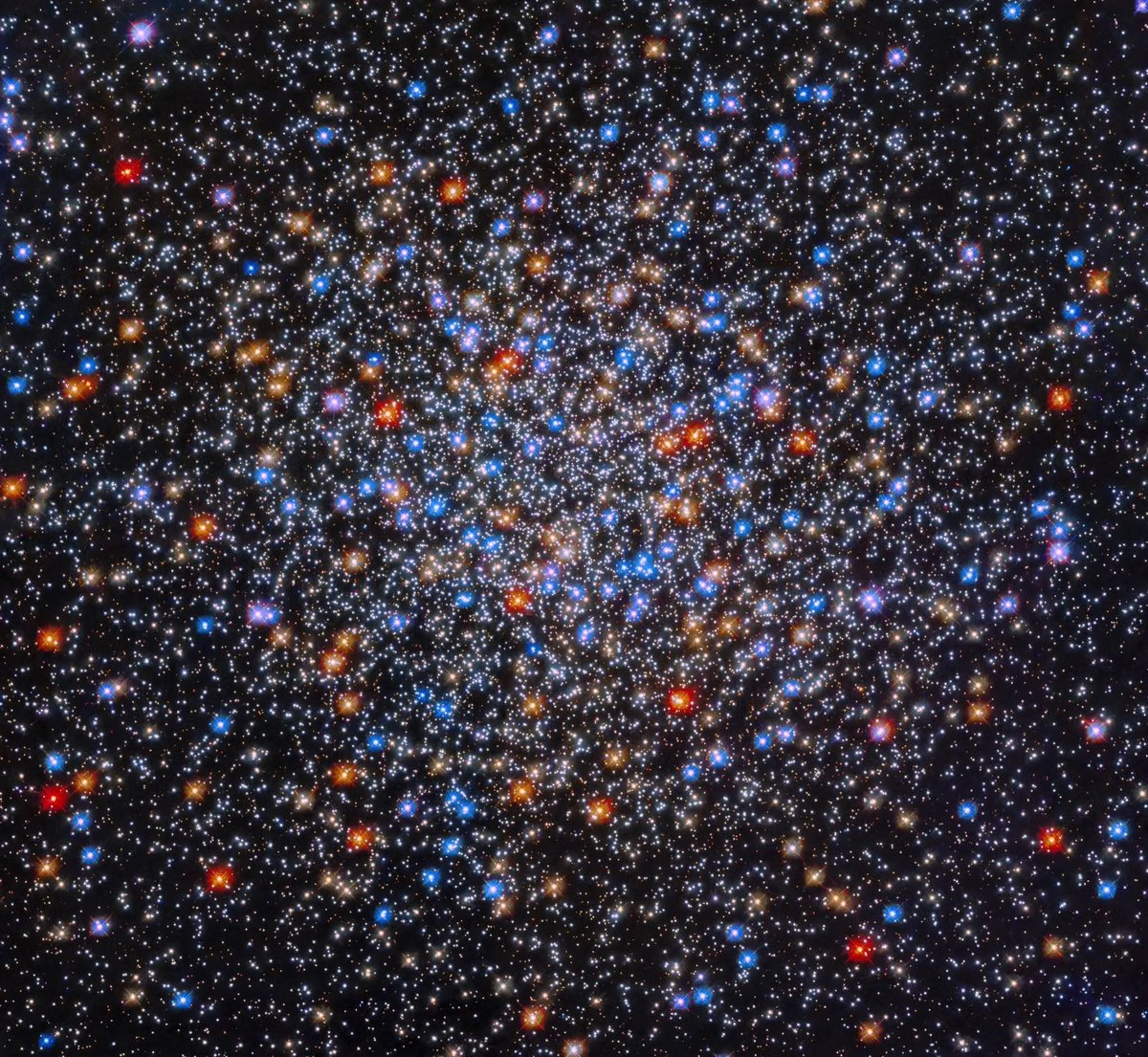
This annual stargazing event encourages astronomers to target cosmic objects from the Messier catalog, compiled by French astronomer Charles Messier in the 1700s. M10 is a globular cluster, which is a roughly spherical grouping of stars held together by their mutual gravity. Image credit: NASA, ESA, G. Piotto (Universita degli Studi di Padova); Image Processing: Gladys Kober (NASA/Catholic University of America)
Black Hole tweet media
English
2
8
45
2.7K