@3rdBaseBNSM@jimshapiro I think this applies to coaches at all levels, playing some kids on every snap because they are the “best” athlete instead of utilizing your roster.
Play football. Do the math.
11 players needed on offense
11 on defense
11 on special teams
33 more to back them up
I know the math isn’t perfect, one kid can play multiple positions BUT…
Why focus on other sports where playing time math isn’t in your favor.
Do the math. Play #football
Players
You can't gain weight because you're not eating enough calories, and you're not lifting hard enough.
It's as simple as that.
6000 calories per day should be the goal.
It requires discipline.
Schools are not recruiting undersized weak kids.
Stop with the excuses and get to work.
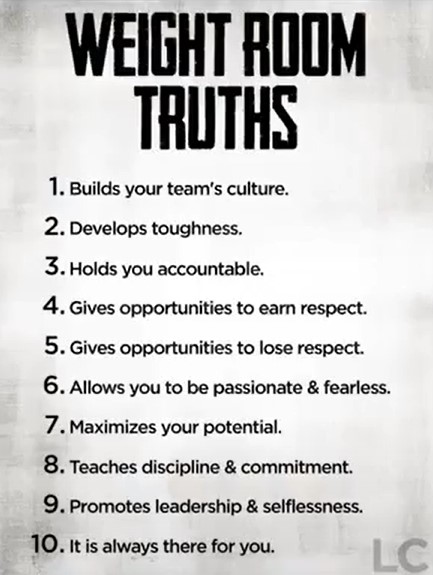
The weight-room is special because it only rewards those that work. It values tenacity over talent. It doesn’t care about ⭐️’s or playing time. It’s a sanctuary where athletes aren’t subject to scrutiny from the outside world. The weight-room is a equal opportunity equalizer.
Quitting on your team & TEAMMATES is next-level selfish. When you commit to going to battle each night during a season, you uphold that pledge to your TEAMMATES come hell or high water & then reevaluate your desire to play or not play after the season…multiple HS & even some college coaches I’ve spoken to this year had players bail midseason because they are mad with playing time leaving their TEAM out to dry—a sad state of affairs with American youth & families.
Mike Tomlin said, "It's not what you're capable of. It's what you're willing to do. I know plenty of people who are capable, but few who are willing."
You can't just talk about it, you have to be about it.
It means discipline, commitment, and sacrifice.
To be great in anything, you have to will yourself there.
You have to be persistent, resilient, and perseverant.
It means dedicating yourself to personal excellence.
The Disciplines You Need for Personal Excellence 👇
Commitment: Full commitment involves sacrifice and dedicating yourself to expertise and mastery. It means you are unwavering in your focus and what you want to achieve. It shows prioritization and reminds you what matters to you.
Sacrifice: When you sacrifice, you acknowledging that success comes at a cost. Making sacrifices means prioritizing long-term benefits over short-term pleasures. It prepares you for the inevitable trade-offs required for success, ensuring you value and make the most of your achievements.
Willingness to Act: You can say whatever you want, but it comes down to what you are willing to do.
• Are you going to get up early?
• Are you going to work hard?
• Are you going to give your best?
When you're willing to act, you transform potential into reality. It's about turning plans into achievements, and creating results.
Discipline: Discipline means holding yourself accountable and making the tough choices. it is something that you choose for yourself. Discipline helps you establish strong habits and maintain focus on your goals. It allows you to manage time and resources effectively, leading to greater productivity and success.
Perseverance: Perseverance is about maintaining your effort and commitment, even in the face of difficulty or slow progress. It is important for overcoming challenges and achieving long-term goals because excellence requires more than talent, it requires grit. Albert Einstein said, "It's not that I'm so smart, it's just that I stay with problems longer."
Resilience: Resilience enables you to bounce back from failures and adapt to change. Be willing to walk into each day and face challenges head-on. Resilience is important when you think about achieving long-term goals. It helps you maintain focus, it improves your attitude, and allows you to manage stress.
Self-Motivation: All successful people have the internal drive and motivation to get better, commit, and grow because they want to. They don't rely on external encouragement and validation to be their sole motivation. They know that the effort must be the reward, and they live with a growth-mindset.
The culture of a school is created by everyone in the school. Walk in a school and see how the front office staff talks and interacts or the custodians or teachers in the hallway. Yes the admin influences it but everyone is ultimately responsible for the culture of a school.
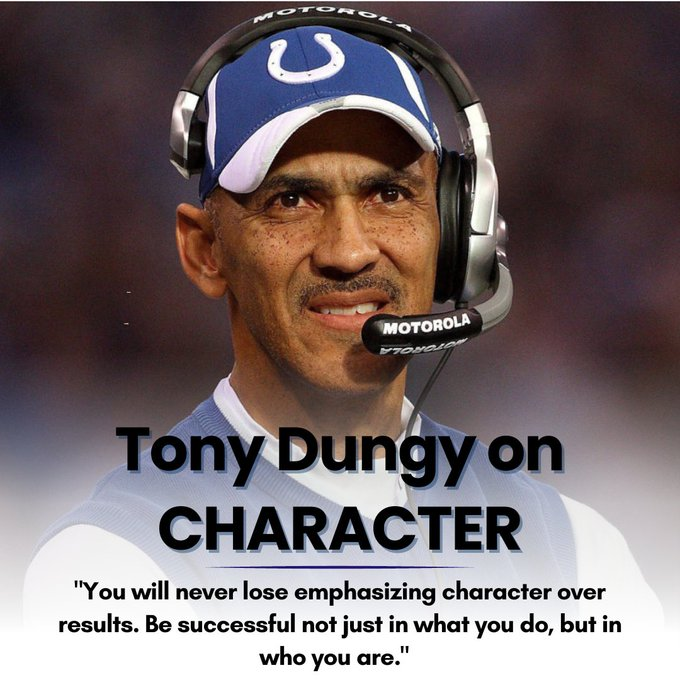
Tony Dungy said, "You will never lose emphasizing character over results. Be successful not just in what you do, but in who you are."
Good character is doing the right thing.
• It's your decisions.
• It's your actions.
• It's choosing integrity.
Good character isn't just a trait, it's a choice that leads to a life worth living.
It is living your life with integrity, honesty, responsibility, and self-discipline.
Your character strengthens each time you choose what's right over what's easy.
Tony Dungy on How to Build Character:
1. It's How You Do Things
Be a person of integrity. Be honest and upfront with people. Treat people the right way and choose to do things the right way.
When you have integrity in how you do things, people know that you care about them and that they can trust you.
2. Don't Let Anyone Else Define You
Live by your core values and what you believe in. This builds self-awareness and independence. It empowers you to develop a strong sense of self and stick with what you believe in.
When you learn to trust your judgment, you make decisions that align with your true self and navigate life with a sense of purpose.
3. Be A Problem Solver
There will always be challenges and problems, but you can't sit and feel sorry for yourself and make things worse. Don't blame yourself and don't blame others. Think about how you can make things better. Ask the question "How can I make the situation better?"
By asking this question, you are focusing on what you can control and how you can take action.
4. Drive Forward, not Backward
Setbacks are normal. Detours are normal. If you didn’t fail, you wouldn’t build the character you need for success. As a character leader, you need to be able to drive the team and yourself forward even when there are tough times.
Your ability to move forward will depend on how you learn from the past and use it as a guide, but don't live there. Control what you can control and look forward to the future.
5. Have the Courage and Be True to Yourself
Have the courage to stand by your convictions and values, even in the face of adversity or opposition. Be your authentic self. Make choices that align with your principles and ethics. It cultivates inner strength and moral fortitude.
This kind of courage and authenticity fosters self-respect and integrity, and is often inspirational to others.
6. Serve Others with Humility
Servant leadership means giving to others and giving to the team. You have to have a deep understanding of people and how you can help others. You have to have the humility to know that it isn't just about you, but it's important to give.
The smallest acts of kindness can make the biggest differences. When you support and guide others with kindness, you become a shining light for others.
"You should never be defined by what you do, by the things you have; you've got to define yourself by who you are and who you impact and how you impact people. And that's the thing I try to get across to my players." - Tony Dungy
What are your favorite coaching phrases?
Here are 20 positive coaching phrases that coaches can use.
1. "Iron sharpens Iron."
2. "Are you a fountain or a drain?"
3. "Trust the process."
4. "Be a champion by choice."
5. "Eliminate easy. Handle hard."
6. “Find an excuse or find a way.”
7. "Never give up."
8. "Celebrate the small wins."
9. "Teamwork makes the dream work."
10. "Mindset matters."
11. “Accept the struggle.”
12. “Get bitter or get better.”
13. “Stalk success.”
14. “Why me or try me?"
15. “Name it and praise it.”
16. "Pretender or Contender?"
17. "Are you Hungry or are you Starving?"
18. "Make preparation your separation."
19. "Help the Helper."
20. "No Deposit - No Return!"
What would you add?
-----
Follow me @gregberge for more Actionable Ideas on Coaching, Leadership, Culture, and Teams.
Join 8400+ others and subscribe to my free weekly newsletter. The subscription link is in my profile.
Being a student-athlete is not easy. It requires a level of dedication, sacrifice, and work that many aren’t willing to do. However, the responsibilities, benefits, and opportunities make the student-athlete experience transformational.
Being a student-athlete means more responsibilities:
*Clean social media
*Academic performance
*Substantial time commitment
*Eating right
*In the public eye
Being a student-athlete means more opportunities:
*Teammates, friendships, and mentors
*Life skill development
*Travel, hotel stays, and meals
*Scholarship opportunities
*Networking and career opportunities
@Coach_Carlyy I don’t know you but after looking at your page you have earned my respect by your hard work and accomplishments, you deserve that much. You gain my loyalty by the way you treat me.
“Athletes need to respect me.”
Yes, but no. Basic manners, yeah. Blindly follow you into a burning building, no.
I don’t chase respect with athletes. I chase LOYALTY.
Why? Because here’s the requirements of generating loyalty:
1. Being really effing good at my job.
Mental Toughness separates the Men from the Boys! 💪💯
“Mental toughness doesn't guarantee you'll win. But playing without it pretty much guarantees you won't.”
– Tim Grover
Talent plays ZERO role in how TOUGH you are!
Talent is given.
Toughness is decided.
It's a choice!
5 Hard Truths for Athletes:
1. No one owes you anything.
2. Nothing worth having comes easy.
3. Hard work is the price of admission.
4. Hard times create strong people.
5. Improvement has no offseason.
~ via @TheCoachJournal
As a coach this is what it’s all about. Former player @bryantmocaby coming back to watch us get the win.
You can probably tell he was one of Landon’s favorites!