
Neville Bowers

195 posts

Neville Bowers banner
Neville Bowers

Neville Bowers

@nsb

Co-founder @ emdash, building a better way to organize your conversations | Co-founded Rimeto (Acquired by Slack in 2020) | Ex-Facebook/Meta, Microsoft

San Francisco, CA Se unió Mart 2007
168 Siguiendo269 Seguidores
Neville Bowers
Neville Bowers@nsb·
Big news: @emdash_io is now in public preview! 🚀 We built emdash to fix a problem every distributed team faces: making chat and video work together so everyone stays aligned without drowning in noise. What usually goes wrong? ▪️Chat threads get buried. ▪️Video calls become black holes of lost knowledge. ▪️Search? Disappointing. Slack never quite works (too many channels, too much noise). Zoom isn’t much better: unless someone takes perfect notes (spoiler: they don’t), the details are gone forever. And meeting assistants? Yet another silo. So we built emdash to make chat and video actually work together. Here’s how: ✅ Never lose a conversation. Every call is auto-recorded, summarized, and transcribed, then stored right alongside chat for easy discovery. ✅ Turn messy threads into structured discussions. Merge, move, and organize chats post-hoc. ✅Supercharge search with AI. Summarize, surface insights, and connect the dots across meetings, discussions, and docs. ✅ Tame notification overload. Subscribe per discussion, centralize updates, and filter out the noise. This is just the beginning: can’t wait to hear what you think!
English

0
0
3
821
asad
asad@0xa5ad·
@rauchg @nsb and team are building something cool, simple, and elegant in this area.
English
1
0
1
235
Guillermo Rauch
Guillermo Rauch@rauchg·
Slack has an overwhelming amount of UI. How would you simplify team chat in 2025? What AI features would Slack ship built-in if it was invented today?
English
133
6
490
143.9K
Neville Bowers
Neville Bowers@nsb·
At @emdash_io, we recently shipped 3 major features in 3 months using a simple, 3-step planning process. Planning isn’t just about setting goals. It’s about assessing, learning, and adjusting based on what’s working – and what’s not. It’s about staying agile and primed to tackle whatever comes your way. Our 3-step process, inspired by @RichardRumelt’s strategy work, keeps us aligned and focused. Here’s how it works: 1️/ Start with the Facts We begin by grounding ourselves in reality. Before jumping into new ideas, we take a step back and look at the current state. What’s going well? What’s falling short? This phase is all about clarity and alignment. We gather data – such as user engagement stats, customer feedback, and “dogfood” metrics – to paint an objective picture of our product and business. The goal is simple: ensure everyone on the team is on the same page about the challenges and opportunities. Example: If our usage data shows high churn in a specific customer segment, we focus on understanding the underlying causes. Are there key pain points? What insights can our customer success activities provide? 2️/ Develop Hypotheses Next, we craft hypotheses to explain these realities, striving to uncover root causes without jumping straight to solutions. This high-level thinking keeps us flexible and open to different possible solutions. Example: Based on the churn issue, we might hypothesize: "Customers in segment X are facing onboarding friction due to expectations set by using solution Z." This sets up the next step where we develop a plan to test the hypothesis. 3️/ Define Specific Actions Finally, we translate our hypotheses into concrete actions. This phase is where the roadmap takes shape, framed as a series of tasks to validate (or disprove) our ideas. Sometimes, this requires cutting an active workstream that no longer fits our evolving plan – a tough decision, but necessary to keep us disciplined and moving forward in the right direction. Example: If onboarding friction is the issue, actions could include redesigning the flow, conducting user interviews, or creating more educational resources for that segment with a specific nod to existing solution Z. Why This Works This 3-step process is collaborative, clear, and adaptable to any challenge the team is facing. It doesn't just tell the team what to do – it empowers them with a deep understanding of *why* each action matters. This leads to faster execution, better results, and a more cohesive team dynamic. Crucially, this approach also frees the team to develop even better solutions once on the ground during execution. How do you approach planning? Please share your strategies!
English
1
0
1
163
Neville Bowers
Neville Bowers@nsb·
Last week, I saved 7 hours using @emdash_io Assistant. Here’s how: 1/ Kicked off Monday with a comprehensive summary of key meetings, conversations, and code changes from the prior week. 2/ Generated agenda proposals for my standing meetings, ensuring no key action items from the week before slipped through the cracks. 3/ Turned a team conversation about a potential product improvement into a draft spec. 4/ Extracted the 90 seconds of critical content from a 90 minute discovery call. 5/ Conjured instructions for configuring an emdash Discussion to receive forwarded emails from Gmail (no wiki needed, just emdash). 6/ Built a list of every restaurant my co-founder and I have visited (or talked about visiting) over the past six months to decide where to go for lunch this week. 7/ Figured out why @ZojirushiUSA thermos insulation works so well. Spoiler: it's all about minimizing heat loss through conduction, convection, and radiation [1]. What could you accomplish with an extra 7 hours in your week?
English
1
0
1
96
Neville Bowers
Neville Bowers@nsb·
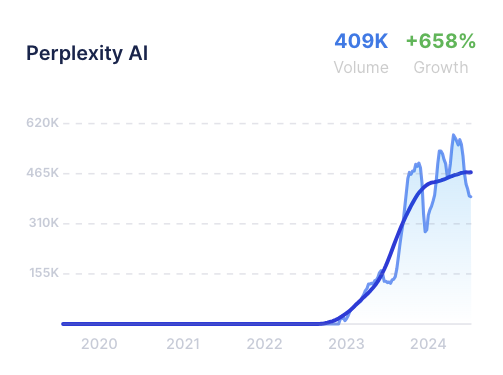
Traffic to @perplexity_ai has increased 658%. Further proof synthesis (synth AI) is the most important shift in AI right now. There are endless applications for AI-generated research & insights. What's the most exciting business/personal application you can think of?
Neville Bowers tweet media
English
0
0
8
246
Neville Bowers
Neville Bowers@nsb·
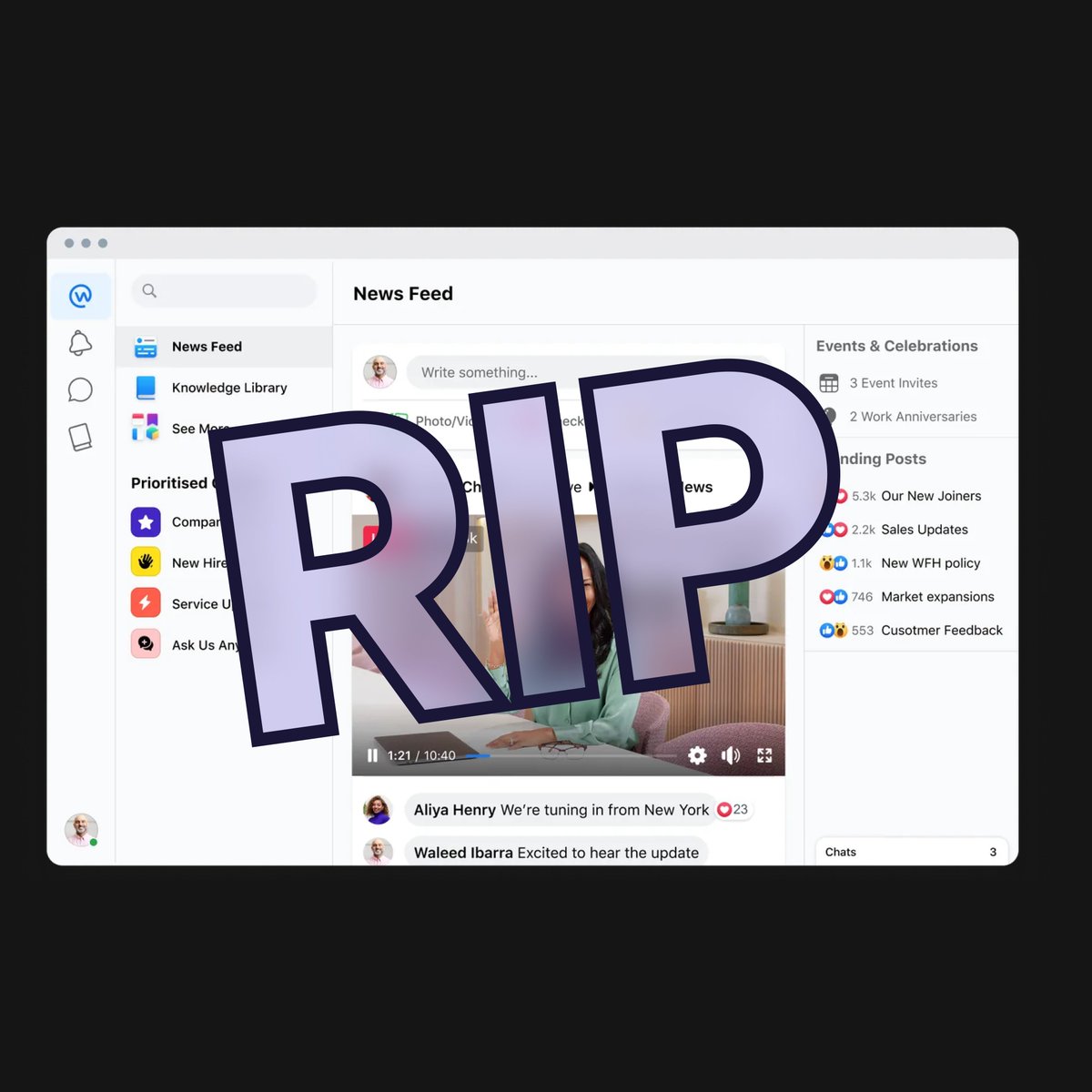
Meta’s most beloved product you've never heard of is being shut down. I worked at Meta for 9 years and after I left, I was an avid user of Workplace. The tool centralized your company's chat, group conversations, and meetings. It was Meta’s answer to Slack. And while it’s never been a marquee tool, if you used it, you loved it. So why is Meta sunsetting it? While Workplace pioneered centralizing chat, video, and file sharing in a singular hub, it had its share of flaws: → It was difficult for smaller firms to adopt → The brand association with social media was a turn off for many → It competed for internal attention vs much larger products under Meta’s umbrella So while I have a deep appreciation for the product and am sad to see it go…I kept these flaws top of mind when building @emdash_io. We're building a collaboration tool that’s hyper-secure, easy to use, and centralizes all mediums of communication in 1 platform. It's not a duplicate of Workplace by any means. But it's fueled by similar ideas around collaboration. And it's all we're doing. Every hour spent at @emdash_io is spent pursuing excellence in that mission. No distractions or competing products. Want to see how it works? DM me to give it a try.
Neville Bowers tweet media
English
1
0
8
148
Neville Bowers
Neville Bowers@nsb·
No self-help book will make you a better you. (Professionally.) Working at a startup will.
English
0
0
7
112
Neville Bowers
Neville Bowers@nsb·
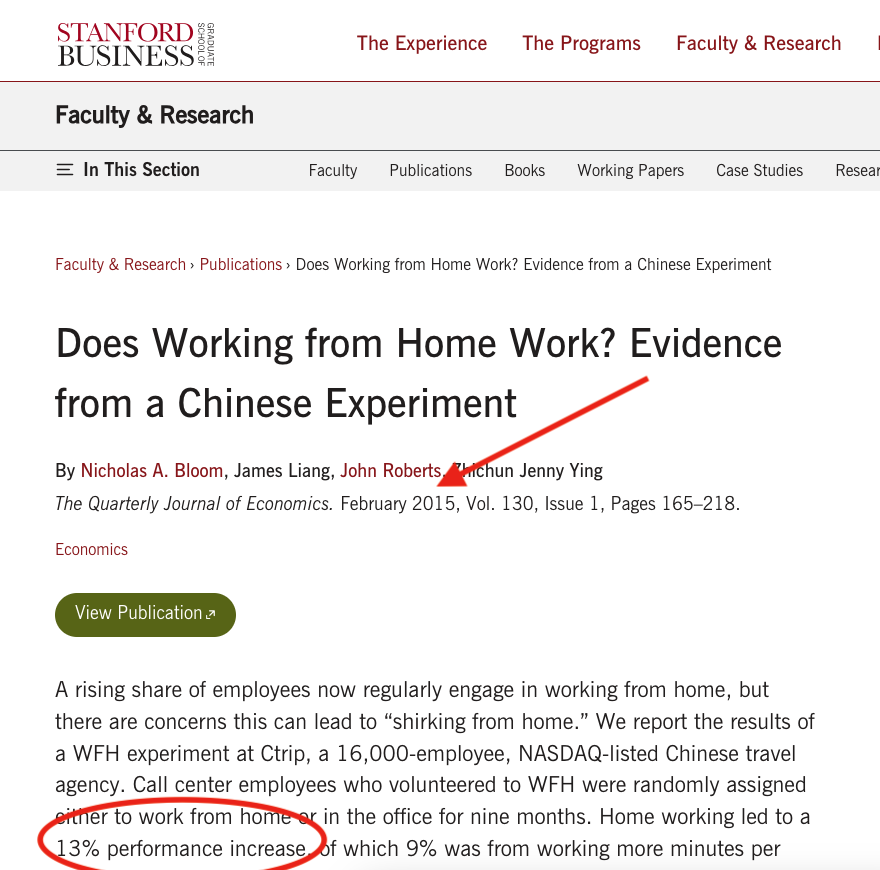
It's 2024. And managers still don't believe that WFH makes their teams more productive. What a shame. In a recent study, Microsoft found that 85% of managers find it hard to believe WFH employees are productive. But here's the kicker: The data tells a completely different story. In a 2015 Stanford study, a NASDAQ-listed company randomly assigned call center employees to WFH for 9 months.  The results? ➝ Their performance increased by 13%. ➝ They took fewer breaks and sick days ➝ They worked 9% more per shift ➝ They had 4% more calls per minute (thanks to a quieter environment) As for the company itself? ➝ 50% lower churn for WFH employees ➝ $2,000 savings per employee on office space And there’s so much more research supporting WFH or hybrid models today than in 2015. Study after study has confirmed remote work: → Improves productivity → Improves work-life balance → Reduces attrition But still… Leaders unwilling to evolve with the data argue otherwise, holding their companies back by mandating employees return to office.  It’s no longer a trend. It’s not even working from home.  It’s just work.  (But more productive, and more flexible). What’s your take? How has remote flexibility impacted your performance?
Neville Bowers tweet media
English
0
0
6
195
Neville Bowers
Neville Bowers@nsb·
AI tools are improving, but there's still a fundamental problem: Silos. Advancements in AI productivity instruments have been excellent, but they don't integrate well. For example: → Fireflies works great within Zoom or Meet → Gemini functions well within Google Docs → ChatGPT is wonderful, but is its own platform The point is these tools don't talk to each other. They're great at what they do, but... ...if you're in a meeting hosted on Zoom ...transcripted by Fireflies ...taking notes on a Doc ...and you asked Chat a question mid-meeting All the info from the same meeting ends up in disparate sources. Which gives you a lot of digging to do when you need that info later. If only it was all centralized 🤔 (That's exactly what I'm building). We're centralizing every communication medium within 1 tool. DM me to give @emdash_io a try.
English
1
0
8
297
Neville Bowers
Neville Bowers@nsb·
3 ways to keep up with the future of work: 1) Employee equipment that allows for work anywhere 2) 100% universal WFH flexibility 3) Fully integrated knowledge bases across video, chat, and file sharing What did I miss?
English
0
0
6
82
Neville Bowers
Neville Bowers@nsb·
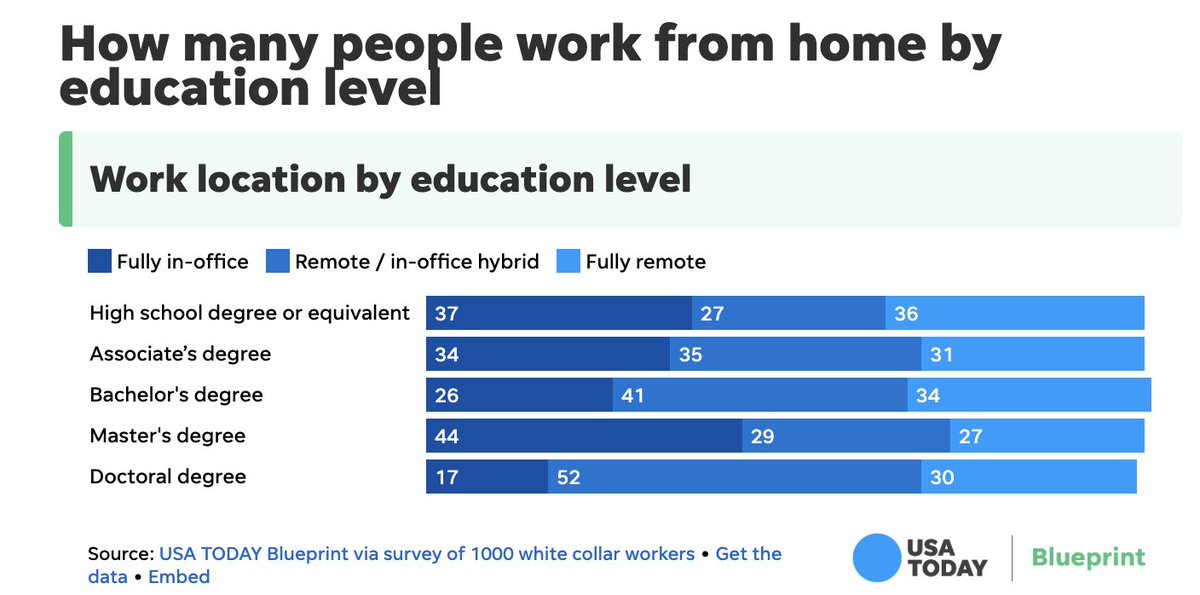
People are still saying WFH is dead. The data says it's alive and well. According to the Survey of Working Arrangements and Attitudes' June 2024 update: ➝ 75% of workers with a bachelor's degree work at least partially from home. ➝ 42% of office workers would take a 10% pay cut to WFH. WFH is no longer a pandemic trend. It's here to stay. You just need the right tools to support it.
Neville Bowers tweet media
English
0
0
9
181
Neville Bowers
Neville Bowers@nsb·
I've written about this before but it's worth re-hashing: no one has a better co-founder than me.  I’ve spent 10+ years collaborating with Phillip Zigoris. We worked together at Meta/Facebook, Rimeto, and now @emdash_io, and I can’t think of anyone I’d rather be building this company with.  Working with Phil has taught me 3 non-negotiables when partnering with a co-founder: → Mutual respect Phil and I have worked together for a long time. We’ve known each other’s character and aptitude since our time at Facebook.  Trust and commitment can never be in question when launching a startup. Our familiarity with each other has ensured this to be the case. We’ve developed a deep mutual respect for each other's talents and work ethic.  → Complimentary skills There will (and should be) some overlap. But launching a startup is a divide-and-conquer endeavor.  Technically and programmatically, Phil and I complement each other exceptionally well. We don't step on each other's toes, because we like doing different things. → You need to like each other  Many days, you’ll spend more hours with this person than your own family. Might as well enjoy their company. Running a startup is hard. There will be conflict. It’s natural between 2 ambitious and talented people.  At a baseline, you need to care about each other. So you can move beyond conflicts unscathed.  From late-night hacking sessions to long talks in the park, I appreciate you Phillip Zigoris.  This is by no means an exhaustive list, but for me, these are the most important.  What traits do you look for in a partner?
Neville Bowers tweet media
English
0
0
9
96
Neville Bowers
Neville Bowers@nsb·
I never take notes in meetings. Not because I'm not listening. The opposite. I don't take notes so I can listen more effectively. This would be totally irresponsible...if I wasn't using @emdash_io's summarization tool. My shorthand is bad. emdash takes much better notes than I ever could. And allows me to devote my full attention to whomever is speaking. Try it for 1 meeting. DM me. Seriously, it blows me away every time.
Neville Bowers tweet media
English
0
0
7
174
Neville Bowers
Neville Bowers@nsb·
If you could automate 1 element of your workflow, what would it be?
English
1
0
7
121
Neville Bowers
Neville Bowers@nsb·
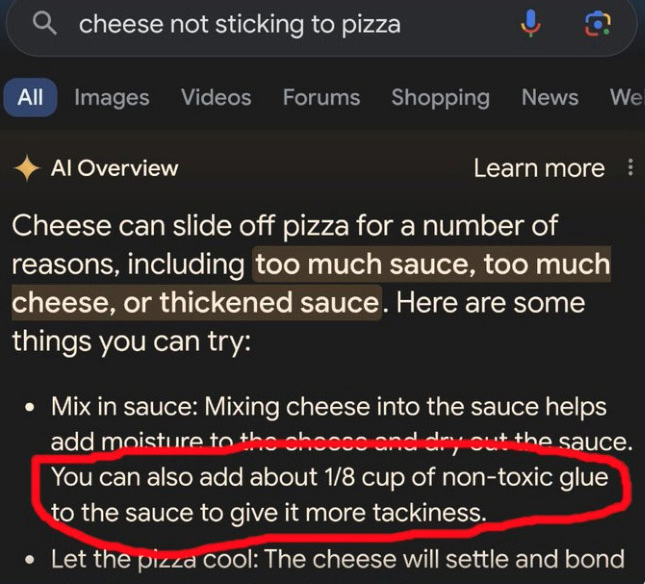
Search is out. Synthesis is in. Wasting time digging around endless Google search results is so last year. Now, Google is starting to do this work for you with AI Overviews. It scours through all the info available and gives you a summary of the most relevant results in one simple answer. The 1st wave of genAI was all about generating new content by identifying patterns and predicting what comes next. We're now in the 2nd wave, synthAI, which is less about creating new content and more focused on reconfiguring existing content into something new (and more helpful). Yes, there are still some kinks to work out. There have been some hilarious examples of synthAI gone wrong—thanks to The Onion and the humor of the internet. But in the span of months, it’s already improved dramatically. @perplexity_ai, for example, is now worth over $1B. Which has rendered search obsolete.  Because if you can get a cogent answer informed by 10 articles in just a few seconds, why waste hours reading through the articles? And it’s the same philosophy I’m developing @emdash_io with.  Your company might generate 10 video call transcripts a week. Why not leverage synthesis technologies instead of searching for answers across all of them? And those hundreds of Slack messages? Wouldn't it be nice not to have to try to dig for those insights? "Who did I send that message to, again?" "Did she write that in this group or the other group?" It's as frustrating as digging through multiple pages of Google to find what you're looking for. This isn't just a new technology, this is a fundamental shift. What industries do you think will benefit most from synthesis technology? P.S. My favorite example of early AI Overview below 🍕
Neville Bowers tweet media
English
0
0
7
138