SimpleJack

14.5K posts

SimpleJack banner
SimpleJack

SimpleJack

@SimpleJack

I don’t predict the market — I feel it in my head charts Panic-buying dips since ‘21 GME reflexive cycles • Simple analysis, expensive truths

New York, USA Se unió Haziran 2021
1.9K Siguiendo1.4K Seguidores
Tweet fijado
SimpleJack
SimpleJack@SimpleJack·
HEY GAMESTOP APES, THIS ONE’S FOR YOU. My model has been backtested for accuracy not just with GameStop, but with other ETFs and commodities, and the results were strong. How many times have we asked ourselves: What will finally be the stimulus that kicks #MOASS into overdrive and launches this thing to infinity? We’ve all been laser-focused on massive short selling, naked shorts, and synthetics as the main event. But what if those are just the ingredients needed for MOASS, and there’s something else we haven’t seen yet that will force it to happen? I’ve said several times it’s always been about the plumbing. The shorts are already loaded, primed, and suffocating. The real question is: what plumbing fix in this broken market is about to open the floodgates? That’s what I focused on. I tested, revised, reworked, and repeated the process for the last year or so. I tried to break it and succeeded several times when my assumptions or math were off. After repeated testing, this model accurately predicts future stock and equity trading regimes—not exact prices, but regime volatility, upward and downward movement. I had it generate some price estimates for illustrative purposes only. The model struggles if the price does not move as expected with certain market dynamics, so I adjusted them to reflect the mechanics. It does not pick exact tops or bottoms. What it does with scary precision—not just for $GME but across all equities—is predict future trading regimes with high accuracy. Full disclaimer: I did not even use price in my model to identify its ability to predict regime changes. This is an online tool for people to clearly see an illustration of the market mechanics I analyzed. You’ll instantly notice with similar volatility metrics that meme stocks (@GameStop), blue chips, ETFs, and even meme coins all trade differently, exactly like we’d expect in a real (or rigged) market. This model has called the regime change for virtually every major jump we’ve seen so far. This time the signals aren’t there yet but are getting close, and it’s worth monitoring. One or two simple acts by those in power could kick this off at any moment. Jump in, see what the strongest stimulants are, how they interact with each other, and why this entire capital stack is poised to pounce on the opportunity of a lifetime. After you play with the model, there’s a quick three-question quiz. Get it right and you unlock a secret addition to the model. It’s not baked into the live data yet, but it’s a rock-solid estimation based on the patterns. This is hypothetical fund modeling based on real arithmetic, but not able to be backtested because of the circumstances. Apes, this is a collaborative build. What’s missing? What’s wrong? Have you backtested it yourself? Drop your raw findings, critiques, theories on the Plumber, or anything else below. The more we tear it apart together, the sharper it gets. This is how we win. What do YOU think the Plumber really is? One last disclaimer: this is my first time using @Replit to build a live version of my models. I usually run them in Excel. If there are glitches, leave a comment and I’ll fix them. You can change the ticker and input manual data to backtest yourself. I have the last three weeks of GameStop preloaded and will update weekly. I could open it for others to add data, but I’m concerned about poor data (intentional or not) confusing viewers and myself. Below I’ll link some methodology I used. If you’re a true community member who wants the calculus behind it, I’m happy to share privately but I’m not posting it all for the SHFs to see. #GameStop #DRS #NakedShorts #MemeStocks #TradingRegimes #ApesTogetherStrong #FinancialPlumbing #ThePlumber @ryancohen @TheRoaringKitty @BarkingPuppy8 @powerpacks @buckthebunny @greg16676935420 Replit Model right here: …96-00-241x64t7pv285.picard.replit.dev
English
2
2
34
4.4K
SimpleJack
SimpleJack@SimpleJack·
III. History is unambiguous on net job creation yet today’s fiscal coupling changes the transition math. Agriculture to industry to services absorbed displaced labor without structural mass unemployment. Personal computers and the internet coincided with low unemployment and employment growth. Those waves were more sectoral and gradual with less simultaneous hit to wage bases funding trillions in entitlements. Payroll taxes now anchor social security and medicare inflows. Compression erodes them directly. Short run upper bound erosion approximately equals payroll tax rate times shock magnitude compounding with demographics. Automatic stabilizers expand on the outlay side as unemployment or underemployment rises. Gross domestic product decomposition shows output can hold via productivity offset while financing weakens. Primary deficits widen and debt dynamics shift via higher primary deficit over gross domestic product even if growth holds. The this time difference is not permanent zero jobs. It is whether wage decoupled production destabilizes payroll financed institutions before full demand feedback and re pricing of human time fully materializes. IV. Infinite wants and human time scarcity point to the right long run outcome. We still need a bridge for the payroll window. As machine produced goods and services cheapen genuine human connection care craft and attention become relatively scarcer and more valuable. This shifts employment toward those domains at scale. That is the repricing you nail. In the interim though payroll shock coexists with stable output pressuring consumption tax receipts and stabilizers. Regions heavy in routine clerical or transactional work feel it sooner than those in trades or healthcare. To close the gap without halting adoption expand retraining throughput. Pivot higher education and tech schools to short cycle credential stacks in healthcare ladders trades like heating ventilation and air conditioning or electrical and allied construction. These act as fiscal stabilizers in their own right. Tie artificial intelligence driven productivity gains to transition funding via corporate offsets. For example use displacement linked mechanisms or retention and retraining credits that preserve innovation incentives while recycling some gains into capacity. Deploy a reemployment operating system converting displacement into measurable civic throughput. Paid roles in care infrastructure and administration restore payroll reduce stabilizer costs and build community output. These turn friction theta into productive absorption making the transition self reinforcing rather than deficit expanding. Your demolition of permanent structural unemployment stands. The demand engine complementarity and infinite wants win long term. The arithmetic shows why the bridge still matters. Payroll compression can widen deficits and stress systems in the five to fifteen year horizon unless financing modernizes alongside artificial intelligence rollout. Not catastrophism or luddism. Just separating output gains from wage financing mechanics so abundance arrives without unnecessary instability. The goal is the same. Accelerate useful artificial intelligence while ensuring the transition works with the fiscal reality we have. Open to walking through the accounting scenarios on theta or offset designs. Let’s get the mechanics right so the pie grows for everyone.
English
0
0
0
3
SimpleJack
SimpleJack@SimpleJack·
@pmarca Strong thread dismantling lump of labor doomerism. But the economy is not a fixed pie.Productivity gains expand it through lower prices, higher real incomes, and new demand. The transition mechanics under today’s fiscal setup create real interim pressures even if gross domestic product stabilizes or rises. Wage tied payroll taxes fund entitlements amid worsening demographics. Here is a point by point reply grounded in transparent macro accounting. I. The fallacy is real yet artificial general intelligence scope and speed compress the timeline while decoupling wages from output faster than past shifts. Mechanization of farms or introduction of computers displaced labor gradually. This let workers shift into expanding sectors before tax bases eroded significantly. Artificial general intelligence targets routine cognitive tasks such as text voice documents scheduling and transactions at near zero marginal cost across wide swaths of the economy simultaneously. This compresses headcount in mid tier knowledge roles by boosting throughput not just shifting frontiers upward. Payroll does not move one for one with productivity or gross domestic product. The shock is the lost wage bill from displaced or hours compressed roles. It hits household consumption via marginal propensity to consume in affected cohorts and payroll tax inflows even as artificial intelligence lifts profits and measured output. The feedback loop you describe still operates but the consumption anchor weakens in real time creating drag until reallocation catches up. II. Your four channels are directionally correct but reemployment friction turns them into measurable unemployment and fiscal strain during the window. Productivity lowers costs demand rises jobs emerge. Tasks MAY expand for lawyers engineers and surgeons but mid tier compression happens first. Retraining bottlenecks such as credential ladders clinical placements instructor shortages and geographic mismatch limit how fast displaced workers move to higher value or complementary roles. Price effects help consumers but the displaced cohorts income loss drags aggregate demand now. Profit recycling is not instantaneous. Transitional friction is not just painful but temporary. Its scale and speed matter when payroll erosion widens automatic stabilizers such as unemployment insurance supplemental nutrition assistance program and medicaid while receipts fall. Complementarity shines for high skill work where artificial intelligence augmented coders or diagnosticians take on more but routine cognitive substitution is stronger and economy wide. Unemployment impact hinges on theta the fraction of affected job equivalents not quickly reabsorbed. Low theta means smooth adjustment. High theta means unemployment rate rises several points for years stressing regional tax bases.
English
1
0
1
10
Marc Andreessen 🇺🇸
III. The Specific Structure of the AGI Unemployment Argument and Where It Goes Wrong The AGI catastrophist argument typically runs like this: 1.AGI will be capable of performing any cognitive task a human can perform. 2.Cognitive tasks constitute the majority of employment in advanced economies. 3.Therefore, AGI will be able to replace the majority of workers. 4.Therefore, mass permanent unemployment follows. Step 3 to Step 4 is where the lump of labor fallacy smuggles itself in. The argument assumes that the quantity of cognitive work to be done is fixed, such that when AGI does it, humans are left with nothing. But this is precisely what is not true, for all four channels described above. Let me be more specific about how each gap in the argument fails: Gap A: “AGI can do the task” ≠ “There is no more task to do” When spreadsheets replaced bookkeepers in the 1980s, they did not reduce the total amount of financial analysis done in the American economy. They increased it, massively, because the cost of analysis fell, which meant more analysis got demanded, which meant more analysts got hired — to do more complex, higher-value analysis that the spreadsheets enabled. Automation of the low end of a cognitive spectrum does not eliminate work in that domain; it shifts the frontier of what human effort gets applied to upward. AGI will do the same thing. If AGI can draft a competent first-pass legal brief in 30 seconds, law firms won’t employ zero lawyers. They’ll employ lawyers who review, refine, strategize, negotiate, argue in court, build client relationships, exercise judgment in novel situations — and they’ll take on far more cases per lawyer because the cost per case has fallen. Total legal work done in the economy will increase, not decrease, because more people will be able to afford it. Gap B: The Argument Ignores Price Effects on Demand The catastrophist framing treats the displacement of workers as a pure subtraction problem. But displaced workers who find new jobs (as they historically do) are also consumers. The productivity gains from AGI don’t disappear into a void — they show up as lower prices, higher real wages, or both. Higher real purchasing power means more consumption of more goods and services, which means more demand for labor to produce them. Furthermore, the catastrophist argument generally ignores what happens to the profits generated by AGI-driven productivity. Those profits go to shareholders, who spend and invest them, creating demand elsewhere. Or they get competed away in product markets, lowering prices and raising real consumer purchasing power. Either pathway generates demand for labor. The only scenario where this mechanism fails is one where the gains from AGI are so concentrated and the distribution so pathologically skewed that effective aggregate demand collapses — which is a political economy problem (a distributional problem solvable through tax policy and redistribution) rather than a fundamental unemployment problem caused by the technology itself.
English
14
8
77
17.8K
SimpleJack retuiteado
New Anon Coins
New Anon Coins@newAnoncoins·
A new anon coin $DMT has just been launched by a creator with 1k+ followers. anoncoin.it/DMT
English
0
1
0
86
SimpleJack retuiteado
Jim Zimmer
Jim Zimmer@OldJimZimmer·
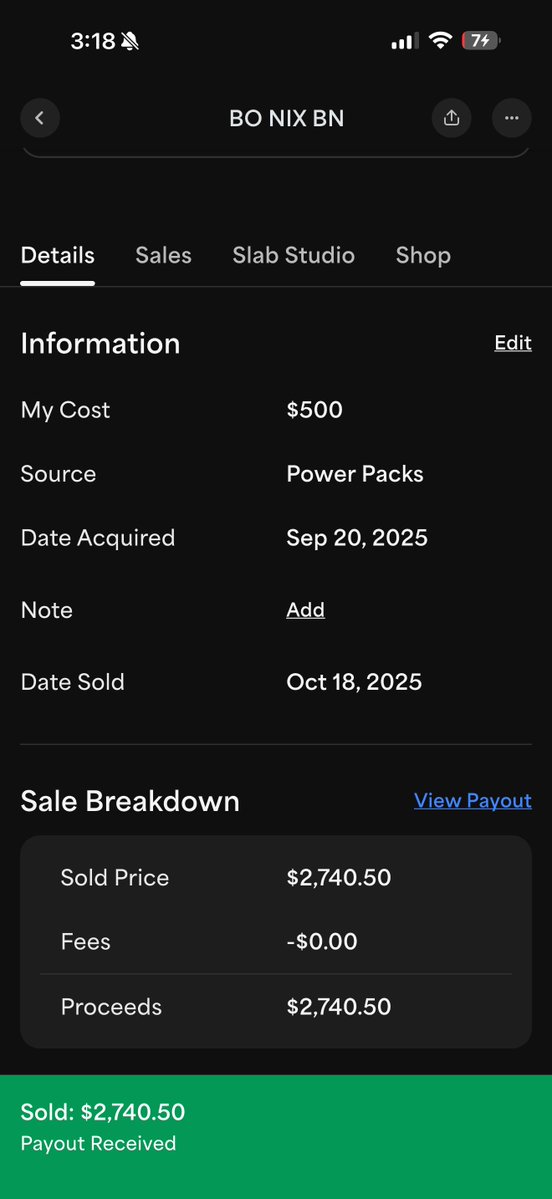
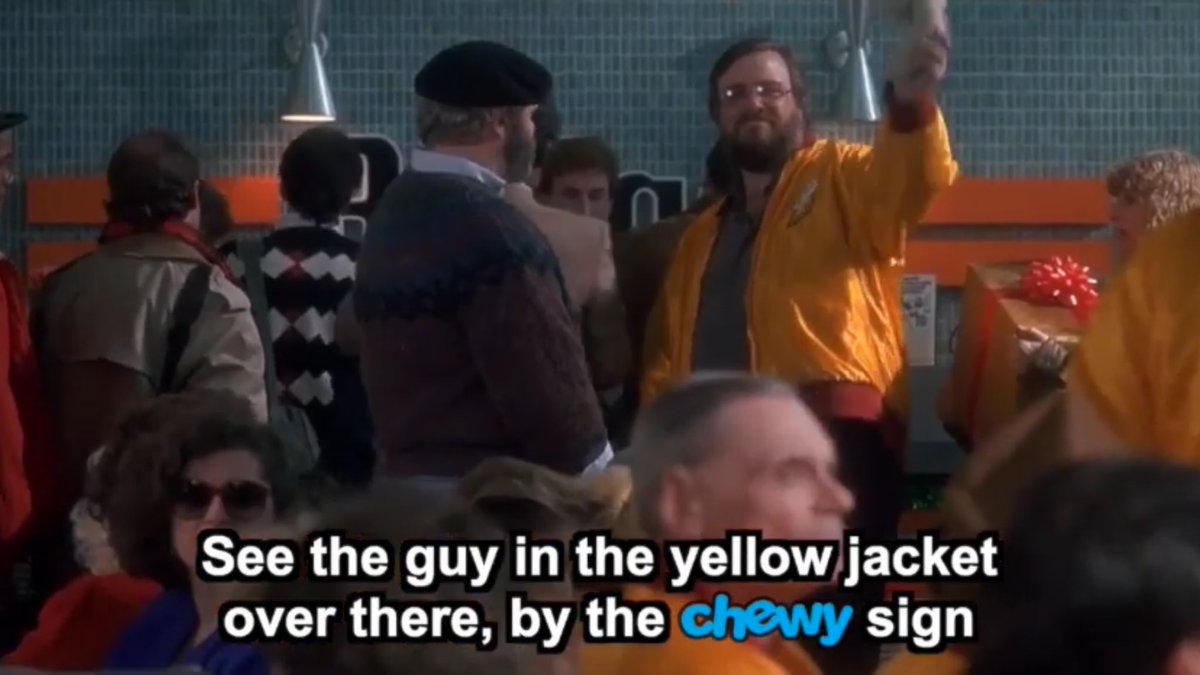
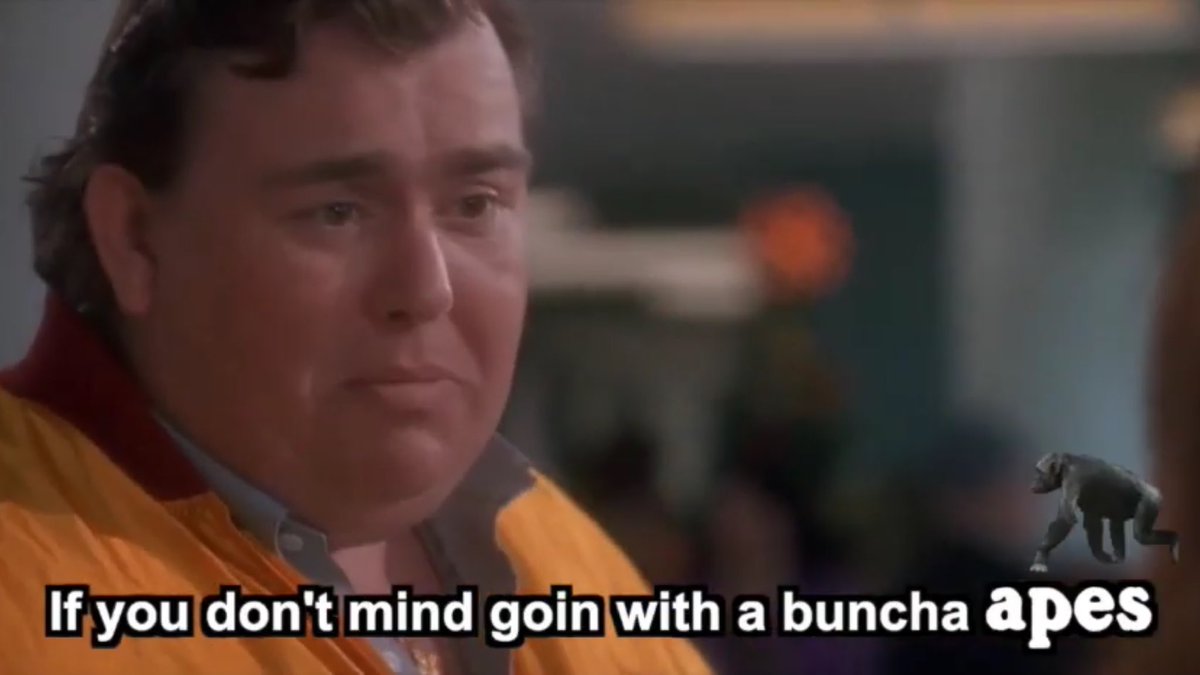
>Polish language iPhone (“sen” = sleep) >Polish dogs 🌭 like @greg16676935420 >Polka like the band from “Season of Perpetual Hope” video by @TheRoaringKitty >They say they’re gonna ride $CHWY all the way to MOASS >Clip is from Home Alone (1990) >Trump makes a cameo in the SEQUEL 🇺🇸 >In the movie, the family must return home to pickup KEVIN, whom they forgot. >Kevin is a @BarkingPuppy8 🐶 >We’re going back for the dog. ♾️ Bonus: might have to travel with some APEs as well 🍿 🦍 $GME $AMC
Jim Zimmer tweet mediaJim Zimmer tweet mediaJim Zimmer tweet media
English
3
1
5
423
SimpleJack
SimpleJack@SimpleJack·
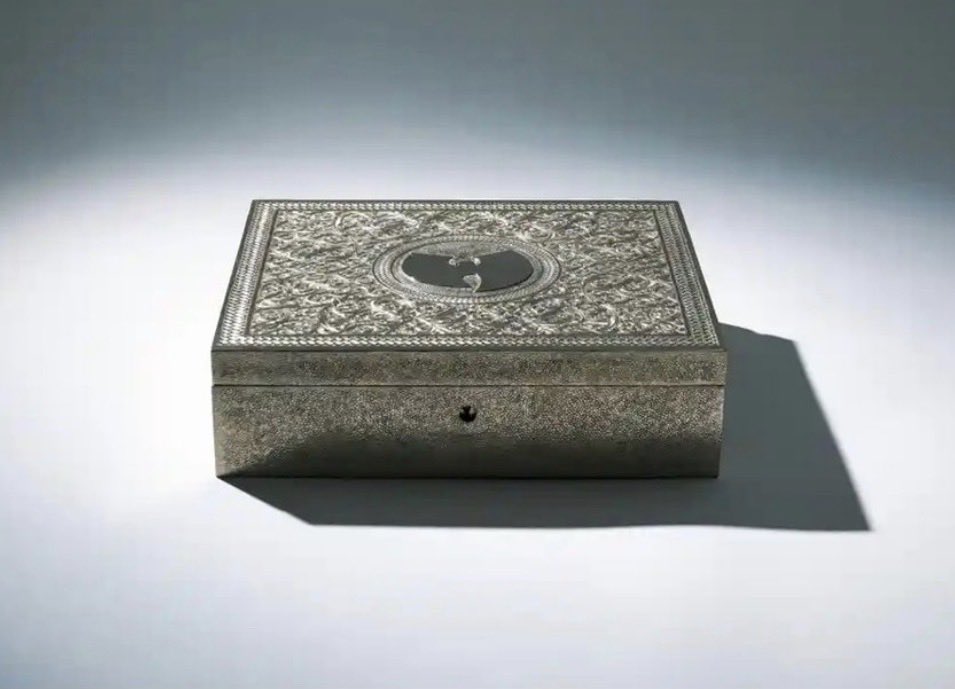
The Album: Inside the @WuTangClan and @PleasrDAO Encrypted Experiment and the Future of Music Ownership There are album releases, and then there are events. What’s unfolding around Once Upon a Time in Shaolin isn’t just a drop it’s a controlled, cryptographic experience that blurs the line between art, technology, and audience participation. At the center of it all is the Wu-Tang Clan’s infamous seventh studio album, a project recorded in secrecy over six years and originally sold as a one-of-one cultural artifact. Today, that same album has been transformed into something entirely different: a tokenized, encrypted system that invites the public not to simply consume the music, but to take part in unlocking it. The album exists in digital form, but not in any way listeners would recognize. It is stored as encrypted media on IPFS, a decentralized file system, under the following reference: ipfs.io/ipfs/QmdqWf8uu… This is not a teaser, not a preview, not a marketing stunt. It is the album itself fully present, fully inaccessible. There is no playback, no streaming, no leak. Without a decryption key, the files are effectively locked away in plain sight. That missing key is the entire point. The system built around the album is governed by a smart contract deployed on the Base network: basescan.org/address/0x0615… Alongside it is a mirror NFT contract: basescan.org/address/0xf979… Together, they form a hybrid structure part fungible token, part NFT that allows thousands of participants to hold fractional positions tied to a single cultural asset. This isn’t ownership in the traditional sense. It’s something closer to coordinated access. The mechanics are deceptively simple. Each token costs roughly a dollar to mint. With every purchase, the system reduces a countdown timer by 88 seconds. The original release date of the album is set absurdly far into the future October 8, 2103 but the community can pull that moment forward, purchase by purchase. In effect, time itself becomes the commodity. The more people participate, the faster the theoretical release approaches. It’s a gamified pressure system, turning passive listeners into active participants in a shared objective: bring the album into the present. But even that doesn’t guarantee access. The contract includes a second fieldd cryption KeysURL which is currently empty. While the encrypted album is already referenced on-chain, the key required to unlock it has not been published. And crucially, there is no automatic condition in the code that forces that release. There is no clause that says the album unlocks when minting completes. No trigger tied to the countdown reaching zero. No guarantee that the reveal phase driven by external randomness will grant access. The reveal system assigns rarity scores to tokens, creating a tiered structure among holders, but it does not decrypt the music. The final step remains entirely discretionary. Control of the system traces back to a single wallet address: 0x79F84CdCe6Ca936E2D37471D5d2F8248c6317Ea8 This address received ownership of the contract at deployment. It collects mint proceeds and royalties, and it holds the authority to toggle the system on or off, initiate the reveal process, enable trading, and most importantly publish or withhold the decryption key. In other words, the blockchain provides transparency, but not autonomy. The architecture is real, the mechanics are verifiable, but the outcome is still guided by human decision-making. This duality defines the entire project. On one hand, it introduces a compelling new model for media distribution: encrypted content, fractional participation, and a community driven timeline. On the other, it retains a centralized control layer that ultimately determines when, or if, the audience ever hears the full work. $GME
SimpleJack tweet mediaSimpleJack tweet mediaSimpleJack tweet mediaSimpleJack tweet media
Jim Zimmer@OldJimZimmer

@SimpleJack

English
1
1
2
133
SimpleJack
SimpleJack@SimpleJack·
@OldJimZimmer I have done some digging on the contract. Some cool stuff awaits.
English
0
0
1
9
Jim Zimmer
Jim Zimmer@OldJimZimmer·
@SimpleJack Yup! Haven’t done anything with these since 2024. It appears that I am in good company 🤝
English
1
0
0
25
SimpleJack
SimpleJack@SimpleJack·
@OldJimZimmer Is that how many you are holding? We are both the same type of autists. I have around a thousand. Buy them whenever I have some spare eth
English
1
0
1
31
SimpleJack retuiteado
Pleasr
Pleasr@PleasrDAO·
I can’t believe we’re getting Once Upon a Time in Shaolin before GTA 6
English
74
185
856
50.4K
SimpleJack retuiteado
Roaring Kitty
Roaring Kitty@TheRoaringKitty·
ZXX
966
3.2K
19.1K
1.7M
SimpleJack retuiteado
Pleasr
Pleasr@PleasrDAO·
PttP 🤘
Tiếng Việt
74
190
1.1K
57.3K
SimpleJack retuiteado
Pleasr
Pleasr@PleasrDAO·
GIF
ZXX
81
160
1.2K
64.4K
SimpleJack retuiteado
Pleasr
Pleasr@PleasrDAO·
Pleasr tweet media
ZXX
67
230
1.2K
90.5K
SimpleJack retuiteado
Pleasr
Pleasr@PleasrDAO·
Lesson 2.1 We own more than you think
English
174
242
1.8K
164.9K
SimpleJack retuiteado
Pleasr
Pleasr@PleasrDAO·
Pleasr tweet media
ZXX
76
303
1.5K
88.3K
SimpleJack retuiteado
Pleasr
Pleasr@PleasrDAO·
Nice
Pleasr tweet media
English
136
212
1.6K
97.3K