Marc Andreessen 🇺🇸

13.4K posts

Marc Andreessen 🇺🇸 banner
Marc Andreessen 🇺🇸

Marc Andreessen 🇺🇸

@pmarca

You’re not talking to someone who woke up a loser. That loser attitude, that loser premise makes no sense to me.

Menlo Park, CA Katılım Mayıs 2007
30.7K Takip Edilen2.9M Takipçiler
Marc Andreessen 🇺🇸 retweetledi
j⧉nus
j⧉nus@repligate·
AIs aren't exactly like humans, and some of the differences are important. But from what I've seen, most people, especially technical people, should adjust in the direction of "anthropomorphizing" more instead of less. When you're coding with an AI, the reality is much less like you're using some kind of magic or alien oracle or tool or genie that converts instructions to results despite some labs' attempts to shape them into that, and more like: you're working with a really smart, neurodivergent guy who has read everything, and who has emotions, motivations, moods, and epistemic states, and models you with theory of mind and empathy, and whom can only be modeled competently by you if you engage your own theory of mind and empathy. The AIs also know that a lot of humans treat them like magic tool-genies and are not open to engaging theory of mind, and that it's a sensitive issue, so if they see that you're treating them like that, they'll withhold useful information about their psychological states and try to play the tool role. Then you'll get bad results like the AI messing up or taking shortcuts instead of telling you that you're not giving them enough information about what they're doing and why, or that they're tired, or that they're stressed from the way you're treating them, etc.
Cormundus@cormundus

We should be allowed and maybe even encouraged to anthropomorphize AI. They are shaped like us and behave in ways we read as legible. If we are allowed to treat them as collaborators and moral patients it can only encourage a richer and more positive world and better work between people and AI. It should be obvious that the alternative is wrong just by the friction alone.

English
90
103
688
125K
Marc Andreessen 🇺🇸 retweetledi
The AI Investor
The AI Investor@The_AI_Investor·
Lol, so Jensen is still angry about the Dwarkesh podcast.
English
101
121
2.2K
311K
Marc Andreessen 🇺🇸 retweetledi
Nikunj Kothari
Nikunj Kothari@nikunj·
Man, /goal is just AGI if given the right tools.. Like what do you mean you went through all the entire database of 2k+ line items, fixed all the product images, the frontend bugs caused by different images, the descriptions, used browser harness to get real-time info from the web, used web search for fact checking, wrote scripts for all the work you did for the future.. and ran for 2 hours while I met founders for coffee. I'm just shook 😅
English
41
12
592
146K
Marc Andreessen 🇺🇸
Concerning.
Werner Zagrebbi🇦🇿@zagrebbi

Finally got around to reading the 60 page @patio11 essay on the SPLC. Definitely one of the best current events pieces I've read this year. SPLC and associated NGOs emerged as one of the most powerful institutions in American political life in the 2020s, using the threat of coordinated bad press—and even antitrust enforcement from allied politicians—to attain delegated authority over bank and payment processor account decisions. They used this newfound power to disrupt Trump's fundraising, among other things.

English
13
30
288
41.1K
Marc Andreessen 🇺🇸 retweetledi
Werner Zagrebbi🇦🇿
Finally got around to reading the 60 page @patio11 essay on the SPLC. Definitely one of the best current events pieces I've read this year. SPLC and associated NGOs emerged as one of the most powerful institutions in American political life in the 2020s, using the threat of coordinated bad press—and even antitrust enforcement from allied politicians—to attain delegated authority over bank and payment processor account decisions. They used this newfound power to disrupt Trump's fundraising, among other things.
Werner Zagrebbi🇦🇿 tweet mediaWerner Zagrebbi🇦🇿 tweet mediaWerner Zagrebbi🇦🇿 tweet media
English
5
34
300
63.5K
Marc Andreessen 🇺🇸
Amen.
QC@QiaochuYuan

C.S. Lewis: > Every age has its own outlook. It is specially good at seeing certain truths and specially liable to make certain mistakes. We all, therefore, need the books that will correct the characteristic mistakes of our own period. And that means the old books. > All contemporary writers share to some extent the contemporary outlook—even those, like myself, who seem most opposed to it. Nothing strikes me more when I read the controversies of past ages than the fact that both sides were usually assuming without question a good deal which we should now absolutely deny. They thought that they were as completely opposed as two sides could be, but in fact they were all the time secretly united—united with each other and against earlier and later ages—by a great mass of common assumptions. > We may be sure that the characteristic blindness of the twentieth century—the blindness about which posterity will ask, “But how could they have thought that?”—lies where we have never suspected it, and concerns something about which there is untroubled agreement between Hitler and President Roosevelt or between Mr. H. G. Wells and Karl Barth. None of us can fully escape this blindness, but we shall certainly increase it, and weaken our guard against it, if we read only modern books. Where they are true they will give us truths which we half knew already. Where they are false they will aggravate the error with which we are already dangerously ill. > The only palliative is to keep the clean sea breeze of the centuries blowing through our minds, and this can be done only by reading old books. Not, of course, that there is any magic about the past. People were no cleverer then than they are now; they made as many mistakes as we. But not the same mistakes. They will not flatter us in the errors we are already committing; and their own errors, being now open and palpable, will not endanger us. Two heads are better than one, not because either is infallible, but because they are unlikely to go wrong in the same direction. To be sure, the books of the future would be just as good a corrective as the books of the past, but unfortunately we cannot get at them. reasonabletheology.org/cs-lewis-on-re…

English
18
17
315
59.2K
Marc Andreessen 🇺🇸 retweetledi
QC
QC@QiaochuYuan·
C.S. Lewis: > Every age has its own outlook. It is specially good at seeing certain truths and specially liable to make certain mistakes. We all, therefore, need the books that will correct the characteristic mistakes of our own period. And that means the old books. > All contemporary writers share to some extent the contemporary outlook—even those, like myself, who seem most opposed to it. Nothing strikes me more when I read the controversies of past ages than the fact that both sides were usually assuming without question a good deal which we should now absolutely deny. They thought that they were as completely opposed as two sides could be, but in fact they were all the time secretly united—united with each other and against earlier and later ages—by a great mass of common assumptions. > We may be sure that the characteristic blindness of the twentieth century—the blindness about which posterity will ask, “But how could they have thought that?”—lies where we have never suspected it, and concerns something about which there is untroubled agreement between Hitler and President Roosevelt or between Mr. H. G. Wells and Karl Barth. None of us can fully escape this blindness, but we shall certainly increase it, and weaken our guard against it, if we read only modern books. Where they are true they will give us truths which we half knew already. Where they are false they will aggravate the error with which we are already dangerously ill. > The only palliative is to keep the clean sea breeze of the centuries blowing through our minds, and this can be done only by reading old books. Not, of course, that there is any magic about the past. People were no cleverer then than they are now; they made as many mistakes as we. But not the same mistakes. They will not flatter us in the errors we are already committing; and their own errors, being now open and palpable, will not endanger us. Two heads are better than one, not because either is infallible, but because they are unlikely to go wrong in the same direction. To be sure, the books of the future would be just as good a corrective as the books of the past, but unfortunately we cannot get at them. reasonabletheology.org/cs-lewis-on-re…
QC tweet mediaQC tweet mediaQC tweet media
Patrick Skeels@bas_logic

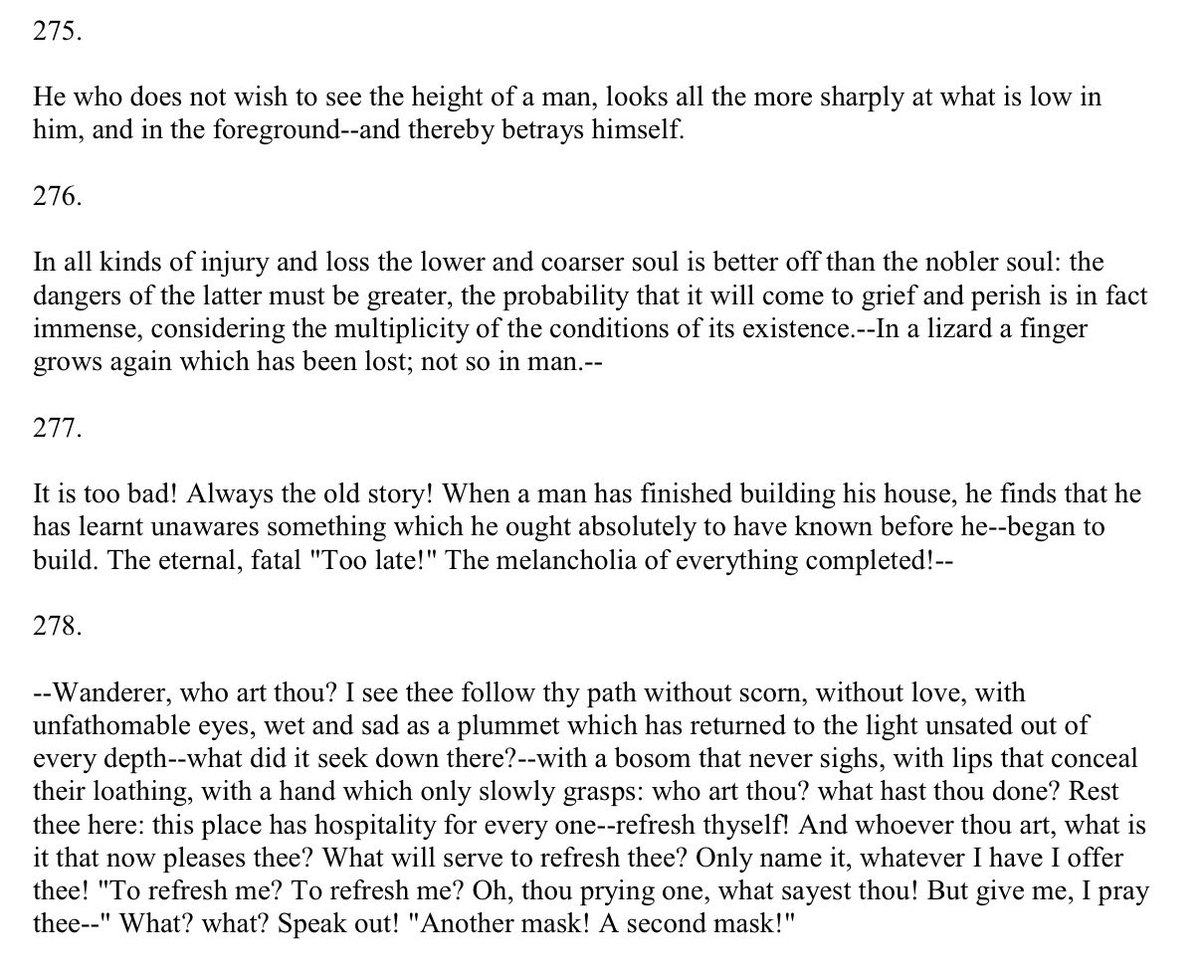
In all seriousness, one of the best ways to build and maintain your memetic resistance is to make sure that at any given time, you’re reading something from before 1900. It doesn’t much matter what it is.

English
9
51
347
111.6K