Quinn Barreth
19.9K posts

Quinn Barreth
@Bar_Qu
Husband, father & principal at Champion school. A Christ follower called to build back into the world. All opinions are mine alone. Rt does not mean endorsement
Calgary, AB Inscrit le Şubat 2010
567 Abonnements419 Abonnés
Tweet épinglé
Quinn Barreth retweeté

Quinn Barreth retweeté

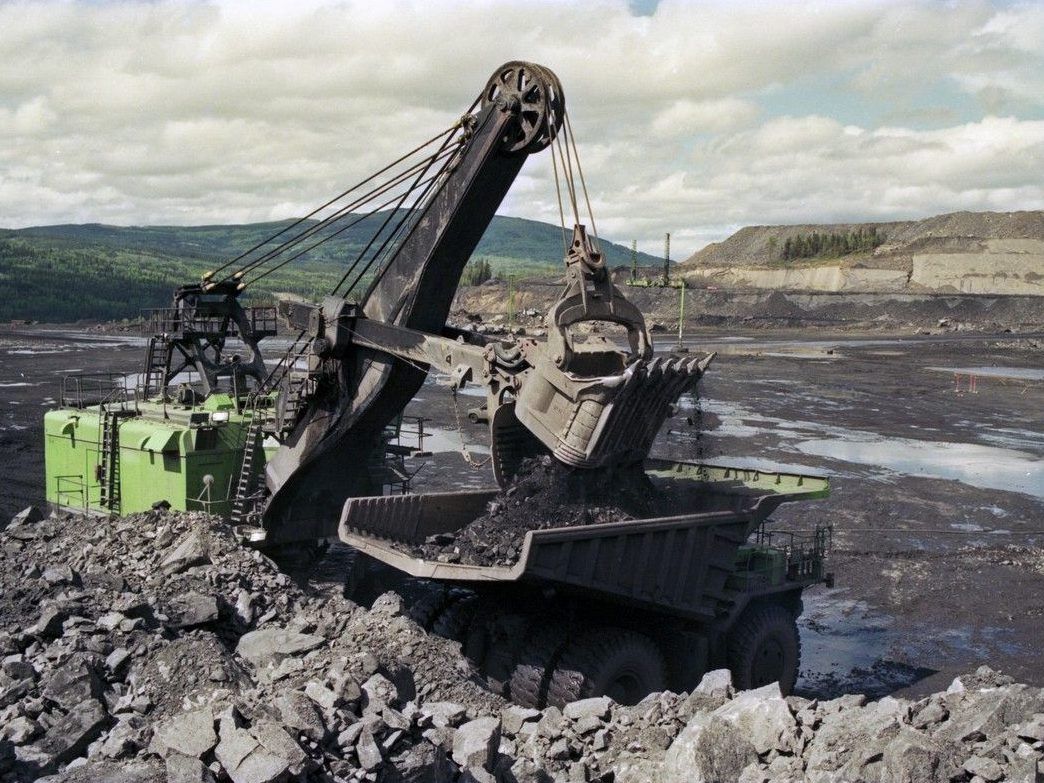
Opinion: The other side of the coal debate that people don't see calgaryherald.com/opinion/column…

English
Quinn Barreth retweeté

Genuinely a better question than most people realize.
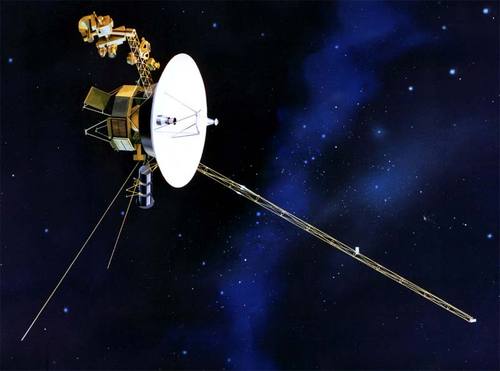
Apollo 11 left a 2-foot wide panel of mirrors on the lunar surface in 1969. No power source, no wiring, no maintenance. Scientists have been shooting lasers at it from New Mexico ever since. The beam travels 239,000 miles, bounces off the mirrors, and returns in 2.5 seconds. That round trip is how we know the moon is drifting away from Earth at 3.8 centimeters per year. So yes, in a literal sense, they were checking if it would still be there.
The seismometers are the part that gets wild. Apollo 12 deliberately crashed its lunar module into the surface at 6,048 km/h. Scientists expected a brief shudder. The moon vibrated for over 55 minutes. On Earth, seismic waves from an equivalent impact die in seconds. Nobody had predicted this. So NASA did it again. Apollo 13 dropped its S-IVB rocket stage from orbit. Hit with the force of 11.5 tons of TNT. The vibrations lasted nearly three and a half hours.
The reason is water, or the lack of it. Earth's interior is damp. Moisture in rock acts like a sponge, absorbing seismic energy. The moon is bone dry, cool, and rigid. Shockwaves have nothing to absorb them. They just bounce back and forth through solid stone until the rock itself stops vibrating. Scientists described it as the moon ringing like a bell.
The seismometers ran for almost 8 years and detected over 13,000 seismic events. Turns out the moon has four types of quakes: deep ones caused by Earth's gravitational pull, shallow ones from the crust shrinking as the interior cools, thermal ones when sunrise thaws the frozen surface, and impacts from meteorites. In 2023, Caltech reanalyzed old Apollo 17 data and found a fifth type: the lunar lander itself creaking and popping every morning as the sun heated it. Every five to six minutes, for five to seven hours straight.
They went up to prove the moon was once part of Earth, measure how fast it's leaving, and figure out what's happening inside a world with no atmosphere, no water, and no tectonic plates. "Checking if it was still there" is honestly closer to the truth than most people's actual answer.
greg@greg16676935420
So did the astronauts just go to the moon to make sure it was still there or what was the purpose of the mission
English
Quinn Barreth retweeté

@RomulusNotNuma Shame was part of maintaining social cohesion, and now that we removed it, the unspoken commitment to help people mind their manners (or put another way, show care for the fellow citizens) is gone too.
"Everyone did as they saw fit"
English

My most boomer complaint!
Total lack of norms!
We used to enforce these through the bully pulpit, public service campaigns, community engagement... We just don't bother anyone
james hassett@rotdialectic
@MattZeitlin It’s emblematic of the bigger issue of the breakdown of public norms - there’s all these formal and informal rules governing public behavior that are increasingly transgressed as individuals becomes more siloed, and legal enforcement or public checking decline
English
Quinn Barreth retweeté

Quinn Barreth retweeté

The ruler is beefing with the pope, his legions have fought to a stalemate with Persia, now typhus is breaking out in a major city, oh yeah it’s late antiquity out there
ABC7 Eyewitness News@ABC7
Flea-borne typhus surges across LA County with 90% of cases requiring hospitalization abc7.la/emB7ow

English
Quinn Barreth retweeté