Joe Biden is a corrupt politician, and everybody knows it. Now you have the proof, perhaps like never was had before on a major politician. Laptop plus. This is the second biggest political scandal in our history!
GeoMagix
214.1K posts

@DblCoverage
🇨🇦Cdn 1st🇨🇦 Join me: Spoutible @dblcoverage, Bluesky @dblcoverage.bsky.social • Maps 🌎 • #Meningioma owner • #Marche 🇮🇹 • Treaty 7

Joe Biden is a corrupt politician, and everybody knows it. Now you have the proof, perhaps like never was had before on a major politician. Laptop plus. This is the second biggest political scandal in our history!


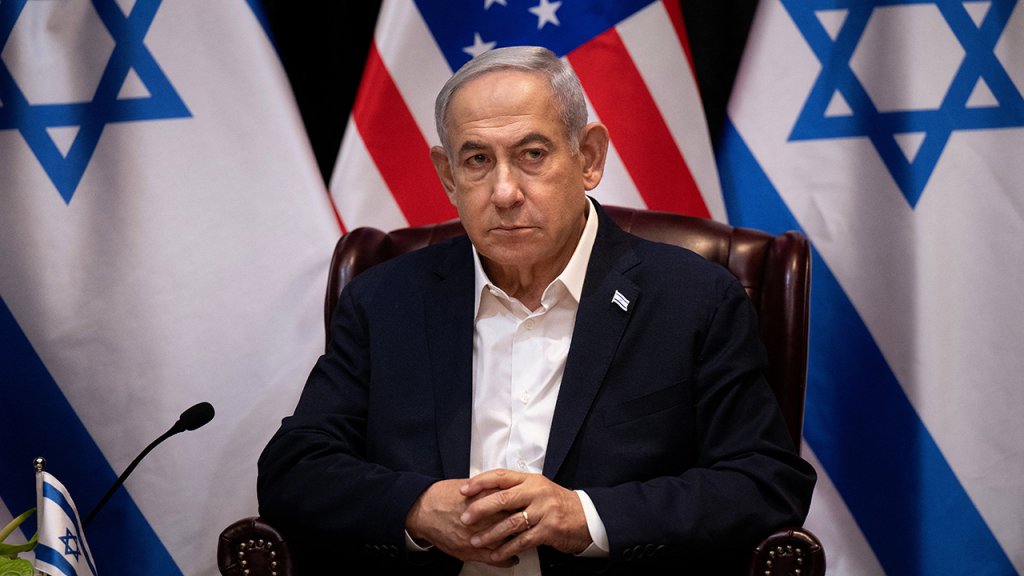
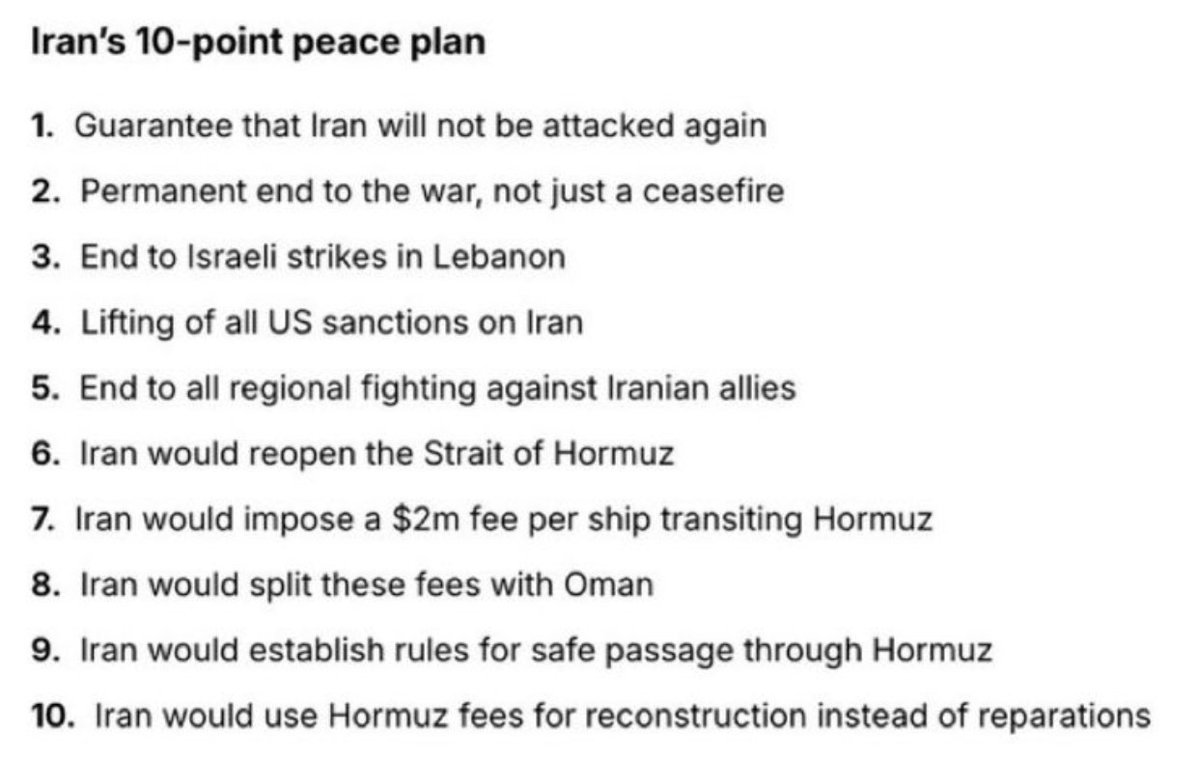
Hezbollah stopped firing. Israel did not. That is the single most important sentence in this ceasefire and nobody is leading with it. After Pakistan announced the ceasefire includes Lebanon and everywhere, Hezbollah paused its attacks. Reuters confirmed no new Hezbollah strikes today. The militia that fired hundreds of missiles at Israel over the past five weeks heard the word ceasefire and stood down. Israel heard the same word and intensified. At least ten airstrikes hit Beirut’s southern suburbs, Tyre, Nabatieh, Saida, and the Bekaa Valley today. The IDF’s Arabic spokesperson issued fresh evacuation orders for civilians to move north of the Zahrani River. Bombs fell on more than thirty villages across southern Lebanon. At least eight people were killed. Over 1,500 have been killed and more than a million displaced since Israel’s Lebanon operations began on March 2nd. Netanyahu’s statement is unambiguous: the two-week ceasefire does not include Lebanon. The United States has told Israel it is committed to achieving shared goals in upcoming negotiations. Trump made no mention of Lebanon. Pakistan says it does. Iran’s 10-point counter-proposal demands cessation of war on all fronts including against Hezbollah. Three signatories, three interpretations, and a million displaced people caught in the gap between them. The humanitarian consequence is immediate. When Sharif announced the ceasefire included Lebanon, displaced families in the south began packing their belongings. Lebanon’s Crisis Management Unit urgently told them to stop moving. The IDF was not pausing. It was issuing new evacuation orders in the same hours that displaced families were trying to return. Some of those families are now moving in both directions simultaneously on the same roads: northward from IDF warnings, southward from ceasefire hopes. This is what happens when a ceasefire is brokered through intermediaries without trilateral agreement on scope. Pakistan needed both sides to say yes. Iran needed Lebanon included to protect its most valuable proxy. Israel needed Lebanon excluded to continue degrading that proxy. The framework was drafted with sufficient ambiguity that both could sign. The ambiguity is now measured in Lebanese casualties. The Hezbollah pause creates a specific problem for Israel’s narrative. If Hezbollah is standing down and Israel is striking, the framing shifts from self-defence to aggression in every newsroom outside Jerusalem. Netanyahu’s legal position is defensible: Lebanon was never part of the deal. But the optics of bombing a militia that has stopped shooting, in a country where a million people just heard they were covered by a ceasefire, while the IDF issues evacuation orders that contradict the Pakistani mediator’s announcement, creates diplomatic friction that Islamabad will have to address on Friday before any nuclear or sanctions discussion begins. Iran will bring Lebanon to the table at Islamabad. It has no choice. Hezbollah is the crown jewel of the proxy architecture, and any deal that excludes it leaves the IRGC’s most valuable forward base exposed to unlimited Israeli degradation. But Israel will refuse to include Lebanon without total Hezbollah disarmament, which Iran will never accept. The gap is not negotiable. It is existential for both sides. And the displaced families on the roads of southern Lebanon are living inside that gap right now. open.substack.com/pub/shanakaans…


The war between the United States and Iran is accelerating the same systemic shifts already set in motion by Russia’s war against Ukraine. ▪️ The first major consequence is that there are no longer separate regional crises. The war in Ukraine, tensions around Iran, Black Sea security, the Strait of Hormuz, energy routes, maritime shipping, drones, air defense, inflation, and the political resilience of alliances are now all interconnected. A crisis in one place quickly reshapes the situation elsewhere. The war in the Middle East is already affecting European security, China’s policy toward Taiwan, South Asian markets, and Russia’s strategic calculations. ▪️ The second consequence is that the United States is losing the trust of its allies and partners and is no longer perceived as an unconditional source of stability. Its unilateral, transactional, and coercive actions undermine confidence, create uncertainty, and force partners to reassess their own security strategies and seek additional balancing options. Europe is talking about greater defense autonomy. Gulf countries are strengthening their multi-vector approach. U.S. partners in Asia are more carefully weighing the risks of over-dependence on Washington and are softening their approaches toward China. ▪️ For Russia, this creates a significant opportunity. Moscow benefits not only from higher oil prices, but also from the political effect: the more U.S. allies doubt Washington’s predictability, the easier it becomes for the Kremlin to promote its narratives. ▪️ But there are risks for Russia as well. Its close ties with Iran bring short-term gains but complicate relations with Arab states. The Gulf monarchies do not want to depend on Iran, on American impulsiveness, or on Russia as a partner too closely aligned with Tehran. They, too, will seek balance. This means Russia is unlikely to convert the gains from this war into long-term political leverage in the Middle East. ▪️ Another major consequence is the sharp rise in the importance of maritime security. Sea lanes, oil flows, LNG, shipping insurance, fuel prices, logistics, and the internal economic stability of entire regions are now under threat. This is changing the very concept of security. Security is no longer just about having a strong army. It is also about the ability to control routes, protect ports, ensure supply resilience, and keep key maritime corridors open. ▪️ For Europe, this means its security no longer ends at NATO’s eastern flank. The war in Ukraine and the conflict around Iran are merging into a single system of risks. More expensive energy, costlier logistics, weaker U.S. predictability, growing internal divisions within the West, and the risk of broader instability on the southern flank require new approaches to European security, new alliances, and a more active role in securing a wider space - from the Black Sea to the Eastern Mediterranean and further along energy corridors. ▪️ For China and Taiwan, this war also has direct implications. The postponement of President Trump’s visit to China due to the Iran war, alongside the planned visit of a Taiwanese opposition leader to China, shows that Beijing is using the moment not only for military pressure but also for political engagement with Taiwan. A window of opportunity is opening for China to pursue reunification with Taiwan through non-military means. ▪️ For Taiwan and other countries in South Asia, the conclusion is also clear. U.S. support is variable and does not guarantee security. In prolonged conflicts, victory does not go simply to the stronger side, but to the one that better sustains tempo, resources, political will, and international connections. ▪️ Another important consequence is the strengthening of states that were not previously seen as key players. Turkey, Pakistan, Egypt, and other middle powers are gaining weight as mediators, transit hubs, providers of connections, and situational guarantors. Influence increasingly goes not to those who are formally the strongest, but to those who can connect actors, secure routes, provide resources, or quickly occupy emerging niches. ▪️ The main conclusion is this. Russia’s war against Ukraine started the collapse of the old belief that large-scale wars belonged to the past. The U.S. war against Iran is now beginning to erode another belief - that the United States will automatically remain the unconditional and stable center of the Western order. American influence is not disappearing. But it is becoming less predictable and more costly for allies. And when allies begin to factor in risks not only from U.S. adversaries but also from Washington’s own actions, the international system enters a new phase. This new phase means more balancing, more hedging against risks, more regional maneuvering, and a greater role for energy, maritime security, logistics, political resilience, and autonomous security decisions. This is what the key systemic consequences of this war look like as of now.


Israel just bombed a café in South Lebanon in the middle of the night murdering 12 civilians. This is the problem with Israel. Ceasefire agreements mean nothing to them. They violate them over & over again. If the US wants to make any peace deal work it must stop funding Israel.

Every so often—for no particular reason—I feel compelled to post a gift link to the 11,000-word article I published in @TheAtlantic seven years ago about @realDonaldTrump's mental disorders and how they rendered him unfit to serve as president. theatlantic.com/ideas/archive/…

A group of investigative journalists, including @michaeldweiss, obtained another intercepted conversation between Hungary’s FM Péter Szijjártó and Lavrov. It appears that Moscow may have been able to access virtually any information it sought from the EU/NATO via Budapest.


Actual quotes from President Trump: Trump’s “victory timeline” claims. Mar 3: "We won the war." Mar 7: "We defeated Iran." Mar 9: "We must attack Iran." Mar 9: "The war is ending almost completely, and very beautifully. March 10: practically nothing left to target Mar 11: “You never like to say too early you won. We won. In the first hour it was over.” Mar 12: "We did win, but we haven't won completely yet." Mar 13: "We won the war." Mar 14: "Please help us." Mar 15: "If you don't help us, I will certainly remember it." Mar 16: "Actually, we don't need any help at all." Mar 16: "I was just testing to see who's listening to me." Mar 16: "If NATO doesn't help, they will suffer something very bad." Mar 17: "We neither need nor want NATO's help." Mar 17: "I don't need Congressional approval to withdraw from NATO." Mar 18: "Our allies must cooperate in reopening the Strait of Hormuz." Mar 19: "US allies need to get a grip - step up and help open the Strait of Hormuz." Mar 20: "NATO are cowards." Mar 21: "The Strait of Hormuz must be protected by the countries that use it. We don't use it, we don't need to open it." Mar 22: "This is the last time. I will give Iran 48 hours. Open the strait" Mar 22: "Iran is Dead" Mar 23: "We had very good and productive talks with Iran." Mar 24: "We’re making progress." Mar 25: “They gave us a present and the present arrived today. And it was a very big present worth a tremendous amount of money. I’m not going to tell you what that present is, but it was a very significant prize.” Mar 26: "Make a deal, or we’ll just keep blowing them away." Mar 27: "We don’t have to be there for NATO." Mar 28: No major quote Mar 29: Claimed talks were progressing Mar 30: "Open the Strait of Hormuz immediately, or face devastating consequences." Mar 31: Claimed a deal was "very close" and that Iran would "do the right thing" Apr 1: "We’ll see what happens very soon." Apr 2: Repeated that a deal was likely, while warning of continued strikes if not Apr 3: "Something big is going to happen." Apr 4: Said Iran must comply "immediately" or face further consequences. Apr 5: "Open the fuckin' Strait, you crazy bastards, or you'll be living in Hell - JUST WATCH! Praise be to Allah." April 6 :a whole civilization will die April 7: total and complete victory April8: objectives were met A true disaster