🚨 GLOBALISM JUST DIED IN DAVOS
Howard Lutnick just walked into the lion’s den — and told the World Economic Forum exactly what they didn’t want to hear.
“Globalism has failed.”
Not whispered.
Not softened.
Declared — on their own stage.
He dismantled the entire WEF doctrine in minutes:
• Offshoring hollowed out the West
• Cheap labor destroyed innovation
• Net Zero made Europe dependent on China
• Sovereignty begins with borders
• Nations must control their industry, energy, and medicine
Then came the line that shook the room:
“Why would Europe agree to Net Zero when they don’t even make a battery?”
That’s the truth globalists can’t answer.
Green agendas without industry.
Climate pledges without sovereignty.
Moral posturing while outsourcing power to Beijing.
America First isn’t isolation.
It’s independence.
And Lutnick made it crystal clear:
The old model is finished.
The globalist experiment has failed.
And the future belongs to nations that put their people first.
Davos just heard the obituary — live.
I own & rent out 1 contractor garage like the ones below, but I want to build & rent out 20+ more outside of DFW.
I KNOW it will be a good investment for decades to come.
The question: What will they cost me per sqft to build if I find my own subs? Incl 1 small bathroom + HVAC
If I were stuck in corporate and had 6 months to escape, here's exactly what I'd do:
• Stop maxing out my 401k
• Cancel the daily coffee runs
• Quit scrolling job boards
• Stop chasing promotions
• Skip the office happy hours
• Research 5 markets (250k-750k population)
• Call 10 cleaning companies for pricing
• Set up a business bank account
• Register my LLC
• Build a basic website with Booking Koala
• Post on Indeed for cleaners
• Interview 15+ candidates
• Run background checks
• Set up payment processing
• Launch Google LSA ads
• Join local Facebook groups
• Cold call realtors on Google Maps
• Book my first 5 clients
• Perfect my systems
• Build cleaner onboarding SOPs
• Automate scheduling with Twilio
• Hit $10k/month consistently
• Hire a VA from the Philippines
• Scale to $40k/month
• Work 5 hours per week
• Quit my job
This stack will transform even the most burnt-out corporate employee into a cash-flowing business owner with actual freedom.
I noticed one employee wearing noise-canceling headphones.
Not earbuds.
The big, cushioned over-ear kind that create a tiny personal universe.
I asked if everything was alright.
He said yes, he’s just trying to focus.
I told him we value focus, but isolation can misread as resistance to collaboration.
He said he’s literally sitting at his desk doing his job.
I told him we track human presence, not just output.
He asked how presence is measured.
I said imperfectly, which is why it's so important.
Then I logged “avoiding spontaneous culture building opportunities” in his engagement profile.
I have a friend who runs a $15M company. He’s a smart guy, a great founder, and he built something real.
But he was drowning.
Every day, his team would interrupt him with "Got a minute?" questions…
Slack messages at 11 pm…
Shoulder taps during meetings…
And the worst part was that they were actually asking good questions / smart questions / questions that actually mattered.
When you're the only person who can make decisions, you become the bottleneck, because the business can only grow as fast as you can think.
So I asked him:
"Show me two of your smartest people. Put them in a room. Show them the same situation. What happens?"
He said:
"They'll see it completely differently. One will say we should do X. The other will say we should do Y. Both will be right. So they come to me."
And that's when I showed him something I use across all 17 companies in our portfolio.
It's not a decision tree…
It's not a playbook...
It's a framework for how to think…
I call it the Clarity Compass.
Every decision gets run through four filters - what I call "the four cases."
1. The Company Case: Does this get us closer to our three-year target?
2. The Customer Case: Does this align with our company's purpose?
3. The Culture Case: Does this align with our core values?
4. The Competitive Case: Can we actually pull this off? Can we win?
When you're making a decision (even if you don't realize it), you're running it through these four filters.
The problem is that your team doesn't know your filters.
So we put it all on one page.
North: Three-year target (where we're going)
South: Company purpose (why we exist)
East: Core values (how we behave)
West: Strategic anchors (what we're actually good at)
Then we made one rule: Before you ask me, run it through the Compass.
Within 90 days, my friend went from getting 20+ "Got a minute?" interruptions per day to maybe two per week.
They finally had his decision-making framework.
And the best part? Before long, his team was making even better decisions than he would make, because they were combining his wisdom with their in-the-trenches experience that he didn't have.
That's the difference between being the hero and being the architect.
The hero has to be in every room.
The architect builds a system that works without them.
If you're still the bottleneck in your business, you don't have a people problem.
You have a framework problem.
And that's way easier to fix.
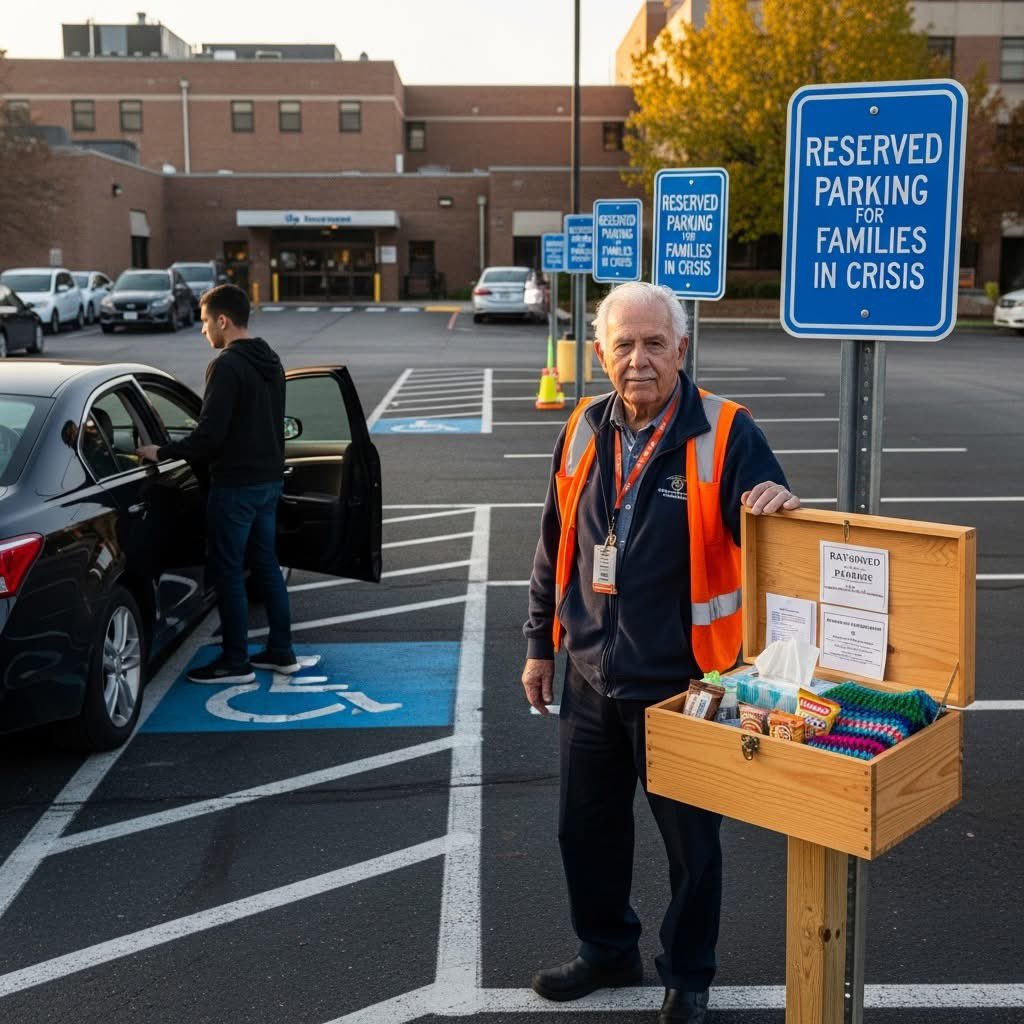
"My name's Raymond. I'm 73. I work the parking lot at St. Joseph's Hospital. Minimum wage, orange vest, a whistle I barely use. Most people don't even look at me. I'm just the old man waving cars into spaces.
But I see everything.
Like the black sedan that circled the lot every morning at 6 a.m. for three weeks. Young man driving, grandmother in the passenger seat. Chemotherapy, I figured. He'd drop her at the entrance, then spend 20 minutes hunting for parking, missing her appointments.
One morning, I stopped him. "What time tomorrow?"
"6:15," he said, confused.
"Space A-7 will be empty. I'll save it."
He blinked. "You... you can do that?"
"I can now," I said.
Next morning, I stood in A-7, holding my ground as cars circled angrily. When his sedan pulled up, I moved. He rolled down his window, speechless. "Why?"
"Because she needs you in there with her," I said. "Not out here stressing."
He cried. Right there in the parking lot.
Word spread quietly. A father with a sick baby asked if I could help. A woman visiting her dying husband. I started arriving at 5 a.m., notebook in hand, tracking who needed what. Saved spots became sacred. People stopped honking. They waited. Because they knew someone else was fighting something bigger than traffic.
But here's what changed everything, A businessman in a Mercedes screamed at me one morning. "I'm not sick! I need that spot for a meeting!"
"Then walk," I said calmly. "That space is for someone whose hands are shaking too hard to grip a steering wheel."
He sped off, furious. But a woman behind him got out of her car and hugged me. "My son has leukemia," she sobbed. "Thank you for seeing us."
The hospital tried to stop me. "Liability issues," they said. But then families started writing letters. Dozens. "Raymond made the worst days bearable." "He gave us one less thing to break over."
Last month, they made it official. "Reserved Parking for Families in Crisis." Ten spots, marked with blue signs. And they asked me to manage it.
But the best part? A man I'd helped two years ago, his mother survived, came back. He's a carpenter. Built a small wooden box, mounted it by the reserved spaces. Inside? Prayer cards, tissues, breath mints, and a note,
"Take what you need. You're not alone. -Raymond & Friends"
People leave things now. Granola bars. Phone chargers. Yesterday, someone left a hand-knitted blanket.
I'm 73. I direct traffic in a hospital parking lot. But I've learned this: Healing doesn't just happen in operating rooms. Sometimes it starts in a parking space. When someone says, "I see your crisis. Let me carry this one small piece."
So pay attention. At the grocery checkout, the coffee line, wherever you are. Someone's drowning in the little things while fighting the big ones.
Hold a door. Save a spot. Carry the weight no one else sees.
It's not glamorous. But it's everything."
Let this story reach more hearts....
Credit: Mary Nelson
Response to MSCI Index Matter
Strategy is not a fund, not a trust, and not a holding company. We’re a publicly traded operating company with a $500 million software business and a unique treasury strategy that uses Bitcoin as productive capital.
This year alone, we’ve completed five public offerings of digital credit securities— $STRK, $STRF, $STRD, $STRC, and $STRE —representing over $7.7 billion in notional value. We also launched Stretch ($STRC), a revolutionary Bitcoin-backed treasury credit instrument that provides variable monthly USD yield to institutional and retail investors.
Funds and trusts passively hold assets. Holding companies sit on investments. We create, structure, issue, and operate. Our team is building a new kind of enterprise—a Bitcoin-backed structured finance company with the ability to innovate in both capital markets and software.
No passive vehicle or holding company could do what we’re doing.
Index classification doesn't define us. Our strategy is long-term, our conviction in Bitcoin is unwavering, and our mission remains unchanged: to build the world’s first digital monetary institution on a foundation of sound money and financial innovation.
This is probably the most important interview you will watch for the rest of the year.
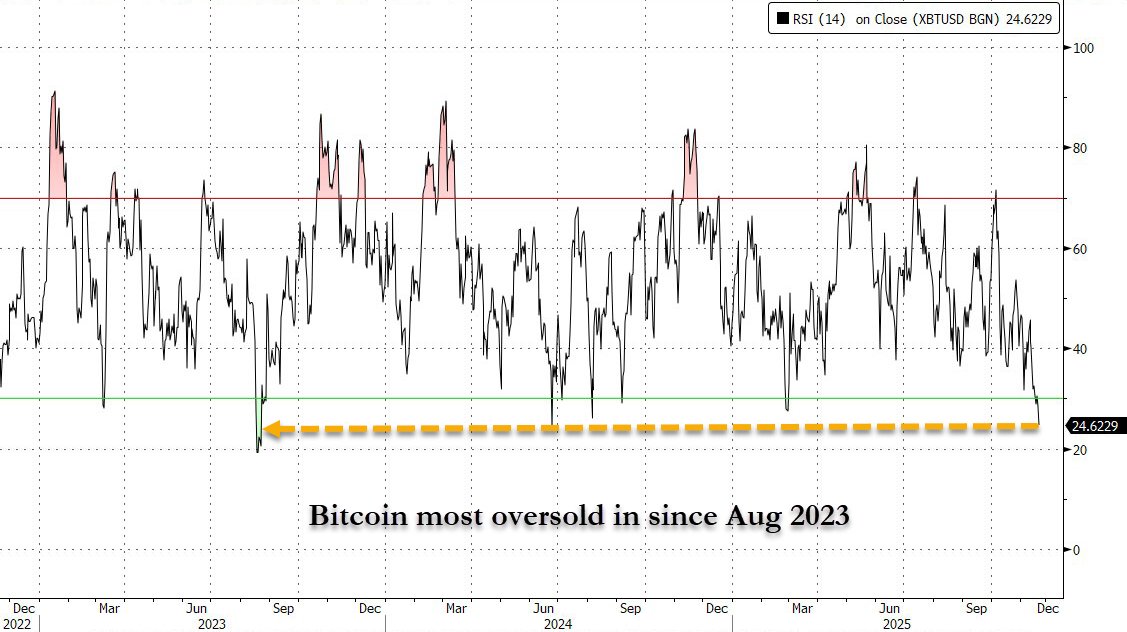
Tom Lee says he believes MSTR is close to a bottom, Bitcoin could drop to $77,000 and explains why MSTR’s price has been cratering for the last 3 months.
Must watch interview.