Kieran Solberg

2.3K posts

Kieran Solberg banner
Kieran Solberg

Kieran Solberg

@KieranSolberg

Co-founder @BlockLayerPods Cryptopunk since 2019 and owner of the first AB101 collection, a full set of the first 101 Artblock projects 🟪.

愛知県一宮市 Inscrit le Mayıs 2009
17 Abonnements25.2K Abonnés
Kieran Solberg retweeté
BlockLayer Podcast
BlockLayer Podcast@BlockLayerPods·
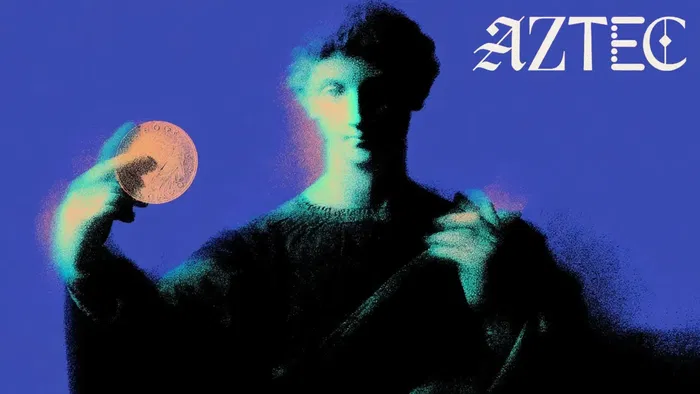
After 7 years, Aztec’s Ignition mainnet is live. Yet zero transactions or apps work yet. The chain is deliberately empty – because true protocol-level privacy can’t be rushed. Here’s how this phased, decentralization-first launch positions Aztec as the leading private L2 on ETH👇 ~~ Analysis by @KieranSolberg ~~ What's Actually Running Think of Ignition like Ethereum's beacon chain from 2020. The governance and consensus infrastructure is operational, but the execution layer remains offline. The team is running what amounts to a live stress test with real money on the line. Each sequencer staked at least 200K $AZTEC tokens to participate. They're producing blocks, provers are generating validity proofs, and the whole system is settling on Ethereum, just without any transactions. The goal of running Ignition with real economics for 2-3 months will (hopefully) surface any remaining issues before transactions go live in early 2026, while setting the network up to be decentralized from day one. The Decentralization Push In Aztec's eyes, launching an L2 with a centralized sequencer from the get go rarely translates to decentralization down the road. Centralized sequencers generate $40-150M annually in fees. Once you're locked into those cash flows, decentralization means making transactions slower and more expensive. The tension never resolves. Instead, @aztecnetwork will launch fully decentralized from day one across three dimensions: ➢ Ownership is decentralized through $AZTEC token holders who control network parameters, fee schedules, and protocol upgrades. ➢ Block Production runs through 617 decentralized sequencer nodes using proof-of-stake. These nodes order transactions and produce blocks. To prevent any single party from gaining control, a small committee of sequencers is randomly selected to validate blocks before they are submitted to Ethereum. ➢ Proving is permissionless from the get-go. Provers generate the zero-knowledge proofs that cryptographically confirm all transactions in a batch are valid. They aggregate blocks and submit a single, final proof to Ethereum for verification, guaranteeing the integrity of the entire rollup. When transactions go live, Aztec will qualify as a Stage 2 rollup, the highest decentralization tier for L2s. Most chains have pushed boundaries in one direction. Hitting all three pillars simultaneously is rare. In Aztec's eyes, decentralization isn't optional for privacy. Centralized sequencers would face pressure from governments to install backdoors. Privacy requires cryptography plus decentralization, not one or the other. What Happens Next There are two major upcoming events, one technical and one token-related. On the technical side, Ignition will remain live for 2-3 more months with sequencers producing empty blocks while the team monitors for issues. Early 2026 is when transactions flip on. Users will be able to send payments, deploy smart contracts, and interact with applications. By the end of 2026, block times should drop from the current 36-72 seconds down to 4 seconds, faster than Ethereum's 12-second blocks. On the token side, the pre-allocation for the $AZTEC token sale is currently live, with the sale beginning December 2nd and running for 4 days. The sale uses @Uniswap's continuous clearing auction mechanism, meaning if you bid early, part of your bid clears at early prices and part clears later. This levels the playing field between early and late participants while letting price discovery happen naturally. When the auction ends, it automatically creates a Uniswap V4 liquidity pool at the final clearing price. To participate in the sale, you must register prior to December 2nd. For compliance, Aztec is using @ZKPassport, enabling people to prove cryptographically that they're from allowed jurisdictions and not on sanctions lists without traditional KYC. The sale is open to US retail and nearly every country worldwide, with the exception of sanctioned countries on the standard OFAC list. The current 500 sequencers already staked $AZTEC tokens they purchased in a whitelisted genesis sale. They're earning rewards in $AZTEC right now. However, all tokens, whether from the genesis sale, the current public auction, or insider allocations, are non-transferable until Token Generation Event (TGE). There is no set date for when TGE occurs, rather the community votes on it. However, the earliest date it can go live is February 11th, 2026. Once TGE happens, tokens purchased in the public auction unlock 100%. 7 Years in the Making Overall, Ignition and the $AZTEC token sale demonstrate both the complexity of successfully executing privacy, as well as the extent to which Aztec is going to get this right. First you have the need for decentralization from the get-go to ensure privacy endures, a feat unaccomplished by countless L2s launched so far. Then you have the tension between privacy and compliance, which the token sale's integration with ZK Passport helps solve. Regardless of how mainnet goes, and I'm hopeful all goes well, this launch process shines as a testament to diligent design, demonstrating that forces like decentralization, privacy, and compliance can all coexist.
BlockLayer Podcast tweet media
English
18
18
120
24.6K
Kieran Solberg retweeté
BlockLayer Podcast
BlockLayer Podcast@BlockLayerPods·
“What happens when AI infrastructure stops chasing everything — and focuses on making intelligence actually reliable?” @sachitakahara joins Karan Sirdesai (@karansirdesai), Founder of @miranetwork, for a deep dive into how Mira is taking a sharper path in decentralized AI: high-trust, reliable intelligence as the core product. They break down why Mira isn’t trying to be another full-stack AI protocol, how it differs from networks like Bittensor, Ritual, and Sahara, and why its narrow focus could make it easier to plug into the broader AI infra ecosystem instead of competing with every layer. The conversation also dives into Mira’s reliability model — from core tech to node-level consensus — and why the future of AI APIs may depend less on raw model access, and more on whether users can actually trust the intelligence they receive.
English
43
24
347
47K
Kieran Solberg retweeté
BlockLayer Podcast
BlockLayer Podcast@BlockLayerPods·
“What if AI is the rare shot we get to reshape the internet itself?” @kenzixbt catches up with Karan Sirdesai (@karansirdesai), Founder of @miranetwork, to trace how a self-taught builder went from cold DMs, crypto arbitrage, and working with names like Balaji Srinivasan and Sandeep Nailwal — to betting early on AI before the world fully understood where it was heading. They unpack why Karan has always taken the road less traveled, how his time at Accel gave him access to frontier AI companies before generative models became obvious, and why the speed of AI’s evolution made him realize this would be bigger than a business wave — it would touch every part of human life.
English
37
29
198
36.4K
Kieran Solberg retweeté
BlockLayer Podcast
BlockLayer Podcast@BlockLayerPods·
“What happens when AI becomes the backbone of the internet?” @dikshaarden sits down with Karan Sirdesai (@karansirdesai) , Founder of @miranetwork, to unpack the future where AI doesn’t just give us information, it starts thinking, acting, and making decisions for us. They break down the upside of “infinite hires,” 90% of our cognitive work moving beyond humans, and a productivity shift that could make today’s jobs look outdated. But the same thing that makes AI powerful also makes it dangerous: overreliance, catastrophic mistakes, malicious agents, and a new alpha species humans have never had to coexist with before.
English
27
54
343
32.8K
Kieran Solberg retweeté
BlockLayer Podcast
BlockLayer Podcast@BlockLayerPods·
This week’s episode features Karan Sirdesai (@karansirdesai), Co-Founder and CEO of Mira Network (@miranetwork). We dive into Karan’s journey from university hustle and early crypto experiments to building one of the most important infrastructure layers for reliable AI. The conversation explores why AI hallucinations are one of the biggest problems holding the industry back, and how Mira is approaching trust, safety, and verification for high-stakes use cases across finance, healthcare, and beyond. We also dig into Mira’s “aha” moment, born from hands-on experimentation with GPU rentals, AI pipelines, and the realization that multiple models could be used together to verify intelligence through consensus. Karan shares how his work with Balaji Srinivasan, his non-linear founder path, and Mira’s deep AI + crypto team shaped the mission: building decentralized AI infrastructure that can make artificial intelligence more reliable, trustworthy, and usable at scale.
BlockLayer Podcast tweet media
English
22
36
168
26.7K
Kieran Solberg retweeté
Dan Robinson
Dan Robinson@danrobinson·
I don’t think pure mathematicians are that likely to lose their jobs It’s not like society needs a target number of proofs per year, and hires enough mathematicians to hit it It’s more like we target how many mathematicians we want, and proofs are what they do with their time
English
30
11
205
59.2K
Kieran Solberg retweeté
BlockLayer Podcast
BlockLayer Podcast@BlockLayerPods·
“What does it take to build when nobody expects you to win?” @kenzixbt speaks with @ruschimanche, Co-Founder of @movement_xyz, to trace the story behind Movement Labs — from broke Vanderbilt dorm-room founders with $100 to their name, to building one of the most talked-about teams in crypto. They discuss the underdog mentality that shaped Movement from day one, why competing against polished researchers and established teams created a permanent chip on their shoulder, and how that scrappy internal drive still defines the company today. From go-to-market and ecosystem growth to the fight for attention, liquidity, projects, and blockspace, this episode explores what it means to wake up every day trying to be number one in one of the most competitive markets in Web3.
English
37
40
233
41.2K
Kieran Solberg retweeté
BlockLayer Podcast
BlockLayer Podcast@BlockLayerPods·
“What happens when the limitations of today’s rollup architectures become impossible to ignore?” @sachitakahara catches up with @rushimanche, Co-Founder of @Movement_xyz, to break down why current optimistic and validity rollups still struggle with slow withdrawals, fragmented state guarantees, and security bottlenecks — and how a new state-focused architecture aims to solve them. They discuss how economic security and validator-based slashing mechanisms can create near-instant settlement guarantees between rollups, why shared sequencing changes interoperability across L2s, and how native-token staking models could replace traditional fraud-proof assumptions. The conversation also dives deep into the Move language and Move Prover, exploring why formal verification matters, how tiny arithmetic mistakes in Solidity continue to cause massive exploits, and why runtime verification could fundamentally change smart contract security. From integer overflows to real-world attack vectors, they explain how Move was designed to act like an “auditor at runtime” for blockchain applications at scale.
English
30
29
147
35.7K
Kieran Solberg retweeté
BlockLayer Podcast
BlockLayer Podcast@BlockLayerPods·
“What does it take to build when nobody expects you to win?” @dikshaarden speaks with @rushimanche, Co-Founder of @movement_xyz, to trace the story behind Movement Labs — from broke Vanderbilt dorm-room founders with $100 to their name, to building one of the most talked-about teams in crypto. They discuss the underdog mentality that shaped Movement from day one, why competing against polished researchers and established teams created a permanent chip on their shoulder, and how that scrappy internal drive still defines the company today. From go-to-market and ecosystem growth to the fight for attention, liquidity, projects, and blockspace, this episode explores what it means to wake up every day trying to be number one in one of the most competitive markets in Web3.
English
23
16
121
29.1K
Kieran Solberg retweeté
BlockLayer Podcast
BlockLayer Podcast@BlockLayerPods·
This week’s episode features Rushi Manche (@rushimanche), Co-Founder of Movement Labs (@movement_xyz). We dive into Rushi’s journey from a young coder to building one of the most talked-about teams in Web3, and unpack how early technical curiosity, time investment, and hands-on experience shaped the way he thinks about crypto, founders, and product. The conversation explores the rise of meme coins, why they became such a powerful cultural force, and how Gen Z marketing is changing the way crypto projects capture attention, build communities, and move markets. We also dig into Movement Labs, the role of the Move language, and how its technology aims to make Ethereum more secure, scalable, and accessible for the next generation of applications. Rushi shares what Gen Z founders need to understand if they want to succeed in Web3, from building real skills to finding sharp distribution, staying close to users, and moving fast in one of the most competitive markets in tech.
BlockLayer Podcast tweet media
English
13
16
87
26.3K
Kieran Solberg retweeté
BlockLayer Podcast
BlockLayer Podcast@BlockLayerPods·
“High-performance infrastructure only matters if it expands what users can actually do onchain — and makes that experience accessible at scale.” @sachitakahara sits down with @jayendra_jog, Co-Founder of @SeiNetwork, to examine why parallelized execution is becoming increasingly important for the next generation of onchain applications. From trading and DeFi to high-frequency user activity that simply breaks in low-throughput environments, they discuss how lower fees and greater execution capacity can fundamentally reshape the user experience — especially for smaller participants who are otherwise priced out. They also explore how this plays out in practice through projects like Bancor’s Carbon DeFi, where Sei has emerged as the ecosystem driving the strongest activity and volume, underscoring how performance advantages translate into real adoption.
English
42
18
320
105.7K
Kieran Solberg retweeté
BlockLayer Podcast
BlockLayer Podcast@BlockLayerPods·
“Virtual machines are like cities — once they reach critical mass, they become magnets that are incredibly hard to displace.” @dikshaarden catches up with @jayendra_jog, Co-Founder of @SeiNetwork, to unpack this idea at a deeper level — why systems with flaws can still dominate simply because that’s where the activity, liquidity, and people already are. From New York and San Francisco to onchain environments like the EVM, they explore how network effects compound over time, why newer ecosystems struggle to pull users away even with better tech, and what it actually takes to break that inertia.
English
28
10
191
41K
Kieran Solberg retweeté
BlockLayer Podcast
BlockLayer Podcast@BlockLayerPods·
This week’s episode features Jayendra Jog (@jayendra_jog), Founder of @SeiNetwork. We dive into Jay’s journey from traditional finance at Robinhood to building Sei Network, and unpack how his view of markets, users, and product feedback shaped the way he thinks about blockchain infrastructure. The conversation explores the parallels between established cities and virtual machines: why dominant systems like the EVM are so difficult to displace, what makes developers stay, and what it actually takes for a new ecosystem to earn attention. We also dig into the need for higher throughput in Web3, how parallelization can help solve today’s performance limits, and why scalability matters if crypto applications are going to serve real users at a much larger scale. Jay also reflects on the role of memecoins, not just as speculation, but as community-driven movements that can reveal how culture, attention, and network effects form onchain.
BlockLayer Podcast tweet media
English
43
20
225
30.6K
Kieran Solberg retweeté
FLAMINGO 🦩
FLAMINGO 🦩@FLAMINGODAO·
Construction Token #264 & #473 by @jeffgdavis "Each Construction Token is unique and contains a randomized seed that determines the composition of the artwork"
FLAMINGO 🦩 tweet mediaFLAMINGO 🦩 tweet media
English
1
8
53
2.8K
Kieran Solberg retweeté
Jehan Chu
Jehan Chu@collectionist·
Overjoyed with our Keith Haring 1987 digital drawings exhibition @MartosGallery designed by renowned architect KULAPAT! If you’re in NYC, don’t miss seeing how surprising NFT’s can be when installed like this!! @nftnow @graceb_art
Jehan Chu tweet media
English
14
12
72
13.9K
Kieran Solberg retweeté
BlockLayer Podcast
BlockLayer Podcast@BlockLayerPods·
“DA layers really differ across three dimensions: performance, programmability, and AI-native design — because on-chain AI can’t operate in a world measured in mere megabytes per second.” @sachitakahara catches up with @michaelh_0g, Founder of @0G_labs, to break down how 0G compares with Celestia, Avail, and EigenDA: why throughput needs to increase by orders of magnitude, how to move beyond the broadcast bottleneck, and why a decentralized storage network is essential for ultra-fast data ingestion and retrieval.
English
63
48
319
76.8K
Kieran Solberg retweeté
Kenzi / 2569.eth
Kenzi / 2569.eth@kenzixbt·
Really enjoyed my conversation today with @michaelh_0g from @0G_labs. We spoke about his background, what first pulled him deeper into technology, how that developed into a broader Web3 thesis, and the story behind building 0G. It was a meaningful conversation with a lot of depth, clarity, and real perspective. Grateful to Michael for the time and openness. And special thanks to the @BlockLayerPod team, as well as to @SachiTakahara and @DikshaArden, for making it all possible.
BlockLayer Podcast@BlockLayerPods

“After moving from Berlin to Silicon Valley, I found myself bored at a new school — so I started spending time at my dad’s SAP Lab: fast internet, endless reading, and the beginning of my love for technology.” Our host @kenzixbt sits down with @michaelh_0g (@0G_labs) to trace his origin story — from early curiosity and a growing obsession with tech to his path into Web3, and ultimately, the founding of his company.

English
36
43
238
43.4K
Kieran Solberg retweeté
BlockLayer Podcast
BlockLayer Podcast@BlockLayerPods·
Worth revisiting from last week: the SEC and CFTC released LANDMARK joint guidance on how crypto assets are treated under U.S. law. ~~ Analysis by @TheaKaage ~~ For the first time, it introduces a real framework instead of treating everything like a potential security. The token taxonomy breaks digital assets into five classifications: > Digital Commodities: 16 assets are EXPLICITLY named nonsecurities, including BTC, ETH, SOL, XRP, DOGE, ADA, LINK, and DOT (lol). Value derived from function and supply/demand, not investment contracts. > Digital Collectibles: NFTs, memecoins, fan tokens. CryptoPunks, WIF, and VCOIN named directly. Memecoins can graduate to commodities once they become “functional.” > Digital Tools: Soulbound credentials, tickets, identity badges. Things designed to DO something, not be traded. Think ENS domains. > Stablecoins: GENIUS Act–compliant payment stablecoins are nonsecurities. Until the Act takes effect in January, “Covered Stablecoins” with full reserves remain outside SEC purview. > Digital Securities: The most CONSEQUENTIAL category and the most ambiguous. The Howey test still governs. Facts and circumstances still control. The SEC declines to name a SINGLE asset it considers a security. The important part isn’t that ambiguity disappears (it doesn’t). But, THANK GOD, “everything might be a security” is no longer the default starting point. Classification now depends on use, marketing, and how a token evolves over time. We're moving in the right direction.
BlockLayer Podcast tweet media
English
16
25
217
21.2K
Kieran Solberg retweeté
6529
6529@punk6529·
chatgpt 5.5 really likes things to be "boring in a good way"
English
102
16
618
81.9K
Kieran Solberg retweeté
BlockLayer Podcast
BlockLayer Podcast@BlockLayerPods·
In a volatile year for DeFi, Coinbase’s L2 kept compounding builder momentum while other chains stalled... Finishing #1 in L2 revenue with $82.6M earned, $4.3B in DeFi TVL, and $4.8B in stablecoins. Here’s a closer look at the products, programs, and upgrades that made Base's year one for the books👇 ~~ Analysis by @punk0439 ~~ 1. Growing the DeFi Mullet While @base has grown alongside Coinbase, Coinbase has also leaned on Base, using it to offer a unique suite of hybrid onchain/offchain products (commonly referred to as the DeFi mullet) that apply centralized finance convenience to DeFi flexibility. Here are some of the top efforts: ➢ Onchain Loans — Through Coinbase, U.S. users can borrow up to $5M in USDC against BTC or up to $1M against ETH, enabled by the exchange's direct integration with the Morpho lending protocol on Base. Your BTC auto-converts to cbBTC, deposits into Morpho, and your USDC arrives in under a minute. Compare this against the week-long process of applying for a bank loan and it becomes clear how superior crypto's systems are. So far, this feature has seen $1.5B borrowed and $1.6B in collateralized BTC, with nearly 19K borrowers to date. ➢ Yield Opportunities — Beyond borrowing, Coinbase users have access to a series of yield options. They can deposit USDC directly into @Morpho vaults to earn yields higher than typical 4% savings rates, timed nicely as rate cuts reduce traditional yields. For those seeking maximally compliant liquidity venues, Verified Pools offer specialized @Uniswap v4 pools open only to Coinbase-KYC'd users, optimized by risk-management firm @gauntlet_xyz. ➢ DEX Integration — Coinbase also integrated DEX trading directly into its exchange, allowing U.S. users (minus New York...) to trade Base tokens without leaving the app. When you make your first trade, the app creates a self-custody wallet — you hold the keys, but the UX looks just like buying tokens normally on the exchange, with all swap fees sponsored. For traders, it's onchain access without the usual friction. For Base projects, it's expanded distribution to millions of more users. Taken together, the combo of accessible loans, competitive yields, and DEX integration positions Coinbase to function as much as a neobank as it is an exchange, a bold vision enabled by Base. 2. Scaling Builder Tools & Programs Base stands out for its builder-first growth ethos. Instead of elaborate governance structures, the chain has developed tools and programs that reward and support existing builders and lower the barrier for new ones. ➢ Builder Programs — Base organizes a global builder program called Base Batches for pre-accelerator talent, with dedicated tracks for AI, stablecoins, and consumer apps. Structured around a series of hackathons, the program aims to provide early-stage support and possible pathways to incubators and venture funding. Meanwhile, Base Build offers a development dashboard with real-time user analytics from launch, along with a monetization option through builder rewards. ➢ Toolkits — For plug-and-play infrastructure, Base provides a set of tools, including Embedded Wallets for account abstraction, Base Pay for USDC checkout within applications, and Sign on with Base, which streamlines account creation and onboarding. ➢ x402 — Perhaps the most forward-looking addition has been x402, an open payments standard that allows payments to be attached to web requests. The protocol solves the hassle of traditional API access by letting you pay automatically based on usage, per-call or per-inference, with payment happening instantly as part of the request. This enables AI agents to act as true, autonomous service providers, managing all the expenses and access they need to run operations independently. The through line here is accessibility. By equipping builders to ship faster, Base stimulates its onchain economy, makes it easy for people to experiment onchain, and positions their L2 as a positive-sum environment. 3. Shipping New Technical Upgrades Beyond brand power and product launches, Base kept making under-the-hood improvements, strengthening security, slashing latency, and expanding connectivity. ➢ Decentralization — In April, Base hit Stage 1 decentralization with the launch of permissionless fault proofs and the implementation of a security council. This strengthened the chain's security and reduced its trust assumptions, particularly important given the chain's close relationship with a shareholder-owned public entity. ➢ Scaling — July brought the debut of Flashblocks, which slashed block times from 2 seconds to 200 milliseconds, moving transactions into "instant" territory. In December, Base launched a native Solana bridge using @chainlink CCIP, enabling SPL token support within Base applications and cross-chain actions where transactions on one chain can trigger transactions on the other. It's the first non-Ethereum chain connected to Base, positioning it as a hub where every asset can exist across every network. These upgrades lay the groundwork for Base to compete on performance, not just distribution, while reducing the trust assumptions that come with being tied to a centralized exchange. 4. Laying Out the Next Phase of Base Beyond infrastructure and product releases, two big developments stood out: the first showcasing a new method for traversing the chain, and the second (soft) confirming something many had hoped for from the beginning. ➢ Base App — Base launched the Base App in July and has expanded it to 140+ countries, replacing Coinbase Wallet as the ecosystem's primary interface and signaling a shift toward social-first crypto. The app integrates chat, trading, social features, and mini-app discovery all wrapped up in one familiar feed. It currently has 169K registered users, and while many are certainly there to farm the chain's upcoming token, there is a core group of users embracing its call to "just coin it," and tokenize their media onchain. ➢ BASE Token — At Base Camp in September, the team publicly confirmed they're "exploring" a native token. Given the soft framing, it's likely it will be some time before a BASE token goes live. In the meantime, airdrop hunters are getting active as it's almost certain that onchain activity will be rewarded if they pursue an airdrop as part of a possible token launch. Together, these moves sketch a vision of Base as a living ecosystem with its own culture and incentives, one where participation, especially as a builder, can pay off handsomely. Looking Ahead Base's 2025 was defined by stacking advantages. The symbiosis with Coinbase has proven mutually beneficial: Base gets a built-in distribution mechanism and trusted brand for onboarding newcomers, while Coinbase gets the infrastructure to offer hybrid products that meaningfully distinguish it from competitors. At the same time, the chain's builder-first ethos has cultivated a positive-sum environment that stood out during a year that was all over the place. And with Stage 1 decentralization achieved, Base has made meaningful progress in reducing the trust assumptions that naturally accompany an exchange-backed L2. The result is the most successful exchange-backed L2 to date, built on a foundation that positions it well for the next phase of growth. Its most credible near-term challenger may be Robinhood's L2, which, if launched, could prove to be an ultimate test for the chain's staying power. It may still be day one for the chain, but the momentum suggests it is building toward something much larger.
BlockLayer Podcast tweet media
English
10
11
100
17.4K