Mark Borris Aldonza (@precursorcell.bsky.social🦋)

15K posts

Mark Borris Aldonza (@precursorcell.bsky.social🦋) banner
Mark Borris Aldonza (@precursorcell.bsky.social🦋)

Mark Borris Aldonza (@precursorcell.bsky.social🦋)

@PrecursorCell

@eLife ambassador. PhD cand @KAISTPR × @SeoulNatlUni. Working on drug promiscuity💊, extremophile traits🪸🦈, & disease evolution👾. Naively pluripotent.

Daejeon, Republic of Korea Inscrit le Ekim 2014
1.8K Abonnements1.4K Abonnés
Tweet épinglé
Mark Borris Aldonza (@precursorcell.bsky.social🦋)
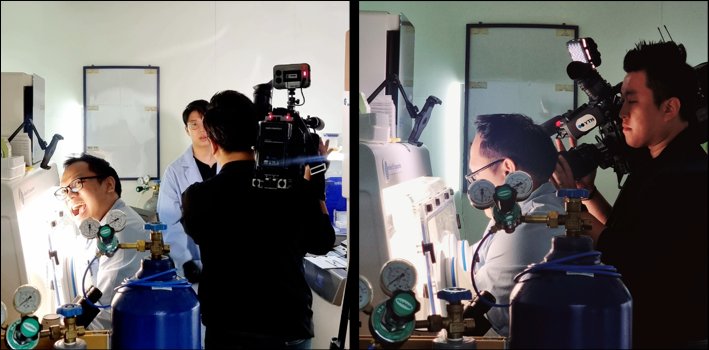
Hot off the press 🔥! My co-first authored paper is out @ScienceAdvances!! A tour de force collab work with @new__hong @MethylAReum. We unlock for the first time the dog epigenome! 🐕 🧬 @SeoulNatlUni @je_yoel #ENCODE #epigenome #epigenetics #ScienceAdvancesResearch
Mark Borris Aldonza (@precursorcell.bsky.social🦋) tweet media
Keun Hong Son (keun-hong.bsky.social)@new__hong

Exciting news! Our lab’s latest paper in @ScienceAdvances on mapping the dog epigenome is out 🐶🧬! Close collaboration with my co-first authors @PrecursorCell + @MethylAReum! 🧵 👇(1/17) #ScienceResearch #ScienceAdvancesResearch #Epigenome science.org/doi/10.1126/sc…

Gwanak-gu, Republic of Korea 🇰🇷 English
6
2
36
11.1K
Mark Borris Aldonza (@precursorcell.bsky.social🦋) retweeté
Veera Rajagopal 
Veera Rajagopal @doctorveera·
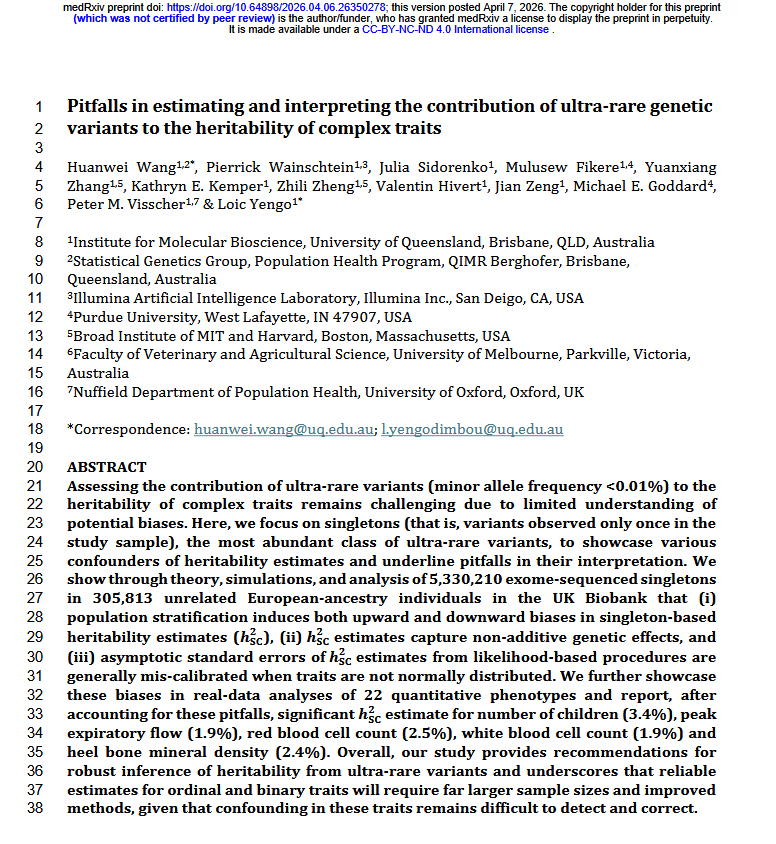
New multiancestry GWAS of hyperemesis gravidarum (pregnancy-associated severe vomiting) based on ~11k cases and ~460k controls out in Nature Genetics The study identified 10 signals, 4 known and 6 novel implicating - GDF15-GFRAL brainstem axis - metabolic/insulin pathways - neuronal genes suggesting roles in nausea perception and food/smell sensitivity. GDF15 continues to be the strongest signal! Fejzo et al. Nat Gen 2026 nature.com/articles/s4158…
Veera Rajagopal  tweet media
English
1
4
18
567
Mark Borris Aldonza (@precursorcell.bsky.social🦋) retweeté
Eric Topol
Eric Topol@EricTopol·
New evidence that somatic mutations in immune cells can be the basis for autoimmune disease @Nature nature.com/articles/s4158…
English
3
54
184
17.4K
Mark Borris Aldonza (@precursorcell.bsky.social🦋) retweeté
Goodfire
Goodfire@GoodfireAI·
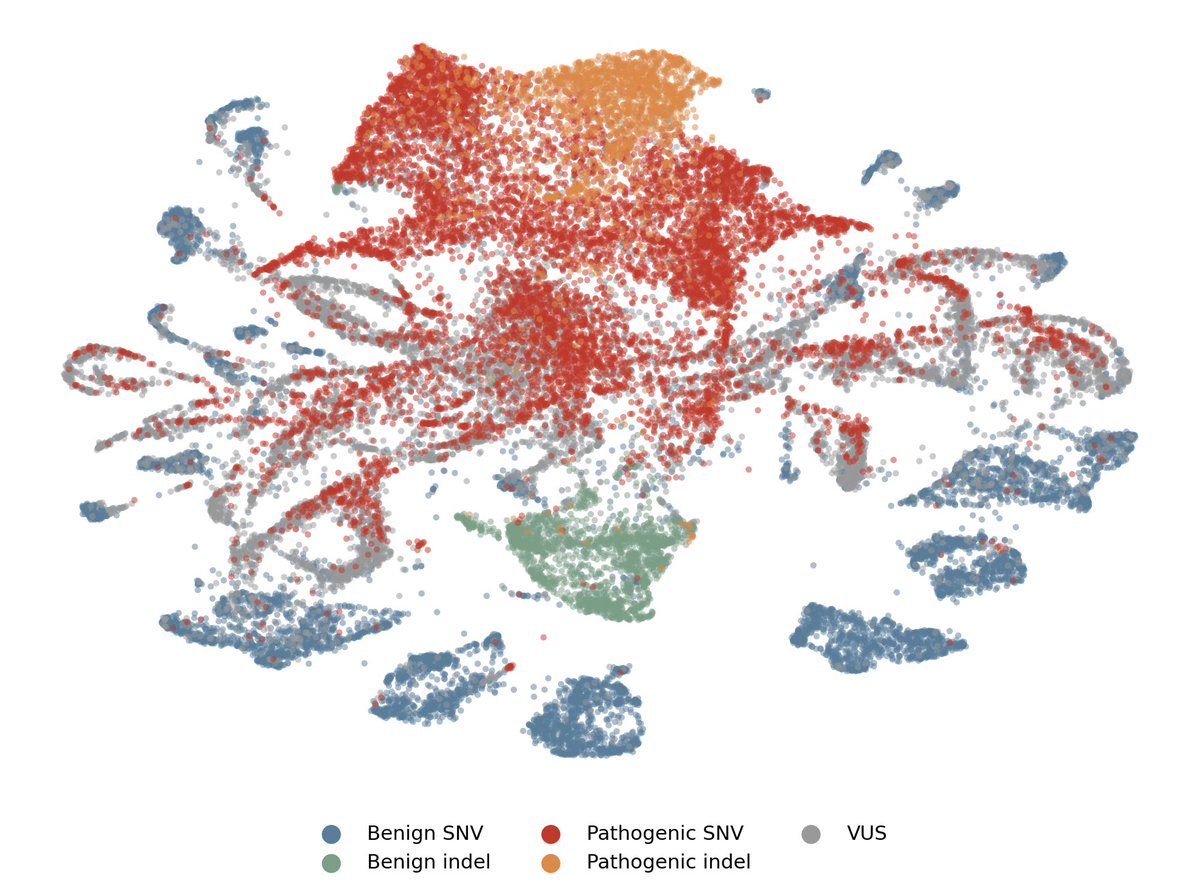
We achieved state-of-the-art performance in predicting which of 4.2 million genetic variants cause diseases by interpreting a genomics model, in a new preprint with @MayoClinic. We're now releasing an open source database for all variants in the NIH's clinvar database. 🧵(1/8)
Goodfire tweet media
English
8
119
647
106K
Mark Borris Aldonza (@precursorcell.bsky.social🦋) retweeté
Effie Apostolou
Effie Apostolou@efapostolou29·
Excited to share our new paper in @NatureGenet led by the incredible @6jinLee! We uncover how cohesin loss impairs postmitotic refolding of 3D chromatin topology with limited context-specific effects on gene activation—especially during differentiation. nature.com/articles/s4158…
English
3
25
111
6.1K
Mark Borris Aldonza (@precursorcell.bsky.social🦋) retweeté
Veera Rajagopal 
Veera Rajagopal @doctorveera·
A fascinating investigation of plasma proteomic changes during human menstrual cycle using UK Biobank data. One thing that excites me the most about the current proteomics era is they are going to revolutionize biomarkers discovery, which will have impact across many domains of medicine. More than the proteins -> phenotype, it's phenotype (disease or trait) -> proteins is what appears more exciting, with many medical applications on the horizon. Here is a proteome score based on 75 proteins that predicts the phase of menstrual cycle with a correlation (r) of 0.56, which is pretty impressive for a single snapshot (which will only improve over time) Riishede et al. Nat Med nature.com/articles/s4159…
Veera Rajagopal  tweet media
English
3
18
62
7K
Mark Borris Aldonza (@precursorcell.bsky.social🦋) retweeté
H_Shimizu
H_Shimizu@biomedicalhacks·
胎児12臓器・81万超の単一細胞で、DNAの「文法(regulatory syntax)」を解読したというNature誌の報告です。SHARE-seqでchromatin accessibility + gene expressionを同時測定。これとDeep learning(ChromBPNet)で配列からaccessibilityを予測し、motifの「文法」を体系的に明らかにしています。nature.com/articles/s4158…
日本語
0
28
156
17K
Mark Borris Aldonza (@precursorcell.bsky.social🦋) retweeté
antisense.
antisense.@razoralign·
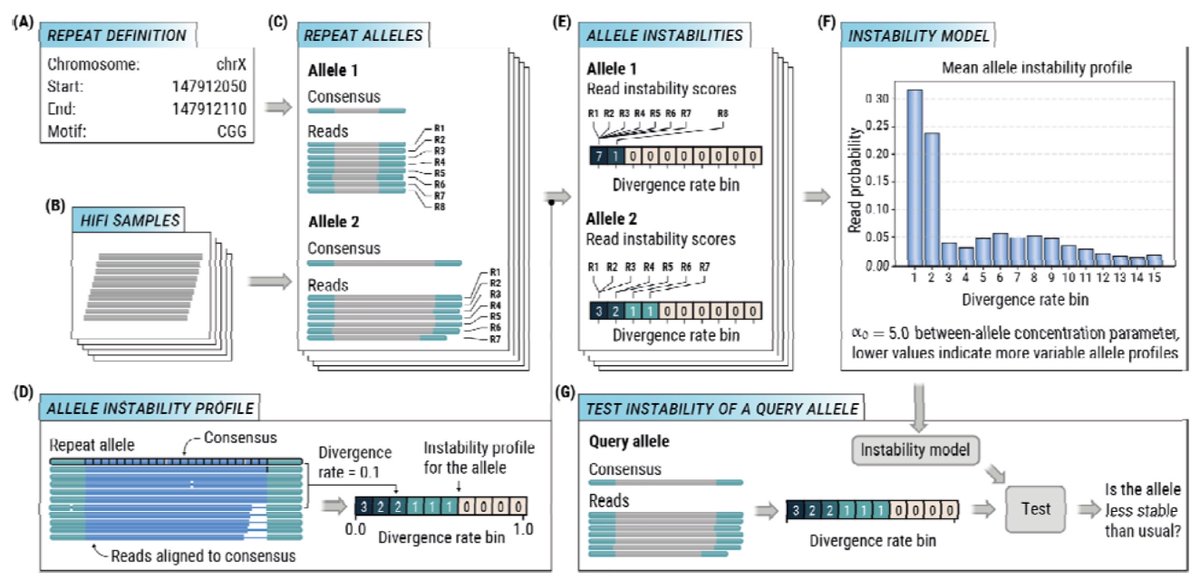
A computational model for quantifying instability of tandem repeats across the genome biorxiv.org/content/10.648…
antisense. tweet media
English
3
18
58
3.2K
Mark Borris Aldonza (@precursorcell.bsky.social🦋) retweeté
Can Aztekin
Can Aztekin@CanAztekin·
🚨Why can’t mammals regenerate limbs like frog tadpoles or salamanders? In our new paper in @ScienceMagazine, we show that species-specific oxygen sensing acts as a gatekeeper for initiating limb regeneration 🐭🐸 🔗 science.org/doi/10.1126/sc… #EvoDevo
English
16
116
401
43K
Mark Borris Aldonza (@precursorcell.bsky.social🦋) retweeté
Markus J. Buehler
Markus J. Buehler@ProfBuehlerMIT·
The next frontier in protein design will not be defined by structure alone, but by the capacity to engineer motion as a first-class principle of function. This is because dynamics is where the real biology lives. Foundational work by Karplus, Levitt & Warshel made clear that chemistry cannot be understood without motion, mechanism, and scale. Gō, Brooks & others showed that proteins possess characteristic collective motions - low-frequency normal modes that capture how whole molecules bend, breathe, and fluctuate. Frauenfelder then sharpened the picture further: proteins are not static objects occupying a single minimum, but dynamic ensembles traversing rugged energy landscapes. And yet the modern AI revolution in protein science has been, above all, a revolution in structure. In our new paper in Matter, @_Bo_Ni and I ask a different question: not what structure will this sequence adopt? but what sequence will realize a prescribed pattern of motion? VibeGen inverts the conventional design paradigm. Rather than treating dynamics as a consequence to be analyzed after the fact, it makes dynamics the design objective from the outset. Using a language diffusion model with two cooperating agents - a designer that proposes sequences and a predictor that critiques them against the target motion profile - the system converges on de novo proteins with tailored vibrational behavior. One of the most intriguing results is a form of functional degeneracy - distinct sequences and distinct folds can satisfy the same target dynamical specification. For a given functional pattern of motion, evolution may have sampled only a small region of the physically realizable design space. The space of viable molecular mechanics may be far larger than the repertoire biology happened to discover. We have made "vibe" into a cultural metaphor - something intuitive, affective, subjective. But at the molecular scale, vibe is not metaphor: It is physics. For a protein, the vibe is the pattern of motion itself; the fluctuations, resonances, and collective displacements that determine what the molecule can do.
English
26
145
792
82.3K
Mark Borris Aldonza (@precursorcell.bsky.social🦋) retweeté
Mekayla Storer
Mekayla Storer@MekaylaStorer·
Proud to share this work with @KevinChalut and @Byron_Mui Why do some injuries scar while others regenerate? Using digit tip models, we show the ECM is a key driver. HA-rich ECM promotes regeneration, and boosting it can shift healing away from fibrosis. science.org/doi/10.1126/sc…
English
7
21
45
5.7K
Mark Borris Aldonza (@precursorcell.bsky.social🦋) retweeté
James Zwierzynski
James Zwierzynski@jameszsci·
Excited to share our preprint, reviving @kristyredhorse's interest in the placenta from her PhD ~20 years ago! We find using 3D imaging that the mouse placenta is far more invasive than previously thought. Furthermore, we find a surprise from our favorite chemokine CXCL12...🧵:
James Zwierzynski tweet media
biorxiv_devbio@biorxiv_devbio

3D imaging of the pregnant uterus reveals an extensively invasive mouse placenta requiring CXCL12-CXCR4 signaling biorxiv.org/content/10.648… #biorxiv_devbio

English
1
24
74
13.9K
Mark Borris Aldonza (@precursorcell.bsky.social🦋) retweeté
James Zwierzynski
James Zwierzynski@jameszsci·
Why have we missed this in the mouse? A logical explanation is the optical clarity resolved by 3D imaging. However, we found a more biologically rooted explanation – arteries persist in the mature placenta in regular patterns – but trophoblast invasion occurs with random bias.
English
1
7
23
1.7K
Mark Borris Aldonza (@precursorcell.bsky.social🦋) retweeté
Nitzan Gonen
Nitzan Gonen@gonen_nitzan·
1/n 🤩 Beyond excited to share our recent paper, published today @NatureComms!! 🤩 This study represents, in my view, one of the most striking phenotypes we ever found with really important findings and implications. nature.com/articles/s4146…
English
7
38
202
22.1K
Mark Borris Aldonza (@precursorcell.bsky.social🦋) retweeté
Veera Rajagopal 
Veera Rajagopal @doctorveera·
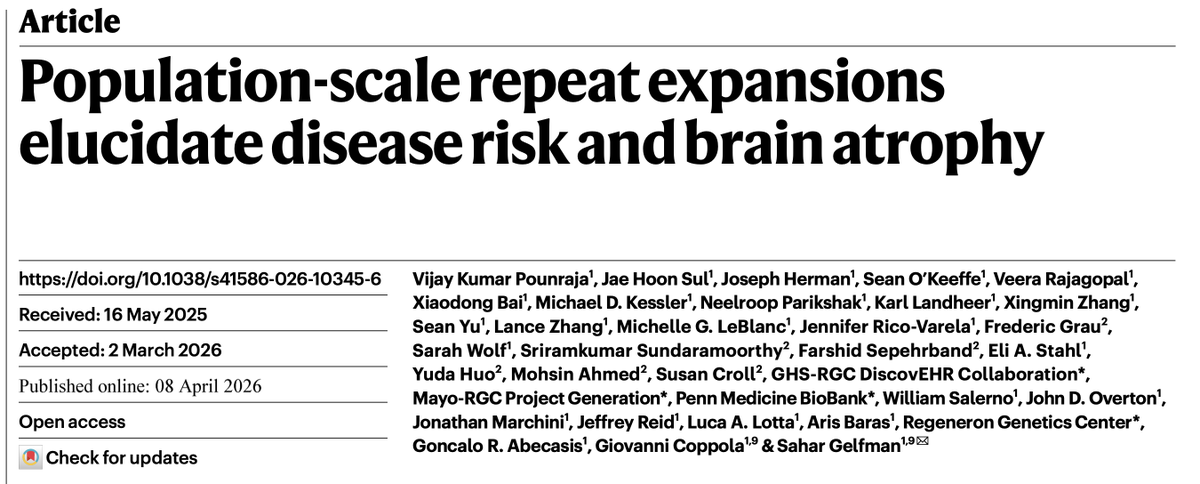
Happy to see our work on repeat expansions led by my colleagues--Sahar Gelfman & Vijay Kumar--at RGC published in @Nature. Below is a thread highlighting what we learned from systematically studying repeat mutations at population-scale in ~1 million individuals
Veera Rajagopal  tweet media
English
5
38
134
11.9K
Mark Borris Aldonza (@precursorcell.bsky.social🦋) retweeté
Chengxiang Qiu
Chengxiang Qiu@CXchengxiangQIU·
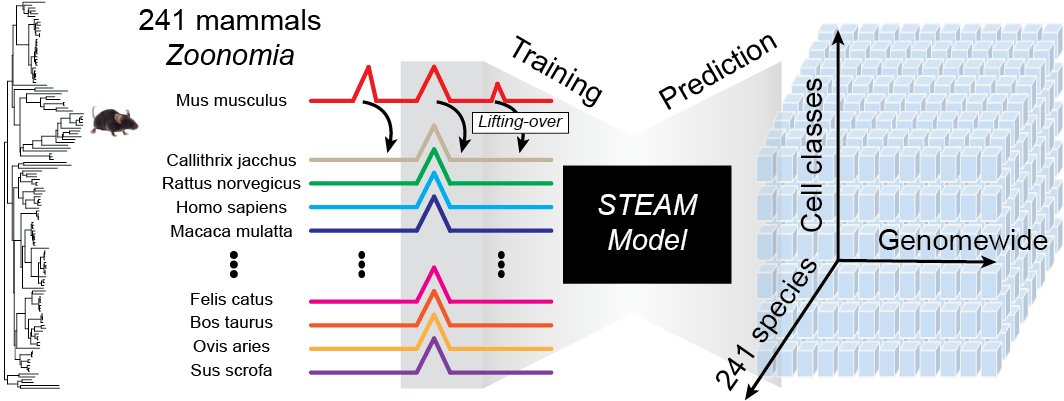
New preprint! @JShendure @CXchengxiangQIU Can we learn regulatory grammars of human cell types we'll never be able to profile - by training on mouse development and transferring across 241 mammalian genomes?biorxiv.org/content/10.648…
Chengxiang Qiu tweet media
English
1
37
143
11.8K
Mark Borris Aldonza (@precursorcell.bsky.social🦋) retweeté
Moon
Moon@msyk_nagai·
It was a pleasure to write research highlight with @Al_Murphy_ & @pkoo562 on AlphaGenome, highlighting the work by @Avsecz and colleagues! It represents an impressive engineering feat for genomic AI but key challenges still remain. 1/N nature.com/articles/s4142…
English
1
17
73
5.9K