Thomas Bratananium

24.1K posts

Thomas Bratananium banner
Thomas Bratananium

Thomas Bratananium

@bratananium

318 ppm=677GtC = 3bn born engineer applied physics I am collecting #PlanetaryBoundaries data. #climate is a feedback structure. #biodiversity #PFAS

thomas-boettcher.bsky.social Inscrit le Eylül 2017
1.5K Abonnements674 Abonnés
Tweet épinglé
Thomas Bratananium
Thomas Bratananium@bratananium·
#PB planetary_boundaries 1_climate_change 2_biodiversity_loss_&_extinction 3_land_use 4_N_P 5_pollution: Plastic, Microplastics, Glyphosate, 350 000 Chemicals 6_water 26.04.2022 0_human_population
Thomas Bratananium tweet media
English
31
106
152
0
Thomas Bratananium retweeté
Leon Simons 🌍
Leon Simons 🌍@LeonSimons8·
@danmiller999 @KNMI That very much depends on where the water evapored from and where it precipitates. Over a yottajoule (YJ) of heat is directed towards surface evaporation annually and with more heat in the system that amount increases. x.com/i/status/20234…
Leon Simons 🌍@LeonSimons8

The amount of energy that's globally directed to evaporation (and sublimation) is hard to grasp. Every year over 1,350 ZJ (energy equal to 10^24 joules!) is directed to evaporate water from oceans, land and ice. That doesn't include evaporation happening inside clouds 👇

English
1
2
4
91
Thomas Bratananium retweeté
David Ullrich
David Ullrich@DavidUllrich202·
Oceans are darkening all over the planet ― what’s going on? In a shift that is reshaping entire ecosystems, the open oceans are letting less light in. We don’t fully understand the consequences yet, but there is still hope, says oceanographer Tim Smyth newscientist.com/article/251961… docs.google.com/document/d/1Cv…
David Ullrich tweet media
English
0
6
9
158
Thomas Bratananium retweeté
James Edward Hansen
James Edward Hansen@DrJamesEHansen·
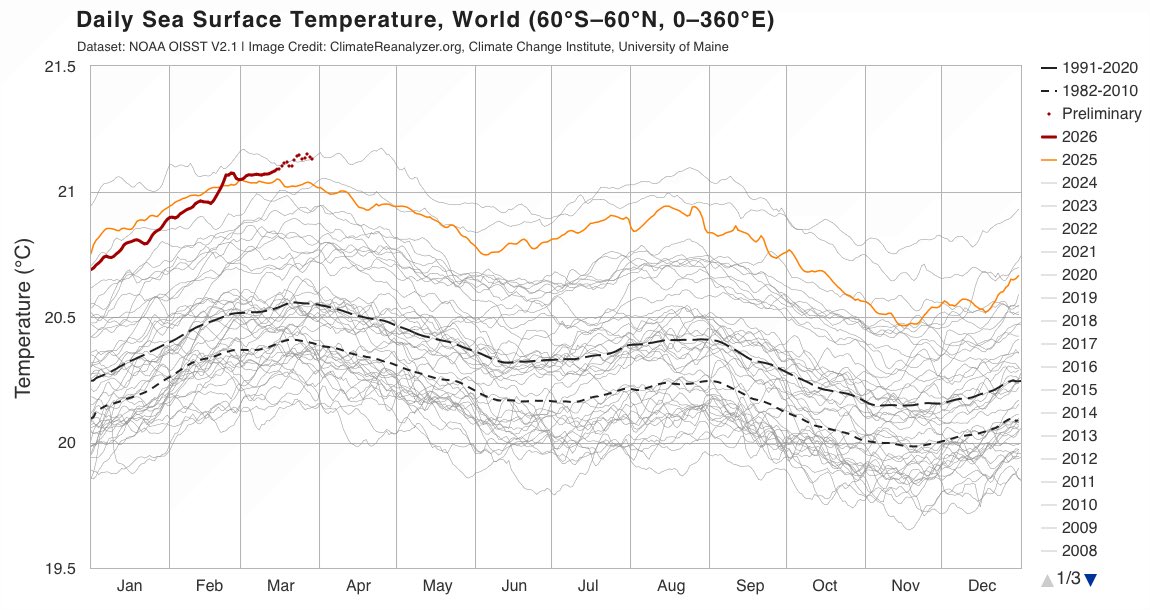
The Nino index (Nino3.4) has just reached Nino-neutral, but global SST (sea surface temperature) has matched the highest level for this date, which was achieved during the last El Nino. Super warming is clear. Look for a global temperature soon of at least +1.7C, even if the "Super" El Nino turns out to be half-baked. The University of Maine Climate Change Institute has a spectacular interactive graphic that they update daily. It is a valuable research and communications tool. Link to graph: climatereanalyzer.org/clim/sst_daily…
James Edward Hansen tweet media
English
28
327
736
37.3K
Thomas Bratananium retweeté
Peter D Carter
Peter D Carter@PCarterClimate·
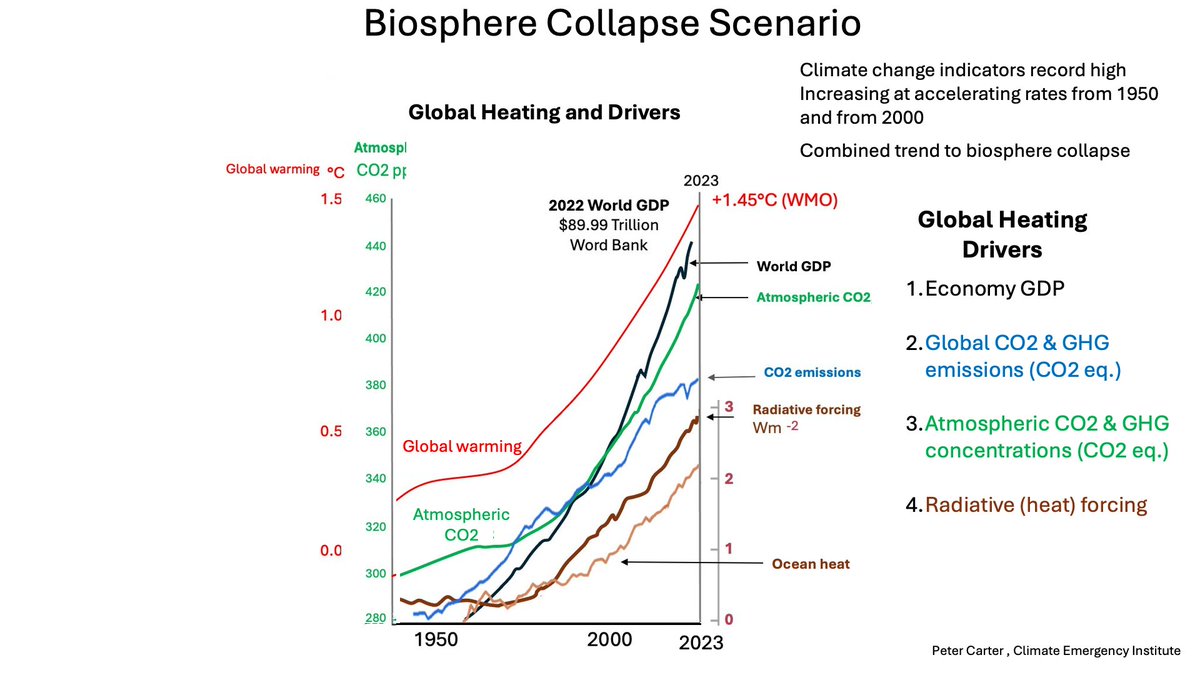
BIOSPHERE COLLAPSE SCENARIO- CLIMATE CHANGE INDICATORS Climate change indicators under unmitigated climate change. Combined record high record increasing indicators is a trend to biosphere collapse. Survival means there can be no further delay on immediate action to put global emissions into rapid decline (IPCC AR6). #environment #climatechange #globalwarming
Peter D Carter tweet media
English
5
65
103
2.2K
David Ullrich
David Ullrich@DavidUllrich202·
@LeonSimons8 I noticed how much faster temperature decreased in relation to CO₂. Is it possible ECS decreased from previously higher levels due to the re-emerging stratocumulus clouds from a largely cloud-free paleoclimate, which included the Miocene?
English
2
1
3
273
Leon Simons 🌍
Leon Simons 🌍@LeonSimons8·
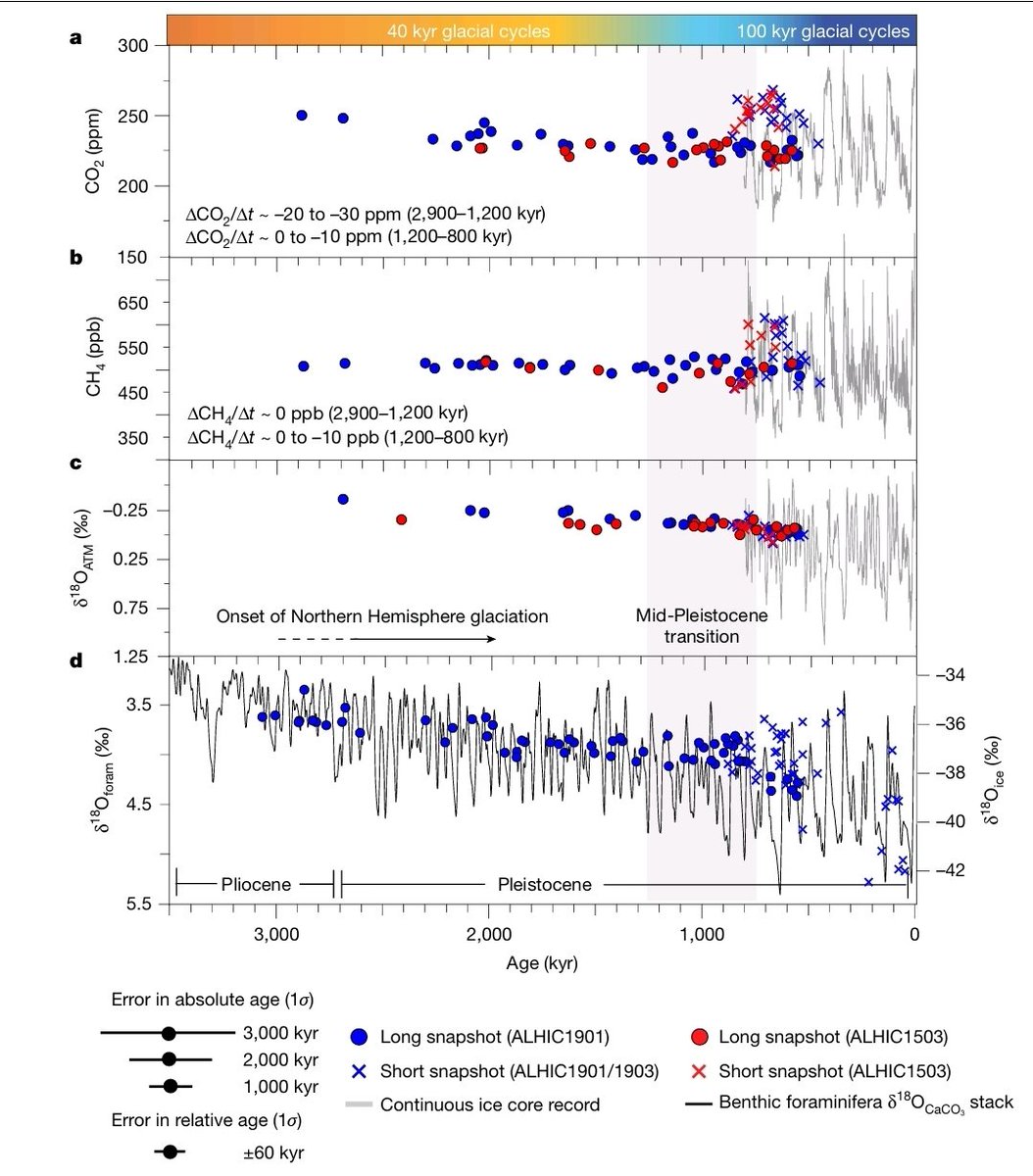
Crucial new research shows that the long term natural decline of global CO₂ from 3 to 1 million years ago was 'only' 20 ppm and that methane concentrations didn't change much. Another crucial new study shows that over the same period the whole global oceans cooled by about 2°C, while parts of the Northern Hemisphere (notably Greenland and the Arctic) started to freeze over. The past ~200 years humanity increased the global greenhouse gas forcing about 9,000,000% faster than the natural decline that took about 2 million years. And now the rate of greenhouse gas forcing (that what forces the climate to change) increase has accelerated to 20,000,000% of the natural decline rate (~+0.45 W/m²/dec vs ~-0.45 W/m²/2M yrs). We will talk about this and more tomorrow on Climate Chat. Join us on YouTube. Links below. Subscribe and hit the bell button on YouTube to get a notification when we go live.
Leon Simons 🌍 tweet mediaLeon Simons 🌍 tweet media
Dan Miller@danmiller999

Sunday 3/29 at 10am PT on Climate Chat: 3 Million Year Climate Secrets: What the Past Teaches Us, with hosts Dan Miller & @LeonSimons8 #ClimateChange #GlobalWarming @drivingmzstacey @radsci youtube.com/live/4HIB2rLyY…

English
11
86
230
14.9K
Thomas Bratananium retweeté
Peter D Carter
Peter D Carter@PCarterClimate·
EARTH'S ENERGY IMBALANCE ACCELERATING- INCREASED 75% IN 15 YEARS WMO 23 March, noted increasing Earth Energy Imbalance. It is ACCELERATING fast, 75% in the past 15 years, by Berkeley Earth dataset. It is the gold standard on climate change assessment. berkeleyearth.org/global-tempera… #climatechange #globalwarming
Peter D Carter tweet media
English
4
33
44
1.2K
Thomas Bratananium retweeté
Indonesisches Bergwiesel
Indonesisches Bergwiesel@IBergwiesel·
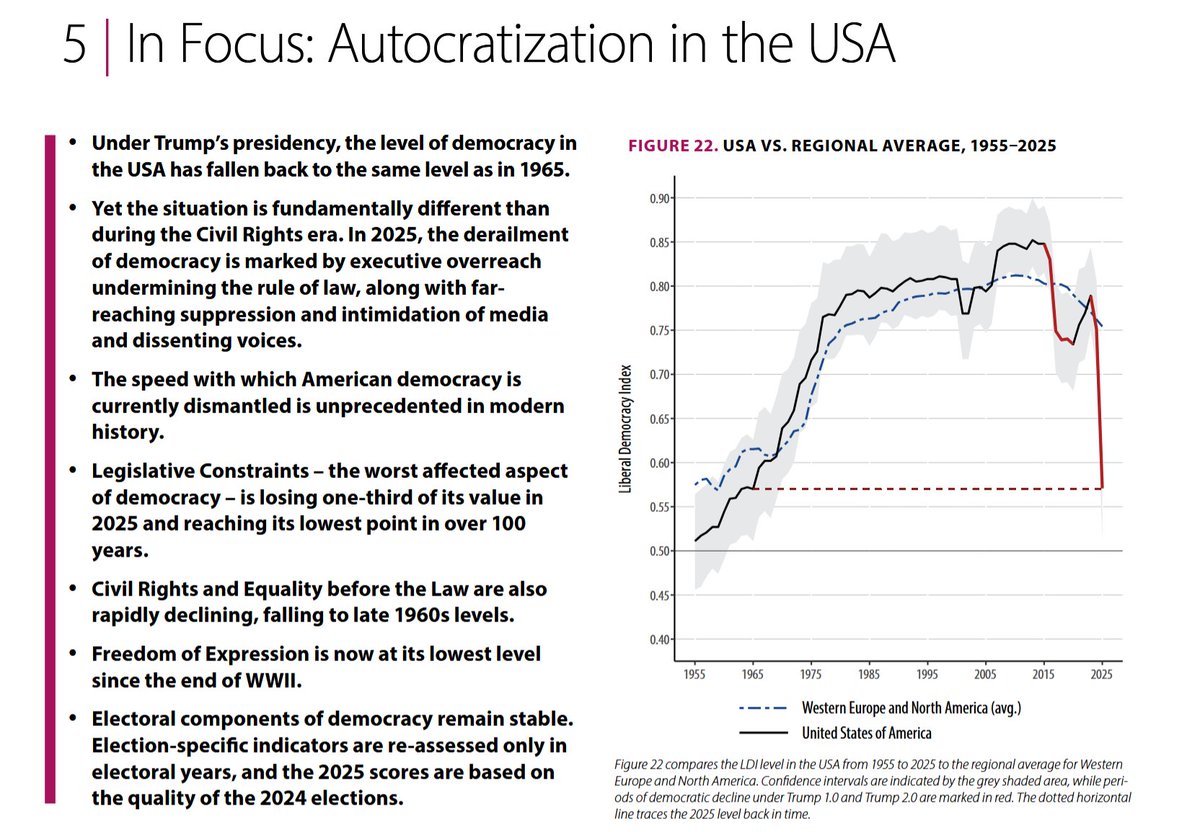
In Focus: Autocratization in the USA Chapter 5 of the 2026 Democracy Report by the “Varieties of Democracy” Institute (V-Dem) at the University of Gothenburg in Sweden, which was released today. #page=33" target="_blank" rel="nofollow noopener">v-dem.net/documents/75/V…
Indonesisches Bergwiesel tweet media
Aline Pabst@AlinePabst

„Die Geschwindigkeit, mit der die amerikanische Demokratie derzeit demontiert wird, ist in der modernen Geschichte beispiellos.“ Darf man die Trump-Fans, die hierzulande ihrem Messias hinterherhecheln, jetzt endlich als Demokratiefeinde bezeichnen? orf.at/stories/342409…

English
0
4
3
134
Thomas Bratananium retweeté
David Ullrich
David Ullrich@DavidUllrich202·
The decline in global cloudiness affects the Earth’s “energy imbalance” ― the difference between absorbed solar energy and heat radiated into space. We find that, since 2003, the decrease of cloudiness has been responsible for half of the increase of Earth’s energy imbalance.
David Ullrich tweet media
English
3
22
39
1.3K
Thomas Bratananium retweeté
Indonesisches Bergwiesel
Indonesisches Bergwiesel@IBergwiesel·
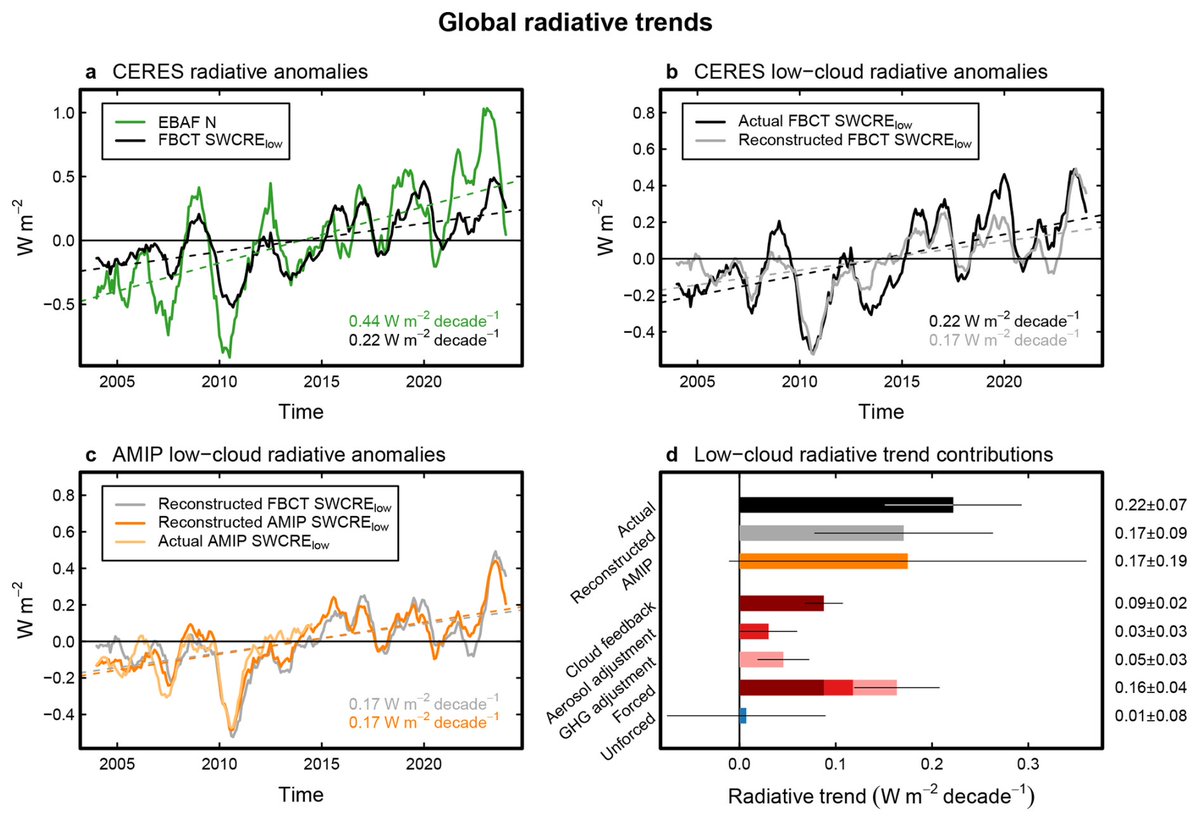
The attribution part of this is interesting. The uncertainties are obviously large, but the central estimate indicates only a small contribution from unforced variability.
Indonesisches Bergwiesel tweet media
David Ullrich@DavidUllrich202

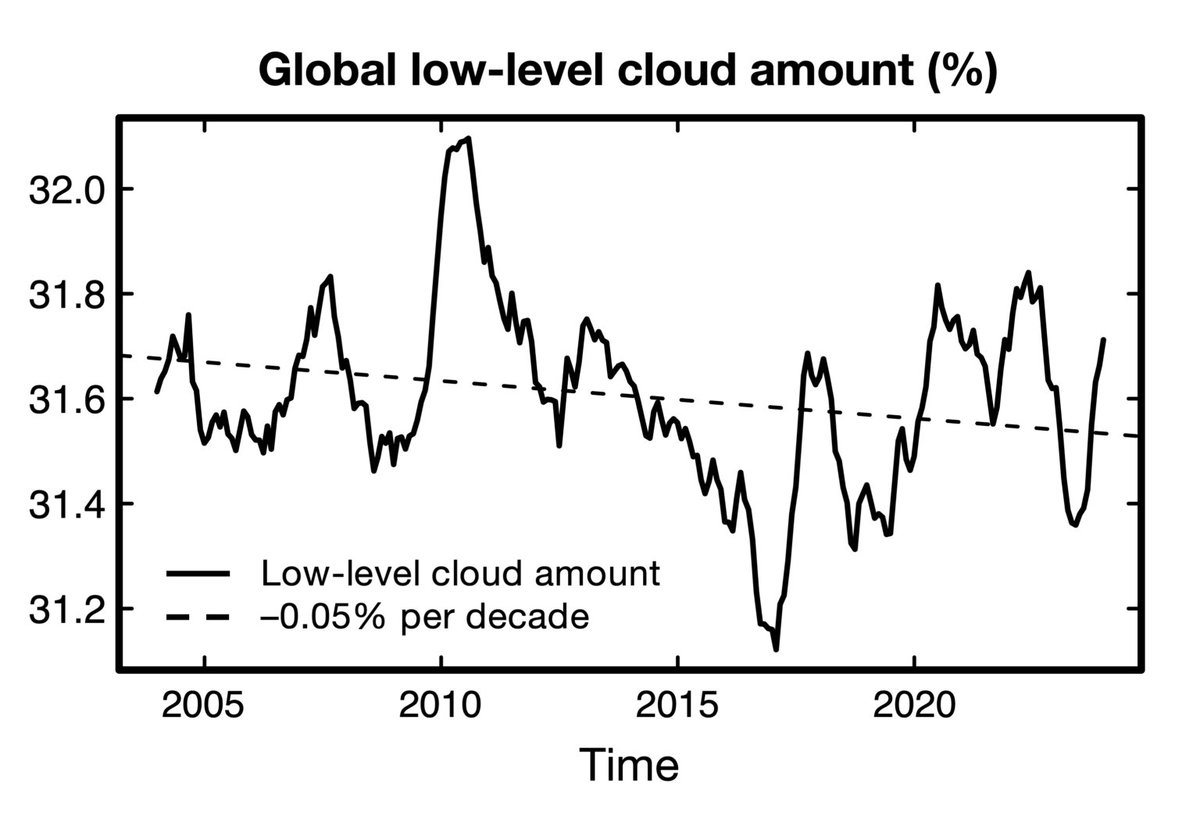
Emerging low-cloud feedback and adjustment in global satellite observations acp.copernicus.org/articles/26/41… drive.google.com/file/d/1gQ3Pbr… Low-level cloud amount (in percent of the globe) from July 2003 to June 2024, based on the CERES-FBCT satellite product. Credit: Ceppi et al. (2026)
English
2
6
22
1.9K