

Börjesson
5.5K posts
Börjesson
@cborjesson
Investment Manager - Main focus on fixed income, FX and macro economics. Married - Three kids. Öisare. YNWA.
Stockholm Inscrit le Eylül 2011
1.4K Abonnements1.2K Abonnés

Fy fan. Sällan känt så lite tillförsikt inför en fotbollsmatch som till den ikväll. Det här är inte ens en antijinx, bara mental föreberedelse.
Svenska

Igår, den 29 december 2025, kl. 18.14, blev Evelina och jag föräldrar - och Penny-Lane och Selma storasystrar - till den här vackra, lilla pojken. Nu är vår familj komplett. Välkommen till världen, älskade son ❤️
Welcome to the world, my beautiful boy ❤️

Svenska
@TheTrueVanguard The rubber keys on my ZX Spectrum make me nostalgic.
English

Prove to me you’re an old gamer in one sentence. I’ll drop a like if I’m convinced.
English


Mats fick hjärtstopp på arenan i Norrköping under matchen i går. Tack vare flera hjältar runt om honom på läktarna lever han i dag och kan njuta av allsvenska avancemanget. #Öis gp.se/sport/fotboll/…
Svenska

I don't think I've ever been this excited before.
I never thought I'd make it this far with my channel and now on Monday I'm flying to Sweden and BROADCASTING for THE FINALS major.
I guess dreams do come true.
Thank you everybody 🧡
English

Embark Studios is facing backlash again from mainstream media for its use of generative AI in The Finals and its latest game, Arc Raiders.
The studio previously stated that it does not plan to stop and may use AI and text-to-speech in upcoming titles.


English

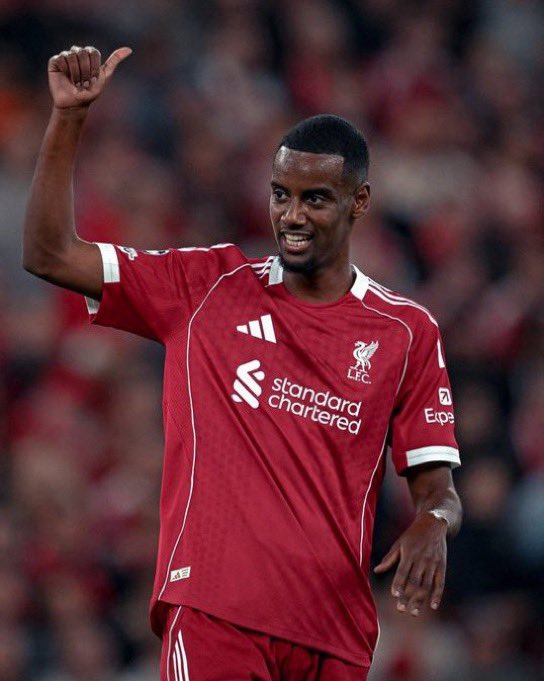
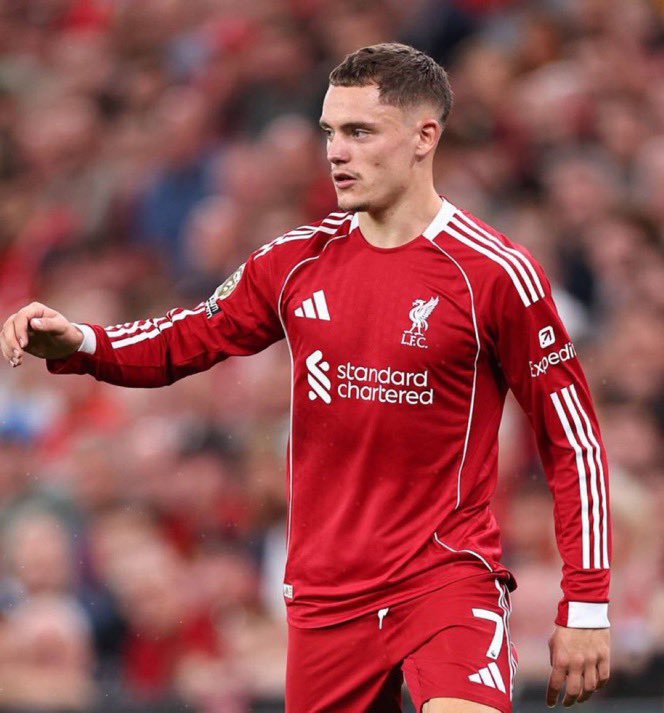
Isak 003 ✅
Wirtz 007 ✅
300 Trillion Nigerian Naira well spent.
English


@KrisAndersson86 Det är så oändligt ledsamt. Underbara Jota!❤️❤️❤️
Svenska
This totally broke me.
Diogo Jota - forever our number 20, forever loved, forever a LFC legend.
YNWA ❤️
English

Hemma diskuterar vi ofta våra bästa fotbollsstunder. Både jag och Jamie landar ofta i denna. Ett euforiskt firande när Diogo Jota tystade Tottenham med 4-3 i 94:e. Ett ögonblick jag kommer bära med mig hela livet. Och vårda extra varsamt för all framtid. ❤️

Svenska
Börjesson retweeté




Last week, we hosted a call for @ExanteData clients on the ongoing asset allocation shift and (very negative) implications for the dollar.
Here I am just posting the opening slides from the call, that illustrates that there is nothing normal about the current regime...
short THREAD
English
@cullenroche I think time is a factor. Without any improvements in x months, support will drop.
English

What would it take for tariff supporters to admit this was a bad idea?
Stocks down 30%?
Unemployment up to 5-6%?
Nothing? Power thru any downturn?
English
@aintbychanzz__ I think Henrik Larsson’s header vs. Bulgaria 2004 deserves to be high on the list!
English


This was brilliantly executed by @realDonaldTrump. Textbook, Art of the Deal.
English
Here is a rant about tariff/economics. I do not want to be political. But you cannot separate trade policy from economics, so there is that.
Capitalism has proven far superior to communism in generating wealth. State controlled economies tend to do very poorly. Look at North Korea vs South Korea or Poland versus Russia. It is like night and day. There is always the issue of how the pie is divided, but it helps to have a bigger pie...
Tariffs are sand in the wheels of capitalism. It will make it harder to produce efficiently, and allocate capital efficiently if you have to pay taxes at the border (we have known about this at least since Ricardo). And any private company paying extra tariffs now are feeling that pain (both the dollars lost and the extra admin burden). That should also be pretty clear.
This does not mean that tariffs or industrial policy cannot be warranted, in certain situations.
For example, it seems clear that supply chains that are crucial to your military cannot be outsourced (think steel, shipbuilding, drone manufacturing). Hence, the idea of national security tariffs can certainly be very logical. The economic cost is worth it for national security.
Another example is when trading partners are not actiing fairly. China is a clear example here. Major US companies are not allowed to operate in China, with Google / Aphabet a key example. One of the biggest US companies had to shut down its China operations in 2010. This should certainly be a factor in trade policy and trade policy, if there are asymmetries like that (How can TikTok operate freely in the US, if Google cannot operate in China, how is that fair?).
Then there is the currency angle. For many years, foreign central banks kept their currencies artificially weak, to protect their exports. China was again prominent in this trend, accumulating lots of reserves up to 2014 to avoid CNY appreciation. This can arguably be seen as a barrier to free trade, and something that should be taken into account when tariff rates and other trade policy measures are decided. But in recent years, we have not seen a lot of this behavior. The USD has been very strong in recent years, globally, and other countries have actually been trying to strengthen their own currencies (or at least avoid weakness), as we have seen in Japan (selling foreign currency reserves to support the Yen in recent years). Perhaps US trade policy should have been more aggressive on this in the period 2005-2015?
And then there is the uncertainty dimension. Businesses like to have certainty. They can plan and invest with confidence, if they know the environment they are dealing with. At this point, they do not know what they are dealing with. USMCA tariffs are on one day, off the other day. Reciprocal tariffs are now on, but maybe they will be off soon, based on negotiations and deals to come. Nobody really knows. The uncertainty will cause investment to drop (likely sharply) as businesses just mostly wait it out. This is not good for the US economy.
And then there is the issue of transparency. The reciprocal tariffs imposed this past week were based on a formula that really is just a function of the trade deficit between the US and the country in question. It is not clear what the trading partner can do to be 'fair'. They can reduce their tariffs to zero, and the trade deficit may still be there (if they sell something US consumers or producers really want, or perhaps they have a natural resource that is unique). Hence, the lack of transparency (linkage to actual 'unfairness') will make the negotiations hard, as the formula used is not directly linked to each country's tariff rates on US exports or other non-tariff barriers (but simply based on the trade deficit)
This post will probably be unpopular. But some of these issues are actually not that complicated. Hence, it should in theory be possible to generate some consensus on the most important aspects.
English
Börjesson retweeté
many people are saying this is the best summary of tariffs in the world...

English