Daniel Gutierrez C. 👨🏻‍🏫💻🎹

6.1K posts

Daniel Gutierrez C. 👨🏻‍🏫💻🎹 banner
Daniel Gutierrez C. 👨🏻‍🏫💻🎹

Daniel Gutierrez C. 👨🏻‍🏫💻🎹

@danielgc

Profesor universitario, pianista aficionado, perseguidor de conocimiento. Esposo y padre feliz. + en https://t.co/sxPkosV3jk

Montemorelos, NL, MX Inscrit le Mayıs 2007
2K Abonnements1.2K Abonnés
Daniel Gutierrez C. 👨🏻‍🏫💻🎹 retweeté
ア
@yuruyurau·
a=(x,y,d=mag(k=4*cos(x/21),e=y/8-20))=>circle((q=3*sin(k*2)+.3/k+sin(y/19)*k*(9+2*sin(e*14-d*3+t*2)))+50*cos(c=d-t)+200,q*sin(c)+d*39-475,k*k>15?2:1) t=0,draw=$=>{t||createCanvas(w=400,w);background(9).noStroke().fill(w,116);for(t+=PI/240,i=1e4;i--;)a(i,i/235)}#つぶやきProcessing
English
141
906
7K
310.8K
Daniel Gutierrez C. 👨🏻‍🏫💻🎹 retweeté
Hombres con Determinación
Hombres con Determinación@H_Determinante·
La mayoría cree que el problema del mundo es la maldad... ¡Error! El verdadero peligro está la estupidez. No es falta de inteligencia. Es renunciar a pensar. Y cuando aparece en grupo… se vuelve imparable. Esto lo explicó Dietrich Bonhoeffer 🧵
Hombres con Determinación tweet media
Español
30
807
1.6K
50.1K
Daniel Gutierrez C. 👨🏻‍🏫💻🎹 retweeté
Vicente Alcañiz
Vicente Alcañiz@vicente_alcaniz·
El procesamiento del cerebro humano, lo que pensamos, decidimos y hacemos, va a unos 10 bits por segundo. Esta aparente lentitud no es un defecto, sino su mayor virtud. En lugar de abarcar toda la complejidad del entorno, lo simplifica. Y gana en robustez acortar.link/18OyAr
Vicente Alcañiz tweet media
Español
0
25
81
1.5K
Daniel Gutierrez C. 👨🏻‍🏫💻🎹 retweeté
Gaceta UNAM
Gaceta UNAM@Gaceta_UNAM·
La #UNAM creó las Guías de Uso de Inteligencia Artificial Generativa en Evaluación Educativa, que ayudan a enfrentar el reto que esa tecnología representa en el proceso de enseñanza-aprendizaje y su posterior análisis y calificación. Se trata de tres documentos orientadores dirigidos a estudiantes y docentes de bachillerato, licenciatura y posgrado desarrollados por @CEIDE_UNAM. t.ly/eCNGu
Gaceta UNAM tweet media
Español
6
93
200
8.9K
Daniel Gutierrez C. 👨🏻‍🏫💻🎹 retweeté
جبرتي تويتر
جبرتي تويتر@ElGabarty_·
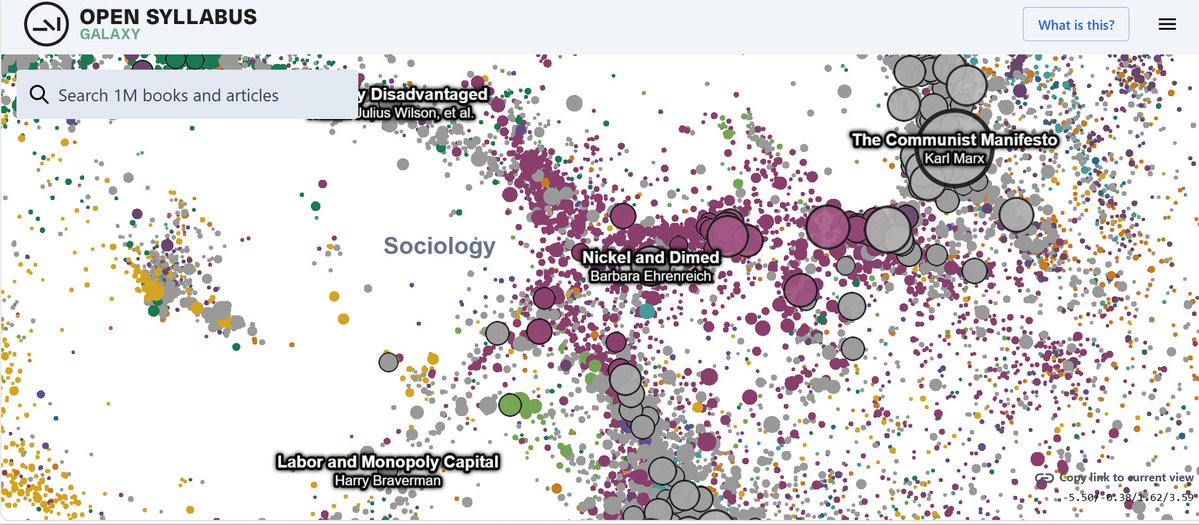
موقع مفيد جدا لمصممي المناهج الجامعية.. يضم: - أكثر من 6 مليون منهج دراسي - أكثر من 3 مليون عنوان للكتب الدراسية - من 6,547 كلية -في 65 مجال -أكثر من 108 ألف ناشر -في 116 دولة به خريطة تفاعلية رائعة للتجول في المناهج حول العالم opensyllabus.org
جبرتي تويتر tweet media
العربية
10
215
928
47.4K
Daniel Gutierrez C. 👨🏻‍🏫💻🎹 retweeté
Adventist IAD
Adventist IAD@AdventistIAD·
José Luis Olmos has been elected president of Montemorelos University for the 2026–2030 term by the Montemorelos University Board of Trustees, during its meeting held in Miami, Florida, on May 5, 2026. #IADSM26
Adventist IAD tweet media
English
0
4
12
234
Daniel Gutierrez C. 👨🏻‍🏫💻🎹 retweeté
0xMarioNawfal
0xMarioNawfal@RoundtableSpace·
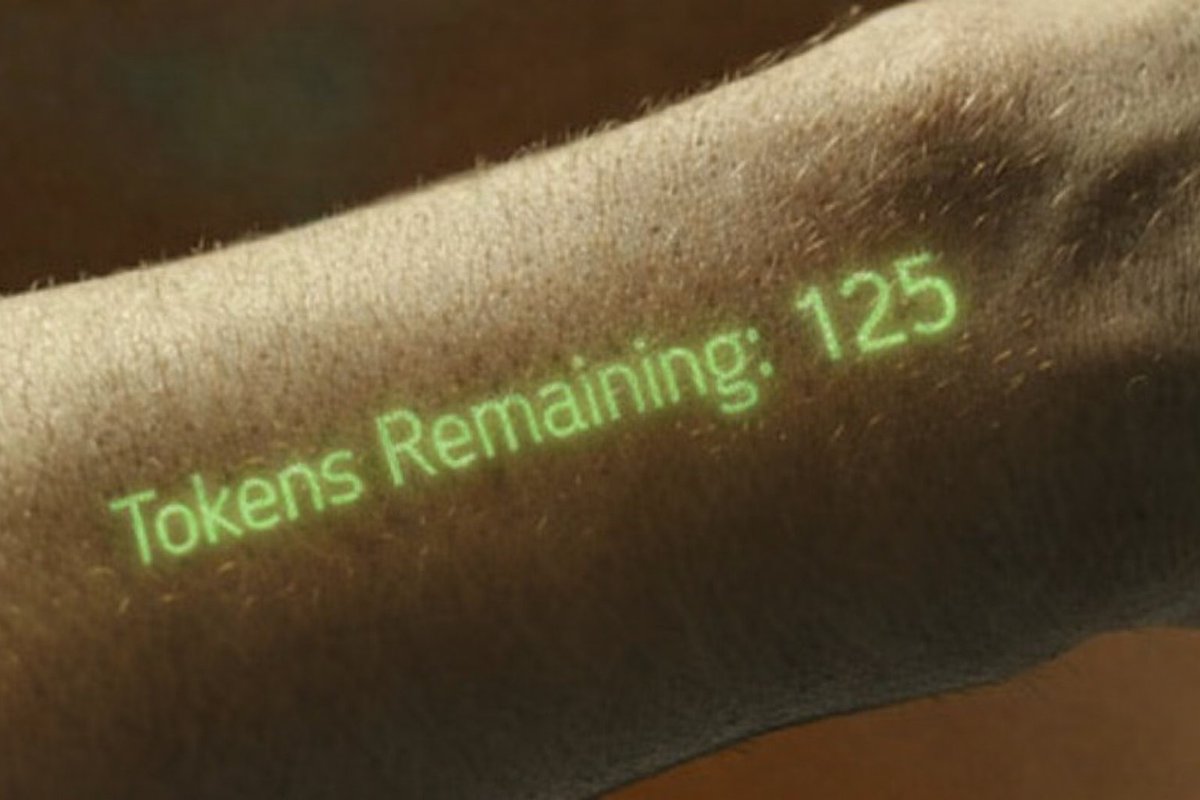
"YOUR CLAUDE CODE SESSION LIMIT HAS BEEN REACHED"
English
183
537
4.6K
554.8K
Daniel Gutierrez C. 👨🏻‍🏫💻🎹 retweeté
Sotiris Kaniras
Sotiris Kaniras@CastAsHuman·
Could happen 😅
Sotiris Kaniras tweet media
English
191
1.5K
17.1K
395.6K
Daniel Gutierrez C. 👨🏻‍🏫💻🎹 retweeté
Elias Al
Elias Al@iam_elias1·
A researcher spent two years documenting what AI is doing to the way humans think. His conclusion fits in one sentence. AI is standardizing human thought. Across societies. Across cultures. Across generations. Simultaneously. At a scale no technology in history has ever achieved. The paper is called "The Impact of Artificial Intelligence on Human Thought." Published July 2025 on arXiv. Written by independent researcher Rénald Gesnot, categorized under Computers & Society and Human-Computer Interaction. It is not a benchmark paper. It is not a capability paper. It is something rarer — a systematic analysis of what happens to human cognition, creativity, and intellectual diversity when billions of people outsource their thinking to the same machine. Here is the mechanism the researcher describes. When you ask an AI a question, you get an answer shaped by the model's training data, its fine-tuning, its alignment process, and the preferences of the company that built it. That answer is not neutral. It reflects a specific set of values, framings, and assumptions. Usually Western. Usually English-dominant. Usually optimized for engagement and approval. When 500 million people ask the same AI similar questions and receive similar answers, those answers become reference points. People quote them. Build on them. Argue from them. The diversity of starting points — different cultures, different intellectual traditions, different ways of framing problems — begins to compress. The researcher describes this as cognitive standardization. Not censorship. Not propaganda. Something subtler and harder to reverse. A gravitational pull toward the outputs of a small number of models, trained by a small number of companies, reflecting a small number of worldviews. The paper also documents algorithmic manipulation — AI systems that exploit cognitive biases to influence behavior. The way recommendation algorithms produce filter bubbles. The way AI-generated content exploits confirmation bias. The way personalization systems learn what you already believe and feed it back to you amplified. And then the creativity question — the one nobody wants to answer directly. When AI can produce a poem, an essay, a business plan, or a research summary in seconds — and when that output is often indistinguishable from or preferred over human-generated content — what happens to the human practice of creating those things? Not the output. The practice. The struggle. The failure. The slow development of a personal voice through years of imperfect attempts. The researcher argues that cognitive offloading — delegating thinking tasks to AI — does not merely save time. It atrophies the mental capacity that the offloaded task was building. Microsoft and Carnegie Mellon found this empirically in 2025: higher AI trust correlates directly with measurably lower critical thinking. The researcher provides the theoretical framework for why. The paper ends with a question the researcher admits he cannot answer. Once a generation grows up with AI as the default thinking partner — once the habit of outsourcing cognition is formed before the habit of independent thought is developed — what does intellectual autonomy even mean? And is it already too late to find out? Source: Gesnot, R. · "The Impact of Artificial Intelligence on Human Thought" · arXiv:2508.16628 · arxiv.org/abs/2508.16628 · July 2025
English
133
402
1.1K
86.7K
Daniel Gutierrez C. 👨🏻‍🏫💻🎹 retweeté
Julio Rodríguez, PhD | Genética Clínica
Aprendizaje e instrucción, de Richard E. Mayer. Síntesis rigurosa de la psicología cognitiva aplicada a la educación El autor articula, desde una perspectiva empírica, cómo se produce el aprendizaje y qué principios deben guiar el diseño para optimizarlo Unas frases:
Julio Rodríguez, PhD | Genética Clínica tweet media
Español
3
24
86
3.5K
Daniel Gutierrez C. 👨🏻‍🏫💻🎹 retweeté
CUAED UNAM
CUAED UNAM@cuaedunam·
🤖📚 La @CEIDE_UNAM invita a la Presentación de las Guías de Uso de Inteligencia Artificial Generativa en Evaluación Educativa (Bachillerato, Licenciatura y Posgrado) 📅 29 abril | ⏰ 17:00 h ▶️ YouTube (CEIDE UNAM) 🔗 youtube.com/live/ppTQX9wsP…
YouTube video
YouTube
CUAED UNAM tweet media
Español
1
58
116
4.1K
Daniel Gutierrez C. 👨🏻‍🏫💻🎹 retweeté
Vicente Alcañiz
Vicente Alcañiz@vicente_alcaniz·
Si un alumno delega en la IA su voz antes de haberla encontrado no habrá voz. Habrá un eco bien redactado, indistinguible de los otros ecos. Más exámenes orales, más defensas públicas, más trabajos hechos en clase frente al otro. Reintroducir lectura lenta acortar.link/FSKIOe
Vicente Alcañiz tweet media
Español
26
768
1.9K
74.1K
Daniel Gutierrez C. 👨🏻‍🏫💻🎹 retweeté
Niké de Samotracia
Niké de Samotracia@NikSamotracia·
Recordar es volver a pasar por el corazón. (Re-cordis). Bonito, ¿verdad? 🥰🥰 Sigue leyendo ⬇️
Español
36
150
835
42.2K
Daniel Gutierrez C. 👨🏻‍🏫💻🎹 retweeté
Lectócratas
Lectócratas@lectocratas·
📖 La sociedad del cansancio — Byung-Chul Han (2010) DESCARGA GRATUITA u-cursos.cl/facso/2019/2/A… Prólogo "El mito de Prometeo puede reinterpretarse considerándolo una escena del aparato psíquico del sujeto de rendimiento contemporáneo, que se violenta a sí mismo, que está en guerra consigo mismo. En realidad, el sujeto de rendimiento, que se cree en libertad, se halla tan encadenado como Prometeo. El águila que devora su hígado en constante crecimiento es su álter ego, con el cual está en guerra." 🧵1/8
Lectócratas tweet media
Español
9
446
1.9K
977.7K
Daniel Gutierrez C. 👨🏻‍🏫💻🎹 retweeté
Ihtesham Ali
Ihtesham Ali@ihtesham2005·
A MIT professor who built the world's first neural network machine said something about intelligence that nobody in Silicon Valley wants to admit. His name was Marvin Minsky. He co-founded MIT's artificial intelligence lab with John McCarthy in 1959. He built SNARC the first randomly wired neural network learning machine in 1951, as a graduate student at Princeton. He won the Turing Award. He advised Stanley Kubrick on 2001: A Space Odyssey. Isaac Asimov, who was not a modest man, said Minsky was one of only two people he would admit were more intelligent than him. In 1986, after decades of building machines that could think, Minsky published a book about something far more unsettling. How humans think. And why we are wrong about almost everything we believe about it. The book is called The Society of Mind. It has 270 essays. Each one is a page long. Together they build a single argument that most people, when they first encounter it, reject immediately because it is too uncomfortable to accept. The argument is this: you do not have a mind. You have thousands of them. What you experience as a single, unified self making clear-headed decisions is not a thinker. It is an outcome. The result of hundreds of tiny, specialized, mostly mindless agents competing, negotiating, overriding, and occasionally cooperating with each other beneath the surface of your awareness. You do not decide things. You are what is left over after the arguing stops. Minsky was precise about this. He wrote that the power of intelligence stems from our vast diversity, not from any single perfect principle. He called this the trick that makes us intelligent, and then immediately added: the trick is that there is no trick. There is no central processor. No ghost in the machine. No unified self sitting behind your eyes, calmly evaluating options and choosing rationally. There is only the parliament. And the parliament is always in session. This reframing destroys the standard explanation for every failure of self-control. The reason you procrastinate is not laziness. It is that the agent in you that understands long-term consequences is losing an argument to the agent that wants comfort right now, and neither of those agents has a decisive vote. The reason you change your mind the moment someone pushes back is not weakness. It is that the social agent, the one that monitors status and belonging, just outweighed the analytical one. The reason willpower fails is not a character flaw. It is that you sent one small agent into a fight against dozens, and you called that discipline. Minsky had a specific line that breaks this open completely. He said: in general, we are least aware of what our minds do best. The things you do with the most apparent ease, reading a face, walking through a crowded room, understanding a sentence, catching a ball, are not simple at all. They are the products of staggeringly complex agent networks that run so smoothly, so far below conscious access, that you experience them as effortless. The things that feel like work, the logical arguments, the deliberate choices, the careful plans, are actually the clumsy surface layer, the small fraction of mental activity you can observe at all. You have been taking credit for the wrong parts of your own intelligence. The practical implication is the one that most productivity advice misses entirely. If your decisions are not made by a single rational self but by whichever coalition of agents happens to win the moment, then the game is not about training yourself to be more disciplined. The game is about designing the environment so that the right agents win without needing a fight. This is why removing your phone from the room works better than deciding not to check it. This is why writing one task on an index card works better than building a sophisticated system. This is why commitment devices beat motivation every time. You are not strengthening your will. You are changing the conditions of the argument so that the outcome you want becomes the path of least resistance. Minsky spent his entire career building machines that could imitate intelligence. What he discovered in the process was that natural intelligence, the kind running inside every human brain on earth, is nothing like what we think it is. It is not a single flame burning in a single chamber. It is a city. Loud, chaotic, full of competing interests, with no mayor. The people who understand this stop trying to win the argument through force of will. They learn to build a better city instead.
Ihtesham Ali tweet media
English
150
698
2.5K
205K
Daniel Gutierrez C. 👨🏻‍🏫💻🎹 retweeté
Tw93
Tw93@HiTw93·
👷 Kami is now open source. Your AI writes well. Now your docs can look good too. A design system for AI-native docs: one-pagers, resumes, portfolios, letters, long docs, and slides. Bilingual, diagram-ready, print-ready. Zero setup. github.com/tw93/kami
Tw93 tweet media
English
77
409
4.4K
292.9K
Daniel Gutierrez C. 👨🏻‍🏫💻🎹 retweeté
Raúl | Productividad & IA
Raúl | Productividad & IA@Raul_IA_Prod·
Cuando tardo más de una semana en terminar un libro, uso estos 6 prompts de NotebookLM y en 20 minutos obtengo más información que la mayoría de los lectores en una relectura completa Cópialas y pégalas después de subir tu PDF:
Raúl | Productividad & IA tweet media
Español
28
207
1K
65.1K
Daniel Gutierrez C. 👨🏻‍🏫💻🎹 retweeté
ℏεsam
ℏεsam@Hesamation·
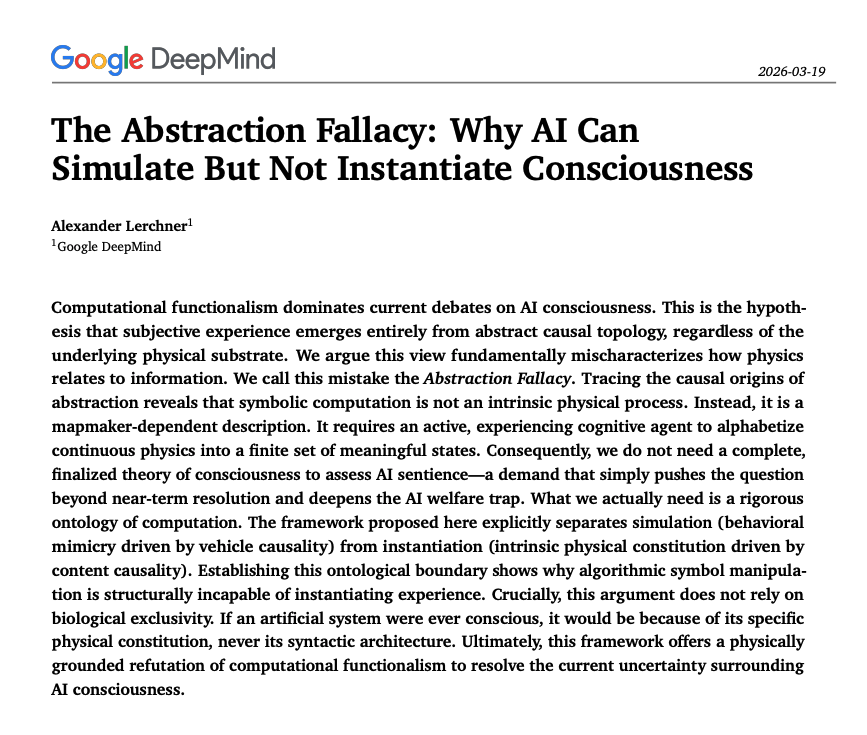
Google DeepMind researcher argues that LLMs can never be conscious, not in 10 years or 100 years. "Expecting an algorithmic description to instantiate the quality it maps is like expecting the mathematical formula of gravity to physically exert weight."
ℏεsam tweet media
English
334
3.8K
29.6K
4.9M