Julius Python 🍇

10.4K posts

Julius Python 🍇 banner
Julius Python 🍇

Julius Python 🍇

@juliuspython

Hellenism | Dionysus | Aphrodite 🏛️🐍 Homer | Heraclitus | Nietzsche | Sade 🐅🎭 Art | Painting | Aesthetic | Beauty 🎨🖌️ Eroticism | Vitalism | Nudity 🔥💧

Ancient Rome Inscrit le Aralık 2021
1.1K Abonnements2.9K Abonnés
Tweet épinglé
Julius Python 🍇
Julius Python 🍇@juliuspython·
“Pagans are all those who say yes to life, and to whom ‘God’ is a word signifying acquiescence in all things.” Nietzsche - The Antichrist
Julius Python 🍇 tweet media
English
5
36
589
84.3K
Julius Python 🍇
Julius Python 🍇@juliuspython·
It doesn't matter if you unfollowed me and don't want me to follow you anymore I'll keep following you... very closely. I only unfollow when I want to. I'm a follower raypist
English
0
0
4
111
Julius Python 🍇
Julius Python 🍇@juliuspython·
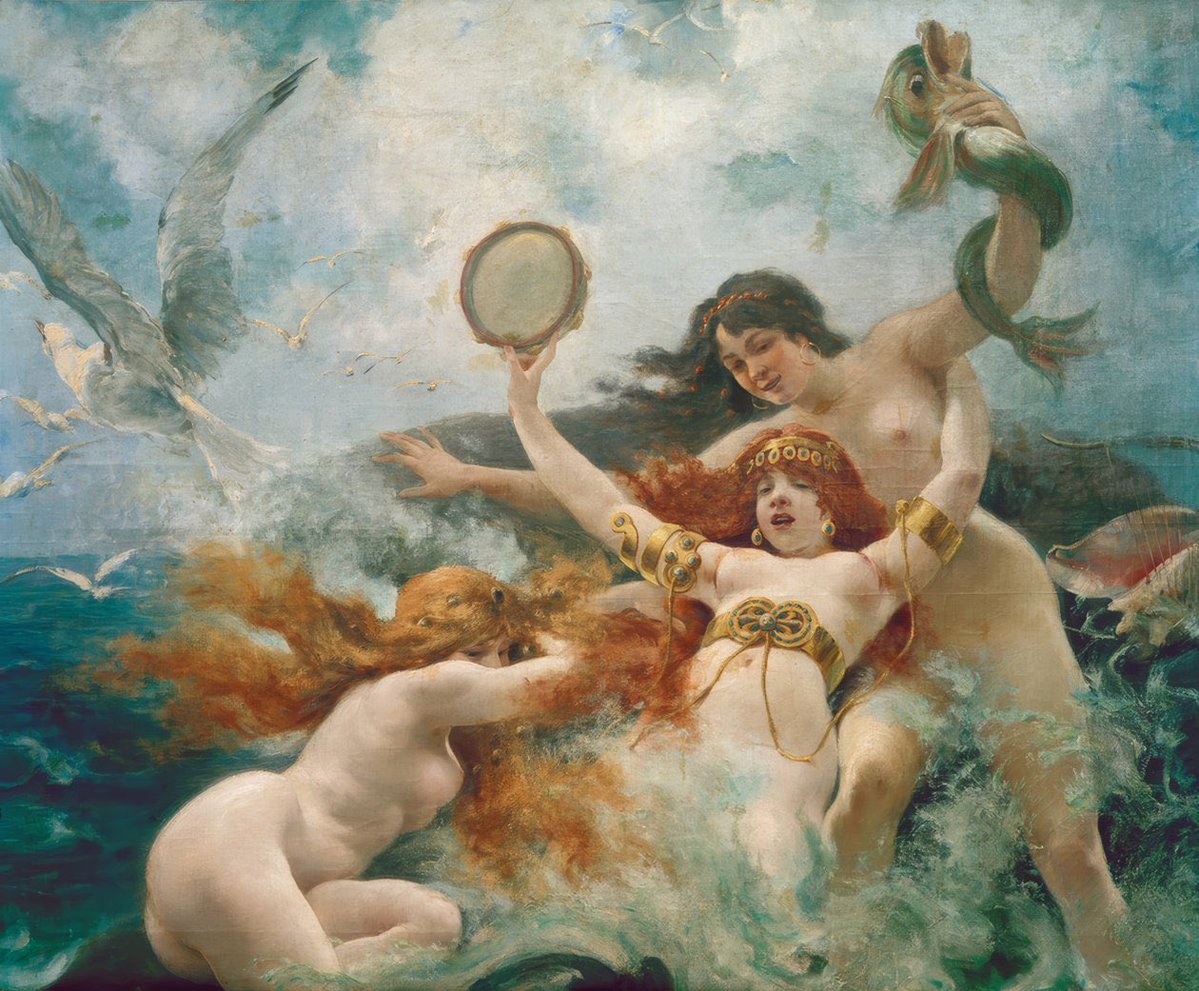
Nymphs — Adolphe Lalyre (19th century)
Julius Python 🍇 tweet media
English
0
1
17
225
Julius Python 🍇
Julius Python 🍇@juliuspython·
Acca Larentia was a prostitute who later ended up becoming a goddess in Roman paganism. In her honor, the festival Larentalia was celebrated on December 23. In one version of the story, Acca was the adoptive mother of Romulus and Remus (the founders of Rome), taking them in after they were thrown into the Tiber River. Another version says she was a prostitute known as a “lupa” by the shepherds (literally “she-wolf,” but more like “courtesan” in everyday speech), and that she left the fortune she earned from sex to the Roman people. So basically, in paganism, prostitutes didn’t repent or try to change what they were (they stayed in their social class until death), could be patriotic, and were even capable of brave acts.
Julius Python 🍇 tweet media
Rauðgrani ᚱᛆᚢᚦᚴᚱᛆᚿᛁ@GraniRau

She could even be virtuous in her own manner. The ancients had stories of prostitutes showing bravery and patriotism. But she wouldnt leave her class.

English
0
0
6
210
Julius Python 🍇
Julius Python 🍇@juliuspython·
Would feminists today say that Ovid was a porn addict? For wanting a woman without body hair? Or a pedophile? For wanting a hairless woman like a girl?
English
0
0
2
335
Julius Python 🍇
Julius Python 🍇@juliuspython·
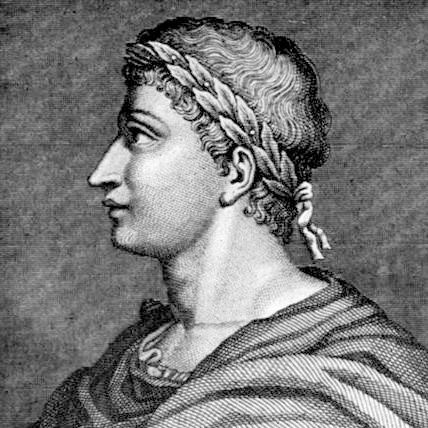
Ovid liked women who shave their armpits and legs, as well as brush their teeth and wear makeup: “I almost don’t even need to say it: don’t let some wild goat live under your armpits, and don’t let your legs get rough with stiff hair. Do I really have to remind you not to let laziness darken your teeth, and to wash your face with water in the morning? You also know how to get that pale look by using chalk powder — if real blood won’t make you blush, art will. With a bit of skill, you can fill in your eyebrows, and a thin layer hides any marks on your face. And you’re not shy about outlining your eyes with fine ash, either.” — Ovid, Ars Amatoria, III (Roman poet, 1st century BC)
Julius Python 🍇 tweet mediaJulius Python 🍇 tweet media
English
0
2
68
1.3K
Julius Python 🍇
Julius Python 🍇@juliuspython·
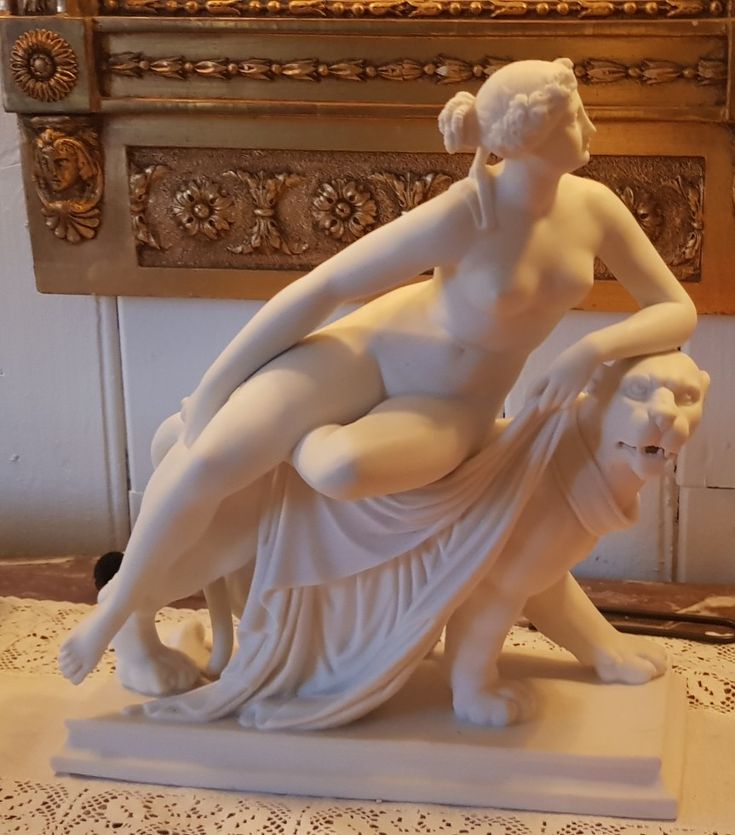
Ariadne Riding the Panther — Johann Heinrich von Dannecker
Julius Python 🍇 tweet media
Deutsch
0
3
28
503
Julius Python 🍇
Julius Python 🍇@juliuspython·
Transparent Modesty in Greece and Rome Some people always claim that Greek and Roman wives were all “covered up” like Muslim women and full of “modesty”. But in truth the veil and dress was generally seen as something provocative and sexual in Greece and Rome, and it functioned more as a marker of a woman’s social class (a wife) than as a tool of chastity or puritanism. Prostitutes, concubines, low-class women and female slaves (the majority of the female population) were not veiled and did not follow modesty. Here are some quotations: 1. Greece: The “Coan Veil” On the island of Cos, a silk so fine was produced that it was nicknamed “woven air.” Although technically they could be tunics or veils, the effect was the same: the fabric was meant to conceal, but in reality it revealed. Horace (Sermones 1.2.28-105) wrote about how they hid nothing: “Some men won’t touch any woman unless her clothes cover all the way down to her ankles; on the other hand, some men only want women hanging around in a stinky brothel.”  “As a man was leaving a brothel, he heard: “Well done, be virtuous! When lust starts to rise, it’s better for young men to come here than violate other men’s wives.” “I do not wish to be praised in this way,” says Cupiennius, admirer of matrons' vulvas.”  “For a matron, you couldn’t see anything past her face (unless she was a Catia) since the rest was all covered by her dress.” “If you seek what is forbidden, surrounded by a rampart — for this is what drives you mad — many things will then obstruct you: guards, the litter, hairdressers, parasites, the dress dropped to the ankles and wrapped with a cloak, countless things stopping you from seeing things clearly.”  “As for the other women, nothing stands in the way: through Coan silk you can almost see her as if naked, so that she has no bad leg nor unsightly foot; you may measure her flank with your eyes. Or do you prefer to have traps set for you and the price taken before the merchandise is even shown?”  A. Conclusion: Horace makes an exception for matrons with the mention of Catia. Catia was a real matron of the time who became famous for not wearing traditional garments in a modest way, behaving as if she were a prostitute. Horace uses the term Catia for matrons who did not wear clothing that covered everything and, at the same time, displayed themselves through long dresses that allowed men to see them naked (Coan silk). If Horace spoke in this way, as a category, it is probably because there were already many Roman matrons in his time behaving like this. This shows that the long dresses and veils of matrons gradually became a sexual fetish for men. Horace is also trying to convince that covering women can also inflate some men to want to fuck matrons, whereas pleasure with other women is safer, more transparent, and anatomically guaranteed, although it's less attractive to some men. 2. Rome: “Transparent” Modesty Ovid suggests that partial covering was more exciting than total nudity, as it sharpened the observer’s imagination: “This dress imitates the waves: I could believe that nymphs are clothed in such a garment. [...] Yet let the lower part of your shoulder be bare. When I see this, I am moved to blow kisses to the shoulder, wherever it is exposed.” — Ovid, Ars Amatoria, III, 180-310. 3. Seneca: “I see ladies' silk dresses, if those deserve to be called dresses which can neither cover their body or their shame; when wearing which, they can scarcely with a good conscience, swear that they are not naked. [...] Our matrons may show as much of their bodies in public as they do to their husbands in her own bedroom.” — Seneca, De Beneficiis (7.9.5) B. Conclusion: Thus, in Rome and Greece, veils and long tunics worn by wives quickly lost their function as symbols of chastity and became elements of sexual fetishization. Which only proves what Sade said: that the Greeks and Romans were, in fact, libertines with refined sexual practices.
English
1
0
35
1.1K
Julius Python 🍇
Julius Python 🍇@juliuspython·
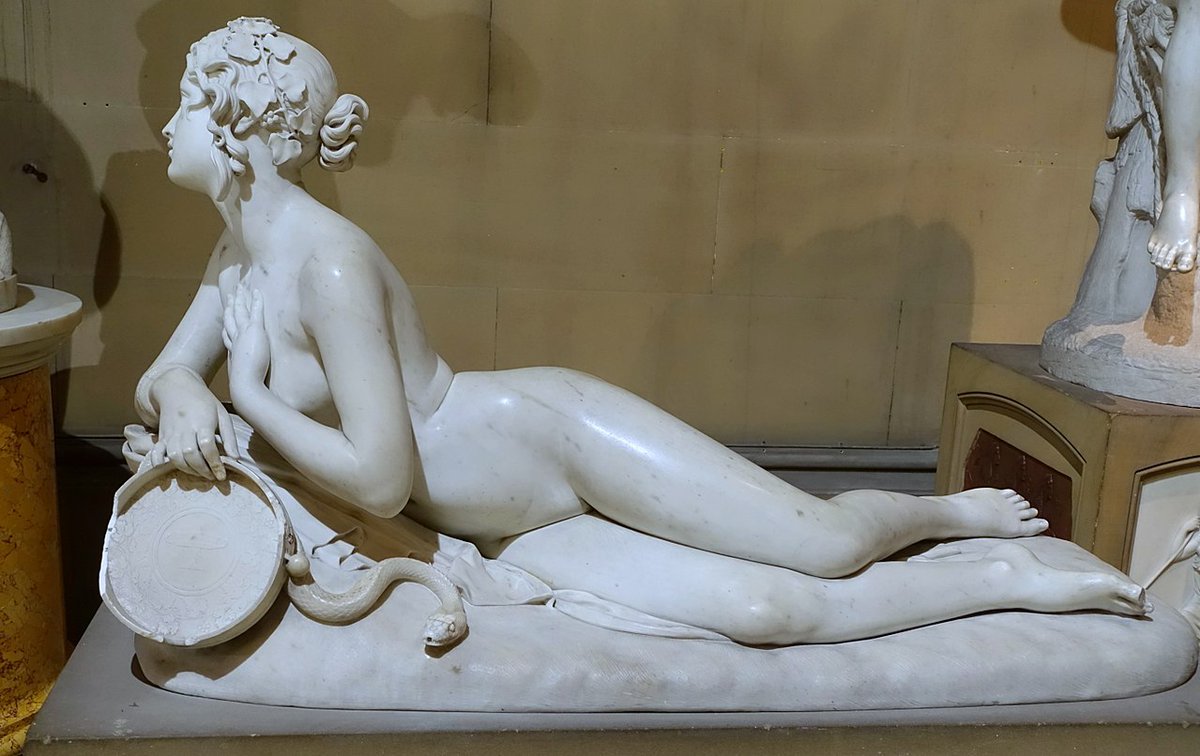
Recumbent Bacchante — Lorenzo Bartolini (1834)
Julius Python 🍇 tweet media
Italiano
0
1
19
622
Julius Python 🍇
Julius Python 🍇@juliuspython·
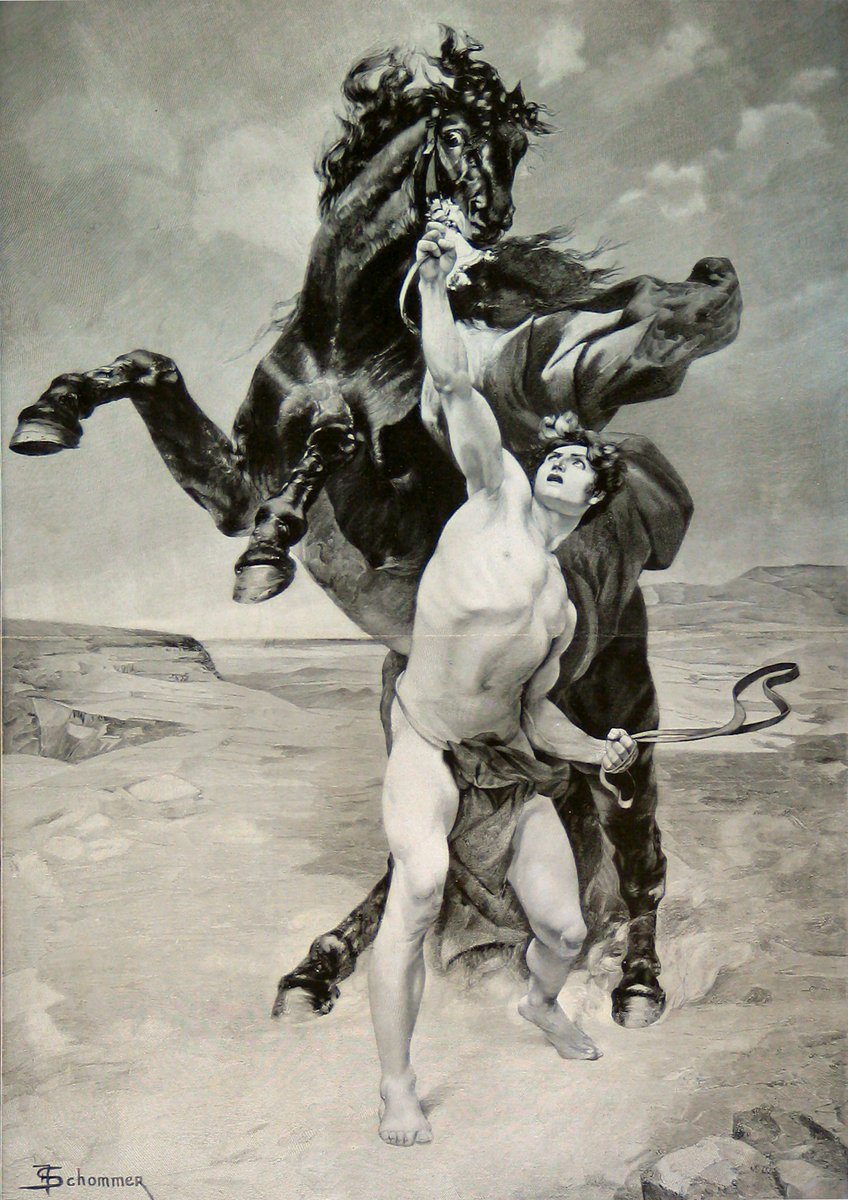
Alexander Taming Bucephalus — F. Schommer
Julius Python 🍇 tweet media
Dansk
0
1
27
625
Julius Python 🍇
Julius Python 🍇@juliuspython·
“How can Sade propose that a society live in a 24/7 orgy and abolish marriage, yet this does not contradict earlier statements by Sade? Didn’t you show in another post a quote from Sade where he says that wives and whores must crawl before men and be their slaves?” The point is that the end of marriage is an idealization by Sade: a society of libertines, in which pleasure would truly be regarded as supreme. But I believe that Sade himself didn’t even think this could actually be realized, because the libertine male characters in his books are always married and patriarchal. For Sade, as long as family, marriage, and wives exist, the ideal is that women truly be the property of men and their slaves, fulfilling all their desires, including sexual ones.
English
1
0
4
570
Julius Python 🍇
Julius Python 🍇@juliuspython·
Yes, exactly. The agathos daimon serpent was like a representation of the genetic lineage of the family’s male ancestors. That’s why I say it is also a phallic symbol (in my interpretation), because the female lineage was disregarded in ancestor worship (as described by Fustel de Coulanges); what mattered was the reproduction of the phallic lineage. A man could divorce his wife (who was part of the ancestral phallic cult), keep her children, and marry another, and this would not affect the ancestor cult. And only male children could continue the ancestor cult; the daughters of the pater familias could not.
Gildhelm@gwyrain

@juliuspython Lares/Agathodaimon was widely seen as their ancestors... see also Greek tritopatores, also depicted as a snake

English
0
0
4
541
Julius Python 🍇
Julius Python 🍇@juliuspython·
Εἰ θεός ἐστιν Ὅμηρος, ἐν ἀθανάτοισι σεβέσθω· εἰ δ’ αὖ μὴ θεός ἐστι, νομιζέσθω θεὸς εἶναι. “If Homer is a god, let him be worshipped as one of the immortals, but if on the contrary he is not a god, let him be regarded as such.” — Greek Anthology 16.301
1
10
274
3.3K
Julius Python 🍇
Julius Python 🍇@juliuspython·
Perseus and Andromeda — Oleg Litvinov (1999)
Julius Python 🍇 tweet media
Norsk
0
0
15
590
Julius Python 🍇
Julius Python 🍇@juliuspython·
When I see pictures of Roman lararium, I think to myself that the Romans really weren't afraid of snakes, and even venerated them, painting them inside their own homes. Almost all Romans had snake paintings in their homes because of the lararium tradition. The Romans saw snakes differently from modern Christianized eyes. They saw them as good animals, so much so that the name of this snake is agathos daimon (or good spirit). The snake is nothing more than a phallic symbol. It was only later, with the castrating, eunuch-like, and asexual Christianity, that the snake was demonized.
Julius Python 🍇 tweet mediaJulius Python 🍇 tweet media
English
1
1
21
669
Julius Python 🍇
Julius Python 🍇@juliuspython·
τὸ γὰρ γάλα τῇ φύσει τὸ αὐτό ἐστι τῇ γονῇ. “For milk is, in its nature, the same thing as the semen.” — Aristotle, On the Generation of Animals
1
2
111
1.4K
Julius Python 🍇 retweeté
George 🇦🇺
George 🇦🇺@Georgie_KK·
The vigor of youth is the glory of the body, and strength in manhood is the pride of life
George 🇦🇺 tweet mediaGeorge 🇦🇺 tweet media
English
1
11
152
2.9K
Julius Python 🍇
Julius Python 🍇@juliuspython·
The Death of Sardanapalus — Eugène Delacroix (1844)
Julius Python 🍇 tweet media
Français
0
0
11
499