
Tweet épinglé

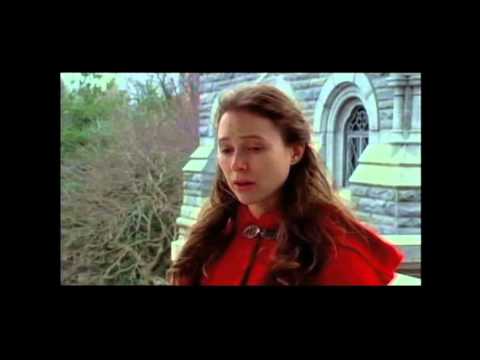
For those of you new to this: my #OpheliasRoom fundraising trailer: youtu.be/qPh3PPhzKq0 telling the tragic story of the renowned Ophelia.
YouTube
English
Violet Frasier
17.4K posts
@keepingviolet
Writer, filmmaker. Inventor of #Violetology. OPHELIA'S ROOM & NOW DARKNESS fundraising trailers. pic: Rodeo Bar & star stools The truth knows no boundaries.


Take a look at the skies over Majorca yesterday. Lots of lovely ‘natural’ clouds. Still waiting for a name for them from the UK MET office. Sent to me by an ex-pat co-conspirator.


Construction of Medieval Castles still blows my mind. For example, here’s Bamburgh Castle in England from the 11th century!

As Governor, I would sign legislation into law, like Florida and Tennessee, to ban chemtrails. Supporting legislation to protect the air we breathe is just common sense. South Carolina STRONG: nancymace.org/nancy-mace-bac…
In the 17th-century Dutch Golden Age, the small city of Delft produced a distinctive school of painters. They captured calm, everyday scenes with masterful light and perspective. Johannes Vermeer became the most famous. His View of Delft shows the city glowing under a vast sky. #ArtHistory #DutchGoldenAge
My favorite Gloria Swanson pic, taken by Edward Steichen in 1924. At the end of the photo session, he hung a piece of lace in front of her face: "She recognized the idea at once... You don’t have to explain things to a dynamic and intelligent personality like Miss Swanson." #botd




Wild elephants visited Kaikai's little mud bath in the night. By morning, only their tracks remained — great platter-sized footprints pressed into the earth. When Kaikai arrived for her midday wallow, she stepped straight into one of them. All four of her tiny feet fit inside a single print. One day, she will leave footprints like that herself. Right now, she is less than a year old, rescued from the Maasai Mara in May 2025 after her mother died of natural causes. She arrived hungry and frightened, a week-old calf with no one to nurse from. She arrived at Kaluku, found her Keepers, and decided — fairly quickly — that she was the centre of the universe. By adopting Kaikai, you become part of the journey between those two sets of footprints — the tiny ones she leaves today, and the ones she will leave when she is wild and grown. Adopt Kaikai: sheldrickwildlifetrust.org/orphans/kaikai

Today, our quiet girls were having a pool party! Akina is a reserved elephant by nature, but the mud bath is her time to shine. She loves water and she loves to show off in it. In fact, we often find her loitering around the pool, just waiting for the other orphans to vacate so she can have it all to herself. As the herd headed into the bush this afternoon, Akina noticed Rokka lagging behind in the water. She about-turned to join her friend, and the two girls enjoyed a splashy show-off session. The Keepers enjoyed the spectacle! Every elephant seen here is an orphan. While each suffered a unique tragedy, they found a family with us – one that will continue to love and support them through their lives. Meet the herd: sheldrickwildlifetrust.org/orphans

She climbed 180 feet into a 1,000-year-old redwood—and refused to come down. In December 1997, Julia “Butterfly” Hill stepped onto two small wooden platforms high in a tree called Luna. What was meant to be a short protest became 738 days of isolation, endurance, and defiance. No walls. No heat. Just sky. She survived 90 mph El Niño winds, freezing rain, and constant harassment from loggers below. Supplies were pulled up by rope. Sleep came in fragments. Every day was a test of how long one person could hold their ground. But she stayed. Not just for a tree—but for what it stood for: ancient life, fragile ecosystems, and the power of refusing to move. After more than two years, it worked. A $50,000 agreement with Pacific Lumber was reached, protecting Luna and a 200-foot buffer zone from logging. One woman. One tree. And a line that wouldn’t be crossed. #archaeohistories
Stonehenge is not simply a circle of large stones. Randall walks through the material composition of the monument in a way that reframes the entire structure - because the stones were not chosen for their size or availability. They were chosen for what they could do. The outer sarsen stones are sandstone high in quartz - a mineral that produces electricity when placed under pressure. The inner rings are bluestone, an igneous rock quarried in Wales approximately 120 miles away. The sarsen stones traveled 20 to 25 miles from their source. None of this was accidental or convenient. The most significant recent discovery Randall describes is the altar stone - positioned on the solstice alignment at the center of the monument. It was recently identified as a third and entirely distinct type of rock, differentiated from the other stones by its unusually high metallic content, particularly barium. That chemical signature allowed researchers to trace its origin to northern Scotland - a quarrying and transport effort that dwarfs even the bluestone operation. Randall is careful to say he doesn't yet know the full implications of the barium content. However, the pattern is already clear - every material decision at Stonehenge points to a level of geological knowledge and intentionality that a culture simply arranging impressive stones in a field does not possess.