David Flint

2.5K posts

David  Flint

David Flint

@profdavidflint

Sydney Inscrit le Nisan 2013
650 Abonnements2.2K Abonnés
David  Flint
David Flint@profdavidflint·
Angus Taylor’s Budget Reply follows One Nation’s lead Pauline Hanson knows what Menzies’ forgotten people need David Flint 17 May 2026 On Thursday night, Shadow Treasurer Angus Taylor delivered the Opposition’s Budget Reply, focusing on what he termed ‘generational tax reform’ and significant structural changes to migration and housing. There is significant overlap between Angus Taylor’s 2026 Budget Reply and several long-standing One Nation policies, particularly regarding migration, welfare, and energy. Political analysts and Senator Pauline Hanson herself have noted that the Coalition appears to be ‘moving into One Nation territory’ following recent electoral pressure (specifically the Farrer by-election). Indeed, while most of the overlap relates to long-standing One Nation policies, few – if any – of these have previously been on the Coalition agenda. This points to One Nation not being merely, as is so often claimed, a party of complaint. One Nation is, in fact, clearly a policy leader. Key Similarities and Distinctions The ‘Housing-Migration’ Link: The core of Angus Taylor’s speech – that Australia should ‘only bring in as many people as it can house’ – is a rhetorical and policy mirror of One Nation’s ‘Clean up our own backyard first’ slogan. While One Nation uses a hard number (130,000), Taylor’s formulaic approach effectively achieves a similarly drastic reduction. Welfare Protectionism: Both parties are now aligned on the idea that welfare should be a ‘benefit of citizenship’ rather than a right for permanent residents. Taylor’s proposal to strip 17 specific payments from non-citizens is a more granular version of Pauline Hanson’s long-standing demand for a ‘migrant waiting period.’ She also proposes doubling the surprisingly short period currently required for naturalisation – a position originally detailed in a 2018 bill introduced into Parliament. Energy Sovereignty: Taylor’s vow to extend the life of coal-fired power stations reflects One Nation’s ‘Energy Security’ platform. However, the Coalition still technically operates within a framework of eventual transition (albeit delayed), whereas One Nation explicitly calls for the repeal of all legislated Net Zero targets and a total withdrawal from the Paris Agreement. Tactical Shift: Barnaby Joyce and other commentators have explicitly stated that Taylor was ‘reading off One Nation’s script’. This shift is widely seen as a tactical move to reclaim voters in regional seats where One Nation has seen a surge in support. While the Coalition’s proposals are framed in the language of ‘economic common sense’ and ‘generational reform’, the structural mechanics – cutting migration to historic lows and prioritising domestic welfare for citizens – are remarkably close to the platform One Nation has long campaigned on. On migration, One Nation has a number of supporting policies, including the aforementioned naturalisation reform introduced in 2018, which would extend the residency requirement from four to eight years while making the application process significantly more rigorous. The Hanson Critique In her independent response to the Budget, Senator Pauline Hanson offered a sharper structural critique: Migration and Infrastructure: She linked the housing crisis directly to high migration levels, stating that no amount of tax reform would work while population growth continues to outpace housing and hospital capacity. Regional Neglect: Senator Hanson accused the government of ignoring the ‘realities faced by agricultural communities’ in favour of inner-city political priorities. One Nation’s Alternative Proposals Senator Hanson campaigned for a $90 billion reduction in ‘government waste’ to be redirected toward nation-building. Her specific proposals included: Abolishing Agencies: Scrapping the Department of Climate Change and the National Indigenous Australians Agency (NIAA). Media Reform: Defunding SBS entirely and restricting the ABC to regional and rural areas only, forcing it to rely on advertising and subscriptions. Infrastructure Investment: Investing in dams, railways, and ‘nation-building projects’ to stimulate long-term wealth. The Bradfield Plan A cornerstone of One Nation’s long-term vision – which Senator Hanson reaffirmed in her response – is the delivery of the Bradfield Scheme (or a modern variant of it). Originally proposed in 1938 by Dr John Bradfield (the engineer behind the Sydney Harbour Bridge), it is a massive water diversion project designed to ‘drought-proof’ the Australian interior. The core idea is to capture water from the high-rainfall tropical rivers of North Queensland (such as the Tully, Herbert, and Burdekin) and divert it across the Great Dividing Range to flow into the western river systems and eventually toward Lake Eyre. Under One Nation’s current advocacy, the plan would be delivered through: Large-scale Infrastructure: The construction of massive dams (such as an expanded Hell’s Gate Dam) and a series of gravity-fed tunnels or pumped pipelines to move water across the mountain range. Agricultural Expansion: The water would be used to irrigate roughly 80,000 square kilometres of ‘blacksoil plains’ in western Queensland, potentially turning the region into a major food production hub. Hydro-electric Power: Modern versions of the plan propose using the water flow to generate thousands of megawatts of ‘clean, green’ energy through hydro-plants. Funding: One Nation proposes funding such projects by redirecting savings from abolished government departments and withdrawing from international climate agreements like the Paris Accord. Outlook – no grand coalition envisaged. With polling now suggesting that One Nation is the most popular party in the country, the commentariat and the Coalition alike must take the party seriously. The continuous refrain that One Nation is a party of complaint but not of policy is demonstrably false. Is it not about time the commentariat abandoned what is, in Australian terms, a furphy? One Nation has clearly offered leadership on policy, especially to those Menzies called the ‘forgotten people’, those who are neither unionists nor massively wealthy. That is a fact. The overarching reality is clear: if, in the coming election, One Nation and the Coalition win at least 76 House of Representatives seats between them, they will hold the numbers to reshape and save the country. This outcome becomes far more likely if the two sides can successfully negotiate an exchange of voting preferences. Furthermore, should a governing framework be established, the Coalition must be prepared to reciprocate Pauline Hanson’s pragmatic offer: a guarantee that One Nation will support a Coalition-formed government on vital matters of supply and votes of no confidence, laying the groundwork for a stable, conservative alternative. Pauline Hanson assumes that if One Nation and the Coalition have at least 76 seats, the one with the larger number will form the government. That is a reasonable but not mandatory conclusion. This would rule out a grand coalition which is not necessarily a bad conclusion.
David  Flint tweet media
English
1
1
5
97
David  Flint
David Flint@profdavidflint·
Follow Menzies: vote One Nation Save Australia and avoid death duties and taxes on the family home David Flint Spectator Australia 23 May 2026 The budget reply by Angus Taylor is a confirmation that the Coalition’s decision to change their leadership was only the beginning. By borrowing One Nation’s long-standing, common-sense policies, they have demonstrated how wrong the commentariat is to keep on repeating their baseless claim that One Nation is only a party of complaint and not of policy. One Nation’s long-standing policies are attracting not only Coalition but also Labor voters. This is why, before the last federal election campaign when the Coalition was trying to walk on both sides of the road, I strongly recommended and have continued to recommend that those who did not want Australia to become a poor country – an ‘Argentina of the South Seas’ – should give their first preferences to One Nation. Doing this is not an act of disloyalty to the conservative cause; rather, it follows a precedent set by the great founder of the Liberal party, Sir Robert Menzies. Upon his retirement, Menzies witnessed exactly what we have seen since Malcolm Turnbull’s coup against Tony Abbott – the tendency for those who today call themselves ‘moderates’ to take over the Liberal party and make it ‘Labor-lite’. For this very reason, Sir Robert gave his first preference to the anti-communist DLP, just as many now are giving their first preference to One Nation. The Coalition is being forced today – not by its rank and file, whom it has long totally ignored, but by the sheer presence of One Nation – to stop pretending to be both ‘Labor-lite’ and a fighter for the ‘forgotten people’. As a consequence, the leadership of the Liberal and National parties was changed when it otherwise never would have been, and now much of the One Nation agenda is being adopted. Remember that the commentariat who despise One Nation are the very same elites who tried to impose a fake republic on this nation – one designed to increase the powers of the political class far beyond anything envisaged under the Westminster system. The fact is, only One Nation’s policies will be the ones to save this nation from the terrible decline the Albanese government is delivering to Australia. That the Coalition has borrowed One Nation’s policies should not be a cause of embarrassment but one of rejoicing. This ideological influence was on full display in what was a good reply to the budget by opposition leader Angus Taylor. We should not complain that the Liberals and Nationals are now adopting One Nation’s long-standing platform; in fact, this dramatically increases the chances that One Nation’s common-sense agenda will actually be put into place. Meanwhile, this nation remains governed by probably the most unworthy administration in Australia’s history. The atmosphere on budget night was one of deep embarrassment; this was not only a lying government, it was one so appalling that they risk alienating even their strongest traditional supporters. No wonder the latest Morgan poll reveals that ‘lifelong, rusted-on Labor voters’ have dropped to an extraordinarily low 13 per cent. Everyday Labor voters are finally realising that this is a fake Labor party, made up of, and serving the exclusive interests of, the globalist elites. The party is desperately clinging to power against One Nation, structurally supported by the historical hesitancy of the Liberal-National Coalition. Meanwhile, by ‘grandfathering’ the changes to property taxation to allow Labor MPs to deduct rental income from their very generous salaries and ridiculously large ‘allowances’, Labor has ensured that its own private interests are protected while the door is firmly slammed shut on the next generation of aspiring property owners. Their divisive and quite vicious attempt to blame the elderly, even putting a large loading onto the cost of their health funds, will not result in the intergenerational anger Labour desires. What it will reveal instead is that the parliamentary Labor party’s claim to be the ‘workers’ party’ is a total fiction. The Labor pattern is now unmistakable: if this government declares it will not change a tax, that is the definitive signal to investor cronies that it intends to do exactly that. The Australian public must now look to the horizon with grim realism. If Labor is returned at the next election, the reintroduction of death and estate duties, alongside a punitive taxation on the family home – as was actually applied in NSW for a time by Labor – is no longer a matter of if but when. We are witnessing a return to the punitive economic era that was only ended when Queensland Premier Sir Joh Bjelke-Petersen initiated the historic abolition of death duties in 1977. The Prime Minister himself has personally profited from the very rules he now condemns – rules he explicitly promised, by his own count, fifty times not to touch – enabling him to secure a $4.3-million clifftop mansion. This symbolises a political class that has transformed itself into a major investor in real estate only because of the extravagant returns they manage to extract from the people. This culture of blatant lies and misgovernance has triggered a tectonic shift, forcing Angus Taylor to adopt a cornerstone One Nation policy: the automatic indexation of tax brackets to inflation. This move will finally end the insidious ‘bracket creep’ that allowed the Albanese government to pocket an estimated $28-billion windfall while simultaneously saddling the youth of this country with an official $1-trillion national debt, plus another trillion cleverly hidden from public view through off-budget funding vehicles and other probably unconstitutional devices. Meanwhile, the billions seized through these broken promises will do absolutely nothing to affect the global climate; they will only enrich foreign ‘climate capitalists’ and Beijing-based communists. The path to a stable, sovereign Australia in 2028 lies in One Nation and the Coalition winning at least 76 seats in the House of Representatives in the upcoming election. Pauline Hanson has sensibly stated that if the Coalition secures more seats than One Nation, she will support them forming a government by guaranteeing supply and confidence to ensure the stable, common-sense governance the country voted for. The Coalition must now reciprocate, do its patriotic duty, and fully exchange preferences to ensure this grand alliance succeeds.
David  Flint tweet media
English
8
4
7
227
David  Flint
David Flint@profdavidflint·
LABOR'S SHAME Tolerating antisemitism to win elections David Flint Spectator Australia 16 May 2026 9:00 AM Antisemitism is an abomination, unacceptable in any advanced democracy and an affront to a civilised society. Yet, as we look at the current state of our streets and the safety of our citizens, we must confront a jarring reality: the antisemitism currently surging through Australia is not an accidental by-product of global tensions. It is a political import, facilitated by the mismanagement of our borders and tolerated by a political class more concerned with electoral mathematics than the ‘peace, order, and good government of the Commonwealth’. As I have noted in this column, I became personally aware early in this century of the fact that Jews in Australia were living under the threat of violent antisemitism and that the authorities were not acting seriously against this. The contrast in state priorities was never more visible than at Bondi Beach. During the Covid-19 pandemic, Bondi was flooded with police to enforce the closure of the sand. Later, with exercising restricted to a five kilometre radius from home, identification was demanded of sunbathers and swimmers. Both occasions were massive, if pointless, displays of force. But when it came to the celebration of Hanukkah on 14 December, 2025, despite the Jewish Community Security Group recognising a ‘high’ threat level, the police high command refused to allocate even one armed officer. All they could offer were passing drop-in, or passer-by police officers. This was despite having just allocated half a platoon of detectives for the spectacular theatrical arrest of Alan Jones not so long before. Meanwhile at Bondi, the private security guards at Hanukkah could not be legally armed. This was after increasing violence and threats of violence across the city. This is not merely a failure of policing; it is a symptom of an ‘indecent toleration’ of antisemitism that has become unofficial government policy. Historically, antisemitism was once more advanced in Christian nations than in Muslim ones. When Jews were expelled from Spain in 1492, they found refuge under the Sultan of Morocco. By the 19th and 20th centuries – before the catastrophic rise of Nazism – antisemitism was receding in Europe. The British Empire, then led by the world’s most powerful country, saw Queen Victoria elevate the great Benjamin Disraeli to the high office of prime minister. In Australia, the remnants of antisemitism – largely limited to social club barriers – were disappearing by the 1970s. In my youth in Sydney and at my school which had a significant number of Jewish students, I never once saw any evidence of antisemitism. It was a society that seemed to have outgrown ancient hatreds. The return of this ‘oldest hatred’ began with the mismanagement of the immigration power. In 1976, the Fraser government was forced to close the ‘Lebanon Concession’ after cabinet considered a blunt report: officials had lost control of the programme, and there was a grave risk that the ‘conflicts, tensions, and divisions within Lebanon will be transferred to Australia’. This was the first warning that we were failing to screen for imported prejudices. The surge we see today is the result of what has been termed the ‘Red-Black Alliance’ – a marriage of convenience between Labor’s hard left and radical Islamists. This shift was foretold in 2004 by Labor eminence Barry Cohen, who declared that antisemitism was ‘rampant’ within his own party. He warned that Labor was abandoning its traditional support for Israel to court the growing Muslim vote in western Sydney, a strategy which enjoyed cross-factional support from Labor’s right. A fear of losing the Muslim vote remains too often the primary driver of Labor policy. In 2012, during an internal debate regarding Palestinian UN observer status, a Labor minister undermined prime minister Julia Gillard by asking Caucus: ‘How could I possibly defend that policy from the steps of the Lakemba mosque?’ This calculation explains why, following the 7 October, 2023 Hamas incursion, the authorities ‘chaperoned’ protesters from the Town Hall to the Opera House forecourt, where a riot ensued yet where the only man taken into custody was a Jewish man carrying an Israeli flag. Then the police command spent months on a widely criticised investigation into whether the crowd shouted, as everyone I know heard, ‘Gas the Jews’. The eventual claim that they were actually shouting the impossibly unidiomatic ‘Where’s the Jews?’ seemed like a desperate attempt to explain away the audible ‘Z’ sound on recordings. It was a distraction from a broader policy of inaction. The tenuous nature of this political alliance was recently laid bare when Prime Minister Albanese visited the Lakemba Mosque for Eid al-Fitr prayers. Despite his government’s soft stance on antisemitic demonstrations, he was subject to an angry confrontation. The message was clear: for those holding radicalised views, no amount of political concession is enough. Governments today argue that they cannot regulate the takeover of our streets by chanting mobs because of the ‘implied freedom of political communication’ found by the High Court. This is a gross misinterpretation of our constitutional traditions. In my youth, free speech was exercised in places like the Domain. Speakers – including communists – interacted with crowds without paralysing the city’s commerce or threatening its citizens. Serious consideration should be given for a referendum to replace this murky ‘implied freedom’ with a far more relevant US-style constitutional guarantee of freedom of speech and of the press with an express ‘public figure’ defence in defamation proceedings. This would trade the current protection enjoyed by street-occupying mobs for a system that allows more robust speech regarding the activities of politicians and other public figures. If we are to arrest this decline, the royal commission should look beyond individuals and examine the political parties themselves, and especially the Labor party, as well as the antisemitic Greens, whose preferences put Labor into power. We need a fundamental shift in how they manage the powers granted by our Constitution. As to immigrants, why not have recorded interviews to ensure they genuinely wish to join and maintain one of the world’s oldest continuing democracies? Why not have a longer probation and only grant citizenship after a thorough Swiss-style process to demonstrate the immigrant sincerely wishes to be a citizen in our democracy? There should also be remedies when crimes involving antisemitism are not prosecuted for political reasons. Unless we take strong measures, active antisemitism will stain the reputation of Australia. The charge to our politicians to exercise executive and legislative powers for the ‘peace, order, and good government’ of Australia will remain a hollow phrase. Antisemitism is a political problem, and it requires a political solution that places Australian values above the calculated mathematics of winning the next election. [These are some of the matters to be raised in David Flint’s submission to the Royal Commission on Antisemitism and Social Cohesion.]
David  Flint tweet media
English
1
3
4
130
David  Flint
David Flint@profdavidflint·
The Farrar Earthquake: How the Commentariat Got It Wrong The political establishment is in a state of shock. When 'Sky News' took the unprecedented step of calling the Farrer by-election for One Nation at an extraordinarily early hour, it wasn't just calling a seat; it was announcing the end of an era. For the first time in Australian history, One Nation has captured a House of Representatives seat at an election, and if the current opinion polls are any indication, it is merely the first of many. The 'commentariat'—that insulated class of pundits and pollsters—has spent years repeating the tired myth that One Nation is a party of complaint but not of policy. This is precisely why, before the last Federal election, I suggested that Liberals do what Sir Robert Menzies did: return to the philosophy of the 'Forgotten People' and vote for the best party. I advised voters to give their first preference to the party with the best common-sense policies and the leader who will deliver them, One Nation. Farrer has proven that the commentariat’s ‘no-policies' narrative was a delusion. Australians are not merely 'protesting'; they are voting for a platform of common sense, consistently put forward by Pauline Hanson and Senator Malcolm Roberts—one that the major parties have long since abandoned. The Death of the Major Party Monopoly Senator Malcolm Roberts is, incidentally, one of the few former manual workers in Parliament, appearing as a rare exception alongside some farmers within the Nationals. In contrast, Labor has become a party of career politicians who have been embedded in the political machine since their university days. The result reflects a deep-seated exhaustion with the status quo. Labor is no longer the party of the worker; it has become the party of the inner-city elite. The Greens, far from being environmentalists, seem content to see our landscape ruined by industrial 'renewables' to enrich foreign interests—propping up what Donald Trump rightly called the 'world’s biggest fraud.' In contrast, voters have responded to a leader who tells the simple truth. A Platform of Substance Beyond the personality of Pauline Hanson lies a suite of consistent, nationalist policies that address the existential crises facing the country: Cost of Living and Waste: One Nation has a strong program to eliminate the duplication caused by Canberra and the States performing the same functions. They are also committed to ending the enormous cost of 'Net Zero' energy and demonising ‘fossil fuel’ , which is wrecking the country’s agricultural land and giving us what is among the most expensive electricity in the world. Energy and Water: While the major parties pursue a financially ruinous and environmentally damaging 'Net Zero' agenda—ripping up agricultural land for useless windmills, solar farms and power transmission lines—One Nation has championed an updated Bradfield Plan. Australia is the driest continent on earth, yet we allow our water to flow into the sea. We need massive engineering, not massive taxes. Bringing northern water south is far more sensible than delivering power via a fragile, coal-shunning grid. Immigration: One Nation’s 'Net Zero' immigration policy—the guideline that arrivals do not exceed departures—is the right target for a nation struggling with a housing and cost-of-living crisis. Indigenous Policy: The party is willing to address the 'sit-down money' that has plagued remote communities since the Whitlam era. By focusing on work over welfare and supporting the principles of the Howard-era intervention, they offer a path out of dependency that the 'Voice' industry never could. Defence and Mining: With figures like Malcolm Roberts—a man who actually knows what it’s like to work in a coal mine—the party stands as the lone defender of our resources sector. They understand that our national wealth and our national defence (including the proper treatment of our veterans and heroes like Ben Roberts-Smith) are the twin pillars of a sovereign nation. The Ultimate Check: Direct Democracy Perhaps most importantly, One Nation remains the sole political advocate for Direct Democracy on the Swiss model. By allowing the Australian people to initiate referendums via simple petitions, we can finally control the politicians between elections. It is a constitutional mechanism that would allow us to introduce the laws we need and scrap the ones we don’t. Crucially, it provides a 'People’s Veto' over the High Court when activist judges attempt to change the Constitution through the back door—something only the people should be able to do by a considered vote. The New Reality The Farrer victory is a breakthrough that proves the Australian people are ready to reclaim their country. The major parties have spent decades treating the electorate like 'puppets' to be managed. This result suggests that the people have finally decided to manage themselves. The 'safe seat' is dead. The policy of common sense is back.
David  Flint tweet media
English
3
3
10
291
David  Flint
David Flint@profdavidflint·
The King of Australia (and Great Britain) wows the Americans A right royal triumph David Flint Spectator Australia 9 May 2026 The Royal Visit to Washington, DC has been nothing short of a diplomatic triumph, with King Charles III and President Donald Trump emerging with their reputations significantly enhanced. It was King Charles III who, with a mixture of dry wit and deep historical perspective, truly captured the American capital’s and therefore the world’s attention. To Australia’s great benefit, Charles made a point of drawing the attention of Washington to the nation in a way no Australian president ever could – even one of the eminence of a President Rudd or a President Turnbull. Charles particularly told Congress of his pride in being our King. As the Sydney Morning Herald’s Michael Koziol wrote, while the ‘special relationship’ was the focal point at the exclusive White House dinner that evening, Charles had ensured Australia had the most memorable moment. This was through his personal gift, the beautiful original bell from HMS Trump which had spent most of its life in Australia playing a ‘critical role’ in the second world war. Linking his gift to the Australian alliance, Charles wittily described it as from ‘an Aukus predecessor’. Proposing it stand as a testimony to ‘our nations’ shared history and shining future’, he added, in his inimitable way, ‘And should you ever need to get hold of us, just give us a ring.’ Charles thus ensured the evening and the visit was not just a diplomatic success; for ‘le tout Washington’, it was the social event of the decade. As to President Trump, he was not backwards in describing the essentially British origin of what was to become the United States. He confirmed the historical proposition that the American Revolution was not a rejection of British values, but rather, a fierce defence of them. As the President insisted, Americans have had ‘no closer friends’ than the British, sharing the same roots, speaking the same language, and holding the same values. Together, he said, ‘our warriors have defended the same extraordinary civilisation’. Before ever proclaiming our independence, Americans carried within them, he declared, ‘the rarest of gifts – moral courage – and it came from a small but mighty Kingdom from across the sea.’ This touches on a profound truth: the Americans fought for independence only because they were already the freest people in the world. Meanwhile, the King, with a twinkle in his eye, had reminded the room that, but for the British, the language of the day might have been very different. To even the contributions between the colonists and the home country after the long war against France, Britain had attempted to raise funds through taxation. They had not realised their free colonies had actually grown up and should have been consulted first. The colonists’ appeals to the hitherto respected King George III fell on deaf ears; he was unconditionally committed to the sovereignty of parliament – a principle settled after the bloody Civil War which had culminated in the trial and the execution of a king and the flight of another. By the time of the American Revolution, the extra-constitutional shift of a dynasty had ensured that parliament, not the king, held ultimate power in what would be thereafter an evolving constitutional monarchy. Nor was the dispute limited to ‘no taxation without representation’. Other, less ‘noble’ issues were at play, such as the 1763 Great Proclamation forbidding colonists from settling on Indian land west of the Appalachian Mountains. London viewed existing colonial land as ample and wished to avoid further conflict with Native American nations. Furthermore, the landmark Somerset v. Stewart (1772) case had effectively ruled that slavery had no basis in the English common law. The barrister’s summary of the case – that ‘the air of England is too pure for a slave to breathe; let the Black go free’ – terrified colonial slave owners, who feared staying under the Crown would lead, as it did, to the abolition of the slave trade and of slavery itself. Indeed, it even led to Britain’s long, expensive and noble campaign through the Royal Navy against the slave trade, as well as the extraordinary parliamentary abolition of that institution within the whole empire. Despite an antipodean media suggestion that the King’s address to Congress was ‘clearly scripted’ by the UK Prime Minister, the performance told a different story. While a constitutional monarch naturally aligns with government policy and agrees with the Prime Minister on essential matters, there is no justification for the claim that the King merely read a Whitehall product. Senator Ted Cruz was so struck by the rare eloquence displayed, he even wondered whether special outside talent had been engaged in the drafting. Yet, the brilliant stories chosen and the magisterial style in which they were relayed – including the link between house renovations and the War of 1812 – bear precisely the King’s personal hallmark. Recalling the British attempt to burn down the White House in August 1814, the King noted: ‘I cannot help noticing the readjustments to the East Wing, Mr President, following your visit to Windsor Castle last year. And I’m sorry to say that we British, of course, made our own small attempt at real estate redevelopment of the White House in 1814.’ Meanwhile, the response in the Congress had been unprecedented with the King receiving multiple standing ovations, leading to Trump’s amazed observation: ‘He got the Democrats to stand… I’ve never been able to do that!’ While some observers harbour an irrational and blinding hatred of Donald Trump, the King’s visit bypassed the noise. By giving Australia ‘top billing’ and presenting the bell from HMS Trump, he drew the world’s attention to the Aukus treaty. This was a style and a quality of communication of a rare class headed by those other masters of English, Churchill and our own Sir Robert Menzies. These contributions are being, and will long be, studied around the world. In an age of division, the King proved that a sovereign can command a level of respect and attention that no partisan politician ever can. It was, by every measure, a royal triumph and thanks to him, one for Australia too.
David  Flint tweet media
English
1
0
3
256
David  Flint
David Flint@profdavidflint·
BODY OF EVIDENCE Why do governments ignore these monstrous crimes? David Flint 25 April 2026 Spectator Australia As Vladimir Putin and Xi Jinping walked to a platform to review a Beijing military parade last September, their words were inadvertently picked up by an open microphone and livestreamed to the world. Demonstrating that dictators see mortality as their greatest enemy, Putin said ‘Human organs can be continuously transplanted. The longer you live, the younger you become, even achieving immortality.’ Xi Jinping referred to predictions that, ‘… in this century humans may live to 150 years old’. Before coming to the monstrous crime that delivers human organs on demand, it is important to identify a delusion which communists have long promoted. This is that achievements such as the gleaming skyscrapers of Shanghai or the industrial might of Shenzhen mean the Chinese Communist party has succeeded. Their original mission, unadulterated communism, was a catastrophic, blood-soaked failure. It came at an almost unimaginable cost to the Chinese people. Most authoritative scholars estimate the total death toll under Mao Zedong was conservatively 65 million people. By the late-1970s, the regime faced a choice: total collapse or a desperate pivot. The survival of the CCP was not achieved through the triumph of its ideology, but through its suppression. The communists decided the only way the regime could survive was to permit a restricted market economy. They looked to the world and saw that Hong Kong was the ideal model. What did Hong Kong prove? It proved that the Chinese people are among the most industrious, entrepreneurial and law-abiding people on Earth when they are permitted to live under a predictable rule of law. For decades, the British Crown colony provided precisely that. Ignoring the fact that the determined would even swim through shark-infested waters to be there, the only long-term restriction the communists imposed was ‘no democratic self-government or we invade’. Until they took it over and broke the treaty to maintain one country with two systems, the communists feared the Hong Kong model because it demonstrated a devastating truth: Chinese people do not need communism to thrive; they only need the freedom to be themselves. This was the great paradox of the 20th century: the only way communism can work is by not being communist. The multi-billionaire communist leaders did well from their ‘market-Leninism’. They traded their Mao suits for those from Savile Row and filled Swiss bank accounts, all the while maintaining a brutal, high-tech dictatorship. So why does a regime with total control over the military, the banks and the internet fear a group of people performing slow-motion exercises in a park? The Falun Gong became a target not because they have a political agenda – they do not. They were targeted because they were suddenly, and overwhelmingly, supported by the Chinese people. Their popularity was a silent referendum on the moral vacuum at the heart of communism. The regime could not tolerate a movement that lived by a motto of such profound and simple virtue. As their teachings state, the fundamental characteristic of the universe is ‘Truthfulness, Compassion, and Forbearance’ – the ‘iron will’ to stay true to one’s principles under extreme pressure. In a system built on deception, cruelty and intolerance, these three words are a revolutionary act. By simply being virtuous, the Falun Gong practitioners exposed the CCP as the moral wasteland it truly is. For this ‘crime’ of virtue, they have been subjected to a campaign of persecution, now in its third decade – a campaign that has evolved from simple imprisonment into industrialised murder. In his new work, Killed to Order – on the New York Times and Amazon bestseller lists – Jan Jekielek meticulously documents how China has built a billion-dollar industry on organs ripped from the bodies of live young healthy Chinese. Estimates suggest 60,000 up to 90,000 people are murdered each year in an industry authorised by the dictator Xi Jinping. This industrial-scale murder is not merely a commercial enterprise; it is a tool for the survival of the regime’s elite. The chilling exchange between autocrats Xi Jinping and Vladimir Putin, while they walked alongside Kim Jong-un, provides the ultimate proof: they view the bodies of the virtuous as a biological resource for their own indefinite rule. These victims are prisoners of conscience – Falun Gong practitioners and, more recently, the Uighur Muslims of Xinjiang. Xi has turned Xinjiang – literally the ‘New Frontier’ – into a laboratory for biological tyranny. Perhaps the most chilling development is the latest new ‘product’ line. This is their ‘halal’ organ trade which commands a substantial premium, some say 300 per cent, from wealthy Middle Eastern patients. This involves ‘clean’ organs from Uighur Muslims whose bodies have not been ‘defiled’ by alcohol or pork. Imagine the level of depravity required to convert a person’s religious identity into a marketing point for their own murder. If we accept the conservative estimate of 60,000 to 90,000 victims a year, we are looking at a cumulative atrocity that has claimed between 1.5 and 2.3 million lives since the turn of the century. This is the monetisation of ethnic cleansing. It is the ultimate window into the true nature of the CCP. Governments and the media must call it what it is. This is a wicked regime. It is the ideological and logistical leader of the world’s Axis of Evil. Our politicians cannot claim ignorance. They have seen the evidence and heard the testimonies, yet the International Coalition to End Transplant Abuse warns that Australia is ‘lagging behind’ the rest of the world. In a submission to the Law Reform Commission only this January, international legal expert David Matas condemned our ‘prolonged delay’ in taking action. We should be leading the charge for an international ban on ‘organ tourism’ with sanctions against all involved in these gross human rights violations. To continue ‘business as usual’ with a regime that harvests the lifeblood of its own citizens is more than a diplomatic failure – it is a moral stain. When we trade our values for ‘market access’, we eventually lose both. The resilience of the Falun Gong in the face of this darkness is a light to the rest of the world. By holding fast to Truthfulness, Compassion, and Forbearance, they prove that the human spirit can never be ‘re-educated’ out of existence.
David  Flint tweet media
English
1
1
4
177
David  Flint
David Flint@profdavidflint·
The great gas give-away Australia’s self-inflicted energy crisis David Flint Spectator Australia David Flint 28 April 2026 It is a persistent and lazy myth that Pauline Hanson’s One Nation is a party of protest without policy. For many years, while the ‘Uni-party’ of Labor and the Liberals (in their decline after the Howard and Abbott governments) presided over the squandering of our natural wealth, One Nation has stood almost alone in demanding that Australia stop giving its gas away for a pittance. The outstanding exception to this political complacency was the WA Labor Premier Alan Carpenter, who not only imposed direct royalties which consistently deliver over half a billion dollars to the state annually, but also ensured WA consumers would always be able to buy gas at prices among the lowest in the OECD. The records show that One Nation’s advocacy for a fundamental restructure of gas taxation gained its modern, technical teeth in 2016, following the election of Senator Malcolm Roberts. As the party’s ‘Great Proponent’ of resource sovereignty, Senator Roberts has consistently used his platform to warn that the Petroleum Resource Rent Tax (PRRT) is a failed experiment – a ‘farce’ that has actually allowed multi-billion dollar corporations to pay less in this tax lawfully than the average nurse or teacher. One Nation’s proposed reform, highlighted in the Offshore Petroleum and Greenhouse Gas Storage Amendment (Domestic Reserve) Bill, 2026, rests on three non-negotiable points: Taxation at the Wellhead The centrepiece of the policy is shifting the tax point from ‘profit’ to the wellhead. Currently, the federal government struggles to collect significant revenue as the PRRT is levied on profits that often evaporate due to ‘transfer pricing’ – where multinational producers sell gas to their own subsidiaries at a loss. By levying a tax at the wellhead based on the physical volume extracted, the tax becomes inescapable. As Senator Roberts argues, you can hide profits in a ledger, but you cannot hide a gigajoule of energy leaving the ground. The 15 per cent Domestic Gas Reserve (The ‘Carpenter Precedent’) The second pillar is a mandate that 15 per cent of all Australian gas be reserved for the domestic market. This is a proven success. In 2006, Premier Carpenter successfully faced down the multinational gas giants to secure a 15 per cent domestic reservation for the Gorgon and Pluto projects. Despite industry threats to walk away and claims that the projects would be scrapped, the producers eventually relented. Because Carpenter stood his ground, WA now enjoys energy security and prices that remain a fraction of those paid in the Eastern States. One Nation proposes taking this successful ‘Carpenter Model’ and applying it nationally to end the absurdity of Australians paying international prices for their own resources. A Minimum $10 Billion Annual Revenue Return Finally, the policy is designed to deliver a reliable return to the Australian taxpayer – estimated at a value of at least $10 billion per year. This is not a new tax on Australians, but a more efficient collection of royalties. While the federal government remains entangled in a system that gas giants easily bypass, a simplified volume-based tax would provide the fiscal headroom to fund critical relief, such as halving the fuel excise, ensuring that the wealth of our geology benefits the citizens who own it. Putting Australians First Since 2016, these warnings have been largely ignored by the establishment. Despite Alan Carpenter’s example, successive federal governments have allowed Australia to become an ‘international laughing stock’ – a continent treated as a cheap dirt mine for foreign interests while our own people struggle with the cost of living. One Nation’s policy is built on a simple, nationalist truth: Australian resources should benefit Australians first. It is time we stopped the give-away and followed the bold lead once set in the West, treating our natural wealth with the respect it deserves.
David  Flint tweet media
English
0
3
2
105
David  Flint
David Flint@profdavidflint·
Ben Roberts-Smith's jurisprudential imbroglio Moral and common-sense solutions David Flint Spectator Australia 2 May 2026 9:00 AM It is surely reasonable to expect that, after the trial of Cardinal Pell and the arrest of Alan Jones, the authorities would have learned a lesson. As the US Supreme Court noted in Berger v. United States (1935), prosecutors should be driven not to win, but to see that justice is done. The misuse of theatrical techniques in the arrest of Ben Roberts-Smith VC, together with the apparent collaboration with a favoured media outlet, devalues and demeans the golden thread of our ancient criminal law: the presumption of innocence. It rarely stops there. Meanwhile, the corollary identified in 1471 by Chief Justice Sir John Fortescue holds true today: ‘I would rather that twenty guilty men should escape the punishment of death, than that one innocent person should be condemned….’ Just as those who flouted the presumption of innocence in their theatrical, TV-driven arrest of Alan Jones would later radically change the charges against him – thus denying him the precious right to a jury trial – so those who denied Cardinal Pell’s jury access to crucial evidence (from which would have flowed a veritable sea of reasonable doubts), also forced him every day of his two long trials to pass through a mainly hostile media intermingled with a large, noisy rabble demanding his head. It was as if he were in a tumbril on the way to the guillotine, a tumultuous media spectacle within earshot of the jury. Our heroic soldiers do not risk their lives in foreign lands for the core standards of this ancient democracy to be so disgracefully undermined by those entrusted with the very duty of honouring them. The proceedings against the celebrated Victoria Cross recipient, Ben Roberts-Smith, have moved beyond the realm of legal inquiry into a managed spectacle doing enormous damage to the armed forces. The point is surely that if this bizarre, delayed process had been followed in the world wars, we could well now see the flag of one of our former enemies flying over our capital. Meanwhile, just as the prosecutorial authorities in this case refuse to explain the apparent transgressions in his arrest and what appears to be media collaboration, so a fundamental question remains unanswered by the High Command: why did they not handle the ‘rumours’ and ‘claims’ referred to in the Brereton Report within the military jurisdiction through a general court martial? By the time Ben Roberts-Smith was compelled to take the desperate route of a defamation suit to defend his reputation, the window for a command-led resolution had been wide open for over a decade. By failing to convene a ‘warrior jury’ of senior officers to test these allegations, the High Command allowed a vacuum to form – one that was inevitably filled by a media campaign marred by a significant ethical breach and a huge payout, all culminating in an unacceptable ‘civil conviction’ in the Federal Court. With the coming criminal trial, we can thank our Founders for constitutionally mandating the jury as the ultimate bulwark against state oppression. Such a jury can intuitively recognise when the authorities, trying to hide the fact that they cannot prove their case beyond a reasonable doubt, are overreaching. The jury is then likely to deliver a ‘not guilty’ verdict that requires no explanation and leaves no room for appeal. It should be stressed that the current crisis has been compounded by the politicians’ error in centralising military prosecutions under a Director of Military Prosecutions stripped from the command structure and not necessarily having combat experience.We saw the first ruinous failure of this system in the 2011 case, R v. McDade, where commandos were charged with manslaughter for no more than simply responding, as soldiers do, when under fire. Meanwhile, the High Court of Australia surprisingly refused Roberts-Smith’s appeal on the ground that it raised ‘no question of legal principle’. No question of principle? Surely, a civil court finding of murder on the balance of probabilities must raise questions of principle which a High Court bench, as the guardian of the common law, should consider. In a defamation case similar to Roberts-Smith’s, where a media defendant relies on a defence of truth, one solution would be for parliament to require that all issues – including any damages – be determined by a jury of twelve, most of whom should have substantial combat experience – a desperate need exposed in the McDade case. A finding that the defence of truth had been established should, of course, require a unanimous vote. Such a ‘warrior jury’ would bridge the dangerous gap between civil and criminal standards, ensuring that a soldier’s reputation is only forfeit when proven to the satisfaction of those who truly understand the lethal context of the battlefield, including one with guerrillas disguised as non-combatants. A wise attorney-general would have this year delivered the coup de grâce to this jurisprudential imbroglio. The brief that reached the First Law Officer’s desk was a vessel long abandoned to the Sargasso Sea of managerial delay. It arrived encrusted with the barnacles of a $300-million ‘sunk cost’ of the obviously superfluous Office of the Special Investigator (OSI). Choked by the weeds of a civil finding, it was a wreck so structurally compromised by media contamination that it could no longer be expected to float in the pure stream of a criminal trial. Surprisingly, Attorney-General Michelle Rowland rubber-stamped the OSI recommendation. Obviously, justice can no longer be assured by a trial. No jury can ‘un-know’ a decade of headlines or a judicial finding of murder. This has been exacerbated by the undermining of the presumption of innocence. As the authorities clearly will not guarantee a pure stream of justice free from media contamination, there is at this late stage – apart from an exercise of the royal prerogative of mercy – only one way now to stop a process which this nation will long regret. This would be not only to counter the prosecutorial abuse of process but also to restore the morale of the armed forces and remove the outrage that affects this nation. Just as Judge Advocate Westwood dismissed the charges in the McDade case as wrong in law, the judge hearing the prosecution of Ben Roberts-Smith should order a permanent stay of proceedings.
David  Flint tweet media
English
0
1
3
153
David  Flint
David Flint@profdavidflint·
MALCOLM TURNBULL'S OTHER DISASTER
David  Flint tweet media
English
0
0
1
39
David  Flint
David Flint@profdavidflint·
Why do governments ignore Beijing's monstrous crimes? Body of evidence David Flint Spectator Australia 25 April 2026 As Vladimir Putin and Xi Jinping walked to a platform to review a Beijing military parade last September, their words were inadvertently picked up by an open microphone and livestreamed to the world. Demonstrating that dictators see mortality as their greatest enemy, Putin said ‘Human organs can be continuously transplanted. The longer you live, the younger you become, even achieving immortality.’ Xi Jinping referred to predictions that, ‘… in this century humans may live to 150 years old’. Before coming to the monstrous crime that delivers human organs on demand, it is important to identify a delusion which communists have long promoted. This is that achievements such as the gleaming skyscrapers of Shanghai or the industrial might of Shenzhen mean the Chinese Communist party has succeeded. Their original mission, unadulterated communism, was a catastrophic, blood-soaked failure. It came at an almost unimaginable cost to the Chinese people. Most authoritative scholars estimate the total death toll under Mao Zedong was conservatively 65 million people. By the late-1970s, the regime faced a choice: total collapse or a desperate pivot. The survival of the CCP was not achieved through the triumph of its ideology, but through its suppression. The communists decided the only way the regime could survive was to permit a restricted market economy. They looked to the world and saw that Hong Kong was the ideal model. What did Hong Kong prove? It proved that the Chinese people are among the most industrious, entrepreneurial and law-abiding people on Earth when they are permitted to live under a predictable rule of law. For decades, the British Crown colony provided precisely that. Ignoring the fact that the determined would even swim through shark-infested waters to be there, the only long-term restriction the communists imposed was ‘no democratic self-government or we invade’. Until they took it over and broke the treaty to maintain one country with two systems, the communists feared the Hong Kong model because it demonstrated a devastating truth: Chinese people do not need communism to thrive; they only need the freedom to be themselves. This was the great paradox of the 20th century: the only way communism can work is by not being communist. The multi-billionaire communist leaders did well from their ‘market-Leninism’. They traded their Mao suits for those from Savile Row and filled Swiss bank accounts, all the while maintaining a brutal, high-tech dictatorship. So why does a regime with total control over the military, the banks and the internet fear a group of people performing slow-motion exercises in a park? The Falun Gong became a target not because they have a political agenda – they do not. They were targeted because they were suddenly, and overwhelmingly, supported by the Chinese people. Their popularity was a silent referendum on the moral vacuum at the heart of communism. The regime could not tolerate a movement that lived by a motto of such profound and simple virtue. As their teachings state, the fundamental characteristic of the universe is ‘Truthfulness, Compassion, and Forbearance’ – the ‘iron will’ to stay true to one’s principles under extreme pressure. In a system built on deception, cruelty and intolerance, these three words are a revolutionary act. By simply being virtuous, the Falun Gong practitioners exposed the CCP as the moral wasteland it truly is. For this ‘crime’ of virtue, they have been subjected to a campaign of persecution, now in its third decade – a campaign that has evolved from simple imprisonment into industrialised murder. In his new work, Killed to Order – on the New York Times and Amazon bestseller lists – Jan Jekielek meticulously documents how China has built a billion-dollar industry on organs ripped from the bodies of live young healthy Chinese. Estimates suggest 60,000 up to 90,000 people are murdered each year in an industry authorised by the dictator Xi Jinping. This industrial-scale murder is not merely a commercial enterprise; it is a tool for the survival of the regime’s elite. The chilling exchange between autocrats Xi Jinping and Vladimir Putin, while they walked alongside Kim Jong-un, provides the ultimate proof: they view the bodies of the virtuous as a biological resource for their own indefinite rule. These victims are prisoners of conscience – Falun Gong practitioners and, more recently, the Uighur Muslims of Xinjiang. Xi has turned Xinjiang – literally the ‘New Frontier’ – into a laboratory for biological tyranny. Perhaps the most chilling development is the latest new ‘product’ line. This is their ‘halal’ organ trade which commands a substantial premium, some say 300 per cent, from wealthy Middle Eastern patients. This involves ‘clean’ organs from Uighur Muslims whose bodies have not been ‘defiled’ by alcohol or pork. Imagine the level of depravity required to convert a person’s religious identity into a marketing point for their own murder. If we accept the conservative estimate of 60,000 to 90,000 victims a year, we are looking at a cumulative atrocity that has claimed between 1.5 and 2.3 million lives since the turn of the century. This is the monetisation of ethnic cleansing. It is the ultimate window into the true nature of the CCP. Governments and the media must call it what it is. This is a wicked regime. It is the ideological and logistical leader of the world’s Axis of Evil. Our politicians cannot claim ignorance. They have seen the evidence and heard the testimonies, yet the International Coalition to End Transplant Abuse warns that Australia is ‘lagging behind’ the rest of the world. In a submission to the Law Reform Commission only this January, international legal expert David Matas condemned our ‘prolonged delay’ in taking action. We should be leading the charge for an international ban on ‘organ tourism’ with sanctions against all involved in these gross human rights violations. To continue ‘business as usual’ with a regime that harvests the lifeblood of its own citizens is more than a diplomatic failure – it is a moral stain. When we trade our values for ‘market access’, we eventually lose both. The resilience of the Falun Gong in the face of this darkness is a light to the rest of the world. By holding fast to Truthfulness, Compassion, and Forbearance, they prove that the human spirit can never be ‘re-educated’ out of existence. [This article is based on an address to a Falun Gong Rally in Martin Place, Sydney on 16 April, 2026 ]
David  Flint tweet media
English
7
9
16
431
David  Flint
David Flint@profdavidflint·
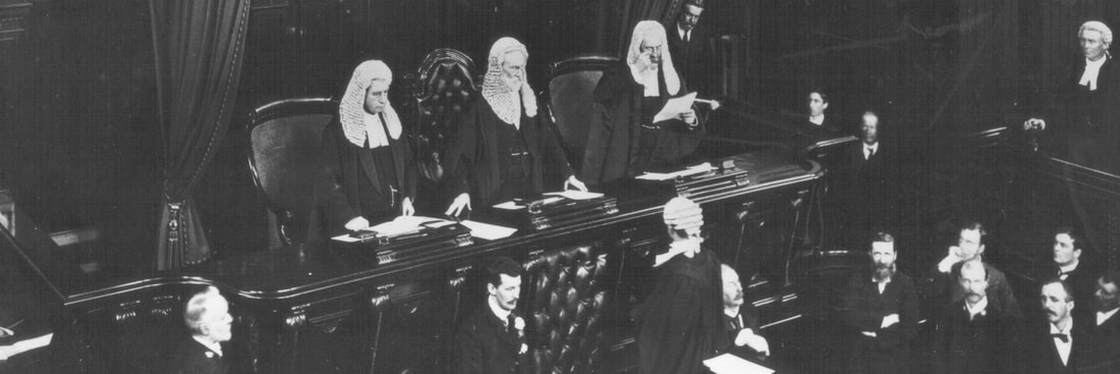
The judicial invention of freedom: A bridge too far? One Nation proposes a solution David Flint 18 April 2026 The recent NSW Court of Appeal decision in Jarrett v NSW stands as a stark monument to the folly of judicial activism. It says the legislation introduced by the Minns government, with bipartisan support, to stop the weekly occupation of Sydney streets by the hard-left, is unconstitutional. To the ordinary Australian – the quiet citizen trying to cross the Sydney Harbour Bridge to get to work or reach a hospital – the ruling is not merely incomprehensible; it is an affront. It is the latest fruit of a tree planted not by our Founders, nor by the people in a referendum, but by a handful of judges who, four decades ago, discovered a ‘freedom’ of political communication that appears nowhere in the text of our Constitution. They claim it is necessary for the system of government our founders designed and the people approved. Curiously, no one knew anything about it for most of the life of this country, enjoying uninterrupted freedom of speech and democratic governance for longer than all but a handful of countries. Invention Without a Mandate The logic is simple: if the Founders and the people who approved the Constitution in the 1890s had intended such a ‘freedom’ to exist, they would have put it in the document. They were precise people, well-versed in the protection of liberty through the mechanisms of responsible and representative government and the common law. They knew that true liberty is found in an ordered society, not in an abstract ‘implication’ that can be stretched or shrunk at the whim of High Court judges who began to replace the founding bench ( some of whom are shown in the image) which included some who actually wrote the Constitution. By the time we reached Lange v ABC in 1997, the judges were forced into a defensive posture. Their initial invention a few years before was becoming so confusing and legally unstable that they reacted like American pioneers moving into Indian land: they moved the caravans into a united defensive circle. Their ‘unanimous’ decision was less a clarification of law and more a tactical retreat to save a judicial creation from its own internal contradictions. The False Promise of the US Model In Lange, I argued as an amicus curiae on behalf of the Press Council that if the Court were to insist on this path, it should at least adopt the US model and create a clear, enforceable right. But an historical perspective suggests that even the American path is a trap. The US Supreme Court has yet again gone too far, creating a ‘public figure’ defence and a disregard for sub judice contempt that allows for a degree of defamation and trial-by-media incompatible with a civilised, ordered society. No society needs a system where a person’s reputation can be shredded with impunity or where a fair trial is sacrificed on the altar of sensationalism. A Hierarchy of Protagonists The ‘freedom’ we are left with today is not a shield for the citizen, but is, in my view, a license for judicial bias. We see an enormous discretion afforded to the bench. On one hand, the courts look favourably upon laws that restrict the ‘gentle protest’ of a solitary individual praying or handing out leaflets near an abortion clinic, citing the ‘dignity’ of the patient seeking a ‘medical service’. Since some have second thoughts after, and some say they were pressured, what can be wrong with gently suggesting a reconsideration? On the other hand, the courts too often seem to grant a virtual license to aggressive minorities to block major arterial roads and bridges for what some believe to be antisemitic demonstrations. It seems the right of a mob to shout genocidal chants on the Sydney Opera House steps or on the Sydney Harbour Bridge is more ‘essential to democracy’ than the right of the ordinary Australian to use that bridge for its intended purpose: transport. Restoring the People’s Constitution The creation of this freedom was a major mistake by judges who should have stayed judging and not played politics. Our Constitution is a delicate instrument of our Commonwealth, in essence, our Crowned Republic. If it is to be changed, it must be done, and only done, by the people through the referendum process set out in Section 128. That is how we federated: through an elected convention followed by a serious, considered debate and a series of referendums. That process gave us a good Constitution – one that was seriously damaged when, in my opinion, activist judges went into league with a political class. We saw this same impulse in the 1999 republican model – a ‘politicians’ republic’ designed to increase the power of the ruling government. It was pushed by a desire for revenge for the perfectly proper dismissal of the Whitlam Government in 1975 – a dismissal carried out for reasons Whitlam himself had long propounded until they were applied to him. The best path forward is a return to the people. If we are to balance order and speech, it must be done through citizen-initiated referendums. A prominent federalist, Charles Kingston, the South Australian Premier, strongly supported citizen-initiated referendums (CIR). Through his efforts, South Australia was the first jurisdiction in the world to give women the vote. He was dissuaded by Alfred Deakin from proposing the inclusion of CIRs in the Constitution because, Deakin argued, any need for this was filled by and was incompatible with responsible government. Responsible government does not mean, as the layman might assume, sensible government. It means a government must enjoy the confidence or support of the Lower House, at least on motions of no-confidence and grants of supply. While Kingston’s radicalism was the ‘democratic engine’ of the conventions, Deakin’s objection to CIRs is based on a 19th Century view of parliamentary supremacy that was superseded by the introduction of the referendum into the constitution. It is fascinating, indeed timely, that at least one party is a strong adherent of CIRs. This is the party we are constantly told has no policies: One Nation. In my view, this is yet another reason to give one’s first preference to One Nation, a position argued here in the last election. It is expected that if the Albanese government is defeated in the next election, a government will emerge which is supported by the Liberals, Nationals, and One Nation. That does not mean they will all necessarily be in the government. One could be outside but refraining from joining a vote of No Confidence or supporting a denial of supply. If a Coalition government of Liberals and Nationals emerged in that situation, One Nation could in negotiations insist on support for holding a referendum to incorporate CIRs into the constitution. If that were passed, ‘value judgments’ could, as in Switzerland, be taken away from the High Court and returned to the ballot box. Only then would our infrastructure and our social order be protected from the caprice of a judicial elite.
David  Flint tweet media
English
0
2
2
442