
Andrew Sinclair retweeté
Andrew Sinclair
40.1K posts

Andrew Sinclair
@sync0x
Microsoft Basic dialects, IRC, IPX/SPX, Netware, FreeBSD, the classics. No correspondence regarding donations will be entered into. Threats CC'd to the ASD.
New South Wales Inscrit le Aralık 2008
1.4K Abonnements291 Abonnés

Andrew Sinclair retweeté
When PM @AlboMP are we going to distance ourselves from the deranged orange lemon.
THE STANDARD YOU WALK PAST IS THE STANDARD YOU ACCEPT.
The standard trump sets on every level is not acceptable and makes us look complicit by neglect.
English
Andrew Sinclair retweeté

📜 MYKHAILO KRAVCHUK: THE UKRAINIAN GENIUS BEHIND THE FIRST COMPUTER
Mykhailo Kravchuk was a brilliant Ukrainian mathematician who laid the foundation for the world's first computer. His works were taught in Paris and Berlin, and his mathematical polynomials were used by Atanasoff in the creation of the ABC computer.
However, the USSR imprisoned him in a concentration camp simply because he spoke the Ukrainian language, where he ultimately perished.
English
Andrew Sinclair retweeté

“Foo” and “bar,” beloved Unix placeholders, originated as WWII slang. Soldiers borrowed “FUBAR” (“F***ed Up Beyond All Recognition”) for broken equipment and absurd orders. Decades later, MIT hackers imported “foo” and “bar” as generic variables, spreading into Unix lore. Unaware of their profane military ancestry, sysadmins worldwide innocently copy “foo/bar” examples into production code and manuals. The great irony: pristine, corporate-approved documentation quietly carrying decades-old, profane military slang—proof again that Unix never entirely lost its underground, mischievous streak.

English
Andrew Sinclair retweeté

@covie_93 You are asking the question backwards. Trump is the Christian because the Christs are GREEDY WARMONGERING, PEDOPHILES, SADISTS, MASOCHISTS and RAPISTS like Trump.
HOW did the Christ convince people they were like HIM?
English
Andrew Sinclair retweeté

ZELENSKYY: This is very important. If we want to end this war, you shouldn’t pressure me or Ukrainians.
You have to pressure Putin, because he doesn’t want to stop. His goal is to occupy us and then go further. He will go to the Baltic countries if we don’t stop him.
English
Andrew Sinclair retweeté

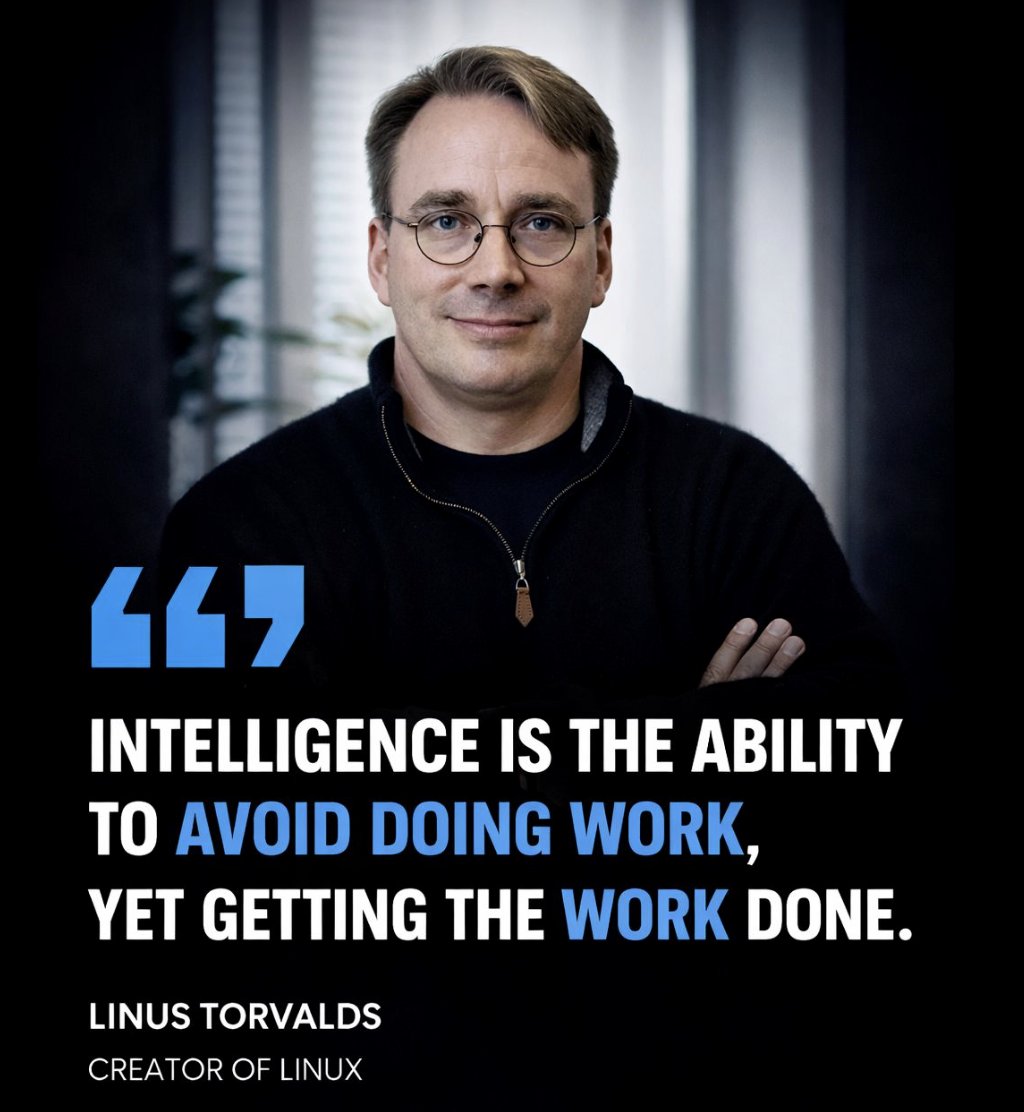
“Intelligence is the ability to avoid doing work, yet getting the work done.”
Linus Torvalds
Creator of Linux
English
Andrew Sinclair retweeté

Australia’s insistence on treating this as the behaviour of a responsible ally is untenable.

English
Andrew Sinclair retweeté

- Meet James Gosling
- Creator of Java
- Built his first computer from scratch as a teenager
- Loved math, science, and tinkering with electronics
- Preferred experimenting on his own rather than traditional classroom learning
- joined Sun Microsystems and noticed a major problem
- Programming languages were complex, unsafe, and hardware-dependent
- Code couldn’t run easily across different machines
- Many projects failed due to system incompatibility
- got Frustrated with these limitations
- Created a new language called “Oak”
- They wanted simple, catchy, and energetic name
- The team was drinking coffee during brainstorming ☕
- so Later they renamed it to Java
- he wrote the original Java compiler and virtual machine himself
- designed it to be Simple, Secure, Platform-independent
- it became one of the most influential programming languages in history
- Widely used in: Web applications, Android apps, Enterprise systems, Banking software
- Adopted by millions of developers worldwide
- earned the nickname as “Father of Java”
- literally changed how software is built across the world.
Absolute legend.

English
Andrew Sinclair retweeté

🚨🚨BREAKING🚨🚨
Donald Trump’s team is frantically deleting his old tweets — especially the ones where he viciously attacked President Obama’s Iran policies — in a blatant attempt to rewrite history and hide his past hypocrisy.

English
Andrew Sinclair retweeté

DEAR MR. TRUMP,
THANK YOU FOR SUBMITTING YOUR APPLICATION TO THE NOBEL PEACE PRIZE COMMITTEE. WHILE WE REVIEW YOUR "LIVING IN HELL" STATEMENT OF LOVE AND PEACE, WE SUGGEST YOU APPLY TO THE INTERNATIONAL COURT AT THE HAGUE. YOU ARE EXACTLY WHO THEY'RE LOOKING FOR.

English
Andrew Sinclair retweeté

@gregkellyusa Oh fuck off. Power plant and bridge day? Destroying civilian infrastructure is a war crime. "Praise be to Allah"? Yesterday he invoked God's name. Keeping int real? This is the post of a lunatic.
English
Andrew Sinclair retweeté

@gregkellyusa It’s the murdering civilians threat that people have a problem with fag
English
Andrew Sinclair retweeté

@gregkellyusa It’s not about the word “fuck.” It’s a matter of being unhinged, desperate, and vile. It’s also about war crimes.
It’s clear he doesn’t know how to solve this diplomatically, which is the only solution. He should not be leading us.
English
Andrew Sinclair retweeté


Andrew Sinclair retweeté


Andrew Sinclair retweeté

I forget to wish greetings to everyone who celebrate Easter because we only get murder theater marathon all day and evening.
But I did not forget friends. 🙏🏻
GIF
English
Andrew Sinclair retweeté

@Q0MT6pFmbVqynsM Проміняли вони всіх чоловіків на пельмені.
▶️ @PetrenkoAndryi
Українська
Andrew Sinclair retweeté

С мест сообщают, что в России уже ни одного нормального мужика не осталось.
Русский
Andrew Sinclair retweeté

Happy Easter to all who celebrate—and let’s also celebrate Ukraine’s relentless demilitarization of Russia! From obliterating air defenses 10 times faster to halting oil terminals, Ukrainian strikes are shaking Moscow. As explosions echo and the Kremlin’s excuses fail, share the truth and witness the collapse! 🇺🇦🔥
#RussiaIsCollapsing #MakeRussiaSmallAgain #StandWithUkraine #SlavaUkraini
English