Thiago Lopes, PhD

3K posts

Thiago Lopes, PhD banner
Thiago Lopes, PhD

Thiago Lopes, PhD

@trlopes82

Sport Scientist | São Paulo Association for Medicine Development | Olympic Center of Training and Research (Exercise Physiology Lab)

São Paulo, Brasil Inscrit le Temmuz 2018
1.5K Abonnements787 Abonnés
Thiago Lopes, PhD retweeté
Daniel Berglind, PhD
Daniel Berglind, PhD@DanielBerglind·
One barbell can take you far. Free-weight training is highly effective for increasing maximal strength and muscle hypertrophy with great transfer to athletic performance. ➡️Simplicity works💪 pubmed.ncbi.nlm.nih.gov/39072660/
English
1
5
42
1.4K
Thiago Lopes, PhD retweeté
Samuele Marcora
Samuele Marcora@SamueleMarcora·
It's easy to speculate about what causes task failure during endurance exercise. It's way more difficult to design experiments that test rival hypotheses. Here is a blast from the past journals.physiology.org/doi/full/10.11…
English
0
7
31
3.5K
Thiago Lopes, PhD retweeté
Jozo Grgic
Jozo Grgic@Jozo_Grgic·
Optimizing Strength and Hypertrophy: The Combined Effect of Intensity and Velocity Loss Thresholds in Bench Press Training journals.lww.com/acsm-msse/abst…
Jozo Grgic tweet media
English
2
7
27
1.4K
Thiago Lopes, PhD retweeté
Keijo Häkkinen
Keijo Häkkinen@KeijoHakkinen·
doi.org/10.1007/s40279… Nice review! While AEL augments the ECC-phase stimulus, it increases metabolic stress+perceived effort, implying a need for longer, more frequent inter-set rests+longer btw-session recovery. Carefully consider this training method within a training cycle.
English
0
3
12
776
Thiago Lopes, PhD retweeté
Iñigo San Millán
Iñigo San Millán@doctorinigo·
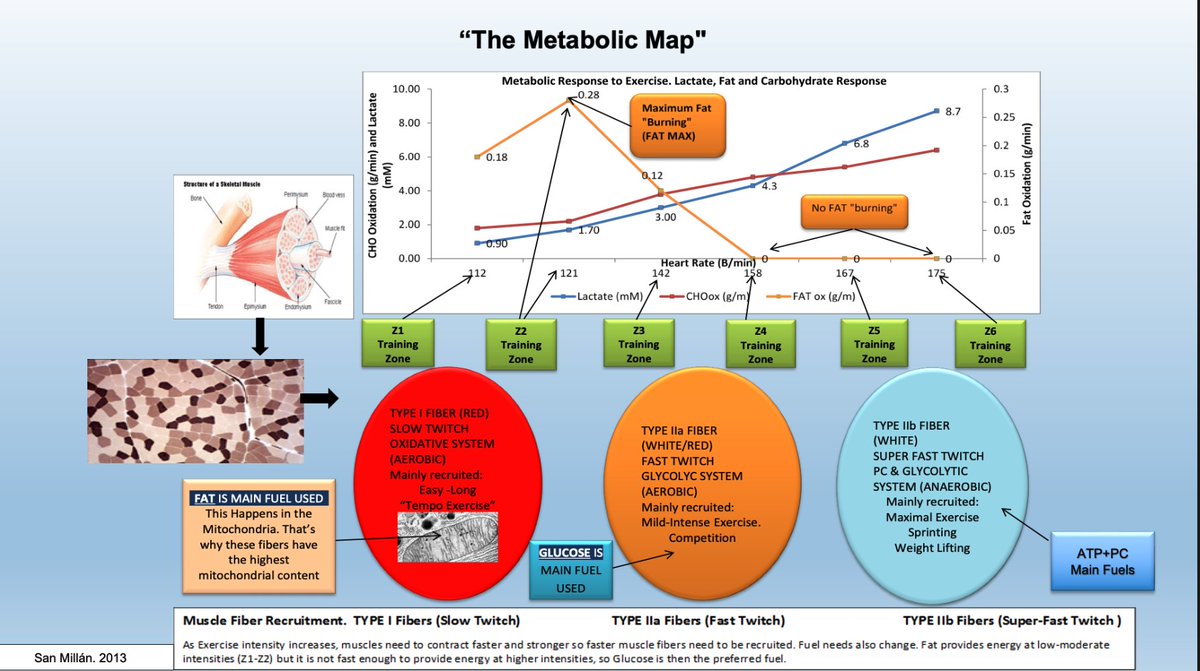
Are you overloaded, at equilibrium or are you a drifter? Not asking about your mental health but about your metabolic training. I like to be at metabolic equilibrium but here and there, I like to be a drifter and I also love to be overloaded 😉 Please check out this new metabolic model to understand exercise metabolism and training that I propose. From 2013 to 2026, I just updated my “metabolic map” 👇 @inigosanmillan/note/p-193581258?r=2nunp3&utm_medium=ios&utm_source=notes-share-action" target="_blank" rel="nofollow noopener">substack.com/@inigosanmilla
Iñigo San Millán tweet media
English
1
18
118
7.6K
Thiago Lopes, PhD retweeté
Paul Gastin
Paul Gastin@PaulGastin·
Pleased to publish a 25y update to my 2001 review: Anaerobic and Aerobic Energy System Contribution During Maximal Exercise (Sports Med) Synthesising 102 studies of energy system interplay during maximal efforts 🔗 rdcu.be/fcXUu #ExercisePhysiology @hareshsuppiah
Paul Gastin tweet media
English
6
85
385
44.3K
Thiago Lopes, PhD retweeté
Iñigo San Millán
Iñigo San Millán@doctorinigo·
🚨The updated Metabolic Map. Yesterday I said the Metabolic Map I proposed in 2013 needed to evolve. That map helped me and others translate complex laboratory findings into practical guidance for training and performance. Today I’m sharing the updated model. In my view, this represents a shift in how we should understand exercise metabolism. For over two decades, I focused on what the body burns, fat vs carbohydrates, and how lactate serves as a powerful proxy of that process. After many years of working with world-class athletes, patients and laboratory research, my view is clearer: exercise metabolism is a continuum of metabolic states, defined by the relationship between glycolysis and mitochondrial capacity. From equilibrium to drift to overload. Lactate is the signal of where the system stands, and how we can track metabolism across all exercise intensities. Full article: @inigosanmillan/note/p-193581258?r=2nunp3&utm_medium=ios&utm_source=notes-share-action" target="_blank" rel="nofollow noopener">substack.com/@inigosanmilla
Iñigo San Millán tweet media
English
8
80
331
17.9K
Thiago Lopes, PhD retweeté
Iñigo San Millán
Iñigo San Millán@doctorinigo·
The original "Metabolic Map" I created in 2013 organized exercise metabolism around substrate utilization and muscle fiber recruitment, illustrating how the body transitions from fat to carbohydrate use as intensity increases. This model helped me and many others translate complex laboratory findings into practical guidance for training and performance. Now, I believe that it is time to evolve the concept.. Through years of research, as well as performance and clinical work with world-class athletes and patients, this has led to an updated model (2026), representing a conceptual shift. Rather than questioning what the body burns, I began to question whether the system itself is in balance. Exercise metabolism is reframed as a continuum of metabolic states, from equilibrium to overload, governed by the relationship between glycolysis and mitochondrial capacity. Lactate emerges as a central proxy of this balance, reflecting the system’s ability to match production with clearance. This concept and article have taken longer to articulate than anticipated, but tomorrow I’ll share the new model in my substack article. inigosanmillan.substack.com
Iñigo San Millán tweet media
English
6
38
228
10K
Thiago Lopes, PhD retweeté
Jozo Grgic
Jozo Grgic@Jozo_Grgic·
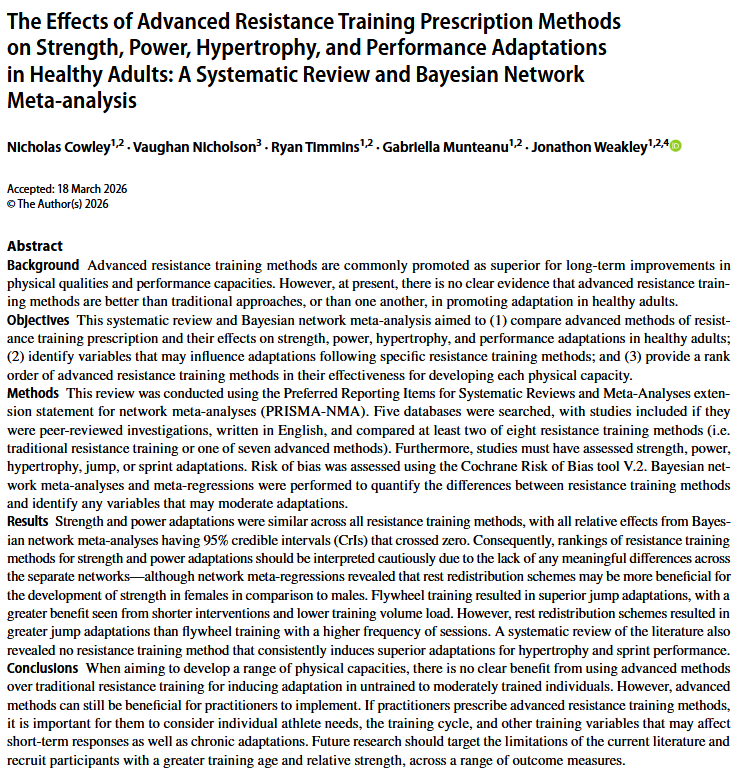
The Effects of Advanced Resistance Training Prescription Methods on Strength, Power, Hypertrophy, and Performance Adaptations in Healthy Adults: A Systematic Review and Bayesian Network Meta-analysis link.springer.com/article/10.100…
Jozo Grgic tweet media
English
1
19
75
3.2K
Thiago Lopes, PhD retweeté
Øyvind Skattebo
Øyvind Skattebo@Skattebo_Oyvind·
Our latest review explores the key physiological factors limiting VO₂max and endurance performance 🚴‍♀️🏃 From oxygen delivery to muscle metabolism, we unpack what sets the upper limits of human performance 🚴‍♀️🏃 Read more: onlinelibrary.wiley.com/doi/epdf/10.11…
English
2
38
129
6.7K
Thiago Lopes, PhD retweeté
Damian Harper, PhD
Damian Harper, PhD@DHMov·
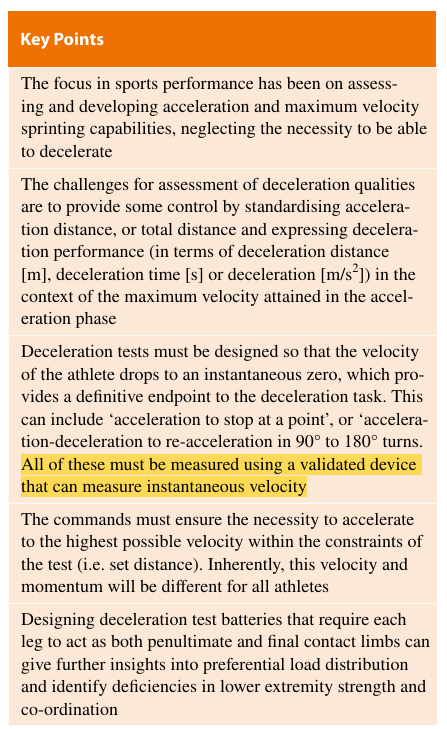
LEADING ARTICLE ON... ➡️ How to assess DECELERATION in applied settings? ❌"Focus in sports performance been on assessing acceleration & top speed, neglecting necessity to DECELERATE!" ✔️ "Obtaining ACCURATE information on DECELERATION critical" KEY POINTS ⬇️
Damian Harper, PhD tweet mediaDamian Harper, PhD tweet media
English
3
8
50
3.9K
Thiago Lopes, PhD retweeté
Dorian Varović
Dorian Varović@DorianVarovic·
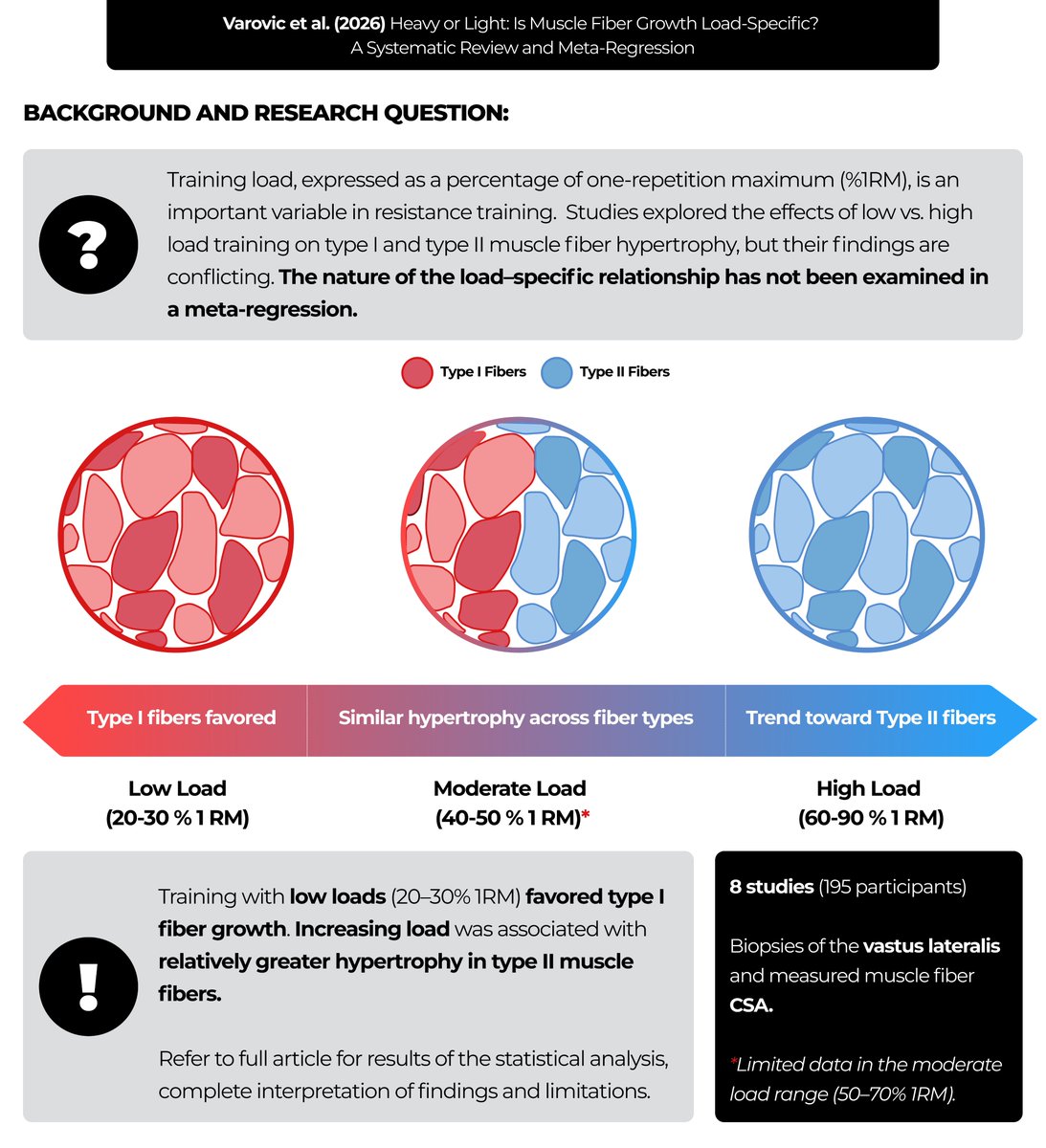
Our new systematic review and meta-regression exploring the relationship between training load and muscle fiber hypertrophy has just been pre-printed. Kudos to @StianLa07849895 and @Jozo_Grgic for awesome collaboration! You can read the paper here: sportrxiv.org/index.php/serv…
Dorian Varović tweet media
English
0
8
27
1.4K
Thiago Lopes, PhD retweeté
Brad Schoenfeld, PhD
Brad Schoenfeld, PhD@BradSchoenfeld·
There is strong evidence that similar hypertrophy can be achieved across a wide range of loading schemes (~5 to 30+ repetitions), provided sets are performed close to muscular failure. That said, some data suggest fiber type–specific differences, with heavier loads potentially favoring Type II fiber growth and lighter loads favoring Type I fibers. A recent meta-analysis offers preliminary support for this idea, although the limited number of eligible studies warrants cautious interpretation. From a practical standpoint, those aiming to maximize hypertrophy may benefit from incorporating both heavy and light loads within a training program. For the general population, however, loading range is unlikely to have a meaningful impact on overall muscle growth—so selecting loads based on preference and adherence is a sensible approach. sportrxiv.org/index.php/serv…
English
12
24
193
25.6K
Thiago Lopes, PhD retweeté
Jozo Grgic
Jozo Grgic@Jozo_Grgic·
Is muscle fiber growth load-specific? Our meta-regression exploring the effects of training load on type I and type II muscle fiber hypertrophy is now posted as a pre-print Comments are welcome @DorianVarovic sportrxiv.org/index.php/serv…
Jozo Grgic tweet media
English
2
17
88
5.5K
Thiago Lopes, PhD retweeté
David Bishop (🦋 also bluespotscience.bsky.social)
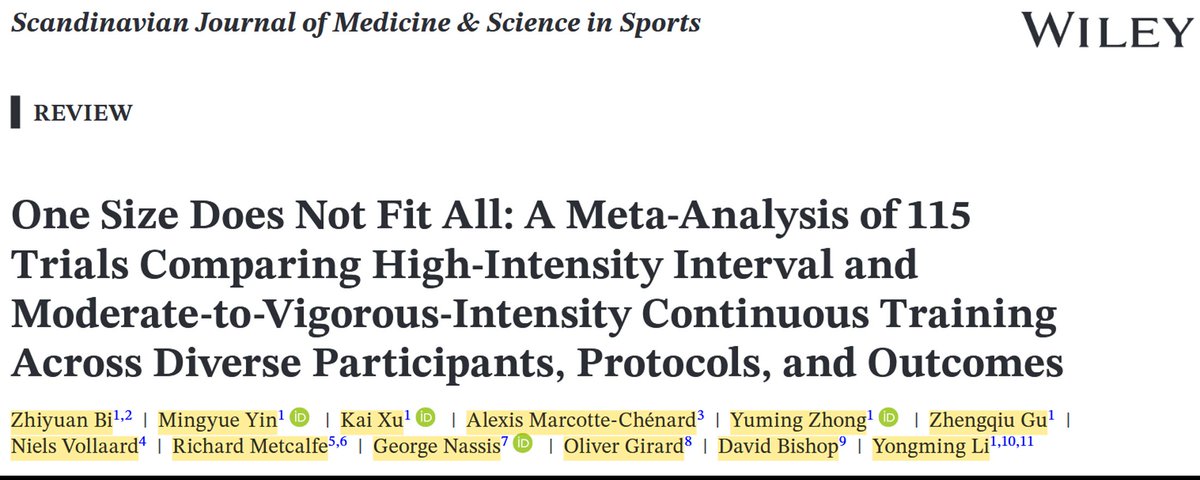
How does high-intensity interval training (HIIT) compare with moderate-to-vigorous continuous training (MVICT)? Our new meta-analysis synthesises 115 RCTs (n = 3196) across populations from sedentary adults to elite athletes. DOI: bit.ly/4rJXGgt Key findings below 🧵
David Bishop (🦋 also bluespotscience.bsky.social) tweet media
English
4
39
162
14.6K
Thiago Lopes, PhD retweeté
Brad Schoenfeld, PhD
Brad Schoenfeld, PhD@BradSchoenfeld·
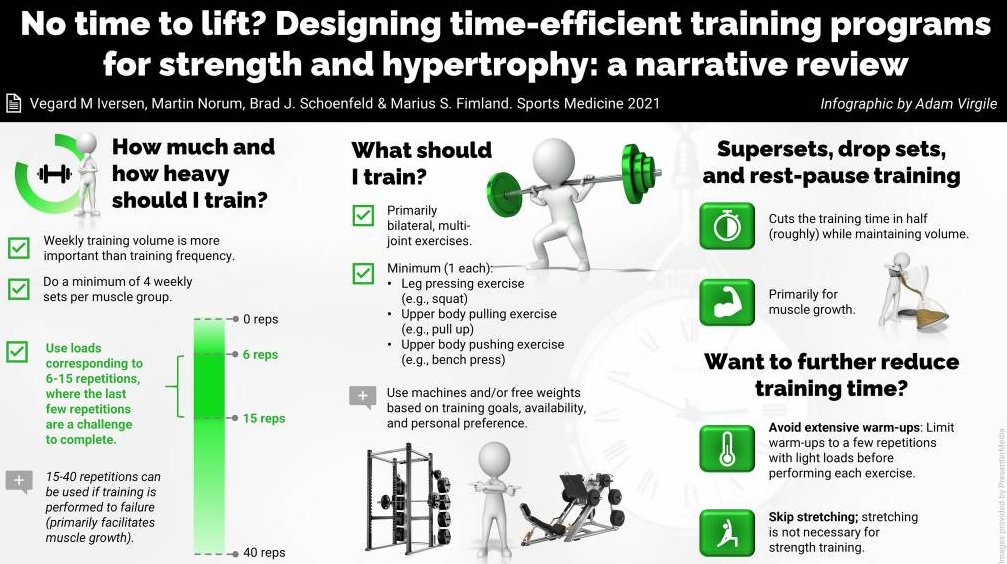
Less than one-quarter of the population performs resistance training on a regular basis. Time is considered the primary barrier to participation. It shouldn't be. An emerging body of evidence shows that as little as two 30-minute resistance training sessions per week can produce meaningful improvements in strength, muscle hypertrophy, functional capacity, and various health-related outcomes. Several years ago we published a paper titled, "No Time to Lift? Designing Time-Efficient Training Programs for Strength and Hypertrophy" (PMID: 34125411) that detailed time-saving strategies for workouts. Here are some of the highlights: 1. Training efficiency can be enhanced by emphasizing bilateral, multijoint exercises performed through a full range of motion. 2. Incorporating techniques such as supersets, drop sets, and rest-pause training can reduce session duration by about half compared to traditional approaches, while still maintaining overall volume load. 3. When using moderate to higher repetition ranges, specific warm-ups may be largely unnecessary, and cool-downs are not essential. 4. Resistance training performed through a full range of motion can improve flexibility, minimizing the need for dedicated stretching unless further gains in range of motion are required for daily activities. pmc.ncbi.nlm.nih.gov/articles/PMC84… Bottom line: Just lift 💪 #noexcuses
Brad Schoenfeld, PhD tweet media
English
17
74
376
22.3K
Thiago Lopes, PhD retweeté
Chris Beardsley
Chris Beardsley@SandCResearch·
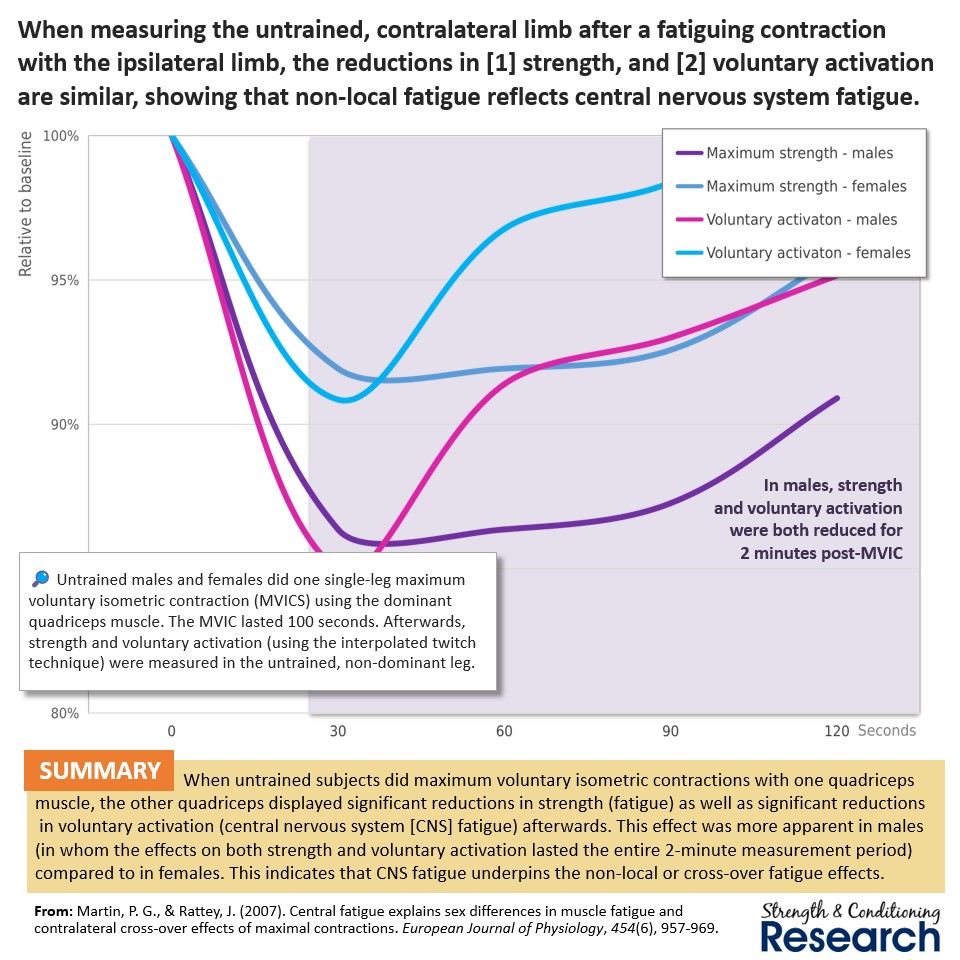
Non-local fatigue is closely associated with reductions in voluntary activation of the untrained limb, indicating that it is caused by central nervous system fatigue mechanisms.
Chris Beardsley tweet media
English
2
11
39
3.2K